Minor Credit Seminar
Department of Horticulture
Microbial seed coating- an emerging strategy
towards organic vegetable production
Presenter: Miss Mehjebin Rahman
2019-ADJ-60
Ph. D. 2nd year 1st Semester
Major Advisor: Dr. Pradip Kr. Borah
19/01/2021, Minor Credit Seminar
Department
of
Horticulture,
AAU,
Jorhat
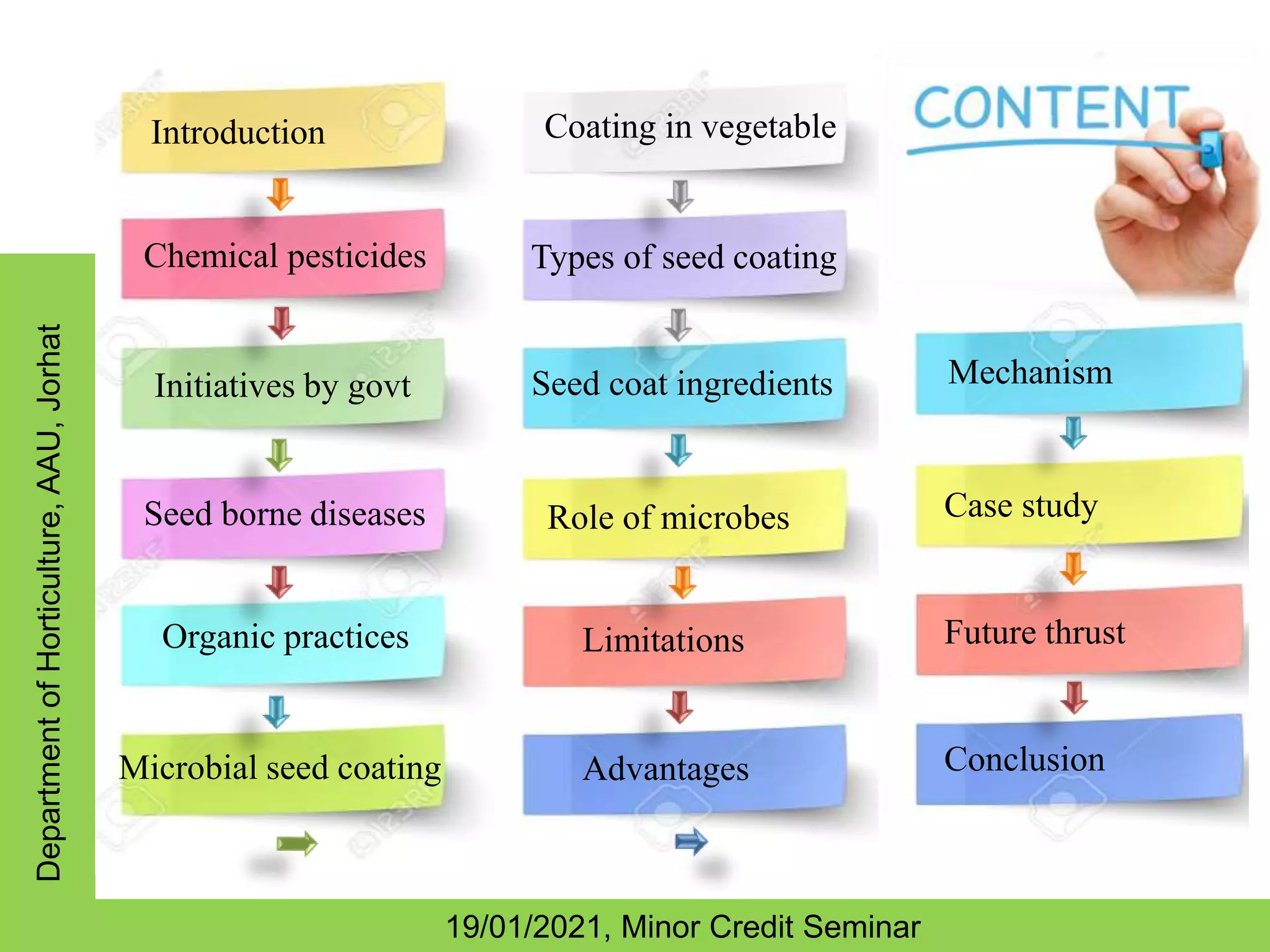
Introduction
Chemical pesticides
Initiatives by govt
Seed borne diseases
Organic practices
Microbial seed coating
Coating in vegetable
Types of seed coating
Seed coat ingredients
Role of microbes
Limitations
Advantages
Mechanism
Case study
Future thrust
Conclusion
19/01/2021, Minor Credit Seminar
Department
of
Horticulture,
AAU,
Jorhat
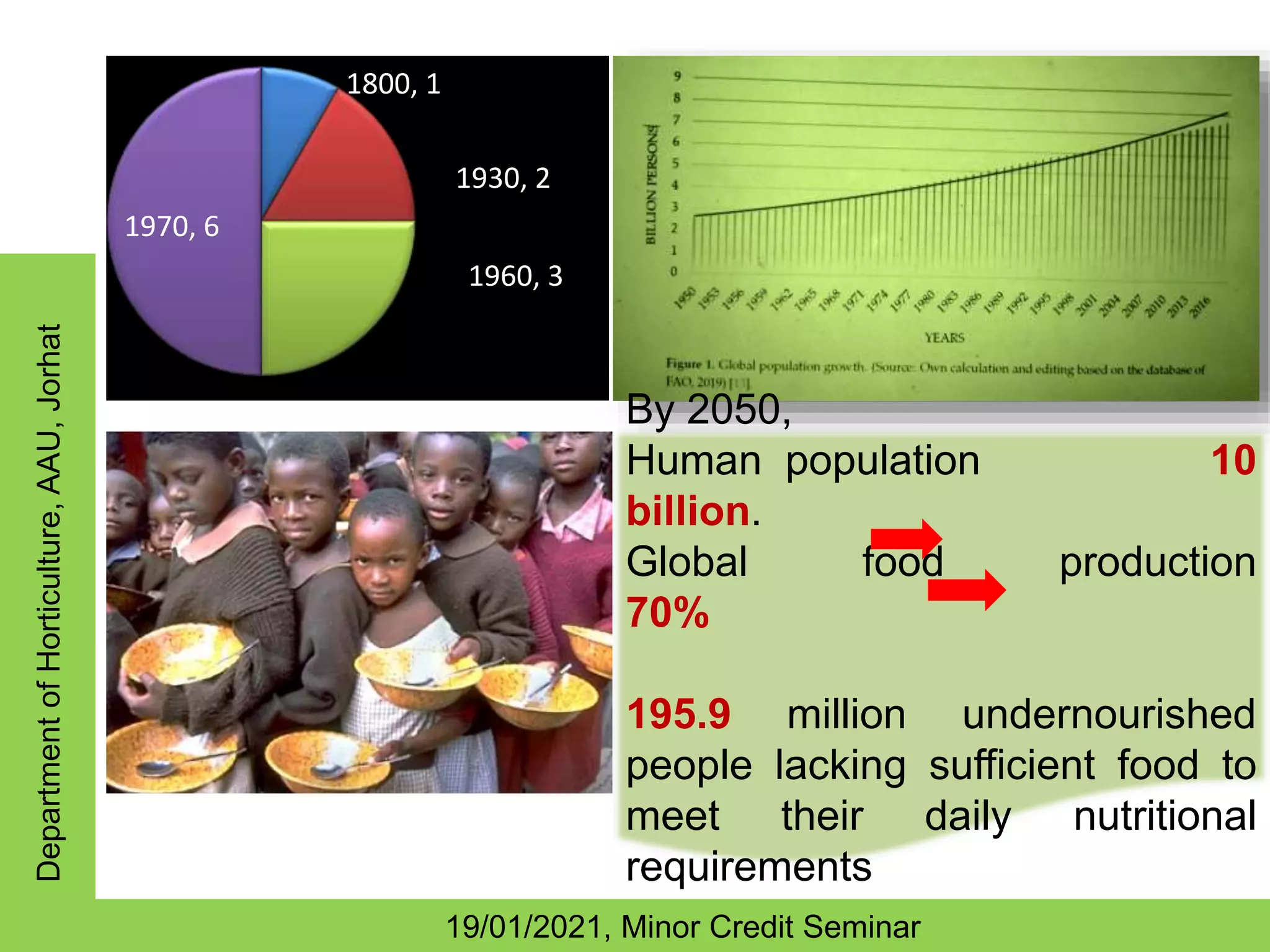
1800, 1
1930, 2
1960, 3
1970, 6
By 2050,
Human population 10
billion.
Global food production
70%
195.9 million undernourished
people lacking sufficient food to
meet their daily nutritional
requirements
19/01/2021, Minor Credit Seminar
Department
of
Horticulture,
AAU,
Jorhat
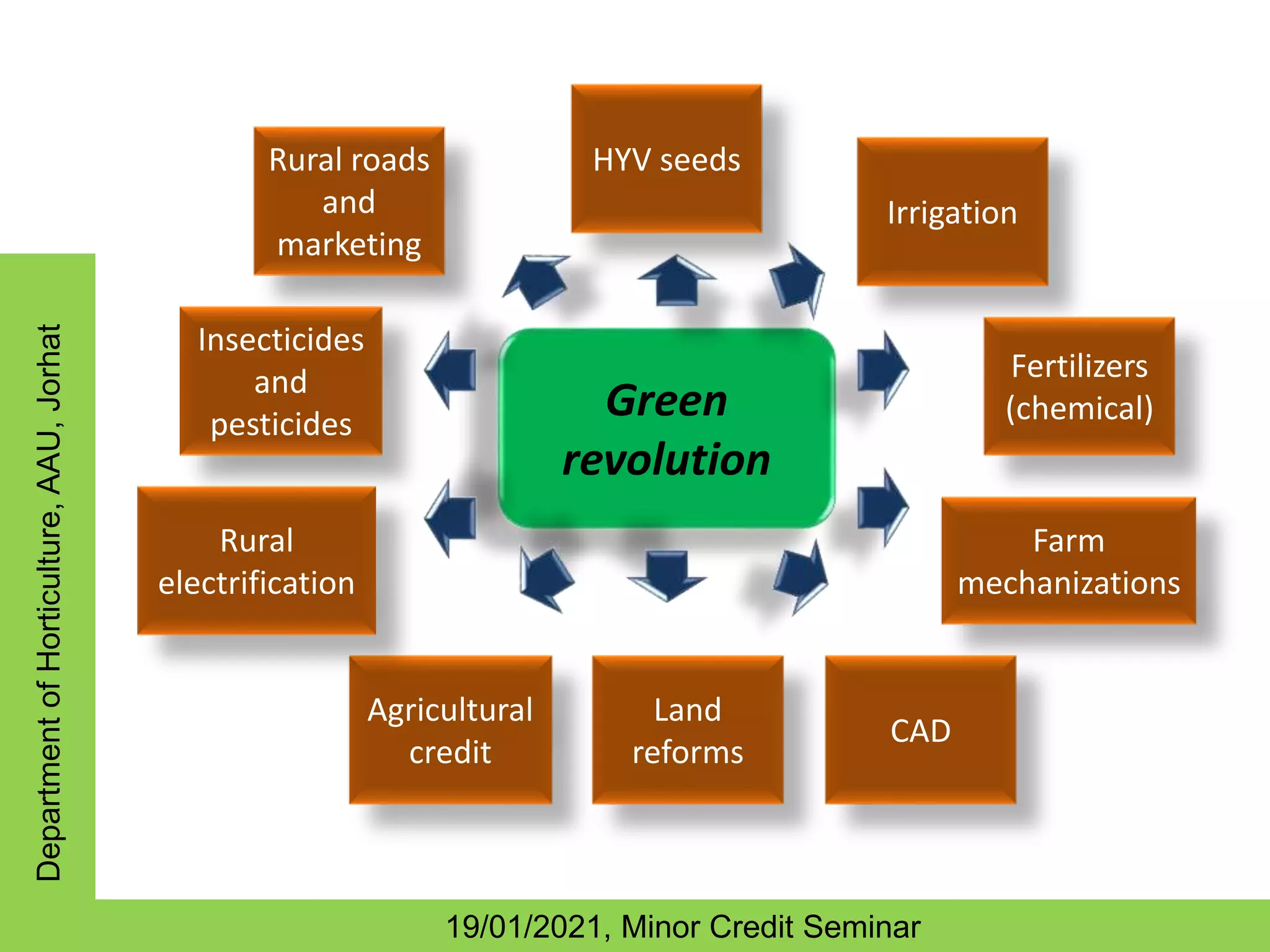
Green
revolution
HYV seeds
Irrigation
Fertilizers
(chemical)
CAD
Land
reforms
Agricultural
credit
Rural
electrification
Rural roads
and
marketing
Farm
mechanizations
Insecticides
and
pesticides
19/02/2021, Minor Credit Seminar
Department
of
Horticulture,
AAU,
Jorhat
List of the 10 most contaminated food items by The Environmental
Working Group (EWG) :
Strawberries, Spinach, Nectarines, Apples, Grapes, Peaches, Cherries
Pears, Tomatoes, Celery
19/02/2021, Minor Credit Seminar
Department
of
Horticulture,
AAU,
Jorhat
Circulates through
blood and reach
neurons and brain
cells
Pesticides and
fungicides
19/02/2021, Minor Credit Seminar
Department
of
Horticulture,
AAU,
Jorhat
19/02/2021, Minor Credit Seminar
Department
of
Horticulture,
AAU,
Jorhat
The government through programmes like Paramparagat Krishi Vikas
Yojana (PKVY) is encouraging farmers to adopt organic farming for
“Doubling Farmers’ income by 2022”
PM
Honourable P.M Narendra Modi said- We clearly need a second green
revolution that is more broad-based, more inclusive and more
sustainable; we need to produce more without depleting our natural
resources any further
He has called for adoption of organic and natural farming in a cluster
based approach and said Indian Council of Agricultural Research
(ICAR) has developed a geo-referenced Organic Carbon Map of India
and identified 88 bio control agents and 22 Bio pesticides which can
promote organic agriculture.
19/02/2021, Minor Credit Seminar
Department
of
Horticulture,
AAU,
Jorhat
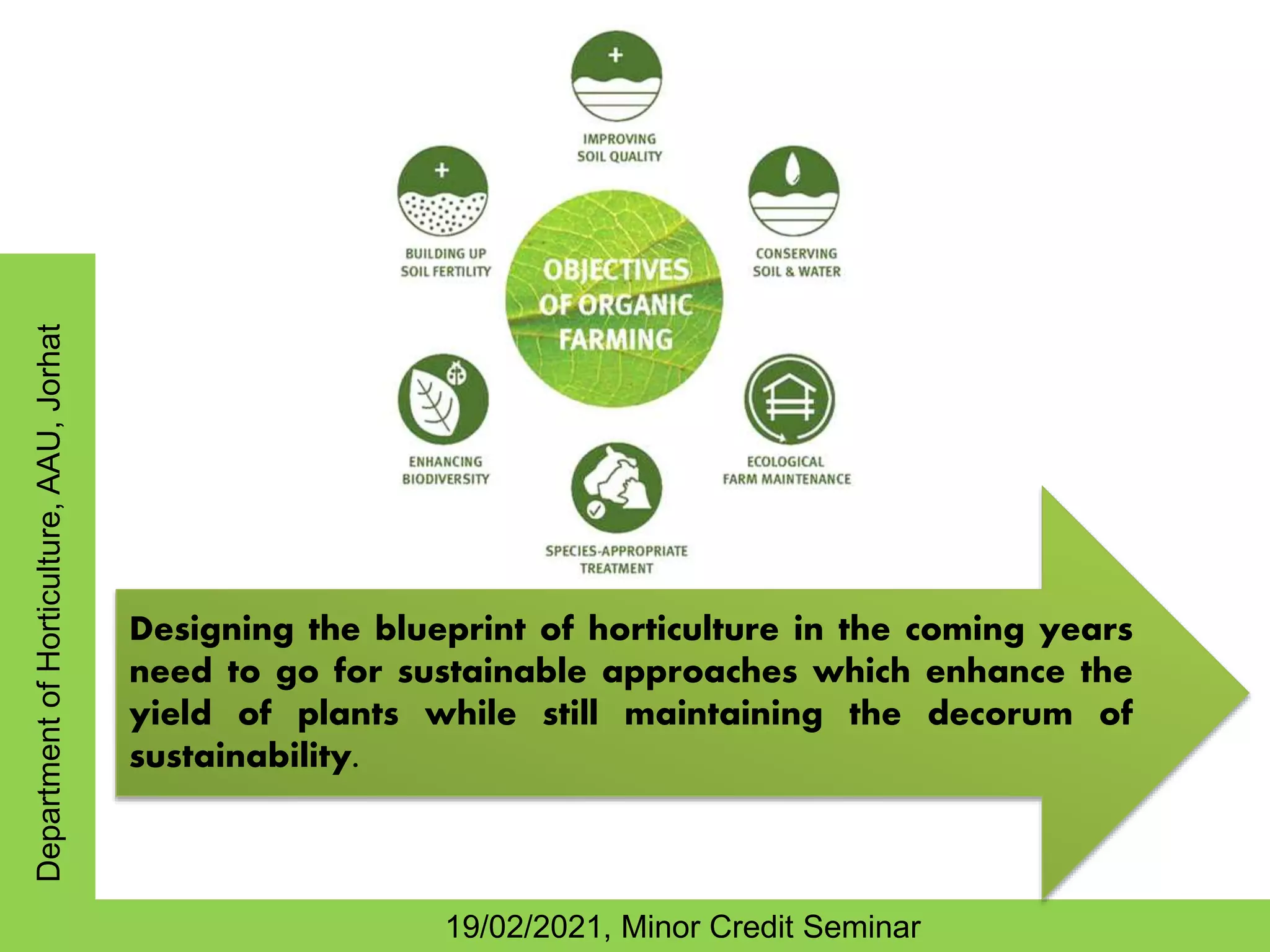
Designing the blueprint of horticulture in the coming years
need to go for sustainable approaches which enhance the
yield of plants while still maintaining the decorum of
sustainability.
19/02/2021, Minor Credit Seminar
Department
of
Horticulture,
AAU,
Jorhat
Seed is a common carrier of plant
pathogens and pathogen free seed
is the important input material for
agriculture (Senthamarai MP et al.,
2011)
Over 200 diseases have been
reported to affect the different
vegetables in the world. Among
them the seed-borne pathogens
mostly fungi play a vital role in
disease development(Hossain
GMK et al., 2015)
19/02/2021, Minor Credit Seminar
Department
of
Horticulture,
AAU,
Jorhat
19/02/2021, Minor Credit Seminar
Department
of
Horticulture,
AAU,
Jorhat
Soil borne diseases of vegetable crops
Fusarium wilt of melon Bacterial leaf sopt in lettuce Bacterial soft rot of carrot
White mold of cabbage
Root and hypocotyl rot of
radishes
Late blight of tomato
19/02/2021, Minor Credit Seminar
Department
of
Horticulture,
AAU,
Jorhat
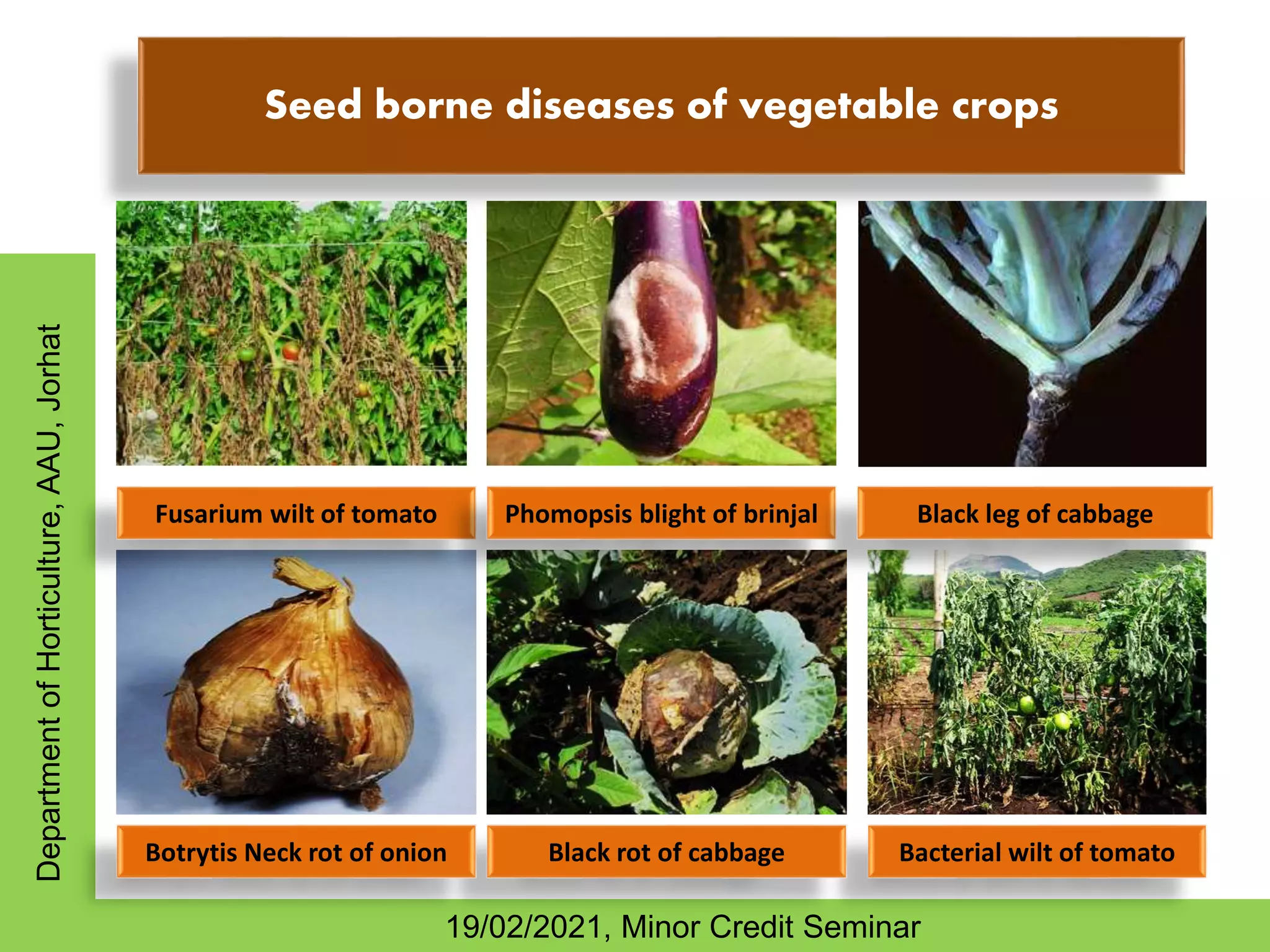
Seed borne diseases of vegetable crops
Fusarium wilt of tomato
Bacterial wilt of tomato
Black rot of cabbage
Botrytis Neck rot of onion
Phomopsis blight of brinjal Black leg of cabbage
19/02/2021, Minor Credit Seminar
Department
of
Horticulture,
AAU,
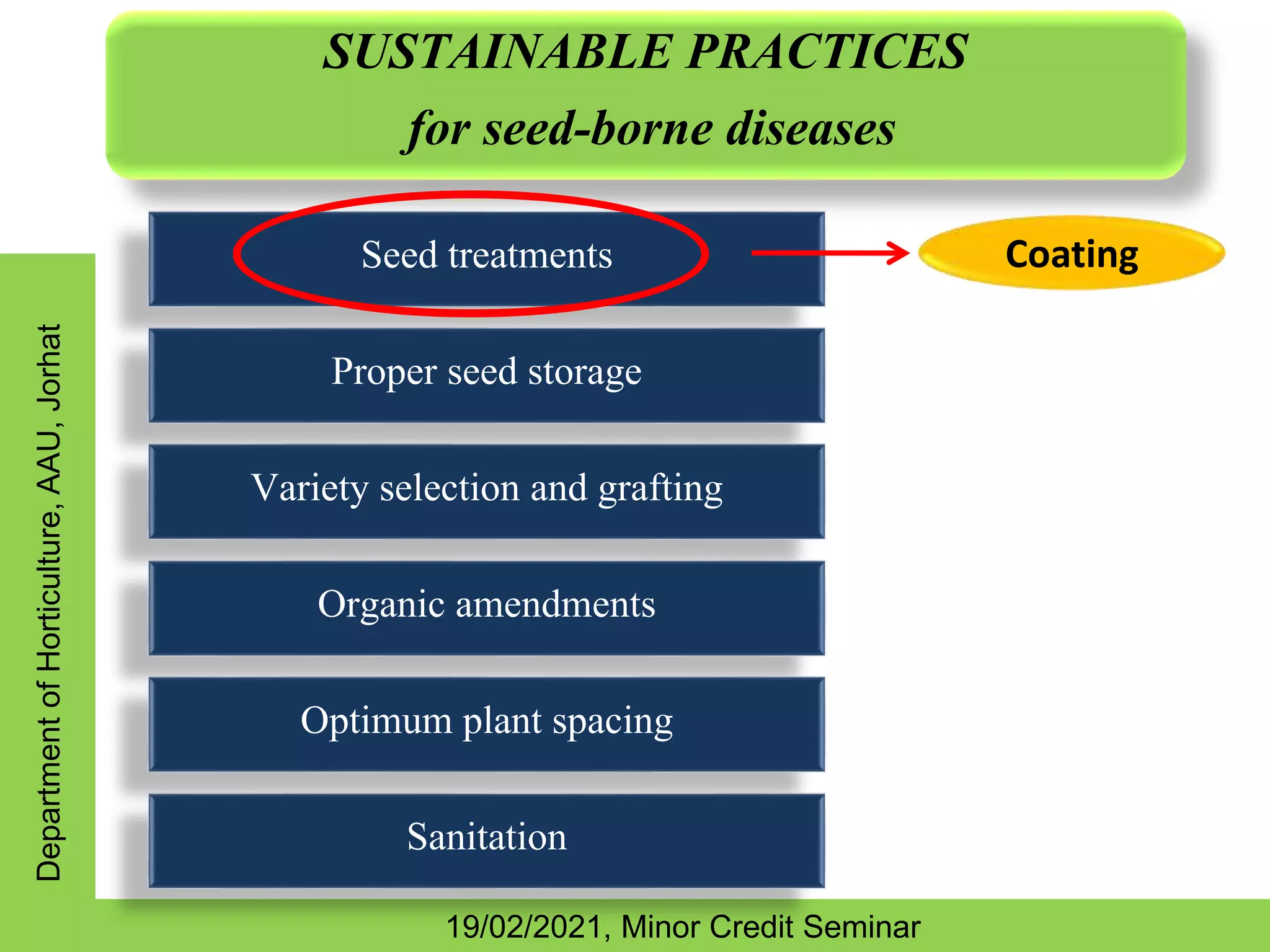
Jorhat SUSTAINABLE PRACTICES
for seed-borne diseases
Seed treatments
Proper seed storage
Variety selection and grafting
Organic amendments
Optimum plant spacing
Sanitation
Coating
19/02/2021, Minor Credit Seminar19
Department
of
Horticulture,
AAU,
Jorhat
Seed coating
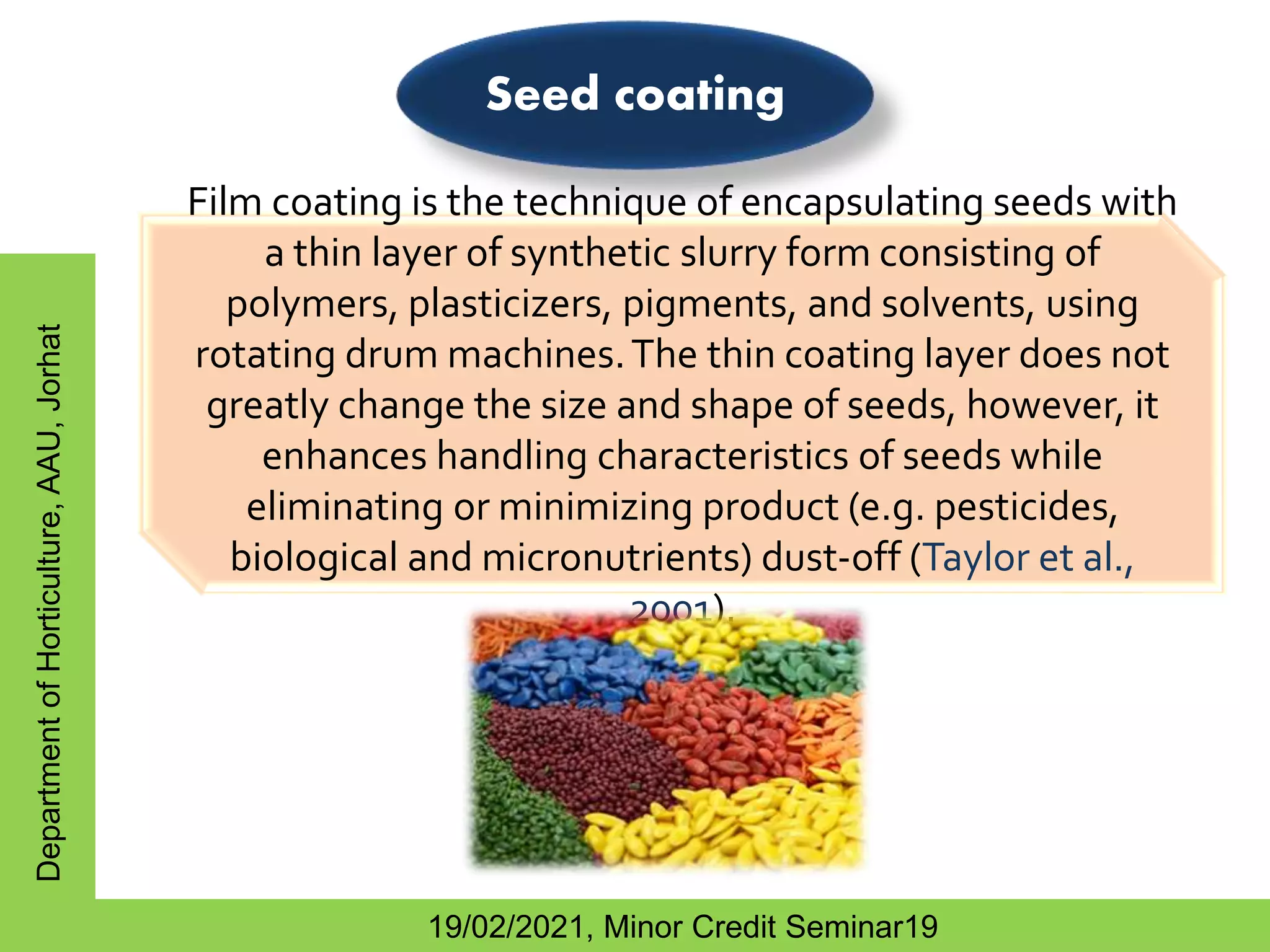
Film coating is the technique of encapsulating seeds with
a thin layer of synthetic slurry form consisting of
polymers, plasticizers, pigments, and solvents, using
rotating drum machines.The thin coating layer does not
greatly change the size and shape of seeds, however, it
enhances handling characteristics of seeds while
eliminating or minimizing product (e.g. pesticides,
biological and micronutrients) dust-off (Taylor et al.,
2001).
19/02/2021, Minor Credit Seminar
Department
of
Horticulture,
AAU,
Jorhat
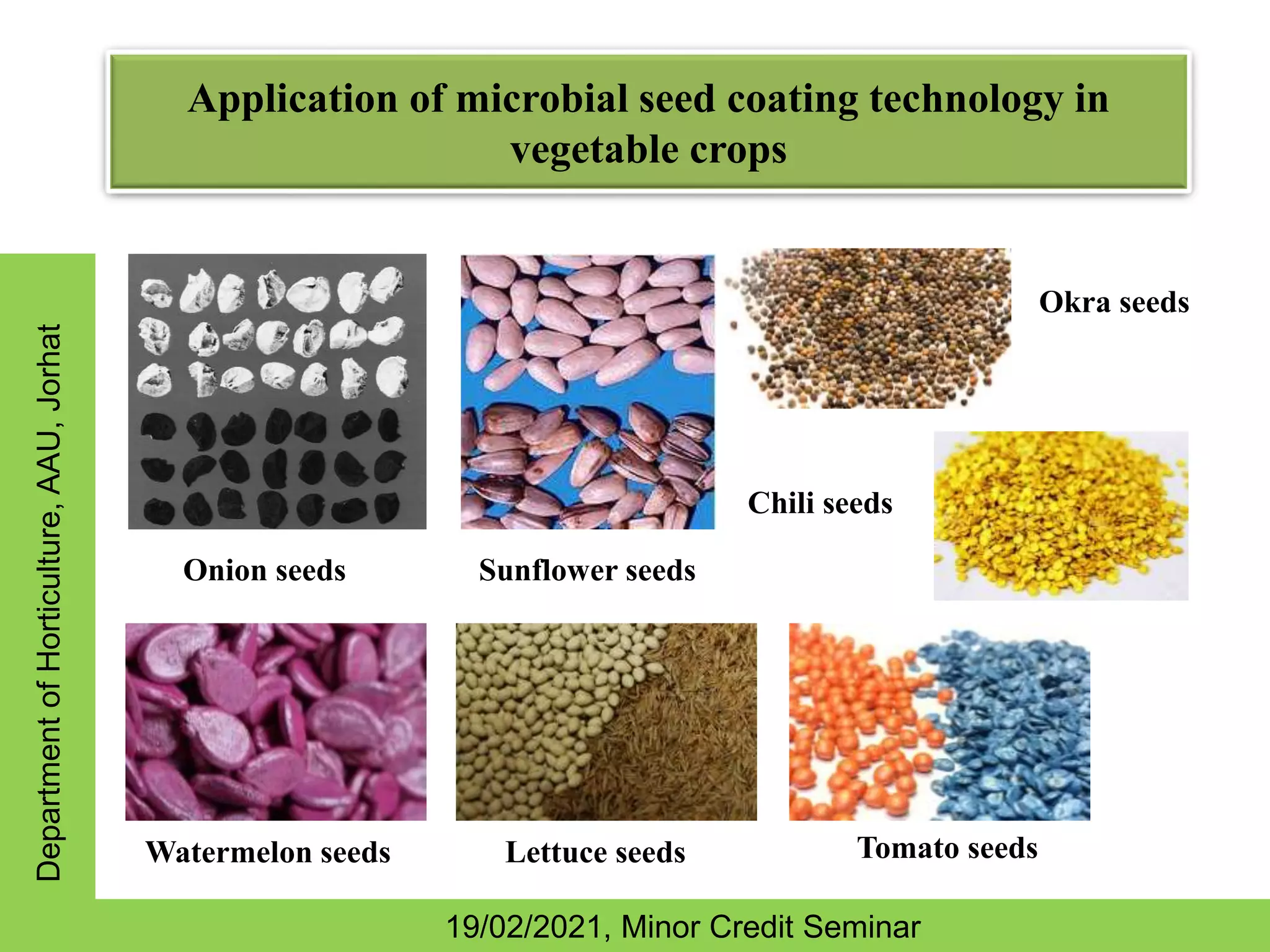
Application of microbial seed coating technology in
vegetable crops
Onion seeds Sunflower seeds
Okra seeds
Chili seeds
Tomato seeds
Lettuce seeds
Watermelon seeds
19/02/2021, Minor Credit Seminar
Department
of
Horticulture,
AAU,
Jorhat
Seed coating types
Seed dressing
Film coating
Encrusting
Pelleting
19/02/2021, Minor Credit Seminar
Lime
Department
of
Horticulture,
AAU,
Jorhat
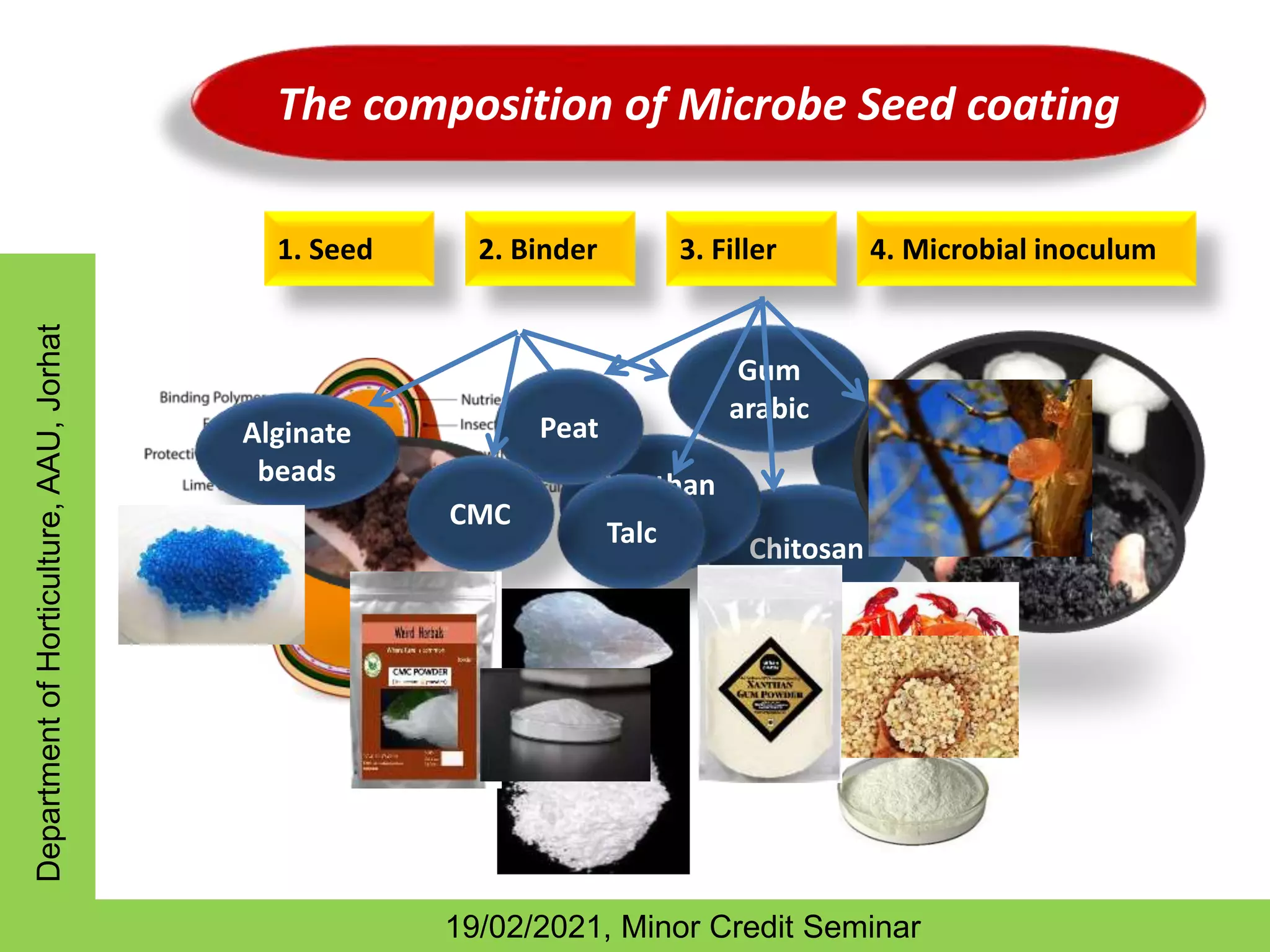
The composition of Microbe Seed coating
2. Binder 3. Filler 4. Microbial inoculum
1. Seed
Biochar
Chitosan
Xanthan
gum
Gum
arabic
Peat
Talc
CMC
Alginate
beads
19/02/2021, Minor Credit Seminar
Department
of
Horticulture,
AAU,
Jorhat
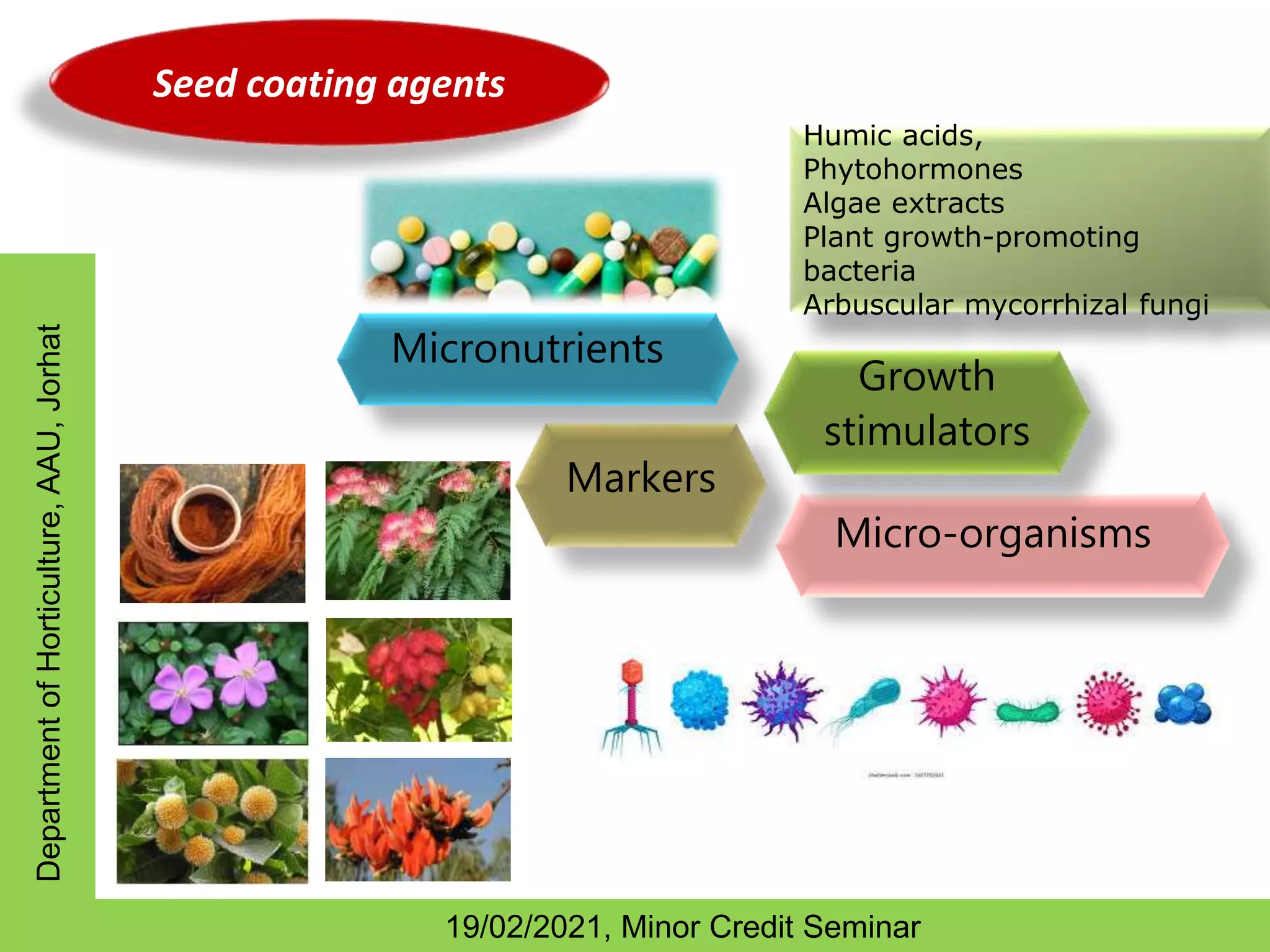
Seed coating agents
Markers
Micro-organisms
Growth
stimulators
Humic acids,
Phytohormones
Algae extracts
Plant growth-promoting
bacteria
Arbuscular mycorrhizal fungi
Micronutrients
19/02/2021, Minor Credit Seminar
Department
of
Horticulture,
AAU,
Jorhat
MICROBES are the
best players finding
their roles in plant
growth promotion and
also stress management.
19/02/2021, Minor Credit Seminar
Department
of
Horticulture,
AAU,
Jorhat
Microbes to
Feed the World
without being
Detrimental to
Environment
Act as
BIOFERTILIZERS
Rhizomediators
Act as
BIOSTIMULATOR
The crop
protectants-
BIOPESTICIDES
19/02/2021, Minor Credit Seminar
Department
of
Horticulture,
AAU,
Jorhat
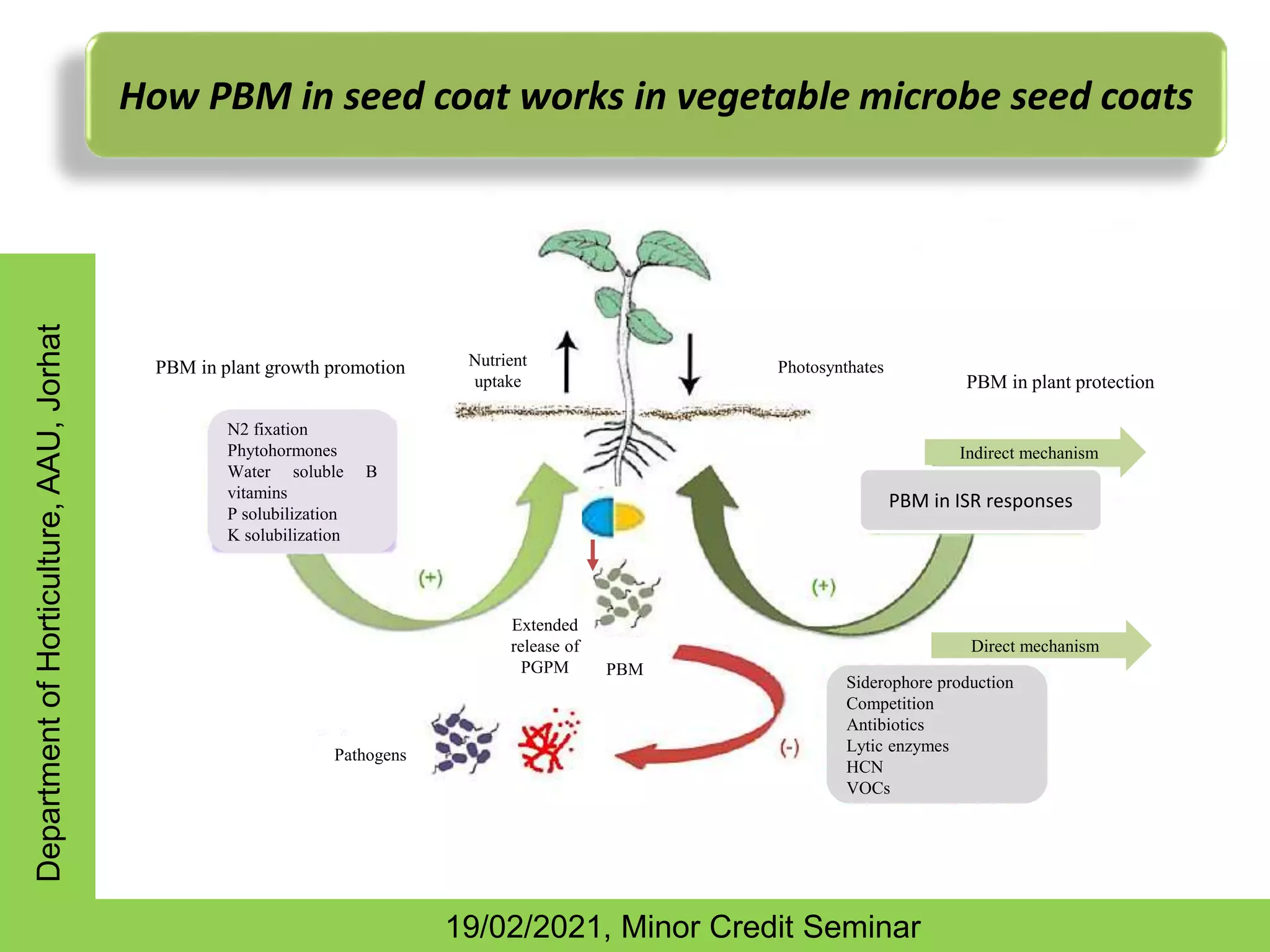
How PBM in seed coat works in vegetable microbe seed coats
Extended
release of
PGPM
PBM in ISR responses
Indirect mechanism
Direct mechanism
Siderophore production
Competition
Antibiotics
Lytic enzymes
HCN
VOCs
PBM
Pathogens
N2 fixation
Phytohormones
Water soluble B
vitamins
P solubilization
K solubilization
PBM in plant growth promotion Nutrient
uptake
Photosynthates
PBM in plant protection
19/02/2021, Minor Credit Seminar
.
Department
of
Horticulture,
AAU,
Jorhat
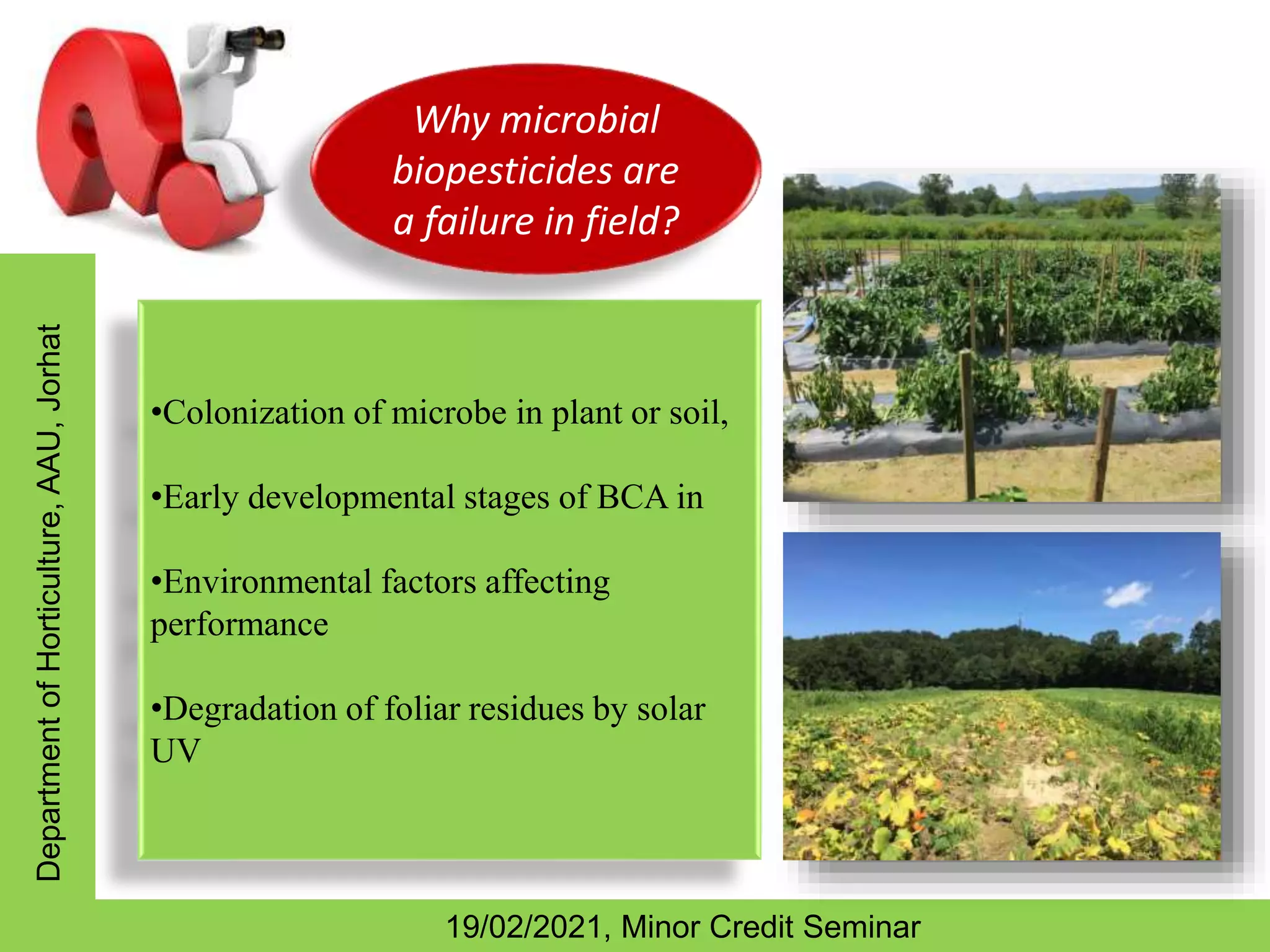
•Colonization of microbe in plant or soil,
•Early developmental stages of BCA in
•Environmental factors affecting
performance
•Degradation of foliar residues by solar
UV
Why microbial
biopesticides are
a failure in field?
19/02/2021, Minor Credit Seminar
Department
of
Horticulture,
AAU,
Jorhat
Advantages of microbe coated seeds over other
organic approaches
 Protect the functional microbes
 Precision farming
 Extended-release
• Right time-Right place-Right amount
 Protect them during seed storage
• Enhanced mechanism of PGPM inoculants
19/02/2021, Minor Credit Seminar
Department
of
Horticulture,
AAU,
Jorhat
MICROBIAL SEED COATING:
A tool for successfully delivering microbes
To promote crop growth and stress tolerance
High potential for VEGETABLES AND OTHER HORTICULTURAL CROPS.
The global seed coating market is projected to surge at a CAGR of
8.10% to reach a market size of USD4.287 billion in 2025 from a market
size of USD2.686 billion in 2019.
Agribusiness firms Novozymes and Monsanto world’s biggest field-test
program of seeds laced with promising microbes
19/02/2021, Minor Credit Seminar
Department
of
Horticulture,
AAU,
Jorhat
19/02/2021, Minor Credit Seminar
Department
of
Horticulture,
AAU,
Jorhat
19/01/2021, Minor Credit Seminar
Department
of
Horticulture,
AAU,
Jorhat
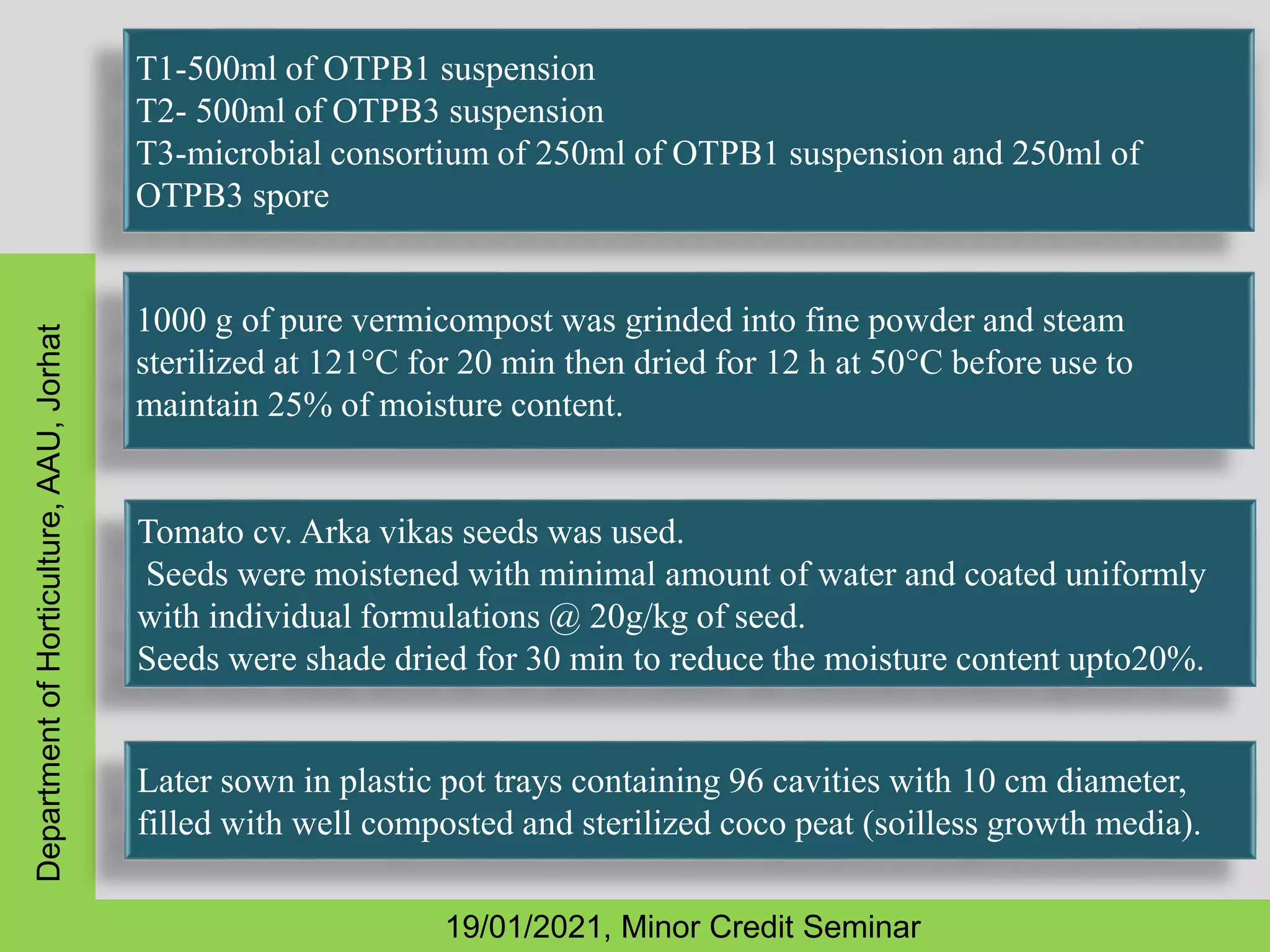
1000 g of pure vermicompost was grinded into fine powder and steam
sterilized at 121°C for 20 min then dried for 12 h at 50°C before use to
maintain 25% of moisture content.
Tomato cv. Arka vikas seeds was used.
Seeds were moistened with minimal amount of water and coated uniformly
with individual formulations @ 20g/kg of seed.
Seeds were shade dried for 30 min to reduce the moisture content upto20%.
T1-500ml of OTPB1 suspension
T2- 500ml of OTPB3 suspension
T3-microbial consortium of 250ml of OTPB1 suspension and 250ml of
OTPB3 spore
Later sown in plastic pot trays containing 96 cavities with 10 cm diameter,
filled with well composted and sterilized coco peat (soilless growth media).
19/02/2021, Minor Credit Seminar
Department
of
Horticulture,
AAU,
Jorhat
Seeds coated with microbial consortium and vermicompost (T3) gave the
best results in all parameters of seedlings growth and induction of three
defense enzyme activities.
(T1)
(T2)
(T3)
(T3)
(T1)
(T2)
19/02/2021, Minor Credit Seminar
Department
of
Horticulture,
AAU,
Jorhat
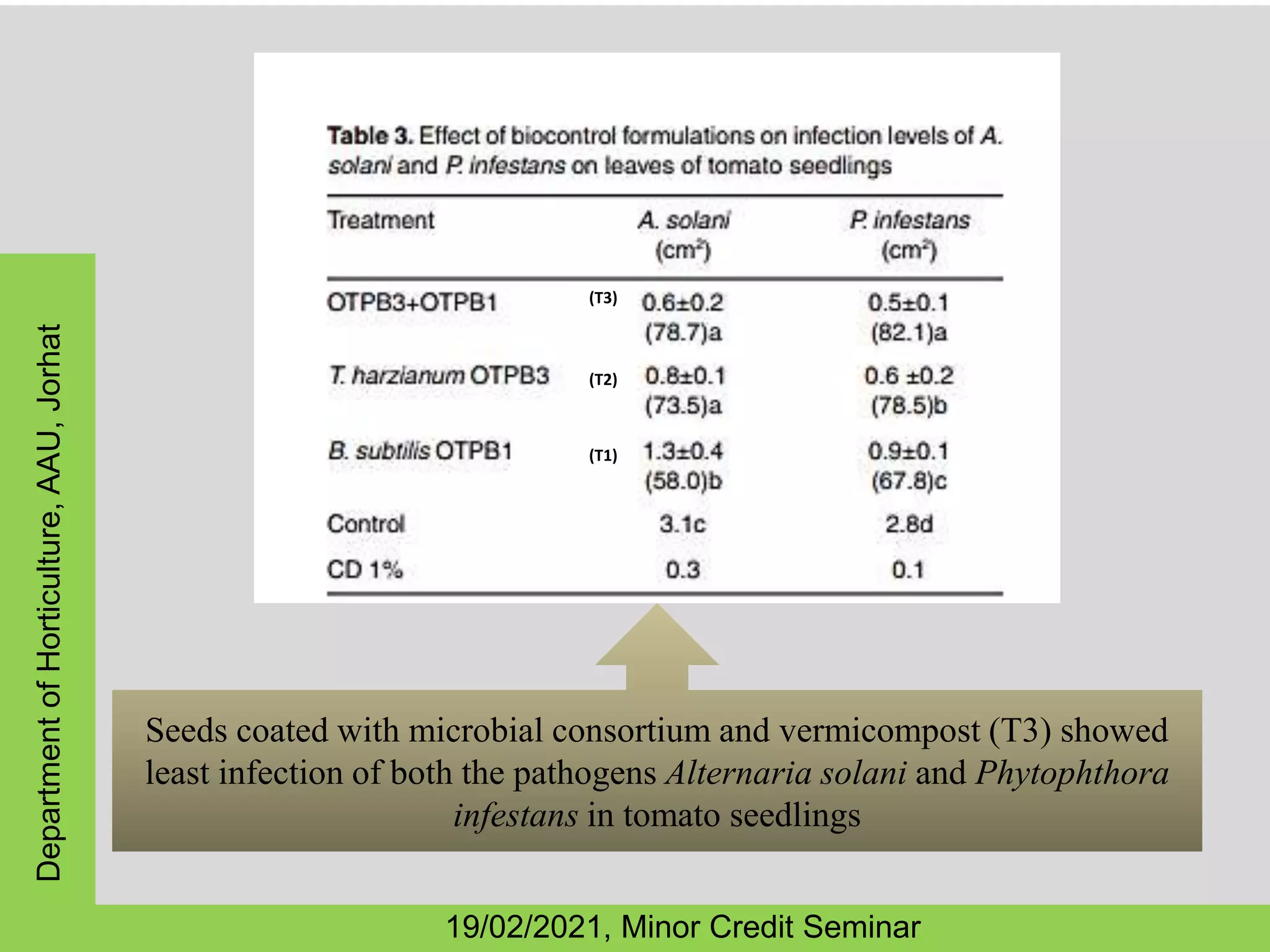
Seeds coated with microbial consortium and vermicompost (T3) showed
least infection of both the pathogens Alternaria solani and Phytophthora
infestans in tomato seedlings
(T3)
(T2)
(T1)
19/02/2021, Minor Credit Seminar
Department
of
Horticulture,
AAU,
Jorhat
19/02/2021, Minor Credit Seminar
Department
of
Horticulture,
AAU,
Jorhat
19/02/2021, Minor Credit Seminar
Department
of
Horticulture,
AAU,
Jorhat
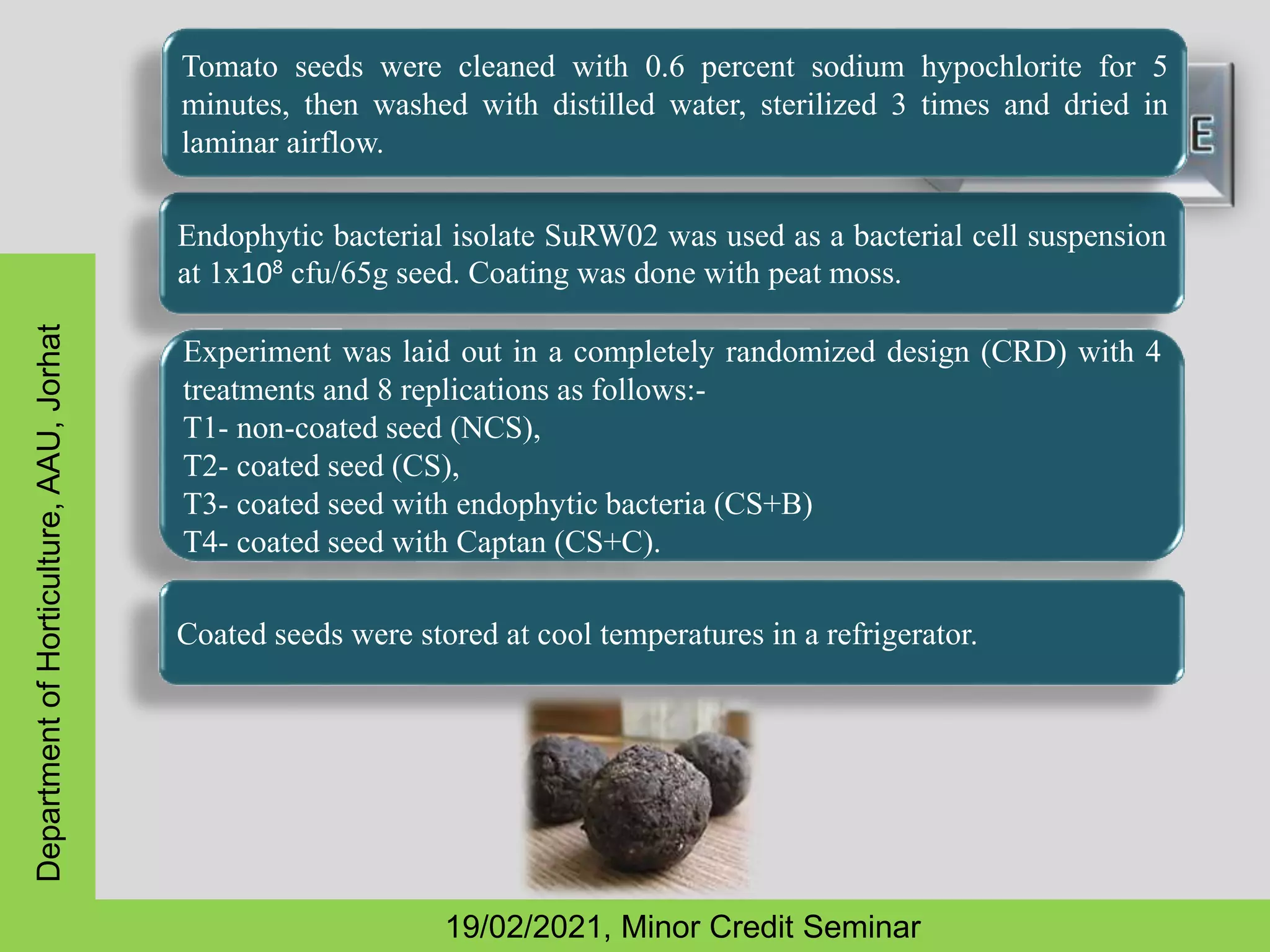
Endophytic bacterial isolate SuRW02 was used as a bacterial cell suspension
at 1x10⁸ cfu/65g seed. Coating was done with peat moss.
Tomato seeds were cleaned with 0.6 percent sodium hypochlorite for 5
minutes, then washed with distilled water, sterilized 3 times and dried in
laminar airflow.
Experiment was laid out in a completely randomized design (CRD) with 4
treatments and 8 replications as follows:-
T1- non-coated seed (NCS),
T2- coated seed (CS),
T3- coated seed with endophytic bacteria (CS+B)
T4- coated seed with Captan (CS+C).
Coated seeds were stored at cool temperatures in a refrigerator.
19/02/2021, Minor Credit Seminar
Department
of
Horticulture,
AAU,
Jorhat
Seeds coated with Captan followed by Endophytic bacteria showed least disease
incidence of Fusarium wilt in tomato seedlings
Seeds coated with Endophytic bacteria gave maximum height of shoot, fresh
weight, stem diameter, yield weight and TSS in Fusarium inoculated plants.
19/02/2021, Minor Credit Seminar
Department
of
Horticulture,
AAU,
Jorhat
19/02/2021, Minor Credit Seminar
Department
of
Horticulture,
AAU,
Jorhat
Pelleting materials: Cow dung, vermicompost, clay soil in the ratio of 3:2:1
volume basis. Pelleting material was put manually layer after layer till the
desired pellet size was achieved
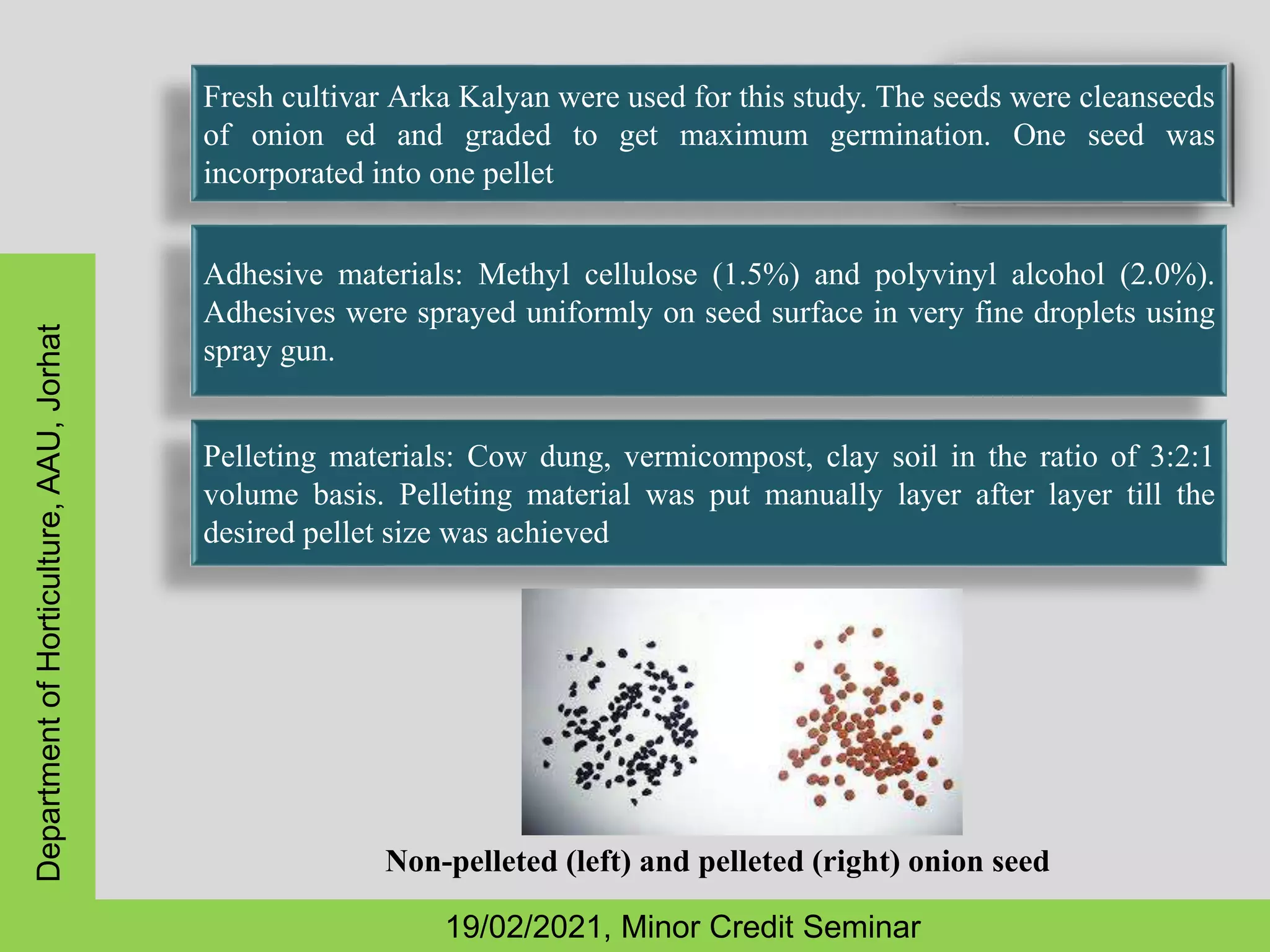
Fresh cultivar Arka Kalyan were used for this study. The seeds were cleanseeds
of onion ed and graded to get maximum germination. One seed was
incorporated into one pellet
Adhesive materials: Methyl cellulose (1.5%) and polyvinyl alcohol (2.0%).
Adhesives were sprayed uniformly on seed surface in very fine droplets using
spray gun.
Non-pelleted (left) and pelleted (right) onion seed
19/02/2021, Minor Credit Seminar
Department
of
Horticulture,
AAU,
Jorhat
Micronutrients such as zinc sulphate 5% and boric acid 1% and microbial
consortium were incorporated concurrently along with pelleting material.
(Microbial consortium I) :Actinomycetes + and Bacillus aryabhatai
(Microbial consortium II) :Bacillus subtilis + Trichoderma harizianum
Combinations:
1) Pelleted only; 2) Pelleted with Zn and B; 3) Pelleted with Zn, B and
microbial consortium I; 4) Pelleted with Zn, B and microbial consortium II; 5)
Control (non-pelleted).
The moisture content of pellets was determined by standard oven method by
drying at 103 °C for 17 hr
The pelleted and nonpelleted seeds were stored in cloth bags under ambient for
12 months to study the effect of pelleting on their storage.
19/02/2021, Minor Credit Seminar
Department
of
Horticulture,
AAU,
Jorhat
These seeds were placed in germination chamber maintained at alternate
temperature of 20-30 °C and RH 90%. First count was recorded on 6th day and
final germination was recorded on 12th day after incubation.
The data on seed quality parameters such as 100 seed weight, first count, final
germination, abnormal seedlings, seedling length and vigour index were
analyzed by CRD and field data on crop stand, plants with bulbs, yield/plot and
estimated yield/ha by RCBD ANOVA.
19/02/2021, Minor Credit Seminar
Department
of
Horticulture,
AAU,
Jorhat
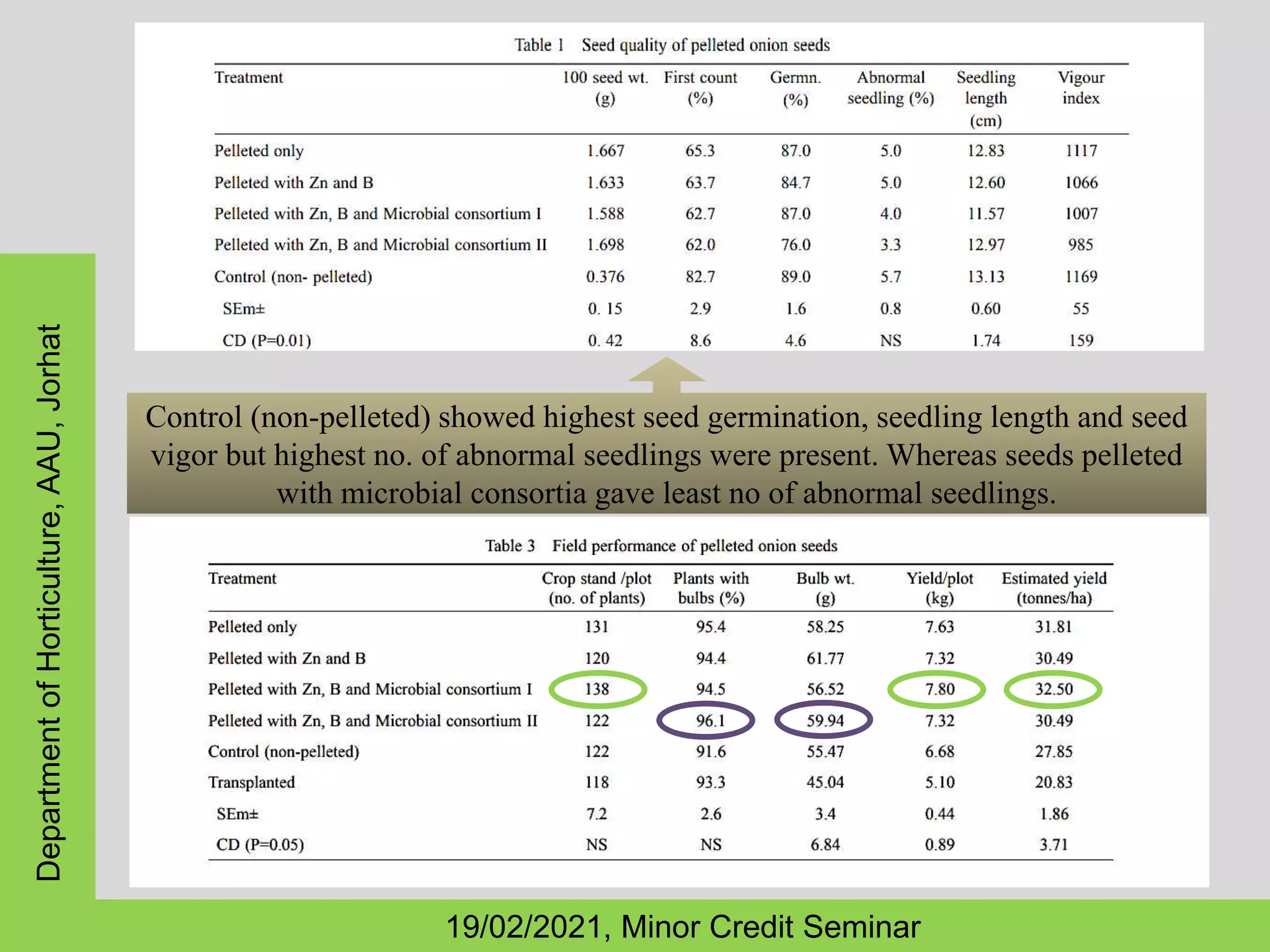
Control (non-pelleted) showed highest seed germination, seedling length and seed
vigor but highest no. of abnormal seedlings were present. Whereas seeds pelleted
with microbial consortia gave least no of abnormal seedlings.
19/02/2021, Minor Credit Seminar
Department
of
Horticulture,
AAU,
Jorhat
19/02/2021, Minor Credit Seminar
Department
of
Horticulture,
AAU,
Jorhat
Seeds of okra (Abelmoschus esculentus L.) and sunflower (Helianthus
annus L.) were surface sterilized with 1% Ca(OCl)2 for three minutes,
rinsed thoroughly in running tap water and dried aseptically
The seeds were treated with microbial antagonists viz, B. thuringiensis,
R. meliloti, A. niger, T. harzianum separately by using 1% and 2%
sugar, mollases, glucose and gum arabic solution as a sticker.
5 seeds/pot were sown in 8 cm diameter plastic pots, each pot
containing 300g soil.
There were three replicates of each treatment and pots without
antagonists and without seed coating material served as control
19/02/2021, Minor Credit Seminar
Department
of
Horticulture,
AAU,
Jorhat
Plants were uprooted after 30 days. Plant growth parameters in terms of root
length, shoot length and fresh weights of root, shoot and incidence of root
infecting fungi were recorded.
After 30 days, roots of okra and sunflower were washed in running tap water,
surface sterilized in 1% Ca(OCl)2 and then five 1 cm long root pieces were
transferred on PDA plates containing penicillin @ 100,000/litre and
streptomycin @ 20mg/l.
Petri plates were incubated for 5 days, at room temperature to confirm
infection of roots by root infecting fungi.
19/02/2021, Minor Credit Seminar
Department
of
Horticulture,
AAU,
Jorhat
19/02/2021, Minor Credit Seminar
Department
of
Horticulture,
AAU,
Jorhat
19/02/2021, Minor Credit Seminar
Department
of
Horticulture,
AAU,
Jorhat
19/02/2021, Minor Credit Seminar
Department
of
Horticulture,
AAU,
Jorhat
No significant increase in germination was observed when seeds of
okra and sunflower were treated with microbial antagonists using 1 and
2% of sugar, mollases, glucose and gum arabic as stickers.
The 2% gum Arabic solution showed more promising results in
increasing shoot length, shoot weight, root length, root weight.
Also in reducing infection of root rot fungi viz., M. phaseolina, R.
solani and Fusarium spp., on okra.
T. harzianum showed most effective results in increasing germination
of sunflower and okra seeds.
Increase in shoot length, shoot weight, root length and root weights was
also observed.
Significant reduction in infection of R. solani, M. phaseolina and
Fusarium spp., where seeds of okra and sunflower were treated with T.
harzianum and B. thuringiensis
Among the coating agents
Among the BCA
19/02/2021, Minor Credit Seminar
Department
of
Horticulture,
AAU,
Jorhat
19/02/2021, Minor Credit Seminar
Department
of
Horticulture,
AAU,
Jorhat
Future thrust
Nascent stage in
horticultural crops
Lab-to-Land
Dissemination
of technology
Skill development
and
entrepreneurship
19/02/2021, Minor Credit Seminar
Department
of
Horticulture,
AAU,
Jorhat
It is a largely untapped area that deserves major research efforts
Achieving the craze for organic faming that is popularizing worldwide
Time saving and cost effective.
Microbial seed coating

Microbial seed coating

  • 1.
    Minor Credit Seminar Departmentof Horticulture Microbial seed coating- an emerging strategy towards organic vegetable production Presenter: Miss Mehjebin Rahman 2019-ADJ-60 Ph. D. 2nd year 1st Semester Major Advisor: Dr. Pradip Kr. Borah
  • 2.
    19/01/2021, Minor CreditSeminar Department of Horticulture, AAU, Jorhat Introduction Chemical pesticides Initiatives by govt Seed borne diseases Organic practices Microbial seed coating Coating in vegetable Types of seed coating Seed coat ingredients Role of microbes Limitations Advantages Mechanism Case study Future thrust Conclusion
  • 3.
    19/01/2021, Minor CreditSeminar Department of Horticulture, AAU, Jorhat 1800, 1 1930, 2 1960, 3 1970, 6 By 2050, Human population 10 billion. Global food production 70% 195.9 million undernourished people lacking sufficient food to meet their daily nutritional requirements
  • 4.
    19/01/2021, Minor CreditSeminar Department of Horticulture, AAU, Jorhat Green revolution HYV seeds Irrigation Fertilizers (chemical) CAD Land reforms Agricultural credit Rural electrification Rural roads and marketing Farm mechanizations Insecticides and pesticides
  • 5.
    19/02/2021, Minor CreditSeminar Department of Horticulture, AAU, Jorhat
  • 6.
    List of the10 most contaminated food items by The Environmental Working Group (EWG) : Strawberries, Spinach, Nectarines, Apples, Grapes, Peaches, Cherries Pears, Tomatoes, Celery 19/02/2021, Minor Credit Seminar Department of Horticulture, AAU, Jorhat Circulates through blood and reach neurons and brain cells Pesticides and fungicides
  • 7.
    19/02/2021, Minor CreditSeminar Department of Horticulture, AAU, Jorhat
  • 8.
    19/02/2021, Minor CreditSeminar Department of Horticulture, AAU, Jorhat The government through programmes like Paramparagat Krishi Vikas Yojana (PKVY) is encouraging farmers to adopt organic farming for “Doubling Farmers’ income by 2022” PM Honourable P.M Narendra Modi said- We clearly need a second green revolution that is more broad-based, more inclusive and more sustainable; we need to produce more without depleting our natural resources any further He has called for adoption of organic and natural farming in a cluster based approach and said Indian Council of Agricultural Research (ICAR) has developed a geo-referenced Organic Carbon Map of India and identified 88 bio control agents and 22 Bio pesticides which can promote organic agriculture.
  • 9.
    19/02/2021, Minor CreditSeminar Department of Horticulture, AAU, Jorhat Designing the blueprint of horticulture in the coming years need to go for sustainable approaches which enhance the yield of plants while still maintaining the decorum of sustainability.
  • 10.
    19/02/2021, Minor CreditSeminar Department of Horticulture, AAU, Jorhat Seed is a common carrier of plant pathogens and pathogen free seed is the important input material for agriculture (Senthamarai MP et al., 2011) Over 200 diseases have been reported to affect the different vegetables in the world. Among them the seed-borne pathogens mostly fungi play a vital role in disease development(Hossain GMK et al., 2015)
  • 11.
    19/02/2021, Minor CreditSeminar Department of Horticulture, AAU, Jorhat
  • 12.
    19/02/2021, Minor CreditSeminar Department of Horticulture, AAU, Jorhat Soil borne diseases of vegetable crops Fusarium wilt of melon Bacterial leaf sopt in lettuce Bacterial soft rot of carrot White mold of cabbage Root and hypocotyl rot of radishes Late blight of tomato
  • 13.
    19/02/2021, Minor CreditSeminar Department of Horticulture, AAU, Jorhat Seed borne diseases of vegetable crops Fusarium wilt of tomato Bacterial wilt of tomato Black rot of cabbage Botrytis Neck rot of onion Phomopsis blight of brinjal Black leg of cabbage
  • 14.
    19/02/2021, Minor CreditSeminar Department of Horticulture, AAU, Jorhat SUSTAINABLE PRACTICES for seed-borne diseases Seed treatments Proper seed storage Variety selection and grafting Organic amendments Optimum plant spacing Sanitation Coating
  • 15.
    19/02/2021, Minor CreditSeminar19 Department of Horticulture, AAU, Jorhat Seed coating Film coating is the technique of encapsulating seeds with a thin layer of synthetic slurry form consisting of polymers, plasticizers, pigments, and solvents, using rotating drum machines.The thin coating layer does not greatly change the size and shape of seeds, however, it enhances handling characteristics of seeds while eliminating or minimizing product (e.g. pesticides, biological and micronutrients) dust-off (Taylor et al., 2001).
  • 16.
    19/02/2021, Minor CreditSeminar Department of Horticulture, AAU, Jorhat Application of microbial seed coating technology in vegetable crops Onion seeds Sunflower seeds Okra seeds Chili seeds Tomato seeds Lettuce seeds Watermelon seeds
  • 17.
    19/02/2021, Minor CreditSeminar Department of Horticulture, AAU, Jorhat Seed coating types Seed dressing Film coating Encrusting Pelleting
  • 18.
    19/02/2021, Minor CreditSeminar Lime Department of Horticulture, AAU, Jorhat The composition of Microbe Seed coating 2. Binder 3. Filler 4. Microbial inoculum 1. Seed Biochar Chitosan Xanthan gum Gum arabic Peat Talc CMC Alginate beads
  • 19.
    19/02/2021, Minor CreditSeminar Department of Horticulture, AAU, Jorhat Seed coating agents Markers Micro-organisms Growth stimulators Humic acids, Phytohormones Algae extracts Plant growth-promoting bacteria Arbuscular mycorrhizal fungi Micronutrients
  • 20.
    19/02/2021, Minor CreditSeminar Department of Horticulture, AAU, Jorhat MICROBES are the best players finding their roles in plant growth promotion and also stress management.
  • 21.
    19/02/2021, Minor CreditSeminar Department of Horticulture, AAU, Jorhat Microbes to Feed the World without being Detrimental to Environment Act as BIOFERTILIZERS Rhizomediators Act as BIOSTIMULATOR The crop protectants- BIOPESTICIDES
  • 22.
    19/02/2021, Minor CreditSeminar Department of Horticulture, AAU, Jorhat How PBM in seed coat works in vegetable microbe seed coats Extended release of PGPM PBM in ISR responses Indirect mechanism Direct mechanism Siderophore production Competition Antibiotics Lytic enzymes HCN VOCs PBM Pathogens N2 fixation Phytohormones Water soluble B vitamins P solubilization K solubilization PBM in plant growth promotion Nutrient uptake Photosynthates PBM in plant protection
  • 23.
    19/02/2021, Minor CreditSeminar . Department of Horticulture, AAU, Jorhat •Colonization of microbe in plant or soil, •Early developmental stages of BCA in •Environmental factors affecting performance •Degradation of foliar residues by solar UV Why microbial biopesticides are a failure in field?
  • 24.
    19/02/2021, Minor CreditSeminar Department of Horticulture, AAU, Jorhat Advantages of microbe coated seeds over other organic approaches  Protect the functional microbes  Precision farming  Extended-release • Right time-Right place-Right amount  Protect them during seed storage • Enhanced mechanism of PGPM inoculants
  • 25.
    19/02/2021, Minor CreditSeminar Department of Horticulture, AAU, Jorhat MICROBIAL SEED COATING: A tool for successfully delivering microbes To promote crop growth and stress tolerance High potential for VEGETABLES AND OTHER HORTICULTURAL CROPS. The global seed coating market is projected to surge at a CAGR of 8.10% to reach a market size of USD4.287 billion in 2025 from a market size of USD2.686 billion in 2019. Agribusiness firms Novozymes and Monsanto world’s biggest field-test program of seeds laced with promising microbes
  • 26.
    19/02/2021, Minor CreditSeminar Department of Horticulture, AAU, Jorhat
  • 27.
    19/02/2021, Minor CreditSeminar Department of Horticulture, AAU, Jorhat
  • 28.
    19/01/2021, Minor CreditSeminar Department of Horticulture, AAU, Jorhat 1000 g of pure vermicompost was grinded into fine powder and steam sterilized at 121°C for 20 min then dried for 12 h at 50°C before use to maintain 25% of moisture content. Tomato cv. Arka vikas seeds was used. Seeds were moistened with minimal amount of water and coated uniformly with individual formulations @ 20g/kg of seed. Seeds were shade dried for 30 min to reduce the moisture content upto20%. T1-500ml of OTPB1 suspension T2- 500ml of OTPB3 suspension T3-microbial consortium of 250ml of OTPB1 suspension and 250ml of OTPB3 spore Later sown in plastic pot trays containing 96 cavities with 10 cm diameter, filled with well composted and sterilized coco peat (soilless growth media).
  • 29.
    19/02/2021, Minor CreditSeminar Department of Horticulture, AAU, Jorhat Seeds coated with microbial consortium and vermicompost (T3) gave the best results in all parameters of seedlings growth and induction of three defense enzyme activities. (T1) (T2) (T3) (T3) (T1) (T2)
  • 30.
    19/02/2021, Minor CreditSeminar Department of Horticulture, AAU, Jorhat Seeds coated with microbial consortium and vermicompost (T3) showed least infection of both the pathogens Alternaria solani and Phytophthora infestans in tomato seedlings (T3) (T2) (T1)
  • 31.
    19/02/2021, Minor CreditSeminar Department of Horticulture, AAU, Jorhat
  • 32.
    19/02/2021, Minor CreditSeminar Department of Horticulture, AAU, Jorhat
  • 33.
    19/02/2021, Minor CreditSeminar Department of Horticulture, AAU, Jorhat Endophytic bacterial isolate SuRW02 was used as a bacterial cell suspension at 1x10⁸ cfu/65g seed. Coating was done with peat moss. Tomato seeds were cleaned with 0.6 percent sodium hypochlorite for 5 minutes, then washed with distilled water, sterilized 3 times and dried in laminar airflow. Experiment was laid out in a completely randomized design (CRD) with 4 treatments and 8 replications as follows:- T1- non-coated seed (NCS), T2- coated seed (CS), T3- coated seed with endophytic bacteria (CS+B) T4- coated seed with Captan (CS+C). Coated seeds were stored at cool temperatures in a refrigerator.
  • 34.
    19/02/2021, Minor CreditSeminar Department of Horticulture, AAU, Jorhat Seeds coated with Captan followed by Endophytic bacteria showed least disease incidence of Fusarium wilt in tomato seedlings Seeds coated with Endophytic bacteria gave maximum height of shoot, fresh weight, stem diameter, yield weight and TSS in Fusarium inoculated plants.
  • 35.
    19/02/2021, Minor CreditSeminar Department of Horticulture, AAU, Jorhat
  • 36.
    19/02/2021, Minor CreditSeminar Department of Horticulture, AAU, Jorhat Pelleting materials: Cow dung, vermicompost, clay soil in the ratio of 3:2:1 volume basis. Pelleting material was put manually layer after layer till the desired pellet size was achieved Fresh cultivar Arka Kalyan were used for this study. The seeds were cleanseeds of onion ed and graded to get maximum germination. One seed was incorporated into one pellet Adhesive materials: Methyl cellulose (1.5%) and polyvinyl alcohol (2.0%). Adhesives were sprayed uniformly on seed surface in very fine droplets using spray gun. Non-pelleted (left) and pelleted (right) onion seed
  • 37.
    19/02/2021, Minor CreditSeminar Department of Horticulture, AAU, Jorhat Micronutrients such as zinc sulphate 5% and boric acid 1% and microbial consortium were incorporated concurrently along with pelleting material. (Microbial consortium I) :Actinomycetes + and Bacillus aryabhatai (Microbial consortium II) :Bacillus subtilis + Trichoderma harizianum Combinations: 1) Pelleted only; 2) Pelleted with Zn and B; 3) Pelleted with Zn, B and microbial consortium I; 4) Pelleted with Zn, B and microbial consortium II; 5) Control (non-pelleted). The moisture content of pellets was determined by standard oven method by drying at 103 °C for 17 hr The pelleted and nonpelleted seeds were stored in cloth bags under ambient for 12 months to study the effect of pelleting on their storage.
  • 38.
    19/02/2021, Minor CreditSeminar Department of Horticulture, AAU, Jorhat These seeds were placed in germination chamber maintained at alternate temperature of 20-30 °C and RH 90%. First count was recorded on 6th day and final germination was recorded on 12th day after incubation. The data on seed quality parameters such as 100 seed weight, first count, final germination, abnormal seedlings, seedling length and vigour index were analyzed by CRD and field data on crop stand, plants with bulbs, yield/plot and estimated yield/ha by RCBD ANOVA.
  • 39.
    19/02/2021, Minor CreditSeminar Department of Horticulture, AAU, Jorhat Control (non-pelleted) showed highest seed germination, seedling length and seed vigor but highest no. of abnormal seedlings were present. Whereas seeds pelleted with microbial consortia gave least no of abnormal seedlings.
  • 40.
    19/02/2021, Minor CreditSeminar Department of Horticulture, AAU, Jorhat
  • 41.
    19/02/2021, Minor CreditSeminar Department of Horticulture, AAU, Jorhat Seeds of okra (Abelmoschus esculentus L.) and sunflower (Helianthus annus L.) were surface sterilized with 1% Ca(OCl)2 for three minutes, rinsed thoroughly in running tap water and dried aseptically The seeds were treated with microbial antagonists viz, B. thuringiensis, R. meliloti, A. niger, T. harzianum separately by using 1% and 2% sugar, mollases, glucose and gum arabic solution as a sticker. 5 seeds/pot were sown in 8 cm diameter plastic pots, each pot containing 300g soil. There were three replicates of each treatment and pots without antagonists and without seed coating material served as control
  • 42.
    19/02/2021, Minor CreditSeminar Department of Horticulture, AAU, Jorhat Plants were uprooted after 30 days. Plant growth parameters in terms of root length, shoot length and fresh weights of root, shoot and incidence of root infecting fungi were recorded. After 30 days, roots of okra and sunflower were washed in running tap water, surface sterilized in 1% Ca(OCl)2 and then five 1 cm long root pieces were transferred on PDA plates containing penicillin @ 100,000/litre and streptomycin @ 20mg/l. Petri plates were incubated for 5 days, at room temperature to confirm infection of roots by root infecting fungi.
  • 43.
    19/02/2021, Minor CreditSeminar Department of Horticulture, AAU, Jorhat
  • 44.
    19/02/2021, Minor CreditSeminar Department of Horticulture, AAU, Jorhat
  • 45.
    19/02/2021, Minor CreditSeminar Department of Horticulture, AAU, Jorhat
  • 46.
    19/02/2021, Minor CreditSeminar Department of Horticulture, AAU, Jorhat
  • 47.
    No significant increasein germination was observed when seeds of okra and sunflower were treated with microbial antagonists using 1 and 2% of sugar, mollases, glucose and gum arabic as stickers. The 2% gum Arabic solution showed more promising results in increasing shoot length, shoot weight, root length, root weight. Also in reducing infection of root rot fungi viz., M. phaseolina, R. solani and Fusarium spp., on okra. T. harzianum showed most effective results in increasing germination of sunflower and okra seeds. Increase in shoot length, shoot weight, root length and root weights was also observed. Significant reduction in infection of R. solani, M. phaseolina and Fusarium spp., where seeds of okra and sunflower were treated with T. harzianum and B. thuringiensis Among the coating agents Among the BCA 19/02/2021, Minor Credit Seminar Department of Horticulture, AAU, Jorhat
  • 48.
    19/02/2021, Minor CreditSeminar Department of Horticulture, AAU, Jorhat Future thrust Nascent stage in horticultural crops Lab-to-Land Dissemination of technology Skill development and entrepreneurship
  • 49.
    19/02/2021, Minor CreditSeminar Department of Horticulture, AAU, Jorhat It is a largely untapped area that deserves major research efforts Achieving the craze for organic faming that is popularizing worldwide Time saving and cost effective.

Editor's Notes

  • #5 The pressure to meet the demands of population has always been a worldwide concern which leads to evolution of new technologies. Green revolution is one such. Intensive agricultural practices and inputs are contributing to use high doses of chemical pesticides
  • #6 Residual amount of these chemicals are present on the food when it gets to the grocery store. Dithiocarbamates are among the most common residual contaminants. The pesticide residue cannot easily be removed with plain water. Almost 62% of vegetables and 82% of fruits are found to have pesticide residues, which can affect your health in a different way.
  • #7 Fungicides have been sprayed in increasing quantities to protect crops such as cabbages, spinach, lettuce, kale, tomatoes, apples, pears and grapes Scientists at the University of North Carolina, Researchers exposed dishes of the brain cells to more than 300 different pesticides and fungicides and found that one class of fungicides, the strobilurins. While the fungicides produced autism-like and Alzheimer’s-like signatures. What this work provides is evidence that these chemicals are bad for neurons. They turn the same genes on or off that you see not only in autism brains, but also in neurodegeneration. trobilurins work by disrupting mitochondria, the tiny structures that live inside cells and ensure they have enough energy to function properly. inflammation in the nervous system, the ability of mature neurons to communicate, and hamper the normal movement of neurons in the developing brain.
  • #8 PHYTOTOXICITY-The widely accepted assumption that fungicide has low phytotoxicity has started to be outdated with the publication of more detailed analysis at the cell level that demonstrated several damages at the photosynthetic apparatus. fungicides has consequences on plant physiology, such as grow reduction, perturbation of reproductive organ development, alteration of nitrogen, and/or carbon metabolism. Decreased CO2 assimilation in fungicide-treated plants has been attributed to both stomatal (due to stomatal closure) and nonstomatal effects due to a disruption in the capacity of RuBisCO carboxylation, decrease of RuBisCO content, and/or reduction of the ribulose 1.5 bisphosphate regeneration. The analysis of several chlorophyll a fluorescence parameters of plants treated with fungicides demonstrated that light reactions of photosynthesis are also sensible to fungicide exposure. Fungicides of the triforine type (a systemic and contact fungicide) strongly inhibit electrontransport reactions of chloroplasts. POLLINATORS-Pesticides are considered to be a potent driver for loss of important pollinators.  Long term repeated exposure to pesticides can impair behaviour, neurobiology, physiology and various other survival mechanisms of insect pollinator groups and particularly the honey bees. Residues of the pesticides may be brought back to the hive and fed to the brood – thereby imposing an additional threat to the population. Captan 215ug/beein contact and 91ug/bee oral, carbendanzim 50ug/bee contact. As they are applied consistently as seed dressings, their residues may remain in the soil for years and are taken up by the crop and weeds, ending up in the nectar and pollen of all plants in the treated landscape. the probability of a bee being sprayed on can be considered 100% if the bee flies directly through the spray cloud in the field, or if a hive is placed downwind and within the normal range of spray drift by aerial or ground-rig applications, i.e., less than 1 km.
  • #9 Now, if we see the scenario regarding the
  • #11 Fungal pathogens, including species of Fusarium, Rhizoctonia, Verticillium, Sclerotinia and Macrophomina phaseolina, cause the loss of billions of dollars each year. The incidence of damping-off was increased from 19 to 90% with increasing inoculum levels of Rhizoctonia solani, while the incidence of root rots caused 10 to 80% losses in different vegetables.
  • #12 Fungal pathogens, including species of Fusarium, Rhizoctonia, Verticillium, Sclerotinia and Macrophomina phaseolina, cause the loss of billions of dollars each year. The incidence of damping-off was increased from 19 to 90% with increasing inoculum levels of Rhizoctonia solani, while the incidence of root rots caused 10 to 80% losses in different vegetables.
  • #13 Even if planting ‘clean’ tested seed, remember that several of these diseases can also attack from the soil.
  • #17 Nowadays seed coatng is used by horticultural and crop industries worldwide and has earned its place in the global market. For applying colours as tracers, protectants, soil adjuvants, micronutrients
  • #18 Seed dressing is the application of finely milled solids dusted onto surface of seeds in small amounts
  • #20 Seed coating with polymer micronutrients [such as phosphorus (P), potassium (K), copper (Cu), manganese (Mn) and zinc (Zn)] or plant nutrient-rich substance (e.g. biochar) can provide plant host available nutrients during plant growth f soy flour, cellulose, and diatomaceous earth)- f PGPM possessing a range of plant growth promoting traits, such as production of phytohormones and siderophores The integration of marker substances (such as visible or invisible dyes, fluorescent, sound and chip makers In terms of bacterial coating, bacteria cells can be directly entrapped in polyelectrolyte complex of alternating charges existing of an acidic (e.g. carboxylic and sulfonic) and basic component (e.g. amino function) [such as chitosan polymer (Gerasimenko et al., 2004)] by ionic interactions as their cell membrane is negatively charged which ensure a reasonable shelf life in the formulation and their controlled release. t coating seeds with nanofiber-immobilized PGPB may be served as a promising environmentally friendly approach Apart from the active ingredients, seed coating formulations consist of carrier materials, often polymeric and hygroscopic in nature (Pedrini et al., 2017). The carriers can be broadly categorized according to their function as nutrients (such as P, K, Cu, Mn, and Zn) or fillers (such as cellulose, chitosan, peat, talc, lime, biochar, and vermiculite) The most common carriers for microbial coating include silica and biochar. Recently
  • #22 Rhizomediators- phenols, pesticides, petroleum, fly ash dumps, xenobiotics, and heavy metals
  • #25 the carriers used for microbial seed coating help deliver a suitable amount of microbes and nutrients as required of the microbes provide a suitable microenvironment and assure sufficient shelf life against various environmental stresses, such as drought, salinity, chilling or heat, contaminants, and nutrient deficiency or excess Help deliver them to the target zone, rhizosphere where phytopathogens are active and generally cause seed rots and seedling damping-off The capacity of the desired PGPM inoculants for competing with local microbes can be enhanced by microbial seed coating, as it ensures enough number of PGPM inside the seeds while reducing the risk of desiccation and the adverse impact of applied pesticides.
  • #28 Overall, PGPM inoculants have been successfully delivered/applied to a diversity of crop seeds using different coating types (e.g. film coating, pelleting, and encrusting) and coating materials (binder and fillers) in laboratory, greenhouse, and field trials. So far much research on microbial seed coating has been conducted with vegetables (such as A. cepa, Beta vulgaris, C. scolymus, D. carota, Lepidium sativum, Lycopersicum esculentum, and Solanum lycopersicum)