BPMN Method & Style
CHAPTER 2
How Does A Model Mean?
1
2
• Process Logic
• What Is an Activity?
• What Is a Process?
• BPMN Levels
Outlines
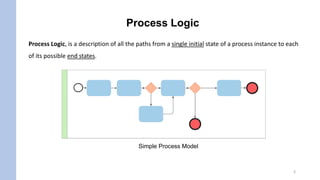
Process Logic, is a description of all the paths from a single initial state of a process instance to each
of its possible end states.
3
Process Logic
Simple Process Model
4
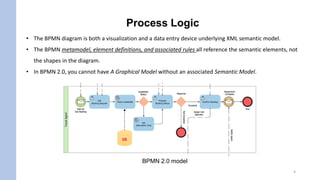
• The BPMN diagram is both a visualization and a data entry device underlying XML semantic model.
• The BPMN metamodel, element definitions, and associated rules all reference the semantic elements, not
the shapes in the diagram.
• In BPMN 2.0, you cannot have A Graphical Model without an associated Semantic Model.
BPMN 2.0 model
DS
Process Logic
Process
Modeler
SMEs
document
an as-is How does the process actually start?
How does the process get from X to Y?
How do you know when X is done?
Does X always end in the same way?
Process Logic Answers
with
5
Process Logic
Activity and Process
An activity in BPMN is an action, a unit of work that is performed
repeatedly in the course of business.
A BPMN activity is :
• a discrete action with a well-defined start and end, or functions
performed continuously
A process in BPMN is a sequence of activities leading from an initial
state of the process instance to some defined end states.
• Process is also discrete action.
6
The modeler needs to
have clarity on the
meaning of the activity
instance.
Process
Modeler
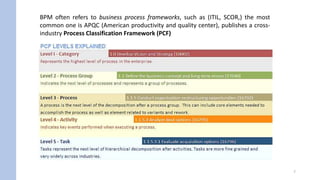
BPM often refers to business process frameworks, such as (ITIL, SCOR,) the most
common one is APQC (American productivity and quality center), publishes a cross-
industry Process Classification Framework (PCF)
7
8
BPMN Process Modeling Levels
• The Level 1 palette called Descriptive Process Modeling
• The Level 2 palette called Analytic Process Modeling
• The Level 3 palette called the Common Executable Process Modeling
9
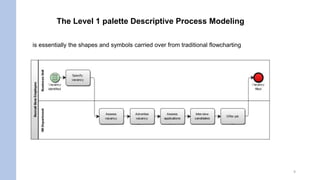
is essentially the shapes and symbols carried over from traditional flowcharting
The Level 1 palette Descriptive Process Modeling
10
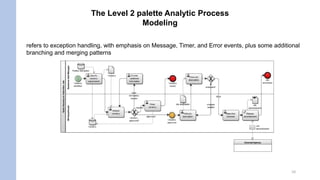
refers to exception handling, with emphasis on Message, Timer, and Error events, plus some additional
branching and merging patterns
The Level 2 palette Analytic Process
Modeling
11
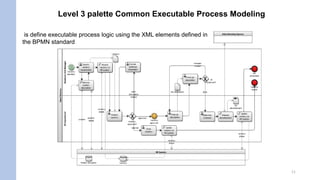
is define executable process logic using the XML elements defined in
the BPMN standard
Level 3 palette Common Executable Process Modeling
12
END.

method_style_ch02.pptx

  • 1.
    BPMN Method &Style CHAPTER 2 How Does A Model Mean? 1
  • 2.
    2 • Process Logic •What Is an Activity? • What Is a Process? • BPMN Levels Outlines
  • 3.
    Process Logic, isa description of all the paths from a single initial state of a process instance to each of its possible end states. 3 Process Logic Simple Process Model
  • 4.
    4 • The BPMNdiagram is both a visualization and a data entry device underlying XML semantic model. • The BPMN metamodel, element definitions, and associated rules all reference the semantic elements, not the shapes in the diagram. • In BPMN 2.0, you cannot have A Graphical Model without an associated Semantic Model. BPMN 2.0 model DS Process Logic
  • 5.
    Process Modeler SMEs document an as-is Howdoes the process actually start? How does the process get from X to Y? How do you know when X is done? Does X always end in the same way? Process Logic Answers with 5 Process Logic
  • 6.
    Activity and Process Anactivity in BPMN is an action, a unit of work that is performed repeatedly in the course of business. A BPMN activity is : • a discrete action with a well-defined start and end, or functions performed continuously A process in BPMN is a sequence of activities leading from an initial state of the process instance to some defined end states. • Process is also discrete action. 6 The modeler needs to have clarity on the meaning of the activity instance. Process Modeler
  • 7.
    BPM often refersto business process frameworks, such as (ITIL, SCOR,) the most common one is APQC (American productivity and quality center), publishes a cross- industry Process Classification Framework (PCF) 7
  • 8.
    8 BPMN Process ModelingLevels • The Level 1 palette called Descriptive Process Modeling • The Level 2 palette called Analytic Process Modeling • The Level 3 palette called the Common Executable Process Modeling
  • 9.
    9 is essentially theshapes and symbols carried over from traditional flowcharting The Level 1 palette Descriptive Process Modeling
  • 10.
    10 refers to exceptionhandling, with emphasis on Message, Timer, and Error events, plus some additional branching and merging patterns The Level 2 palette Analytic Process Modeling
  • 11.
    11 is define executableprocess logic using the XML elements defined in the BPMN standard Level 3 palette Common Executable Process Modeling
  • 12.

Editor's Notes

  • #4 A process model is more than a drawing. Its purpose is to convey meaning, specifically the logic of the activity flow from process start to end. it’s a complete story and should be clear and understandable to a business person process logic requires understanding how the elements (shapes, events and symbols) fit together, not just as separated words That requires attention to the overall structure of the model.
  • #6 How can we get process logic?
  • #7 The modeler needs to have clarity on the meaning of the activity instance, such as an order, a service request, or a monthly review.