Methodological Options in
Grammar Teaching
Materials
Rod Ellis(2002)
   Yu Tamura
   EFL 527
   March 14, 2012
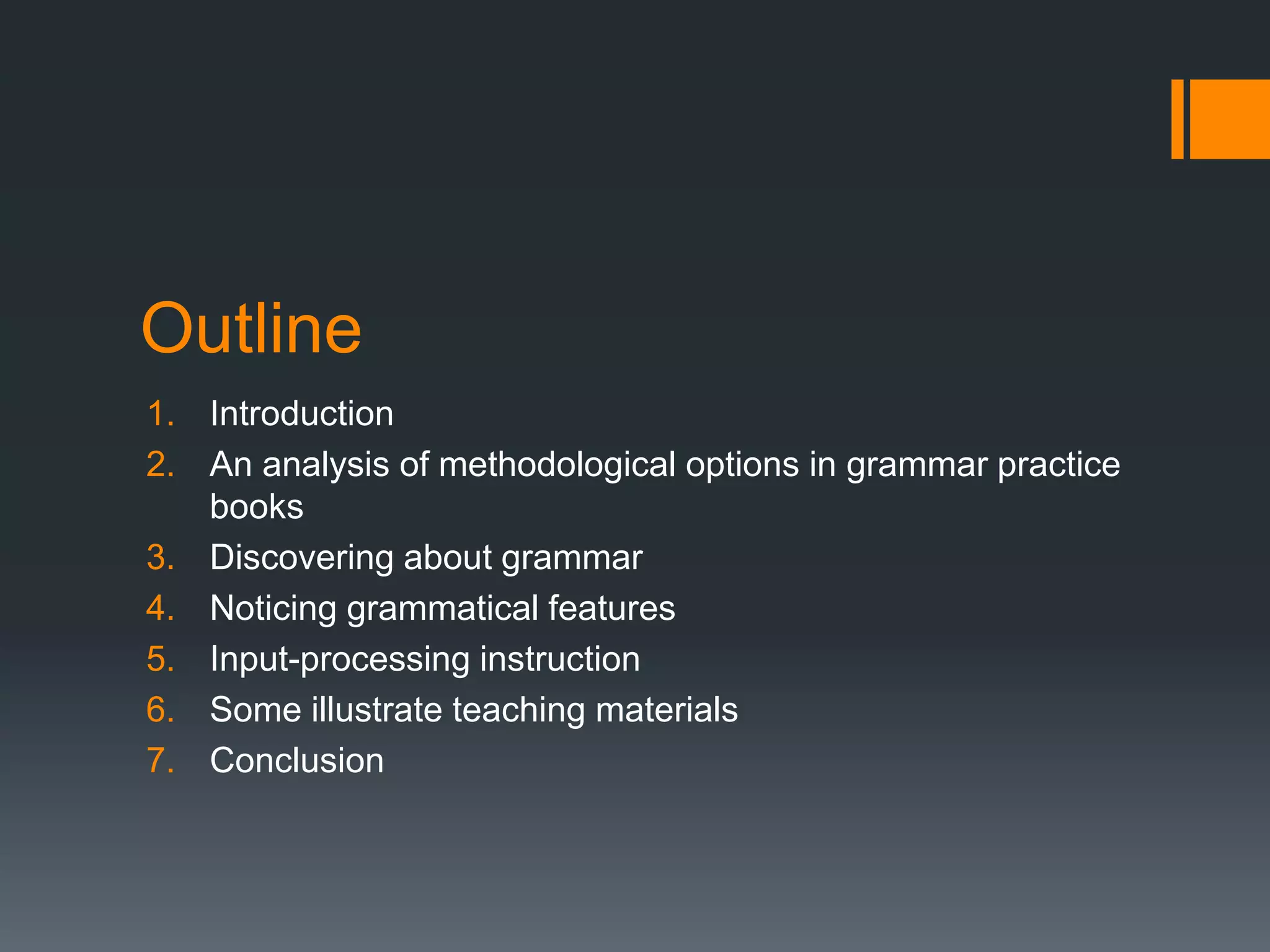
Outline
1. Introduction
2. An analysis of methodological options in grammar practice
   books
3. Discovering about grammar
4. Noticing grammatical features
5. Input-processing instruction
6. Some illustrate teaching materials
7. Conclusion
Introduction
 What methodology for teaching grammar do grammar
  practice books employ?
 What is the empirical / theoretical basis for the chosen
  methodology?
 Key words: “implicit” / “explicit” grammar teaching
An Analysis of Methodological Options
in Grammar Practice Books
 Investigate 6 grammar practice book
   Choose one unit which deals with the present continuous tense
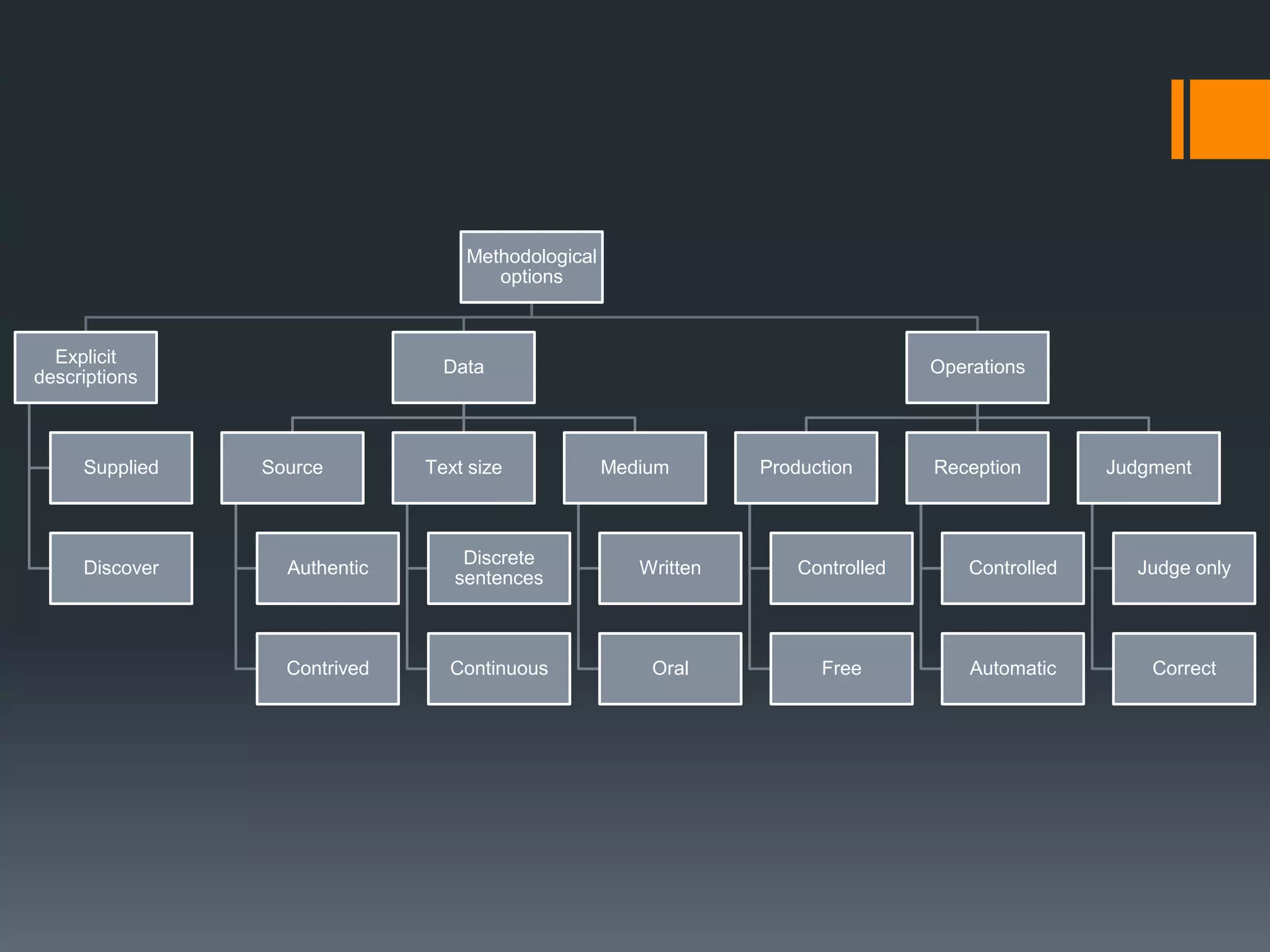
 Table 9.1 indicate the result
Methodological
                                     options


  Explicit
                                Data                                             Operations
descriptions


     Supplied   Source        Text size            Medium       Production       Reception        Judgment


                                  Discrete
     Discover     Authentic                           Written       Controlled       Controlled     Judge only
                                 sentences


                  Contrived     Continuous             Oral           Free           Automatic        Correct
An Analysis of Methodological Options
in Grammar Practice Books
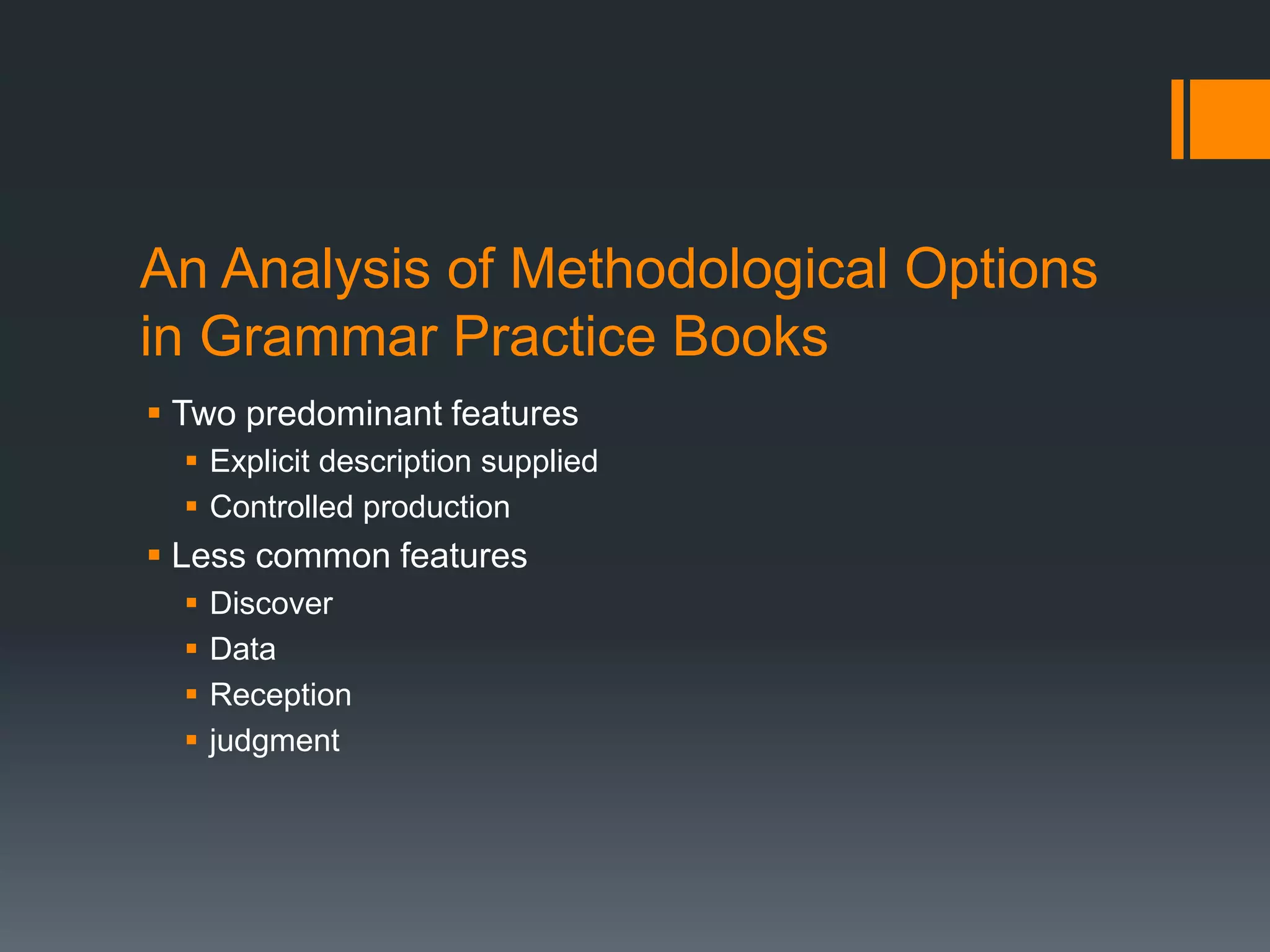
 Two predominant features
   Explicit description supplied
   Controlled production
 Less common features
     Discover
     Data
     Reception
     judgment
An Analysis of Methodological Options
in Grammar Practice Books
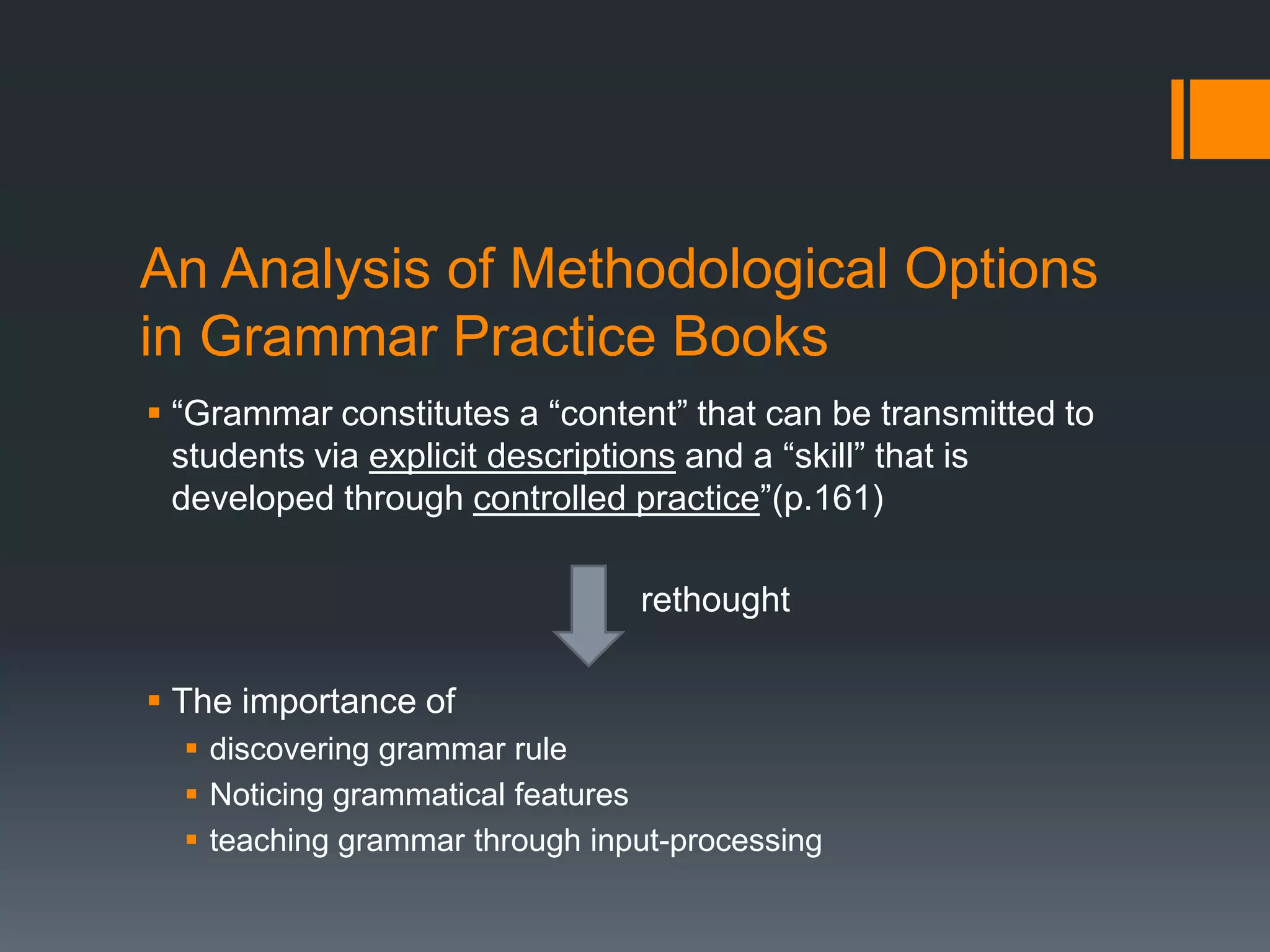
 “Grammar constitutes a “content” that can be transmitted to
  students via explicit descriptions and a “skill” that is
  developed through controlled practice”(p.161)

                                rethought

 The importance of
   discovering grammar rule
   Noticing grammatical features
   teaching grammar through input-processing
Discovering About Grammar
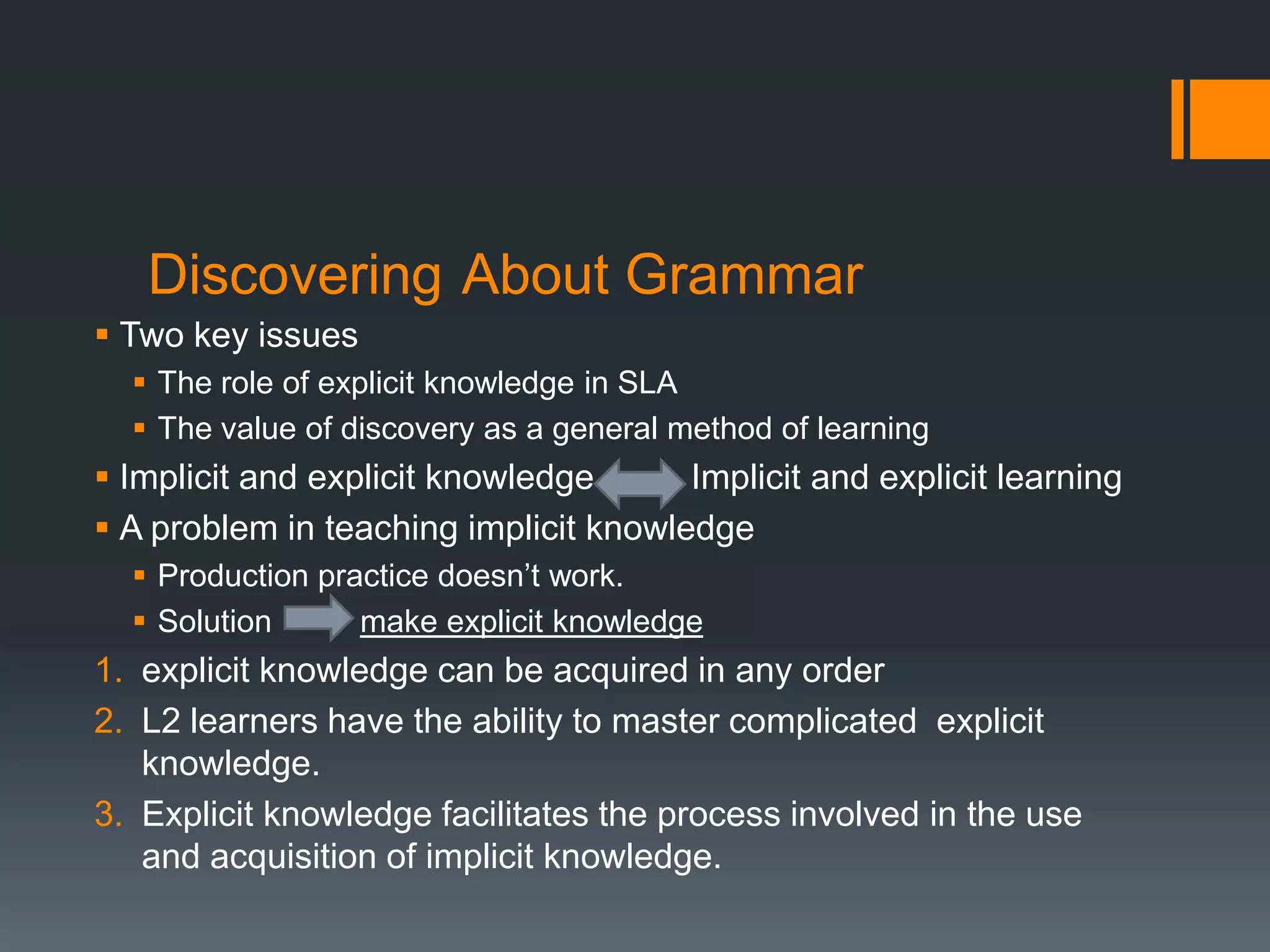
 Two key issues
   The role of explicit knowledge in SLA
   The value of discovery as a general method of learning
 Implicit and explicit knowledge      Implicit and explicit learning
 A problem in teaching implicit knowledge
   Production practice doesn’t work.
   Solution      make explicit knowledge
1. explicit knowledge can be acquired in any order
2. L2 learners have the ability to master complicated explicit
   knowledge.
3. Explicit knowledge facilitates the process involved in the use
   and acquisition of implicit knowledge.
Discovering About Grammar
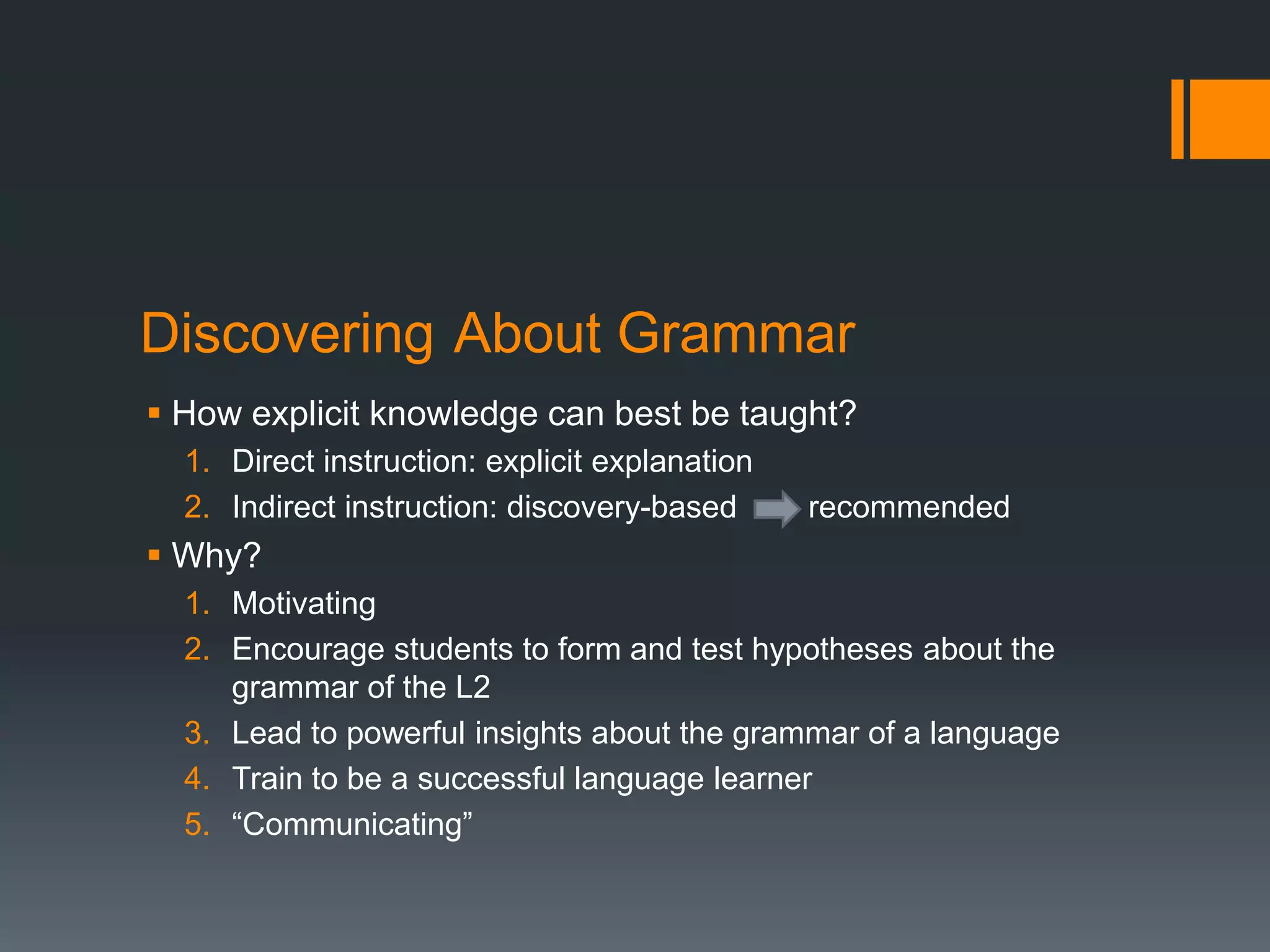
 How explicit knowledge can best be taught?
  1. Direct instruction: explicit explanation
  2. Indirect instruction: discovery-based      recommended
 Why?
  1. Motivating
  2. Encourage students to form and test hypotheses about the
     grammar of the L2
  3. Lead to powerful insights about the grammar of a language
  4. Train to be a successful language learner
  5. “Communicating”
Noticing grammar features
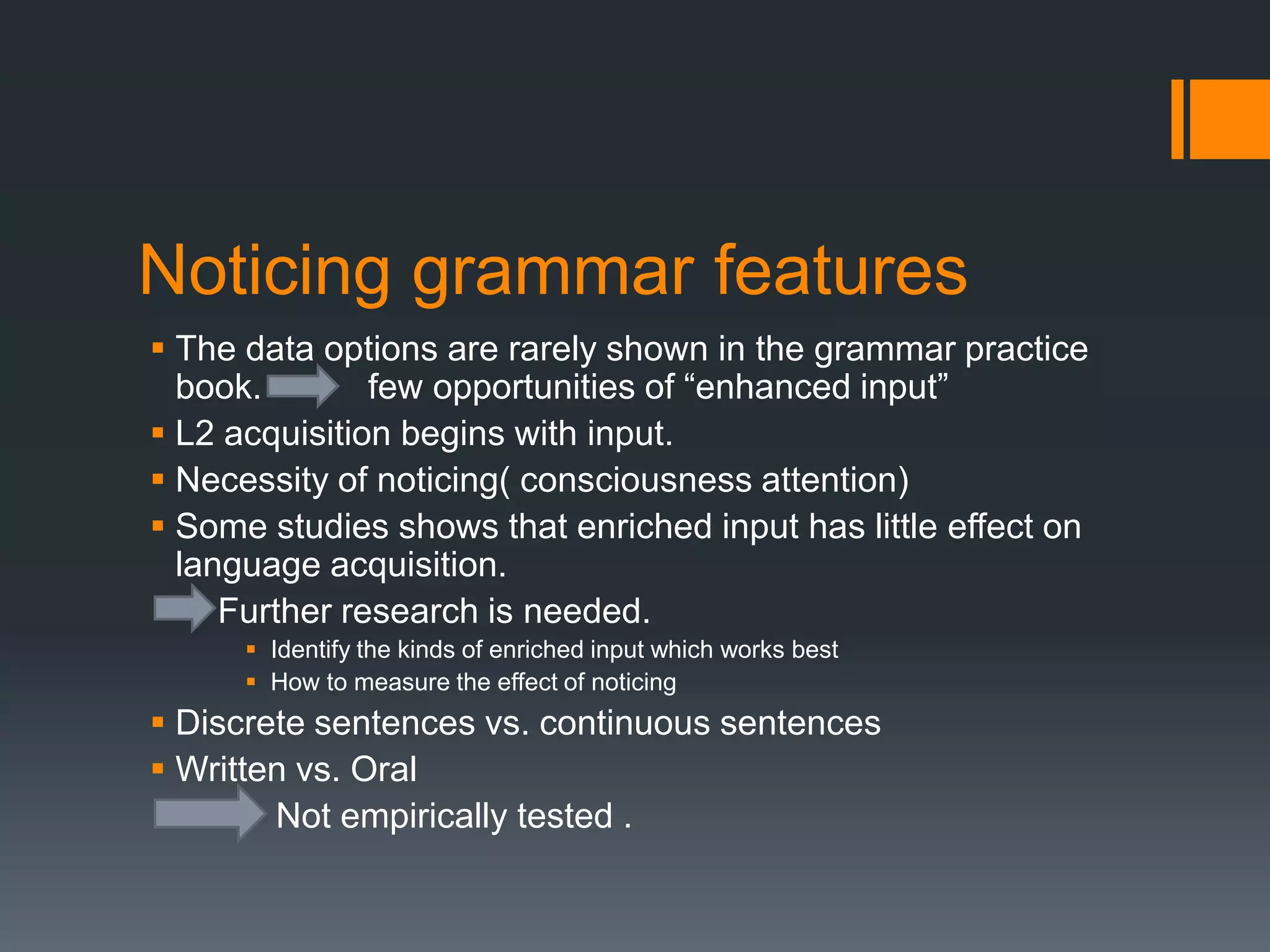
 The data options are rarely shown in the grammar practice
  book.        few opportunities of “enhanced input”
 L2 acquisition begins with input.
 Necessity of noticing( consciousness attention)
 Some studies shows that enriched input has little effect on
  language acquisition.
     Further research is needed.
       Identify the kinds of enriched input which works best
       How to measure the effect of noticing
 Discrete sentences vs. continuous sentences
 Written vs. Oral
        Not empirically tested .
Noticing grammar features
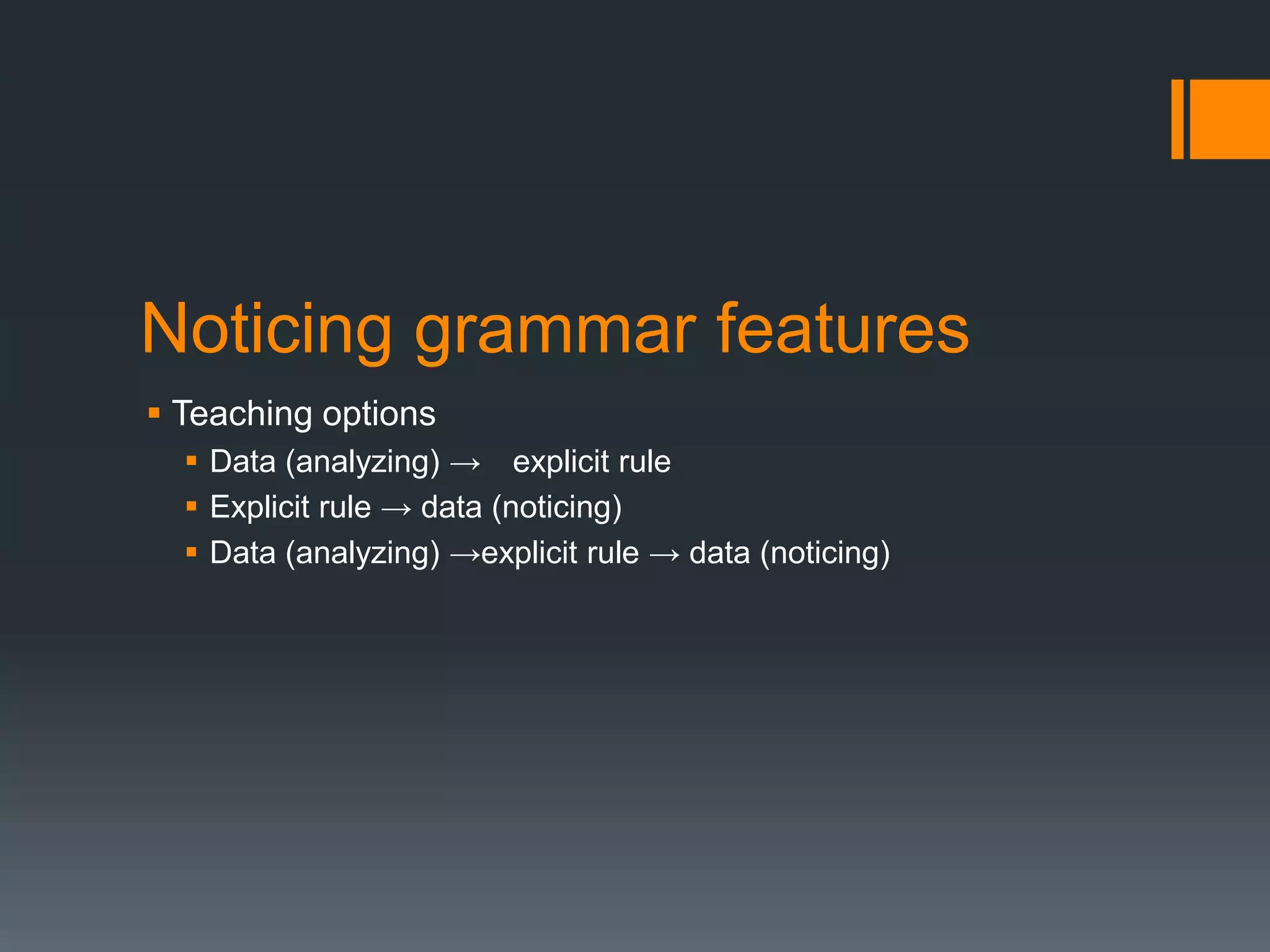
 Teaching options
   Data (analyzing) → explicit rule
   Explicit rule → data (noticing)
   Data (analyzing) →explicit rule → data (noticing)
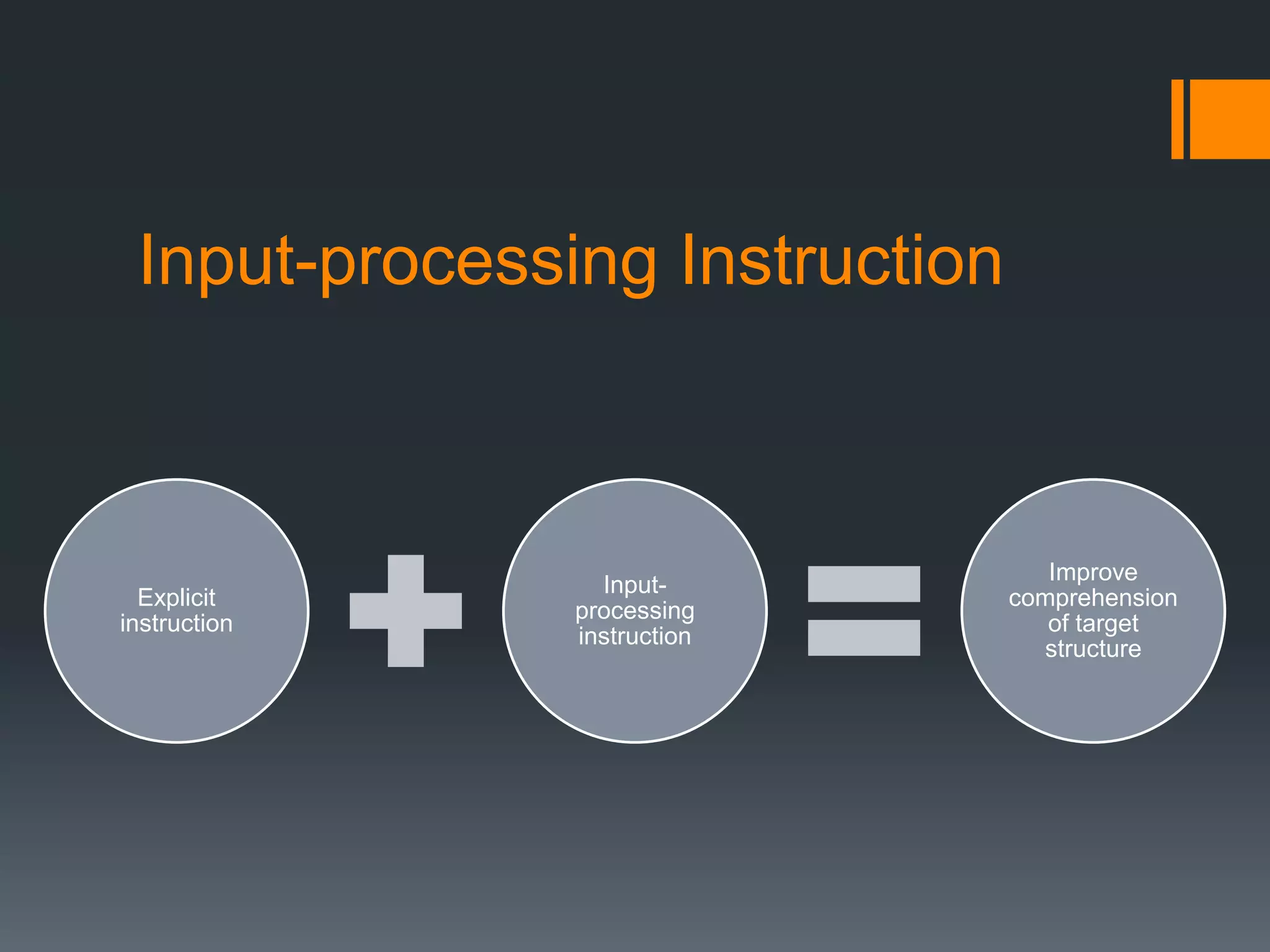
Input-processing Instruction
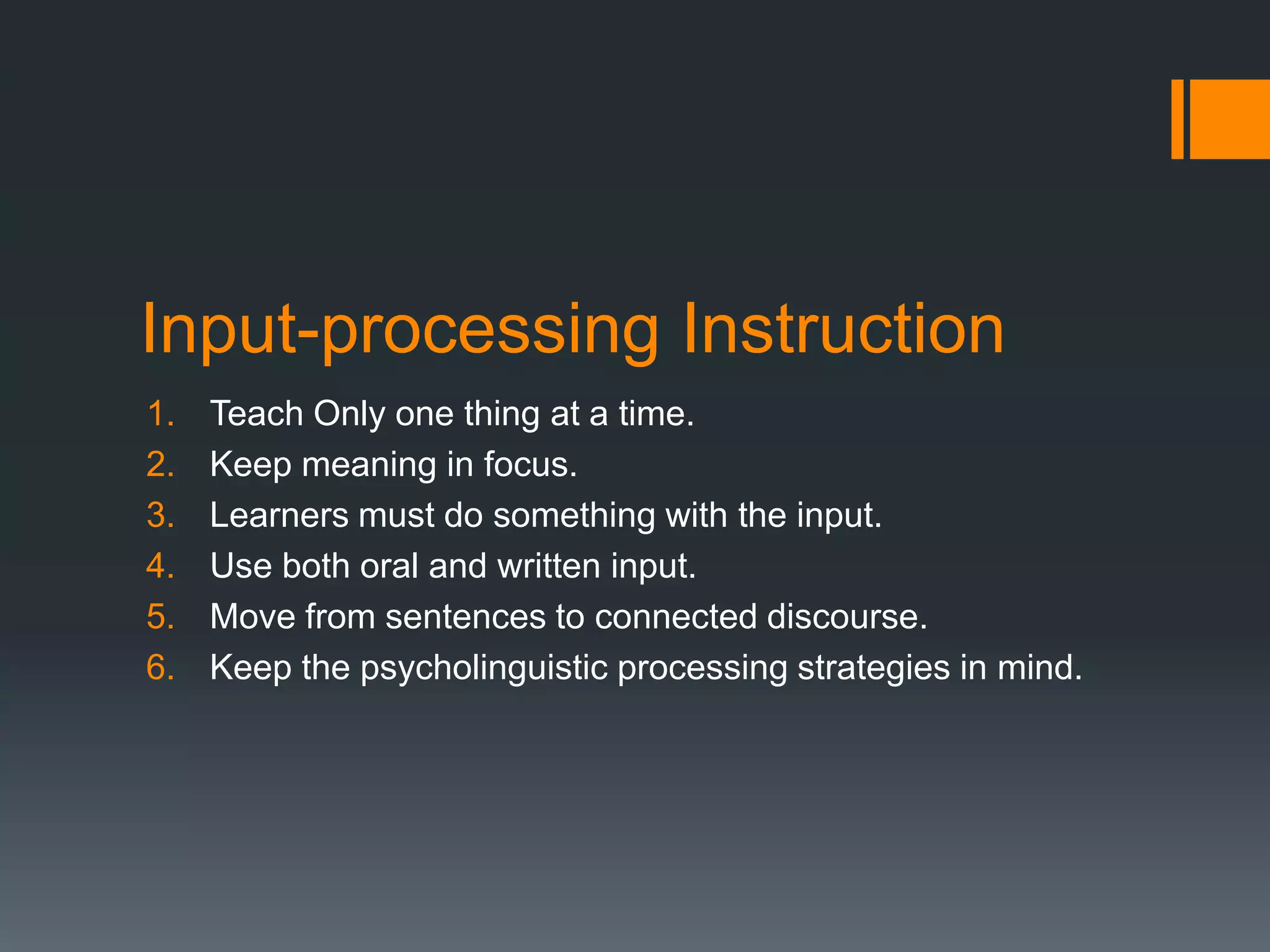
1.   Teach Only one thing at a time.
2.   Keep meaning in focus.
3.   Learners must do something with the input.
4.   Use both oral and written input.
5.   Move from sentences to connected discourse.
6.   Keep the psycholinguistic processing strategies in mind.
Input-processing Instruction


                                   Improve
                 Input-
  Explicit                      comprehension
               processing
instruction                        of target
               instruction
                                  structure
Some Illustrative teaching materials
 Involving learner judgment or discrimination.
 Task which requires leaners to perform or solve a problem.
 Aim in raising learners’ consciousness about grammar
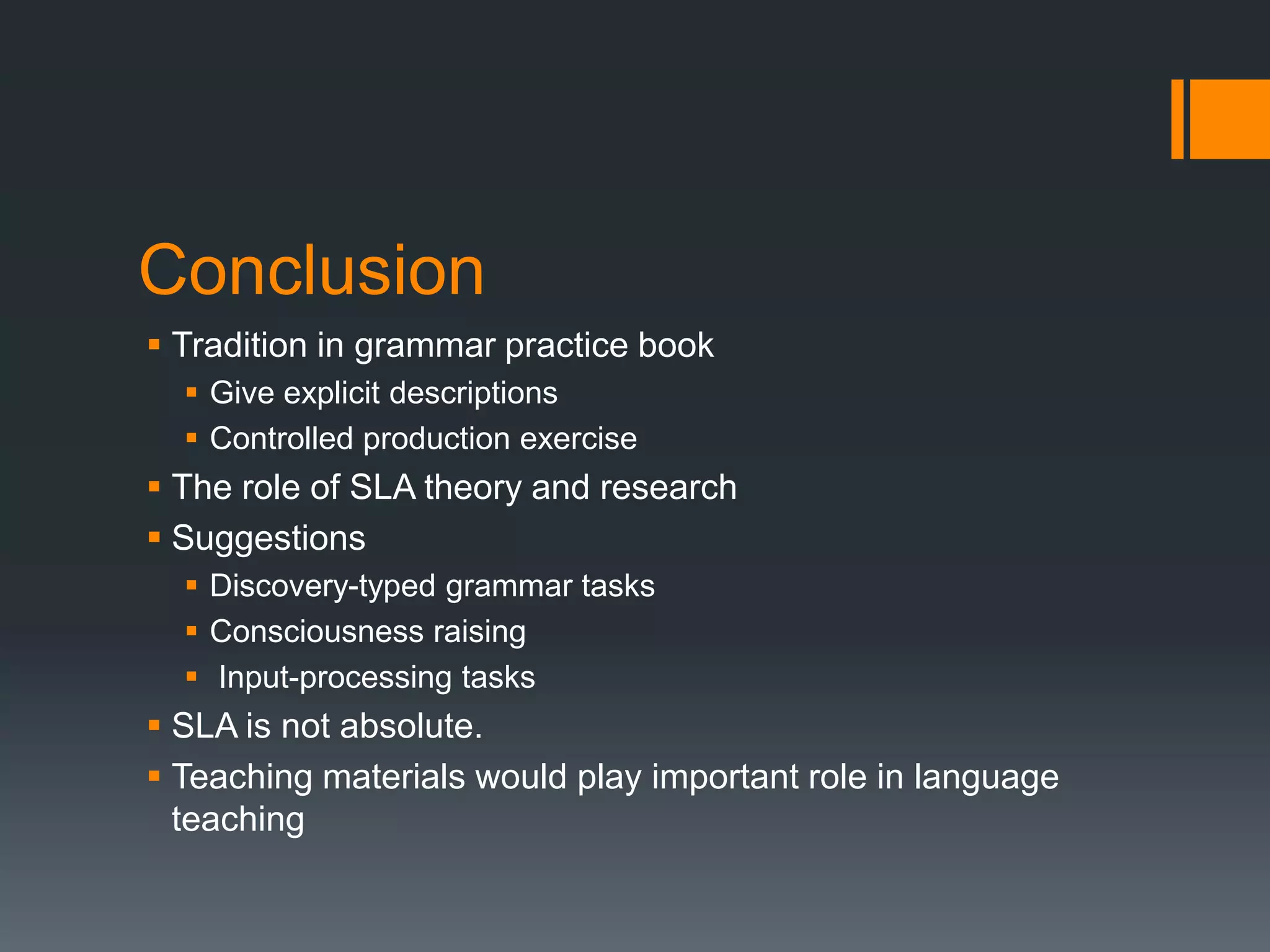
Conclusion
 Tradition in grammar practice book
   Give explicit descriptions
   Controlled production exercise
 The role of SLA theory and research
 Suggestions
   Discovery-typed grammar tasks
   Consciousness raising
   Input-processing tasks
 SLA is not absolute.
 Teaching materials would play important role in language
  teaching
Discussion Question
 What methodological options did you use in your micro
  teaching in this class?
 Do you usually think of what methodological options you use
  and why or what for you choose that options?
 How do you teach with a “traditional” textbook which mainly
  consists of explicit explanation and controlled production
  task?

Methodological options in grammar teaching materials

  • 1.
    Methodological Options in GrammarTeaching Materials Rod Ellis(2002) Yu Tamura EFL 527 March 14, 2012
  • 2.
    Outline 1. Introduction 2. Ananalysis of methodological options in grammar practice books 3. Discovering about grammar 4. Noticing grammatical features 5. Input-processing instruction 6. Some illustrate teaching materials 7. Conclusion
  • 3.
    Introduction  What methodologyfor teaching grammar do grammar practice books employ?  What is the empirical / theoretical basis for the chosen methodology?  Key words: “implicit” / “explicit” grammar teaching
  • 4.
    An Analysis ofMethodological Options in Grammar Practice Books  Investigate 6 grammar practice book  Choose one unit which deals with the present continuous tense  Table 9.1 indicate the result
  • 5.
    Methodological options Explicit Data Operations descriptions Supplied Source Text size Medium Production Reception Judgment Discrete Discover Authentic Written Controlled Controlled Judge only sentences Contrived Continuous Oral Free Automatic Correct
  • 6.
    An Analysis ofMethodological Options in Grammar Practice Books  Two predominant features  Explicit description supplied  Controlled production  Less common features  Discover  Data  Reception  judgment
  • 7.
    An Analysis ofMethodological Options in Grammar Practice Books  “Grammar constitutes a “content” that can be transmitted to students via explicit descriptions and a “skill” that is developed through controlled practice”(p.161) rethought  The importance of  discovering grammar rule  Noticing grammatical features  teaching grammar through input-processing
  • 8.
    Discovering About Grammar Two key issues  The role of explicit knowledge in SLA  The value of discovery as a general method of learning  Implicit and explicit knowledge Implicit and explicit learning  A problem in teaching implicit knowledge  Production practice doesn’t work.  Solution make explicit knowledge 1. explicit knowledge can be acquired in any order 2. L2 learners have the ability to master complicated explicit knowledge. 3. Explicit knowledge facilitates the process involved in the use and acquisition of implicit knowledge.
  • 9.
    Discovering About Grammar How explicit knowledge can best be taught? 1. Direct instruction: explicit explanation 2. Indirect instruction: discovery-based recommended  Why? 1. Motivating 2. Encourage students to form and test hypotheses about the grammar of the L2 3. Lead to powerful insights about the grammar of a language 4. Train to be a successful language learner 5. “Communicating”
  • 10.
    Noticing grammar features The data options are rarely shown in the grammar practice book. few opportunities of “enhanced input”  L2 acquisition begins with input.  Necessity of noticing( consciousness attention)  Some studies shows that enriched input has little effect on language acquisition. Further research is needed.  Identify the kinds of enriched input which works best  How to measure the effect of noticing  Discrete sentences vs. continuous sentences  Written vs. Oral Not empirically tested .
  • 11.
    Noticing grammar features Teaching options  Data (analyzing) → explicit rule  Explicit rule → data (noticing)  Data (analyzing) →explicit rule → data (noticing)
  • 12.
    Input-processing Instruction 1. Teach Only one thing at a time. 2. Keep meaning in focus. 3. Learners must do something with the input. 4. Use both oral and written input. 5. Move from sentences to connected discourse. 6. Keep the psycholinguistic processing strategies in mind.
  • 13.
    Input-processing Instruction Improve Input- Explicit comprehension processing instruction of target instruction structure
  • 14.
    Some Illustrative teachingmaterials  Involving learner judgment or discrimination.  Task which requires leaners to perform or solve a problem.  Aim in raising learners’ consciousness about grammar
  • 15.
    Conclusion  Tradition ingrammar practice book  Give explicit descriptions  Controlled production exercise  The role of SLA theory and research  Suggestions  Discovery-typed grammar tasks  Consciousness raising  Input-processing tasks  SLA is not absolute.  Teaching materials would play important role in language teaching
  • 16.
    Discussion Question  Whatmethodological options did you use in your micro teaching in this class?  Do you usually think of what methodological options you use and why or what for you choose that options?  How do you teach with a “traditional” textbook which mainly consists of explicit explanation and controlled production task?