Introducing Metaworks3 –


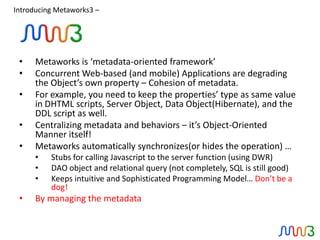
 •    Metaworks is ‘metadata-oriented framework’
 •    Concurrent Web-based (and mobile) Applications are degrading
      the Object’s own property – Cohesion of metadata.
 •    For example, you need to keep the properties’ type as same value
      in DHTML scripts, Server Object, Data Object(Hibernate), and the
      DDL script as well.
 •    Centralizing metadata and behaviors – it’s Object-Oriented
      Manner itself!
 •    Metaworks automatically synchronizes(or hides the operation) …
      •   Stubs for calling Javascript to the server function (using DWR)
      •   DAO object and relational query (not completely, SQL is still good)
      •   Keeps intuitive and Sophisticated Programming Model… Don’t be a
          dog!
 •    By managing the metadata
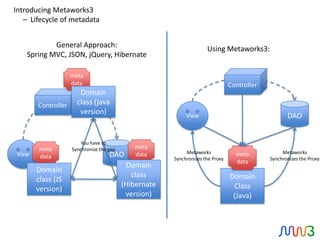
Introducing Metaworks3
   – Lifecycle of metadata


            General Approach:                                        Using Metaworks3:
    Spring MVC, JSON, jQuery, Hibernate

                    meta
                    data                                                        Controller
                       Domain
       Controller     class (java
                       version)                             View                                    DAO


                        You have to
        meta        Synchronize the gap      meta
                                                            Metaworks                             Metaworks
View    data                        DAO      data
                                                       Synchronizes the Proxy
                                                                                  meta
                                                                                             Synchronizes the Proxy
                                                                                  data
                                           Domain
       Domain
                                             class                              Domain
       class (JS
                                          (Hibernate                             Class
       version)
                                           version)                              (Java)
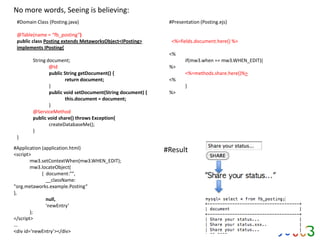
No more words, Seeing is believing:
 #Domain Class (Posting.java)                                 #Presentation (Posting.ejs)

 @Table(name = “fb_posting”)
 public class Posting extends MetaworksObject<IPosting>        <%=fields.document.here() %>
 implements IPosting{
                                                              <%
        String document;                                             if(mw3.when == mw3.WHEN_EDIT){
                @Id                                           %>
                public String getDocument() {                        <%=methods.share.here()%>
                        return document;                      <%
                }                                                    }
                public void setDocument(String document) {    %>
                        this.document = document;
                }
        @ServiceMethod
        public void share() throws Exception{
                createDatabaseMe();
        }
 }

#Application (application.html)                              #Result
<script>
        mw3.setContextWhen(mw3.WHEN_EDIT);
        mw3.locateObject(
             { document:"",
               __className:
"org.metaworks.example.Posting”
},
               null,
               'newEntry’
        );
</script>
...
<div id=‘newEntry’></div>
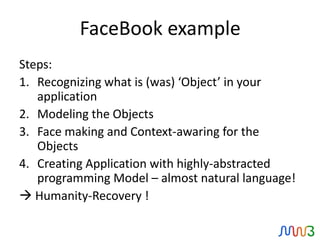
FaceBook example
Steps:
1. Recognizing what is (was) ‘Object’ in your
   application
2. Modeling the Objects
3. Face making and Context-awaring for the
   Objects
4. Creating Application with highly-abstracted
   programming Model – almost natural language!
 Humanity-Recovery !
Step 1.
Recognizing what is (was)
‘Object’ in your application
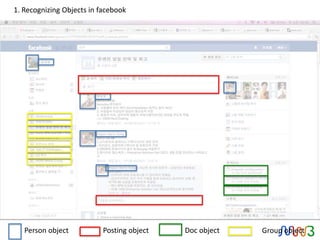
1. Recognizing Objects in facebook


   Person object           Posting object   Doc object   Group object
1. Recognizing Objects in facebook
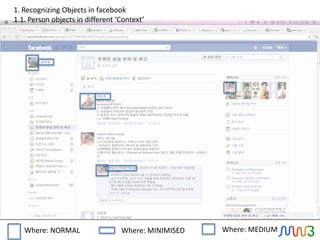
1.1. Person objects in different ‘Context’


   Where: NORMAL                  Where: MINIMISED   Where: MEDIUM
1. Recognizing Objects in facebook
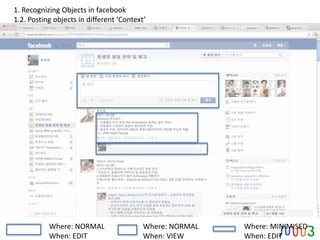
1.2. Posting objects in different ‘Context’


           Where: NORMAL                  Where: NORMAL   Where: MINIMISED
           When: EDIT                     When: VIEW      When: EDIT
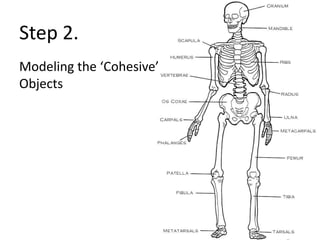
Step 2.
Modeling the ‘Cohesive’
Objects
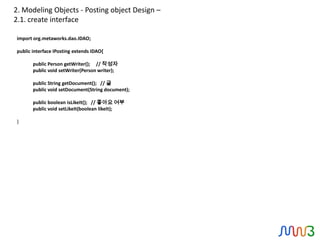
2. Modeling Objects - Posting object Design –
2.1. create interface

import org.metaworks.dao.IDAO;

public interface IPosting extends IDAO{

       public Person getWriter(); // 작성자
       public void setWriter(Person writer);

       public String getDocument(); // 글
       public void setDocument(String document);

       public boolean isLikeIt(); // 좋아요 여부
       public void setLikeIt(boolean likeIt);

}
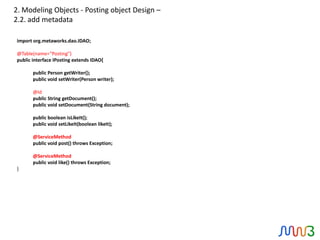
2. Modeling Objects - Posting object Design –
2.2. add metadata

import org.metaworks.dao.IDAO;

@Table(name="Posting")
public interface IPosting extends IDAO{

       public Person getWriter();
       public void setWriter(Person writer);

       @Id
       public String getDocument();
       public void setDocument(String document);

       public boolean isLikeIt();
       public void setLikeIt(boolean likeIt);

       @ServiceMethod
       public void post() throws Exception;

       @ServiceMethod
       public void like() throws Exception;
}
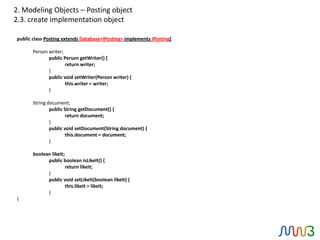
2. Modeling Objects – Posting object
2.3. create implementation object

public class Posting extends Database<IPosting> implements IPosting{

       Person writer;
              public Person getWriter() {
                      return writer;
              }
              public void setWriter(Person writer) {
                      this.writer = writer;
              }

       String document;
               public String getDocument() {
                       return document;
               }
               public void setDocument(String document) {
                       this.document = document;
               }

       boolean likeIt;
             public boolean isLikeIt() {
                       return likeIt;
             }
             public void setLikeIt(boolean likeIt) {
                       this.likeIt = likeIt;
             }
}
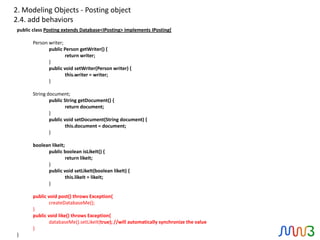
2. Modeling Objects - Posting object
2.4. add behaviors
public class Posting extends Database<IPosting> implements IPosting{

       Person writer;
              public Person getWriter() {
                      return writer;
              }
              public void setWriter(Person writer) {
                      this.writer = writer;
              }

       String document;
               public String getDocument() {
                       return document;
               }
               public void setDocument(String document) {
                       this.document = document;
               }

       boolean likeIt;
             public boolean isLikeIt() {
                       return likeIt;
             }
             public void setLikeIt(boolean likeIt) {
                       this.likeIt = likeIt;
             }

       public void post() throws Exception{
               createDatabaseMe();
       }
       public void like() throws Exception{
               databaseMe().setLikeIt(true); //will automatically synchronize the value
       }
}
Step 3
Face making and Context-awaring for
the Objects
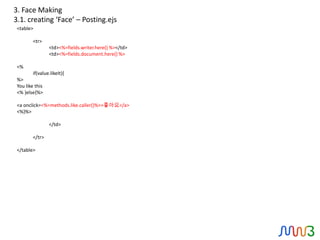
3. Face Making
3.1. creating ‘Face’ – Posting.ejs
 <table>

         <tr>
                 <td><%=fields.writer.here() %></td>
                 <td><%=fields.document.here() %>

 <%
         if(value.likeIt){
 %>
 You like this
 <% }else{%>

 <a onclick=<%=methods.like.caller()%>>좋아요</a>
 <%}%>

                 </td>

         </tr>

 </table>
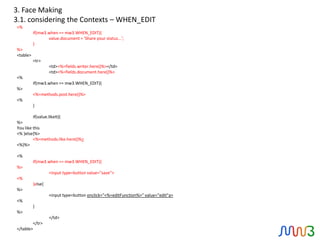
3. Face Making
3.1. considering the Contexts – WHEN_EDIT
<%
          if(mw3.when == mw3.WHEN_EDIT){
                 value.document = 'Share your status...';
          }
%>
<table>
          <tr>
                   <td><%=fields.writer.here()%></td>
                   <td><%=fields.document.here()%>
<%
          if(mw3.when == mw3.WHEN_EDIT){
%>
          <%=methods.post.here()%>
<%
          }

         if(value.likeIt){
%>
You like this
<% }else{%>
         <%=methods.like.here()%>
<%}%>

<%
          if(mw3.when == mw3.WHEN_EDIT){
%>
                   <input type=button value="save">
<%
          }else{
%>
                   <input type=button onclick="<%=editFunction%>" value="edit"a>
<%
          }
%>
                   </td>
        </tr>
</table>
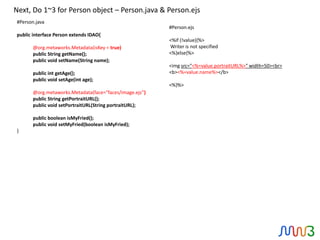
Next, Do 1~3 for Person object – Person.java & Person.ejs
#Person.java
                                                         #Person.ejs
public interface Person extends IDAO{
                                                         <%if (!value){%>
       @org.metaworks.Metadata(isKey = true)             Writer is not specified
       public String getName();                          <%}else{%>
       public void setName(String name);
                                                         <img src="<%=value.portraitURL%>" width=50><br>
       public int getAge();                              <b><%=value.name%></b>
       public void setAge(int age);
                                                         <%}%>
       @org.metaworks.Metadata(face="faces/image.ejs”)
       public String getPortraitURL();
       public void setPortraitURL(String portraitURL);

       public boolean isMyFried();
       public void setMyFried(boolean isMyFried);
}
Step 4
Creating Application with
highly-abstracted
programming Model –
Write a Novel or Poet, not
the alien language
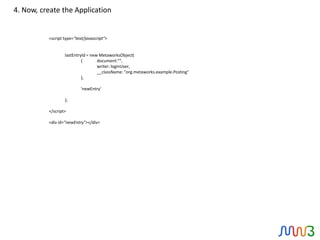
4. Now, create the Application


          <script type="text/javascript">


                  lastEntryId = new MetaworksObject(
                           {       document:"",
                                   writer: loginUser,
                                   __className: "org.metaworks.example.Posting"
                           },

                           'newEntry'

                  );

          </script>

          <div id=”newEntry"></div>
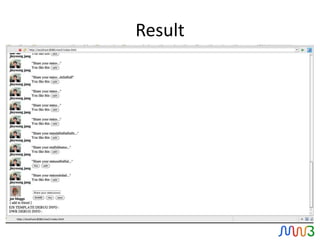
Result
Conclusion
• No duplicated metadata mapping
  e.g. JSON object mapping in Spring Controller and DAO
  mapping for Hibernate.
 No errors from duplicated metadata source.
• Cohesive User Interface management by EJS-
  object mapping.
• Intuitive Programming Model – model and
  metadata-driven, not implementation-driven.

Only thing you have to do is… just forgetting the old
manners!
All the Source Code available here:
 http://www.largedocument.com/2/99c863a7/mw3
 _facebook_example_MetaworksObject.zip

 - it’s very early stage now! You are welcomed to
   participate this Open Source Project. E-mail me:
   jyjang at uengine.org
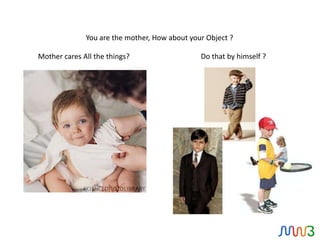
You are the mother, How about your Object ?

Mother cares All the things?                   Do that by himself ?

Metaworks3

  • 1.
    Introducing Metaworks3 – • Metaworks is ‘metadata-oriented framework’ • Concurrent Web-based (and mobile) Applications are degrading the Object’s own property – Cohesion of metadata. • For example, you need to keep the properties’ type as same value in DHTML scripts, Server Object, Data Object(Hibernate), and the DDL script as well. • Centralizing metadata and behaviors – it’s Object-Oriented Manner itself! • Metaworks automatically synchronizes(or hides the operation) … • Stubs for calling Javascript to the server function (using DWR) • DAO object and relational query (not completely, SQL is still good) • Keeps intuitive and Sophisticated Programming Model… Don’t be a dog! • By managing the metadata
  • 2.
    Introducing Metaworks3 – Lifecycle of metadata General Approach: Using Metaworks3: Spring MVC, JSON, jQuery, Hibernate meta data Controller Domain Controller class (java version) View DAO You have to meta Synchronize the gap meta Metaworks Metaworks View data DAO data Synchronizes the Proxy meta Synchronizes the Proxy data Domain Domain class Domain class (JS (Hibernate Class version) version) (Java)
  • 3.
    No more words,Seeing is believing: #Domain Class (Posting.java) #Presentation (Posting.ejs) @Table(name = “fb_posting”) public class Posting extends MetaworksObject<IPosting> <%=fields.document.here() %> implements IPosting{ <% String document; if(mw3.when == mw3.WHEN_EDIT){ @Id %> public String getDocument() { <%=methods.share.here()%> return document; <% } } public void setDocument(String document) { %> this.document = document; } @ServiceMethod public void share() throws Exception{ createDatabaseMe(); } } #Application (application.html) #Result <script> mw3.setContextWhen(mw3.WHEN_EDIT); mw3.locateObject( { document:"", __className: "org.metaworks.example.Posting” }, null, 'newEntry’ ); </script> ... <div id=‘newEntry’></div>
  • 4.
    FaceBook example Steps: 1. Recognizingwhat is (was) ‘Object’ in your application 2. Modeling the Objects 3. Face making and Context-awaring for the Objects 4. Creating Application with highly-abstracted programming Model – almost natural language!  Humanity-Recovery !
  • 5.
    Step 1. Recognizing whatis (was) ‘Object’ in your application
  • 6.
    1. Recognizing Objectsin facebook Person object Posting object Doc object Group object
  • 7.
    1. Recognizing Objectsin facebook 1.1. Person objects in different ‘Context’ Where: NORMAL Where: MINIMISED Where: MEDIUM
  • 8.
    1. Recognizing Objectsin facebook 1.2. Posting objects in different ‘Context’ Where: NORMAL Where: NORMAL Where: MINIMISED When: EDIT When: VIEW When: EDIT
  • 9.
    Step 2. Modeling the‘Cohesive’ Objects
  • 10.
    2. Modeling Objects- Posting object Design – 2.1. create interface import org.metaworks.dao.IDAO; public interface IPosting extends IDAO{ public Person getWriter(); // 작성자 public void setWriter(Person writer); public String getDocument(); // 글 public void setDocument(String document); public boolean isLikeIt(); // 좋아요 여부 public void setLikeIt(boolean likeIt); }
  • 11.
    2. Modeling Objects- Posting object Design – 2.2. add metadata import org.metaworks.dao.IDAO; @Table(name="Posting") public interface IPosting extends IDAO{ public Person getWriter(); public void setWriter(Person writer); @Id public String getDocument(); public void setDocument(String document); public boolean isLikeIt(); public void setLikeIt(boolean likeIt); @ServiceMethod public void post() throws Exception; @ServiceMethod public void like() throws Exception; }
  • 12.
    2. Modeling Objects– Posting object 2.3. create implementation object public class Posting extends Database<IPosting> implements IPosting{ Person writer; public Person getWriter() { return writer; } public void setWriter(Person writer) { this.writer = writer; } String document; public String getDocument() { return document; } public void setDocument(String document) { this.document = document; } boolean likeIt; public boolean isLikeIt() { return likeIt; } public void setLikeIt(boolean likeIt) { this.likeIt = likeIt; } }
  • 13.
    2. Modeling Objects- Posting object 2.4. add behaviors public class Posting extends Database<IPosting> implements IPosting{ Person writer; public Person getWriter() { return writer; } public void setWriter(Person writer) { this.writer = writer; } String document; public String getDocument() { return document; } public void setDocument(String document) { this.document = document; } boolean likeIt; public boolean isLikeIt() { return likeIt; } public void setLikeIt(boolean likeIt) { this.likeIt = likeIt; } public void post() throws Exception{ createDatabaseMe(); } public void like() throws Exception{ databaseMe().setLikeIt(true); //will automatically synchronize the value } }
  • 14.
    Step 3 Face makingand Context-awaring for the Objects
  • 15.
    3. Face Making 3.1.creating ‘Face’ – Posting.ejs <table> <tr> <td><%=fields.writer.here() %></td> <td><%=fields.document.here() %> <% if(value.likeIt){ %> You like this <% }else{%> <a onclick=<%=methods.like.caller()%>>좋아요</a> <%}%> </td> </tr> </table>
  • 16.
    3. Face Making 3.1.considering the Contexts – WHEN_EDIT <% if(mw3.when == mw3.WHEN_EDIT){ value.document = 'Share your status...'; } %> <table> <tr> <td><%=fields.writer.here()%></td> <td><%=fields.document.here()%> <% if(mw3.when == mw3.WHEN_EDIT){ %> <%=methods.post.here()%> <% } if(value.likeIt){ %> You like this <% }else{%> <%=methods.like.here()%> <%}%> <% if(mw3.when == mw3.WHEN_EDIT){ %> <input type=button value="save"> <% }else{ %> <input type=button onclick="<%=editFunction%>" value="edit"a> <% } %> </td> </tr> </table>
  • 17.
    Next, Do 1~3for Person object – Person.java & Person.ejs #Person.java #Person.ejs public interface Person extends IDAO{ <%if (!value){%> @org.metaworks.Metadata(isKey = true) Writer is not specified public String getName(); <%}else{%> public void setName(String name); <img src="<%=value.portraitURL%>" width=50><br> public int getAge(); <b><%=value.name%></b> public void setAge(int age); <%}%> @org.metaworks.Metadata(face="faces/image.ejs”) public String getPortraitURL(); public void setPortraitURL(String portraitURL); public boolean isMyFried(); public void setMyFried(boolean isMyFried); }
  • 18.
    Step 4 Creating Applicationwith highly-abstracted programming Model – Write a Novel or Poet, not the alien language
  • 19.
    4. Now, createthe Application <script type="text/javascript"> lastEntryId = new MetaworksObject( { document:"", writer: loginUser, __className: "org.metaworks.example.Posting" }, 'newEntry' ); </script> <div id=”newEntry"></div>
  • 20.
  • 21.
    Conclusion • No duplicatedmetadata mapping e.g. JSON object mapping in Spring Controller and DAO mapping for Hibernate.  No errors from duplicated metadata source. • Cohesive User Interface management by EJS- object mapping. • Intuitive Programming Model – model and metadata-driven, not implementation-driven. Only thing you have to do is… just forgetting the old manners!
  • 22.
    All the SourceCode available here: http://www.largedocument.com/2/99c863a7/mw3 _facebook_example_MetaworksObject.zip - it’s very early stage now! You are welcomed to participate this Open Source Project. E-mail me: jyjang at uengine.org
  • 23.
    You are themother, How about your Object ? Mother cares All the things? Do that by himself ?