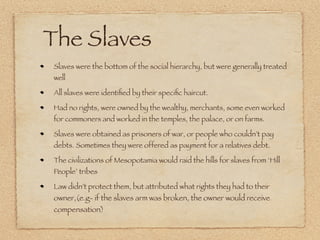
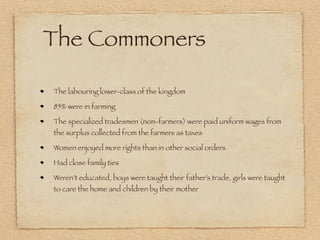
Mesopotamian society was stratified, with slaves at the bottom. Slaves were obtained through warfare, debt, or as payment and had no legal rights. Commoners, who made up 85% of the population as farmers or tradesmen, had more freedom but little wealth or education. Merchants and artisans invented writing and engaged in regional trade, producing goods. Scribes comprised the educated class who could read, write, and work for the government. Priests controlled land distribution and crops, ran schools, and were influential as religious authorities. Kings stood at the top as either divine rulers ordained by the gods or actual gods in human form, wielding absolute power and authority as head of government and military