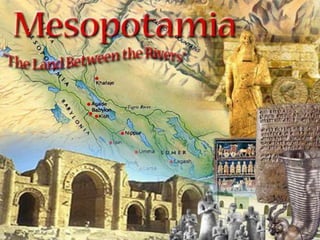
Music Video- 
Intro 
Mesopotamia 
(3:21)
The Rise of 
Babylon 
• Euphrates River near modern-day 
Baghdad, Iraq 
• Former Sumerian city 
• By 1800 BC- became power with 
its own government 
• Hammurabi (1792 BC) was 
city’s greatest monarch 
• Fought many battles to expand 
his power 
• Named Babylon Empire after 
capital 
• Able to govern entire empire 
• Oversaw irrigation projects 
• Improved tax collection system 
• Increased trade= prosperity 
• Ruled 42 years- Babylon 
declined after his death
Hammurabi’s 
Code 
• 282 laws dealing with 
almost every part of 
daily life 
• Ex: trade, loans, theft, 
marriage, injury, & 
murder 
• Some still seen in 
today’s laws 
• Specific crimes= 
specific punishment 
• Social class did not 
matter 
• Important because it 
was written down for all 
to see 
• Effect: people all over 
Video
Hittites & 
Kassites 
Kingdom in Asia Minor-modern- 
day Turkey 
Achievements: 
Military advantages: 
Ironworking= strong 
weapons 
chariot = fast 
movement around 
battlefield to shoot 
arrows at enemies 
• Hittite king assassinated 
by Kassites= chaos in 
city 
• Kassites ruled for 400 
years from North of 
Hittites 
video
The Assyrians 
• Northern Mesopotamia 
• 900 BC began conquering 
all of Fertile Crescent, parts 
of Asia Minor & Egypt 
• Success- strong organized 
army & strong weapons & 
chariots like Hittites 
• Spread terror before 
attacking 
• Demanded heavy taxes & 
punished those who 
opposed 
Achievements: 
Roads built to connect 
distant parts of the empire 
Messengers rode 
horseback to deliver 
orders to faraway officials 
Assyrian kings held power 
through: 
Local leaders who 
Governed small areas 
Collected taxes 
Enforced laws 
Raised troops for the 
army
The 
Chaldeans 
• 612 BC: destroyed Assyrian 
Empire 
• King Nebuchadnezzar rebuilt 
Babylon- restoring its former 
beauty 
• Legend of Nebuchadnezzar’s 
palace Hanging Gardens 
(Wonder of the World) 
• Copied Sumerian culture: 
studied language & built 
temples for Sumerian gods 
Achievements: 
• Babylon became center of 
astronomy- charted stars, 
tracked economic, political, & 
weather events 
• Created a calendar 
• Solved complex geometry 
problems 
Video: Hanging Gardens
The Phoenicians 
Geography: 
• Western end of the Fertile 
Crescent: modern-day Lebanon 
• Mountains border the region to 
the north and east, western 
border- Mediterranean Sea 
• Had few resources for trade 
• Cedar trees were prized for their 
timber- valuable trade item 
• Overland trade routes blocked 
by mountains & hostile 
neighbors
Phoenician Expansion of 
Trade • Became sea traders- fast fleets sailed to 
ports in Egypt, Greece, Italy, Sicily, & 
Spain (Cultural Diffusion) 
• They sailed through the Strait of Gibraltar 
to reach the Atlantic Ocean 
• Founded several new colonies along 
trade routes 
• Carthage (northern coast of Africa) later 
became most powerful city on the 
Mediterranean 
• Wealth came from trade of lumber, 
silverwork, ivory carvings, glass-blown 
beads, and slaves
Phoenician 
Advances 
• Glass blowing 
• Purple dye from shellfish-very 
popular with the 
wealthy 
• World’s first alphabet: 
• Developed to record 
their activities 
• Made writing much 
easier 
• Major IMPACT on the 
world then & now 
• English alphabet is 
based on the 
Phoenicians’ 
• Later civilizations 
modified alphabets 
into what we have
Phoenician Alphabet 
Video: Phoenician Alphabet (2:21)
Mesopotamian Civilizations 
Timeline 
3000 BCSumerian 
Civilization 
World’s first 
civilization 
2350 BC 
Akkadian 
Dynasty 
2125 BC 
Third Dynasty 
of Ur 
1900 BCFirst Dynasty 
of Babylon 
Code of 
Hammurabi 
1500 BC 
Hittites & 
Kassites 
900 BC 
Assyrian 
Empire 
600 BCChaldeans 
(Neo-Babylon) 
535 BC 
Persian 
Empire 
(Phoenicians)

Mesopotamia continued

  • 2.
    Music Video- Intro Mesopotamia (3:21)
  • 3.
    The Rise of Babylon • Euphrates River near modern-day Baghdad, Iraq • Former Sumerian city • By 1800 BC- became power with its own government • Hammurabi (1792 BC) was city’s greatest monarch • Fought many battles to expand his power • Named Babylon Empire after capital • Able to govern entire empire • Oversaw irrigation projects • Improved tax collection system • Increased trade= prosperity • Ruled 42 years- Babylon declined after his death
  • 4.
    Hammurabi’s Code •282 laws dealing with almost every part of daily life • Ex: trade, loans, theft, marriage, injury, & murder • Some still seen in today’s laws • Specific crimes= specific punishment • Social class did not matter • Important because it was written down for all to see • Effect: people all over Video
  • 5.
    Hittites & Kassites Kingdom in Asia Minor-modern- day Turkey Achievements: Military advantages: Ironworking= strong weapons chariot = fast movement around battlefield to shoot arrows at enemies • Hittite king assassinated by Kassites= chaos in city • Kassites ruled for 400 years from North of Hittites video
  • 6.
    The Assyrians •Northern Mesopotamia • 900 BC began conquering all of Fertile Crescent, parts of Asia Minor & Egypt • Success- strong organized army & strong weapons & chariots like Hittites • Spread terror before attacking • Demanded heavy taxes & punished those who opposed Achievements: Roads built to connect distant parts of the empire Messengers rode horseback to deliver orders to faraway officials Assyrian kings held power through: Local leaders who Governed small areas Collected taxes Enforced laws Raised troops for the army
  • 7.
    The Chaldeans •612 BC: destroyed Assyrian Empire • King Nebuchadnezzar rebuilt Babylon- restoring its former beauty • Legend of Nebuchadnezzar’s palace Hanging Gardens (Wonder of the World) • Copied Sumerian culture: studied language & built temples for Sumerian gods Achievements: • Babylon became center of astronomy- charted stars, tracked economic, political, & weather events • Created a calendar • Solved complex geometry problems Video: Hanging Gardens
  • 8.
    The Phoenicians Geography: • Western end of the Fertile Crescent: modern-day Lebanon • Mountains border the region to the north and east, western border- Mediterranean Sea • Had few resources for trade • Cedar trees were prized for their timber- valuable trade item • Overland trade routes blocked by mountains & hostile neighbors
  • 9.
    Phoenician Expansion of Trade • Became sea traders- fast fleets sailed to ports in Egypt, Greece, Italy, Sicily, & Spain (Cultural Diffusion) • They sailed through the Strait of Gibraltar to reach the Atlantic Ocean • Founded several new colonies along trade routes • Carthage (northern coast of Africa) later became most powerful city on the Mediterranean • Wealth came from trade of lumber, silverwork, ivory carvings, glass-blown beads, and slaves
  • 10.
    Phoenician Advances •Glass blowing • Purple dye from shellfish-very popular with the wealthy • World’s first alphabet: • Developed to record their activities • Made writing much easier • Major IMPACT on the world then & now • English alphabet is based on the Phoenicians’ • Later civilizations modified alphabets into what we have
  • 11.
    Phoenician Alphabet Video:Phoenician Alphabet (2:21)
  • 12.
    Mesopotamian Civilizations Timeline 3000 BCSumerian Civilization World’s first civilization 2350 BC Akkadian Dynasty 2125 BC Third Dynasty of Ur 1900 BCFirst Dynasty of Babylon Code of Hammurabi 1500 BC Hittites & Kassites 900 BC Assyrian Empire 600 BCChaldeans (Neo-Babylon) 535 BC Persian Empire (Phoenicians)