THE FIRST CIVILIZATIONS: MESOPOTAMIA
THE FIRST URBAN CIVILIZATIONS: THE RIVER 
CIVILIZATIONS 
 Some 6 000 years ago, 
some Neolithic villages 
became cities as a result of 
agricultural and commercial 
prosperity. 
 These civilisations invented 
writing.
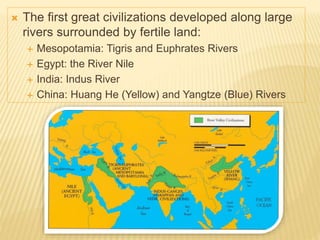
 The first great civilizations developed along large 
rivers surrounded by fertile land: 
 Mesopotamia: Tigris and Euphrates Rivers 
 Egypt: the River Nile 
 India: Indus River 
 China: Huang He (Yellow) and Yangtze (Blue) Rivers
MESOPOTAMIA: THE LAND BETWEEN TWO 
RIVERS 
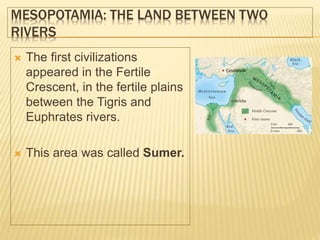
 The first civilizations 
appeared in the Fertile 
Crescent, in the fertile plains 
between the Tigris and 
Euphrates rivers. 
 This area was called Sumer.
POLITICAL ORGANIZATION 
 agriculture changed 
Neolithic villages into 
independent city-states. 
 The most important city-states 
in Sumer were Ur, 
Uruk and Lagash. 
 .
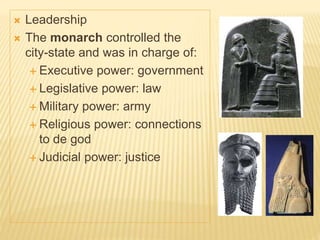
 Leadership 
 The monarch controlled the 
city-state and was in charge of: 
 Executive power: government 
 Legislative power: law 
 Military power: army 
 Religious power: connections 
to de god 
 Judicial power: justice
 He was advised by civil servants and 
scribes (bureaucracy) that collected 
taxes, applied the orders and the 
laws… 
 He controlled the population through 
the army and the priests.
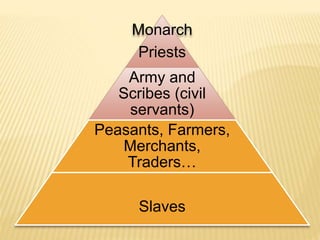
Monarch 
Priests 
Army and 
Scribes (civil 
servants) 
Peasants, Farmers, 
Merchants, 
Traders… 
Slaves
 Mesopotamian hierarchy: privileged groups and 
non-privileged groups. 
 Privileged-groups: controlled the power and the 
wealth. 
 The Monarch 
 The priests 
 The army and the civil servants 
 Non-privileged groups: produced the products 
needed by society 
 Farmers, peasants, stockbreeders… 
 Merchants, traders, craftsman... 
 Slaves: group without rights. They were their 
master’s property. They became slaves through conquest 
(war prisoners) or debts.
MESOPOTAMIAN RELIGION 
 Polytheistic: their gods were 
similar to human beings but they 
were immortal. 
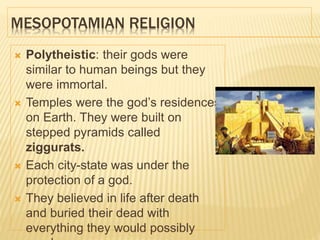
 Temples were the god’s residences 
on Earth. They were built on 
stepped pyramids called 
ziggurats. 
 Each city-state was under the 
protection of a god. 
 They believed in life after death 
and buried their dead with 
everything they would possibly 
need.
MESOPOTAMIAN CULTURE 
 The Sumerian people are 
believed to be the first ones 
to develop a written 
language. 
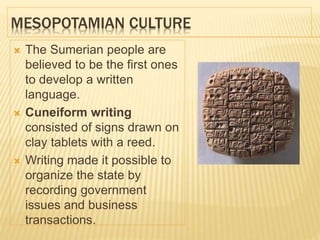
 Cuneiform writing 
consisted of signs drawn on 
clay tablets with a reed. 
 Writing made it possible to 
organize the state by 
recording government 
issues and business 
transactions.
 The first schools were created 
here to train scribes. Only 
male children from rich families 
went to school. 
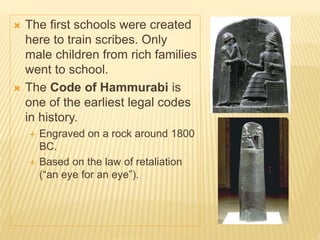
 The Code of Hammurabi is 
one of the earliest legal codes 
in history. 
 Engraved on a rock around 1800 
BC. 
 Based on the law of retaliation 
(“an eye for an eye”).
MESOPOTAMIAN ART: ARCHITECTURE 
 Materials: brick and adobe (bricks of clay and 
straw) 
 To sustain the ceiling they invented the arch and 
the vault. 
 Walls were decorated with brightly colored glazed 
ceramics with floral motives, geometric designs, 
scenes of war… 
 Type of buildings: 
 Palaces 
 Ziggurats (temples)
 Ziggurats: temples 
built at the center of 
the city. They were 
the house of god on 
Earth.
MESOPOTAMIAN ART: SCULPTURE 
 Materials: gold, lapis, clay, 
wood… 
 Types: 
 Statues (not attached) 
 Reliefs (different carving 
techniques) 
 Themes: 
 Men and women worshipping 
 Kings 
 Military or hunting scenes…
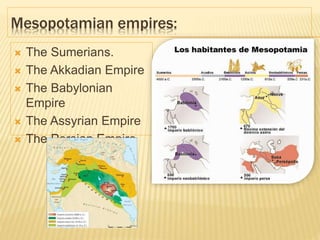
Mesopotamian empires: 
 The Sumerians. 
 The Akkadian Empire 
 The Babylonian 
Empire 
 The Assyrian Empire 
 The Persian Empire
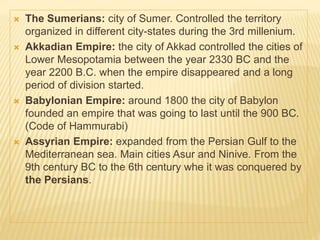
 The Sumerians: city of Sumer. Controlled the territory 
organized in different city-states during the 3rd millenium. 
 Akkadian Empire: the city of Akkad controlled the cities of 
Lower Mesopotamia between the year 2330 BC and the 
year 2200 B.C. when the empire disappeared and a long 
period of division started. 
 Babylonian Empire: around 1800 the city of Babylon 
founded an empire that was going to last until the 900 BC. 
(Code of Hammurabi) 
 Assyrian Empire: expanded from the Persian Gulf to the 
Mediterranean sea. Main cities Asur and Ninive. From the 
9th century BC to the 6th century whe it was conquered by 
the Persians.
WHAT DID MESOPOTAMIANS DO FOR US?

Mesopotamia

  • 1.
  • 2.
    THE FIRST URBANCIVILIZATIONS: THE RIVER CIVILIZATIONS  Some 6 000 years ago, some Neolithic villages became cities as a result of agricultural and commercial prosperity.  These civilisations invented writing.
  • 3.
     The firstgreat civilizations developed along large rivers surrounded by fertile land:  Mesopotamia: Tigris and Euphrates Rivers  Egypt: the River Nile  India: Indus River  China: Huang He (Yellow) and Yangtze (Blue) Rivers
  • 5.
    MESOPOTAMIA: THE LANDBETWEEN TWO RIVERS  The first civilizations appeared in the Fertile Crescent, in the fertile plains between the Tigris and Euphrates rivers.  This area was called Sumer.
  • 6.
    POLITICAL ORGANIZATION agriculture changed Neolithic villages into independent city-states.  The most important city-states in Sumer were Ur, Uruk and Lagash.  .
  • 7.
     Leadership The monarch controlled the city-state and was in charge of:  Executive power: government  Legislative power: law  Military power: army  Religious power: connections to de god  Judicial power: justice
  • 8.
     He wasadvised by civil servants and scribes (bureaucracy) that collected taxes, applied the orders and the laws…  He controlled the population through the army and the priests.
  • 9.
    Monarch Priests Armyand Scribes (civil servants) Peasants, Farmers, Merchants, Traders… Slaves
  • 10.
     Mesopotamian hierarchy:privileged groups and non-privileged groups.  Privileged-groups: controlled the power and the wealth.  The Monarch  The priests  The army and the civil servants  Non-privileged groups: produced the products needed by society  Farmers, peasants, stockbreeders…  Merchants, traders, craftsman...  Slaves: group without rights. They were their master’s property. They became slaves through conquest (war prisoners) or debts.
  • 11.
    MESOPOTAMIAN RELIGION Polytheistic: their gods were similar to human beings but they were immortal.  Temples were the god’s residences on Earth. They were built on stepped pyramids called ziggurats.  Each city-state was under the protection of a god.  They believed in life after death and buried their dead with everything they would possibly need.
  • 12.
    MESOPOTAMIAN CULTURE The Sumerian people are believed to be the first ones to develop a written language.  Cuneiform writing consisted of signs drawn on clay tablets with a reed.  Writing made it possible to organize the state by recording government issues and business transactions.
  • 13.
     The firstschools were created here to train scribes. Only male children from rich families went to school.  The Code of Hammurabi is one of the earliest legal codes in history.  Engraved on a rock around 1800 BC.  Based on the law of retaliation (“an eye for an eye”).
  • 14.
    MESOPOTAMIAN ART: ARCHITECTURE  Materials: brick and adobe (bricks of clay and straw)  To sustain the ceiling they invented the arch and the vault.  Walls were decorated with brightly colored glazed ceramics with floral motives, geometric designs, scenes of war…  Type of buildings:  Palaces  Ziggurats (temples)
  • 15.
     Ziggurats: temples built at the center of the city. They were the house of god on Earth.
  • 17.
    MESOPOTAMIAN ART: SCULPTURE  Materials: gold, lapis, clay, wood…  Types:  Statues (not attached)  Reliefs (different carving techniques)  Themes:  Men and women worshipping  Kings  Military or hunting scenes…
  • 19.
    Mesopotamian empires: The Sumerians.  The Akkadian Empire  The Babylonian Empire  The Assyrian Empire  The Persian Empire
  • 20.
     The Sumerians:city of Sumer. Controlled the territory organized in different city-states during the 3rd millenium.  Akkadian Empire: the city of Akkad controlled the cities of Lower Mesopotamia between the year 2330 BC and the year 2200 B.C. when the empire disappeared and a long period of division started.  Babylonian Empire: around 1800 the city of Babylon founded an empire that was going to last until the 900 BC. (Code of Hammurabi)  Assyrian Empire: expanded from the Persian Gulf to the Mediterranean sea. Main cities Asur and Ninive. From the 9th century BC to the 6th century whe it was conquered by the Persians.
  • 21.