
Merging Supply Chain and
Blockchain Technologies
By Amr M., Elgazzar M., Kassem S., Ezzat M.
Since the rise of the 20th century, the dependency of businesses on
supply chains has increased. Supply chains have become a vital business
process that can encourage the competitiveness of a business in the
market.
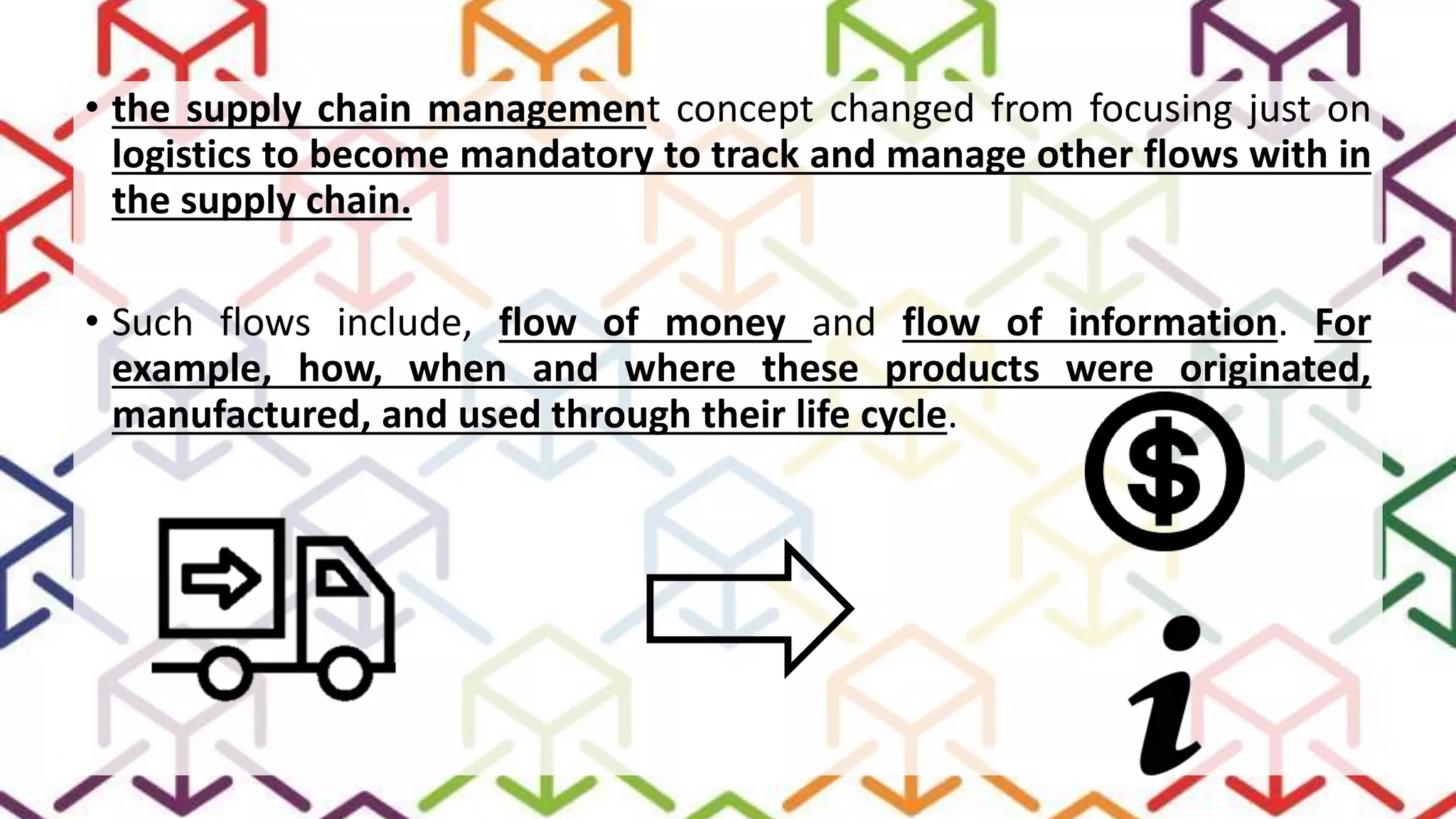
• the supply chain management concept changed from focusing just on
logistics to become mandatory to track and manage other flows with in
the supply chain.
• Such flows include, flow of money and flow of information. For
example, how, when and where these products were originated,
manufactured, and used through their life cycle.
Blockchain is a data structure format that makes it possible to create a
stack of existence with a specific time stamp for each digital asset.
The rest of the paper is organized as follows:
1. previous work considering adopting Blockchain in the supply chain
domain is presented.
2. investigates different applications of Blockchain.
3. a short description of implementation is given.
4. Finally, provides conclusion of the paper.
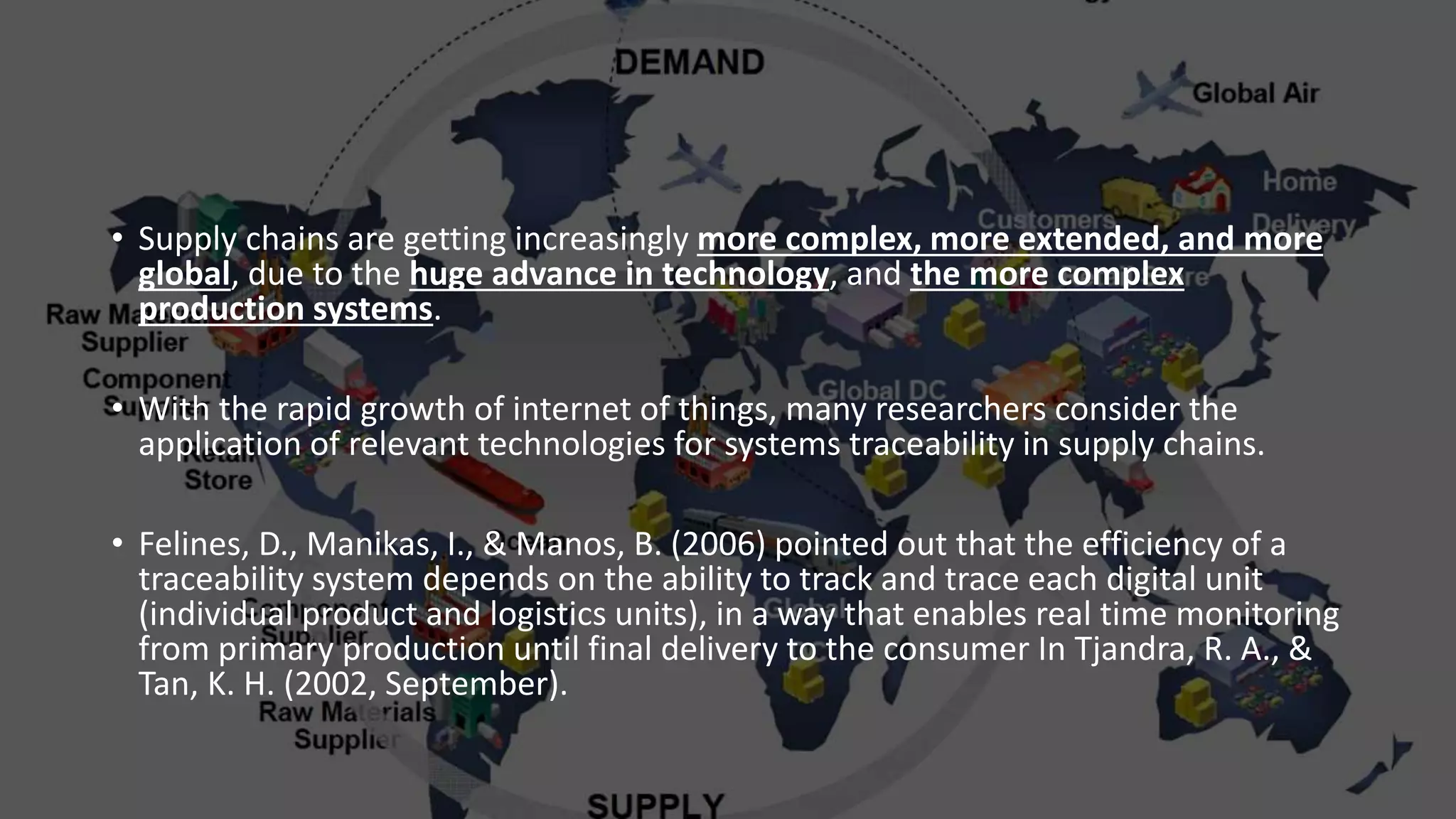
• Supply chains are getting increasingly more complex, more extended, and more
global, due to the huge advance in technology, and the more complex
production systems.
• With the rapid growth of internet of things, many researchers consider the
application of relevant technologies for systems traceability in supply chains.
• Felines, D., Manikas, I., & Manos, B. (2006) pointed out that the efficiency of a
traceability system depends on the ability to track and trace each digital unit
(individual product and logistics units), in a way that enables real time monitoring
from primary production until final delivery to the consumer In Tjandra, R. A., &
Tan, K. H. (2002, September).
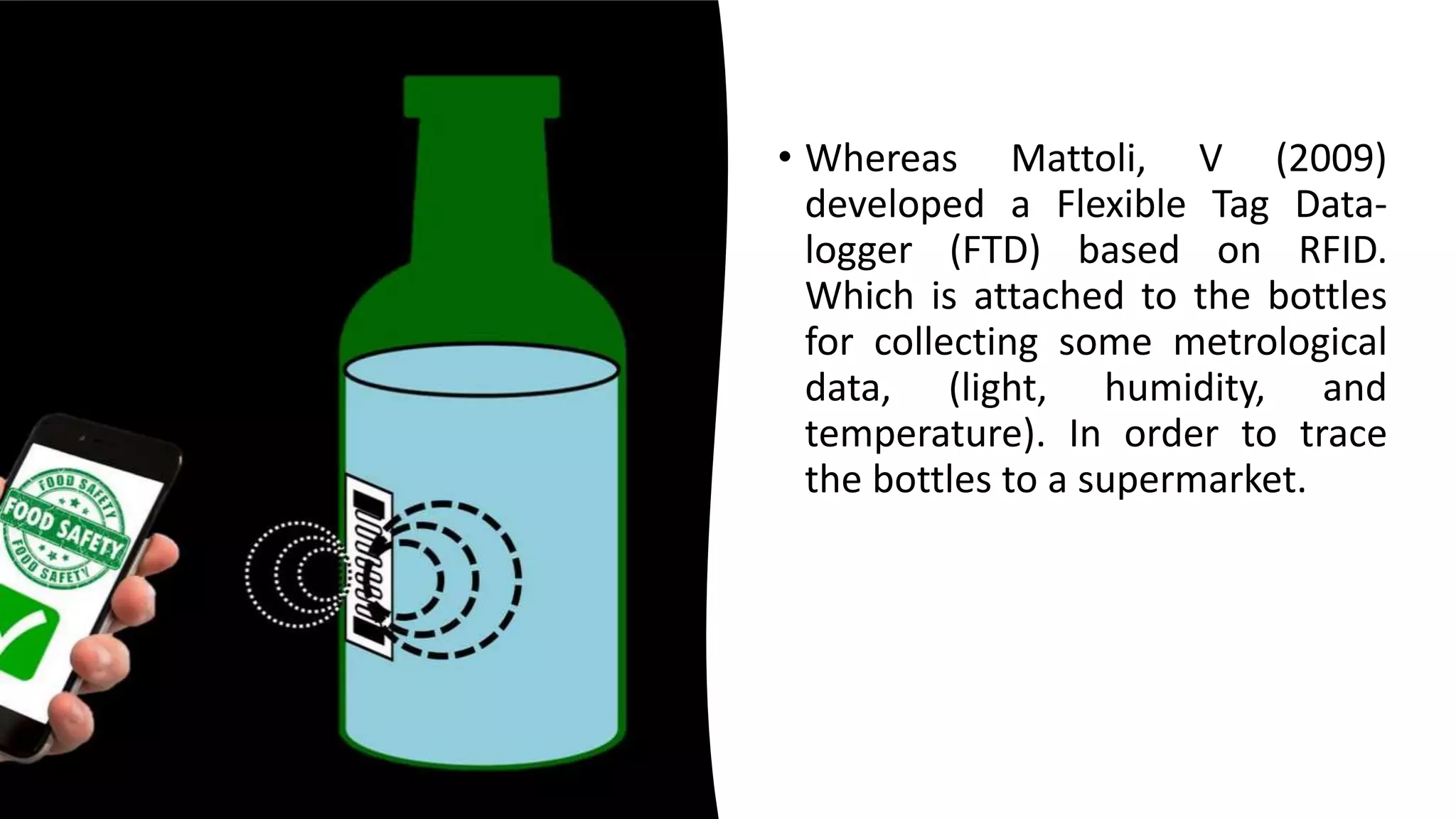
• Whereas Mattoli, V (2009)
developed a Flexible Tag Data-
logger (FTD) based on RFID.
Which is attached to the bottles
for collecting some metrological
data, (light, humidity, and
temperature). In order to trace
the bottles to a supermarket.
• The digital supply chain is
described by the exchange of
information between
suppliers (financial,
production, design, research,
and/or competition) to
enhance communication
between stakeholders in the
chain.
• Integrated supply chain
information models are an
essential feature at the
current time.
• BigchainDB allows for the deployment of large-scale applications in a variety of use cases and industries from
intellectual property and identity to supply chain, IoT and artificial intelligence.
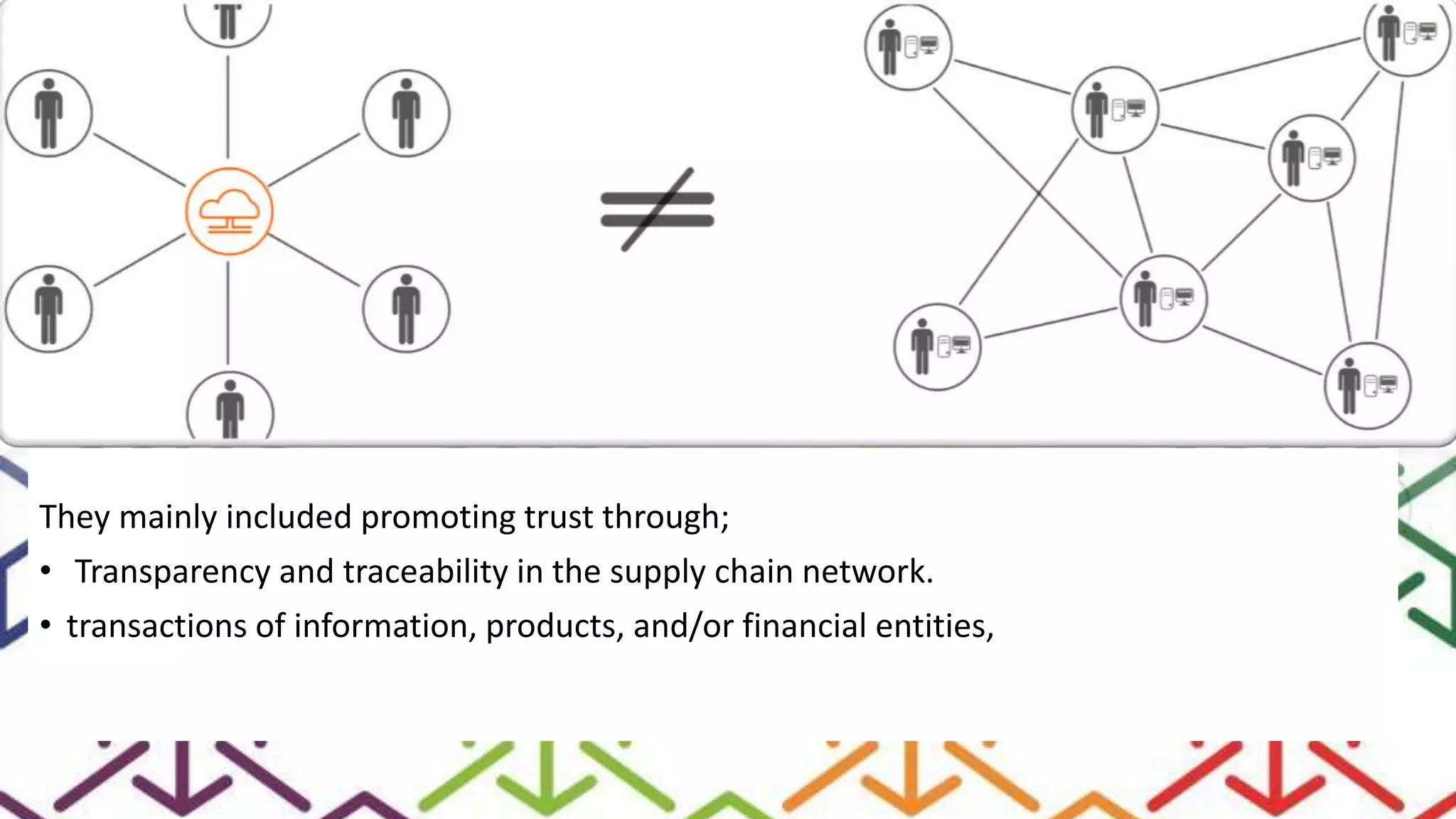
They mainly included promoting trust through;
• Transparency and traceability in the supply chain network.
• transactions of information, products, and/or financial entities,
The benefits of Blockchain technology in supply chains could be seen
across two domains, namely, data transparency and resource sharing.
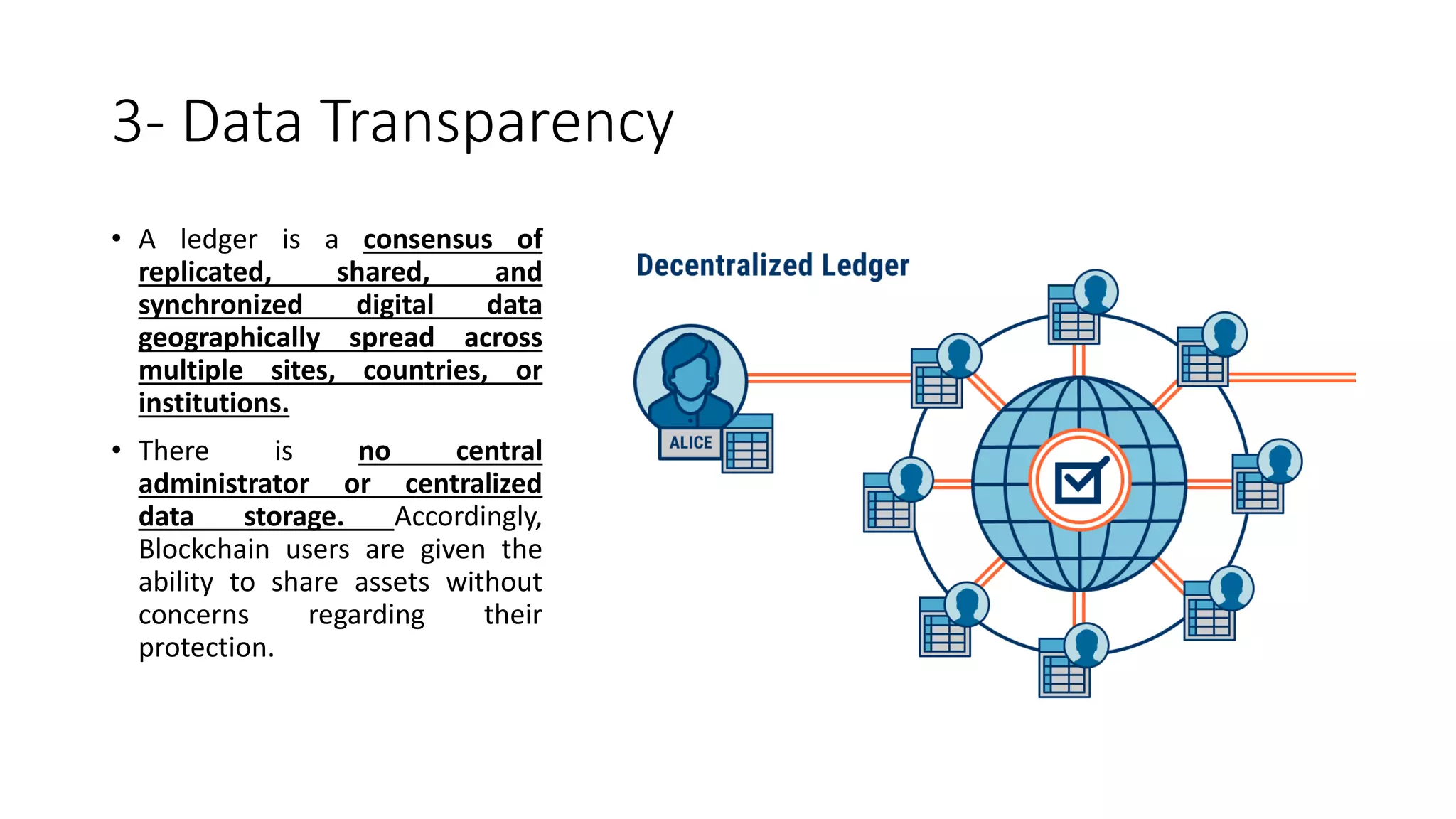
3- Data Transparency
• A ledger is a consensus of
replicated, shared, and
synchronized digital data
geographically spread across
multiple sites, countries, or
institutions.
• There is no central
administrator or centralized
data storage. Accordingly,
Blockchain users are given the
ability to share assets without
concerns regarding their
protection.
3.1 Enhancing
information:
• Supply chain planning requires
forecasting demand, transportation,
inventory, etc.
• As a result of data transparency of
the distributed ledger (Blockchain),
trust is built among users.
3.1 Enhancing
information:
• This step leads to enhancing both
the level of information and
coordination among the supply
chain,
• leading to more win-win situations
towards increasing the profitability
among the supply chain
3.1 Enhancing information:
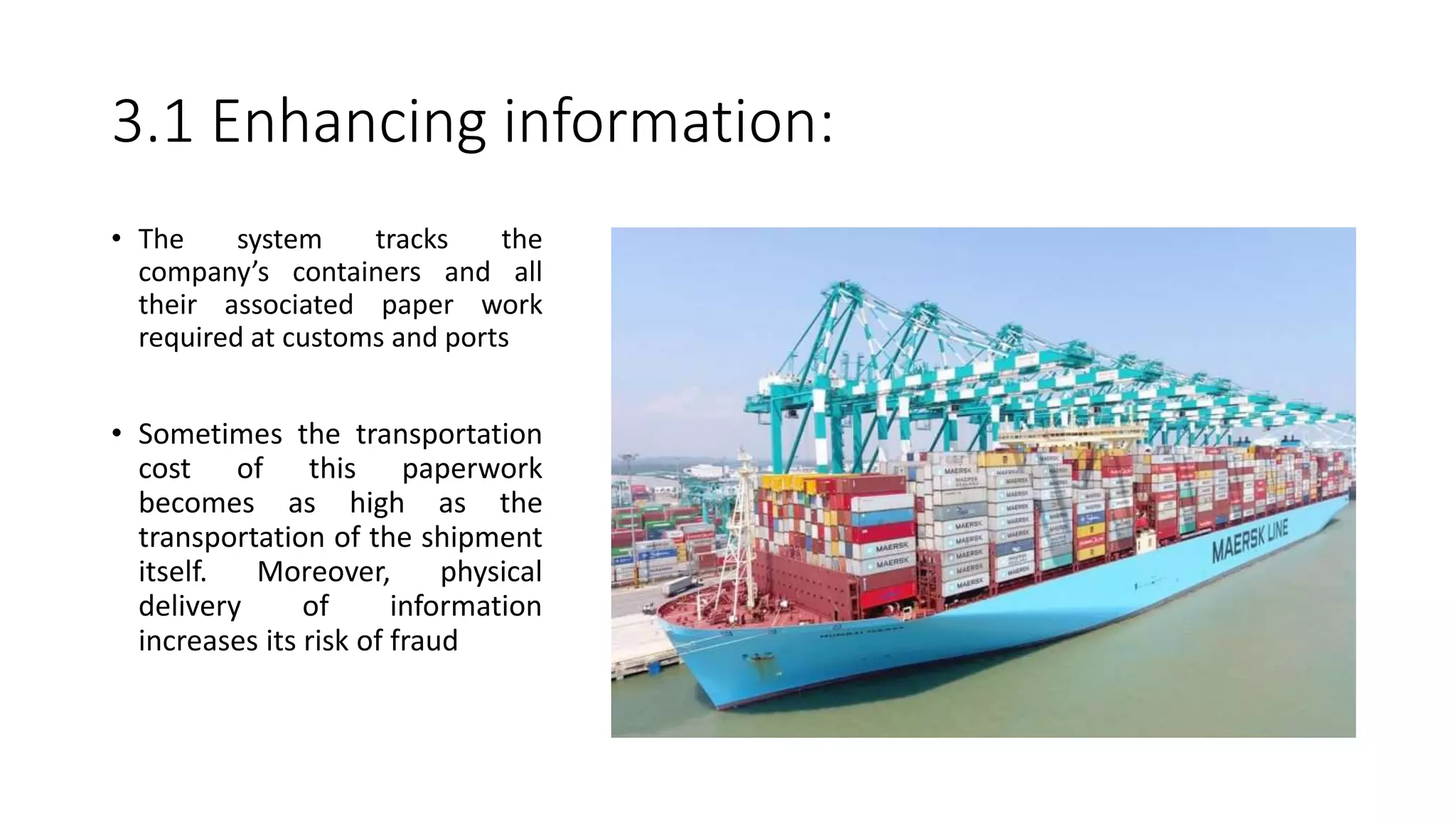
• The system tracks the
company’s containers and all
their associated paper work
required at customs and ports
• Sometimes the transportation
cost of this paperwork
becomes as high as the
transportation of the shipment
itself. Moreover, physical
delivery of information
increases its risk of fraud
3.2 Demand Forecasting
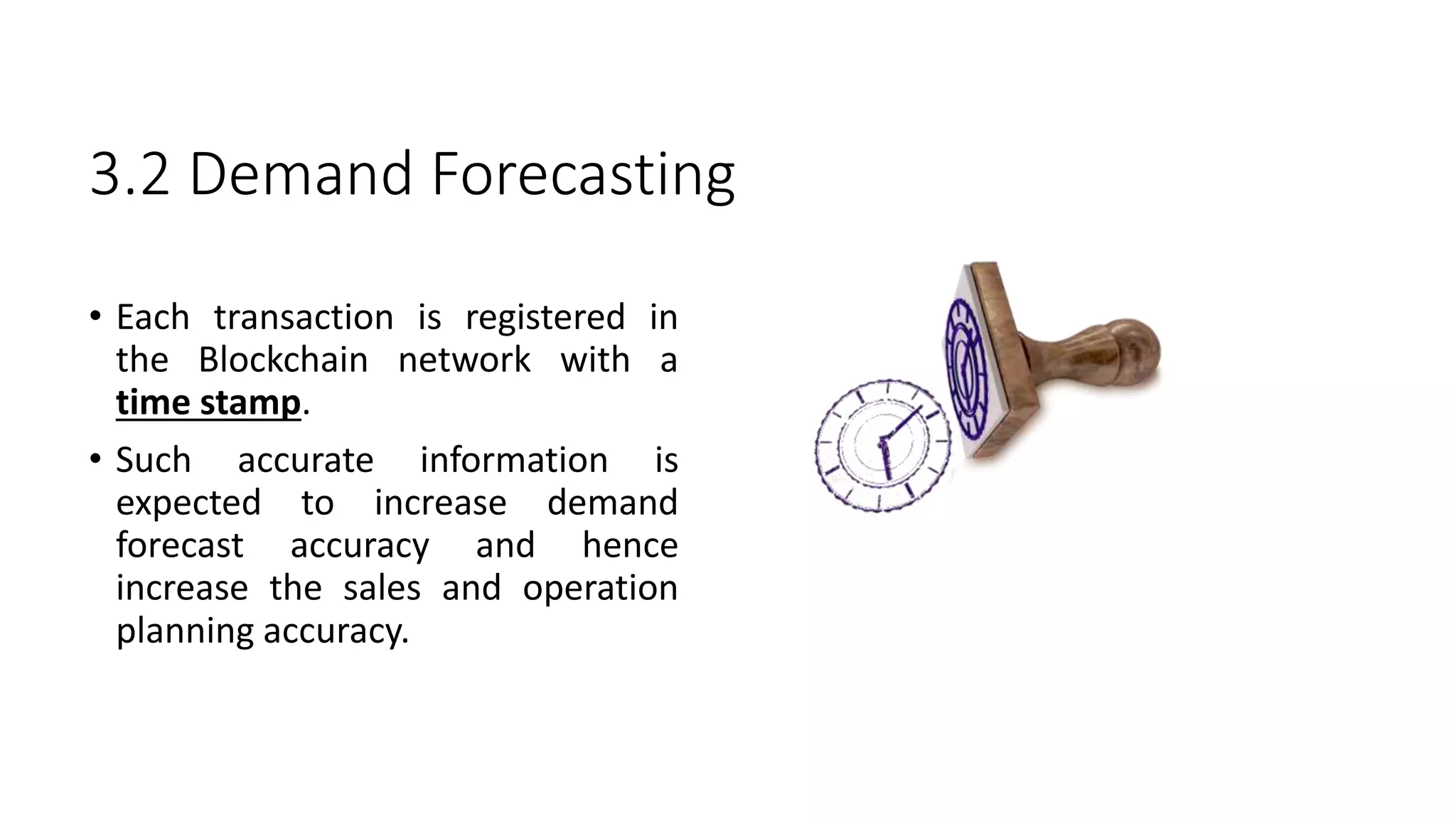
• Each transaction is registered in
the Blockchain network with a
time stamp.
• Such accurate information is
expected to increase demand
forecast accuracy and hence
increase the sales and operation
planning accuracy.
3.2 Demand Forecasting
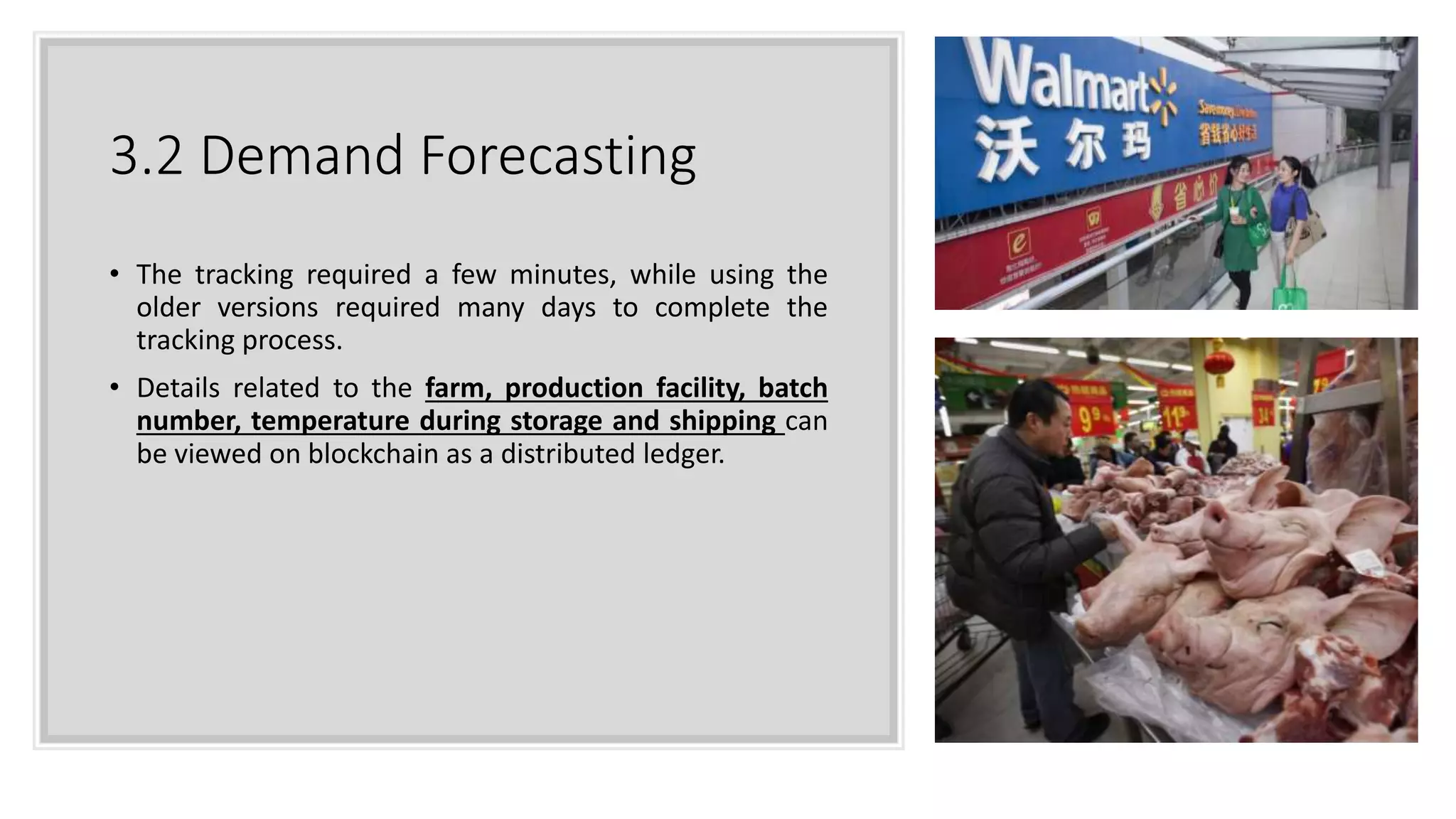
• The tracking required a few minutes, while using the
older versions required many days to complete the
tracking process.
• Details related to the farm, production facility, batch
number, temperature during storage and shipping can
be viewed on blockchain as a distributed ledger.
4 Resource sharing
• One of the main advantages of Blockchain
technology is data transparency. This
feature could help the decision maker to
know which digital assets in the supply
chain are fully utilized
4.1 Sharing resources
in Supply Chain
networks
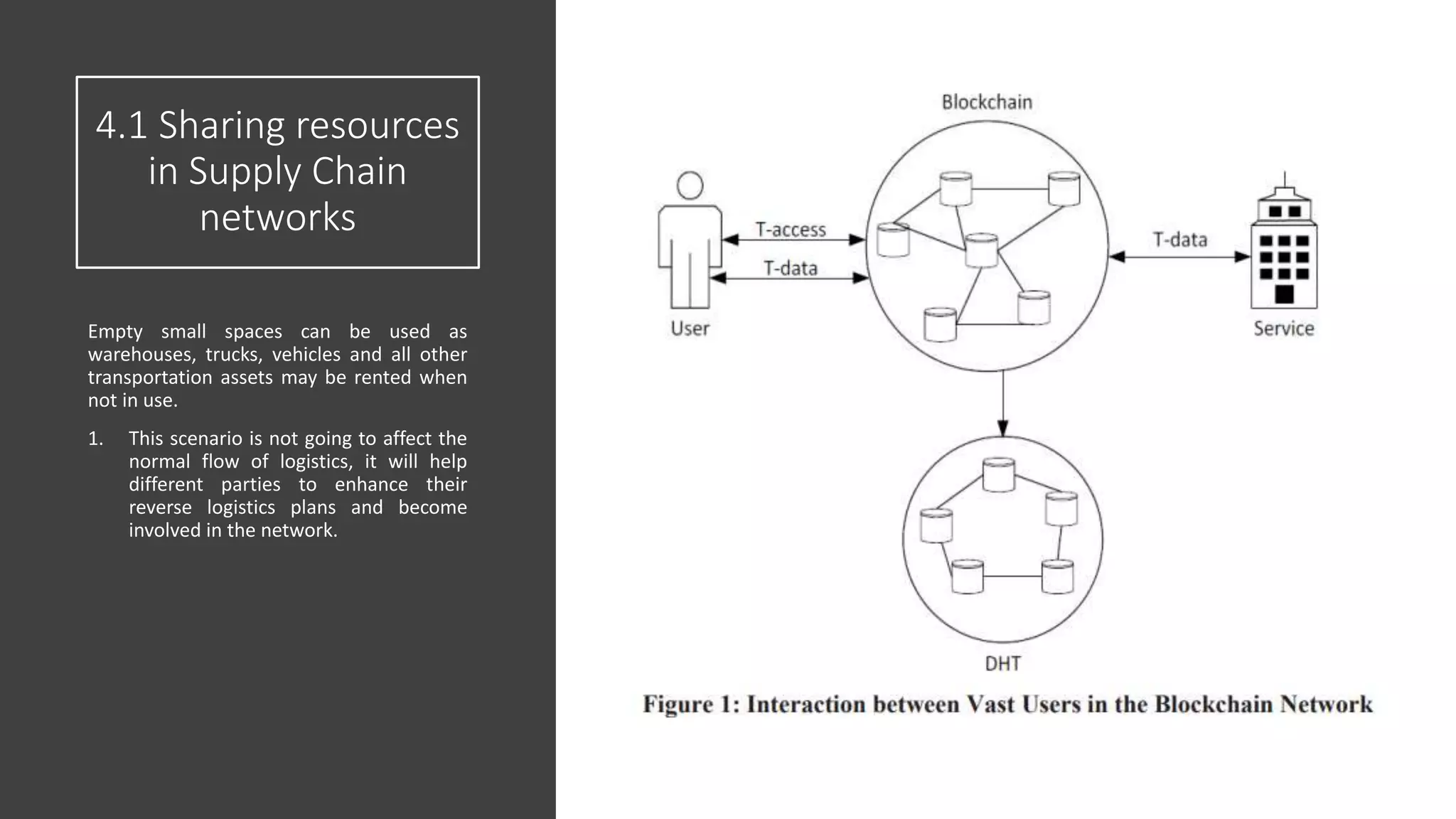
Empty small spaces can be used as
warehouses, trucks, vehicles and all other
transportation assets may be rented when
not in use.
1. This scenario is not going to affect the
normal flow of logistics, it will help
different parties to enhance their
reverse logistics plans and become
involved in the network.
4.1 Sharing resources
in Supply Chain
networks
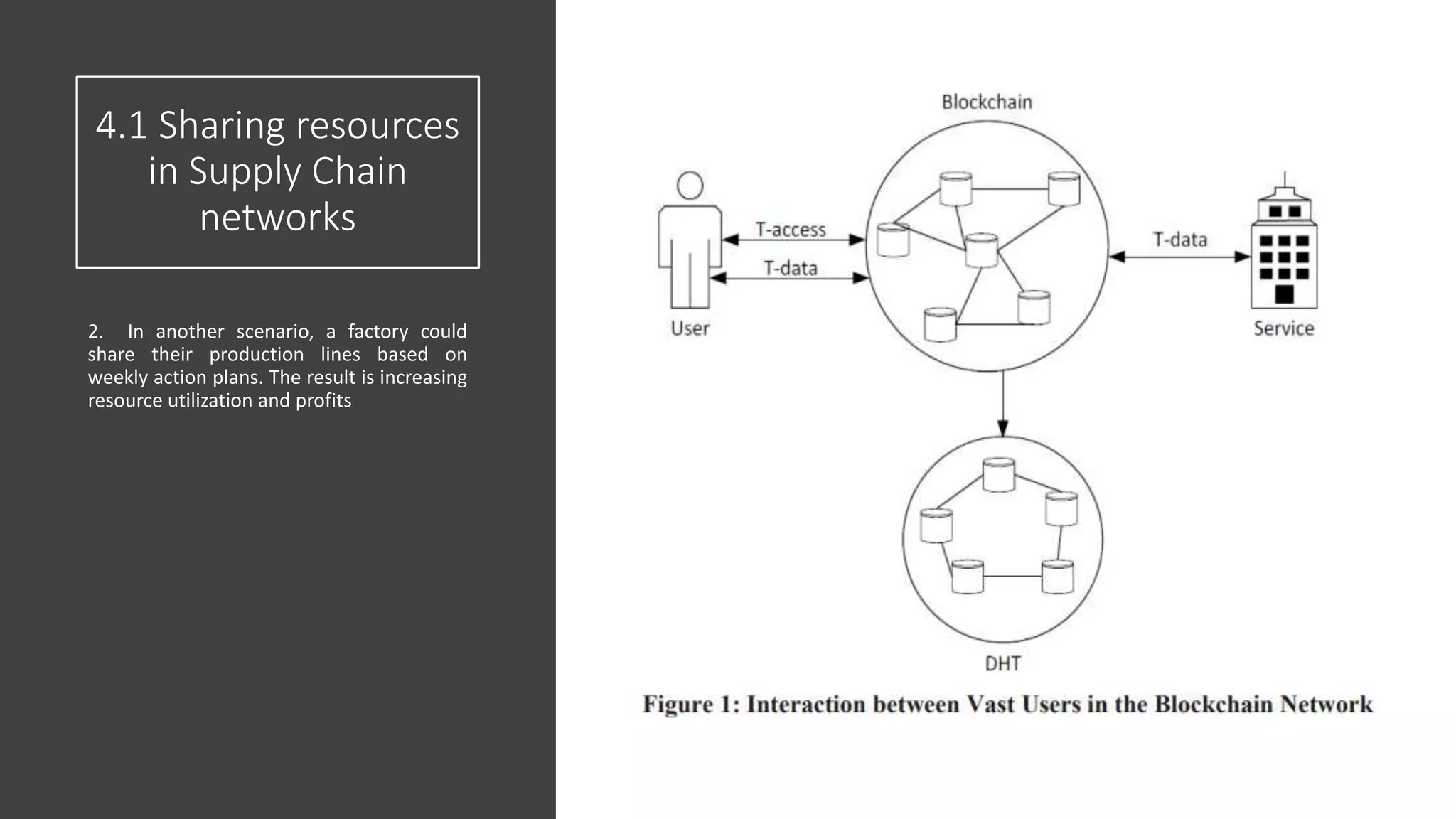
2. In another scenario, a factory could
share their production lines based on
weekly action plans. The result is increasing
resource utilization and profits
5 Conclusion
• This paper proposed 3 scenarios to merge Blockchain and supply
chain in order to avoid some of the challenges faced by supply chains.
The scenarios are based on Data Transparency and Resource sharing.
• The paper concludes that the proposed scenarios of merging
Blockchain and supply chain technologies will enhance supply chains
performance.
Mohammad Amr
Researcher and Technology
Transfer Officer
Innovation, Entrepreneurship and
Competitiveness Center
Nile University
Mobile No.: +02 01003049259
Email: mamr@nu.edu.eg

Merging supply chain and blockchain technologies

  • 1.
    Merging Supply Chainand Blockchain Technologies By Amr M., Elgazzar M., Kassem S., Ezzat M.
  • 2.
    Since the riseof the 20th century, the dependency of businesses on supply chains has increased. Supply chains have become a vital business process that can encourage the competitiveness of a business in the market.
  • 3.
    • the supplychain management concept changed from focusing just on logistics to become mandatory to track and manage other flows with in the supply chain. • Such flows include, flow of money and flow of information. For example, how, when and where these products were originated, manufactured, and used through their life cycle.
  • 4.
    Blockchain is adata structure format that makes it possible to create a stack of existence with a specific time stamp for each digital asset.
  • 5.
    The rest ofthe paper is organized as follows: 1. previous work considering adopting Blockchain in the supply chain domain is presented. 2. investigates different applications of Blockchain. 3. a short description of implementation is given. 4. Finally, provides conclusion of the paper.
  • 6.
    • Supply chainsare getting increasingly more complex, more extended, and more global, due to the huge advance in technology, and the more complex production systems. • With the rapid growth of internet of things, many researchers consider the application of relevant technologies for systems traceability in supply chains. • Felines, D., Manikas, I., & Manos, B. (2006) pointed out that the efficiency of a traceability system depends on the ability to track and trace each digital unit (individual product and logistics units), in a way that enables real time monitoring from primary production until final delivery to the consumer In Tjandra, R. A., & Tan, K. H. (2002, September).
  • 7.
    • Whereas Mattoli,V (2009) developed a Flexible Tag Data- logger (FTD) based on RFID. Which is attached to the bottles for collecting some metrological data, (light, humidity, and temperature). In order to trace the bottles to a supermarket.
  • 8.
    • The digitalsupply chain is described by the exchange of information between suppliers (financial, production, design, research, and/or competition) to enhance communication between stakeholders in the chain. • Integrated supply chain information models are an essential feature at the current time.
  • 9.
    • BigchainDB allowsfor the deployment of large-scale applications in a variety of use cases and industries from intellectual property and identity to supply chain, IoT and artificial intelligence.
  • 10.
    They mainly includedpromoting trust through; • Transparency and traceability in the supply chain network. • transactions of information, products, and/or financial entities,
  • 11.
    The benefits ofBlockchain technology in supply chains could be seen across two domains, namely, data transparency and resource sharing.
  • 12.
    3- Data Transparency •A ledger is a consensus of replicated, shared, and synchronized digital data geographically spread across multiple sites, countries, or institutions. • There is no central administrator or centralized data storage. Accordingly, Blockchain users are given the ability to share assets without concerns regarding their protection.
  • 13.
    3.1 Enhancing information: • Supplychain planning requires forecasting demand, transportation, inventory, etc. • As a result of data transparency of the distributed ledger (Blockchain), trust is built among users.
  • 14.
    3.1 Enhancing information: • Thisstep leads to enhancing both the level of information and coordination among the supply chain, • leading to more win-win situations towards increasing the profitability among the supply chain
  • 15.
    3.1 Enhancing information: •The system tracks the company’s containers and all their associated paper work required at customs and ports • Sometimes the transportation cost of this paperwork becomes as high as the transportation of the shipment itself. Moreover, physical delivery of information increases its risk of fraud
  • 16.
    3.2 Demand Forecasting •Each transaction is registered in the Blockchain network with a time stamp. • Such accurate information is expected to increase demand forecast accuracy and hence increase the sales and operation planning accuracy.
  • 17.
    3.2 Demand Forecasting •The tracking required a few minutes, while using the older versions required many days to complete the tracking process. • Details related to the farm, production facility, batch number, temperature during storage and shipping can be viewed on blockchain as a distributed ledger.
  • 18.
    4 Resource sharing •One of the main advantages of Blockchain technology is data transparency. This feature could help the decision maker to know which digital assets in the supply chain are fully utilized
  • 19.
    4.1 Sharing resources inSupply Chain networks Empty small spaces can be used as warehouses, trucks, vehicles and all other transportation assets may be rented when not in use. 1. This scenario is not going to affect the normal flow of logistics, it will help different parties to enhance their reverse logistics plans and become involved in the network.
  • 20.
    4.1 Sharing resources inSupply Chain networks 2. In another scenario, a factory could share their production lines based on weekly action plans. The result is increasing resource utilization and profits
  • 21.
    5 Conclusion • Thispaper proposed 3 scenarios to merge Blockchain and supply chain in order to avoid some of the challenges faced by supply chains. The scenarios are based on Data Transparency and Resource sharing. • The paper concludes that the proposed scenarios of merging Blockchain and supply chain technologies will enhance supply chains performance.
  • 22.
    Mohammad Amr Researcher andTechnology Transfer Officer Innovation, Entrepreneurship and Competitiveness Center Nile University Mobile No.: +02 01003049259 Email: mamr@nu.edu.eg

Editor's Notes

  • #3 Since the rise of the 20th century, the dependency of businesses on supply chains has increased. Supply chains have become a vital business process that can encourage the competitiveness of a business in the market. It has been recently emphasized that the success of a company is based on the interaction between flows of information, materials, workers and capital equipment. Logistics have been playing a major role in achieving an effective value proposition to the customers as defined by Cavinato Kshetri, N. (2018).
  • #4 Supply chain management was used for decades to deliver goods. Later, There are billions of products being manufactured every day through complex systems of supply chains that extend to all parts of the world. However, there are several questions regarding these products. Even before reaching the end consumer, goods pass through a wide network of retailers, distributors, transporters, inventories, and suppliers that participate in every process in the supply chain (i.e. design, production, delivery, sales, etc...).