A PRESENTATION ON
Roll No : 16
Ing Vysya Bank Merger With Kotak
Mahindra Bank Case
Prepare By : Akash Pandya
Content
 M&AActivity In Indian Banking Sector
 About Kotak Mahindra Bank Limited (Kotak)
 About ING Vysya Bank Limited (ING Vysya)
 The Merger Deal
 Synergies Out Of The Merger
 Challenges Of This Deal
 Looking Forward
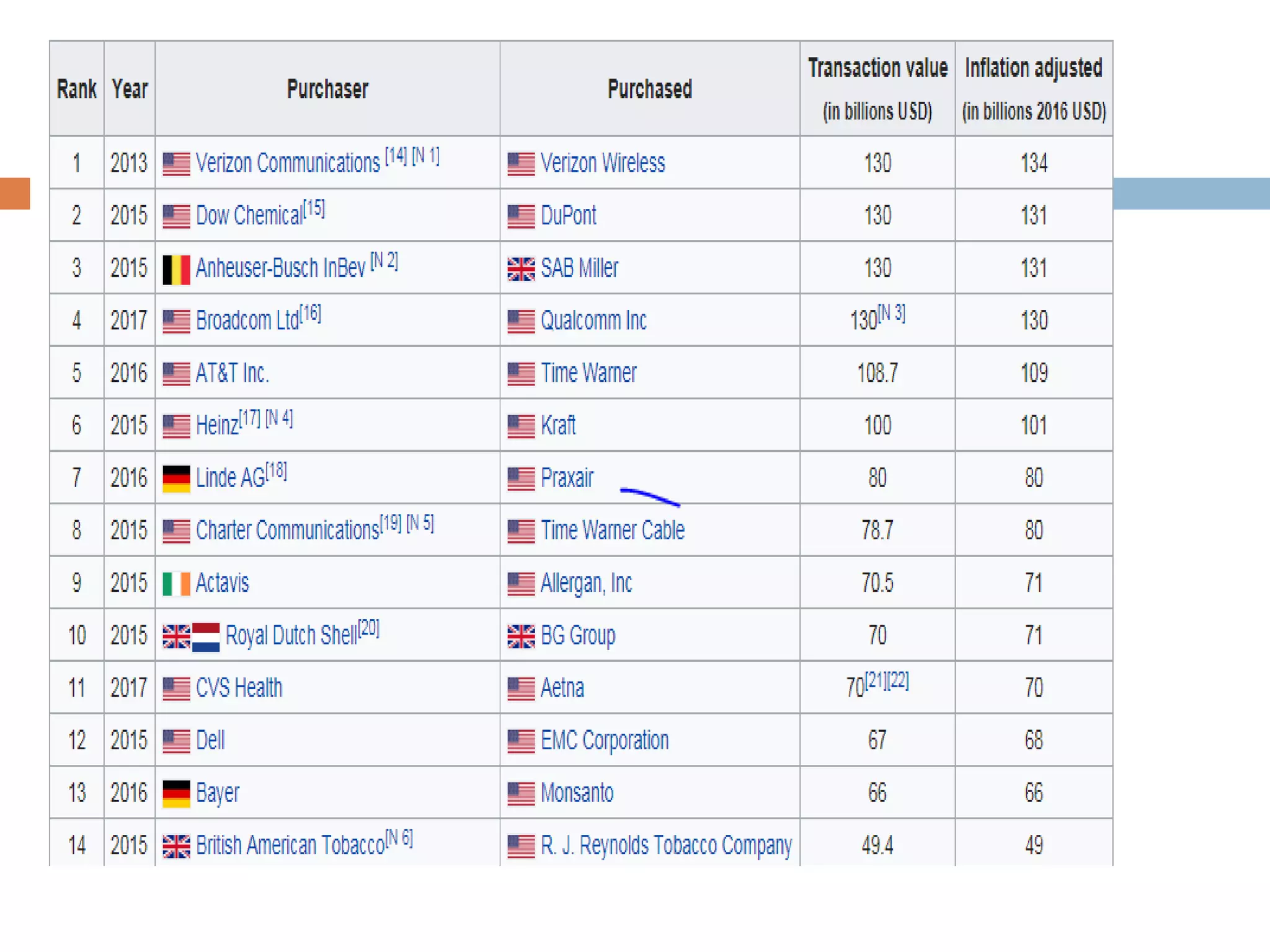
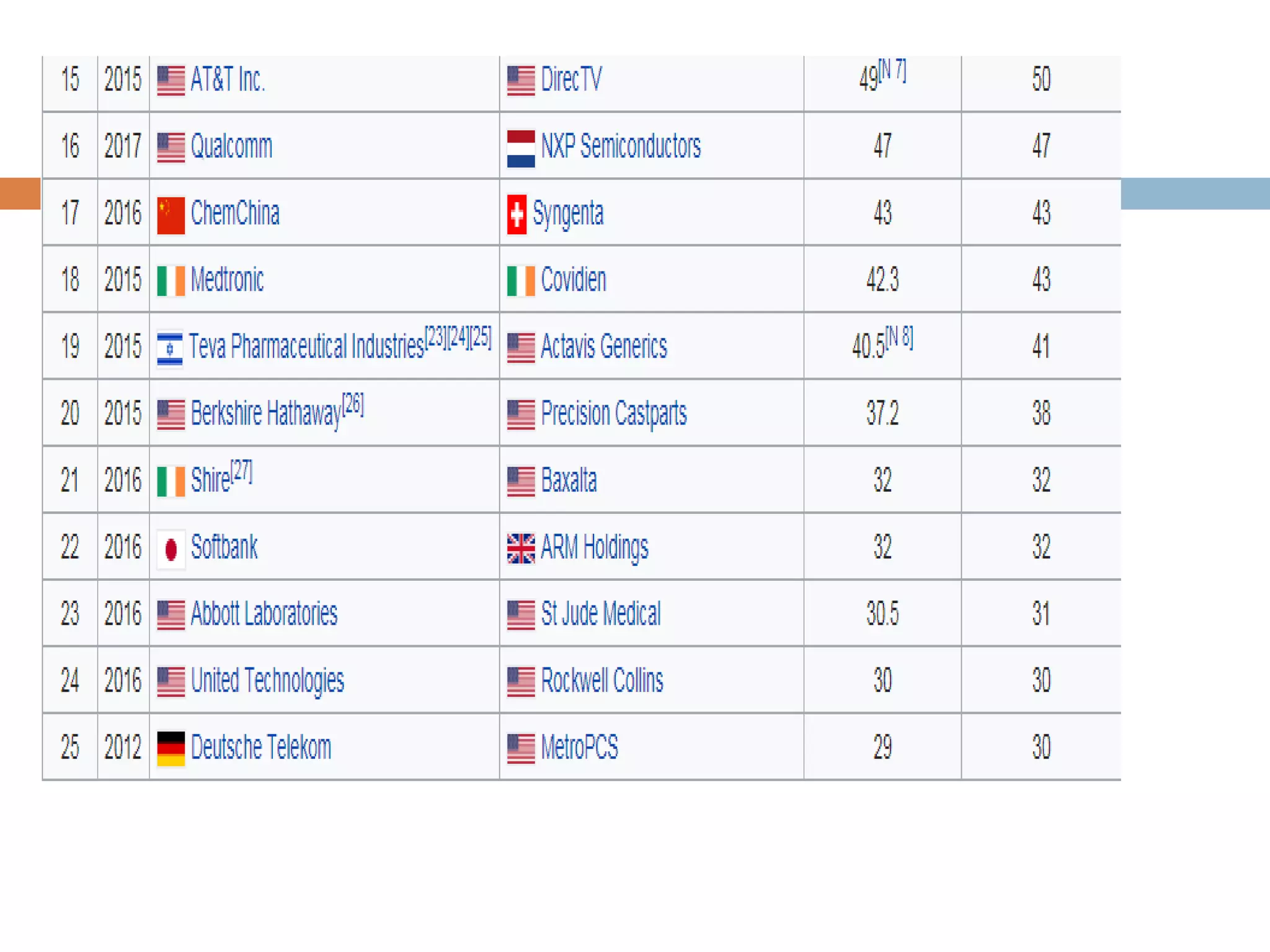
 Top 25 M&A deals worldwide by value from
2011 to 2020
M&A Activity In Indian Banking
Sector
 The Indian banking sector did not witness too many
M&A activities when compared to western and
other countries.
 After the first stage of nationalization in 1969, only
34 mergers took place in the Indian banking sector.
 In 26 of these deals, PSBs acquired private sector
banks that were on the brink of failure, mostly on a
directive from the RBI.
 The remaining 8 deals happened between private
sector banks.
 The merger prior to the Kotak and ING Vysya merger in the private sector
banking space took place in 2010 when Bank of Rajasthan merged with
ICICI Bank in a US$398 million deal.
 There were many reasons for the low number of M&As in India. These
included restrictive regulations, a major part of the banking industry being
owned by the Indian government, and the rigid resistance by strong
employees unions.
About Kotak Mahindra Bank Limited
(Kotak)
 Stock price: KOTAKBANK (NSE) 1,005.10 -6.30 (-0.62%)
9 Nov,2017 3:30 PM IST( India Standard Time )
 Headquarters: Mumbai
 Founder: Uday Kotak
 Subsidiaries: Kotak Securities, Kotak Life Insurance, MORE
 VPs: Mr. Abhishek Bisen, Mr. Deepak Agrawal
 Kotak started as a Non Banking Financial Company (NBFC) – Kotak Mahindra
Capital Management Finance Limited (KMCMFL) – in 1985 in India.
 KMCMFL was renamed Kotak Mahindra Finance Limited (KMFL) in 1985 and it
received its banking license in February 2003 to become the first NBFC to be
converted into a full-fledged private bank in India.
 It was renamed as Kotak Mahindra Bank Limited (Kotak).
About ING Vysya Bank Limited (ING
Vysya)
 ING Vysya was incorporated as Vysya Bank Limited (Vysya Bank)
in 1930 in Bangalore, Karnataka, in Southern India.
 In 2002, ING Vysya came into existence when the ING Group
acquired a major stake in Vysya Bank.
 This was the first acquisition of an Indian bank by any foreign bank.
 Key People of the bank is Shelendara Bhanderi & Uday Sareen.
 ING Vysya offered various financial services under four business
segments – Treasury, Corporate / Wholesale Banking, Retail
Banking, and Other Banking Operations.
 At the end of FY14, ING Vysya had generated revenue of Rs. 60.72
billion with a net profit of Rs. 6.58 billion .
The Merger Deal
 On November 20, 2014, Kotak announced the merger with ING Vysya in
an all-stock deal worth of Rs. 148.51 billion or US$2.4 billion.
 On regulatory approval, all of ING Vysya’s branches and businesses would
merge with Kotak.
 ING Vysya’s shareholders would get 0.725 share of Kotak stock for every
one stock of ING Vysya they held i.e., 725 shares of Kotak for every 1,000
shares of ING Vysya.
 This exchange ratio indicated that the implied price of each stock of ING
Vysya was Rs. 790 which was based on the average stock price of Kotak
and ING Vysya for one month – from October 20, 2014, to November
19,2014 – which came to Rs. 1089.50 and Rs. 682 respectively.
Synergies Out Of The Merger
 The merger increased the geographical presence and further
deepened Kotak’s network, thanks to the complementary network of
ING Vysya.
 The merger increased Kotak’s number of branches and its ATMs
network by 47% and 35% to 1,214 and 1,794 respectively.
 Before the merger, 80% of the Kotak’s branches were in the western
and northern parts of the country and only 15% were in the southern
part of India.
 On the other hand, ING Vysya had a greater presence in the
southern part of the country with 64% of its branches located there
and only 32% its branches in the western and northern parts of the
country.
 After the merger, Kotak had a balanced presence in different parts
of the country.
Challenges Of This Deal
 The major challenge was related to human resource management.
 The salary structure of both banks was also quite different. Around
one-third employees of the 10,591 employees of ING Vysya were
unionized and their pay structure came under the Indian Banks
Association.
 The employees of ING Vysya were worried whether their pay
structure would continue or not.
 Some of the employees of ING Vysya had other concerns too.
 Employees in positions like regional manager, sales head, zonal
manager, etc., were apprehensive that duplication of positions could
lead to transfers or even to their losing their jobs.
Looking Forward
 According to experts, completing the deal under
the nose of the employees’ union was the big
challenge for Kotak as the employees had already
threatened to go on strike on the issue.
 In 2009, a merger deal between Federal Bank
and Catholic Syrian Bank Ltd. did not go through
due to the employees union.
 The troubles for Kotak were compounded when
the Securities and Exchange Board of India
(SEBI) started an investigation into unusual
trading in the shares of Kotak and ING Vysya
before the merger was announced in November
2014.
Top 25 M&A deals worldwide by value
from 2011 to 2020
Merger case study
Merger case study
Merger case study

Merger case study

  • 1.
    A PRESENTATION ON RollNo : 16 Ing Vysya Bank Merger With Kotak Mahindra Bank Case Prepare By : Akash Pandya
  • 3.
    Content  M&AActivity InIndian Banking Sector  About Kotak Mahindra Bank Limited (Kotak)  About ING Vysya Bank Limited (ING Vysya)  The Merger Deal  Synergies Out Of The Merger  Challenges Of This Deal  Looking Forward  Top 25 M&A deals worldwide by value from 2011 to 2020
  • 4.
    M&A Activity InIndian Banking Sector  The Indian banking sector did not witness too many M&A activities when compared to western and other countries.  After the first stage of nationalization in 1969, only 34 mergers took place in the Indian banking sector.  In 26 of these deals, PSBs acquired private sector banks that were on the brink of failure, mostly on a directive from the RBI.  The remaining 8 deals happened between private sector banks.
  • 5.
     The mergerprior to the Kotak and ING Vysya merger in the private sector banking space took place in 2010 when Bank of Rajasthan merged with ICICI Bank in a US$398 million deal.  There were many reasons for the low number of M&As in India. These included restrictive regulations, a major part of the banking industry being owned by the Indian government, and the rigid resistance by strong employees unions.
  • 6.
    About Kotak MahindraBank Limited (Kotak)  Stock price: KOTAKBANK (NSE) 1,005.10 -6.30 (-0.62%) 9 Nov,2017 3:30 PM IST( India Standard Time )  Headquarters: Mumbai  Founder: Uday Kotak  Subsidiaries: Kotak Securities, Kotak Life Insurance, MORE  VPs: Mr. Abhishek Bisen, Mr. Deepak Agrawal  Kotak started as a Non Banking Financial Company (NBFC) – Kotak Mahindra Capital Management Finance Limited (KMCMFL) – in 1985 in India.  KMCMFL was renamed Kotak Mahindra Finance Limited (KMFL) in 1985 and it received its banking license in February 2003 to become the first NBFC to be converted into a full-fledged private bank in India.  It was renamed as Kotak Mahindra Bank Limited (Kotak).
  • 7.
    About ING VysyaBank Limited (ING Vysya)  ING Vysya was incorporated as Vysya Bank Limited (Vysya Bank) in 1930 in Bangalore, Karnataka, in Southern India.  In 2002, ING Vysya came into existence when the ING Group acquired a major stake in Vysya Bank.  This was the first acquisition of an Indian bank by any foreign bank.  Key People of the bank is Shelendara Bhanderi & Uday Sareen.  ING Vysya offered various financial services under four business segments – Treasury, Corporate / Wholesale Banking, Retail Banking, and Other Banking Operations.  At the end of FY14, ING Vysya had generated revenue of Rs. 60.72 billion with a net profit of Rs. 6.58 billion .
  • 8.
    The Merger Deal On November 20, 2014, Kotak announced the merger with ING Vysya in an all-stock deal worth of Rs. 148.51 billion or US$2.4 billion.  On regulatory approval, all of ING Vysya’s branches and businesses would merge with Kotak.  ING Vysya’s shareholders would get 0.725 share of Kotak stock for every one stock of ING Vysya they held i.e., 725 shares of Kotak for every 1,000 shares of ING Vysya.  This exchange ratio indicated that the implied price of each stock of ING Vysya was Rs. 790 which was based on the average stock price of Kotak and ING Vysya for one month – from October 20, 2014, to November 19,2014 – which came to Rs. 1089.50 and Rs. 682 respectively.
  • 9.
    Synergies Out OfThe Merger  The merger increased the geographical presence and further deepened Kotak’s network, thanks to the complementary network of ING Vysya.  The merger increased Kotak’s number of branches and its ATMs network by 47% and 35% to 1,214 and 1,794 respectively.  Before the merger, 80% of the Kotak’s branches were in the western and northern parts of the country and only 15% were in the southern part of India.  On the other hand, ING Vysya had a greater presence in the southern part of the country with 64% of its branches located there and only 32% its branches in the western and northern parts of the country.  After the merger, Kotak had a balanced presence in different parts of the country.
  • 10.
    Challenges Of ThisDeal  The major challenge was related to human resource management.  The salary structure of both banks was also quite different. Around one-third employees of the 10,591 employees of ING Vysya were unionized and their pay structure came under the Indian Banks Association.  The employees of ING Vysya were worried whether their pay structure would continue or not.  Some of the employees of ING Vysya had other concerns too.  Employees in positions like regional manager, sales head, zonal manager, etc., were apprehensive that duplication of positions could lead to transfers or even to their losing their jobs.
  • 11.
    Looking Forward  Accordingto experts, completing the deal under the nose of the employees’ union was the big challenge for Kotak as the employees had already threatened to go on strike on the issue.  In 2009, a merger deal between Federal Bank and Catholic Syrian Bank Ltd. did not go through due to the employees union.  The troubles for Kotak were compounded when the Securities and Exchange Board of India (SEBI) started an investigation into unusual trading in the shares of Kotak and ING Vysya before the merger was announced in November 2014.
  • 12.
    Top 25 M&Adeals worldwide by value from 2011 to 2020