Presented by
Allison
Beaudry
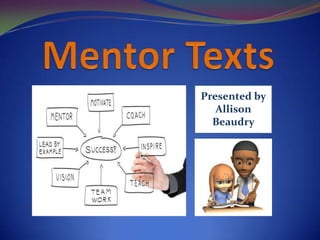
•Discuss how to use mentor texts
•Share and engage in lessons for the
classroom
•Share resources
•Inspire the use of mentor texts!
(Dorfman & Cappelli, 2007, 2012)
•Mentor texts are often chosen because
they are well-known and loved. As we
return to these texts throughout the year
we almost memorize the stories as we
examine the way the text was crafted.
Whether we are looking at the way the
text is structured or how the author
describes a setting, these books become
our mentors or coaches. Students are
inspired to mimic their favorite authors.
(Dorfman & Cappelli, 2007, 2012)
•Bridge the gap between reading
and writing!
•Differentiate Instruction
•INSPIRE!!!
•Reading Strategies – visualize, inferring, etc.
•Comprehension Skills – plot, main idea, etc.
•Figurative Language – simile, metaphor, etc.
•Parts of Speech – adjectives, prepositions , etc.
•Sequence
•Cause & Effect
•Problem & Solution
•Compare & Contrast
•Description
•Focus
•Content
•Organization
•Style
•Conventions
(Dorfman & Cappelli, 2007, p.5)
•Reading Connections
• Visualizing
• Point of View
•Writing Connections
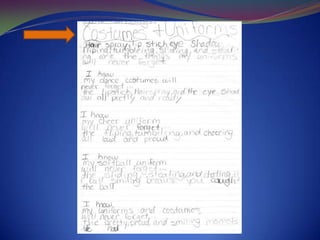
• Style/Word Choice
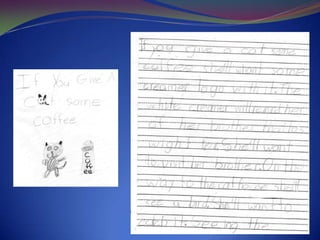
•Reading Connections
• Cause & Effect (Text Structure)
•Writing Connections
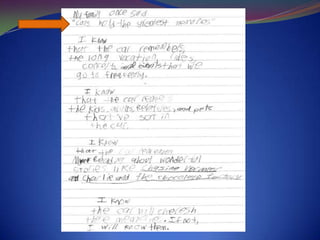
• Organization
•Reading Connections
• Similes & Metaphors
•Writing Connections
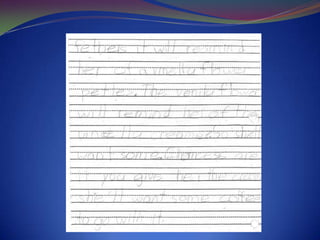
• Content – 5 Senses
• Style – Figurative Language
•Writing Connections
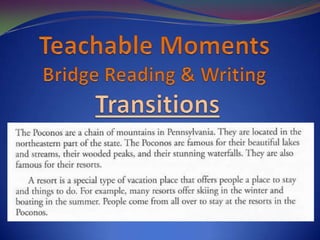
• Focus
• Content
• Organization
• Style
• Conventions
Extension
Ideas
Thank you and Good Luck!
Find inspiration
through your favorite authors!

Mentor texts