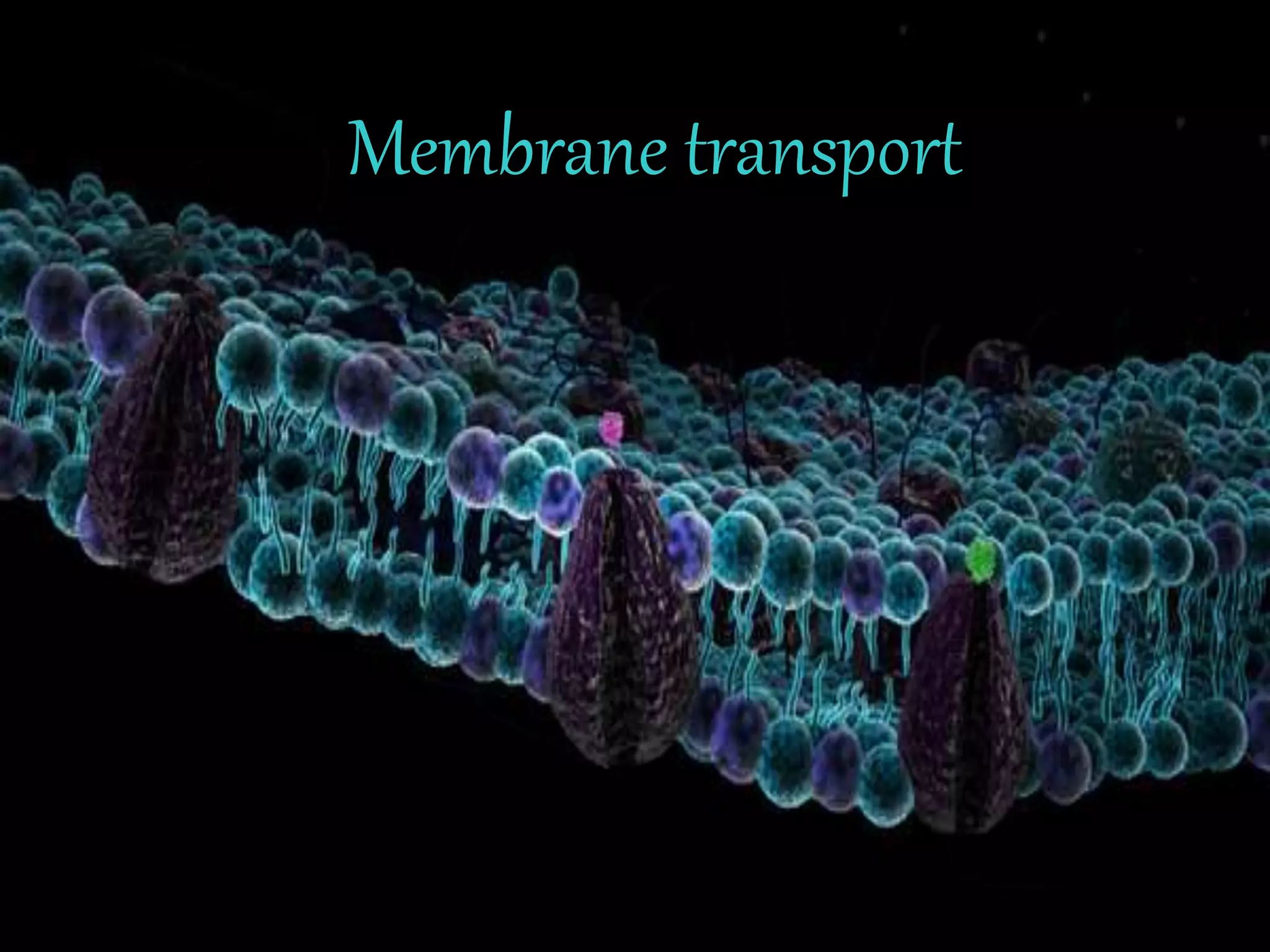
Membrane transport
James Danielle
(1911-1984)
Cell Membrane
“Possibly the decisive step
the origin of life] was the
formation of the first cell,
which chain molecules
enclosed by a
membrane which kept
together but let their food
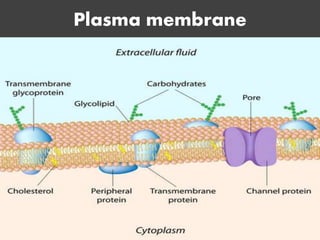
Plasma membrane
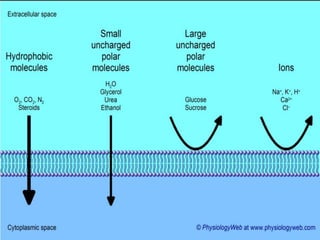
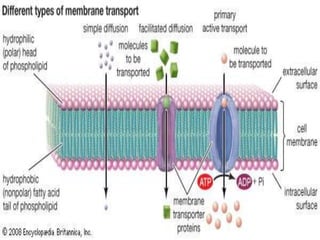
Membrane transport
“The collection of mechanisms that
regulate the passage of solutes such as
ions and small molecules through
biological membranes, which are lipid
bilayers that contain proteins
embedded in them.”
Passive Transport
 Passive transport that uses integral
membrane proteins to help larger,
charged, hydrophilic, and polar molecules
across a concentration gradient.
 It does not require cellular energy to
transport molecules across cell
membrane.
 Passive-mediated transport is carried out
Ionophores
Ionophores are organic molecules of diverse
types, usually of bacterial origin, that
increase the permeability of membranes to
ions. These molecules often exert an
antibiotic effect by discharging the vital
ion concentration gradients that cells
actively maintain.
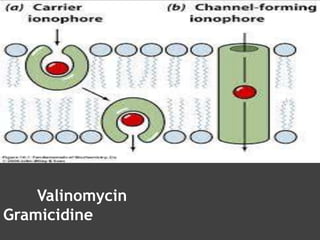
1. Carrier ionophores
2. Channel forming ionophores
Valinomycin
Gramicidine
Porins
Porins are bacterial β-strand proteins that
form a water-filled β-barrel pore within the
outer membrane, either causing a
disruption of the membrane or generating a
means for transporting molecules such as
carbohydrates and amino acids across the
membrane.
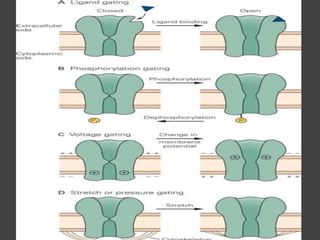
Ion channels
All cells contain ion-specific channels that
allow the rapid passage of ions such as Na,
K, and Cl. The movement of these ions
through such channels, along with their
movement through active transporters, is
essential for maintaining osmotic balance,
for signal transduction.
1. Mechanosensitive channels
2. Ligand-gated channels
3. Signal-gated channels
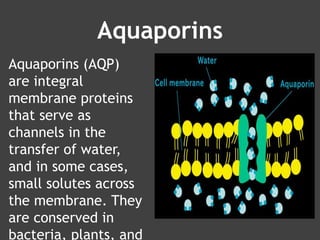
Aquaporins
Aquaporins (AQP)
are integral
membrane proteins
that serve as
channels in the
transfer of water,
and in some cases,
small solutes across
the membrane. They
are conserved in
bacteria, plants, and
Transport proteins
Membrane proteins known as ‘connexins’
also form such channels, in the form of
gap junctions between cells.
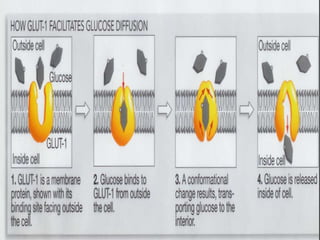
However, not all membrane transport
proteins offer a discrete bilayer-spanning
pore. Instead, some proteins undergo
conformational changes to move
substances from one side of the
membrane to the other.
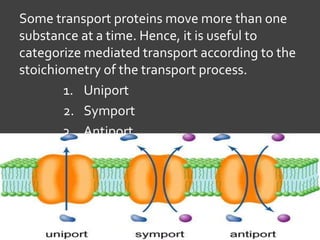
Some transport proteins move more than one
substance at a time. Hence, it is useful to
categorize mediated transport according to the
stoichiometry of the transport process.
1. Uniport
2. Symport
3. Antiport
Filtration
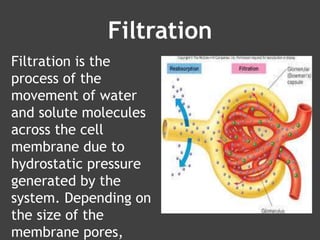
Filtration is the
process of the
movement of water
and solute molecules
across the cell
membrane due to
hydrostatic pressure
generated by the
system. Depending on
the size of the
membrane pores,
Osmosis
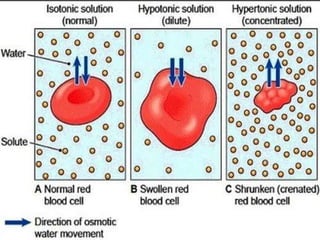
• Osmosis is a form of passive transport
that's similar to diffusion and involves a
solvent moving through a selectively
permeable or semipermeable membrane
from an area of higher concentration to
an area of lower concentration.
• the ability of an extracellular solution to
make water move into or out of a cell by
osmosis is known as toncity.
Membrane transport(Passive mediated)

Membrane transport(Passive mediated)

  • 1.
  • 2.
    James Danielle (1911-1984) Cell Membrane “Possiblythe decisive step the origin of life] was the formation of the first cell, which chain molecules enclosed by a membrane which kept together but let their food
  • 3.
  • 5.
    Membrane transport “The collectionof mechanisms that regulate the passage of solutes such as ions and small molecules through biological membranes, which are lipid bilayers that contain proteins embedded in them.”
  • 7.
    Passive Transport  Passivetransport that uses integral membrane proteins to help larger, charged, hydrophilic, and polar molecules across a concentration gradient.  It does not require cellular energy to transport molecules across cell membrane.  Passive-mediated transport is carried out
  • 8.
    Ionophores Ionophores are organicmolecules of diverse types, usually of bacterial origin, that increase the permeability of membranes to ions. These molecules often exert an antibiotic effect by discharging the vital ion concentration gradients that cells actively maintain. 1. Carrier ionophores 2. Channel forming ionophores
  • 9.
  • 10.
    Porins Porins are bacterialβ-strand proteins that form a water-filled β-barrel pore within the outer membrane, either causing a disruption of the membrane or generating a means for transporting molecules such as carbohydrates and amino acids across the membrane.
  • 11.
    Ion channels All cellscontain ion-specific channels that allow the rapid passage of ions such as Na, K, and Cl. The movement of these ions through such channels, along with their movement through active transporters, is essential for maintaining osmotic balance, for signal transduction. 1. Mechanosensitive channels 2. Ligand-gated channels 3. Signal-gated channels
  • 13.
    Aquaporins Aquaporins (AQP) are integral membraneproteins that serve as channels in the transfer of water, and in some cases, small solutes across the membrane. They are conserved in bacteria, plants, and
  • 14.
    Transport proteins Membrane proteinsknown as ‘connexins’ also form such channels, in the form of gap junctions between cells. However, not all membrane transport proteins offer a discrete bilayer-spanning pore. Instead, some proteins undergo conformational changes to move substances from one side of the membrane to the other.
  • 16.
    Some transport proteinsmove more than one substance at a time. Hence, it is useful to categorize mediated transport according to the stoichiometry of the transport process. 1. Uniport 2. Symport 3. Antiport
  • 17.
    Filtration Filtration is the processof the movement of water and solute molecules across the cell membrane due to hydrostatic pressure generated by the system. Depending on the size of the membrane pores,
  • 18.
    Osmosis • Osmosis isa form of passive transport that's similar to diffusion and involves a solvent moving through a selectively permeable or semipermeable membrane from an area of higher concentration to an area of lower concentration. • the ability of an extracellular solution to make water move into or out of a cell by osmosis is known as toncity.