MEMBRANE FILTRATION
SUBMITTED BY:-
SWATHI D S
I MSc I SEM
PG Department of Biotechnology
Sahyadri Science College
Shivamogga-577203
UNDER THE GUIDENCE OF
Dr. Syed Murthuza
Lecturer
PG Department of
Biotechnology
Sahyadri Science College
Shivamogga-577203
PG DEPARTMENT OF BIOTECHNOLOGY
SAHYADRI SCIENCE COLLEGE, SHIVAMOGGA-577203
A SEMINAR REPORT ON
Contents
 INTRODUCTION
 MECHANISM OF MEMBRANE FILTRATION
 TYPES OF MEMBRANE FILTRATION
 APPLICATIONS OF MEMBRANE FILTRATION
 ADVANTAGES OF MEMBRANE FILTRATION
 DISADVANTAGES OF MEMBRANE FILTRATION
 CONCLUSION
 REFERENCE
INRTODUCTION
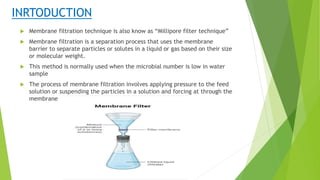
 Membrane filtration technique is also know as “Millipore filter technique”
 Membrane filtration is a separation process that uses the membrane
barrier to separate particles or solutes in a liquid or gas based on their size
or molecular weight.
 This method is normally used when the microbial number is low in water
sample
 The process of membrane filtration involves applying pressure to the feed
solution or suspending the particles in a solution and forcing at through the
membrane
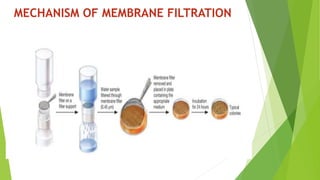
MECHANISM OF MEMBRANE FILTRATION
TYPES OF MEMBRANE FILTRATION
The membrane filtration is classified into four types on the basis of pore
size.
1. Microfiltration
2. Ultrafiltration
3. Nanofiltration
4. Reverse osmosis filtration
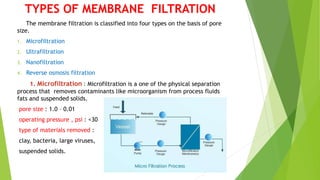
1. Microfiltration : Microfiltration is a one of the physical separation
process that removes contaminants like microorganism from process fluids
fats and suspended solids.
pore size : 1.0 – 0.01
operating pressure , psi : <30
type of materials removed :
clay, bacteria, large viruses,
suspended solids.
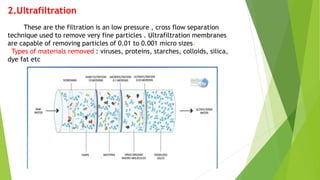
2.Ultrafiltration
These are the filtration is an low pressure , cross flow separation
technique used to remove very fine particles . Ultrafiltration membranes
are capable of removing particles of 0.01 to 0.001 micro sizes.
Types of materials removed : viruses, proteins, starches, colloids, silica,
dye fat etc
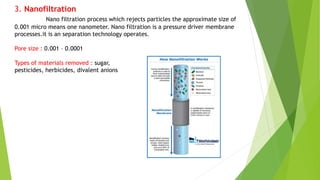
3. Nanofiltration
Nano filtration process which rejects particles the approximate size of
0.001 micro means one nanometer. Nano filtration is a pressure driver membrane
processes.it is an separation technology operates.
Pore size : 0.001 – 0.0001
Types of materials removed : sugar,
pesticides, herbicides, divalent anions
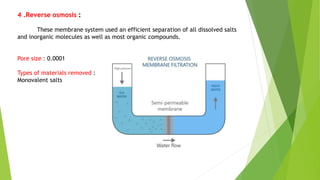
4 .Reverse osmosis :
These membrane system used an efficient separation of all dissolved salts
and inorganic molecules as well as most organic compounds.
Pore size : 0.0001
Types of materials removed :
Monovalent salts
HEPA filtration [ High Efficiency Particulate Air ] :
HEPA are the efficiency standard of air filters.it is an officially by
the U.S Dep. Of energy. This type of air filter can theoretically remove at
least 99.97% of dust, pollen, mold, bacteria, and any airborne particles
with a size of 0.3 microns.
Seitz filtration :
A filter disc [originally of asbestos] with pores so fine that they will not
permit passage of bacteria . these filter consist of highly fibrillated pure
cellulose fibers.
Diatomaceous earth filter [DE] :
The process uses diatoms or diatomaceous earth the skeletal remains of
small. Sigle celled organisms as the filter media consisting of 2 types. One is food
grade which is suitable for consumption and another one is filter grade.
Advantages of membrane filtration :
 Water and wastewater treatment
 Food and beverage industry
 Pharmaceutical and biotechnology
 Healthcare
 Environmental protection
 Industrial processes
 Removes turbidity , suspended solids
 Separation of microbial cells
 HEPA Filter : Life span of up to 10 years
 For separation of viruses from bacteria
 Production of liquid dosage
 Removing cysts , algae and asbestos from water
 Separation can be carried out continuously
 No complx instrumentation
Disadvantages :
 It is high in a cost
 Chances of skin burning
 Showing problem to handling
 High electricity spending
 High pressure drops
Conclusion :
Membrane filtration is an important physical separation process used
in downstream processing and purification of several pharmaceutical
products . membrane filtration is widely used in separation heat of liable
substances and volatile liquids in cosmetic and perfumes industry.
Membrane filtration it is a barrier to separate contaminants from water.
Reference :
 Prescott – Harley – Klein – S – Microbiology 7th edition : 2008
 The text book of Microbiology by Surinder Kumar – First edition :2012
 The book of membrane filtration [ applications, techniques, and problems ]
edited by Bernard J. Dutka
MEMBRANE FILTRATION PRESENTATION.pptx ppt

MEMBRANE FILTRATION PRESENTATION.pptx ppt

  • 1.
    MEMBRANE FILTRATION SUBMITTED BY:- SWATHID S I MSc I SEM PG Department of Biotechnology Sahyadri Science College Shivamogga-577203 UNDER THE GUIDENCE OF Dr. Syed Murthuza Lecturer PG Department of Biotechnology Sahyadri Science College Shivamogga-577203 PG DEPARTMENT OF BIOTECHNOLOGY SAHYADRI SCIENCE COLLEGE, SHIVAMOGGA-577203 A SEMINAR REPORT ON
  • 2.
    Contents  INTRODUCTION  MECHANISMOF MEMBRANE FILTRATION  TYPES OF MEMBRANE FILTRATION  APPLICATIONS OF MEMBRANE FILTRATION  ADVANTAGES OF MEMBRANE FILTRATION  DISADVANTAGES OF MEMBRANE FILTRATION  CONCLUSION  REFERENCE
  • 3.
    INRTODUCTION  Membrane filtrationtechnique is also know as “Millipore filter technique”  Membrane filtration is a separation process that uses the membrane barrier to separate particles or solutes in a liquid or gas based on their size or molecular weight.  This method is normally used when the microbial number is low in water sample  The process of membrane filtration involves applying pressure to the feed solution or suspending the particles in a solution and forcing at through the membrane
  • 4.
  • 5.
    TYPES OF MEMBRANEFILTRATION The membrane filtration is classified into four types on the basis of pore size. 1. Microfiltration 2. Ultrafiltration 3. Nanofiltration 4. Reverse osmosis filtration 1. Microfiltration : Microfiltration is a one of the physical separation process that removes contaminants like microorganism from process fluids fats and suspended solids. pore size : 1.0 – 0.01 operating pressure , psi : <30 type of materials removed : clay, bacteria, large viruses, suspended solids.
  • 6.
    2.Ultrafiltration These are thefiltration is an low pressure , cross flow separation technique used to remove very fine particles . Ultrafiltration membranes are capable of removing particles of 0.01 to 0.001 micro sizes. Types of materials removed : viruses, proteins, starches, colloids, silica, dye fat etc
  • 7.
    3. Nanofiltration Nano filtrationprocess which rejects particles the approximate size of 0.001 micro means one nanometer. Nano filtration is a pressure driver membrane processes.it is an separation technology operates. Pore size : 0.001 – 0.0001 Types of materials removed : sugar, pesticides, herbicides, divalent anions
  • 8.
    4 .Reverse osmosis: These membrane system used an efficient separation of all dissolved salts and inorganic molecules as well as most organic compounds. Pore size : 0.0001 Types of materials removed : Monovalent salts
  • 9.
    HEPA filtration [High Efficiency Particulate Air ] : HEPA are the efficiency standard of air filters.it is an officially by the U.S Dep. Of energy. This type of air filter can theoretically remove at least 99.97% of dust, pollen, mold, bacteria, and any airborne particles with a size of 0.3 microns.
  • 10.
    Seitz filtration : Afilter disc [originally of asbestos] with pores so fine that they will not permit passage of bacteria . these filter consist of highly fibrillated pure cellulose fibers.
  • 11.
    Diatomaceous earth filter[DE] : The process uses diatoms or diatomaceous earth the skeletal remains of small. Sigle celled organisms as the filter media consisting of 2 types. One is food grade which is suitable for consumption and another one is filter grade.
  • 12.
    Advantages of membranefiltration :  Water and wastewater treatment  Food and beverage industry  Pharmaceutical and biotechnology  Healthcare  Environmental protection  Industrial processes  Removes turbidity , suspended solids  Separation of microbial cells  HEPA Filter : Life span of up to 10 years  For separation of viruses from bacteria  Production of liquid dosage  Removing cysts , algae and asbestos from water  Separation can be carried out continuously  No complx instrumentation
  • 13.
    Disadvantages :  Itis high in a cost  Chances of skin burning  Showing problem to handling  High electricity spending  High pressure drops
  • 14.
    Conclusion : Membrane filtrationis an important physical separation process used in downstream processing and purification of several pharmaceutical products . membrane filtration is widely used in separation heat of liable substances and volatile liquids in cosmetic and perfumes industry. Membrane filtration it is a barrier to separate contaminants from water.
  • 15.
    Reference :  Prescott– Harley – Klein – S – Microbiology 7th edition : 2008  The text book of Microbiology by Surinder Kumar – First edition :2012  The book of membrane filtration [ applications, techniques, and problems ] edited by Bernard J. Dutka