MEDICAL RESEACH :VALUES IN MEDICAL ETHICS AND
AUTONOMY PRESENTED BY,
SHRUTHI S REDDY
3RD SEM M.PHARM
DEPARTMENTOF PHARMACEUTICS
CONTENTS
1. Introduction
2. Importance of Medical Ethics
3. Principles/Values of Medical Ethics
INTRODUCTION
Ethics is concerned with moral principles, values and standards of conduct.
(WHO)
Ethics is the study of morality - careful and systematic reflection on and analysis
of moral decisions and behaviour.
Morality is the value dimension of human decision-making and behaviour.
#-World Medical Association Manual of Medical Ethics
■The Greek word ethike means habit, action, character.
■The Latin word mos (morals) means habit or custom.
■ In simple words, Ethics is a set of philosophical beliefs and practices
concerned with the distinction between right and wrong.
■ Ethics is a very large and complex field of study with many branches or
subdivisions.
■ Medical Ethics is the branch of ethics that deals with moral issues in medical
practice.
IMPORTANCE OF MEDICAL ETHICS:
■ Ethical principles such as respect for persons, informed consent and confidentiality are
basic to the physician-patient relationship.
■ Application of these principles in specific situations is often problematic, since
physicians, patients, their family members and other healthcare personnel may disagree
about what is the right way to act in a situation.
■The study of ethics prepares medical professionals to recognize difficult situations and
to deal with them in a rational and principled manner.
■ Ethics is also important in physicians' interactions with society and their colleagues
and for the conduct of medical research.
PRINCIPLES/VALUES IN MEDICAL ETHICS
Autonomy
Beneficence
Confidentiality
Do no harm/ Non-maleficence
Equity or Justice
AUTONOMY:
DEFINITION:
It is to be defined as a right for the self-observed, rational agents
who are independent and are capable of both points:
a) Rational i.e. an agent can select the end for the best.
b)Unconstrained decision making and acting accordingly i.e. smooth
working without limitations.
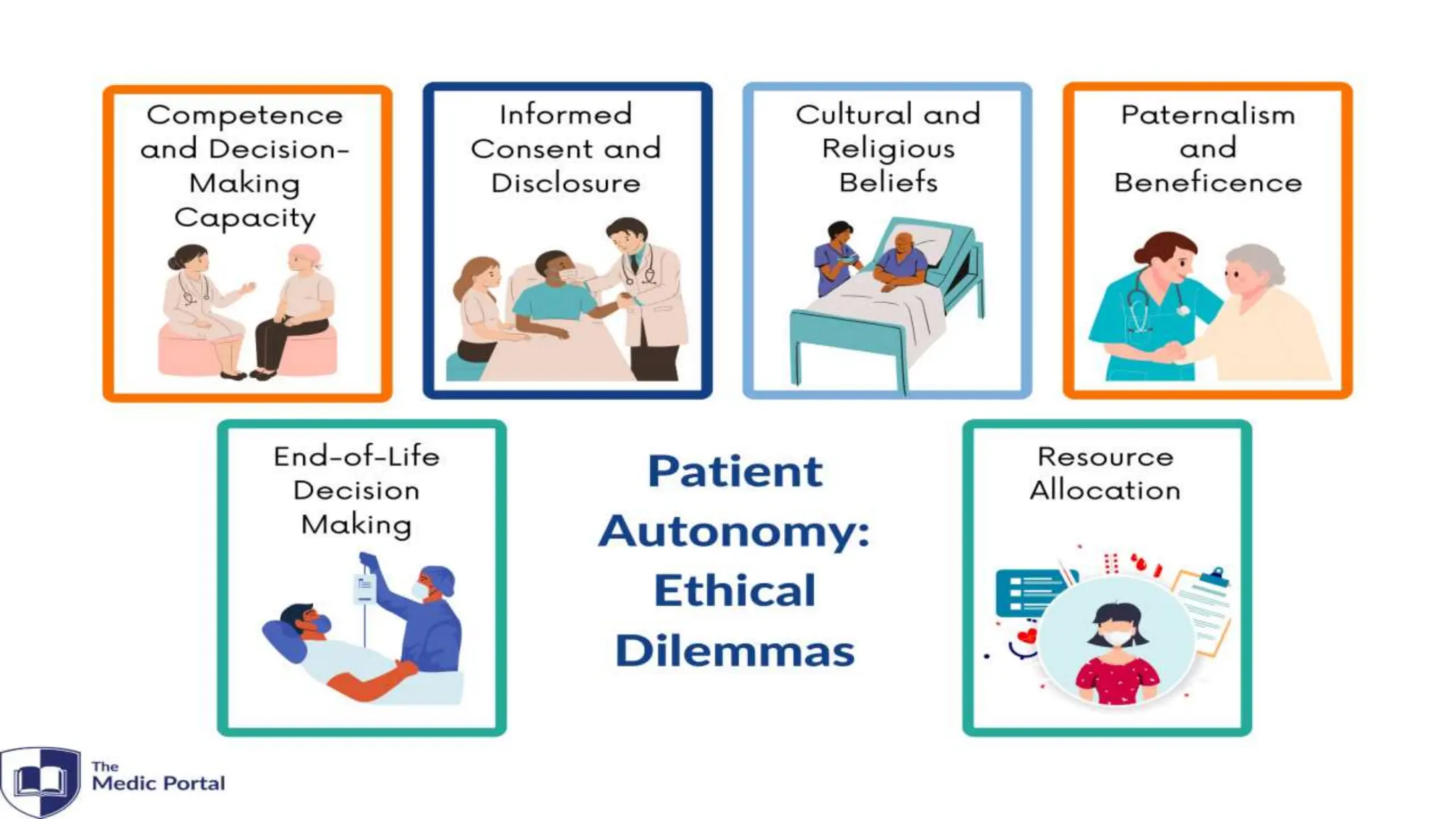
For a patient to make a fully informed decision,
she/he must understand all risks and benefits of the
procedure and the likelihood of success.
Patient has freedom of thought, intention and
action when making decisions regarding health care
procedures.
This includes the need to tell the truth and to be
faithful to one's commitments.
THANKYOU

Medical ethics biostatistics and research

  • 1.
    MEDICAL RESEACH :VALUESIN MEDICAL ETHICS AND AUTONOMY PRESENTED BY, SHRUTHI S REDDY 3RD SEM M.PHARM DEPARTMENTOF PHARMACEUTICS
  • 2.
    CONTENTS 1. Introduction 2. Importanceof Medical Ethics 3. Principles/Values of Medical Ethics
  • 3.
    INTRODUCTION Ethics is concernedwith moral principles, values and standards of conduct. (WHO) Ethics is the study of morality - careful and systematic reflection on and analysis of moral decisions and behaviour. Morality is the value dimension of human decision-making and behaviour. #-World Medical Association Manual of Medical Ethics
  • 4.
    ■The Greek wordethike means habit, action, character. ■The Latin word mos (morals) means habit or custom. ■ In simple words, Ethics is a set of philosophical beliefs and practices concerned with the distinction between right and wrong. ■ Ethics is a very large and complex field of study with many branches or subdivisions. ■ Medical Ethics is the branch of ethics that deals with moral issues in medical practice.
  • 5.
    IMPORTANCE OF MEDICALETHICS: ■ Ethical principles such as respect for persons, informed consent and confidentiality are basic to the physician-patient relationship. ■ Application of these principles in specific situations is often problematic, since physicians, patients, their family members and other healthcare personnel may disagree about what is the right way to act in a situation. ■The study of ethics prepares medical professionals to recognize difficult situations and to deal with them in a rational and principled manner. ■ Ethics is also important in physicians' interactions with society and their colleagues and for the conduct of medical research.
  • 6.
    PRINCIPLES/VALUES IN MEDICALETHICS Autonomy Beneficence Confidentiality Do no harm/ Non-maleficence Equity or Justice
  • 7.
    AUTONOMY: DEFINITION: It is tobe defined as a right for the self-observed, rational agents who are independent and are capable of both points: a) Rational i.e. an agent can select the end for the best. b)Unconstrained decision making and acting accordingly i.e. smooth working without limitations.
  • 8.
    For a patientto make a fully informed decision, she/he must understand all risks and benefits of the procedure and the likelihood of success. Patient has freedom of thought, intention and action when making decisions regarding health care procedures. This includes the need to tell the truth and to be faithful to one's commitments.
  • 11.