ERA UNIVERSITY
INTRODUCTION OF MEDICAL
ETHICS
PRATIK SHARMA
Optometry Tutor
Department of optometry
E.L.M.C&H.
INTRODUCATION
Ethics is concerned with moral principal value and
standard of conduct. (W.H.O)
Ethics is the study of morality careful and systemmic
reflection on and analysis of moral decisions and behaviour
Morality is the value dimension of human decision-
making and behavior.
Ethics is a very large and complex field of study with many
branches or subdivision.
Medical ethics is the branch of ethics that deals with moral
issue in medical practice.
Medical ethics is an applied branch of ethics which analyzes
the practice of clinical medicine and related scientific research.
 The Greek word Ethike means Habit, action, character.
 The Latin word Mos (morals) means habit or custom.
Medical ethics focused primarily on issues arising out of the
practice of medicine.
Bioethics is a very broad subject that is concerned with the
moral issue raised by development in the biological sciences
more generally.
AIM
In recent time medical ethics has been greatly influenced by
development in human right.
Medical ethics is also closely related to law
Medical etiquettes:-
The conventional laws custom of courtesy and the code of
conduct groverning the relationship of the physician with his
professional colleagus.
IMPORTANCE OF MEDICAL
ETHICS
• Ethical principal such as respect for persons informed consent and
confidentiality are basics to the physician-patient relationship.
• Application of these principles in specific situation is often problematic since
physicians, patients.
• The study of ethics prepares medical professionals to recognize difficult
situations and to deal with them in a rational and principled manner.
• Ethics is also important in physicians interactions with society and their
colleagues and for the conduct of medical research.
PRINCIPAL OF MEDICAL
ETHICS
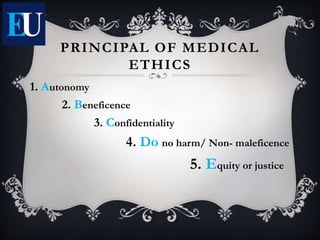
1. Autonomy
2. Beneficence
3. Confidentiality
4. Do no harm/ Non- maleficence
5. Equity or justice
AUTONOMY
 Patient has freedom of thought, intention and action when
making decisions regarding health care procedures.
 For a patient to make a fully informed decision, she/he
must understand all risks and benefits of the procedure and
the like hood of success.
BENEFICENCE
The practitioner should act in the best interest of the patient
the procedure be provided with the intent of doing good to
the patient.
Patient’s welfare is the first priority.
CONFIDENTIALITY
• Based on loyalty and trust.
• Maintain the confidentiality of all personal medical and treatment
information.
• Information to be revealed for the benefit of the patient and when
ethically and legally required.
DO NO HARM
• Above all do no harm
• Make sure that the procedure dose not harm the patient or other
in society
• When interventions undertaken by physicians create a positive
outcome while also potentially doing harm it is know as the double
effect
EQUITY OR JUSTICE
• Fair and equal distribution of scarce health resources and the
decision of who gets what treatment.
• The burdens and benefits of new or experimental treatments must
be distributed equally among all groups in society.
ETHICAL CODES
 Hippocratic oath – 5th century BC
 Nuremberg code – 1948
 Declaration of Geneva – 1978
 Universal declaration of human rights 1948
 Helsinki declaration 1964 (human experimental)
 International code of medical ethics
 Indian medical council (professional conduct etiquettes and ethics)regulation 2002)
M.C.I. REGULATION 2002
 The medical council of India notified the “Indian medical council
(professional conduct, etiquettes and ethics)
 Regulation 2002 on 11 march 2002
 Last amended in 2010
DUTY AND RESPONSIBILITIES OF
PHYSICIAN IN GENERAL
 Character of physician
• Dignity and honesty
• Service to humanity
• Recognized qualification
• Display of Registration Number
 Maintenance of medical records
 Maintain the medical records pertaining for a o his/ her indoor patients for a
period of 3 year
 Records to be given withing 72 hrs (if requested by patients/ legal authorities).
 Maintain a registered of medical certificate giving full detail of certificates
issued .
PUNISHMENT & DISCIPLINARY
 COMPLAINTS HEARD BY M.C.I.
 If appropriate medical council’s decision is not acceptable the petitioner or
the RMP May then appeal to MCI within days .
 If no action is taken by appropriate medical council within 6 month
directly MCI.
• THE punishment given by the appropriate medical council or MCI Includes
• Warning
• Reprimand – official action
• Cancellation of registration
1. Temporary
2. Permanent
medical ethic.pptx

medical ethic.pptx

  • 1.
    ERA UNIVERSITY INTRODUCTION OFMEDICAL ETHICS PRATIK SHARMA Optometry Tutor Department of optometry E.L.M.C&H.
  • 2.
    INTRODUCATION Ethics is concernedwith moral principal value and standard of conduct. (W.H.O) Ethics is the study of morality careful and systemmic reflection on and analysis of moral decisions and behaviour Morality is the value dimension of human decision- making and behavior.
  • 3.
    Ethics is avery large and complex field of study with many branches or subdivision. Medical ethics is the branch of ethics that deals with moral issue in medical practice. Medical ethics is an applied branch of ethics which analyzes the practice of clinical medicine and related scientific research.  The Greek word Ethike means Habit, action, character.  The Latin word Mos (morals) means habit or custom.
  • 4.
    Medical ethics focusedprimarily on issues arising out of the practice of medicine. Bioethics is a very broad subject that is concerned with the moral issue raised by development in the biological sciences more generally. AIM
  • 5.
    In recent timemedical ethics has been greatly influenced by development in human right. Medical ethics is also closely related to law Medical etiquettes:- The conventional laws custom of courtesy and the code of conduct groverning the relationship of the physician with his professional colleagus.
  • 6.
    IMPORTANCE OF MEDICAL ETHICS •Ethical principal such as respect for persons informed consent and confidentiality are basics to the physician-patient relationship. • Application of these principles in specific situation is often problematic since physicians, patients. • The study of ethics prepares medical professionals to recognize difficult situations and to deal with them in a rational and principled manner. • Ethics is also important in physicians interactions with society and their colleagues and for the conduct of medical research.
  • 7.
    PRINCIPAL OF MEDICAL ETHICS 1.Autonomy 2. Beneficence 3. Confidentiality 4. Do no harm/ Non- maleficence 5. Equity or justice
  • 8.
    AUTONOMY  Patient hasfreedom of thought, intention and action when making decisions regarding health care procedures.  For a patient to make a fully informed decision, she/he must understand all risks and benefits of the procedure and the like hood of success.
  • 9.
    BENEFICENCE The practitioner shouldact in the best interest of the patient the procedure be provided with the intent of doing good to the patient. Patient’s welfare is the first priority.
  • 10.
    CONFIDENTIALITY • Based onloyalty and trust. • Maintain the confidentiality of all personal medical and treatment information. • Information to be revealed for the benefit of the patient and when ethically and legally required.
  • 11.
    DO NO HARM •Above all do no harm • Make sure that the procedure dose not harm the patient or other in society • When interventions undertaken by physicians create a positive outcome while also potentially doing harm it is know as the double effect
  • 12.
    EQUITY OR JUSTICE •Fair and equal distribution of scarce health resources and the decision of who gets what treatment. • The burdens and benefits of new or experimental treatments must be distributed equally among all groups in society.
  • 13.
    ETHICAL CODES  Hippocraticoath – 5th century BC  Nuremberg code – 1948  Declaration of Geneva – 1978  Universal declaration of human rights 1948  Helsinki declaration 1964 (human experimental)  International code of medical ethics  Indian medical council (professional conduct etiquettes and ethics)regulation 2002)
  • 14.
    M.C.I. REGULATION 2002 The medical council of India notified the “Indian medical council (professional conduct, etiquettes and ethics)  Regulation 2002 on 11 march 2002  Last amended in 2010
  • 15.
    DUTY AND RESPONSIBILITIESOF PHYSICIAN IN GENERAL  Character of physician • Dignity and honesty • Service to humanity • Recognized qualification • Display of Registration Number  Maintenance of medical records  Maintain the medical records pertaining for a o his/ her indoor patients for a period of 3 year  Records to be given withing 72 hrs (if requested by patients/ legal authorities).  Maintain a registered of medical certificate giving full detail of certificates issued .
  • 16.
    PUNISHMENT & DISCIPLINARY COMPLAINTS HEARD BY M.C.I.  If appropriate medical council’s decision is not acceptable the petitioner or the RMP May then appeal to MCI within days .  If no action is taken by appropriate medical council within 6 month directly MCI. • THE punishment given by the appropriate medical council or MCI Includes • Warning • Reprimand – official action • Cancellation of registration 1. Temporary 2. Permanent