Core Ethical Values and principles of Medical
Ethics
Presented By :
Muhammad Saeed
( M.Phil Biochemistry)
Lecturer in Biochemistry
RIC Peshawar
Ethical Values
Ethical values are those values that people use to
determine what is right and wrong in different,
random situations.
Different people have different ethical values
Ethical values are guiding principles that guide us in
taking decisions in our life. They lay the foundation
of our responses and reactions.
TRUSTWORTHINESS
Trustworthiness concerns a variety of
behavioral qualities
Honesty
Integrity
Reliability and loyalty.
RESPECT
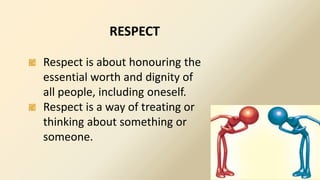
Respect is about honouring the
essential worth and dignity of
all people, including oneself.
Respect is a way of treating or
thinking about something or
someone.
RESPONSIBILITY
Being responsible means
being in charge of our choices
and therefore our lives.
It means being accountable
for what we do and who we
are.
FAIRNESS
Fairness usually refers to a range of
morally justifiable outcomes rather
than discovery of one fair answer.
It is a tricky concept and some people
think that its own concept is fair but
they aren't.
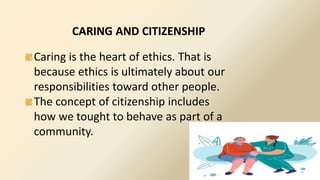
CARING AND CITIZENSHIP
Caring is the heart of ethics. That is
because ethics is ultimately about our
responsibilities toward other people.
The concept of citizenship includes
how we tought to behave as part of a
community.
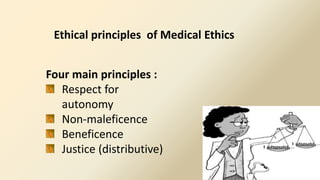
Ethical principles of Medical Ethics
Four main principles :
Respect for
autonomy
Non-maleficence
Beneficence
Justice (distributive)
RESPECT FOR AUTONOMY
The right of patients to make decisions about
their medical care without their health care
provider trying to influence the decision.
Patient autonomy does allow for health care
providers to educate the patient but does not
allow the health care provider to make the
decision for the patient.
The ability and tendency to think for oneself .
Always recognize that human
individuals are ends, and do not use
them as means to your end.
Cont,
BENEFICENCE
In every house where I come I will enter only for
the good of my patients, keeping myself far from
all intentional ill-doing.
Make the care of your patient your first concern
Protect and promote the health of patients and
the public
Intention to do good
To benefit the patient
Do no harm
Prevent harm
Prevent evil
Promote good
Cont,
Non Maleficence
Stronger principle than beneficence
Consent for treatment/research
Practice within your
knowledge/capabilities
Be truthful
Use language that your patients will
understand
Non-maleficence means to do no harm.
An example of a non-maleficent action would
be stopping a medication known to be
harmful or refusing to give a medication to a
patient if it has not been proven to be
effective.
JUSTICE
Healthcare resources are finite
Require fair allocation of resources
Maximizing the outcomes within
current resources
What is fair and equal distribution?
Equality-Each person receives an
equal share of the resources
available.
Need-Each person receives resources
appropriate to how much that
person needs.
Cont,

Core values and ethical principle.pptx

  • 1.
    Core Ethical Valuesand principles of Medical Ethics Presented By : Muhammad Saeed ( M.Phil Biochemistry) Lecturer in Biochemistry RIC Peshawar
  • 2.
    Ethical Values Ethical valuesare those values that people use to determine what is right and wrong in different, random situations. Different people have different ethical values Ethical values are guiding principles that guide us in taking decisions in our life. They lay the foundation of our responses and reactions.
  • 3.
    TRUSTWORTHINESS Trustworthiness concerns avariety of behavioral qualities Honesty Integrity Reliability and loyalty.
  • 4.
    RESPECT Respect is abouthonouring the essential worth and dignity of all people, including oneself. Respect is a way of treating or thinking about something or someone.
  • 5.
    RESPONSIBILITY Being responsible means beingin charge of our choices and therefore our lives. It means being accountable for what we do and who we are.
  • 6.
    FAIRNESS Fairness usually refersto a range of morally justifiable outcomes rather than discovery of one fair answer. It is a tricky concept and some people think that its own concept is fair but they aren't.
  • 7.
    CARING AND CITIZENSHIP Caringis the heart of ethics. That is because ethics is ultimately about our responsibilities toward other people. The concept of citizenship includes how we tought to behave as part of a community.
  • 8.
    Ethical principles ofMedical Ethics Four main principles : Respect for autonomy Non-maleficence Beneficence Justice (distributive)
  • 9.
    RESPECT FOR AUTONOMY Theright of patients to make decisions about their medical care without their health care provider trying to influence the decision. Patient autonomy does allow for health care providers to educate the patient but does not allow the health care provider to make the decision for the patient.
  • 10.
    The ability andtendency to think for oneself . Always recognize that human individuals are ends, and do not use them as means to your end. Cont,
  • 11.
    BENEFICENCE In every housewhere I come I will enter only for the good of my patients, keeping myself far from all intentional ill-doing. Make the care of your patient your first concern Protect and promote the health of patients and the public
  • 12.
    Intention to dogood To benefit the patient Do no harm Prevent harm Prevent evil Promote good Cont,
  • 13.
    Non Maleficence Stronger principlethan beneficence Consent for treatment/research Practice within your knowledge/capabilities Be truthful Use language that your patients will understand
  • 14.
    Non-maleficence means todo no harm. An example of a non-maleficent action would be stopping a medication known to be harmful or refusing to give a medication to a patient if it has not been proven to be effective.
  • 15.
    JUSTICE Healthcare resources arefinite Require fair allocation of resources Maximizing the outcomes within current resources What is fair and equal distribution?
  • 16.
    Equality-Each person receivesan equal share of the resources available. Need-Each person receives resources appropriate to how much that person needs. Cont,