Prepared by: Dr T Divakaran
Prepared for: Turacoz Healthcare Solutions
Medical Device:
A life changing
innovation
Table of Contents
 Definition/Introduction
 History/Regulations
 Drug Development
process
 Classification
 Uses
 Risks/Management
Introduction
• A medical device is any instrument that is
used for a medical purpose.
• Medical devices are as important as a drug
and assist in drug delivery (Therapeutic use).
• Medical devices also assist in disease
diagnosis (Diagnostic use).
Definition
The World Heath Organisation defines
a medical device as an article,
instrument, apparatus or machine that
is used in the prevention, diagnosis or
treatment of illness or disease, or for
detecting, measuring, restoring,
correcting or modifying the structure or
function of the body for some health
purpose.
Follow Link
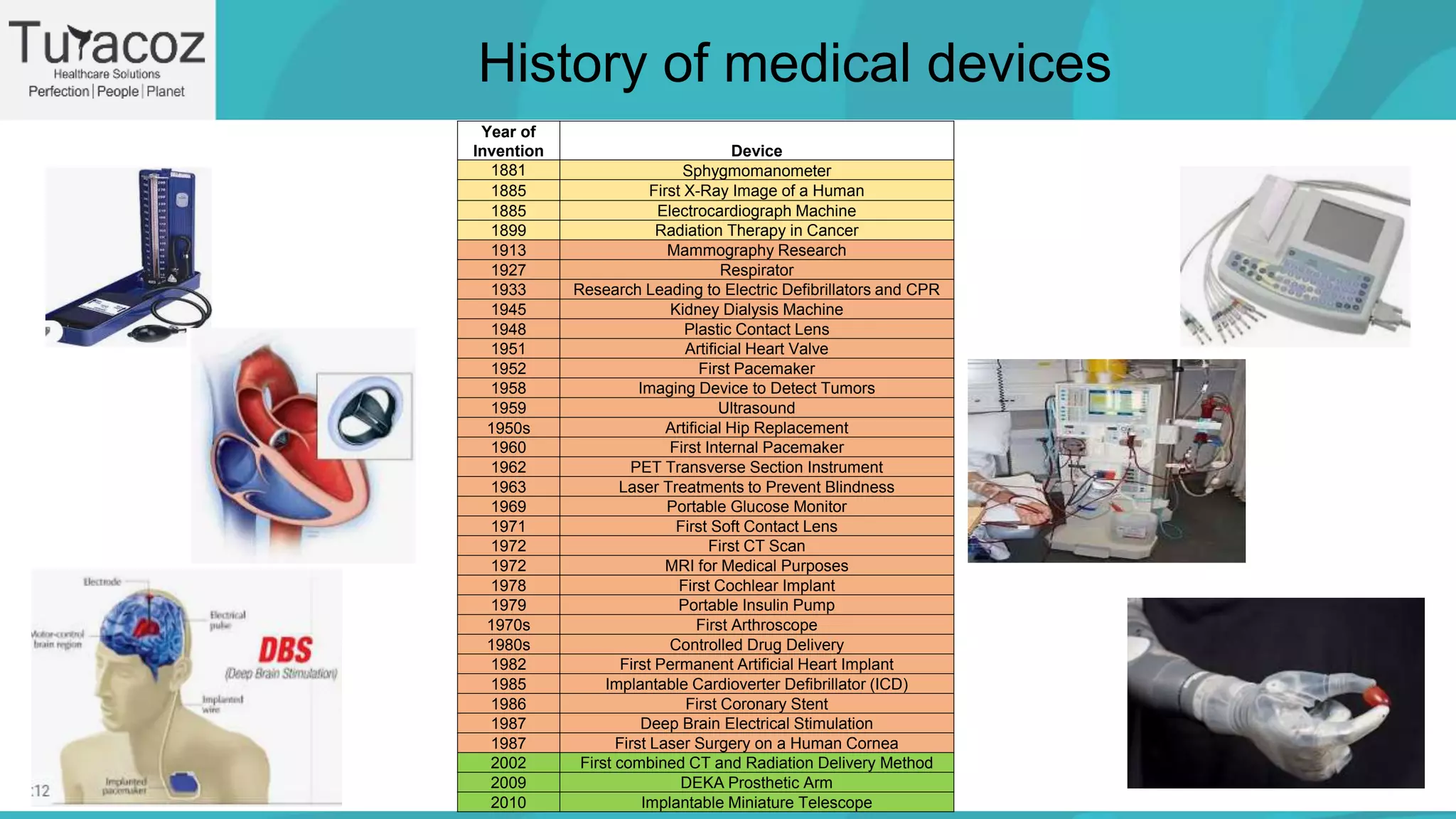
History of medical devices
Year of
Invention Device
1881 Sphygmomanometer
1885 First X-Ray Image of a Human
1885 Electrocardiograph Machine
1899 Radiation Therapy in Cancer
1913 Mammography Research
1927 Respirator
1933 Research Leading to Electric Defibrillators and CPR
1945 Kidney Dialysis Machine
1948 Plastic Contact Lens
1951 Artificial Heart Valve
1952 First Pacemaker
1958 Imaging Device to Detect Tumors
1959 Ultrasound
1950s Artificial Hip Replacement
1960 First Internal Pacemaker
1962 PET Transverse Section Instrument
1963 Laser Treatments to Prevent Blindness
1969 Portable Glucose Monitor
1971 First Soft Contact Lens
1972 First CT Scan
1972 MRI for Medical Purposes
1978 First Cochlear Implant
1979 Portable Insulin Pump
1970s First Arthroscope
1980s Controlled Drug Delivery
1982 First Permanent Artificial Heart Implant
1985 Implantable Cardioverter Defibrillator (ICD)
1986 First Coronary Stent
1987 Deep Brain Electrical Stimulation
1987 First Laser Surgery on a Human Cornea
2002 First combined CT and Radiation Delivery Method
2009 DEKA Prosthetic Arm
2010 Implantable Miniature Telescope
Regulations pertaining to medical devices
Center for Devices
and Radiological
Health (CDRH)
Regulates firms who
manufacture,
repackage, relabel,
and/or import medical
devices sold in the
United States.
• Regulation (EU) 2017/745 on
Medical Devices
• Regulation (EU) 2017/746 on In-
Vitro Diagnostic Devices
EMA evaluates the quality, safety and
efficacy of marketing authorization
applications assessed through the
centralized procedure, including the
safety and performance of the medical
device in relation to its use with the
medicinal product.
• GMP Requirements are specified
under Schedule M III
• Rule 109-A Labelling of Medical
Devices
• Rule 125-A Standards for Medical
Devices
The Drug Controller General of India
(DCGI) is responsible for the approval
of the manufacturing of certain drugs,
specific medical devices, and new
drugs.
The Device Development Process
Step1: Research
for a new drug or
device begins in
the laboratory
Step 2: Devices
undergo laboratory and
animal testing to
answer basic questions
about safety.
Step 3: Devices are
tested on people to
make sure they are
safe and effective.
Step 4: FDA
review teams
thoroughly
examine all of the
submitted data
related to the drug
or device and
make a decision to
approve or not to
approve it.
Step 5: FDA
monitors all drug
and device safety
once products are
available for use
by the public.
Classification of medical devices
The FDA categorizes medical devices into
one of three classes:
• Class I
• Class II
• Class III
Advantages of medical devices
Quick and accurate diagnosis.
Ex- nature of stroke decides
the treatment plan.
Useful in life saving procedures.
Ex- laryngoscope for intubation;
cardiac defibrillator for restoration
of cardiac function.
Increased drug bioavailability and
faster onset of action of the drug
Improved patient experience and cost effectiveness.
Therapeutic uses of medical devices
Drug delivery pumps:
• Ensures a steady supply of the drug as per
the prescribed dose.
• No need for repeated injections
• Better patient compliance and control of
disease symptoms.
Emergency use devices: Restores cardiac and
respiratory function.
Ex: Laryngoscopes, cardiac defibrillators (ICD),
ventilators.
Diagnostic uses of medical devices
There are a variety of diagnostic purpose medical devices as highlighted below.
Glucometer for rapid
measurement of blood sugar
levels
Portable BP apparatus for
measurement of blood
pressure
Imaging equipment's including CT Scan (above),
mammography (left), and ultrasonography (right).
Risks associated with Medical devices
• Device blockage-Blocked tracheostomy tube
• Incorrect dose of drug delivered
• Dislodgement
• Bleeding
• Injection site reactions
Risk benefit analysis of medical devices
EMC Risk Management File
Conclusions
• The benefits surely outweigh the risks associated with medical devices.
• Risk is different for each medical device and a risk based approach will ensure better results.
• Patient education will improve compliance and better outcome.
• Medical devices are life saving innovations and a boon to effective delivery of healthcare.
Thank You

Medical Device: A life changing innovation

  • 1.
    Prepared by: DrT Divakaran Prepared for: Turacoz Healthcare Solutions Medical Device: A life changing innovation
  • 2.
    Table of Contents Definition/Introduction  History/Regulations  Drug Development process  Classification  Uses  Risks/Management
  • 3.
    Introduction • A medicaldevice is any instrument that is used for a medical purpose. • Medical devices are as important as a drug and assist in drug delivery (Therapeutic use). • Medical devices also assist in disease diagnosis (Diagnostic use).
  • 4.
    Definition The World HeathOrganisation defines a medical device as an article, instrument, apparatus or machine that is used in the prevention, diagnosis or treatment of illness or disease, or for detecting, measuring, restoring, correcting or modifying the structure or function of the body for some health purpose. Follow Link
  • 5.
    History of medicaldevices Year of Invention Device 1881 Sphygmomanometer 1885 First X-Ray Image of a Human 1885 Electrocardiograph Machine 1899 Radiation Therapy in Cancer 1913 Mammography Research 1927 Respirator 1933 Research Leading to Electric Defibrillators and CPR 1945 Kidney Dialysis Machine 1948 Plastic Contact Lens 1951 Artificial Heart Valve 1952 First Pacemaker 1958 Imaging Device to Detect Tumors 1959 Ultrasound 1950s Artificial Hip Replacement 1960 First Internal Pacemaker 1962 PET Transverse Section Instrument 1963 Laser Treatments to Prevent Blindness 1969 Portable Glucose Monitor 1971 First Soft Contact Lens 1972 First CT Scan 1972 MRI for Medical Purposes 1978 First Cochlear Implant 1979 Portable Insulin Pump 1970s First Arthroscope 1980s Controlled Drug Delivery 1982 First Permanent Artificial Heart Implant 1985 Implantable Cardioverter Defibrillator (ICD) 1986 First Coronary Stent 1987 Deep Brain Electrical Stimulation 1987 First Laser Surgery on a Human Cornea 2002 First combined CT and Radiation Delivery Method 2009 DEKA Prosthetic Arm 2010 Implantable Miniature Telescope
  • 6.
    Regulations pertaining tomedical devices Center for Devices and Radiological Health (CDRH) Regulates firms who manufacture, repackage, relabel, and/or import medical devices sold in the United States. • Regulation (EU) 2017/745 on Medical Devices • Regulation (EU) 2017/746 on In- Vitro Diagnostic Devices EMA evaluates the quality, safety and efficacy of marketing authorization applications assessed through the centralized procedure, including the safety and performance of the medical device in relation to its use with the medicinal product. • GMP Requirements are specified under Schedule M III • Rule 109-A Labelling of Medical Devices • Rule 125-A Standards for Medical Devices The Drug Controller General of India (DCGI) is responsible for the approval of the manufacturing of certain drugs, specific medical devices, and new drugs.
  • 7.
    The Device DevelopmentProcess Step1: Research for a new drug or device begins in the laboratory Step 2: Devices undergo laboratory and animal testing to answer basic questions about safety. Step 3: Devices are tested on people to make sure they are safe and effective. Step 4: FDA review teams thoroughly examine all of the submitted data related to the drug or device and make a decision to approve or not to approve it. Step 5: FDA monitors all drug and device safety once products are available for use by the public.
  • 8.
    Classification of medicaldevices The FDA categorizes medical devices into one of three classes: • Class I • Class II • Class III
  • 9.
    Advantages of medicaldevices Quick and accurate diagnosis. Ex- nature of stroke decides the treatment plan. Useful in life saving procedures. Ex- laryngoscope for intubation; cardiac defibrillator for restoration of cardiac function. Increased drug bioavailability and faster onset of action of the drug Improved patient experience and cost effectiveness.
  • 10.
    Therapeutic uses ofmedical devices Drug delivery pumps: • Ensures a steady supply of the drug as per the prescribed dose. • No need for repeated injections • Better patient compliance and control of disease symptoms. Emergency use devices: Restores cardiac and respiratory function. Ex: Laryngoscopes, cardiac defibrillators (ICD), ventilators.
  • 11.
    Diagnostic uses ofmedical devices There are a variety of diagnostic purpose medical devices as highlighted below. Glucometer for rapid measurement of blood sugar levels Portable BP apparatus for measurement of blood pressure Imaging equipment's including CT Scan (above), mammography (left), and ultrasonography (right).
  • 12.
    Risks associated withMedical devices • Device blockage-Blocked tracheostomy tube • Incorrect dose of drug delivered • Dislodgement • Bleeding • Injection site reactions
  • 13.
    Risk benefit analysisof medical devices EMC Risk Management File
  • 14.
    Conclusions • The benefitssurely outweigh the risks associated with medical devices. • Risk is different for each medical device and a risk based approach will ensure better results. • Patient education will improve compliance and better outcome. • Medical devices are life saving innovations and a boon to effective delivery of healthcare.
  • 15.