In what ways does your media product use,
develop or challenge forms and conventions of
real media products?
Research
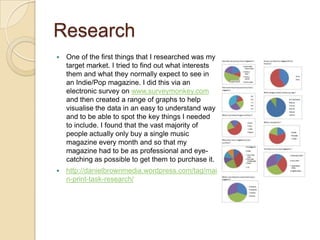
   One of the first things that I researched was my
    target market. I tried to find out what interests
    them and what they normally expect to see in
    an Indie/Pop magazine. I did this via an
    electronic survey on www.surveymonkey.com
    and then created a range of graphs to help
    visualise the data in an easy to understand way
    and to be able to spot the key things I needed
    to include. I found that the vast majority of
    people actually only buy a single music
    magazine every month and so that my
    magazine had to be as professional and eye-
    catching as possible to get them to purchase it.
   http://danielbrownmedia.wordpress.com/tag/mai
    n-print-task-research/
Magazine Front Covers
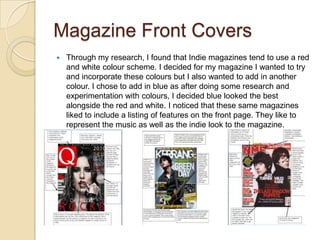
   Through my research, I found that Indie magazines tend to use a red
    and white colour scheme. I decided for my magazine I wanted to try
    and incorporate these colours but I also wanted to add in another
    colour. I chose to add in blue as after doing some research and
    experimentation with colours, I decided blue looked the best
    alongside the red and white. I noticed that these same magazines
    liked to include a listing of features on the front page. They like to
    represent the music as well as the indie look to the magazine.
Magazine Contents Pages
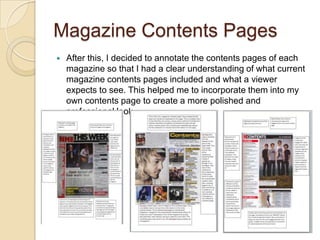
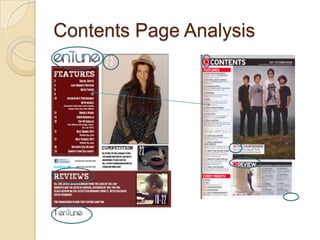
   After this, I decided to annotate the contents pages of each
    magazine so that I had a clear understanding of what current
    magazine contents pages included and what a viewer
    expects to see. This helped me to incorporate them into my
    own contents page to create a more polished and
    professional look.
Double Page Spreads
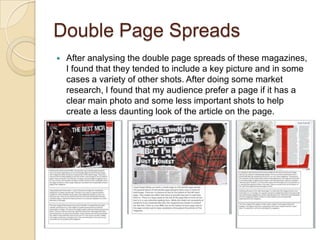
   After analysing the double page spreads of these magazines,
    I found that they tended to include a key picture and in some
    cases a variety of other shots. After doing some market
    research, I found that my audience prefer a page if it has a
    clear main photo and some less important shots to help
    create a less daunting look of the article on the page.
Front Cover Analysis


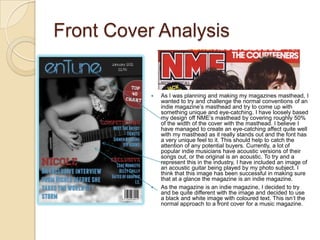
              As I was planning and making my magazines masthead, I
               wanted to try and challenge the normal conventions of an
               indie magazine’s masthead and try to come up with
               something unique and eye-catching. I have loosely based
               my design off NME’s masthead by covering roughly 50%
               of the width of the cover with the masthead. I believe I
               have managed to create an eye-catching affect quite well
               with my masthead as it really stands out and the font has
               a very unique feel to it. This should help to catch the
               attention of any potential buyers. Currently, a lot of
               popular indie musicians have acoustic versions of their
               songs out, or the original is an acoustic. To try and a
               represent this in the industry, I have included an image of
               an acoustic guitar being played by my photo subject. I
               think that this image has been successful in making sure
               that at a glance the magazine is an indie magazine.
              As the magazine is an indie magazine, I decided to try
               and be quite different with the image and decided to use
               a black and white image with coloured text. This isn’t the
               normal approach to a front cover for a music magazine.
Contents Page Analysis
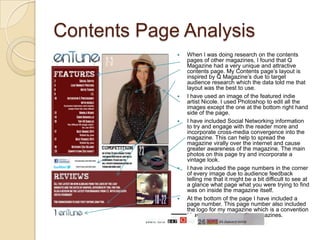
                When I was doing research on the contents
                 pages of other magazines, I found that Q
                 Magazine had a very unique and attractive
                 contents page. My Contents page’s layout is
                 inspired by Q Magazine’s due to target
                 audience research which the data told me that
                 layout was the best to use.
                I have used an image of the featured indie
                 artist Nicole. I used Photoshop to edit all the
                 images except the one at the bottom right hand
                 side of the page.
                I have included Social Networking information
                 to try and engage with the reader more and
                 incorporate cross-media convergence into the
                 magazine. This can help to spread the
                 magazine virally over the internet and cause
                 greater awareness of the magazine. The main
                 photos on this page try and incorporate a
                 vintage look.
                I have included the page numbers in the corner
                 of every image due to audience feedback
                 telling me that it might be a bit difficult to see at
                 a glance what page what you were trying to find
                 was on inside the magazine itself.
                At the bottom of the page I have included a
                 page number. This page number also included
                 the logo for my magazine which is a convention
                 I have seen in other indie magazines.
Double Spread Analysis
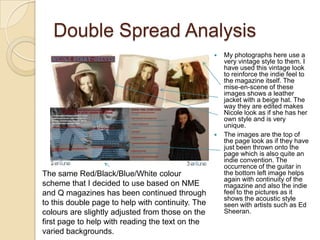
                                                      My photographs here use a
                                                       very vintage style to them. I
                                                       have used this vintage look
                                                       to reinforce the indie feel to
                                                       the magazine itself. The
                                                       mise-en-scene of these
                                                       images shows a leather
                                                       jacket with a beige hat. The
                                                       way they are edited makes
                                                       Nicole look as if she has her
                                                       own style and is very
                                                       unique.
                                                      The images are the top of
                                                       the page look as if they have
                                                       just been thrown onto the
                                                       page which is also quite an
                                                       indie convention. The
                                                       occurrence of the guitar in
The same Red/Black/Blue/White colour                   the bottom left image helps
                                                       again with continuity of the
scheme that I decided to use based on NME              magazine and also the indie
and Q magazines has been continued through             feel to the pictures as it
                                                       shows the acoustic style
to this double page to help with continuity. The       seen with artists such as Ed
colours are slightly adjusted from those on the        Sheeran.
first page to help with reading the text on the
varied backgrounds.
Photo Comparisons
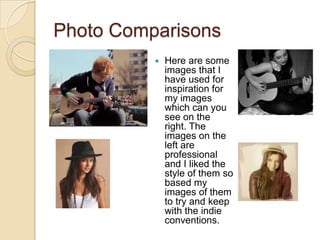
             Here are some
              images that I
              have used for
              inspiration for
              my images
              which can you
              see on the
              right. The
              images on the
              left are
              professional
              and I liked the
              style of them so
              based my
              images of them
              to try and keep
              with the indie
              conventions.

Question 1

  • 1.
    In what waysdoes your media product use, develop or challenge forms and conventions of real media products?
  • 2.
    Research  One of the first things that I researched was my target market. I tried to find out what interests them and what they normally expect to see in an Indie/Pop magazine. I did this via an electronic survey on www.surveymonkey.com and then created a range of graphs to help visualise the data in an easy to understand way and to be able to spot the key things I needed to include. I found that the vast majority of people actually only buy a single music magazine every month and so that my magazine had to be as professional and eye- catching as possible to get them to purchase it.  http://danielbrownmedia.wordpress.com/tag/mai n-print-task-research/
  • 3.
    Magazine Front Covers  Through my research, I found that Indie magazines tend to use a red and white colour scheme. I decided for my magazine I wanted to try and incorporate these colours but I also wanted to add in another colour. I chose to add in blue as after doing some research and experimentation with colours, I decided blue looked the best alongside the red and white. I noticed that these same magazines liked to include a listing of features on the front page. They like to represent the music as well as the indie look to the magazine.
  • 4.
    Magazine Contents Pages  After this, I decided to annotate the contents pages of each magazine so that I had a clear understanding of what current magazine contents pages included and what a viewer expects to see. This helped me to incorporate them into my own contents page to create a more polished and professional look.
  • 5.
    Double Page Spreads  After analysing the double page spreads of these magazines, I found that they tended to include a key picture and in some cases a variety of other shots. After doing some market research, I found that my audience prefer a page if it has a clear main photo and some less important shots to help create a less daunting look of the article on the page.
  • 7.
    Front Cover Analysis  As I was planning and making my magazines masthead, I wanted to try and challenge the normal conventions of an indie magazine’s masthead and try to come up with something unique and eye-catching. I have loosely based my design off NME’s masthead by covering roughly 50% of the width of the cover with the masthead. I believe I have managed to create an eye-catching affect quite well with my masthead as it really stands out and the font has a very unique feel to it. This should help to catch the attention of any potential buyers. Currently, a lot of popular indie musicians have acoustic versions of their songs out, or the original is an acoustic. To try and a represent this in the industry, I have included an image of an acoustic guitar being played by my photo subject. I think that this image has been successful in making sure that at a glance the magazine is an indie magazine.  As the magazine is an indie magazine, I decided to try and be quite different with the image and decided to use a black and white image with coloured text. This isn’t the normal approach to a front cover for a music magazine.
  • 8.
  • 9.
    Contents Page Analysis  When I was doing research on the contents pages of other magazines, I found that Q Magazine had a very unique and attractive contents page. My Contents page’s layout is inspired by Q Magazine’s due to target audience research which the data told me that layout was the best to use.  I have used an image of the featured indie artist Nicole. I used Photoshop to edit all the images except the one at the bottom right hand side of the page.  I have included Social Networking information to try and engage with the reader more and incorporate cross-media convergence into the magazine. This can help to spread the magazine virally over the internet and cause greater awareness of the magazine. The main photos on this page try and incorporate a vintage look.  I have included the page numbers in the corner of every image due to audience feedback telling me that it might be a bit difficult to see at a glance what page what you were trying to find was on inside the magazine itself.  At the bottom of the page I have included a page number. This page number also included the logo for my magazine which is a convention I have seen in other indie magazines.
  • 10.
    Double Spread Analysis  My photographs here use a very vintage style to them. I have used this vintage look to reinforce the indie feel to the magazine itself. The mise-en-scene of these images shows a leather jacket with a beige hat. The way they are edited makes Nicole look as if she has her own style and is very unique.  The images are the top of the page look as if they have just been thrown onto the page which is also quite an indie convention. The occurrence of the guitar in The same Red/Black/Blue/White colour the bottom left image helps again with continuity of the scheme that I decided to use based on NME magazine and also the indie and Q magazines has been continued through feel to the pictures as it shows the acoustic style to this double page to help with continuity. The seen with artists such as Ed colours are slightly adjusted from those on the Sheeran. first page to help with reading the text on the varied backgrounds.
  • 11.
    Photo Comparisons  Here are some images that I have used for inspiration for my images which can you see on the right. The images on the left are professional and I liked the style of them so based my images of them to try and keep with the indie conventions.