DEPARTMENT OF MICROBIOLOGY
VIVEKANANDA ARTS AND SCIENCE COLLEGE FOR WOMEN
SANKAGIRI
Meat and Meat Products
Subject: Food Microbiology
Submitted by
Ms. Suriyakala Murugesan
III B.SC., -Microbiology
Department of Microbiology
Vivekananda Arts and Science College for Women
Sankagiri, Salem.
Tamil Nadu, India.
MEAT AND MEAT PRODUCTS
1.INTRODUCTION
2.SPOILAGE OF MEAT AND MEAT PRODUCTS
3.GENERAL TYPE OF MICROBIAL SPOILAGE IN
MEATS.
4.MEAT PRODUCT.
5.PRESERVATION AND CONTROL.
Meat is nutritient dense,protein rich food that is
extremely perishable and has a short sheft life of it
is not preserved.
It is either cooked or transformed into another form
to prevent to spoilage.The primary cause of spilage
of meat is microbes.
INTRODUCTION
Raw meat is suitable to alternation by its own
enzymes and microbial action and it's fat may undergo
chemical oxidation.
A significant level of autolysis is desirable in hanging
or ageing of beef.
Autolytic alteration induces some proteolytic action on
muscle and connective tissues as well as a minor
hydrolysis of lipid
Excessive autolysis refer to “souring” it emit a sour
odour.
SPOILAGE OF MEAT AND MEAT PRODUCTS
GENERAL TYPE OF MICROBIAL SPOILAGE IN MEAT
A) Spoilage under aerobic condition
Sps.pseudomonas ,acidobacter,moraxella,alcaligenes,
streptococcus,leunostoc, bacillus and micrococcus may create a surface
slime.
2. Changes in colour of meat pigment
As a result of the creation of oxidizing substance,such as peroxide or
hydrogen sulfide by bacteria,the red colour of the meat referred to as it's “
bloom” might change to colours of green,brown,grey.
Ex:heterofermentative Lactobacillus
3. Changes in fat
The chemical oxidation of unsaturated fat in meats cause in air
cause,rancidity in meats.
It will create off-flavour.
1. Surface slime
4. phosphorescence
This is rare abnormality produce by the growth of phosphorescent or fluorescent
bacterium
Ex: photobacterium sps.
5. Various surface colors due to pigmented bacteria
● Red spot - serratia sps.
● Blue color - pseudomonas sps
● Yellow discoloration - micrococcus sps, flavobacterium
● Greenish blue to browindh black - chromobacterium
● Purple stamping milk - yellow pigmented cocci or red.
6. Off odours & of taste
● Actinomycetes cause a earthy FG labour
● Off odours and off taste may develops in meat due to the bacterial growth.
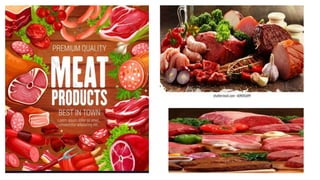
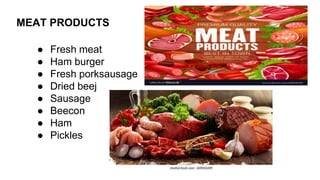
MEAT PRODUCTS
● Fresh meat
● Ham burger
● Fresh porksausage
● Dried beej
● Sausage
● Beecon
● Ham
● Pickles
PREVENTION AND CONTROL
ASEPSIS
Using of sterile Ram material ,knife,
equipment,reduce the amount of spilage.
USES OF HEAT:
Heat canning and other heat process reduce the
amount of bacterial load.
USE OF LOW TEMPERATURE
Chilling,freezing,these process reduce the level of
spilage.
USE OF IRRADIATION:
Use of UV rays,gamma, cathode are used
DRYING:
Involves sun drying,pickling,and other drying
process main principal is eliminating water .
USE OF PRESERVATIVES:
Removal of moisture content.
Salting ,wring brining, smoking, antibiotic species.
PRESERVE FOOD
EAT HEALTHY.
THANK YOU…..

Meat and Meat Products.pptx

  • 1.
    DEPARTMENT OF MICROBIOLOGY VIVEKANANDAARTS AND SCIENCE COLLEGE FOR WOMEN SANKAGIRI Meat and Meat Products Subject: Food Microbiology Submitted by Ms. Suriyakala Murugesan III B.SC., -Microbiology Department of Microbiology Vivekananda Arts and Science College for Women Sankagiri, Salem. Tamil Nadu, India.
  • 2.
    MEAT AND MEATPRODUCTS 1.INTRODUCTION 2.SPOILAGE OF MEAT AND MEAT PRODUCTS 3.GENERAL TYPE OF MICROBIAL SPOILAGE IN MEATS. 4.MEAT PRODUCT. 5.PRESERVATION AND CONTROL.
  • 4.
    Meat is nutritientdense,protein rich food that is extremely perishable and has a short sheft life of it is not preserved. It is either cooked or transformed into another form to prevent to spoilage.The primary cause of spilage of meat is microbes. INTRODUCTION
  • 5.
    Raw meat issuitable to alternation by its own enzymes and microbial action and it's fat may undergo chemical oxidation. A significant level of autolysis is desirable in hanging or ageing of beef. Autolytic alteration induces some proteolytic action on muscle and connective tissues as well as a minor hydrolysis of lipid Excessive autolysis refer to “souring” it emit a sour odour. SPOILAGE OF MEAT AND MEAT PRODUCTS
  • 6.
    GENERAL TYPE OFMICROBIAL SPOILAGE IN MEAT A) Spoilage under aerobic condition Sps.pseudomonas ,acidobacter,moraxella,alcaligenes, streptococcus,leunostoc, bacillus and micrococcus may create a surface slime. 2. Changes in colour of meat pigment As a result of the creation of oxidizing substance,such as peroxide or hydrogen sulfide by bacteria,the red colour of the meat referred to as it's “ bloom” might change to colours of green,brown,grey. Ex:heterofermentative Lactobacillus 3. Changes in fat The chemical oxidation of unsaturated fat in meats cause in air cause,rancidity in meats. It will create off-flavour. 1. Surface slime
  • 7.
    4. phosphorescence This israre abnormality produce by the growth of phosphorescent or fluorescent bacterium Ex: photobacterium sps. 5. Various surface colors due to pigmented bacteria ● Red spot - serratia sps. ● Blue color - pseudomonas sps ● Yellow discoloration - micrococcus sps, flavobacterium ● Greenish blue to browindh black - chromobacterium ● Purple stamping milk - yellow pigmented cocci or red. 6. Off odours & of taste ● Actinomycetes cause a earthy FG labour ● Off odours and off taste may develops in meat due to the bacterial growth.
  • 8.
    MEAT PRODUCTS ● Freshmeat ● Ham burger ● Fresh porksausage ● Dried beej ● Sausage ● Beecon ● Ham ● Pickles
  • 9.
    PREVENTION AND CONTROL ASEPSIS Usingof sterile Ram material ,knife, equipment,reduce the amount of spilage. USES OF HEAT: Heat canning and other heat process reduce the amount of bacterial load. USE OF LOW TEMPERATURE Chilling,freezing,these process reduce the level of spilage.
  • 10.
    USE OF IRRADIATION: Useof UV rays,gamma, cathode are used DRYING: Involves sun drying,pickling,and other drying process main principal is eliminating water . USE OF PRESERVATIVES: Removal of moisture content. Salting ,wring brining, smoking, antibiotic species.
  • 11.