Measuring outcomes of brand
equity
Leroy J. Ebert DipM MCIM, Chartered Marketer, MSLIM
Manager Marketing and Business Development – Logiwiz Ltd.
Presentation Developed as Course Material for the SLIM Diploma
in Brand Management
Usefulness of brand value
• Mergers and acquisitions
• Brand Licensing
• Fund Raising
• Brand management decisions
Accounting Background
• Tangible Assets – Property, plant &
equipment, inventory and cash
• Intangible assets – Specialized resources,
patents, trademarks, licensing agreements,
skills of management and customer relations
Historic Approach
• Calculate the investments made on the brands
intangible and tangible assets
Cost approach
• Cost approach – The amount of money that is
required to reproduce or replace the brand incl
R&D, test marketing, advertising etc.
• Historic or replacement cost
• The disadvantage is that it is looking at the past
glory and not future potential
• Difficult to identify the true cost for old brands
like Toyota, sony etc.
Market Approach
• The present value of the future economic benefit
to be derived by the owner of the asset
• The brand is valued based on what others in the
market have paid for similar assets. With so few
brands being bought and sold, using this method
may be as difficult as finding a recent sale of
another brand with a similar awareness,
strength, or economic and legal situation against
which to benchmark.
The Income Approach
• Royalty relief method - Assume theoretically a
company does not own the brand it operates under, but
instead licenses the use from another. The royalty relief
method uses available data of similar arrangements in
the industry and assigns the value of the brand as the
present value of future royalty payments.
• Price premium method - estimates the value of a
brand by the price premium it generates when compared
to a similar but unbranded product or service. This must
take into account the volume premium method.
• Capitalizing the actual profitability of a brand after
allowing for the costs of maintaining it and the effects of
taxation
Interbrand’s Brand Valuation Model
• Market segmentation – product/service,
distribution channels, consumption patterns,
geography, existing and new customers. Value the
brand in each segment.
• Financial role – identify and forecast the earnings
from intangibles (branded revenues less operating
cost, applicable taxes and a charge for the capital
employed
• Demand – Asses the role the brand plays in driving
demand for products and services in the market in
which it operates
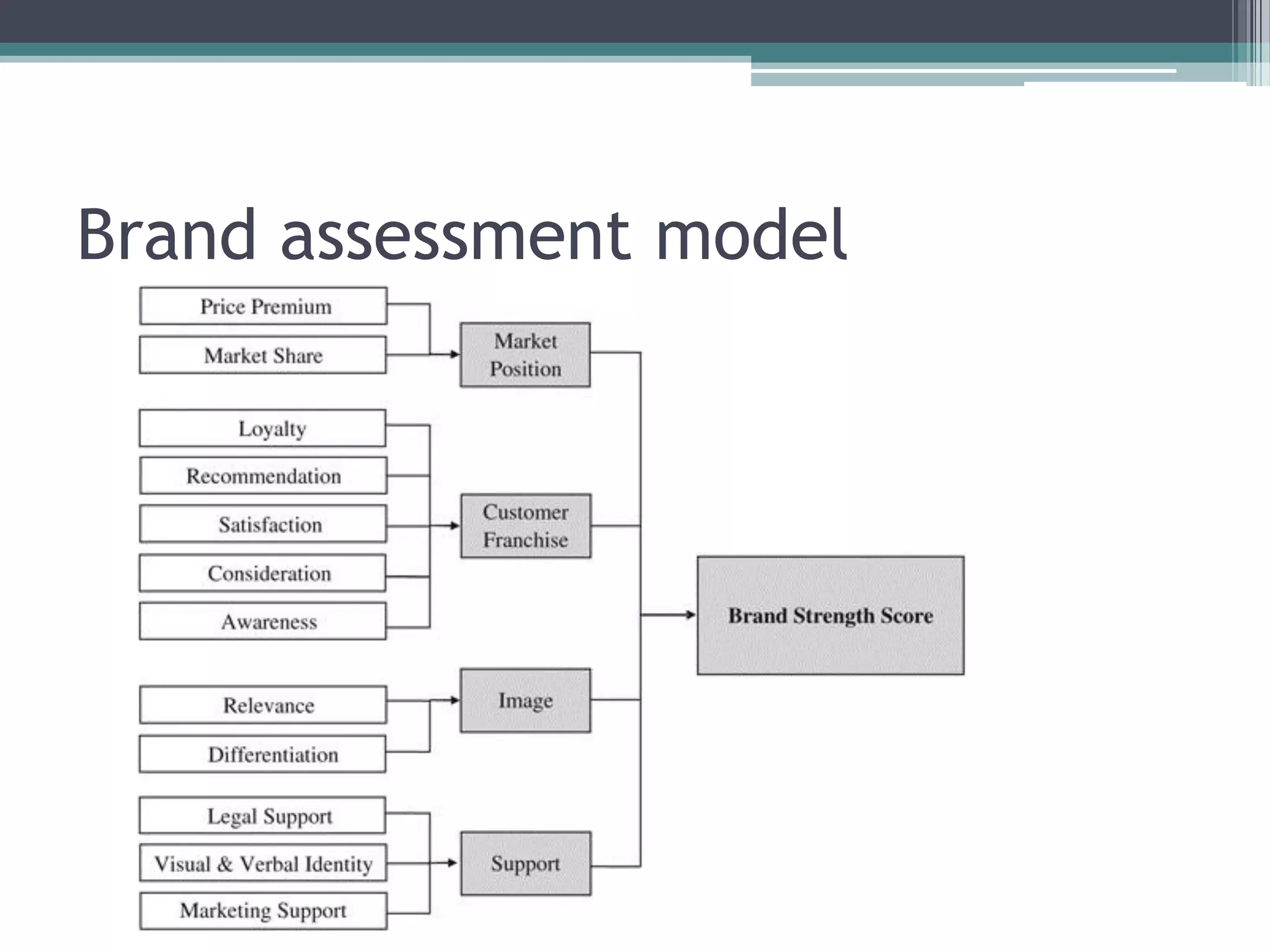
• Competitive bench marking – This method relies
on extensive competitive benchmarking and a
structured evaluation of the brands market,
stability, leadership position, growth rate etc. see
next slide
Brand assessment model
Brand value calculation
• Calculate the brand value as the NPV of the
forecast brand earnings, basically calculate the
future income in today’s terms
Stock market reaction to brand equity
• Brand with greater and sustained equity
generated shareholder returns of up to 30 time
more than its counterparts.
Content Extracted from “Strategic Brand
Management” 3rd Edition
Authors: Kevin Lane Keller
M.G. Parameswaran
Issac Jacob
Presentation developed from SLIM Diploma In Brand
Management Students
Presentation developed by Leroy J. Ebert (25th April 2014)

Measuring outcomes of brand equity By Leroy J. Ebert

  • 1.
    Measuring outcomes ofbrand equity Leroy J. Ebert DipM MCIM, Chartered Marketer, MSLIM Manager Marketing and Business Development – Logiwiz Ltd. Presentation Developed as Course Material for the SLIM Diploma in Brand Management
  • 2.
    Usefulness of brandvalue • Mergers and acquisitions • Brand Licensing • Fund Raising • Brand management decisions
  • 3.
    Accounting Background • TangibleAssets – Property, plant & equipment, inventory and cash • Intangible assets – Specialized resources, patents, trademarks, licensing agreements, skills of management and customer relations
  • 4.
    Historic Approach • Calculatethe investments made on the brands intangible and tangible assets
  • 5.
    Cost approach • Costapproach – The amount of money that is required to reproduce or replace the brand incl R&D, test marketing, advertising etc. • Historic or replacement cost • The disadvantage is that it is looking at the past glory and not future potential • Difficult to identify the true cost for old brands like Toyota, sony etc.
  • 6.
    Market Approach • Thepresent value of the future economic benefit to be derived by the owner of the asset • The brand is valued based on what others in the market have paid for similar assets. With so few brands being bought and sold, using this method may be as difficult as finding a recent sale of another brand with a similar awareness, strength, or economic and legal situation against which to benchmark.
  • 7.
    The Income Approach •Royalty relief method - Assume theoretically a company does not own the brand it operates under, but instead licenses the use from another. The royalty relief method uses available data of similar arrangements in the industry and assigns the value of the brand as the present value of future royalty payments. • Price premium method - estimates the value of a brand by the price premium it generates when compared to a similar but unbranded product or service. This must take into account the volume premium method. • Capitalizing the actual profitability of a brand after allowing for the costs of maintaining it and the effects of taxation
  • 8.
    Interbrand’s Brand ValuationModel • Market segmentation – product/service, distribution channels, consumption patterns, geography, existing and new customers. Value the brand in each segment. • Financial role – identify and forecast the earnings from intangibles (branded revenues less operating cost, applicable taxes and a charge for the capital employed • Demand – Asses the role the brand plays in driving demand for products and services in the market in which it operates
  • 9.
    • Competitive benchmarking – This method relies on extensive competitive benchmarking and a structured evaluation of the brands market, stability, leadership position, growth rate etc. see next slide
  • 10.
  • 11.
    Brand value calculation •Calculate the brand value as the NPV of the forecast brand earnings, basically calculate the future income in today’s terms
  • 12.
    Stock market reactionto brand equity • Brand with greater and sustained equity generated shareholder returns of up to 30 time more than its counterparts.
  • 13.
    Content Extracted from“Strategic Brand Management” 3rd Edition Authors: Kevin Lane Keller M.G. Parameswaran Issac Jacob Presentation developed from SLIM Diploma In Brand Management Students Presentation developed by Leroy J. Ebert (25th April 2014)