CELL BIOLOGY AND GENETICS
DA-2
NAME-BHAVYA OBEROI
REGISTRATION NUMBER-15BBT0048
A High-Throughput, Multi-Cell Phenotype Assay
for the Identification of Novel Inhibitors of
Chemotaxis/Migration
• Abstract
• Chemotaxis and cell migration are fundamental, universal
eukaryotic processes essential for biological functions such as
embryogenesis, immunity, cell renewal, and wound healing,
as well as for pathogenesis of many diseases including cancer
metastasis and chronic inflammation. To identify novel
chemotaxis inhibitors as probes for mechanistic studies and
leads for development of new therapeutics, we developed a
unique, unbiased phenotypic chemotaxis-
dependent Dictyostelium aggregation assay for high-
throughput screening using rapid, laser-scanning cytometry.
• Under defined conditions, individual Dictyostelium secrete
chemoattractants, migrate, and aggregate. Chemotaxis is
quantified by laser-scanning cytometry with a GFP marker
expressed only in cells after chemotaxis/multi-cell
aggregation.
• We applied the assay to screen 1,280 known compounds in a
1536-well plate format and identified two chemotaxis
inhibitors. The chemotaxis inhibitory activities of both
compounds were confirmed in both Dictyostelium and in
human neutrophils in a directed EZ-TAXIscan chemotaxis
assay. The compounds were also shown to inhibit migration
of two human cancer cell lines in monolayer scratch assays.
This test screen demonstrated that the miniaturized assay is
extremely suited for high-throughput screening of very large
libraries of small molecules to identify novel classes of
chemotaxis/migratory inhibitors for drug development and
research tools for targeting chemotactic pathways universal
to humans and other systems.
Introduction
• Chemotaxis is a fundamental process whereby cells sense and migrate in
chemoattractant gradients. Chemotaxis and cell migration play pivotal roles
in embryogenesis, inflammation, wound healing, and renewal of skin and
intestinal cells. They also mediate development of chronic inflammatory
diseases, such as asthma, chronic obstructive pulmonary disease,
rheumatoid arthritis, and atherosclerosis, as well as, cancer, angiogenesis,
and metastasis. Chemotaxis is regulated by G protein coupled receptors
(GPCRs) and heterotrimeric G proteins that transduce chemotactic signals
to the cytoskeleton to dynamically polarize migratory cells. Such biased
polarizations may help re-localize the intracellular machinery for basal cell
motility toward directed movement2. The molecular mechanisms that
regulate chemotaxis/migration under different biological and pathological
conditions are complex, and discovering novel small molecule probes of
these pathways is important to analyze mechanistic functions and to
develop new therapeutics. Pathways involving ligand sensing, signal
transduction, and basal cell mobility may all be targets for inhibition.
Previous in vitro drug screens for anti-inflammatory and anti-metastasis
potential have often focused on chemokine receptors, adhesion molecules,
and limited downstream pathways. However, the compounds identified
from molecular target-based screens generally have poor activity in
vivo and only few of them have been advanced to clinical trials.
• Several cell-based migration assays are being optimized
for more high-throughput image screening, but they
are not yet compatible to screen 1000s of compounds
across a broad range of concentrations. Microfluidic
devices are easily automated and show promise, but
have been difficult to scale beyond 96 format arrays.
Magnetically labeled cell groups can be cultured in 3D,
disrupted, and allowed to coalesce in a ring closure
assay that assesses cell motility. The assay can be
performed in 96-well plates, but requires magnetic and
mechanical manipulations. Boyden chambers have
been re-configured to 96-well formats, but whole
single-plate image analysis is limited and cell migration
efficiency can be restricted to ~20%
• Here, we report a simple, phenotypic, fluorescent
chemotaxis-dependent aggregation assay in a
1536-well plate format that utilizes the unique
chemotactic properties of Dictyostelium.
Chemotaxis has been comprehensively studied
in Dictyostelium discoideum, a model organism
for eukaryote development, cell differentiation,
and chemotaxis, that shares similar chemotactic
mechanisms with mammalian migratory
cells. Dictyostelium has also proven to be a highly
sensitive system to evaluate the effects of various
compounds on chemotaxis.
• Dictyostelium has a unique life cycle involving unicellular
growth and multicellular development. Dictyostelium cells
grow individually under nutrient abundant conditions, but
upon starvation, they enter a developmental program and
secrete the chemoattractant cAMP, which directs cell-to-
cell chemotactic migration, formation of tight multi-cell
aggregates, and multicellular development, with the
terminal differentiation of distinct cell classes. A GFP
reporter, which is only expressed upon chemotactic-
mediated aggregation, is used to assess chemotaxis-
dependent aggregation (Fig. 1A and Supplementary Movie
1). The assay was miniaturized and automated to a 1536-
well plate format, where GFP fluorescence can be rapidly
quantified (Fig. 1). A viability counter screen was also
developed and incorporated, to eliminate cytotoxic false
positives.
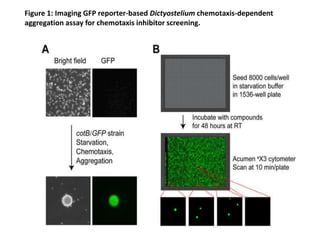
Figure 1: Imaging GFP reporter-based Dictyostelium chemotaxis-dependent
aggregation assay for chemotaxis inhibitor screening.
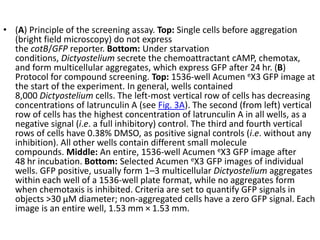
• (A) Principle of the screening assay. Top: Single cells before aggregation
(bright field microscopy) do not express
the cotB/GFP reporter. Bottom: Under starvation
conditions, Dictyostelium secrete the chemoattractant cAMP, chemotax,
and form multicellular aggregates, which express GFP after 24 hr. (B)
Protocol for compound screening. Top: 1536-well Acumen eX3 GFP image at
the start of the experiment. In general, wells contained
8,000 Dictyostelium cells. The left-most vertical row of cells has decreasing
concentrations of latrunculin A (see Fig. 3A). The second (from left) vertical
row of cells has the highest concentration of latrunculin A in all wells, as a
negative signal (i.e. a full inhibitory) control. The third and fourth vertical
rows of cells have 0.38% DMSO, as positive signal controls (i.e. without any
inhibition). All other wells contain different small molecule
compounds. Middle: An entire, 1536-well Acumen eX3 GFP image after
48 hr incubation. Bottom: Selected Acumen eX3 GFP images of individual
wells. GFP positive, usually form 1–3 multicellular Dictyostelium aggregates
within each well of a 1536-well plate format, while no aggregates form
when chemotaxis is inhibited. Criteria are set to quantify GFP signals in
objects >30 μM diameter; non-aggregated cells have a zero GFP signal. Each
image is an entire well, 1.53 mm × 1.53 mm.
• While the described Dictyostelium chemotaxis-dependent
aggregation assay system offers unique advantage for HTS, we
recognize that the readout is indirect. Still, compounds that affect
development independently of chemotaxis, signal-response, and
motility are easily eliminated in directed screens. Further, we
demonstrate successful proof of application, using mammalian cells
as readouts.
• In a test screen of 1280 small molecules, at 7 (i.e. >4-log)
concentrations each, using the described Dictyostelium chemotaxis-
dependent aggregation assay system, we identified two compounds
that inhibit chemotaxis in mammalian cells. The inhibitory activity of
both compounds was independently confirmed using an EZ-TAXIScan
chemotaxis assay, applied to Dictyostelium and human neutrophils,
and a scratch migration assay, applied to human migratory cancer
cells. The Dictyostelium aggregation assay is a first assay suitable for
HTS of chemotaxis/migration inhibitors in large libraries of small
molecules, and we have described a novel technological approach to
identify lead compounds in chemotaxis for mechanistic studies and
new therapeutics.
Results
• Principles of Assay and Signal Detection
• Upon nutrient depletion, Dictyostelium initiate a
multicellular developmental program involving
secretion of the chemoattractant cAMP that directs
chemotaxis and tight multi-cell aggregation. This
morphological transition from unicellular to
multicellular state is easily observed (Fig. 1A).
Chemotaxis/aggregation is quantified
using Dictyostelium carrying a stable GFP reporter
(cotB/GFP) that is only expressed in multicellular
aggregates (Fig. 1A). We miniaturized and automated
the assay (Supplementary Table 1) to a 1536-well plate
format that allows the formation of only 1–3 (GFP-
positive) aggregates per well in a limited surface area
(2.3 mm2 and 6 μl media per well; Fig. 1B).
• We evaluated three different instruments to rapidly quantify GFP signals following
chemotaxis/aggregation in 1536-well plates. The ViewLux CCD imager based
fluorescence plate reader was not sufficiently sensitive to detect the GFP signals.
The 1 to 3 GFP-aggregates per well were frequently localized outside the detection
field of the EnVision photomultiplier tube based fluorescence plate reader. In
contrast, GFP-aggregation fluorescent signals were readily detected by the
Acumen eX3 laser scanning based plate cytometer, with full data collection of an
entire 1536-well plate within ~10 min.
• Scanning threshold was set to capture signals from objects greater than 30 μm in
diameter (>3 cell equivalents) and record numbers of aggregates, total
fluorescence intensity, and peak fluorescence intensity of aggregates within each
well (Fig. 1B). The GFP peak intensity per well proved to be the most consistent, on
well-to-well and plate-to-plate bases, and was chosen as the primary readout.
• In addition to high throughput and quick data acquisition, the phenotypic screening
approach provides further advantages. Since GFP is only expressed in multicellular
aggregates (not individual cells, see Fig. 1A), fluorescent signals are highly
concentrated to the limited multi-cellular foci (aggregates) within each well (Fig.
1 and Supplementary Movie 1). GFP-positive aggregates are readily distinguished
from non-chemotaxing, GFP-negative individual cells. Because there is no
background GFP signal below the 30 μm diameter detection threshold, compounds
inhibiting chemotaxis would ablate strong positive GFP signals.
Assay Automation, Miniaturization,
and Optimization
• Time course
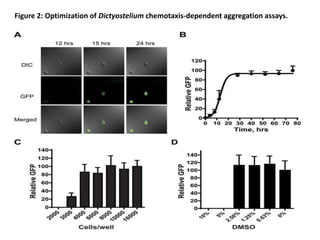
• To evaluate timing, we seeded Dictyostelium in
starvation/differentiation buffer in 1536-well plates, at 6 μl/well,
and incubated at ~20 °C (Supplementary Table 1). Chemoattractant
(cAMP) signaling was initiated endogenously after 8 hr and resulted
in cells chemotaxing and aligning in a head-to-tail mode (i.e. cell-to-
cell streaming; Fig. 2A and Supplementary Movie 1)34. GFP
expression was observed in early aggregated cells and fluorescence
intensity increased with incubation times (Fig.
2A,B and Supplementary Movie 1). The maximal GFP expression in
the 1536-well format was observed after ~30 hr incubation and
remained constant for an additional 2 days (Fig. 2B). We chose a 48-
hr incubation time to ensure that all aggregates of entire plates
attained peak GFP signals.
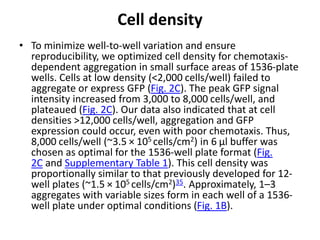
Figure 2: Optimization of Dictyostelium chemotaxis-dependent aggregation assays.
Cell density
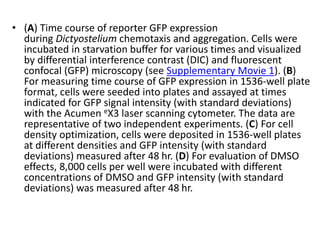
• To minimize well-to-well variation and ensure
reproducibility, we optimized cell density for chemotaxis-
dependent aggregation in small surface areas of 1536-plate
wells. Cells at low density (<2,000 cells/well) failed to
aggregate or express GFP (Fig. 2C). The peak GFP signal
intensity increased from 3,000 to 8,000 cells/well, and
plateaued (Fig. 2C). Our data also indicated that at cell
densities >12,000 cells/well, aggregation and GFP
expression could occur, even with poor chemotaxis. Thus,
8,000 cells/well (~3.5 × 105 cells/cm2) in 6 μl buffer was
chosen as optimal for the 1536-well plate format (Fig.
2C and Supplementary Table 1). This cell density was
proportionally similar to that previously developed for 12-
well plates (~1.5 × 105 cells/cm2)35. Approximately, 1–3
aggregates with variable sizes form in each well of a 1536-
well plate under optimal conditions (Fig. 1B).
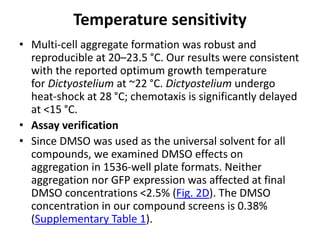
• (A) Time course of reporter GFP expression
during Dictyostelium chemotaxis and aggregation. Cells were
incubated in starvation buffer for various times and visualized
by differential interference contrast (DIC) and fluorescent
confocal (GFP) microscopy (see Supplementary Movie 1). (B)
For measuring time course of GFP expression in 1536-well plate
format, cells were seeded into plates and assayed at times
indicated for GFP signal intensity (with standard deviations)
with the Acumen eX3 laser scanning cytometer. The data are
representative of two independent experiments. (C) For cell
density optimization, cells were deposited in 1536-well plates
at different densities and GFP intensity (with standard
deviations) measured after 48 hr. (D) For evaluation of DMSO
effects, 8,000 cells per well were incubated with different
concentrations of DMSO and GFP intensity (with standard
deviations) was measured after 48 hr.
Temperature sensitivity
• Multi-cell aggregate formation was robust and
reproducible at 20–23.5 °C. Our results were consistent
with the reported optimum growth temperature
for Dictyostelium at ~22 °C. Dictyostelium undergo
heat-shock at 28 °C; chemotaxis is significantly delayed
at <15 °C.
• Assay verification
• Since DMSO was used as the universal solvent for all
compounds, we examined DMSO effects on
aggregation in 1536-well plate formats. Neither
aggregation nor GFP expression was affected at final
DMSO concentrations <2.5% (Fig. 2D). The DMSO
concentration in our compound screens is 0.38%
(Supplementary Table 1).
• Since the GFP-expressing multicellular aggregates formed within each well have
different sizes and numbers, the total fluorescence intensity signals can vary
[coefficient of variation (CV) = 27%)] from well-to-well and plate-to-plate, with a Z’
factor of 0.47. Importantly, the parameters of the laser scanning plate cytometer
are set to only quantify GFP fluorescence presented in multicellular aggregates.
The design of the assay results in a “zero” signal when aggregation is completely
inhibited (see Fig. 1) and, consequently, in non-conventional signal-to-basal ratio
calculations. This high throughput assay is extremely robust, sensitive, and reliable
for the identification of novel chemotaxis inhibitors within small molecule libraries.
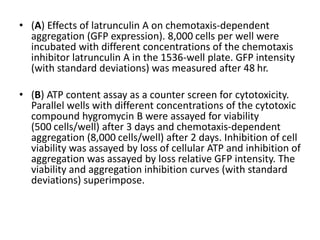
• Latrunculin A is a natural product, which binds actin monomers at 1:1 with a Kd of
200 nM in vitro. Inhibition of actin polymerization by latrunculin A disrupts actin
filament formation, cytoskeletal organization, cell migration, and chemotaxis. We
evaluated inhibitory activity of latrunculin A on chemotaxis-dependent aggregation
in the 1536-well format. Latrunculin A inhibited chemotaxis-dependent aggregation
with an IC50 of 282 nM (95% confidence interval, 193–412 nM; Fig. 3A), similar to
that of mammalian cells. Results demonstrated that the Dictyostelium assay is an
effective alternate approach for compound screening to identify chemotaxis
inhibitors. While latrunculin A may cause lethality of oncogenic mammalian cells, it
is not toxic to Dictyostelium in our assay. When Dictyostelium are seeded in
starvation buffer, growth is arrested and non-dividing cells survive without actin-
dependent processes for external nutrient capture, cell division, or motility; cellular
energy, etc. derive from autophagy. When we simultaneously monitored dose
response effects of latrunculin A on aggregation and cell viability, complete
inhibition of aggregation is confirmed at 1 μM, whereas cells remained viable to
93+/−2.3%, as assayed by vital dye staining. Latrunculin A is more cytotoxic at
10 μM (~30% viability).
Figure 3: Validation of the Dictyostelium chemotaxis-dependent aggregation assay for
inhibitor screens.
• (A) Effects of latrunculin A on chemotaxis-dependent
aggregation (GFP expression). 8,000 cells per well were
incubated with different concentrations of the chemotaxis
inhibitor latrunculin A in the 1536-well plate. GFP intensity
(with standard deviations) was measured after 48 hr.
• (B) ATP content assay as a counter screen for cytotoxicity.
Parallel wells with different concentrations of the cytotoxic
compound hygromycin B were assayed for viability
(500 cells/well) after 3 days and chemotaxis-dependent
aggregation (8,000 cells/well) after 2 days. Inhibition of cell
viability was assayed by loss of cellular ATP and inhibition of
aggregation was assayed by loss relative GFP intensity. The
viability and aggregation inhibition curves (with standard
deviations) superimpose.
• We do not observe partial inhibition of GFP expression
by lactrunculin A across a broad concentration range
(Fig. 3A), as might have been anticipated; in addition,
smaller aggregates are not a characteristic of
inhibition. The non-linearity of the detected GFP signal
response is intrinsic to this unique phenotypic assay
and also provides significant advantage. First, cell-cell
communication (signal-relay) between
individual Dictyostelium is essential to chemotaxis-
dependent aggregation and both signal-relay and
chemotaxis are regulated by many of the same
intracellular pathways. Thus, inhibitory effects can be
amplified if they impact both chemotaxis and signal-
relay, as does latrunculin A.
• In addition, since the assay proceeds for 48 hrs,
we lessen minimal inhibitory effects on
chemotaxis-dependent aggregation and GFP
expression. Finally, GFP is only detected in objects
>30 μM, which further emphasizes
positive/negative contrasts. We suggest that
these criteria polarize effects toward either non-
inhibitory or highly inhibitory signals (Figs 1B
and 3A). Since we test compounds across a wide
concentration range, these data enhance
discrimination of true inhibitory molecules from
false positives.
Counter screen to eliminate toxic
compounds
• Since compounds that cause cell lethality will appear as inhibitory
positives in our assay, we adapted a cell-based ATP content assay to
evaluate compound cytotoxicity to eliminate those false positives
from a primary screen. Since Dictyostelium cells within aggregates
were not easily lysed with the assay-kit buffer, we established an
ATP content assay (Supplementary Table 2) using 500 cells/well in
which aggregation was not formed due to non-permissive numbers
of cells (Fig. 2C). Hygromycin B was used as a positive control for
cytotoxicity that exhibited similar IC50 values of 92.8 μM and
64.5 μM in the ATP content and aggregation assays, respectively
(Fig. 3B). Our results indicate that 3-day incubation is optimal for
measurement of compound cytotoxicity using the ATP content
assay. Hygromycin B was then used as a parallel cytotoxic control in
all experiments. The signal-to-noise ratio was 22-fold, CV was 12%,
and Z’ factor was 0.6 in this Dictyostelium cytotoxicity assay.
LOPAC collection screening
• The LOPAC (Library of Pharmacologically Active Compounds)
collection contains 1280 compounds commonly used to test and
validate screen assays. We performed a
primary Dictyostelium chemotaxis-dependent aggregation assay
with all 1280 LOPAC compounds in serial dilution (from ~2 nM to
~50 μM) in parallel with an ATP content cytotoxicity assay. Based on
calculation of IC50, three compounds fully inhibited
chemotaxis/aggregation at ≤1.5 μM, but all three were also
cytotoxic; at ≤7.7 μM, 22 compounds were inhibitory, with 20 also
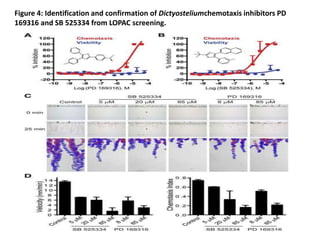
cytotoxic (see Figure S1A,B). The inhibitory effects on aggregate
formation of the two non-toxic compounds PD 169316 and SB
525334 (Fig. 4A,B) were confirmed by microscopic examination; PD
169316 and SB 525334 did not simply suppress GFP expression, but
also inhibited chemotaxis-dependent aggregation.
Figure 4: Identification and confirmation of Dictyosteliumchemotaxis inhibitors PD
169316 and SB 525334 from LOPAC screening.
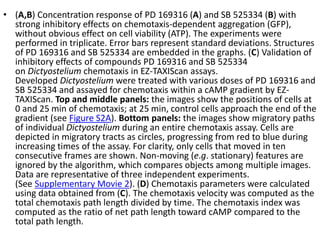
• (A,B) Concentration response of PD 169316 (A) and SB 525334 (B) with
strong inhibitory effects on chemotaxis-dependent aggregation (GFP),
without obvious effect on cell viability (ATP). The experiments were
performed in triplicate. Error bars represent standard deviations. Structures
of PD 169316 and SB 525334 are embedded in the graphs. (C) Validation of
inhibitory effects of compounds PD 169316 and SB 525334
on Dictyostelium chemotaxis in EZ-TAXIScan assays.
Developed Dictyostelium were treated with various doses of PD 169316 and
SB 525334 and assayed for chemotaxis within a cAMP gradient by EZ-
TAXIScan. Top and middle panels: the images show the positions of cells at
0 and 25 min of chemotaxis; at 25 min, control cells approach the end of the
gradient (see Figure S2A). Bottom panels: the images show migratory paths
of individual Dictyostelium during an entire chemotaxis assay. Cells are
depicted in migratory tracts as circles, progressing from red to blue during
increasing times of the assay. For clarity, only cells that moved in ten
consecutive frames are shown. Non-moving (e.g. stationary) features are
ignored by the algorithm, which compares objects among multiple images.
Data are representative of three independent experiments.
(See Supplementary Movie 2). (D) Chemotaxis parameters were calculated
using data obtained from (C). The chemotaxis velocity was computed as the
total chemotaxis path length divided by time. The chemotaxis index was
computed as the ratio of net path length toward cAMP compared to the
total path length.
• Finally, while 123 other compounds were inhibitory at only
the single highest dose tested, 38.3 μM, 111 of these
compounds were also cytotoxic; we did not pursue the
remaining 12 compounds, rather focusing on the more
active compounds PD 169316 and SB 525334.
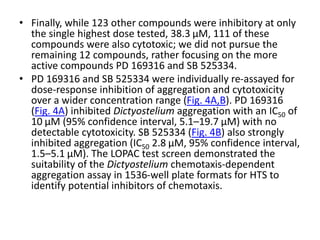
• PD 169316 and SB 525334 were individually re-assayed for
dose-response inhibition of aggregation and cytotoxicity
over a wider concentration range (Fig. 4A,B). PD 169316
(Fig. 4A) inhibited Dictyostelium aggregation with an IC50 of
10 μM (95% confidence interval, 5.1–19.7 μM) with no
detectable cytotoxicity. SB 525334 (Fig. 4B) also strongly
inhibited aggregation (IC50 2.8 μM, 95% confidence interval,
1.5–5.1 μM). The LOPAC test screen demonstrated the
suitability of the Dictyostelium chemotaxis-dependent
aggregation assay in 1536-well plate formats for HTS to
identify potential inhibitors of chemotaxis.
PD 169316 and SB 525334 inhibit chemotaxis of
both Dictyostelium and human neutrophils
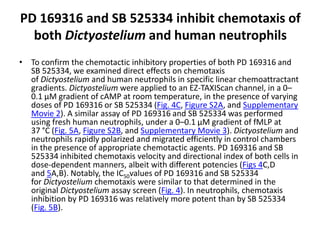
• To confirm the chemotactic inhibitory properties of both PD 169316 and
SB 525334, we examined direct effects on chemotaxis
of Dictyostelium and human neutrophils in specific linear chemoattractant
gradients. Dictyostelium were applied to an EZ-TAXIScan channel, in a 0–
0.1 μM gradient of cAMP at room temperature, in the presence of varying
doses of PD 169316 or SB 525334 (Fig. 4C, Figure S2A, and Supplementary
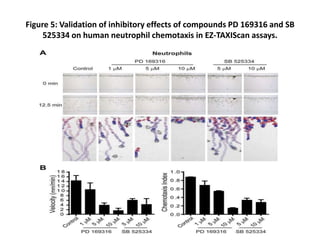
Movie 2). A similar assay of PD 169316 and SB 525334 was performed
using fresh human neutrophils, under a 0–0.1 μM gradient of fMLP at
37 °C (Fig. 5A, Figure S2B, and Supplementary Movie 3). Dictyostelium and
neutrophils rapidly polarized and migrated efficiently in control chambers
in the presence of appropriate chemotactic agents. PD 169316 and SB
525334 inhibited chemotaxis velocity and directional index of both cells in
dose-dependent manners, albeit with different potencies (Figs 4C,D
and 5A,B). Notably, the IC50values of PD 169316 and SB 525334
for Dictyostelium chemotaxis were similar to that determined in the
original Dictyostelium assay screen (Fig. 4). In neutrophils, chemotaxis
inhibition by PD 169316 was relatively more potent than by SB 525334
(Fig. 5B).
Figure 5: Validation of inhibitory effects of compounds PD 169316 and SB
525334 on human neutrophil chemotaxis in EZ-TAXIScan assays.
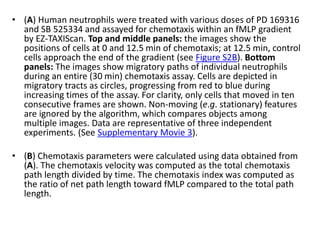
• (A) Human neutrophils were treated with various doses of PD 169316
and SB 525334 and assayed for chemotaxis within an fMLP gradient
by EZ-TAXIScan. Top and middle panels: the images show the
positions of cells at 0 and 12.5 min of chemotaxis; at 12.5 min, control
cells approach the end of the gradient (see Figure S2B). Bottom
panels: The images show migratory paths of individual neutrophils
during an entire (30 min) chemotaxis assay. Cells are depicted in
migratory tracts as circles, progressing from red to blue during
increasing times of the assay. For clarity, only cells that moved in ten
consecutive frames are shown. Non-moving (e.g. stationary) features
are ignored by the algorithm, which compares objects among
multiple images. Data are representative of three independent
experiments. (See Supplementary Movie 3).
• (B) Chemotaxis parameters were calculated using data obtained from
(A). The chemotaxis velocity was computed as the total chemotaxis
path length divided by time. The chemotaxis index was computed as
the ratio of net path length toward fMLP compared to the total path
length.
Conclusions
• We have developed and optimized a novel assay for high-
throughput screening to identify novel inhibitors of
chemotaxis. The assay uses a rapid laser-scanning
cytometry plate reader for the detection of GFP-aggregates
formed during Dictyostelium chemotaxis and a parallel cell
viability counter-screen to eliminate cytotoxic compounds.
The assay allowed the HTS of 1200 compounds, at 7
concentrations + controls, in ~50,000 wells with 32 (1536-
well) plates. We further demonstrated that the 2
compounds identified as inhibitors
of Dictyostelium chemotaxis are also capable of inhibiting
chemotaxis/migration of human neutrophils and cancer
cells. This new compound screening approach, using a
phenotypic Dictyostelium chemotaxis-dependent
aggregation assay, enables the rapid identification of lead
compounds that inhibit chemotaxis in human and other
cells for drug development and research tools.
Cell biology and genetics da 2

Cell biology and genetics da 2

  • 1.
    CELL BIOLOGY ANDGENETICS DA-2 NAME-BHAVYA OBEROI REGISTRATION NUMBER-15BBT0048
  • 2.
    A High-Throughput, Multi-CellPhenotype Assay for the Identification of Novel Inhibitors of Chemotaxis/Migration • Abstract • Chemotaxis and cell migration are fundamental, universal eukaryotic processes essential for biological functions such as embryogenesis, immunity, cell renewal, and wound healing, as well as for pathogenesis of many diseases including cancer metastasis and chronic inflammation. To identify novel chemotaxis inhibitors as probes for mechanistic studies and leads for development of new therapeutics, we developed a unique, unbiased phenotypic chemotaxis- dependent Dictyostelium aggregation assay for high- throughput screening using rapid, laser-scanning cytometry.
  • 3.
    • Under definedconditions, individual Dictyostelium secrete chemoattractants, migrate, and aggregate. Chemotaxis is quantified by laser-scanning cytometry with a GFP marker expressed only in cells after chemotaxis/multi-cell aggregation. • We applied the assay to screen 1,280 known compounds in a 1536-well plate format and identified two chemotaxis inhibitors. The chemotaxis inhibitory activities of both compounds were confirmed in both Dictyostelium and in human neutrophils in a directed EZ-TAXIscan chemotaxis assay. The compounds were also shown to inhibit migration of two human cancer cell lines in monolayer scratch assays. This test screen demonstrated that the miniaturized assay is extremely suited for high-throughput screening of very large libraries of small molecules to identify novel classes of chemotaxis/migratory inhibitors for drug development and research tools for targeting chemotactic pathways universal to humans and other systems.
  • 4.
    Introduction • Chemotaxis isa fundamental process whereby cells sense and migrate in chemoattractant gradients. Chemotaxis and cell migration play pivotal roles in embryogenesis, inflammation, wound healing, and renewal of skin and intestinal cells. They also mediate development of chronic inflammatory diseases, such as asthma, chronic obstructive pulmonary disease, rheumatoid arthritis, and atherosclerosis, as well as, cancer, angiogenesis, and metastasis. Chemotaxis is regulated by G protein coupled receptors (GPCRs) and heterotrimeric G proteins that transduce chemotactic signals to the cytoskeleton to dynamically polarize migratory cells. Such biased polarizations may help re-localize the intracellular machinery for basal cell motility toward directed movement2. The molecular mechanisms that regulate chemotaxis/migration under different biological and pathological conditions are complex, and discovering novel small molecule probes of these pathways is important to analyze mechanistic functions and to develop new therapeutics. Pathways involving ligand sensing, signal transduction, and basal cell mobility may all be targets for inhibition. Previous in vitro drug screens for anti-inflammatory and anti-metastasis potential have often focused on chemokine receptors, adhesion molecules, and limited downstream pathways. However, the compounds identified from molecular target-based screens generally have poor activity in vivo and only few of them have been advanced to clinical trials.
  • 5.
    • Several cell-basedmigration assays are being optimized for more high-throughput image screening, but they are not yet compatible to screen 1000s of compounds across a broad range of concentrations. Microfluidic devices are easily automated and show promise, but have been difficult to scale beyond 96 format arrays. Magnetically labeled cell groups can be cultured in 3D, disrupted, and allowed to coalesce in a ring closure assay that assesses cell motility. The assay can be performed in 96-well plates, but requires magnetic and mechanical manipulations. Boyden chambers have been re-configured to 96-well formats, but whole single-plate image analysis is limited and cell migration efficiency can be restricted to ~20%
  • 6.
    • Here, wereport a simple, phenotypic, fluorescent chemotaxis-dependent aggregation assay in a 1536-well plate format that utilizes the unique chemotactic properties of Dictyostelium. Chemotaxis has been comprehensively studied in Dictyostelium discoideum, a model organism for eukaryote development, cell differentiation, and chemotaxis, that shares similar chemotactic mechanisms with mammalian migratory cells. Dictyostelium has also proven to be a highly sensitive system to evaluate the effects of various compounds on chemotaxis.
  • 7.
    • Dictyostelium hasa unique life cycle involving unicellular growth and multicellular development. Dictyostelium cells grow individually under nutrient abundant conditions, but upon starvation, they enter a developmental program and secrete the chemoattractant cAMP, which directs cell-to- cell chemotactic migration, formation of tight multi-cell aggregates, and multicellular development, with the terminal differentiation of distinct cell classes. A GFP reporter, which is only expressed upon chemotactic- mediated aggregation, is used to assess chemotaxis- dependent aggregation (Fig. 1A and Supplementary Movie 1). The assay was miniaturized and automated to a 1536- well plate format, where GFP fluorescence can be rapidly quantified (Fig. 1). A viability counter screen was also developed and incorporated, to eliminate cytotoxic false positives.
  • 8.
    Figure 1: ImagingGFP reporter-based Dictyostelium chemotaxis-dependent aggregation assay for chemotaxis inhibitor screening.
  • 9.
    • (A) Principleof the screening assay. Top: Single cells before aggregation (bright field microscopy) do not express the cotB/GFP reporter. Bottom: Under starvation conditions, Dictyostelium secrete the chemoattractant cAMP, chemotax, and form multicellular aggregates, which express GFP after 24 hr. (B) Protocol for compound screening. Top: 1536-well Acumen eX3 GFP image at the start of the experiment. In general, wells contained 8,000 Dictyostelium cells. The left-most vertical row of cells has decreasing concentrations of latrunculin A (see Fig. 3A). The second (from left) vertical row of cells has the highest concentration of latrunculin A in all wells, as a negative signal (i.e. a full inhibitory) control. The third and fourth vertical rows of cells have 0.38% DMSO, as positive signal controls (i.e. without any inhibition). All other wells contain different small molecule compounds. Middle: An entire, 1536-well Acumen eX3 GFP image after 48 hr incubation. Bottom: Selected Acumen eX3 GFP images of individual wells. GFP positive, usually form 1–3 multicellular Dictyostelium aggregates within each well of a 1536-well plate format, while no aggregates form when chemotaxis is inhibited. Criteria are set to quantify GFP signals in objects >30 μM diameter; non-aggregated cells have a zero GFP signal. Each image is an entire well, 1.53 mm × 1.53 mm.
  • 10.
    • While thedescribed Dictyostelium chemotaxis-dependent aggregation assay system offers unique advantage for HTS, we recognize that the readout is indirect. Still, compounds that affect development independently of chemotaxis, signal-response, and motility are easily eliminated in directed screens. Further, we demonstrate successful proof of application, using mammalian cells as readouts. • In a test screen of 1280 small molecules, at 7 (i.e. >4-log) concentrations each, using the described Dictyostelium chemotaxis- dependent aggregation assay system, we identified two compounds that inhibit chemotaxis in mammalian cells. The inhibitory activity of both compounds was independently confirmed using an EZ-TAXIScan chemotaxis assay, applied to Dictyostelium and human neutrophils, and a scratch migration assay, applied to human migratory cancer cells. The Dictyostelium aggregation assay is a first assay suitable for HTS of chemotaxis/migration inhibitors in large libraries of small molecules, and we have described a novel technological approach to identify lead compounds in chemotaxis for mechanistic studies and new therapeutics.
  • 11.
    Results • Principles ofAssay and Signal Detection • Upon nutrient depletion, Dictyostelium initiate a multicellular developmental program involving secretion of the chemoattractant cAMP that directs chemotaxis and tight multi-cell aggregation. This morphological transition from unicellular to multicellular state is easily observed (Fig. 1A). Chemotaxis/aggregation is quantified using Dictyostelium carrying a stable GFP reporter (cotB/GFP) that is only expressed in multicellular aggregates (Fig. 1A). We miniaturized and automated the assay (Supplementary Table 1) to a 1536-well plate format that allows the formation of only 1–3 (GFP- positive) aggregates per well in a limited surface area (2.3 mm2 and 6 μl media per well; Fig. 1B).
  • 12.
    • We evaluatedthree different instruments to rapidly quantify GFP signals following chemotaxis/aggregation in 1536-well plates. The ViewLux CCD imager based fluorescence plate reader was not sufficiently sensitive to detect the GFP signals. The 1 to 3 GFP-aggregates per well were frequently localized outside the detection field of the EnVision photomultiplier tube based fluorescence plate reader. In contrast, GFP-aggregation fluorescent signals were readily detected by the Acumen eX3 laser scanning based plate cytometer, with full data collection of an entire 1536-well plate within ~10 min. • Scanning threshold was set to capture signals from objects greater than 30 μm in diameter (>3 cell equivalents) and record numbers of aggregates, total fluorescence intensity, and peak fluorescence intensity of aggregates within each well (Fig. 1B). The GFP peak intensity per well proved to be the most consistent, on well-to-well and plate-to-plate bases, and was chosen as the primary readout. • In addition to high throughput and quick data acquisition, the phenotypic screening approach provides further advantages. Since GFP is only expressed in multicellular aggregates (not individual cells, see Fig. 1A), fluorescent signals are highly concentrated to the limited multi-cellular foci (aggregates) within each well (Fig. 1 and Supplementary Movie 1). GFP-positive aggregates are readily distinguished from non-chemotaxing, GFP-negative individual cells. Because there is no background GFP signal below the 30 μm diameter detection threshold, compounds inhibiting chemotaxis would ablate strong positive GFP signals.
  • 13.
    Assay Automation, Miniaturization, andOptimization • Time course • To evaluate timing, we seeded Dictyostelium in starvation/differentiation buffer in 1536-well plates, at 6 μl/well, and incubated at ~20 °C (Supplementary Table 1). Chemoattractant (cAMP) signaling was initiated endogenously after 8 hr and resulted in cells chemotaxing and aligning in a head-to-tail mode (i.e. cell-to- cell streaming; Fig. 2A and Supplementary Movie 1)34. GFP expression was observed in early aggregated cells and fluorescence intensity increased with incubation times (Fig. 2A,B and Supplementary Movie 1). The maximal GFP expression in the 1536-well format was observed after ~30 hr incubation and remained constant for an additional 2 days (Fig. 2B). We chose a 48- hr incubation time to ensure that all aggregates of entire plates attained peak GFP signals.
  • 14.
    Figure 2: Optimizationof Dictyostelium chemotaxis-dependent aggregation assays.
  • 15.
    Cell density • Tominimize well-to-well variation and ensure reproducibility, we optimized cell density for chemotaxis- dependent aggregation in small surface areas of 1536-plate wells. Cells at low density (<2,000 cells/well) failed to aggregate or express GFP (Fig. 2C). The peak GFP signal intensity increased from 3,000 to 8,000 cells/well, and plateaued (Fig. 2C). Our data also indicated that at cell densities >12,000 cells/well, aggregation and GFP expression could occur, even with poor chemotaxis. Thus, 8,000 cells/well (~3.5 × 105 cells/cm2) in 6 μl buffer was chosen as optimal for the 1536-well plate format (Fig. 2C and Supplementary Table 1). This cell density was proportionally similar to that previously developed for 12- well plates (~1.5 × 105 cells/cm2)35. Approximately, 1–3 aggregates with variable sizes form in each well of a 1536- well plate under optimal conditions (Fig. 1B).
  • 16.
    • (A) Timecourse of reporter GFP expression during Dictyostelium chemotaxis and aggregation. Cells were incubated in starvation buffer for various times and visualized by differential interference contrast (DIC) and fluorescent confocal (GFP) microscopy (see Supplementary Movie 1). (B) For measuring time course of GFP expression in 1536-well plate format, cells were seeded into plates and assayed at times indicated for GFP signal intensity (with standard deviations) with the Acumen eX3 laser scanning cytometer. The data are representative of two independent experiments. (C) For cell density optimization, cells were deposited in 1536-well plates at different densities and GFP intensity (with standard deviations) measured after 48 hr. (D) For evaluation of DMSO effects, 8,000 cells per well were incubated with different concentrations of DMSO and GFP intensity (with standard deviations) was measured after 48 hr.
  • 17.
    Temperature sensitivity • Multi-cellaggregate formation was robust and reproducible at 20–23.5 °C. Our results were consistent with the reported optimum growth temperature for Dictyostelium at ~22 °C. Dictyostelium undergo heat-shock at 28 °C; chemotaxis is significantly delayed at <15 °C. • Assay verification • Since DMSO was used as the universal solvent for all compounds, we examined DMSO effects on aggregation in 1536-well plate formats. Neither aggregation nor GFP expression was affected at final DMSO concentrations <2.5% (Fig. 2D). The DMSO concentration in our compound screens is 0.38% (Supplementary Table 1).
  • 18.
    • Since theGFP-expressing multicellular aggregates formed within each well have different sizes and numbers, the total fluorescence intensity signals can vary [coefficient of variation (CV) = 27%)] from well-to-well and plate-to-plate, with a Z’ factor of 0.47. Importantly, the parameters of the laser scanning plate cytometer are set to only quantify GFP fluorescence presented in multicellular aggregates. The design of the assay results in a “zero” signal when aggregation is completely inhibited (see Fig. 1) and, consequently, in non-conventional signal-to-basal ratio calculations. This high throughput assay is extremely robust, sensitive, and reliable for the identification of novel chemotaxis inhibitors within small molecule libraries. • Latrunculin A is a natural product, which binds actin monomers at 1:1 with a Kd of 200 nM in vitro. Inhibition of actin polymerization by latrunculin A disrupts actin filament formation, cytoskeletal organization, cell migration, and chemotaxis. We evaluated inhibitory activity of latrunculin A on chemotaxis-dependent aggregation in the 1536-well format. Latrunculin A inhibited chemotaxis-dependent aggregation with an IC50 of 282 nM (95% confidence interval, 193–412 nM; Fig. 3A), similar to that of mammalian cells. Results demonstrated that the Dictyostelium assay is an effective alternate approach for compound screening to identify chemotaxis inhibitors. While latrunculin A may cause lethality of oncogenic mammalian cells, it is not toxic to Dictyostelium in our assay. When Dictyostelium are seeded in starvation buffer, growth is arrested and non-dividing cells survive without actin- dependent processes for external nutrient capture, cell division, or motility; cellular energy, etc. derive from autophagy. When we simultaneously monitored dose response effects of latrunculin A on aggregation and cell viability, complete inhibition of aggregation is confirmed at 1 μM, whereas cells remained viable to 93+/−2.3%, as assayed by vital dye staining. Latrunculin A is more cytotoxic at 10 μM (~30% viability).
  • 19.
    Figure 3: Validationof the Dictyostelium chemotaxis-dependent aggregation assay for inhibitor screens.
  • 20.
    • (A) Effectsof latrunculin A on chemotaxis-dependent aggregation (GFP expression). 8,000 cells per well were incubated with different concentrations of the chemotaxis inhibitor latrunculin A in the 1536-well plate. GFP intensity (with standard deviations) was measured after 48 hr. • (B) ATP content assay as a counter screen for cytotoxicity. Parallel wells with different concentrations of the cytotoxic compound hygromycin B were assayed for viability (500 cells/well) after 3 days and chemotaxis-dependent aggregation (8,000 cells/well) after 2 days. Inhibition of cell viability was assayed by loss of cellular ATP and inhibition of aggregation was assayed by loss relative GFP intensity. The viability and aggregation inhibition curves (with standard deviations) superimpose.
  • 21.
    • We donot observe partial inhibition of GFP expression by lactrunculin A across a broad concentration range (Fig. 3A), as might have been anticipated; in addition, smaller aggregates are not a characteristic of inhibition. The non-linearity of the detected GFP signal response is intrinsic to this unique phenotypic assay and also provides significant advantage. First, cell-cell communication (signal-relay) between individual Dictyostelium is essential to chemotaxis- dependent aggregation and both signal-relay and chemotaxis are regulated by many of the same intracellular pathways. Thus, inhibitory effects can be amplified if they impact both chemotaxis and signal- relay, as does latrunculin A.
  • 22.
    • In addition,since the assay proceeds for 48 hrs, we lessen minimal inhibitory effects on chemotaxis-dependent aggregation and GFP expression. Finally, GFP is only detected in objects >30 μM, which further emphasizes positive/negative contrasts. We suggest that these criteria polarize effects toward either non- inhibitory or highly inhibitory signals (Figs 1B and 3A). Since we test compounds across a wide concentration range, these data enhance discrimination of true inhibitory molecules from false positives.
  • 23.
    Counter screen toeliminate toxic compounds • Since compounds that cause cell lethality will appear as inhibitory positives in our assay, we adapted a cell-based ATP content assay to evaluate compound cytotoxicity to eliminate those false positives from a primary screen. Since Dictyostelium cells within aggregates were not easily lysed with the assay-kit buffer, we established an ATP content assay (Supplementary Table 2) using 500 cells/well in which aggregation was not formed due to non-permissive numbers of cells (Fig. 2C). Hygromycin B was used as a positive control for cytotoxicity that exhibited similar IC50 values of 92.8 μM and 64.5 μM in the ATP content and aggregation assays, respectively (Fig. 3B). Our results indicate that 3-day incubation is optimal for measurement of compound cytotoxicity using the ATP content assay. Hygromycin B was then used as a parallel cytotoxic control in all experiments. The signal-to-noise ratio was 22-fold, CV was 12%, and Z’ factor was 0.6 in this Dictyostelium cytotoxicity assay.
  • 24.
    LOPAC collection screening •The LOPAC (Library of Pharmacologically Active Compounds) collection contains 1280 compounds commonly used to test and validate screen assays. We performed a primary Dictyostelium chemotaxis-dependent aggregation assay with all 1280 LOPAC compounds in serial dilution (from ~2 nM to ~50 μM) in parallel with an ATP content cytotoxicity assay. Based on calculation of IC50, three compounds fully inhibited chemotaxis/aggregation at ≤1.5 μM, but all three were also cytotoxic; at ≤7.7 μM, 22 compounds were inhibitory, with 20 also cytotoxic (see Figure S1A,B). The inhibitory effects on aggregate formation of the two non-toxic compounds PD 169316 and SB 525334 (Fig. 4A,B) were confirmed by microscopic examination; PD 169316 and SB 525334 did not simply suppress GFP expression, but also inhibited chemotaxis-dependent aggregation.
  • 25.
    Figure 4: Identificationand confirmation of Dictyosteliumchemotaxis inhibitors PD 169316 and SB 525334 from LOPAC screening.
  • 26.
    • (A,B) Concentrationresponse of PD 169316 (A) and SB 525334 (B) with strong inhibitory effects on chemotaxis-dependent aggregation (GFP), without obvious effect on cell viability (ATP). The experiments were performed in triplicate. Error bars represent standard deviations. Structures of PD 169316 and SB 525334 are embedded in the graphs. (C) Validation of inhibitory effects of compounds PD 169316 and SB 525334 on Dictyostelium chemotaxis in EZ-TAXIScan assays. Developed Dictyostelium were treated with various doses of PD 169316 and SB 525334 and assayed for chemotaxis within a cAMP gradient by EZ- TAXIScan. Top and middle panels: the images show the positions of cells at 0 and 25 min of chemotaxis; at 25 min, control cells approach the end of the gradient (see Figure S2A). Bottom panels: the images show migratory paths of individual Dictyostelium during an entire chemotaxis assay. Cells are depicted in migratory tracts as circles, progressing from red to blue during increasing times of the assay. For clarity, only cells that moved in ten consecutive frames are shown. Non-moving (e.g. stationary) features are ignored by the algorithm, which compares objects among multiple images. Data are representative of three independent experiments. (See Supplementary Movie 2). (D) Chemotaxis parameters were calculated using data obtained from (C). The chemotaxis velocity was computed as the total chemotaxis path length divided by time. The chemotaxis index was computed as the ratio of net path length toward cAMP compared to the total path length.
  • 27.
    • Finally, while123 other compounds were inhibitory at only the single highest dose tested, 38.3 μM, 111 of these compounds were also cytotoxic; we did not pursue the remaining 12 compounds, rather focusing on the more active compounds PD 169316 and SB 525334. • PD 169316 and SB 525334 were individually re-assayed for dose-response inhibition of aggregation and cytotoxicity over a wider concentration range (Fig. 4A,B). PD 169316 (Fig. 4A) inhibited Dictyostelium aggregation with an IC50 of 10 μM (95% confidence interval, 5.1–19.7 μM) with no detectable cytotoxicity. SB 525334 (Fig. 4B) also strongly inhibited aggregation (IC50 2.8 μM, 95% confidence interval, 1.5–5.1 μM). The LOPAC test screen demonstrated the suitability of the Dictyostelium chemotaxis-dependent aggregation assay in 1536-well plate formats for HTS to identify potential inhibitors of chemotaxis.
  • 28.
    PD 169316 andSB 525334 inhibit chemotaxis of both Dictyostelium and human neutrophils • To confirm the chemotactic inhibitory properties of both PD 169316 and SB 525334, we examined direct effects on chemotaxis of Dictyostelium and human neutrophils in specific linear chemoattractant gradients. Dictyostelium were applied to an EZ-TAXIScan channel, in a 0– 0.1 μM gradient of cAMP at room temperature, in the presence of varying doses of PD 169316 or SB 525334 (Fig. 4C, Figure S2A, and Supplementary Movie 2). A similar assay of PD 169316 and SB 525334 was performed using fresh human neutrophils, under a 0–0.1 μM gradient of fMLP at 37 °C (Fig. 5A, Figure S2B, and Supplementary Movie 3). Dictyostelium and neutrophils rapidly polarized and migrated efficiently in control chambers in the presence of appropriate chemotactic agents. PD 169316 and SB 525334 inhibited chemotaxis velocity and directional index of both cells in dose-dependent manners, albeit with different potencies (Figs 4C,D and 5A,B). Notably, the IC50values of PD 169316 and SB 525334 for Dictyostelium chemotaxis were similar to that determined in the original Dictyostelium assay screen (Fig. 4). In neutrophils, chemotaxis inhibition by PD 169316 was relatively more potent than by SB 525334 (Fig. 5B).
  • 29.
    Figure 5: Validationof inhibitory effects of compounds PD 169316 and SB 525334 on human neutrophil chemotaxis in EZ-TAXIScan assays.
  • 30.
    • (A) Humanneutrophils were treated with various doses of PD 169316 and SB 525334 and assayed for chemotaxis within an fMLP gradient by EZ-TAXIScan. Top and middle panels: the images show the positions of cells at 0 and 12.5 min of chemotaxis; at 12.5 min, control cells approach the end of the gradient (see Figure S2B). Bottom panels: The images show migratory paths of individual neutrophils during an entire (30 min) chemotaxis assay. Cells are depicted in migratory tracts as circles, progressing from red to blue during increasing times of the assay. For clarity, only cells that moved in ten consecutive frames are shown. Non-moving (e.g. stationary) features are ignored by the algorithm, which compares objects among multiple images. Data are representative of three independent experiments. (See Supplementary Movie 3). • (B) Chemotaxis parameters were calculated using data obtained from (A). The chemotaxis velocity was computed as the total chemotaxis path length divided by time. The chemotaxis index was computed as the ratio of net path length toward fMLP compared to the total path length.
  • 31.
    Conclusions • We havedeveloped and optimized a novel assay for high- throughput screening to identify novel inhibitors of chemotaxis. The assay uses a rapid laser-scanning cytometry plate reader for the detection of GFP-aggregates formed during Dictyostelium chemotaxis and a parallel cell viability counter-screen to eliminate cytotoxic compounds. The assay allowed the HTS of 1200 compounds, at 7 concentrations + controls, in ~50,000 wells with 32 (1536- well) plates. We further demonstrated that the 2 compounds identified as inhibitors of Dictyostelium chemotaxis are also capable of inhibiting chemotaxis/migration of human neutrophils and cancer cells. This new compound screening approach, using a phenotypic Dictyostelium chemotaxis-dependent aggregation assay, enables the rapid identification of lead compounds that inhibit chemotaxis in human and other cells for drug development and research tools.