Planning and Statistics Division
Ministry of Education, Myanmar
1
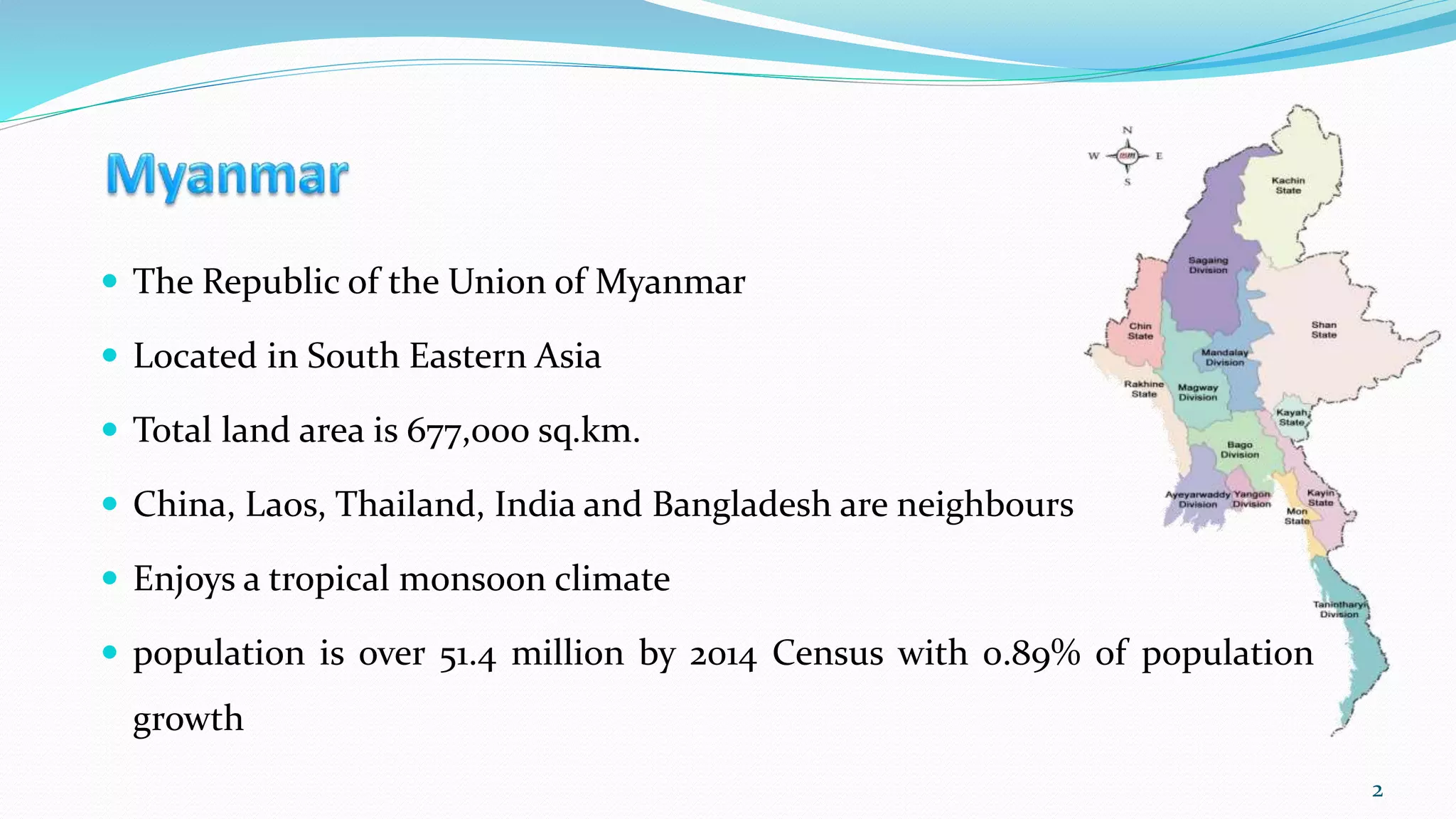
 The Republic of the Union of Myanmar
 Located in South Eastern Asia
 Total land area is 677,000 sq.km.
 China, Laos, Thailand, India and Bangladesh are neighbours
 Enjoys a tropical monsoon climate
 population is over 51.4 million by 2014 Census with 0.89% of population
growth
2
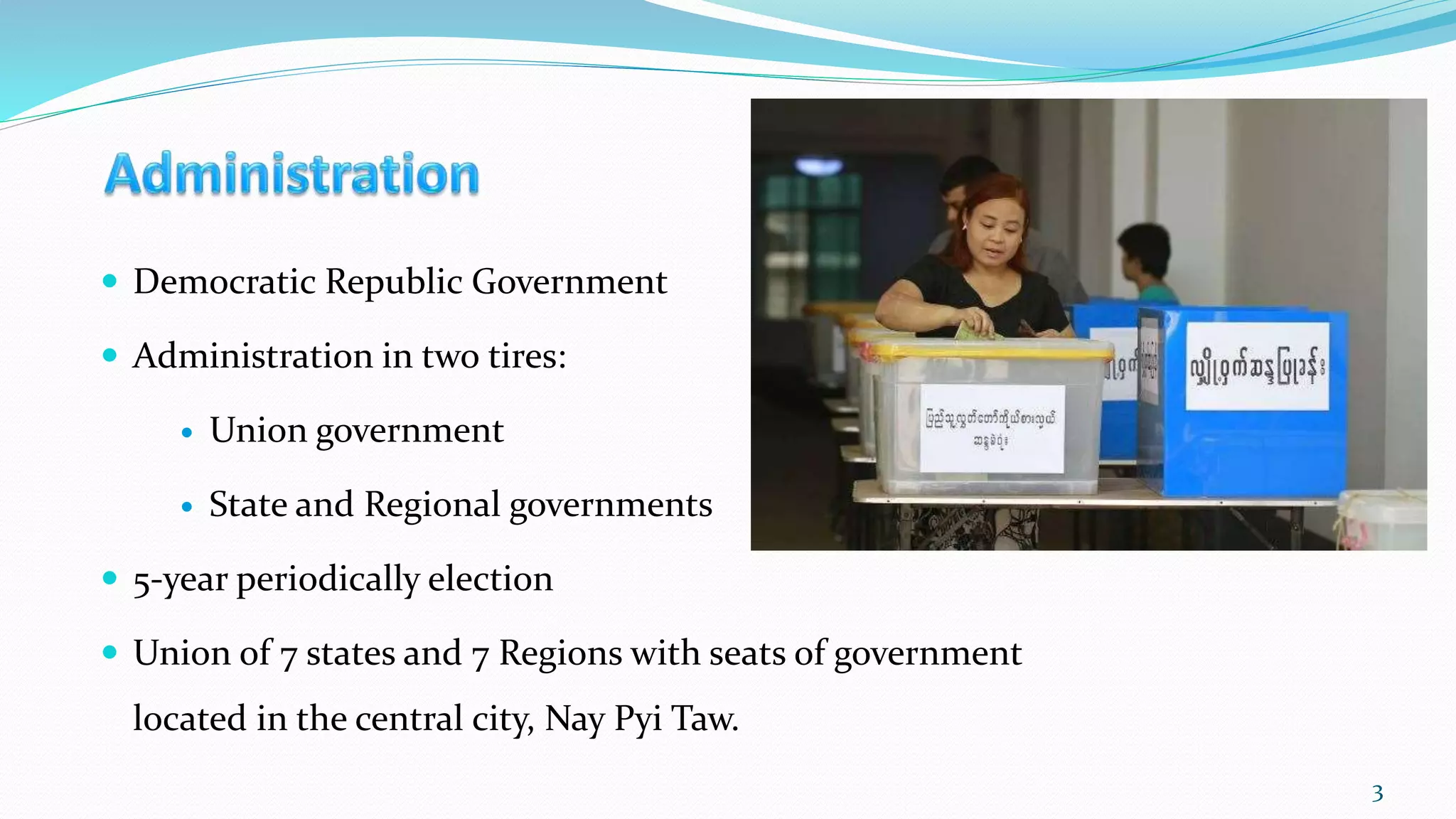
 Democratic Republic Government
 Administration in two tires:
 Union government
 State and Regional governments
 5-year periodically election
 Union of 7 states and 7 Regions with seats of government
located in the central city, Nay Pyi Taw.
3
1. Finance and taxation reforms
2. Monetary sector reforms
3. Relaxation of regulations on trade and investments
4. Undertakings for private sector development
5. Health and education sectors reforms
6. Plan for food sufficiency and agricultural sectors development
7. Plan for governing system and transparency
8. Plan for upgrading of mobile communication service and internet system
9. Infrastructural development programme
10. Programme for emergence of effective and efficient governing system
4
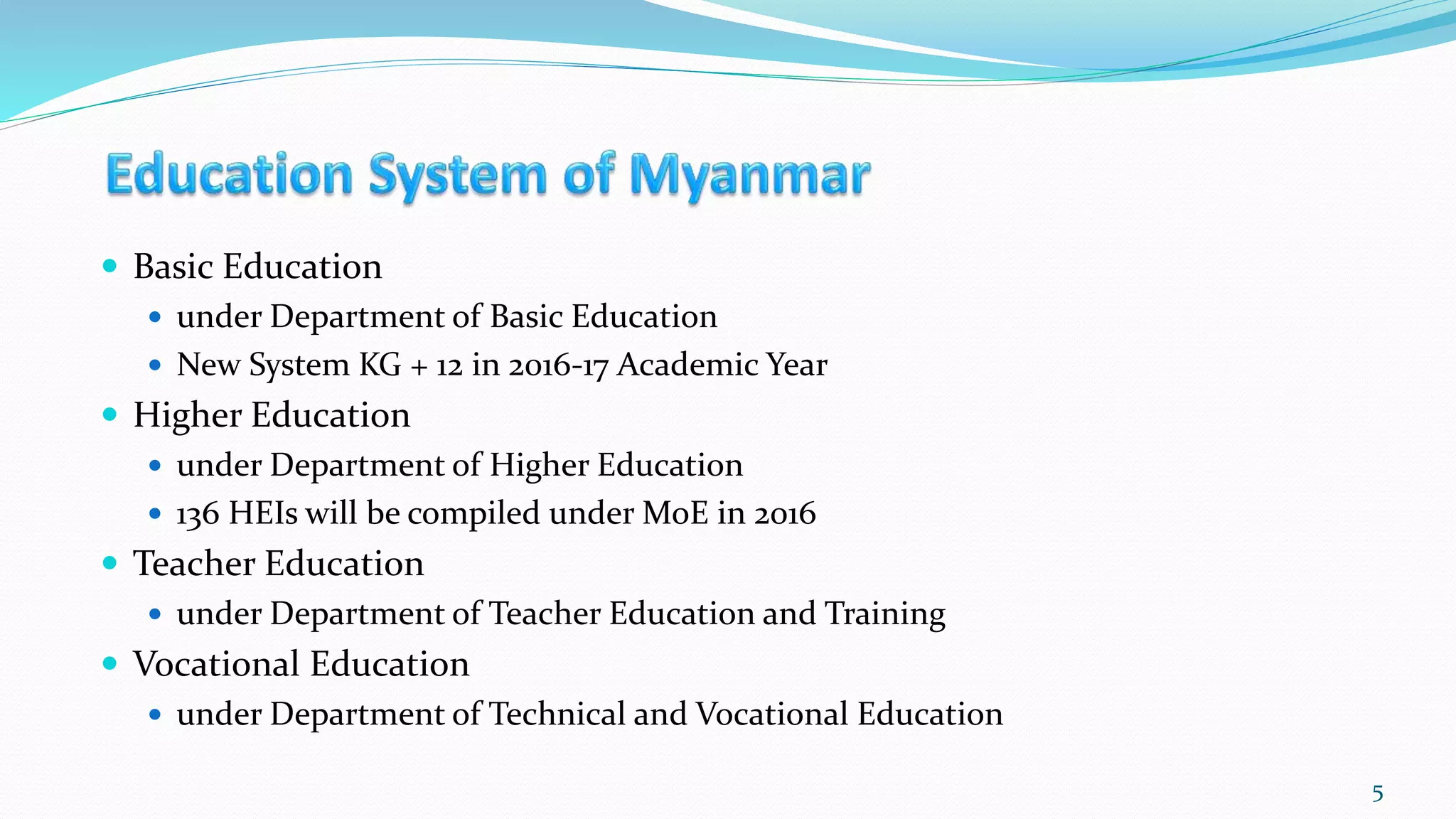
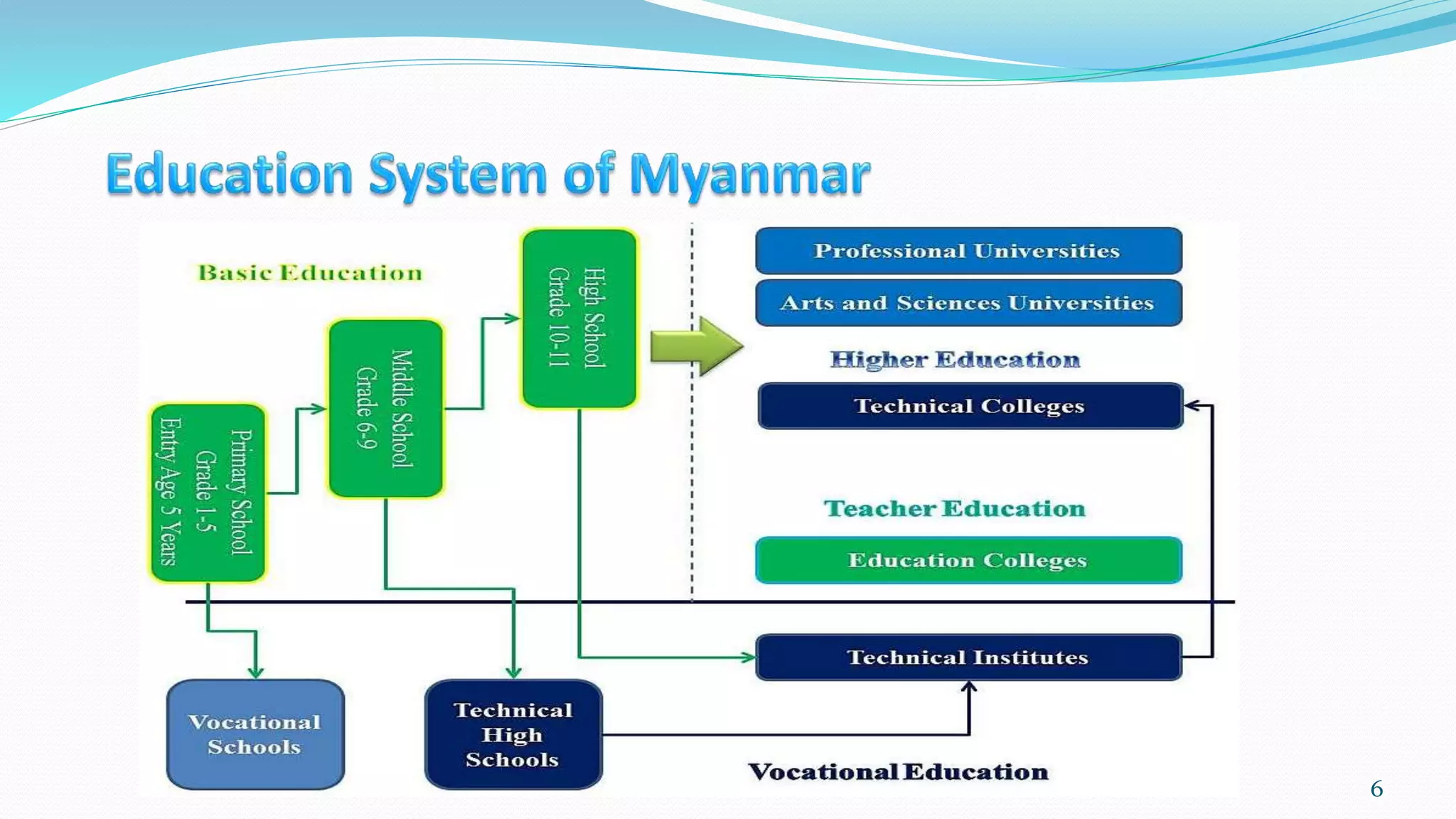
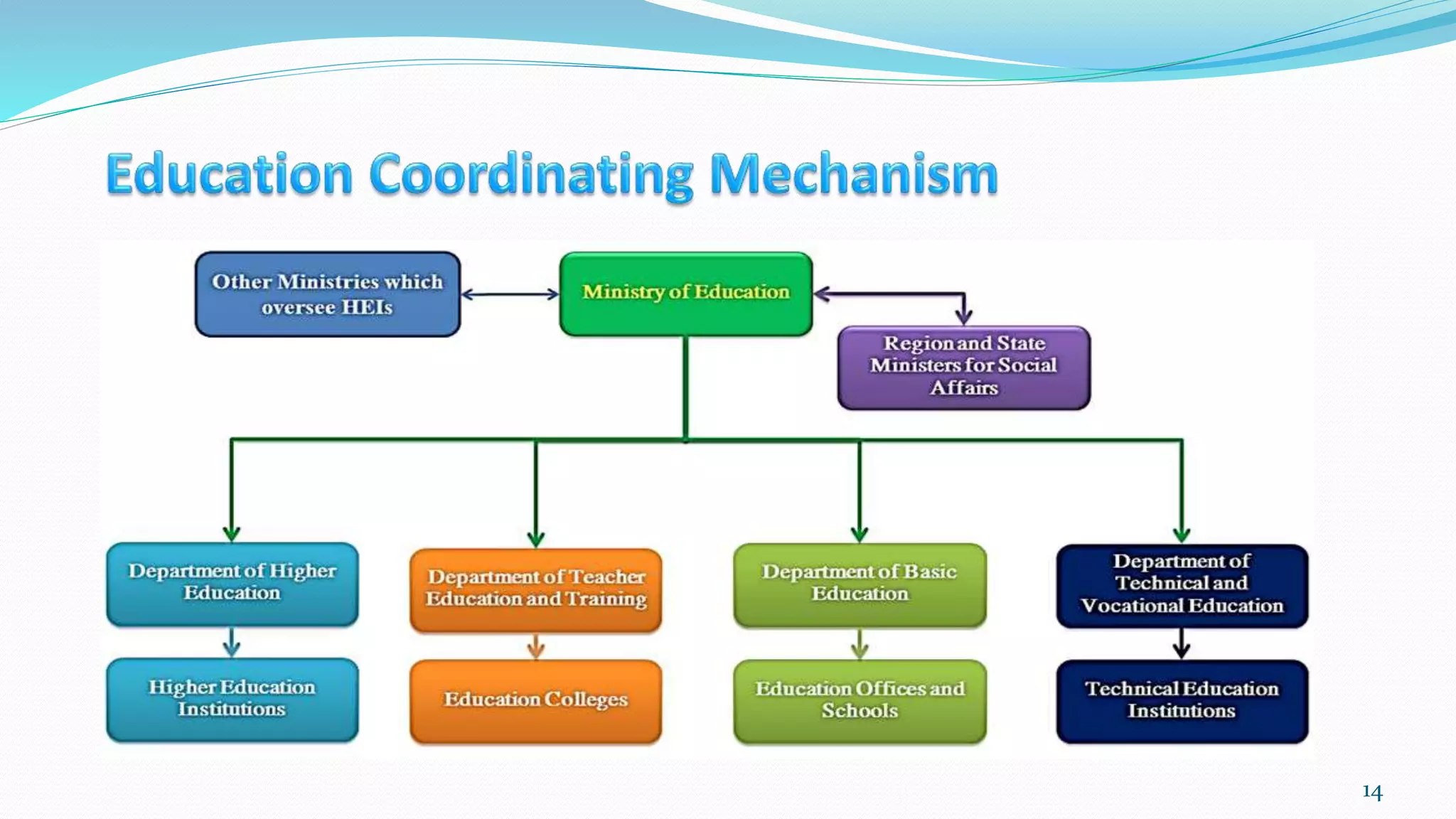
 Basic Education
 under Department of Basic Education
 New System KG + 12 in 2016-17 Academic Year
 Higher Education
 under Department of Higher Education
 136 HEIs will be compiled under MoE in 2016
 Teacher Education
 under Department of Teacher Education and Training
 Vocational Education
 under Department of Technical and Vocational Education
5
6
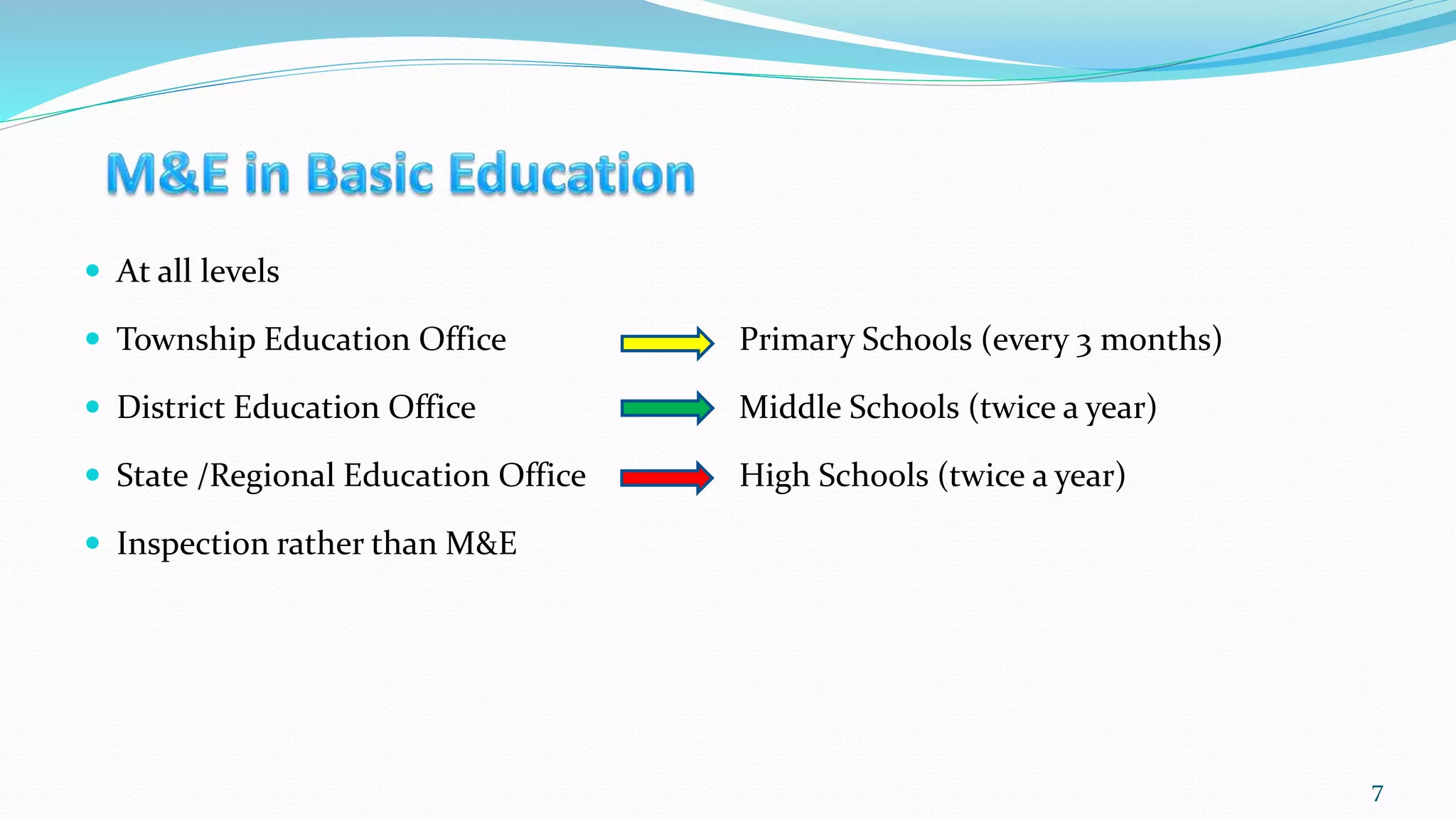
 At all levels
 Township Education Office Primary Schools (every 3 months)
 District Education Office Middle Schools (twice a year)
 State /Regional Education Office High Schools (twice a year)
 Inspection rather than M&E
7
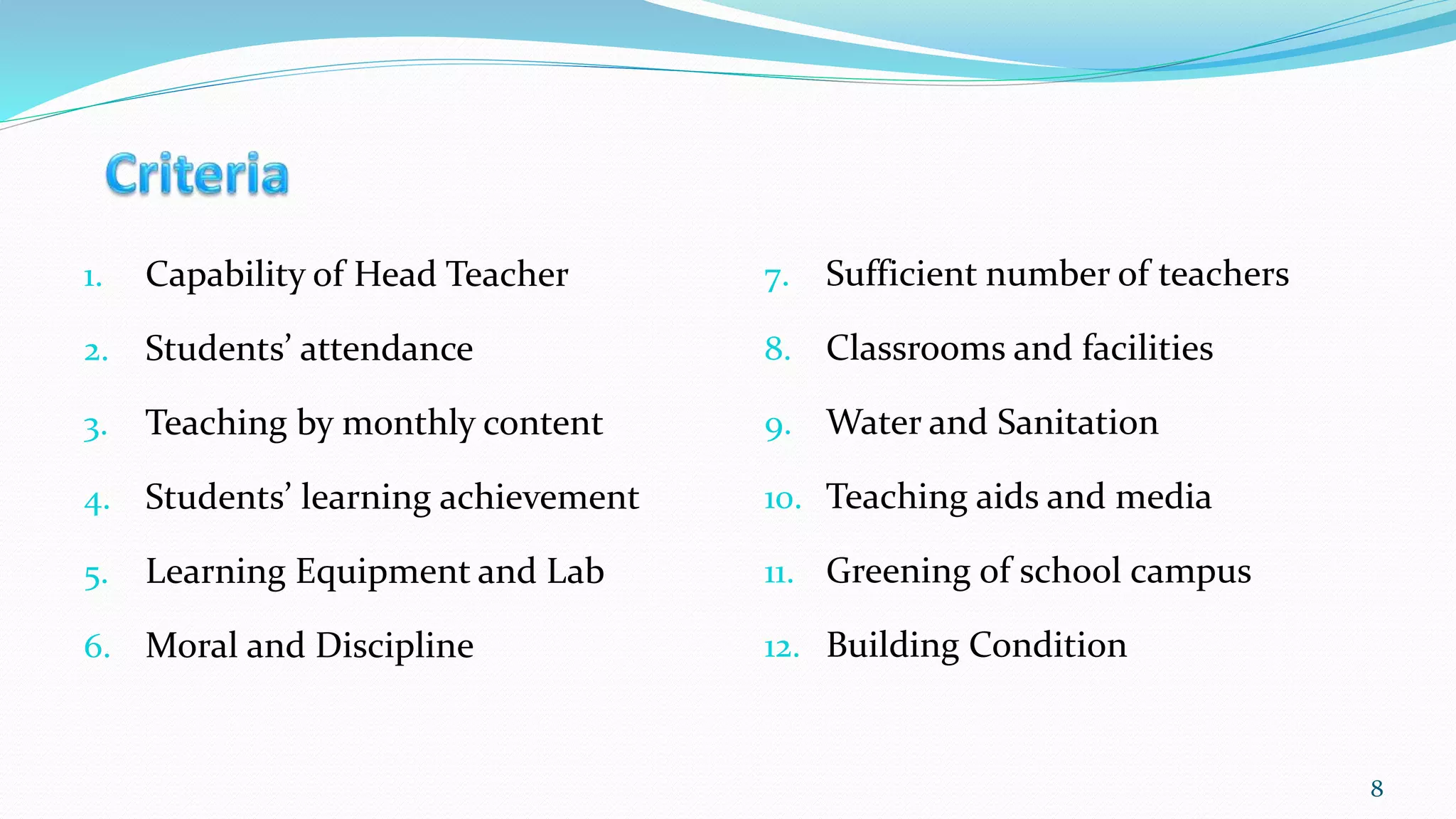
1. Capability of Head Teacher
2. Students’ attendance
3. Teaching by monthly content
4. Students’ learning achievement
5. Learning Equipment and Lab
6. Moral and Discipline
8
7. Sufficient number of teachers
8. Classrooms and facilities
9. Water and Sanitation
10. Teaching aids and media
11. Greening of school campus
12. Building Condition
 Each HEI is monitoring itself
 Evaluation is only for Administrative and Teaching Staff
9
1. Dutiful
2. Capability
3. Trust
4. Learning
5. Hard-working
6. Research and Innovation
7. Discipline
8. Volunteer Services
9. Communication Skills
10. Leadership Skills
10
 Since 1980, Statistical Information System (SIS) was implemented
 SIS - data collection, processing, analyzing and reporting of educational
information including schools, students, teachers and staff
 disseminated into school level, township level, district level, state and region
level, departmental level and union level
 collected quarterly, semiannually and annually
 published for departmental purpose as a Yearbook
11
 DHE also collects data from HEIs under its administration.
 profile of HEI, number of students by level and specialization, number of
teacher by rank and specialization and so on.
 Data are collected annually and published for departmental purpose.
12
 DBE in collaboration with UNICEF implemented the Township Education
Management Information System (TEMIS)
 It is not finished yet.
 Now, UNESCO is supporting to implement the Education Management
Information System (EMIS)
 We are trying to conduct School Census in 2016.
13
14
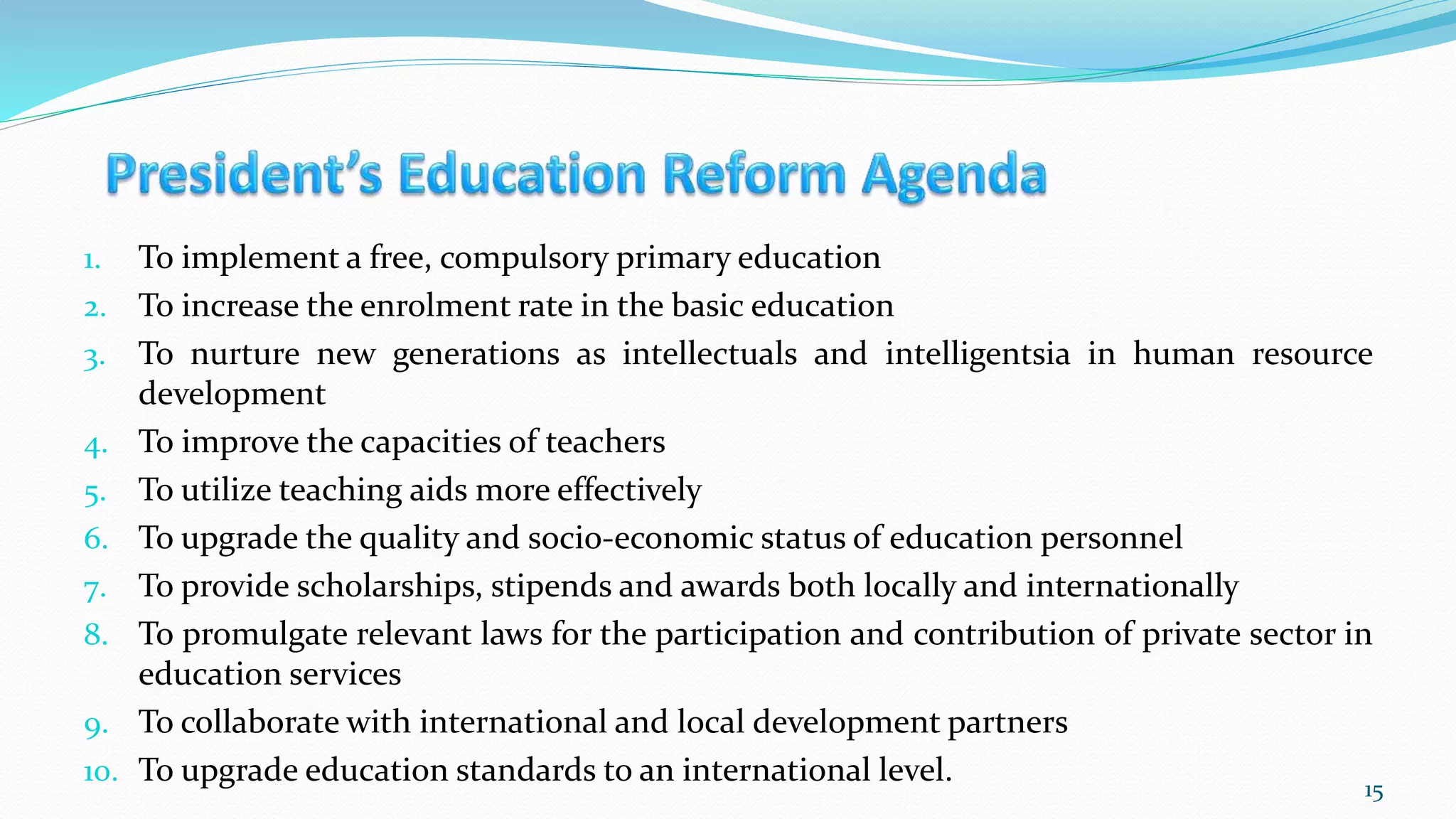
1. To implement a free, compulsory primary education
2. To increase the enrolment rate in the basic education
3. To nurture new generations as intellectuals and intelligentsia in human resource
development
4. To improve the capacities of teachers
5. To utilize teaching aids more effectively
6. To upgrade the quality and socio-economic status of education personnel
7. To provide scholarships, stipends and awards both locally and internationally
8. To promulgate relevant laws for the participation and contribution of private sector in
education services
9. To collaborate with international and local development partners
10. To upgrade education standards to an international level. 15
16
1. Establishment of quality assurance system
2. Strengthening coordinating mechanism
3. Strengthening EMIS and
4. Capacity building for effective management.
17
 To implement the capacity building programmes to strengthen and knowledge
and skills of education managers at all levels
 To strengthen its own organization culture to encourage teamwork, greater
transparency, partnership with other organizations and evidence-based decision
making
 To mainstream a competency-based performance management system
18
 Enhance the capacity of data collectors
 Use collected data at all levels, from schools to central level
 Give training to implement evidence-based practice and thereby better control
the quality of statistics
 Provide trainings to enhance understanding
 Ensure MoE takes a leading role in establishing the National Education
Database
 Foster more cooperation and collaboration
 Urgently implement the national EMIS master plan and blueprint by studying
the current EMIS and pilot TEMIS.
 Enhance the use of modern ICTs in Education
19
 Myanmar is currently in transition
 MoE is reforming organization structure and decentralizing
 To be systematic monitoring and evaluation system, EMIS is urgently needed.
 So, under the guidance of NEL we will have systematic quality assurance system
for future.
20
21

M&E and Data System of Myanmar

  • 1.
    Planning and StatisticsDivision Ministry of Education, Myanmar 1
  • 2.
     The Republicof the Union of Myanmar  Located in South Eastern Asia  Total land area is 677,000 sq.km.  China, Laos, Thailand, India and Bangladesh are neighbours  Enjoys a tropical monsoon climate  population is over 51.4 million by 2014 Census with 0.89% of population growth 2
  • 3.
     Democratic RepublicGovernment  Administration in two tires:  Union government  State and Regional governments  5-year periodically election  Union of 7 states and 7 Regions with seats of government located in the central city, Nay Pyi Taw. 3
  • 4.
    1. Finance andtaxation reforms 2. Monetary sector reforms 3. Relaxation of regulations on trade and investments 4. Undertakings for private sector development 5. Health and education sectors reforms 6. Plan for food sufficiency and agricultural sectors development 7. Plan for governing system and transparency 8. Plan for upgrading of mobile communication service and internet system 9. Infrastructural development programme 10. Programme for emergence of effective and efficient governing system 4
  • 5.
     Basic Education under Department of Basic Education  New System KG + 12 in 2016-17 Academic Year  Higher Education  under Department of Higher Education  136 HEIs will be compiled under MoE in 2016  Teacher Education  under Department of Teacher Education and Training  Vocational Education  under Department of Technical and Vocational Education 5
  • 6.
  • 7.
     At alllevels  Township Education Office Primary Schools (every 3 months)  District Education Office Middle Schools (twice a year)  State /Regional Education Office High Schools (twice a year)  Inspection rather than M&E 7
  • 8.
    1. Capability ofHead Teacher 2. Students’ attendance 3. Teaching by monthly content 4. Students’ learning achievement 5. Learning Equipment and Lab 6. Moral and Discipline 8 7. Sufficient number of teachers 8. Classrooms and facilities 9. Water and Sanitation 10. Teaching aids and media 11. Greening of school campus 12. Building Condition
  • 9.
     Each HEIis monitoring itself  Evaluation is only for Administrative and Teaching Staff 9
  • 10.
    1. Dutiful 2. Capability 3.Trust 4. Learning 5. Hard-working 6. Research and Innovation 7. Discipline 8. Volunteer Services 9. Communication Skills 10. Leadership Skills 10
  • 11.
     Since 1980,Statistical Information System (SIS) was implemented  SIS - data collection, processing, analyzing and reporting of educational information including schools, students, teachers and staff  disseminated into school level, township level, district level, state and region level, departmental level and union level  collected quarterly, semiannually and annually  published for departmental purpose as a Yearbook 11
  • 12.
     DHE alsocollects data from HEIs under its administration.  profile of HEI, number of students by level and specialization, number of teacher by rank and specialization and so on.  Data are collected annually and published for departmental purpose. 12
  • 13.
     DBE incollaboration with UNICEF implemented the Township Education Management Information System (TEMIS)  It is not finished yet.  Now, UNESCO is supporting to implement the Education Management Information System (EMIS)  We are trying to conduct School Census in 2016. 13
  • 14.
  • 15.
    1. To implementa free, compulsory primary education 2. To increase the enrolment rate in the basic education 3. To nurture new generations as intellectuals and intelligentsia in human resource development 4. To improve the capacities of teachers 5. To utilize teaching aids more effectively 6. To upgrade the quality and socio-economic status of education personnel 7. To provide scholarships, stipends and awards both locally and internationally 8. To promulgate relevant laws for the participation and contribution of private sector in education services 9. To collaborate with international and local development partners 10. To upgrade education standards to an international level. 15
  • 16.
  • 17.
    1. Establishment ofquality assurance system 2. Strengthening coordinating mechanism 3. Strengthening EMIS and 4. Capacity building for effective management. 17
  • 18.
     To implementthe capacity building programmes to strengthen and knowledge and skills of education managers at all levels  To strengthen its own organization culture to encourage teamwork, greater transparency, partnership with other organizations and evidence-based decision making  To mainstream a competency-based performance management system 18
  • 19.
     Enhance thecapacity of data collectors  Use collected data at all levels, from schools to central level  Give training to implement evidence-based practice and thereby better control the quality of statistics  Provide trainings to enhance understanding  Ensure MoE takes a leading role in establishing the National Education Database  Foster more cooperation and collaboration  Urgently implement the national EMIS master plan and blueprint by studying the current EMIS and pilot TEMIS.  Enhance the use of modern ICTs in Education 19
  • 20.
     Myanmar iscurrently in transition  MoE is reforming organization structure and decentralizing  To be systematic monitoring and evaluation system, EMIS is urgently needed.  So, under the guidance of NEL we will have systematic quality assurance system for future. 20
  • 21.