



Key Concepts in Education
Analysis
Dr. Hafiz Kosar
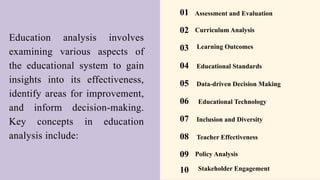
Education analysis involves
examining various aspects of
the educational system to gain
insights into its effectiveness,
identify areas for improvement,
and inform decision-making.
Key concepts in education
analysis include:
Educational Technology
06
01 Assessment and Evaluation
02
03
04 Educational Standards
05 Data-driven Decision Making
08 Teacher Effectiveness
Inclusion and Diversity
07
Curriculum Analysis
Learning Outcomes
09 Policy Analysis
10 Stakeholder Engagement
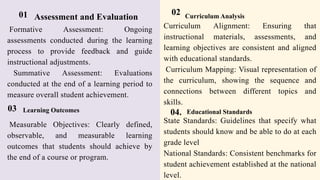
01 Assessment and Evaluation
02
03
Curriculum Analysis
Learning Outcomes
Formative Assessment: Ongoing
assessments conducted during the learning
process to provide feedback and guide
instructional adjustments.
Summative Assessment: Evaluations
conducted at the end of a learning period to
measure overall student achievement.
Curriculum Alignment: Ensuring that
instructional materials, assessments, and
learning objectives are consistent and aligned
with educational standards.
Curriculum Mapping: Visual representation of
the curriculum, showing the sequence and
connections between different topics and
skills.
Measurable Objectives: Clearly defined,
observable, and measurable learning
outcomes that students should achieve by
the end of a course or program.
04. Educational Standards
State Standards: Guidelines that specify what
students should know and be able to do at each
grade level
National Standards: Consistent benchmarks for
student achievement established at the national
level.
05 Data-driven Decision Making
06 Educational Technology
Data Analysis: Examination of educational
data, including test scores, attendance
records, and demographic information, to
identify patterns and trends.
Decision Making Based on Evidence:
Using data to inform decisions related to
curriculum, teaching methods, and resource
allocation.
EdTech Integration: Incorporating technology
tools and resources into the teaching and
learning process.
Digital Literacy: Ensuring that students and
educators have the skills to use technology
effectively.
07. Inclusion and Diversity
Inclusive Education: Creating learning
environments that accommodate the needs of
diverse learners, including those with
disabilities.
Cultural Competence: Understanding and
valuing cultural differences to create an
inclusive educational experience.
08 Teacher Effectiveness
09 Policy Analysis
Teacher Evaluation: Systematic assessment
of teachers' performance based on criteria
such as classroom management,
instructional practices, and student
outcomes.
Professional Development: Ongoing
training and support for educators to
enhance their skills and knowledge.
Education Policy: Examination of government
and institutional policies that impact
education, including funding, curriculum
standards, and assessment practices.
10. Stakeholder Engagement
Community Involvement: Collaboration with
parents, community members, and other
stakeholders to support and enhance the
educational experience.
Parental Involvement: Encouraging parents
to actively participate in their child's
education.
hafeezkausar.hashmi@gmail.com
https://www.facebook.com/kausar0791
https://www.linkedin.com/in/dr-hafiz-
kosar-284484186/
+92-314-3205571
THANK YOU

Key Concepts in Education Analysis.pptx

  • 1.
    Key Concepts inEducation Analysis Dr. Hafiz Kosar
  • 2.
    Education analysis involves examiningvarious aspects of the educational system to gain insights into its effectiveness, identify areas for improvement, and inform decision-making. Key concepts in education analysis include: Educational Technology 06 01 Assessment and Evaluation 02 03 04 Educational Standards 05 Data-driven Decision Making 08 Teacher Effectiveness Inclusion and Diversity 07 Curriculum Analysis Learning Outcomes 09 Policy Analysis 10 Stakeholder Engagement
  • 3.
    01 Assessment andEvaluation 02 03 Curriculum Analysis Learning Outcomes Formative Assessment: Ongoing assessments conducted during the learning process to provide feedback and guide instructional adjustments. Summative Assessment: Evaluations conducted at the end of a learning period to measure overall student achievement. Curriculum Alignment: Ensuring that instructional materials, assessments, and learning objectives are consistent and aligned with educational standards. Curriculum Mapping: Visual representation of the curriculum, showing the sequence and connections between different topics and skills. Measurable Objectives: Clearly defined, observable, and measurable learning outcomes that students should achieve by the end of a course or program. 04. Educational Standards State Standards: Guidelines that specify what students should know and be able to do at each grade level National Standards: Consistent benchmarks for student achievement established at the national level.
  • 4.
    05 Data-driven DecisionMaking 06 Educational Technology Data Analysis: Examination of educational data, including test scores, attendance records, and demographic information, to identify patterns and trends. Decision Making Based on Evidence: Using data to inform decisions related to curriculum, teaching methods, and resource allocation. EdTech Integration: Incorporating technology tools and resources into the teaching and learning process. Digital Literacy: Ensuring that students and educators have the skills to use technology effectively. 07. Inclusion and Diversity Inclusive Education: Creating learning environments that accommodate the needs of diverse learners, including those with disabilities. Cultural Competence: Understanding and valuing cultural differences to create an inclusive educational experience.
  • 5.
    08 Teacher Effectiveness 09Policy Analysis Teacher Evaluation: Systematic assessment of teachers' performance based on criteria such as classroom management, instructional practices, and student outcomes. Professional Development: Ongoing training and support for educators to enhance their skills and knowledge. Education Policy: Examination of government and institutional policies that impact education, including funding, curriculum standards, and assessment practices. 10. Stakeholder Engagement Community Involvement: Collaboration with parents, community members, and other stakeholders to support and enhance the educational experience. Parental Involvement: Encouraging parents to actively participate in their child's education.
  • 6.