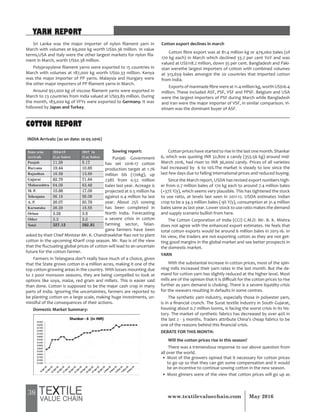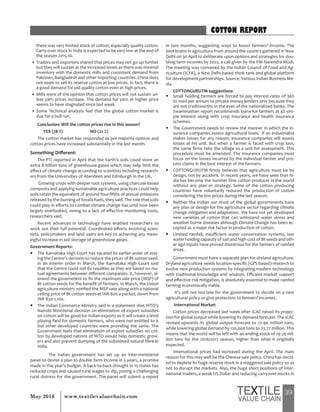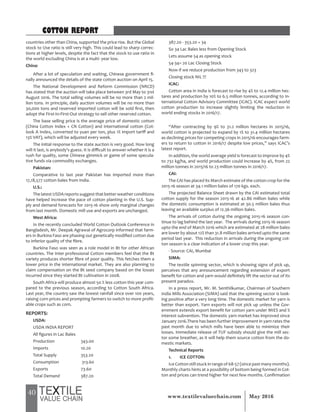
www.textilevaluechain.com
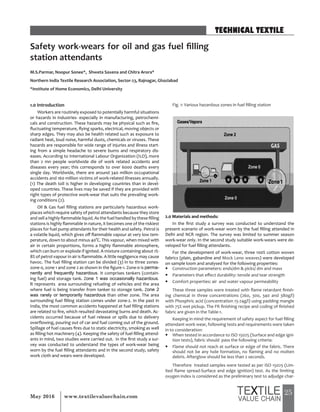
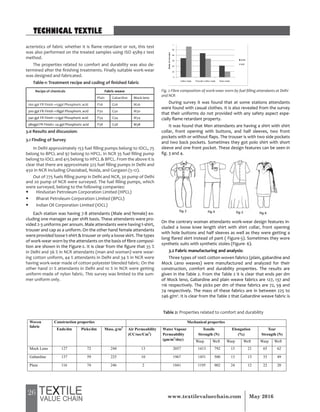
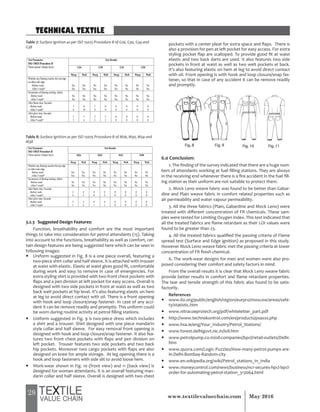
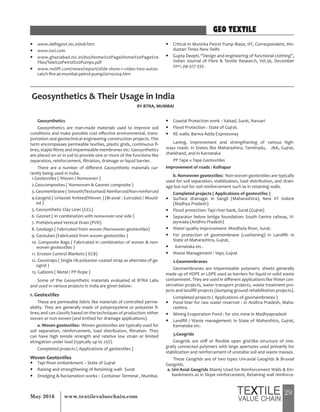
TE TILEX
VALUE CHAIN
Registered with Registrar of Newspapers under | RNI NO: MAHENG/2012/43707
Postal Registration No. MNE/346/2015-17 published on 5th of every month,TEXTILE VALUE CHAIN posted at Mumbai
Patrika Channel Sorting Office,Pantnagar- 75, posting date 17/18 of month
May 2016 Volume 4 Issue 5 Pages 52
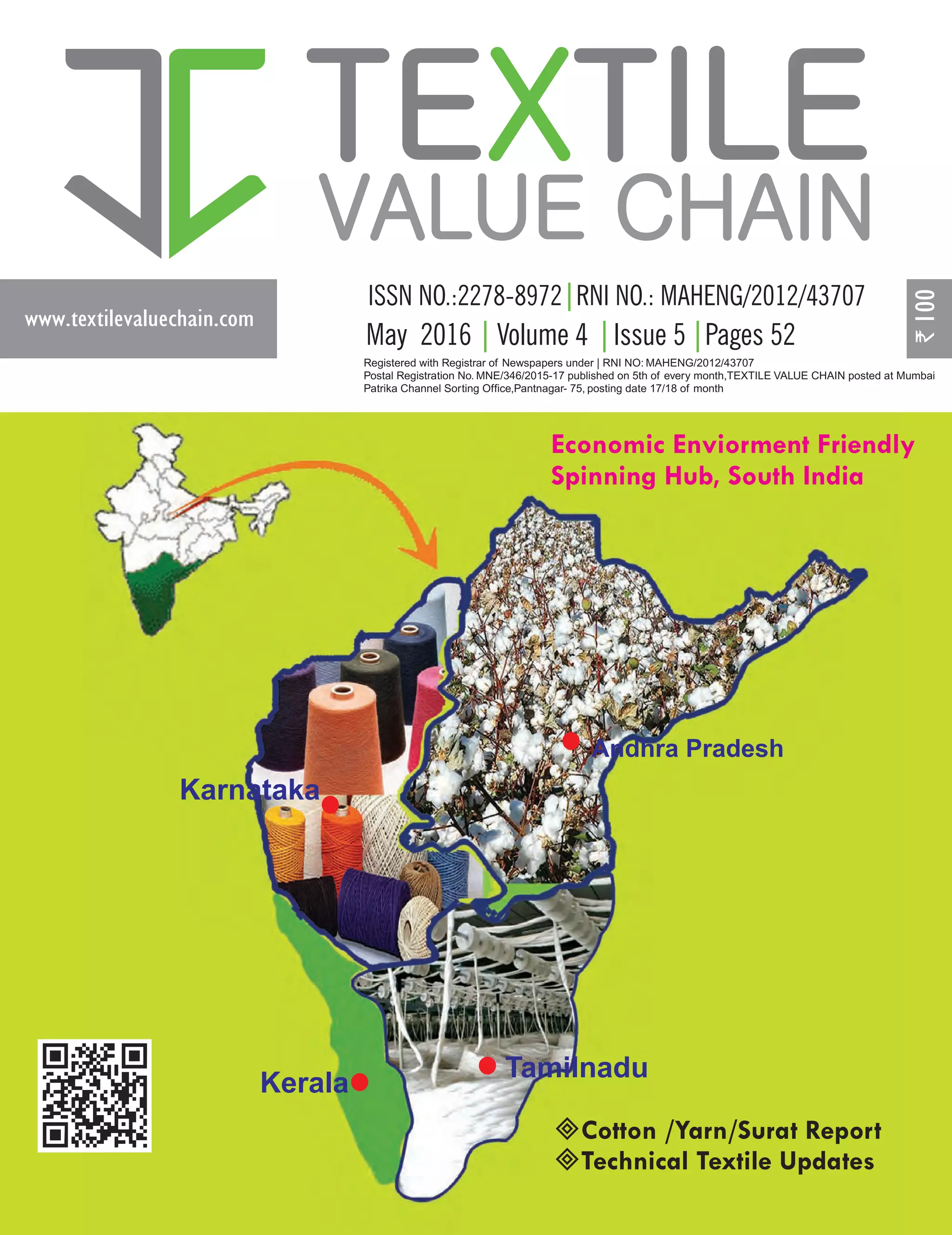
Andhra Pradesh
Tamilnadu
Kerala
Karnataka
Economic Enviorment Friendly
Spinning Hub, South India
³Cotton /Yarn/Surat Report
³Technical Textile Updates
For details, call: Mumbal: +912266917930 131, Surat: +912614003362/64 I Email: rayslllPladltyablrla.com
RAYSIL. ADDS ELEGANCE TO FASHION.
The superior Quality VFY from Indian Rayon.
Presenting Raysil. The versatile yarn that helps create the best of georgettes.
crepes and chiffons that flow and drape well. Go ahead, try Raysil and feel the
difference it makes to fabrics.
R~;SirThe fashion yarn
3May 2016 www.textilevaluechain.com
All rights reserved Worldwide; Reproduction of
any of the content from this issue is prohibited
without explicit written permission of the
publisher. Every effort has been made to ensure
and present factual and accurate information.
The views expressed in the articles published in
this magazine are that of the respective authors
and not necessarily that of the publisher. Textile
Value chain is not responsible for any unlikely
errors that might occur or any steps taken
based in the information provided herewith.
Registered Office
Innovative Media and Information Co.
189/5263, Sanmati, Pantnagar,
Ghatkopar (East), Mumbai 400075.
Maharashtra, INDIA.
Tel : +91-22-21026386
Cell: +91-9769442239
Email: info@textilevaluechain.com
tvcmedia2012@gmail.com
Web: www.textilevaluechain.com
Owner, Publisher, Printer &
Editor
Ms. Jigna Shah
Printed & Processed by her at,
Impression Graphics,
Gala no.13, Shivai Industrial Estate,
Andheri Kurla Road,
Sakinaka, Andheri (East),
Mumbai 400072,
Maharashtra, India.
EDITORIAL
After many years in wilderness the Indian textile industry is once again in the reckoning, because of two seg-
ments, namely, spinning and home textiles. The entire capacity of spinning industry is totally in the organized sector.
At the same time, a large percentage of weaving, processing and garmenting capacities are in the micro, small and
medium segments.
About 1800 spinning mills are humming in the country day and night. Southern states namely, Tamilnadu, Andhra
Pradesh, Telengana and Karnataka account for bulk of Indian spinning capacity. Credit goes to the South Indian mil-
lowners who perceived the perceived the potential of the spinning sector. It must be recalled here that SIMA [South-
ern India Millowners’ Association] played a major role in getting industry-friendly policies.
No wonder, the spinning capacity has recorded a growth of 35 percent from 34 million spindles in 2004-2005 to
46 million spindles in 2015-2016.
What induced the millowners to augment the spinning capacity is the domestic availability of most modern spin-
ning machinery for which the entire credit goes to Late Mr. G.K. Devarajulu, the visionary industrialist of Tamilnadu.
It is said that, Rieters, the foreign collaborators of Lakshmi Machines were astonished to note the product develop-
ment achieved by their Indian partner.
The next source of help for the spinning sector was the flagship scheme of the Ministry of Textiles under which
fresh investment in eligible machines became entitled for interest subsidy.
Yarn spun by modern spinning mills excels the best spinners in quality. Thus, Indian yarn has carved a special
space for itself in the international market.
The spinning industry is also a beneficiary of the development of Indian cotton in terms of quantity and quality.
All this has helped spinners to earn annually foreign exchange worth US $ 4 to 5 billion per annum, which will
shoot up in the coming years.
Efforts are being made to diversify uses of cotton yarn by entering new fields
like Technical Textiles. In the Olympic of textile products, it is the spinning segment
holds the Indian flag high.
Spinning on a high pedestal
Shri V.Y. Tamhane
Editorial Advisor
4
May 2016www.textilevaluechain.com
EDITORIAL TEAM
Editor & Publisher
Ms. Jigna Shah
Editorial Advisor
Shri V.Y. Tamhane
Consulting Editor
Mr. Avinash Mayekar
Graphic Designer
Mr. Anant A. Jogale
INDUSTRY
Mr. Devchand Chheda
City Editor - Vyapar ( Janmabhumi Group)
Mr. Manohar Samuel
President, Birla Cellulose, Grasim Industries
Dr. M. K. Talukdar
VP, Kusumgar Corporates
Mr. Shailendra Pandey
VP (Head – Sales and Marketing), Indian Rayon
Mr. Ajay Sharma
GM RSWM (LNJ Bhilwara Group)
EDUCATION / RESEARCH
Mr. B.V. Doctor
HOD knitting, SASMIRA
Dr. Ela Dedhia
Associate Professor, Nirmala Niketan College
Dr. Mangesh D. Teli
Professor, Dean ICT
Dr. S.K. Chattopadhyay
Principal Scientist & Head MPD
Dr. Rajan Nachane
Retired Scientist, CIRCOT
CONSULTANT / ASSOCIATION
Mr. Shivram Krishnan
Senior Textile Advisor
Mr. G. Benerjee
Management & Industrial Consultant
Mr. Uttam Jain
Director PDEXCIL; VP of Hindustan Chamber of Commerce
Mr. Shiv Kanodia
Sec General, Bharat Merchant Chamber
Mr. N.D. Mhatre
Dy. Director, ITAMMA
May 2016 ISSUE
CONTENT
ARTICLES
11- Economic impact of GI Registration of unique textiles of India,
An empirical analysis by Mr. Tapan Rout, Textile Committee
15- Contract Worker by Mr. V.Y. Tamhane
16- Absence of Success Stories of Textiles by Mr. V.Y. Tamhane
17- Suvin Success story in Angola by Mr. Avinash Mayekar
18- Sustainable products : Save Planet Earth by Mr. Rushin Vadhani
19- Barre- Causes, Precautions, Analysis by TRADC Scientist
23- Teraspin : the smart choice of high spinning precision compo-
nent by ATE
TECHNICAL TEXTILE CORNER
25- Safety work-wears for oil & gas fuel filling station attend-
ants by NITRA Professors
29- Geo Synthetics and its usage/ Practical Applications in
India by BTRA
NEWS
24- ATE
31- Suvin Advisor
31- Palladam hi-tech weaving park
32- Roland / Apsom
32- Liva/ Kangna Ranaut
SHOW REPORT
33- Pre: No Woven Tech Asia
34- Post: Screen Print India 2016
34- Post: Taiwan Showcase in Technotex
35- Post: World Cotton Outlook, Bangladesh
MARKET REPORT
36- YARN : Export Watch Report
38- Cotton Report
41- Surat Report
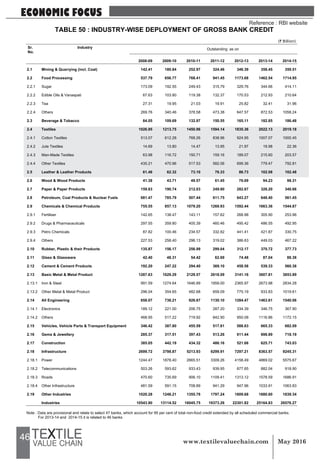
46- Industry wise Bank Credit Report
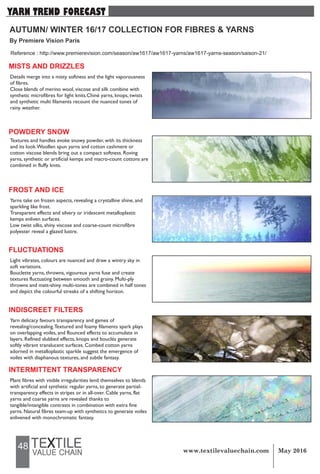
48- Yarn Trend forecast
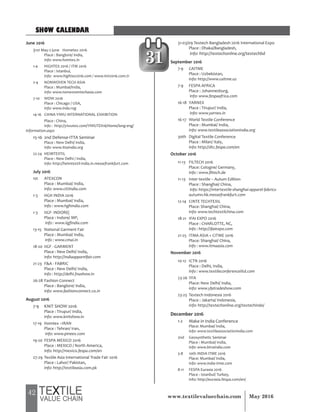
42- Show Calendar
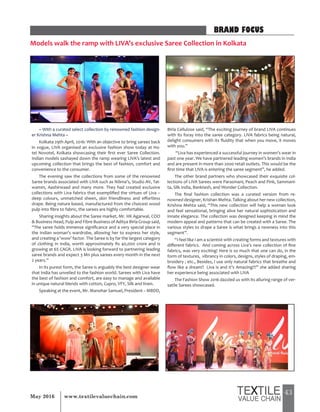
43- BRAND FOCUS : LIVA by Birla Cellulose
Advertiser Index
Back Page: Raymond Ltd.
Back Inside: Liva
Front Inside: Raysil
Page 5 : SGS
Page 6: No Woven Tech
Page 7 : Peumesys
Page 8: India ITME
Page 9 : Rieter
Page 10: TEXFAIR
Page 24: R.J. Fashion
Page 44: Filtech
Page 45: Sai Krishna Textile
Page 45: Pattaiyaa Mills
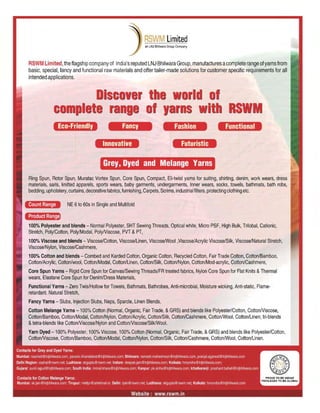
Page 47- RSWM
Page 49- Sanjay Plastic
Content Page.indd 1 16/05/2016 3:28:47 PM
I.
& +91 8140515555 @ illfo@sgsinnovations.com @ www.sgsinnovations.com
SGS'S PREMIER-QUALITY YARN IS WORTH ITS WEIGHT IN GOLD
IN TERMS OF DENIERS, COLOURS AND COUNTS
VARN
SandhuembroIdery yarn
SGSINNOVATIONS
We cordially invite you
Partner State
NON OlEN
liTER ITIII L
Exhibition
EJ
June 2016
Hall-5, Bombay Exhibition Center,
NSE complex, Goregaon East,
Mumbal, Maharashtra, India.
NON WOVEN TECH
ASIA 2016
INTERNATIONAL
PARTICIPATION
II
Japan•China
D
.......... [!].........•.. .. ..... .... .. 1 ..
... f~
........ .~-:.
Get Yourself
Registered
Now as VISITOR
For more details, Please contact :
Radeecal Communications
402, 4th Floor, "Optionz" Complex,
Opp. Nest Hotel, Off e.G. Road,
Navrangpura,Ahmedabad- 380009,
GUJARAT, INDIA.
Phone: +91 79 26401101/02/03,
Mobile: +919173440725,
+917718884496
Mail: sales@nonwoventechasia.com
Switzerland Belgium Italy
~CUSTAGE
Visitor KIt Show Daily Partner
VAU.DR'"
en~
_"-'r~"""''''-''
99 PRINT &PACK
~---.... 'f!~~t
Supported By
Media Partner
Co-organlser
Times International
•_~~ mt't~..........................liIIIIIIIIr
Organlser
.- .,Radeecalcommun Icatlons
f ... Like us on Facebook www.nonwoventechasia.com
?NeUMSYSADVANCE ENERGY SOLUTIONS
PUSH FIT MODULAR ALUMINIUM PIPING FOR COMPRESSED AIR
Providers of Modular Piping Solutions
For Air and Gases
Our portfolio of advance piping solutions include:
• Compressed air and all industrial gases push fit aluminium piping
• Compressed air audits
- Digital recording and leakage management programs for compressed
air and gases
- Zero air loss drainage management solutions
LUTHRA PNEUMSYS
Unit No: 24, 1st floor, Samhits Indl Estate No.8 Sated pool.
Andheri East, Mumbai - 72.
t: +91 9821128362/ • - pooja.pneumsys@gmail.com
A· __M
atb _ ....- mrIIIl1
~~"""'" -'P'!!!: ~
U'lJ _ ... ~
1l:I:l:l:I3••ii~ .-......
..- ".....'U!-=~ lmIi
IZII:II ,..~
----...
__ a.:,Wo<!lO<o _ _
~~ ..1. ~
~ _01 I~~
t BMli ~
;r..~-- _
___ IIIIlIl:IJ: T=u
_..LED_II.t
Exhibition venue
~..;5:.;ponlOnhIP
"-~ - c. ~
"'"--- .'" G ~
-() ~ 0'''' :! --- A • "'" €I--- <Sill •
www.rieter.com
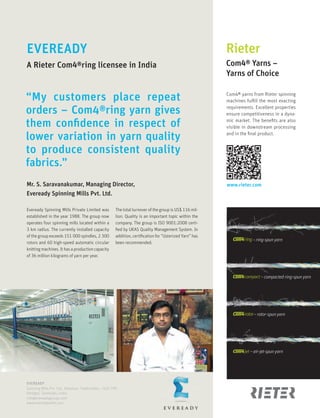
EVEREADY
Spinning Mills Pvt. Ltd., Kottaiyur, Thadicombu – ��� ���
Dindigul, Tamilnadu, India
info@evereadygroups.com
www.evereadymills.com
Rieter
Com�® Yarns –
Yarns of Choice
Com4® yarns from Rieter spinning
machines fulfill the most exacting
requirements. Excellent properties
ensure competitiveness in a dyna-
mic market. The benefits are also
visible in downstream processing
and in the final product.
EVEREADY
A Rieter Com�®ring licensee in India
Mr. S. Saravanakumar, Managing Director,
Eveready Spinning Mills Pvt. Ltd.
Eveready Spinning Mills Private Limited was
established in the year ����. The group now
operates four spinning mills located within a
� km radius. The currently installed capacity
of the group exceeds ��� ��� spindles, � ���
rotors and �� high-speed automatic circular
knittingmachines.Ithasaproductioncapacity
of �� million kilograms of yarn per year.
The total turnover of the group is US� ��� mil-
lion. Quality is an important topic within the
company. The group is ISO ����:���� certi-
fied by UKAS Quality Management System. In
addition, certification for “Usterized Yarn” has
been recommended.
“My customers place repeat
orders – Com4®ring yarn gives
them confidence in respect of
lower variation in yarn quality
to produce consistent quality
fabrics.”
– rotor-spun yarn
– ring-spun yarn
– compacted ring-spun yarn
– air-jet-spun yarn
PLAN YOUR VISIT
Textile Machinery Accessories Spares Services| | |
G GNI INN
*
* *
*
* *
GNINNIPS
GNIVAEW
GNITTINK PRO
C
ESSINGGARMENTI
NG
20 - 23 May 2016 CODISSIA Trade Fair Complex, COIMBATORE
Largest expo for
11May 2016 www.textilevaluechain.com
ECONOMIC FOCUS
Economic Impact of GI Registration of Unique
Textiles of India: An empirical analysis
Introduction:
Geographical Indications (GIs) is the newest additions to the
family of Intellectual Property Rights (IPRs) under the TRIPs Agree-
ment signed by WTO members in 1994. The agreement defined GI
as the indications, which identify goods originating in the territory
of a member or a region or locality in that territory, where a given
quality, reputation or other characteristics of the good is essen-
tially attributable to its geographical origin”. Hence, GI as defined
in the agreement emphasises certain key attributes like qualities,
characteristics or reputation of the product, which should be es-
sentially associated with the origin of the product. Simply defined,
GI identifies products or goods to be belonging to a particular geo-
graphic region on the basis of unique characteristics, evocative of
that region, which may be due to region’s climatic conditions, soil,
water, cultural heritage, human skill or any other characteristics.
The economic rationale of IPR protection through GI is closely
associated with the perception to link origin as a quality signal for
marketing the goods. It ensures the origin and unique quality of
the produce for development of the producers’ community. It
also protects the consumers from deception by eliminating quality-
price disparity and infringed goods. The registration of the product
under the GI Act provides an important legal tool to the proprie-
tors to initiate infringement action against the unethical business
practices through judiciary system. It also helps in realising tangi-
ble benefits for the producers through systematic and sustained
brand promotion and market linkage of the designated products
in post GI period. Most importantly, GI could be an instrument to
curtail the market distortion arising out of information asymmetry
between buyers and sellers. It can be viewed as a process, where
reputation is institutionalised to solve the problem of information
asymmetry and unethical free riding on good associated with the
products.
1.1 TRIPs Agreement & India’s GI Act:
The TRIPs agreement while defining GI has given emphasis to
the quality, reputation or other characteristics of the goods and
tried to link it to geographical origin for protection (Art. 22.1)”. It
means, when some geographical regions acquire reputation for
origin of product with unique quality, it is the quality or reputation
that distinguishes the product from similar other products. Fur-
ther, when a product acquires such reputation, there may be an at-
tempt by others to indulge in unfair business practices to capitalise
the premium price associated with it.
Such action by others harms both original producers and con-
sumers of the products. The original producer looses a part of
the market share of his product and the consumer gets counter-
feit goods in place of original one. While stipulating the level of
protection to the designated products, the agreement has offered
absolute protection (Art-23) to wine and spirit and general level
protection (Art-22) to products other than wines & sprit. The ad-
ditional protection provided to wines and spirits imposes an obliga-
tion on member countries to legislate specific rule for protecting
wines and spirits in the respective countries even if there is no risk
of misleading or unfair competition. Such a dual protection mecha-
nism has been questioned by many member countries. Even if, the
member countries have accepted the TRIPs mandate on absolute
protection, majority of the countries have been insisting for same
level of protection to other products. It was initiated in 2000, when
the countries like Bangladesh, Bulgaria, Cuba, Cyprus, Pakistan,
India and others opposed discriminatory nature of additional pro-
tection and demanded similar protection for other products. How-
ever, their argument was negated citing the clause of Article 24.1,
which stipulates negotiations for enhanced protection for wines
and spirits only. Whereas the promoters of this thought are of the
view that this article refers to the products other than wines and
spirits. The discriminatory approach accepted in the TRIPs coun-
cil may be the resultant of continuous effort by EU countries to
protect unique blended wines and spirits originating from their
countries. However, the members have agreed for the establish-
ment of a multilateral system of notification and legislation of GIs
(article 23.4).
Further, the agreement stipulates that unless a GI is protected
in the country of its origin, there is no obligation by the member
countries to extend reciprocal protection (Art- 22). The clause has
given rise to implementation of national laws by the member coun-
tries for protection of their products. Hence, in compilation to the
TRIPs agreement, India enacted the Geographical Indications (GI)1
Act’1999. It is interesting to note that though Article 23 of TRIPs
provides a higher level of protection to GIs relating to wines and
spirits only, the corresponding provisions in the Indian Act does not
restrict themselves to wines and spirits alone rather it has left it to
the discretion of the central government to decide, which goods
or classes of goods should be granted such a higher level of pro-
tection. This discretion has deliberately been maintained by Indian
lawmakers with an aim to ensure ‘absolute’ protection of Article 23
to all designated GIs having export interest for India.
1.2 Empirical Evidence on GI benefits:
Researchers have been trying to quantify the impact of IPR
protection of unique products & traditional knowledge (TK)
through empirical research on the benefits of GI. A consumer study
organised by the EU Commission estimated that 40 percent of the
consumers are willing to pay a premium of 10 per cent for origin
guaranteed products (EU Commission 2003). The consumers’ will-
ingness to pay higher premium price to the original products may
be attributed to the elimination of uncertainty on the quality and
originality of product.
A study conducted by OECD highlights a number of factors that
influence the small & rural enterprises dealing with unique products
and penetrating the niche markets. Two important factors that
have emerged from the study are (a) market access and (b) market
differentiation. One approach to address these factors could be
to work collectively in order to develop a competitive advantage.
The approach is well accommodated with an origin labelled vali-
Mr.T.K. Rout
Deputy Director
Market Research,
Textiles Committee, Mumbai
12 May 2016www.textilevaluechain.com
dation strategy confirming the economic rationale for protecting
geographical indication. (Bramlay, Bienabe & Kirsten). It may also
influence the rural economy as most of the origin-labelled products
are originated from rural area.
On product specific studies, the Jamaica Bru Mount coffee re-
ceived a premium of $14.50 per kg in comparison to bench-mark
prices of Columbia miles (Rangnekar 2003). The French GI desig-
nated cheese has sold at a premium of 2 euro per kg over other un-
protected cheese. Likewise Italian Toscano Oil is sold at a premium
of 20 percent since it registered in 1998. It has been estimated that
85% of French wine exports and 80% of EU exported spirits use GI’s
as a marketing tool for promoting the product both in domestic
and export market. The GI has become a lifeline for 1,38,000 farms
in France and 3,00,000 Italian employees during post-TRIPS period.
The studies on regional origins and prices of wine have also
given rise to positive impact on the GI registration of the products
(World Trade Report 2004). The primary econometric tool used in
the analysis is the hedonic2
pricing model on wine and it allows es-
timation of the value of such important features as a geographical
origin, variety, vintage, etc. whose inclusion bring about an addi-
tional premium for the original products. Schamel and Anderson
(2003) extended this analysis to the case of Australian wines and
found that regional origin has become a more important deter-
minant of prices over the period 1992-2000 as compared to other
factors. Their study indicated that the average premium price of
the product has increased by 31 percent in 2000 as compared to
1992 for select Australian wines. The Pinot Noir is cheaper by 22
percent compared to a Shiraz from the Barossa Valley, while a wine
produced in Canberra is 25 percent more expensive than its coun-
terparts.
As such, the trends have pointed out that the products once
registered can act as a riding force for free trade. Broadly speak-
ing the IPR protection of unique products may give rise to the ben-
efits by offering community ownership, to the producers as it is the
only IPR, which prescribes community ownership. Besides, it acts
as a stimulating factor for deriving premium price and facilitator
of free trade. A study on Australian Wine (Schamel & Andersons,
2003) has estimated that the regional origin is more important de-
terminant of prices over a period of time, as the product fetched a
premium price of 31 percent in post registration period. Further, it
is evident that most of the GIs designated products have originated
from rural area. In textiles, is it the Kanchipuram Silk of Tamil Nadu
or Jamadani of West Bengal, Patola of Gujarat, almost all products
has originated from rural area. Thus, the production may facilitate a
spill over effect to the development of rural India and hence bridg-
ing the income disparities.
2.0 Comparative market analyses of Pochampally Ikat in pre &
post GI Period:
It is imperative that the IPR Protection through GI provides
much needed protection against infringement and protects the
consumers from deception besides promoting economic pros-
perity of the producers’ community. The most important benefit
from GI is that it eliminates unfair competition, which ultimately
benefits both genuine producers & consumers. In order to protect
the traditional knowledge from infringement and ensure the devel-
opment of producers, the weavers of Pochampally Ikat registered
their hand woven textiles under the GI Act, 1999 of India in the year
2004. They registered the product in such a scenario, when the
product was experiencing decline in production, income and em-
ployment due to mass infringement of the products by the dishon-
est business practices. The availability of cheap counterfeit goods
threatened the very existence of the product by undermining the
marketability of original one.
2.1.1 Protection of Market through GI:
The Pochampally Ikat registered under the Geographical Indi-
cation Act in the month of November 2004. It is presumed that the
registration will bring much needed changes in the key parameters,
the supply chain and the organisation of the manufacturing. Given
this scenario, an attempt has been made to map the growth tra-
jectory of successful handloom enterprises and locate them in the
context of the growth of the handloom industry of Pochampally.
The study also examined the comparative market of Pochamaplly
Ikat during pre and post registration periods on key parameters like
income, employment, production and price, etc.
2.2.2 Market Analysis of Pre & Post GI Registration Periods:
The Ikat products of Pochampally are known for the craftsman-
ship of the weaves all over the country. The product has also cre-
ated its niche market because of its unique quality and beautiful
designs & motifs crafted by weavers through handlooms across
the product lines. During 90’s, the popularity of the product suf-
fered a set-back as the market was flooded with handful of repli-
cated/ infringed Pochampally Ikat giving rise to loss of market for
the original weavers. As a result, the income, employment, product
and other key variables of the product experienced a decline. It ul-
timately leads to migration of weavers to other occupations and to
nearby cities.
However, the popularity and market penetration of the product
increased several times as soon as the Pochampally Ikat got regis-
tered under GI Act’1999. The IPR protection brought about visibil-
ity to the producers as well as products. The product got noticed
both in the domestic and international market due to publicity by
the mass media. Its popularity is further boosted due to contain-
ment of infringement. The businessman producing and marketing
counterfeits in the name of Ikat compelled to discontinue it as
the original producers initiated legal action as per the GI Act and
tried to promote the product through brand building and market
linkage of the product. The popularity of the unique designs paved
the way for product diversification and design innovations. The de-
mand for saree or LDMs or home furnishing increased significantly
in the post registration period. The increase in prices of the product
encouraged the craftsmen to invest more on the raw materials and
auxiliaries besides expanding their units. The demand-pull provided
quicker realisation of the return. The agents and the wholesalers
were also started demanding better-finished products in short
durations and insisted on strict delivery schedules. The weavers
became more responsive to the organisation of their industrial
activity and became more serious in fulfilling the aspiration of the
consumers. The members of the family, who are working leisurely
in the production activity have also engaged themselves for more
duration and also with more seriousness. As a result, not only the
productivity of the head artisan increased but also the supporting
members of the family or hired labour. The size of employment in-
creased and so also the price of the product particularly silk based
products have shown upward movement.
The constitution of an inspection mechanism for monitoring
the quality and other key variables as stipulated in the Geographi-
cal Indication (GI) Act has also helped the weavers in standardiz-
ing their products across the production range. Earlier, the weav-
ECONOMIC FOCUS
13May 2016 www.textilevaluechain.com
ers are not ready to share the information with fellow craftsman
about new designs, motifs and product diversification, etc due to
unhealthy competition among the weavers. Since the GI registra-
tion provided community ownership, it revived the bonding among
them and motivated in sharing the knowhow and better interac-
tion. This ultimately led to better informed decision by the weav-
ers and more intense product diversification to cater the growing
demand for their produce. The standardisation of the quality along
with product diversification also leads to better consumer satisfac-
tion and more demand both from domestic and international mar-
ket.
The other variable aspects, which has also influenced the pro-
duction and sales turnover, is awareness. The field investigation re-
veals a larger chunk of the artisans have acquired the knowledge on
the GI and the changing market demands. However, the increased
demand leading
to better realisa-
tion of price has
brought about
satisfaction to
the stakehold-
ers in terms of
increased in-
come and em-
ployment to the
producers.
S i m i l a r l y ,
the study on
consumers to
assess the willingness to pay for GI registered products like Po-
champally Ikat has indicated that more than 65 percent of the con-
sumers have expressed their willingness to pay more, if the original
quality of the product is ensured. Out of 65.91% consumers, 24.45
percent consumers expressed their willingness to pay 10 to 20 per-
cent more for the guarantee of original Pochampally Ikat, where
as 43.18 percent consumers are willing to pay 5 to10 percent more.
The expression on consumers willingness to pay more for the origi-
nality and unique quality is a reflection that the product may fetch
higher premium price in future leading to better income and em-
ployment to the craftsman.
2.2.3 Trend of Key Variables in Pre & Post GI Registration Pe-
riods:
The Table-1 explains the trends of some of the key variables dur-
ing the Pre and Post GI period on per unit annual production, pro-
ductivity per day, employment per unit and annual sales turnover.
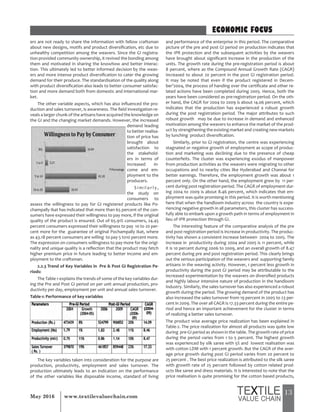
Table-1: Performance of key variables
The key variables taken into consideration for the purpose are
production, productivity, employment and sales turnover. The
production ultimately leads to an indication on the performance
of the other variables like disposable income, standard of living
and performance of the enterprise in this period. The comparative
picture of the pre and post GI period on production indicates that
the IPR protection and the subsequent activities by the weavers
have brought about significant increase in the production of the
units. The growth rate during the pre-registration period is about
8 percent, where as the Compound Annual Growth Rate (CAGR)
increased to about 20 percent in the post GI registration period.
It may be noted that even if the product registered in Decem-
ber’2004, the process of handing over the certificate and other re-
lated actions have been completed during 2005. Hence, both the
years have been considered as pre-registration period. On the oth-
er hand, the CAGR for 2004 to 2009 is about 14.06 percent, which
indicates that the production has experienced a robust growth
during the post registration period. The major attributes to such
robust growth may be due to increase in demand and enhanced
motivation among the weavers to enhance the market of the prod-
uct by strengthening the existing market and creating new markets
by lunching product diversification.
Similarly, prior to GI registration, the centre was experiencing
stagnated or negative growth of employment as scope of produc-
tion and marketing was declining due to the presence of cheap
counterfeits. The cluster was experiencing exodus of manpower
from production activities as the weavers were migrating to other
occupations and to nearby cities like Hyderabad and Channai for
better earnings. Therefore, the employment growth was about 1
percent only. On the other hand, the employment grew by 11 per-
cent during post registration period. The CAGR of employment dur-
ing 2004 to 2009 is about 8.46 percent, which indicates that em-
ployment was quite promising in this period. It is worth mentioning
here that when the handloom industry across the country is expe-
riencing negative growth in all parameters, this cluster has success-
fully able to embark upon a growth path in terms of employment in
lieu of IPR protection through GI.
The interesting feature of the comparative analysis of the pre
and post registration period is increase in productivity. The produc-
tivity has shown a consistent increase between 2004 to 2005. The
increase in productivity during 2004 and 2005 is 11 percent, while
it is 10 percent during 2006 to 2009, and an overall growth of 8.47
percent during pre and post registration period. This clearly brings
out the serious participation of the weavers and supporting family
artisans in the weaving activity. However, 1 percent less growth in
productivity during the post GI period may be attributable to the
increased experimentation by the weavers on diversified products
and highly labour intensive nature of production in the handloom
industry. Similarly, the sales turnover has also experienced a robust
growth during the period. The growing demand of the product has
also increased the sales turnover from 19 percent in 2005 to 23 per-
cent in 2009. The over all CAGR is 17.33 percent during the entire pe-
riod and hence an important achievement for the cluster in terms
of realizing a better sales turnover.
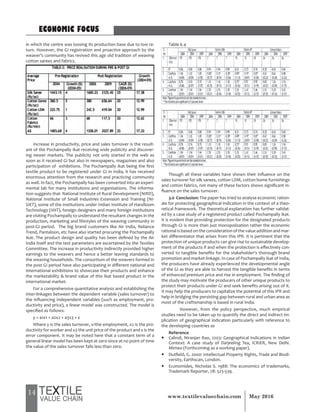
The product wise average price realization has been explained in
Table-2. The price realization for almost all products was quite low
during pre-GI period as shown in the table. The growth rate of price
during the period varies from 1 to 5 percent. The highest growth
was experienced by silk saree with 5% and lowest realisation was
with cotton LDM with 1 percent growth. But the CAGR of the aver-
age price growth during post GI period varies from 20 percent to
25 percent . The best price realization is attributed to the silk saree
with growth rate of 25 percent followed by cotton related prod-
ucts like saree and dress materials. It is interested to note that the
price realisation is quite promising for the cotton based products,
ECONOMIC FOCUS
14 May 2016www.textilevaluechain.com
in which the centre was loosing its production base due to low re-
turn. However, the GI registration and proactive approach by the
weaver’s community has revived this age old tradition of weaving
cotton sarees and fabrics.
Increase in productivity, price and sales turnover is the result-
ant of the Pochampally Ikat receiving wide publicity and discover-
ing newer markets. The publicity not only started in the web as
soon as it received GI but also in newspapers, magazines and also
participation of exhibitions. The Pochampally Ikat being the first
textile product to be registered under GI in India, it has received
enormous attention from the research and practicing community
as well. In fact, the Pochampally has been converted into an experi-
mental lab for many institutions and organisations. The informa-
tion suggests that National Institute of Rural Development (NIRD),
National Institute of Small Industries Extension and Training (NI-
SIET), some of the institutions under Indian Institute of Handloom
Technology (IIHT), foreign designers and many foreign institutions
are visiting Pochampally to understand the resultant changes in the
production, marketing and lifestyles of the weaving community in
post-GI period. The big brand customers like Air India, Reliance
Trend, Pantaloon, etc have also started procuring the Pochampally
Ikat. The product design and quality has been defined by the Air
India itself and the test parameters are ascertained by the Textiles
Committee. The increase in productivity indirectly provided higher
earnings to the weavers and hence a better leaving standards to
the weaving households. The consortium of the weavers formed in
the post GI period have also participating in different national and
international exhibitions to showcase their products and enhance
the marketability & brand value of this Ikat based product in the
international market.
For a comprehensive quantitative analysis and establishing the
inter-linkages between the dependent variable (sales turnover) to
the influencing independent variables (such as employment, pro-
ductivity and price), a linear model was constructed. The model is
specified as follows:
y = a1x1 + a2x2 + a3x3 + ε
Where y is the sales turnover, x1the employment, x2 is the pro-
ductivity for worker and x3 the unit price of the product and ε is the
error component. It may be noted here that a constant term of a
general linear model has been kept at zero since at no point of time
the value of the sales turnover falls less than zero.
Table 6.4
Though all these variables have shown their influence on the
sales turnover for silk sarees, cotton LDM, cotton home furnishings
and cotton fabrics, not many of these factors shows significant in-
fluence on the sales turnover.
3.0 Conclusion: The paper has tried to analyse economic ration-
ale for protecting geographical indication in the context of a theo-
retical framework. The theoretical explanation has further validat-
ed by a case study of a registered product called Pochampally Ikat.
It is evident that providing protection for the designated products
through GI is more than just monopolization rather the economic
rational is based on the consideration of the value addition and mar-
ket differentiator that arises from this IPR. It is pertinent that the
protection of unique products can give rise to sustainable develop-
ment of the products if and when the protection is effectively con-
verted to tangible benefits for the stakeholder’s thorough brand
promotion and market linkage. In case of Pochampally Ikat of India,
the producers have already experienced the developmental angle
of the GI as they are able to harvest the tangible benefits in terms
of enhanced premium price and rise in employment. The finding of
the study may motivate the producers of other unique products to
protect their products under GI and seek benefits arising out of it.
It may help the producers to capitalize the potential of this IPR and
help in bridging the persisting gap between rural and urban area as
most of the craftsmanship is based in rural India.
However, from the policy perspective, much empirical
studies need to be taken up to quantify the direct and indirect im-
plication of geographical indication particularly with reference to
the developing countries as
Reference
y Calindi, Niranjan Rao, 2203: Geographical Indications in Indian
Context: A case study of Darjeeling Tea, ICRIER, New Delhi.
Mimeo (Forthcoming as a working paper).
y Dutfield, G. 2000: Intellectual Property Rights, Trade and Biodi-
versity, Earthscan, London.
y Economides, Nicholas S. 1988: The economics of trademarks,
Trademark Reporter, 78: 523-539.
ECONOMIC FOCUS
15May 2016 www.textilevaluechain.com
y Freedom, P., 1994: “Boundaries of good taste”, Geographical.
y Gervais, D., 1998: The TRIPS Agreement: Drafting history and
analysis. London: Sweet & Maxwell.
y Harte-Bavendamm, H., 2000: Geographical Indications and
Trademarks: Harmony or conflict? In Anon., ed., Symposium on
the International protection of geographical indications, Som-
erset West, Cape Province, South Africa, September 1 & 2, 1999.
Publication No.764 (E). WIPO, Geneva.
y llbery, B. and M. Kneafsey, 2000a: “Producer constructions of
quality in regional speciality food production: A case study from
south-west England”, Journal of Rural Studies 16(2), pp. 217-30.
y llbery, B. and M. Kneafsey, 2000b: “Registering regional speci-
ality food and drink products in the United Kingdom: the case
of PDOs and PGIs.” Area 32(3): 317-325.
y Landes, William M. and Richard A. Posner, 1987: “Trademark
law: an economic perspective”. Journal of Law and Economics,
30(2): 265-309.
y McMichael, Philip: 1994: The Global Re-structuring of Agro-
Food Systems, Ithaca, USA: Cornell University Press.
y Press and Information Division of the European Court of Justice,
2003, Judgements of the Court of Justice in Cases C – 469/00
and C-108/01 – The Court Confirms the Extent of Protection Con-
ferred by Community Legislation on Grana Padano Cheese and
Parma Ham, Press Release No.42/03, available at http://europa.
eu.int/cj/en/actu/communiques/cp03/aff/cp0342en.htm.
y UNCTAD/ICTSD, 2003: Resource Books on TRIPS and Develop-
ment: Part Two – Substantive Obligations: 2.3 Geographical
Indications. Prepared for the UNCTAD/ICTSD Capacity Building
Project on Intellectual Property Rights and Sustainable Devel-
opment, Geneva. Available at
y http://www.iprsonline.org/unctadictsd/ResourceBookIndex.
htm.
y Saris of India by Markand Singh, RTA Kapur Chisti & Amba San-
yal published in the year 1989 by Wiley Eastern Ltd., & Amar
Vastra Kosh, New Delhi.
y Tie-dyed Textiles of India by Veronica Murphy & Rosemary Crill
published in the year 1991 by Victoria & Albert Museum & Mapin
Publishing P. Ltd., UK.
y Textile Arts of India by Kokyo Hatanaka,published in 1993 by
Kyoto Shoin Co.Ltd., Japan.
y Heritage of India authors fabric by Sukla Das in the year 1992
published by Shakti Malik Abhinav.
y Hand woven Fabrics of India edited Jasleen Dhamija & Jyotin-
dra Jain 1989 Mapin Publishing P. Ltd., Ahmedabad.
y Watal,J,2001: Intellectual Property Rights in the WTO and devel-
oping countries. Kluwer Law International, The Hague.
ECONOMIC FOCUS
Contract Workers
CITI has been vigorously pursuing to drop archaic provisions
in labour laws. One demand of the textile industry is that due to
the cyclical nature of demand for textiles, the industry should have
flexibility in the matter of labour employment.
Central Govt. has proposed that the Contract Labour Act be
amended as under:-
i. “the rates of wages payable to workmen by the contractor
shall not be less than:-
a. the rates prescribed under the Minimum Wages Act, 1948 (11 of
1948)
for such employment where applicable; or
b. the rates, if any, fixed by agreement, settlement or award, or
c. ten thousand rupees,
CITI has vehemently opposed to the above amendment on be-
half of textile industry as the proposed wages of contract workers
are higher than the existing wages and will make the textile manu-
facturing in the country uneconomical.
An excellent comparative table on minimum wages vis-a-vis
per capita income of different countries has been prepared by CITI
which is reproduced below
If minimum wages are compared in relation to per capita in-
come, it is clear that the Indian textile industry is the highest pay-
master; with minimum wages being 113% of per capita income,
against 83% in the case of China and 84% in case of Bangladesh.
Per capita income and minimum wage [US $]
It appears that Government is likely to fix contract workers’
wages at Rs.10,000/- per month .CITI has requested for reconsid-
eration of the same . However, it needs to be noted that no notifi-
cation has been raised so far on the subject.
Praiseworthy development in Arvind M ills
Textiles has become part of the fashion industry. Following this
development, Arvind Mills is in talks to acquire the online Fashion
and Lifestyle startup.
Certainly, this will give a big boost to their sales.
We wish Arvind Mills all success in their new project.
TUFS
The picture about continuance or otherwise of this hag shop
scheme of the Ministry of Textiles is still hazy. In the meantime,
funds allocated for TUFS in 2016-2017 are only Rs.1356 crore;
Shri V.Y. Tamhane
16 May 2016www.textilevaluechain.com
whereas nearly Rs.7000 crore are needed to square up all pending
demands.
With the large segment of the of the spinning sector having
been modernized to the international and have started manufac-
turing faultless and flawless yarns of superior quality, such mills
are standing shoulder to shoulder with the best in the world.
Unfortunately, the same thing is not true in respect of weaving,
processing and garmenting. These segments are largely in the de-
centralized sector and require user-friendly TUFS to undertake the
full advantage of the scheme. A hidden benefit of such a develop-
ment is that the demand for machines required for weaving, pro-
cessing and garmenting may increase to economic levels and thus
the production of such latest machinery may start in the country,
whereby further modernization will become economical.
International Trade
The international textile market was quite dull in 2015-16, due to
global concerns, like adverse foreign currency, rates, lack of indus-
trial and economic improvement, sharp increase in unemployment,
setback in commodity markets.
Exports of all items from India suffered a setback of 17%. Con-
versely, textiles and clothing reported a better performance. In
2014-2015, exports of textiles and clothing aggregated to US $ 37
billion. This year, it is expected to be around US $ 35-36 billion, thus
showing a marginal fall.
If separate figures of export of textile and clothing are consid-
ered, the fall was marginal in the case of clothing, while textiles
suffered the brunt of the decline in exports.
Year 2016-17 promises to be better due to improvement in gen-
eral economic conditions.
Important Developments in April 2016
The summer season starts with April, but it is never so hot as
it was this year. Hot months force people to go to hill stations and
hence April is a period of lull. April is also the time to review the eco-
nomic progress of the industry. April 2016 was exceptionally hectic,
particularly for the textile industry.
Sunset review of anti-dumping duty on imports of viscose fibre.
At the instance of the domestic industry of viscose fibre, an-
ti-dumping duty was imposed on 26th July 2010 for a period of 5
years. The sunset review started this year and the stakeholders are
now awaiting the decision of the Director–General of Anti-dumping
duties. who is also called the Designated Authority
Imports of viscose fibre ranged from 14 M Kg in 2010-1 to above
30 M Kg in 2015-16.
In the meantime, domestic production ranged from 305 M Kg
in 2010-11 to 365 M Kg in 2014-15 and was somewhere around 342 M
Kg in 2015-16. The production was stagnant in the 3 years of 2013-14
to 2015-16.
The increase in imports in the intervening period was due to a
sudden jump in exports from 56.24 M Kg in 2010-11 to 156 M Kg in
2015-16.
It appears the domestic manufacturer finds export market
more lucrative.
All the stakeholders are now awaiting the decision of the anti-
dumping authority.
Efforts of Grasim to meet the rise in demand for VSF.
According to a report in Economic Times dt.9th May 2016,
Grasim has decided to take steps to meet the rise in demand when-
ever it takes place.
Grasim is also planning to manufacture anti-microbial fabric,
which prevents germ accumulation on the material and is more hy-
gienic. Thus, the company will certainly capture a special space in
the international market.
All this sounds good.
Absence of Success stories of Textiles
Despite headline in the media about global concerns, one finds
that sensitive industries like automobiles, tyres, real estate includ-
ing cement and sugar make news of improved and better profit-
ability. Even sensex bounces back when the intensity of the causes
for the downfall is diminished. Then what is wrong with the textile
industry ? Even during the worst period , the textile industry tries to
retain its presence in the global market with comparatively small-
er damage to the its export performance compared to the total
exports. It is the traditionally low return on the capital employed
which fails to attract investors. Obviously the rate of return in any
industry must be higher than the normal general rate of interest.
The next question nagging the authorities is how to reverse
the scenario.
Is the lackluster performance over the years the result of un-
stable policies, gross uncertainty or lack of consideration of special
problems if the textile industry.
Some of the issue arresting the development and growth of the
textile industry are:-
Government should evolve a viable scheme to promote textile
industry so that it may occupy the position at the top of the world
and emerge as a winner in the international race.
Consumers of cloth manufactured out of organic cotton insist
on a dependable and reliable certificate by an international im-
proved agency for its genuineness . This issue should be addressed
satisfactorily.
Organic Cotton
There is a wave , particularly in developed countries for or-
ganic products. Consequently, there is a growing demand also for
organic cotton. The industry is hoping for initiation of a durable,
sustainable and viable policy to promote organic cotton . If the
world economy starts looking up, the demand for organic cotton
and the products made from it, that is, fabrics and garments will be
tremendous in the years to come, with the rise in income and the
spread of knowledge of benefits flowing from organic methods of
production.
Durable sustainable and viable policy should be adopted for de-
COVER STORY
17May 2016 www.textilevaluechain.com
velopment of organic cotton in the country. Textile industry is on
the verge to spring from the sense of despondency. All that it re-
quires is a fair, reasonable and friendly package of measures. The
feelers so far received have create atmosphere of industry- friendly
policy and multiplied the enthusiasm of the industry.
1. A long term policy is needed for upgradation of technology in
the textile industry. As a result of wrong policies adopted over a
long has scrapped the intrinsic strength of the organized sector;
in view of the sterling contribution of the national economy,
which is going to continue over a long period. Since the final
product meets the prime necessity of human beings, Govern-
ment should not hesitate to support the textile industry, which
is labour intensive, consumer of major agricultural produce and
earner of large foreign exchange. While the micro, small and
medium enterprises in the textile sector also deserve special
consideration the organized spinning industry should not be
neglected on the spacious ground that it is over-modernized,
which is not correct for two reasons. Technology upgradation
has not touched a large segment of the spinning industry. Fur-
ther, modernization is a continuous process and even modern-
ized mills require further modernization after 7/8 years have
elapsed, since the earlier modernization programme
2. Organic farming of cotton will turn out to be a money spinner in
the days to come. Financial help is required for organic farming
so that its price is affordable.
3.Competition from e-commerce companies cannot be underes-
timated. There should be a balanced taxation policy, so that no
segment gets undue support.
4. Prices of man-made fibres manufactured domestically are ot of
alignment with the international market. Hence, manufactur-
ers of man-made fibres rush to demand the imposition of anti
dumping duties. While all segments must grow including man-
made fibres, the best way to promote man-made fibres is to in-
crease its consumption so that higher production consequent
on higher consumption would protect its profitability.
A viable scheme drawn in consultation with all stakeholders in
this regard is overdue. This is arresting the legitimate growth of the
textile industry.
5. TUFS scheme for micro, small and medium industries should be
so designed that such units will avail of the same.
6. Power, which used to account for 4/5 percent of the total cost
of textile production has now become so costly that it accounts
for 12-15% . Hence, power should be made available at economic
rates for this purpose and obsolete power generators , old grid
for transmission and distribution of power should be modern-
ized. Funds required for the purpose can be made available by
issue of tax-free bonds by the State Corporations engaged in
generation, transmission and distribution of power.
7. Labour laws are archaic and require a hard look. This is not the
best of the time for the textile industry but it has the capacity
to regain its pristine position in the international market. Obvi-
ously an industry which manufacturers items required to meet
the basic need of humanity is bound to turn the corner on the
strength of an industry-friendly policy package.
Suvin’s Success story in Angola!
Every project makes consultant rich with set of experiences he
earned during project. For a successful consultant, it is very neces-
sary to handle variety of projects. Every project is a unique project
in its own way, it has different geographies, different people, differ-
ent conditions, different resources & accordingly planning, meth-
odologies & our approach towards it also differs. Some projects
test your technical skills & abilities, but real challenging project is
one which not only tests you technical abilities but your intellectual
& human skills. We came across such project. The project was real
challenge for me & my team as project demanded not just our tech-
nical expertise but also our human abilities.
In the year 2010, Marubeni Corporation (“Marubeni”) was
awarded a contract for Rehabilitation of Textile Factories in Re-
public of Angola (“Angola”), from the Ministry of Geology, Mining
and Industry (“MGMI”), Angola. For the purpose of reconstruction
of textile industries and creation of employment opportunities,
Marubeni is in contract with MGMI for the rehabilitation of 3 textile
factories (located in Luanda, Benguela and Dondo) on full-turn-key.
For the first time toward Angola, this contract was financed by buy-
er’s credit of Japan Bank for International Cooperation.
The project was envisaged in such a way that the existing build-
ings will be renovated and the factories will be equipped with the
state-of-art textile machines (spinning, weaving, knitting, and dye-
ing machines) and the utility facilities (captive power house, drain
facility and etc). The objective of the project was to enable Angola
to substitute some of the textile products being imported with
home-made products.
Marubeni scanned Textile Consulting firms all across the world.
They had meetings with many of them. With us, they conducted
about 4 meetings &finally they zeroed us for the project looking at
our potential in setting up any textile project single handedly right
from conceptualization to implementation with strong back up of
experienced technical team having expertise of more than 25 years
in the field.Suvin Advisors Pvt. Ltd. (Suvin), an Indian professional
consultancy firm, is the only Indian organization to be a part of this
prestigious deal to offer the services of market research, technol-
ogy selection, project management and operational assistance for
the denim and knit processing projects. It was great honor for us
to work with such as renowned organization on such a prestigious
project.Suvin started the assignment with market research for the
analysis of demand supply gap for the denim and knit products in
Angola. The assignment was really interesting & challenging for
Shri Avinash Mayekar
MD, Suvin Advisor Pvt. Ltd.
COVER STORY
18 May 2016www.textilevaluechain.com
us. It is important to keep your ground work thoroughly ready be-
fore you perform any market study & in this case, we need to not
only collect secondary data of the apparel market in the regionbut
also collect whatever possible information on the people, their cul-
ture, their preferences, their behavioral patterns & demography
in the region. Our team of consultant gathered whatever possible
information to make task of primary survey easier. Initially, Suvin
scanned the entire web, all the publications, sector reports, indus-
try database for any relevant data on Angola. However, there was
no data available for Angola.
A team of 4 employees from Suvin went on to conduct primary
market research for the above products in Luanda, Angola to de-
sign perfect product mix. To back up our survey, we did all research
in terms of raw material availability in the region as it is the most
important deciding factor before finalizing product mix for any
factory. It was toughest task to gather information on cotton pro-
duced in the region as region was under war for period from 1975
to 2002 & so we gathered cotton data before war period & most
recent after war period.Ultimately your product mix has to be in
line with raw material available in the region. We deliberately took
extra care of this factor while doing our market research. We iden-
tified cotton qualities produced in & around Angola to plan strong
backward integration.
The major barrier Suvin came across was the language and
hence a translator was hired as a mediator between the Angolan
people and Suvin employees. Suvin team, while doing primary re-
search, talked to various wholesalers, retailers, government organi-
zations, schools, college & visited many malls, brand stores, retail
outlets & interviewed many end consumers of different segments
to understand the market gaps for the products in Angola.
Some of the major findings of the report were that the prod-
ucts like denim and knits were majorly imported from countries like
Brazil & China and there was huge demand for these products in
the market. Based on the market data and analysis by Suvin, prod-
uct mix was finalized taking into account various factors for denim
like color, weight, construction, content of lycra, brand etc. and for
t-shirts like construction, fibre, process, print etc.
Post market research, Suvin was involved in technology selec-
tion & project management consultancy for two projects namely
knit garment project & denim project. Suvin is assisting the client
for identification of machinery suppliers, evaluation & selection
of suppliers, assistance for negotiating with the suppliers & rec-
ommendations. We are also assisting in preparation of machinery
layout, master planning, architectural designing, utility data col-
lection & utility designing, structural designing and construction
management in collaboration with Techmatex Corporation-A sister
concern of Marubeni. Suvin is also handholding the plant in stand-
ardizing the operations.
Our customized approach &in-depth understanding of textile
project helped us to win further contract of “Erection & Com-
missioning” of the plant With collaborative approach with Suvin
Marubeni has been successful in executing the project till date.
The most important thing we learnt in this project, for any con-
sultant winning over client’s trust is the key to earn more & more
projects & then sky is limit for you!With successful Angola project
execution along with Marubeni, Suvin is looking for expanding its
footprints across the globe!
Sustainable Products : Save Planet Earth !
“You must make a change,to see the change !”How true&
significant is the statement? This question has far reach-
ing effect on next generation & saving our precious planet
earth.
In today’s era where we are being technological driven & aim-
ing for driverless cars but we are failing to answer few facts on con-
versation of our resources & its optimum utilization.
Some Global facts that each one of us need to think :
y 663 million people – 1in 10 – lack access to safe water
y 2.4 billion people – 1in 3- lack access to a toilet
y More people have mobile phone than a toilet
y A review of rural water system sustainability in 8 countries in
Asia,Africa & Central America found an average water failure
of 20-40% failure
y Globally, 1/3 of all schools lack access to safe water and ade-
quate sanitation
y In low and middle-income countries, 1/3 of all healthcare facili-
ties lack a safe water source
y The water crisis is no.1 global risk based on impact to society
(as a measure of devastation) as announced by the World Eco-
nomic Forum in January 2015
We can change this ! Sustainable & renewable resources need
to be part of our everyday life.
We reserve & reuse basic resources. This will help to create
Green planet & maintain ecological balance.
We economize on our driving by using shared resources or we-
cycle to workor walk to save on our carbon footprint. We reduce
our energy usage by buying appliances that conserve water and
electricity and we lobby for energy-smart concepts like solar or
wind energy production.
And yet, one of the world’s greatest culprits in environmental
pollution is something we use every day and probably give the least
consideration to its environmental impact : OUR CLOTHES !.
Conventional textile production is one of the most polluting in-
dustries on the planet. The World Bank estimates that the textile
industry is responsible for as much as 20 percent of industrial pollu-
Shri Rushin H.Vadhani
AGM – Market Research & Product Development
AYM Syntex Limited (Formely Welspun Syntex Ltd)
COVER STORY
19May 2016 www.textilevaluechain.com
tion in our rivers and land.
Finding ways to curb
the environmental pollu-
tion caused by textile pro-
duction starts with finding
new ways to produce fab-
rics that don’t require tox-
ins and large amounts of
water and which minimize
harm to local ecology.
There are many reasons
to be down on today’s fash-
ion industry: water pollu-
tion, toxic chemicals, land-
fill waste, garment worker
exploitation in places likeBangladesh, Cambodia and China – the
list could go on. Sustainable fashion, innovative groups and sus-
tainably-minded apparel brands offer glimmers of hope that this $1
trillion industry is slowly changing course.
Sustainable textile innovation is nothing new: Some apparel
leaders (Patagonia, the North Face, Volcom, Levi’s) have developed
product lines made with recycled plastic bottles, natural fibers, re-
newable fabrics, and other pre- and post-consumer waste. But the
use of those textiles has not yet been systematized into global sup-
ply chains nor brought to scale.
Sustainable Model :
Sustainable products – Its source, manufacturing , supply & ap-
plication needs to be streamlined -economically& ecologically ben-
eficial through the value chain . The local communities & society
needs to be benefited (CSR activity)
The manufacturing & production process needs to be safe &
free from health hazard for employees.
Sustainable products need to be economically viable so that it
has mass consumption & awareness /usage is not limited to elite
segment or the whole purpose of doing good for planet earth will
be defeated. Finally the end consumer should have economical &
health benefits so that he replaces /changes his consumption pat-
tern & demands more. Sustainability is not for products but the
model itself needs to be sustainable generating welfare of society
at large.
Each year in the U.S. alone, 13.1 million tons of textile waste is
created and of this 11 million tons ends up in landfills. Until now,
there hasn’t been a viable solution that effectively transforms old
clothes into new without compromising quality or strength at af-
fordable business model reaching end customer.
The challenge is to build an ecosystem of brands, innovators
and organizations working to transform the apparel and textile in-
dustry. Of course, this transformation will not happen overnight. A
journey of a thousand miles begins with a single step!
Key References :
• www.theguardian.com
• www.water.org
• www.triplepundit.com
• World bank economic forum report – January 2015
Barre- Causes, Precautions, Analysis
Dr. Ravinder Tuteja Mr . Rushikesh Raghav
Textile Research and Application Development Centre
Introduction
Softness & Skin friendliness of the viscose fiber empowering
the growth of viscose in knit wears specially women wears. Use
of spandex in knit fabric gives unique feature of stretch to fit in
knit garments. Viscose is regenerated fiber produced at controlled
plant with average 80 ton per Day at single spinning Line. It means
almost 80 ton yarn will not have any dyeability variation problem,
if produce at one spinner and at same time & in controlled condi-
tion. Whereas cotton is natural fiber & its growth depends on type
of field, weather & Climatic conditions, which are beyond Human
control.
The properties of the cotton fiber vary between lots and within
lots. The properties like maturity, micronaire, whiteness index in-
fluence dyeability of the fiber. High variation in these parameters
leads to dyeability variation in the fabric. To eliminate or minimise
the dyeability variation we must ensure uniform distribution of fib-
er properties throughout the yarn manufacturing process.
In knit fabric production one of the most common quality con-
trol challenges is Barre. Barre is the result of defects in the fiber,
yarn, fabric structure or material handling. Most serious issue with
the Barre identification is, most of the times it gets detected after
the processing at the end of the fabric production. Therefore pur-
chase and sale of the Fiber suppliers, spinners & Knitters take place
on the guarantee provided by the supplier that, no barre will occur
in the end knit fabric. Fabric barre are unintentional stripes or bars
mostly in the knit fabric in the course direction. It appears as light
and dark bars running throughout the width of the fabric.
The factors contributing to the barre are varied and diverse, so
when the barre is detected it needs skill to identify and eliminate
the reason of the barre. Barre can be caused by differences in the
yarn fiber or fabric structure or any combination of these differ-
ences. Barre is visual phenomenon based on subtle differences in
COVER STORY
20 May 2016www.textilevaluechain.com
the reflectance of the adjacent yarns in the knit structure. Mecha-
nism responsible for the reflectance of the yarn was responsible
for Barre.
Consistency in all phases of the textile can prevent the occur-
rence of the barre. Material should be properly labelled to avoid
mix up. Fugitive tinting o t he cones can help to segregate the
material. FIFO must be followed for inventory control. Equipment
must be periodically checked for maintenance. In spinning and knit-
ting before going for full scale production, sample dyeing can be
done it will be helpful to check the Barre appearance. Training of
the knitter will also help if he can identify the barre occurrence at
the knitting stage. [4]
Literature review
Barre is the problem that results from the inconsistencies and
poor management of the fiber, yarn and/or related knitting pro-
cesses. The spinner, knitter and processor must communicate and
work together as a team to overcome the Barre [8].
Barré problem arises in fabric due to fluctuation of number
of fibres in yarn cross section. And the Micronaire value of cotton
determines the no. of fibre in yarn cross section. By performing
the author suggested method for any cotton lot, it is possible to
maintain the average Micronaire value with a limited CV% and also
possible to distribute the color grades uniformly against it’s Micro-
naire value. Author defined procedure of bale selection for each
lay down can confirm the uniform distribution of fibre in yarn cross
section which will lead to minimizing Barré problem [2].
The fabric analysis in the case of fabric made from different
yarn counts (16s, 20s and 30s) show that yarn counts do not create
the fabric barre, however if there is a mixing of yarn of different
counts then knitted fabric may produce fabric barre or streaks. [6]
The results obtained in case of different twist multipliers show
that if T.M. is higher from a certain limit, the fabric barre are visually
shown in the knitted fabric samples.[6]
In the case of yarn count deviation, fabric barre are produced
if there is an excessive yarn count fluctuation. Those yarns which
fluctuate ±1 from nominal value of the yarn count, cause the fabric
barre or streaks in knitted fabric.[6]
Of the fibre parameters, the degree of yellowness of cotton
seems to have a relatively more significant effect on the Barre in-
tensity in fabrics than the micronaire. Difference more than 1.5 of
+b value leads to barre appearance. However even deviation of
micronaire value to the extent of +0.15 results in a visible barre de-
fect. Deviations in yarn count also shows up significantly as Barre
defects [7].
Definition
The noun “barré” is defined by ASTM as an unintentional, re-
petitive visual pattern of continuous bars and stripes usually paral-
lel to the filling of woven fabric or to the courses of circular knit fab-
ric. In a warp knit fabric, barré normally runs in the length direction,
following the direction of yarn flow. Barré can be caused by physi-
cal or optical or dye differences in the yarn, geometric difference
in the fabric structure or by any combination of these difference.
Barre defined by AATCC Monograph M10 barre, n.—an unin-
tentional, usually repetitive, pattern of continuous bars or stripes,
parallel to the courses of circular knit fabric, or, the filling of woven
fabric. NOTE: The term “barré” is sometimes used as a synonym for
“filling bands” in woven fabrics.
Terminology AATCC Monograph M10
There are different terminologies used worldwide for dealing
with Barre, Below mentioned are terminologies given in the AATCC.
Darker appearing — A barré that appears darker than the nor-
mal portion of the fabric. This barré can appear as darker in dyed
shade when the fabric is viewed with reflected light, or darker in
appearance when the fabric is viewed with transmitted light.
Lighter appearing —A barré that appears lighter than the nor-
mal portion of the fabric. This barré can appear as lighter in dyed
shade when the fabric is viewed with reflected light, or lighter in
appearance when the fabric is viewed with transmitted light.
Multiple End type —A regularly repeating barré wherein more
than one course from the knitting machine creel repeat exhibits a
barré appearance, unlike the band type barré. However, a multiple
End type barré appearance does not involve consecutive ends
(from the knitting machine creel).
Random — A barré that does not repeat periodically along the
length of the fabric. (Syn: short term.)
Regularly repeating — A barré that repeats periodically along
the length of the fabric.
Single end type— A regularly repeating barré wherein only one
course from the knitting machine creel repeat exhibits a barré ap-
pearance.
Figure 01 Figure 02 Figure 03
Figure 01 Light appearing & Multiple end type
Figure 02 Regularly repeating
Figure 03 Darker Appearing & Random Barre
Identification of Barre
The First Step in Barre analysis is identification of the Barre. As
per ASTM & AATCC Bars or bands must come in the repetitive fash-
ion to declare it a Barre, It must follow a pattern. Dyeing or pro-
cessing related problem can create repetitive pattern but it’s very
difficult to produce sharp boundary line of the Barre which follows
single course. Many articles are saying that fabric must analysed
on the inclined inspection Table for Barre identification, But not
all type of Barre are visible on inclined Table. Barre are very tricky
sometimes we can see on horizontal table, sometimes on inclined,
sometimes inclined but in course direction. It is better to hold the
both side edges with hands and try all possible position by chang-
ing the hand positions. Few barre can be visible only in particular
position and in peculiar angle.
Dos and Don’ts of Barre
It is better to prevent rather cure & barre are difficult to rectify.
Some guidelines to prevent the Barre appearance.
Fibre Stage:
1. Fiber of different whiteness level should not be mixed up.
COVER STORY
21May 2016 www.textilevaluechain.com
2. Fiber of different Moisture content level should be conditioned
for adequate time after mixing.
3. Fiber of different production plants should not be mixed up.
4. Fiber of different production lots should not be mixed up.
5. Fiber of different storage conditions should be conditioned for
adequate time after mixing.
At spinning stage:
1. Fibers having Different dyeabily should not mix together.
2. Hardness of yarn cones must be maintained same throughout
the lot.
3. Steamed yarns of different Lots must be labeled separately &
correctly.
4. The Spinning oil used should be the same thorough out the spin-
ning of complete lot.
5. Yarns treated and untreated with paraffin should not be mixed.
6. Normally yarns should not be rewinded.
7. Rewinded yarn should not be mix with Normal yarn.
8. Count CV must be at lowest Level.
9. Yarn must be labeled properly with yarn count & Lot No.
10.Yarn count variation more than two must not mix up.
At knitting Stage:
1. Yarn from the different spinning Unit or different lot from the
same spinning unit should not be mixed up.
2. Housekeeping must be maintained throughout the department
to avoid material mix up.
3. Waxed & Normal yarn should not be mixed up.
4. Normal & rewinded yarn should not be mixed up.
5. Material must be conditioned for sufficient time prior to knit-
ting.
6. Constant tension must be maintained at all yarn feeders.
7. All feeding cones must be of same size to maintain uniform ten-
sion distribution throughout the feeders.
8. Run the Knitting machine at optimum and constant speed.
9. Machine area must be clean & regular machine cleaning need to
be done to avoid saturation of Fly & Fluff on the machine parts.
10.All machine parts of yarn path must be check regularly for
smoothness.
For Elastanes:
1. Low pretension in elastane feeding ensures Heat setting at Low-
er temperature. (e.g. 170° C instead of 190°C).
2. Elastane cones should be of same size and diameter. Remnant
cones can be used for white fabrics and should be creeled up in
an alternate manner of new and old, small and big etc.
3. Path of spandex from creel to knitting needle should be abso-
lutely clean and abrasion free.
Other Points:
1. Proper housekeeping & discipline in material handling must be
follow.
2. FIFO (First in First out) must be followed for material flow to
avoid lot mix ups
Causes of the Barre
Barre can be originate by one of following category - Raw Material
(Fiber), Yarn production, Knitting.
Fibre:
1. Fibre Denier variation – Two or more fiber mixed up having dif-
ferent Denier.
2. High Fiber Denier CV%
3. Fibre colour variation – Improper Mixed up of the fibers having
Whiteness variation.
4. Fibers of different production plant - Improper mixing of viscose
Fiber from different production Plants.
5. Two different Lots - Improper mixing of Viscose Fibers of differ-
ent Lots.
6. Different moisture content – Improper mixing of the material
having different moisture content.
7. Different Storage conditions – Improper mixing of the fiber
stored in different storage conditions.
8. For blended yarn, non-uniform mixing of the fiber.
Yarn properties:
1. High variation in yarn count.
2. Yarn Twist variation within Lot & Mixed up of Lots having differ-
ent Twist Variation.
3. Yarn hairiness variation within Lot & Mixed up of Lots having
different Hairiness level.
4. Yarn lot mix up
5. Packing coefficient variation of the cones of same lot or two dif-
ferent Lots.
6. Mixed up of the yarn having quality variation within or between
yarn Lots e.g. U% & Total Imperfections.
7. Worn out cots used for yarn production can give variation within
the lot.
8. Spindle belt slippage can create problem for particular ring spin-
dles which will give yarn quality variation within the yarn lot.
9. Mixed up of paraffin treated yarn & Normal yarn. Uneven appli-
cation of the paraffin on the yarn.
10.For blended yarn, if blend ration is not maintained at Draw
Frame.
11.Mixed up of the material steamed differently.
Knitting:
1. Mixed up of the yarn having different fiber nature.
2. Mixed up of the yarn having different blend ration.
3. Non-Uniform conditioning of the material.
Variation in the feeder tension can create tight loops or Slack
loop: Tight Loop may take the form of a shadow (several courses
involved) or a discreet line (one course involved). It will normally
show up as a dark or dense line or shadow. Slack loop similar to
tight loop shows up as a sheer or light line. There are few other
mechanical variations which can lead to Barre are as follows.
1. Improper setting for the stitch length.
2. Worn needles, which generally produce length direction streaks.
3. Uneven cylinder height needles (wavy barre).
4. Mixed up of Old & New Set of Spandex.
5. Tension variation at Spandex Feeding.
6. Use of self life expired spandex.
7. Poor Spandex Quality.
8. Tension variation due to different size of the spandex package.
Analysis of Barre
Flat Table or Inspection Tables Examination
It is necessary to analyse the fabric on Flat Table or inspection
COVER STORY
22 May 2016www.textilevaluechain.com
Table, to see the defect or any uneven surface appearance of the
fabric. Barre can be easily visualised if fabric is in full width & more
than 1 mtr length. We need to view the fabric by all possible an-
gles and all possible sides. Sometimes fabric must be positioned by
holding the fabric in hands at both sides of the fabric to view in all
possible positions. Some Barre are visible only in top light.
Light Source Observation
Normal Light: After completing the Flat Table Examination,
light source observation may provide useful information. Fabric
must hold toward the light and observe the fabric, if still barre are
visible there are more chances to get variation in physical param-
eters (e.g. Construction, Lycra) rather fiber parameter.
UV Light: If we have Greige fabric of Barre appearing fabric, It
must be examine under UV light. Contamination of Cotton Fiber or
Polyester Fiber in the Viscose Fiber can be easily identified under
UV Light, It will glow differently. UV light also allows the mineral
oils to be identified easily due to their radiant energy (glow). Min-
eral oils create Barre if affected fabric processed without appropri-
ate adjustment in the scouring, a change in composition or content
of oil/wax.
Atlas Streak Analyzer
The Atlas Streak analyser helps us to isolate the barre caused
by physical differences. Streak analyser produces impression of the
fabric on the plastic sheet under the specific conditions of pressure
and heat. Streak analyser claims that the absence of the colour on
the plastic sheet ensures that only physical affect will be seen. The
plastic sheet was observed to see if streaks present on the sheet
were matching the streaks appearing on the fabric. Impressions
are difficult to read if yarn has high variations in the yarn structure,
too rapid cooling after making an impression can produce moir ef-
fect.
On analysing the impression sheet if entire barre pattern were
aligned to fabric barre then barre were due to physical problem
such as tension variation, stitch length, yarn count, twist. If partially
matching then issue can be physical as well as dyeing. If no pattern
visible then barre is due to chemical cause or fiber.
Spandex Dissolution
To check the roll of Spandex in the Barre appearance we must
dissolve the Spandex portion with the help of boiling DMF. If Fabric
without spandex is not showing any Barre then improper use of
spandex or spandex is the reason for creating Barre. On heat set-
ting fabric gets stabilised & fabric deformation which was appear-
ing like Barre will be permanent effect. Even after Spandex dissolu-
tion Barre will be visible because of permanent stabilisation of the
fabric structure. Barre caused by structural parameter other than
spandex will also get permanently set on heat setting.
Fabric Dissolution
If spandex was feed at each feeder then only spandex struc-
ture can be analysed on dissolving the other component. It is pos-
sible only with Viscose Spandex, Modal Spandex & Lyocell Spandex
combinations using low concentration H2SO4. On analysing the
spandex net, derived from the non heat set fabric & Barre are still
visible then we can conclude that Spandex is the culprit other way
Spandex is not responsible for the Barre. On heat setting Barre will
be permanent which may have occurred due to Spandex or fabric
structure.
Fabric Dissection
While observing on the inspection table mark the Barre por-
tion by means of Pins, Pen Marks. Unravel the yarn from the dark &
light portion. Check the Count, Twist Direction, TPI, RKM & Break-
ing Elongation of both the yarns. Compare the yarn test results. If
there is variation of more than two counts, it will result in Barre.
By checking the yarn parameters like RKM & Elongation, we can
say that yarn was from the same lot or two different lots. After un-
ravelling yarn from dark & light portion check for yarn technology,
mixed up of the two yarns of different technology can produce the
barre. Yarn Technologies can be identified by untwisting the yarn.
Ring Yarn – Untwist easily, fiber will become parallel to each
other.
OE Yarn - Yarn will not untwist, At the same time surface will
get twisted & untwisted. It will look like high twisted yarn. Local-
ised opening is possible.
MVS Yarn – No localised opening, Yarn will start untwisting. It
will untwist only surface fiber, core fibre will be intact. We can see
fibers like hair near the yarn core.
Mixed up of the two different yarn having different quality can
produce Barre. We can check the yarn quality by Loop method. On
Uster Unevenness tester we can check the U%, Hairiness & Total
imperfection of the yarn. Imperfections counted due to knots must
be deducted from the calculation. Separate yarn lots were always
shows difference in yarn quality parameters.
Fabric structural parameters
Check the fabric construction parameters for comparison it will
help to find if any problem in the fabric structure. Construction pa-
rameters e.g. Loop Length, CPI, WPI and GSM any variation in any
parameters will produce the Barre. Tension variation at the feeder
will affect the stitch length. Quality of the Spandex used will also
affect on the constructional parameters.
Stripping & Redyeing
Fabric with barre defect can stripped & redye to see the barre
were due to dyeing or improper pre-treatment. With my three year
experience in barre handling I haven’t seen the 100% stripping of
the fabric so Barre was always visible after redyeing. It will be re-
ally helpful in the Cotton/Modal or Cotton/Viscose Blends. It needs
proper pre-treatment to gate solid shade, which can be done after
stripping.
References
1. Barré́: Methods to Prevent Barré in Knitted Fabric Source: New Cloth Mar-
ket By: Donald L. Bailey
2. Impact of consistent fibre properties on optimization of fabric barre, daf-
fodil international university journal of science and technology, volume
4, issue 2, July 2009.
3. Barré: Visual Assessment Descriptive Terms and Terminology, AATCC
Monograph M10.
4. Using HVI data to contol barré, fiber management research report 2004,
cotton incorporated, 6399 Weston Parkway, Cary, North Carolina 27513.
5. Barre in viscose knitted fabric, The Indian Textile journal May 2014.
6. Enhancing the quality of single jersey knitted fabric by preventing barre
caused by yarn parameters, Pak. J. Agri. Sci., Vol. 44(4), 2007.
7. Preventions of Barre, www.cottonyarnmarket.net
8. Methods to Prevent Barre In Knitted Fabric Commerce Essay, www.
ukessays.com/essays/commerce/ methods-to-prevent-barre-in-knitted-
fabric-commerce-essay.php
COVER STORY
23May 2016 www.textilevaluechain.com
What sets a spinner apart from the rest? The answer obvi-
ously is the absolutely consistent production of yarns of best qual-
ity, year after year.
That’s exactly
where TeraSpin
comes in – in help-
ing spinning mills
to produce yarns
of finest quality
consistently with
its high precision
spinning compo-
nents.
TeraSpin came
into being in 2011
with A.T.E.’s acquisition of the textile component business of SKF
India. SKF had been the last word in precision components for
spinning machines for several decades. With TeraSpin this legacy is
seamlessly taken forward.
What led to TeraSpin’s rise to emerge as a brand to reckon with
for precision spinning machinery components within such a short
span of time? The answer is TeraSpin’s unwavering focus on qual-
ity – with a target of ‘zero’ defects – and product development
through continuous R&D, without resting on the legacy of SKF
alone, as well as a no-compromise approach to customer satisfac-
tion. This has earned TeraSpin the trust of its rapidly increasing cus-
tomer base, earning it a reputation as a reliable brand – at par with
some of those that are best-in-class.
Teraspin’s product portfolio
TeraSpin’s product range includes weighting arms, top rollers
and cradles for ring spinning and roving frames and spindles and
spindle inserts for ring frames:
Spindles : designed for high production speeds of more than
20,000 rpm
Spindle inserts : HF 1, HF 100 and HF 21
Ringframe drafting : PK 2025, PK 2035, PK 1601 and components
Roving frame drafting : PK 1500 and components
These products are much in demand by OEMs as well as spin-
ning mills for replacement and upgradation in all major textile pro-
ducing countries like Bangladesh, China, Germany, India, Indonesia,
Japan, Mexico, Turkey, and Vietnam etc.
Quality – a credo
At TeraSpin, the manufacturing programme and practices are
designed to produce high quality products, with quality now an in-
tegral part of its shop floor culture. A high degree of automation
and a well-trained work-force allows consistent quality on mass
scale.
While most manufacturers would be satisfied to produce quali-
ty that lies between predefined specification limits, TeraSpin strives
for more. It continually seeks to produce as close as possible to
exact values as shown in the peaked bell curve of the normal dis-
tribution. This is reflected in its goals for ‘zero defects’ and ‘zero
customer complaints’. In a nutshell, TeraSpin is driving towards
the achievement of Six Sigma quality level for its TeraSpin product
range, as opposed to most other manufacturers that are satisfied
with just 3-Sigma quality levels.
Obviously, the product performance is best at the nominal/per-
fect specification and likely to deteriorate as we move away from
the nominal specification. As per the Taguchi loss function, the loss
to the customer and/or society increases exponentially with de-
viation from the nominal specification. Thus the TeraSpin compo-
nents are designed to last longer and deliver better yarns over their
entire lifetime.
Product development
Innovation and product development through continuous R&D
are other overriding areas of focus at TeraSpin. One such devel-
opment is a new cradle for ring
spinning machines – the ‘Smart’
cradle. It is different from what
is available in the market in a
number of ways. This cradle
can accommodate the change
in the length of an apron, thus
ensuring uniform tension in the
apron. Moreover, for smooth
movement of the apron, the
contact area between cradle
and apron has been minimised.
Also the design is such that it facilitates easy removal of apron from
the cradle. TeraSpin has also released a completely new speed
frame top arm, which has a new cradle for better roving quality,
a special finish for longer life, and an ergonomic handle. There are
many more such innovations in the pipeline.
Manufacturing facility
TeraSpin’s modern manufacturing plant, built on a sprawling
21,000 square metre plot at Sari, near Ahmedabad in Western India,
embodies some unique features to make the ambience conducive
for the manufacture of high precision components. Further, being
a part of the environment conscious group, A.T.E., the TeraSpin
facility encapsulates a number of sustainable technologies and
TeraSpin – the smart choice for high spinning
precision components
COVER STORY
24 May 2016www.textilevaluechain.com
features and will receive LEED
certification soon, being green
building compliant. TeraSpin
is already certified under ISO
14001:2004 Environment Man-
agement System, besides ISO
9001:2008 certification for its
quality management practices,
and OHSAS 18001:2007 Oc-
cupational Health And Safety
System.
“Our biggest achievement is the excellent improvement in our
product quality. As a result, our manufacturing process rejections
have considerably reduced and customer complaints for in-house
manufactured products have almost disappeared. This has been
possible because of our ded-
icated focus on quality and
our efforts to deploy new ini-
tiatives like Lean Six Sigma”
said Mr K P Singh, Director,
A.T.E. Enterprises, who is
operationally responsible for
TeraSpin business unit.
With TeraSpin’s unflinch-
ing commitment to continu-
ously enhance technology, process, product quality, and services,
TeraSpin is poised for rapid scale-up. In TeraSpin one will find a
dedicated partner, willing to go that extra mile to keep the custom-
ers delighted!
A.T.E. Enterprises Private Limited of In-
dia and Savio Macchine Tessili group from
Italy have entered into a strategic partner-
ship at parity position for sales & marketing
of Automatic Winders, Two-For-One Twist-
ers (TFO), Continuous Yarn Shrinking Ma-
chines, OE Rotor Spinning Machines in India
from 1st April 2016.
The Savio group for more than 100 years
after its modest beginning in 1911 has played
major role in development of textile indus-
try worldwide and with its manufacturing
facilities in Italy, India and China that offers
state of the art machines.
Savio India Ltd., the advanced TFO man-
ufacturing set up of Savio group in India,
will continue to provide and ensure state of
the art Customer Support and Spare Parts
Services.
The A.T.E. group, with its strong market-
ing network through 11 offices across India
and a knowledgeable sales and marketing
force, complements the competence of the
Savio group as Savio’s sales and marketing
partner in India. A.T.E. is in the unique posi-
tion of being the only company with a pres-
ence across the entire textile value chain
for textile machinery & accessories, utilities
and complete after sales service solutions
(for key segments). A.T.E. thus is the only
company with the capability of offering to
Indian customers a ‘one window solution’
from spinning to garment making.
The Savio group has taken a quantum
leap and cemented it’s technological trend
setter position with its new automatic wind-
er series EcoPulsarS, launched during the re-
cently held ITMA at Milan. Through the new
winder EcoPulsarS, Savio has introduced an
entirely new concept, which has a capability
of giving users up to 30% energy savings and
up to 10%, enhanced productivity. Savio’s
well proven and the best selling automatic
winder model Polar is still the #1 winder in
many world markets.
Savio is also a front runner with a wide
range of Two-For-One twisters diversified
for different market requirements. The
Savio twisting technology combined with an
ingenious machine design offers low invest-
ment costs together with minimum power
consumption, low maintenance times and
the lowest life-cycle costs. With two models
: the new generation machine Sirius with an
Electronic Drive System (EDS) and the tradi-
tional twisting machine Cosmos, Savio has
been able to address the different needs of
different segments of the markets, offering
long term benefits to its customers through
cost effectiveness, energy saving and low
investment cost.
The partnering of Savio with A.T.E., is
set to immensely benefit the Indian textile
industry, as the expertise from these two
leading groups, offer complete winding and
twisting solutions to the Indian customers
which will give them a sustainable competi-
tive advantage in their business
Savio and A.T.E. will soon be organising
customer days across India for presenting
the most advanced winding and twisting
technology solutions to the Indian custom-
ers.
ADVT.
COVER STORY
25May 2016 www.textilevaluechain.com
1.0 Introduction
Workers are routinely exposed to potentially harmful situations
or hazards in industries- especially in manufacturing, petrochemi-
cals and construction. These hazards may be physical such as fire,
fluctuating temperature, flying sparks, electrical, moving objects or
sharp edges. They may also be health related such as exposure to
radiant heat, loud noise, harmful dusts, chemicals or viruses. These
hazards are responsible for wide range of injuries and illness start-
ing from a simple headache to severe burns and respiratory dis-
eases. According to International Labour Organization (ILO), more
than 2 mn people worldwide die of work related accidents and
diseases every year; this corresponds to over 6000 deaths every
single day. Worldwide, there are around 340 million occupational
accidents and 160 million victims of work-related illnesses annually.
(1) The death toll is higher in developing countries than in devel-
oped countries. These lives may be saved if they are provided with
right types of protective work-wear that suits the prevailing work-
ing conditions (2).
Oil & Gas fuel filling stations are particularly hazardous work-
places which require safety of petrol attendants because they store
and sell a highly flammable liquid. As the fuel handled by these filling
stations is highly flammable in nature, it becomes one of the riskiest
places for fuel pump attendants for their health and safety. Petrol is
a volatile liquid, which gives off flammable vapour at very low tem-
perature, down to about minus 40°C. This vapour, when mixed with
air in certain proportions, forms a highly flammable atmosphere,
which can burn or explode if ignited. A mixture containing about 1%-
8% of petrol vapour in air is flammable. A little negligence may cause
havoc. The fuel filling station can be divided (3) in to three zones-
zone 0, zone 1 and zone 2 as shown in the figure-1. Zone-0 is perma-
nently and frequently hazardous. It comprises tankers (contain-
ing fuel) and storage tank. Zone 1 was occasionally hazardous.
It represents area surrounding refueling of vehicles and the area
where fuel is being transfer from tanker to storage tank. Zone 2
was rarely or temporarily hazardous than other zone. The area
surrounding fuel filling station comes under zone-2. In the past in
India, the most common accidents happened at fuel filling stations
are related to fire, which resulted devastating burns and death. Ac-
cidents occurred because of fuel release or spills due to delivery
overflowing, pouring out of car and fuel coming out of the ground.
Spillage of fuel causes fires due to static electricity, smoking as well
as filling hot machinery (4). Keeping the safety of fuel filling attend-
ants in mind, two studies were carried out. In the first study a sur-
vey was conducted to understand the types of work-wear being
worn by the fuel filling attendants and in the second study, safety
work cloth and wears were developed.
Fig. 1: Various hazardous zones in fuel filling station
2.0 Materials and methods:
In the first study a survey was conducted to understand the
present scenario of work-wear worn by the fuel filling attended in
Delhi and NCR region. The survey was limited to summer season
work-wear only. In the second study suitable work-wears were de-
veloped for fuel filling attendants.
For the development of work-wear, three 100% cotton woven
fabrics (plain, gabardine and Mock Leno weaves) were developed
on sample loom and analysed for the following properties:
y Construction parameters: ends/dm & picks/ dm and mass
y Parameters that effect durability: tensile and tear strength
y Comfort properties: air and water vapour permeability
These three samples were treated with flame retardant finish-
ing chemical in three concentrations (260, 300, 340 and 380g/l)
with Phosphric acid (concentration 15-24g/l) using padding mangle
with 75% wet pickup. The FR finishing recipe and coding of finished
fabric are given in the Table-1.
Keeping in mind the requirement of safety aspect for fuel filling
attendant work wear, following tests and requirements were taken
in to consideration:
y When tested in accordance to ISO 15025 (Surface and edge igni-
tion tests), fabric should pass the following criteria:
y Flame should not reach at surface or edge of the fabric. There
should not be any hole formation, no flaming and no molten
debris. Afterglow should be less than 2 seconds.
Therefore treated samples were tested as per ISO 15025 (Lim-
ited flame spread-Surface and edge ignition) test. As the limiting
oxygen index is considered as the preliminary test to adjudge char-
M.S.Parmar, Noopur Sonee*, Shweta Saxena and Chitra Arora*
Northern India Textile Research Association, Sector-23, Rajnagar, Ghaziabad
*Institute of Home Economics, Delhi University
Safety work-wears for oil and gas fuel filling
station attendants
TECHNICAL TEXTILE
26 May 2016www.textilevaluechain.com
acteristics of fabric whether it is flame retardant or not, this test
was also performed on the treated samples using ISO 4589-2 test
method.
The properties related to comfort and durability was also de-
termined after the finishing treatments. Finally suitable work-wear
was designed and fabricated.
Table-1: Treatment recipe and coding of finished fabric
Recipe of chemicals Fabric weave
Plain Gabardine Mock leno
260 gpl FR Finish +15gpl Phosphoric acid P26 G26 M26
300 gpl FR Finish +18gpl Phosphoric acid P30 G30 M30
340 gpl FR Finish +21gpl Phosphoric acid P34 G34 M34
380gpl FR Finish+ 24 gpl Phosphoric acid P38 G38 M38
3.0 Results and discussion:
3.1 Finding of Survey
In Delhi approximately 153 fuel filling pumps belong to IOCL, 75
belong to BPCL and 97 belong to HPCL. In NCR 35 fuel filling pump
belong to IOCL and 415 belong to HPCL & BPCL. From the above it is
clear that there are approximate 325 fuel filling pumps in Delhi and
450 in NCR including Ghaziabad, Noida, and Gurgaon (5-12).
Out of 775 fuels filling pump in Delhi and NCR, 30 pump of Delhi
and 20 pump of NCR were surveyed. The fuel filling pumps, which
were surveyed, belong to the following companies:
y Hindustan Petroleum Corporation Limited (HPCL)
y Bharat Petroleum Corporation Limited (BPCL)
y Indian Oil Corporation Limited (IOCL)
Each station was having 7-8 attendants (Male and female) ex-
cluding one manager as per shift basis. These attendants were pro-
vided 2-3 uniforms per annum. Male attendants were having t-shirt,
trouser and cap as a uniform. On the other hand female attendants
were provided loose t-shirt & trouser or only a loose skirt. The types
of work-wear worn by the attendants on the basis of fibre composi-
tion are shown in the Figure-2. It is clear from the figure that 35 %
in Delhi and 56 % in NCR attendants (man and woman) were wear-
ing cotton uniform, 44 % attendants in Delhi and 34 % in NCR were
having work-wear made of cotton polyester blended fabric. On the
other hand 21 % attendants in Delhi and 10 % in NCR were getting
uniform made of nylon fabric. This survey was limited to the sum-
mer uniform only.
Fig. 2 Fibre composition of work-wear worn by fuel filling attendants at Delhi
and NCR
During survey it was found that at some stations attendants
were found with casual clothes. It is also revealed from the survey
that their uniforms do not provided with any safety aspect espe-
cially flame retardant property.
It was found that Men attendants are having a shirt with shirt
collar, front opening with buttons, and half sleeves, two front
pockets with or without flaps. The trouser is with two side pockets
and two back pockets. Sometimes they got polo shirt with short
sleeve and one front pocket. These design features can be seen in
fig. 3 and 4.
On the contrary woman attendants work-wear design features in-
cluded a loose knee length shirt with shirt collar, front opening
with hole buttons and half sleeves as well as they were getting a
long flared skirt instead of pant ( Figure-5). Sometimes they wore
synthetic suits with synthetic stoles (Figure- 6).
3.2 Fabric manufacturing and analysis:
Three types of 100% cotton woven fabrics (plain, gabardine and
Mock Leno weaves) were manufactured and analyzed for their
construction, comfort and durability properties. The results are
given in the Table 2. From the Table 2 it is clear that ends per dm
of Mock leno, Gabardine and plain weave fabrics are 127, 137 and
116 respectively. The picks per dm of these fabrics are 72, 59 and
74 respectively. The mass of these fabrics are in between 225 to
246 g/m2
. It is clear from the Table 2 that Gabardine weave fabric is
Table 2: Properties related to comfort and durability
Woven
fabric
Construction properties Mechanical properties
Ends/dm Picks/dm Mass, g/m2
Air Permeability
(CC/sec/Cm2
)
Water Vapour
Permeability
(gm/m2
/day)
Tensile
Strength (N)
Elongation
(%)
Tear
Strength (N)
Warp Weft Warp Weft Warp Weft
Mock Leno 127 72 244 13 2057 1413 792 13 21 65 62
Gabardine 137 59 225 10 1967 1451 500 13 13 33 49
Plain 116 74 246 2 1841 1195 902 24 12 22 20
TECHNICAL TEXTILE
27May 2016 www.textilevaluechain.com
found to have higher tensile strength than others in warp direction
as it has higher ends/dm while plain weave fabric is having higher
tensile strength than other in weft direction as it has higher picks/
dm. The tensile strength of the Mock leno weave fabric is found
to be in between the other two fabrics. The tear strength of the
Mock Leno fabric was found to be higher than others as shown in
the Table 2. Air permeability and water permeability properties of
the Mock Leno weave were also found to be better than other as
shown in the Table 2.
3.3 FR Finishing treatment and analysis of properties:
All the three fabric samples were treated with FR finish in four
concentrations and analysed for the following FR properties.
3.3.1 Limiting Oxygen Index (ISO 4589-2):
Limiting Oxygen Index (LOI) is the preliminary test to ascertain
that fibre is flame retardant or not. The Oxygen index (OI) is the
minimum concentration of oxygen by percentage volume in a mix-
ture of oxygen and nitrogen that will support combustion of a ma-
terial under specified test conditions. Following equation is used to
determine Oxygen Index value of a material.
LOI = [O2
]X100
-------------
[O2
] + [N2
]
where
[O2]= the volumetric flow of oxygen in cm3/s; and
[N2]= the corresponding volumetric flow rate of nitrogen in
cm3/s
It is clear from the figure 7 all the FR finished fabric samples
are having LOI more than 23. However the FR finished Mock Leno
weave fabric samples show higher LOI value compare to the cor-
responding FR finished other woven samples.
Figure-7: Limiting Oxygen Index of FR Finished fabric samples
3.3.2 Limited flame spread (ISO 15025):
There are two types-surface and edge ignition tests are given
under ISO 15025 test standard. The results of both the tests are
given in the Tables-3 to 8. Tables 3 to 5 show the test results of lim-
ited flame spread (Surface ignition) when tested in accordance to
ISO 15025 (Procedure A). From these tables it is clear that P34, P38,
G34, G 38, M30, M34 and M38 samples pass the criteria as men-
tioned in the ISO 11612 specification. Table 6 to 8 indicate the test
results of samples when tested as per ISO 15025 (Procedure B) i.e
Edge ignition. From these tables it is clear that P34, P38, G34, G 38,
M30, M34 and M38 samples pass the performance criteria. From
both the tests it is clear that Mock Leno weave fabric after finish-
ing with 300gpl FR finish pass the criteria of performance. While
other woven fabric require higher amount of flame retardant finish
to qualify the passing requirements.
*As per ISO 6330 procedure 5A, followed by Tumble dry
Table 3: Surface Ignition as per ISO 15025 Procedure A of P26, P30, P34 and
P38
Table 4: Surface Ignition as per ISO 15025 Procedure A of G26, G30, G34 and
G38
Test Parameter
ISO 15025 Procedure A
Flame spread- (Single layer)
Test Results
G26 G30 G34 G38
Warp Weft Warp Weft Warp Weft Warp Weft
Whether any aming reaches the top edge
or either side edge
-Before wash
-After 5 wash*
Yes
Yes
Yes
Yes
No
No
Yes
Yes
No
No
No
No
No
No
No
No
Whether a hole develops
-Before wash
-After 5 wash*
Yes
Yes
Yes
Yes
No
Yes
Yes
Yes
No
No
No
No
No
No
No
No
Occurrence of aming melting debris
-Before wash
-After 5 wash*
No
No
No
No
No
No
No
No
No
No
No
No
No
No
No
No
After ame time, Seconds
-Before wash
-After 5 wash*
7
8
8
8
5
5
5
6
0
0
0
0
0
0
0
0
After glow time, Seconds
-Before wash
-After 5 wash*
4
4
6
8
2
2
3
3
0
0
0
0
0
0
0
0
Table 5: Surface Ignition as per ISO 15025 Procedure A of M26, M30, M34
and M38
Test Parameter
ISO 15025 Procedure A
Flame spread- (Single layer)
Test Results
M26 M30 M34 M38
Warp Weft Warp Weft Warp Weft Warp Weft
Whether any aming reaches the top edge
or either side edge
-Before wash
-After 5 wash*
No
Yes
Yes
Yes
No
No
No
No
No
No
No
No
No
No
No
No
Whether a hole develops
-Before wash
-After 5 wash*
Yes
Yes
Yes
Yes
No
No
No
No
No
No
No
No
No
No
No
No
Occurrence of aming melting debris
-Before wash
-After 5 wash*
No
No
No
No
No
No
No
No
No
No
No
No
No
No
No
No
After ame time, Seconds
-Before wash
-After 5 wash*
7
8
8
8
0
0
0
0
0
0
0
0
0
0
0
0
After glow time, Seconds
-Before wash
-After 5 wash*
2
3
3
3
0
0
0
1
0
0
0
0
0
0
0
0
Table 6: Surface Ignition as per ISO 15025 Procedure B of P26, P30, P34 and
P38
Test Parameter
ISO 15025 Procedure B
Flame spread- (Single layer)
Test Results
P26 P30 P34 P38
Warp Weft Warp Weft Warp Weft Warp Weft
Whether any aming reaches the top edge
or either side edge
-Before wash
-After 5 wash*
Yes
Yes
Yes
Yes
Yes
Yes
Yes
Yes
No
No
No
No
No
No
No
No
Occurrence of aming melting debris
-Before wash
-After 5 wash*
No
No
No
No
No
No
No
No
No
No
No
No
No
No
No
No
After ame time, Seconds
-Before wash
-After 5 wash*
9
11
10
11
8
9
10
12
0
0
0
0
0
0
0
0
After glow time, Seconds
-Before wash
-After 5 wash*
4
5
7
8
5
5
4
5
0
0
0
0
0
0
0
0
Test Parameter
ISO 15025 Procedure A
Flame spread- (Single layer)
Test Results
P26 P30 P34 P38
Warp Weft Warp Weft Warp Weft Warp Weft
Whether any aming reaches the top edge
or either side edge
-Before wash
-After 5 wash*
Yes
Yes
Yes
Yes
No
No
Yes
Yes
No
No
No
No
No
No
No
No
Whether a hole develops
-Before wash
-After 5 wash*
Yes
Yes
Yes
Yes
Yes
Yes
Yes
Yes
No
No
No
No
No
No
No
No
Occurrence of aming melting debris
-Before wash
-After 5 wash*
No
No
No
No
No
No
No
No
No
No
No
No
No
No
No
No
After ame time, Seconds
-Before wash
-After 5 wash*
10
11
12
13
7
9
8
11
0
0
0
0
0
0
0
0
After glow time, Seconds
-Before wash
-After 5 wash*
5
6
6
8
4
5
5
5
0
0
0
0
0
0
0
0
TECHNICAL TEXTILE
28 May 2016www.textilevaluechain.com
Table 7: Surface Ignition as per ISO 15025 Procedure B of G26, G30, G34 and
G38
Test Parameter
ISO 15025 Procedure B
Flame spread- (Single layer)
Test Results
G26 G30 G34 G38
Warp Weft Warp Weft Warp Weft Warp Weft
Whether any aming reaches the top edge
or either side edge
-Before wash
-After 5 wash*
Yes
Yes
Yes
Yes
No
Yes
Yes
Yes
No
No
No
No
No
No
No
No
Occurrence of aming melting debris
-Before wash
-After 5 wash*
No
No
No
No
No
No
No
No
No
No
No
No
No
No
No
No
After ame time, Seconds
-Before wash
-After 5 wash*
7
6
8
10
7
9
8
11
0
0
0
0
0
0
0
0
After glow time, Seconds
-Before wash
-After 5 wash*
3
3
3
4
2
3
3
3
0
0
0
0
0
0
0
0
Table 8: Surface Ignition as per ISO 15025 Procedure B of M26, M30, M34 and
M38
Test Parameter
ISO 15025 Procedure B
Flame spread- (Single layer)
Test Results
M26 M30 M34 M38
Warp Weft Warp Weft Warp Weft Warp Weft
Whether any aming reaches the top edge
or either side edge
-Before wash
-After 5 wash*
Yes
Yes
Yes
Yes
No
No
No
No
No
No
No
No
No
No
No
No
Occurrence of aming melting debris
-Before wash
-After 5 wash*
No
No
No
No
No
No
No
No
No
No
No
No
No
No
No
No
After ame time, Seconds
-Before wash
-After 5 wash*
2
4
4
4
0
0
0
0
0
0
0
0
0
0
0
0
After glow time, Seconds
-Before wash
-After 5 wash*
3
3
3
4
0
1
0
1
0
0
0
0
0
0
0
0
3.2.3 Suggested Design Features:
Function, breathability and comfort are the most important
things to take into consideration for petrol attendants (15). Taking
into account to the functions, breathability as well as comfort, cer-
tain design features are being suggested here which can be seen in
following images:
y Uniform suggested in Fig. 8 is a one piece overall, featuring a
two-piece shirt collar and half sleeve. It is attached with trouser
at waist with elastic. Elastic at waist gives good fit, comfortable
during work and easy to remove in case of emergencies. For
extra styling shirt is provided with two front chest pockets with
flaps and a pen division at left pocket for easy access. Overall is
designed with two side pockets in front at waist as well as two
back welt pockets at hip level. It’s also featuring elastic on hem
at leg to avoid direct contact with oil. There is a front opening
with hook and loop closure/snap fastener. In case of any acci-
dent it can be remove readily and promptly. This uniform could
be worn during routine activity at petrol filling stations.
y Uniform suggested in Fig. 9 is two-piece dress which includes
a shirt and a trouser. Shirt designed with one piece mandarin
style collar and half sleeve. For easy removal front opening is
designed with hook and loop closure/snap fastener. It also fea-
tures two front chest pockets with flaps and pen division on
left pocket. Trouser features two side pockets and two back
hip pockets. Moreover two cargo pockets with flaps are also
designed on knee for ample storage. At leg opening there is a
hook and loop fasteners with side slit to avoid loose hem.
y Work-wear shown in Fig. 10 (front view) and 11 (back view) is
designed for woman attendants. It is an overall featuring man-
darin collar and half sleeve. Overall is designed with two chest
pockets with a center pleat for extra space and flaps. There is
also a provision for pen at left pocket for easy access. For extra
styling pocket flap are scalloped. To provide good fit at waist
elastic and two back darts are used. It also features two side
pockets in front at waist as well as two welt pockets at back.
It’s also featuring elastic on hem at leg to avoid direct contact
with oil. Front opening is with hook and loop closure/snap fas-
tener, so that in case of any accident it can be remove readily
and promptly.
6.0 Conclusion:
1. The finding of the survey indicated that there are a huge num-
bers of attendants working at fuel filling stations. They are always
in the receiving end whenever there is a fire accident in the fuel fill-
ing station as their uniform are not suitable to protect them.
2. Mock Leno weave fabric was found to be better than Gabar-
dine and Plain weave fabric in comfort related properties such as
air permeability and water vapour permeability.
3. All the three fabrics (Plain, Gabardine and Mock Leno) were
treated with different concentration of FR chemicals. These sam-
ples were tested for Limiting Oxygen Index. This test indicated that
all the treated fabrics are flame retardant as their LOI values were
found to be greater than 23.
4. All the treated fabrics qualified the passing criteria of Flame
spread test (Surface and Edge ignition) as proposed in this study.
However Mock Leno weave fabric met the passing criteria at lower
concentration of FR finish chemical.
6. The work-wear designs for men and women were also pro-
posed considering their comfort and safety factors in mind.
From the overall results it is clear that Mock Leno weave fabric
provide better results in comfort and flame retardant properties.
The tear and tensile strength of this fabric also found to be satis-
factorily.
References
y www.ilo.org/public/english/region/eurpro/moscow/areas/safe-
ty/statistic.htm
y www.nitracoeprotech.org/pdf/whiteletter_part.pdf
y http://www.technokontrol.com/en/products/psaxss.php
y www.hsa.ie/eng/Your_Industry/Petrol_Stations/
y www.forest.delhigovt.nic.in/ioil.htm
y www.petrolpump.co.in/oil-companies/bpcl/retail-outlets/Delhi.
htm
y www.quora.com/Logic-Puzzles/How-many-petrol-pumps-are-
in-Delhi-Bombay-Random-city
y www.en.wikipedia.org/wiki/Petrol_stations_in_India
y www.moneycontrol.com/news/business/ncr-secures-hpcl-bpcl-
order-for-automating-petrol-station_313064.html
TECHNICAL TEXTILE
29May 2016 www.textilevaluechain.com
y www.delhigovt.nic.in/ioil.htm
y www.iocl.com
y www.ghaziabad.nic.in/dso/Home%20Page/Home%20Page%20
Files/Tele%20Petrol%20Pumps.pdf
y www.rediff.com/news/report/slide-show-1-video-two-autos-
catch-fire-at-mumbai-petrol-pump/20110204.htm
y Critical In Munirka Petrol Pump Blaze, HT, Correspondent, Hin-
dustan Times New Delhi
y Gupta Deepti, “Design and engineering of functional clothing”,
Indian Journal of Fibre & Textile Research, Vol.36, December
2011, pp.327-335.
Geosynthetics
Geosynthetics are man-made materials used to improve soil
conditions and make possible cost effective environmental, trans-
portation and geotechnical engineering construction projects. This
term encompasses permeable textiles, plastic grids, continuous fi-
bres, staple fibres and impermeable membranes etc. Geosynthetics
are placed on or in soil to provide one or more of the functions like
separation, reinforcement, filtration, drainage or liquid barrier.
There are a number of different Geosynthetic materials cur-
rently being used in India.
1.Geotextiles ( Woven / Nonwoven )
2.Geocomposites ( Nonwoven & Geonet composite )
3. Geomembrane ( Smooth/Texturised/ Reinforced/Non-reinforced
4.Geogrid ( Uniaxial: Knitted/Woven ) (Bi-axial : Extruded / Mould-
ed )
5. Geosynthetic Clay Liner (GCL)
6. Geonet ( In combination with nonwoven one side )
7. Prefabricated Vertical Drain (PVD)
8. Geobags ( Fabricated from woven /Nonwoven geotextiles)
9. Geotubes (Fabricated from woven geotextiles )
10. Composite Bags ( Fabricated in combination of woven & non-
woven geotextiles )
11. Erosion Control Blankets ( ECB)
12. Geostraps ( Single rib polyester coated strap as alternate of ge-
ogrid )
13. Gabions ( Metal / PP Rope )
Some of the Geosynthetic materials evaluated at BTRA Labs
and used in various projects in India are given below:
1. Geotextiles
These are permeable fabric like materials of controlled perme-
ability. They are generally made of polypropylene or polyester fi-
bres; and can classify based on the techniques of production: either
woven or non-woven (and knitted for drainage applications).
a. Woven geotextiles: Woven geotextiles are typically used for
soil separation, reinforcement, load distribution, filtration. They
can have high tensile strength and relative low strain or limited
elongation under load (typically up to 25%).
Completed projects ( Applications of geotextiles )
Woven Geotextiles
y Tapi River embankment – State of Gujrat
y Raising and strengthening of Retaining wall: Surat
y Dredging & Reclamation works : Container Terminal , Mumbai.
y Coastal Protection work : Valsad, Surat, Navsari
y Flood Protection : State of Gujrat.
y RE walls: Barwa Adda Expressway
Laning, Improvement and strengthening of various high-
ways roads: in States like Maharashtra, Tamilnadu, J&K, Gujrat,
Jharkhand, and in Karnataka
PP Tape x Tape Geotextiles
Improvement of roads : Kolhapur
b. Nonwoven geotextiles: Non-woven geotextiles are typically
used for soil separation, stabilization, load distribution, and drain-
age but not for soil reinforcement such as in retaining walls.
Completed projects ( Applications of geotextiles )
y Surface drainage: in Sangli (Maharashtra), New IIT Indore
(Madhya Pradesh)
y Flood protection: Tapi river bank, Surat (Gujrat)
y Separator below bridge foundation: South Centre railway, Vi-
jaywada (Andhra Pradesh)
y Water quality improvement: Mindhola River, Surat.
y For protection of geomembrane (cushioning) in Landfill: in
State of Maharashtra, Gujrat,
y Karnataka etc.
y Waste Management : Vapi, Gujrat
2.Geomembranes
Geomembranes are impermeable polymeric sheets generally
made up of HDPE or LDPE used as barriers for liquid or solid waste
containment. They are used in different applications like Water con-
servation projects, water transport projects, waste treatment pro-
jects and landfill projects (dumping ground rehabilitation projects).
Completed projects ( Applications of geomembranes )
y Pond liner for raw water reservoir : in Andhra Pradesh, Maha-
rashtra.
y Mining Evaporation Pond : for zinc mine in Madhyapradesh
y Landfill / Waste management: in State of Maharshtra, Gujrat,
Karnataka etc.
3.Geogrids
Geogrids are stiff or flexible open grid-like structure of inte-
grally connected polymers with large apertures used primarily for
stabilization and reinforcement of unstable soil and waste masses.
These Geogrids are of two types Uni-axial Geogrids & Bi-axial
Geogrids.
a. Uni-Axial Geogrids Mainly Used for Reinforcement Walls & Em-
bankments as in Slope reinforcement, Retaining wall reinforce-
GEO TEXTILE
Geosynthetics & Their Usage in India
BY BTRA, MUMBAI
30 May 2016www.textilevaluechain.com
ment, Vegeted retaining walls, Landfill expansion projects and
in Railway embankments etc
b. Bi-Axial Geogrids Function is to uniformly distribute the loads
to the underlying weak strata of low SBC as Reinforcement be-
low the Roads and below foundations.
Completed projects ( Applications of geogrids )
y Geogrids( Uniaxial )
Roads and Railway over bridges/ RE walls : in Assam, Bi-
har, Gujrat, Maharashtra, Tamilnadu, Haryana, Utterpradesh,
Andhrapradesh, Rajasthan, Himachal Pradesh, Karnataka and chat-
tisgarh.
y Geogrids( Biaxial )
Roads and strengthening of land for ware housing: in State of
Maharashtra, Gujrat Railway track foundation work: Western
Railway, Ahmadabad
y Glass fibre Geogrids
Extension and strengthening of Airports runways/ Air Force
Station : in Jaipur (Rajasthan) and in other States like Gujarat, Ma-
harashtra, Vishakhapattanam and in Hindan, Ghaziabad ( Utter
Pradesh ).
Concretization and strengthening: Eastern Express Highway,
Mumbai
4.Geostraps
Geostraps are long belt made of polyester cords and coated
with PP. Geostraps are used mainly for Retaining walls as an alter-
nate of geogrids.
Completed projects ( Applications of geostraps)
For construction of fly over bridges/ROB : in Navi Mumbai-Ma-
harashtra, Kannur International Airport Ltd, Kerala, PWD-Puduch-
erri, Chennai , Hydrabad etc.
5.Geocells
Geocells are cavity-like materials in a web have ‘depth’. They
are meant to contain soil, gravel or other fill material within their
maze of cells or pockets and may be porous to allow water move-
ment. They are used on slopes with soft subgrades for stabilization
and in erosion control in channels.
Completed projects ( Applications of geocells)
Raw water reservoir for OGT: in Mallavaram, Andhra Pradesh.
6.Geobags/Geotubes
Geobags/Geotubes are sand/dredged material made of perme-
able geotextiles in Tubular or Bag form filled with soil. They are
used mostly in flood control, erosion control, bank and costal pro-
tection works etc.
Completed projects (Geobags/Geotubes)
y Woven Geobags
Erosion control: in Muzzafar nagar-Shahbazpur road
Pitching & Launching apron bund and restoration of spur: Gha-
gra River in Ballia District (Utte Pradesh).
y Nonwoven Geobags
Bank protection, Flood management & Erosion Control pro-
jects: in Assam
y Woven geotextiles tubes
River bank protection : in Lakhimpur Kheri (UP) and in Mohana
/ Kaoryala River, Haldia dock etc.
Coastal Erosion protection : in Pentha (Odisha)
7.Rope Gabion
These are rope/cords made of Polypropylene or Polyester used
mostly for Erosion protection and other Engineering applications
with in particular structure.
Completed projects (Rope Gabion)
Constructing Protection wall on Mindhola River: Surat (Gujrat)
Protection of B/Dyke from erosion: Brahmaputra River at
Dhakuakhana, Assam.
Geotube embankment for coastal erosion protection : Rajnagar
of Kendrapara district (Odisha).
8.Geocomposites
Geocomposites are hybrid systems of any, or all, of the above
geosynthetic types which can function as specifically designed for
use in soil, rock, waste and liquid related problems.
Completed projects ( Geomats )
Geotextile Mattress composite (Upper green nonwoven &
black Lower woven Layer) :
Erosion / Flood control: for bank protection and Protection
of B/Dyke from the erosion of river in Majuli and at Bramhaputra
River, Assam and Bihar.
9.Prefabricated Vertical Drains (PVD)
They are band shaped (rectangular shaped) material consist-
ing synthetic geotextile jacket surrounding inner plastic core. Jack-
ets are of non woven polyester or polypropylene geotextile. This
is widely used material for Ground Improvement Techniques. The
technique is used to advance the consolidation of soft clays / silty
clays / silts i.e. to advance the post construction settlements prior
to commencement of the actual working loads
Completed projects ( Application of PVD )
Prefabricated Vertical Drain (PVD)
Soil stabilization / ground improvement : for soil consolidation
in Nhava Sheva (India) Gateway Terminal-Yard, and in Maharash-
tra Ware House Corporation and Chennai Metro Rail Ltd at Koy-
ambedu, Haldia ports, Air ports, Harbours in Vishkhapattanam,
Western Railways in Maharashtra etc.
10.Geonets
Geonets are polymer grids with integrally fused joints and net
like structure, manufactured from HDPE/LDPE. These are generally
used in drainage application with combination of geotextiles
Completed projects
Foundation of S.W.Drains and Sever lines: Dronagiri (CIDCO,
Mumbai)
11.Geosynthetic Clay Liner (GCL)
These are the combination of woven and nonwoven geotex-
tiles with Bentonite is sandwiched in between them. The bentonite
swell during wet condition and this system is worked as a Clay liner.
Completed projects
Pond liner: in Jammu & Kashmir
GEO TEXTILE
31May 2016 www.textilevaluechain.com
Suvin to devise a Textile Strat-
egy for Afghanistan
With Suvin signing an international pro-
ject with Afghanistan for development of
Cotton Value Chain in Afghanistan, there is
one more feather in the Suvin’s Cap in terms
of international projects.
Comprehensive Agriculture and Rural
Development – Facility (CARD-F) is an ag-
riculture & rural development programme
of the Islamic Republic of Afghanistan.
CARD-F aims to increase rural employment,
income and business opportunities through
the design, facilitation and implementation
of commercially viable agricultural value
chain. These are further supplemented with
infrastructure projects in the target provinc-
es of Afghanistan. CARD-F seeks to empow-
er rural communities and strengthen their
economic standing through design and
implementation of comprehensive and in-
clusive sets of development interventions.
As a model of cross-ministry collaboration,
CARD-F works under the patronage of an
Inter- Ministerial Committee (IMC) which
consist of various ministries.
Textile industry in Afghanistan is yet to
pick off. Apart from few ginning mills, there
is no much presence of any other textile val-
ue chain. Most of textile & apparel require-
ment is taken care by imports from other
countries mainly Pakistan. Though the cot-
ton production in Afghanistan is adequate,
most of cotton is exported to Pakistan due
to lack of Textile Industry presence in Af-
ghanistan. In order to establish commercial-
ly viable cotton value chain & create more
sources of employment in Afghanistan, it is
needed to map right strategy. Mr. Avinash-
Mayekar, MD & CEO of Suvin Advisors says,
“We are extremely proud to bag such a
prestigious international project which will
create Suvin’s strong mark in international
Textile Industry.
With past experience in devising strat-
egy for various countries, Suvin is sure to
adopt right strategy which will help Afghan-
istan to identify underlying opportunities
with higher success rate. To start with, team
of experts from Suvin has assisted Afghani-
stan delegates to understand Textile Value
Chain starting from Ginning to Garmenting
as well as backward integration of extrac-
tion of cotton seeds to oil refinery. Then
they have been exposed toIndian Textile
Industry to understand the sector in brief
where they got the opportunity to meet in-
dustry leaders, plant heads, various authori-
ties& research bodies.
The next step would be visit of team of
experts from Suvin to Afghanistan to carry
out 360 degree market research to assess
existing situation in Afghanistan in terms of
raw material availability, infrastructure and
government policies to frame right strat-
egy.
With 13 international assignments& 215
assignments in PAN India, Suvin would like
to assist the industry in meeting the dy-
namic demands of the rapidly expanding
global and domestic industry at competitive
levels.With its profound knowledge base
& strong support of internationally trained
consultants, Suvin will work towards sus-
tainable growth of Textile Industry. Their
key strengths will be always the priority to
customer needs, ground-breaking ideas,
market oriented approach, scientific project
planning & execution and result oriented
practical solutions which give themupper
hand over their competitors.
Suvin is confident to handhold Afghani-
stan Textile Industry for successful imple-
mentation of the project.
Textile Secretary visits Palladam
Hi-tech Weaving Park
Palladam Hi-tech Weaving Park is the
master piece of the textile parks promoted
by the Ministry of Textiles under the Scheme
for Integrated Textile Park. The Park has
around 95 units with ultra modern infra-
structure facilities and has been perform-
ing very well since 2008. The park currently
provides employment to 2900 workers di-
rectly and around 3000 workers indirectly.
The park is on the expansion mode and
likely to create new jobs for another 3000
people by 2017.
In a Press Release issued here today,
Mr.M.Senthilkumar, Chairman and Man-
aging Director and promoter of Palladam
Hi-tech Weaving Park has stated that the
Textile Secretary, Smt Rashmi Verma, Ad-
ditional Secretary, Smt.Pushpa Subrama-
niam, Joint Secretary, Shri A Madhukumar
Reddy from Ministry of Textiles visited the
park today. Mr.Senthilkukar has stated that
a presentation was made to the officials of
the Ministry of Textiles regarding the status
and strategy adopted by the park to make
it world class. Textile Secretary and other
officials highly appreciated the progress
made by the park on a continuous basis and
producing value added products.
Mr.Senthilkumar has stated that Pal-
ladam park has been
receiving first prefer-
encefromtheMinistry
of Textiles for imple-
menting the Scheme
for Additional Grant
for Apparel Manufac-
turing. He has stated
that the Central Gov-
ernment has given a
grant of Rs.10 crores
for adding garment
and made-ups manu-
facturing facilities in
the weaving park and
the project is being planned at a cost of
Rs.26.15 crores. He stated that one garment
unit has come into commercial operation
and four more units are under progress.
Mr.Senthilkumar has stated that the
Ministry of Textiles has also given a grant of
Rs.3.00 crores under the Scheme for Textile
Industry Workers’ Accommodation and the
park is constructing hostel to accommodate
men and women with excellent facilities at
a cost of Rs.6.55 crores.
The Textile Secretary Mrs.Rashmi Ver-
ma after visiting the park assured Chairman
to extend all the support for further value
addition and expansion
NEWS
32 May 2016www.textilevaluechain.com
ROLAND DG AND APSOM INFOTEX DIS-
PLAYED TOP SUBLIMATION AND CUS-
TOMISATION MACHINES AT SCREEN
PRINT INDIA 2016 MUMBAI EVENT
India, May 2016– Roland DG and Apsom
Infotex showcased sublimation and cus-
tomisation machines at yet another spec-
tacular event. The Screen Print India 2016 at
the Bombay Exhibition Centre, Mumbai was
held for three consecutive days where lead-
ing machines, Texart XT-640, Texart RT-640
and VersaSTUDIO BN-20 were displayed for
the audience. Roland DG and Apsom Info-
tex showcased the machines ensuring that
with a series of customisation machines to
offer, they will also be focusing upon needs
of the Indian market and its demand of digi-
tal fabrication.
The Texart XT-640 and Texart RT-640
are one of the best dye-sublimation trans-
fer printers crafted totally to suit the textile
printing industry. They propose a extensive
range of textile applications comprising of
sports merchandising, fashion apparel, soft
signs (polyester banners and flags), home
furnishing interior décor, promotional items
and personalized gifts. The VersaSTUDIO
BN-20 on the other hand, offers an entry-
level opening into the world of wide format
eco-solvent printing. Therefore, present-
ing an integrated print-and-cut technology
and white and metallic specialty inks within
a compact desktop machine that are avail-
able in the Indian markets and can enhance
the popular applications it is used for, like
merchandising of t-shirts, caps, and POP
displays.
With Roland’s print-and-cut adaptabil-
ity, graphics can be die cut graphics in one
seamless workflow for personalized labels
and decals, cell phone skins, laptop wraps
and much more.
Mr. Rajat Jaitly, Marketing Manager,
Apsom Infotex Pvt. Ltd described the event
as, “a one of a kind event where the ex-
tensive three day presentation was truly
the best initiative taken to help entrepre-
neurs, know the potential of the industry
and where buyers could notice machines
offered by Roland DG and Apsom Infotex.”
He further added, “These very efforts pro-
mote networking where features and ca-
pability of the machines can be witnessed
and many queries can be ad-
dressed. The three leading
machines present to print
businesses an exceptional
productivity and image
quality in all of its aspects.
Industry based entre-
preneurs and aspiring busi-
ness professionals can pro-
duce an extensive range of
revenue centric products
and earning well from a
nominal investment and
minimal set-up logistics. With the help of
these outstanding customisation machines
and super fast professional dye-sublimation
transfer printers for fashion and sports ap-
parel, one can make a base without any
fear.
The main objective was to connect fu-
ture patrons was the highlight as they ob-
served the versatility and originality behind
the usefulness of these machines. The idea
of how SME market can turn into a profit-
able business by diversifying into the varied
business prospects attached to the printing
and sublimation domain was well appreci-
ated.
The exhibition took place from 6th- 8th
May 2016, at the Bombay Exhibition Centre,
Goregaon (E),Mumbai, India. Roland DG ex-
hibited on Stand A43-A44 & A53-A54, Hall 5.
M u m -
bai, 3rd
May, 2016:
LIVA, con-
gratulates
its brand
ambassador
K a n g a n a
Ranaut for
winning the
Best Actress
for 63rd Na-
tional Film
Awards for
her dual roles in Tanu Weds Manu. It’s an
extremely proud moment for LIVA, which
turned one year old in March 2016, to be
affiliated with such a talented personality.
This is Kangana’s third award in succession
for best actress (Fashion, Queen and Tanu
weds Manu).
“We at LIVA, value our brand partners
– Brand Ambassador, Cobranding Partners,
Liva Accredited Partner Forum Members,
and believe their partnership is mutually
beneficial. We have worked with Kangana
for one year and her association has helped
the fashion connect for Liva with custom-
ers. We take this opportunity to congratu-
late Kangana for the award and wish her
lots more in future” said, Mr. Dilip Gaur,
Business Director, Birla Cellulose of Aditya
Birla Group
Kangana has come a long way with her
talent & passion towards her work. She can
easily fit into any character with tremen-
dous fluidity; just like LIVA fabrics. Fashion
for her is about being yourself and having a
sense of spontaneity that comes from being
free spirited which LIVA fulfills completely.
As a brand, LIVA has outperformed in
terms of its reach and volume. In past one
year, the retail penetration has doubled to
nearly 2000 stores in EBOs and large format
stores only. It’s also available in multi-brand
outlets across India. LIVA is born out of a vi-
sion to create an aspirational brand that will
provide consumers the freedom to move
effortlessly, confidently through garments
that celebrate natural fluid fashion. LIVA
Accredited Partner Forum – LAPF is an eco-
system of spinners, weavers & fabricators
who have been has been leading the fabric
innovations & supply to most leading wom-
en’s brand in the country.
LIVA applauds Kangana’s roaring success
As Kangana Ranaut receives her 3rd National Award
NEWS
33May 2016 www.textilevaluechain.com
As the Non-Woven Industry in India grew at a very rapid pace,
it started dying at an equally fast pace.It was GUJNON who, first,
determined that there was a need for an event to spread and raise
awareness about Non-Woven products & educate people of its
uses through exhibitions.which in turn would increase consump-
tion , and would help the ‘ailing’ industry, and act as a platform,
where all different stakeholders of the Non-Woven Industry – Us-
ers, Suppliers & Manufacturers – could learn from each other.
Thus, the idea of NON WOVEN TECH ASIA was initiated. GU-
JNON joined hand with Radeecal Communication – who helped in
giving shape to this event.
INDIA’s Non-Woven sector, as estimated,is expected to grow
at a rate of 25% in the following years. Driving this growth is the
rising Standard of Living, owing to the constant improvement in
the country’s Industrialisation Index. In spite of strong growth in
recent years, the Non-Woven industry of India is still in its infancy.
One such measure to gauge the growth of the Non-Woven In-
dustry is the Non-Woven consumption and its relationship to Per
CapitaIncome.TheConsumption/PPPIncome(PurchasePowerPar-
ity Income) shows a seemingly linear pattern, indicating an increase
in the consumption of disposable and durable Non-Woven with rise
in the Per Capita Incomes. Once the per capita income reaches a
critical level, the consumer spending on disposables will start to
show significant growth. The reason is obvious: with more people
starting to work, and with the rise in incomes, disposable products
like baby diapers and wipes come within the reach of more con-
sumers, due to the affordability factor, and also an improvement in
the standard of living. With the Indian economy poised for substan-
tial growth in the coming decade, the Non-Woven Industry may see
good times ahead. Although, the Government has taken several
initiatives to drive the growth of NON WOVEN (Technical Textiles)
in India, there are still certain issues that hamper its growth and
penetration levels, leading to a market that has not been exploited
to its full potential, till date.
The Industry is facing certain key issues that are impeding its
growth:
• NON-WOVEN Industry being FRAGMENTED, Less of or-
ganized and More unorganized sector
• Inadequate AWARNESS, about the benefits of NON-WO-
VEN, which is hampering the potential demand of NON-WOVEN
products in India.
• Lack of Awareness leading to the LOW PENETRATION of
these products into the rural and low income areas.
• Lack of PRODUCT KNOWLEDGE & EXPERTISE
• Lack of SKILLED MANPOWER for new technologies asso-
ciated with Non-Woven
• LOW PRODUCTIVITY AND COST COMPETITIVENESS
• Lack of TECHNOLOGY/CONSULTANCY SUPPORT to man-
ufacturers of NON WOVEN
• As the market is not established and well-built for mar-
keting of Non-Woven products, there’s RELUCTANCE TO INVEST IN
HIGH-END MACHINERY & OVERALL INFRASTRUCTURE.
The worldwide Non-Woven Industry has grown steadily at
about 8% per annum (in tonnage) in the last decade. While the
growth for the Non-Woven Industries in North America, Europe and
Japan has relatively slowed down with maturity, these countries
are still growing at morethan 5% per annum. A significant portion of
worldwide Non-Woven expansion is due to the rising demand for
these materials, owing to the expansion of emerging economies
like Asia. India and China, clearly, are the key players contributing
to this growth.
As Non-Woven and Technical Textiles have been considered
to be the most promising anddynamic segment of the Textile In-
dustry, the demand and consumption of Non-Woven and Technical
Textiles will grow enormously in the near future.
The current Indian production levels in Non-Woven are minis-
cule, compared to the ‘Developed Nations’ standards. The produc-
tion level is expected to touch 1.0 Million Tons in 10 years, which
would mean a very high growth rate for the industry.
ABOUT
“Gujnon Manufacturer Association of Nonwovens (gujNON)”
started began its humble existence with the name – “NON WOVEN
MANUFACTURERS ASSOCIATION OF GUJARAT”.
Founded as a Non-Profit Organization, the Association aims
to provide a forum, wherein various issues plaguing the industry
would be addressed, discussed and solutions to those be arrived at.
The establishment of the association was announced at a huge
gathering in Ahmedabad, held on the 25th Dec, 2011. All manufac-
turers of Non-Woven Fabrics & Bags from across Gujarat gathered,
for the firsttime, to address issues of the New, yet ‘ailing’ Non-Wo-
ven Industry.
Gujnon is an Industry Think-Tank, whose objective is:
* To Improve AwarenessPromotion of Non-Woven products.
* To Work for Widespread Application of Non-Woven products.
* To Increase the Presence and Penetration of Non-Woven
products in day-to- day life.
* To educate one & all about the benefits of Non-Woven prod-
ucts.
Gujnon VISION:
To be YOUR C R U S A D E R in the “Eco Friendly” Revolution.
MISSION:
Toraise awareness about the multi-fold benefits of usage of
Non-Woven products in our daily lives, and thereby, develop Gu-
jarat as the largest Manufacturing- and Converting-Base for Non-
Woven products.
PRE SHOW REPORT
NONWOVEN TECH ASIA 2016is coming toyourdoor-step in India, 3rd International
Exhibition of Non Woven Industry at Bombay Convention Exhibition Centre, Gore-
gaon (E), Mumbai, Maharashtra, on 2ndto 4th June 2016.
34 May 2016www.textilevaluechain.com
A s i a n
convergence
w i t n e s s e d
as exhibitors
and visitors
declare the
show to be a
huge success
The 2016
edition of the
Screen Print
India show,
held from
May 6-8, 2016 at Bombay Exhibition Centre, Mumbai, was declared
a huge success by exhibitors and visitors alike. With 1000 stalls and
7000 footfalls over a three-day period, SPI 2016/ ASGA India 2016
raised benchmarks for enhancing awareness, high-level network-
ing, knowledge dissemination and industry bonding.
A galaxy of Global Gurus conducted technical seminars and in-
teractive sessions, adding considerable value to those who attend-
ed this show. Mike Young, Imagetek Consulting International, USA,
conducted seminars on Little-known Techniques for High-Perfor-
mance / Industrial Screen Printing Applications, High-Tech Screen
Printing 101 for senior and mid-management, Overview of Printed
Circuit, Touchscreen and Conductive Screen Printing Applications
and most importantly, High Growth Areas for India’s Screen Print-
ing Community.
Charlie Taublieb conducted seminars on Simulated Process and
Four Color Process in addition to the unique ‘Charlie’s Corner’ con-
cept popular all over the globe. Jacek Stencel, Pasja Print & Media,
Poland, explained Print Finishing, UV Varnish and Special Effects
while Adam Batting, Technical Manager, Fujifilm Europe Graphic
Systems Division highlighted the Future of UV Printing.
The Screen Print India Awards for Excellence in Printing com-
pleted 2 decades – a memorable milestone – continuing a tradition
of recognizing excellence in screen printing that started in the year
1996. The ‘Oscars’ of the screen printing industry in India were pre-
sented by dignitaries from across the globe.
Responding to feedback received from exhibitors, visitors and
supporting associations, the event was being held during the sum-
mer period. This made it possible for more people to exhibit and
visit and the venue was selected so that large and heavy running
machines could be displayed during the show.
Devang N Sheth, Director, Aditya Expositions, shared, “The
Screen Print India exhibition made its debut in 1994 and has be-
come bigger in size, wider in scope and greater in significance. It
now also includes textile printing and digital printing. A co-located
niche event, Sublimation Ideas Expo also made its debut alongside,
providing a focused interface to printers who are already into subli-
mation as well as those planning to explore the various opportuni-
ties it offers.”
The credibility factor of this dedicated platform for the screen
printing industry since over two decades was evident from the
fact that SGIA (USA), SGAI and IPAMA pledged their support. Plus,
ASGA, which usually only officially supported exhibitions in China,
supported SPI 2016 and held its Board Meeting in Mumbai, just a
day after the event.
Screen Print India’s sustained track record since 1994 and pres-
tigious nature of the event given its plush venue and the fact that
it is presented by a reputed event organiser – Aditya Exposition (P)
Ltd. of Mumbai, provided exhibitors and visitors the much-needed
confidence, making this edition a win-win for print industry stake-
holders.
Being held bi-annually in Mumbai since its inception, this inter-
national exhibition on screen, textile and digital printing had made
its North India debut in 2013, Goa debut in 2014 and even forayed
overseas with the brand Screen Print Vietnam in 2015.
SPI 2016/ ASGA India 2016 raises benchmarks
POST SHOW REPORT
T a i w a n
Textile Fed-
eration (TTF)
& the Bureau
of Foreign
Trade (BOFT)
formed Tai-
wan Pavilion
jointly with
Taiwan Com-
posites Asso-
ciation (TCA)
at Technotex
2016, which
was inaugurated today in Mumbai at Bombay Convention &Exhibi-
tion Centre (BCEC), Goregaon.
The Taiwan pavilion displayed Taiwan’s latest textiles and com-
posites with quality products which showcased pioneering tech-
nologies. Taiwan participated in a big way this year with 19leading
companies showcasing Innovative Technical Textiles, High-end
Composites, Performance and Eco-friendly Fabrics, Protective and
Coated fabrics, Nylon and Steel Yarns, Architectural & Geotechnical
construction textiles, etc.
Taiwan’s functional textiles market has invested a lot of re-
sources in textile technology innovation. Today, they produce fab-
rics, which are Anti-bacteria, Water Repellent, and Moisture Trans-
ferring amongst others. The composites industry is one of the key
industries in Taiwan and has been in development in Taiwan for the
past sixty years and hence, the Taiwan Composite Industry possess-
es a unique status in the composites world. Taiwan stands fourth in
the world in the Carbon Fiber capacity and 30 percent of electronic
grade glass fibers are manufactured in Taiwan.
“The Indian industry – functional, technical and composite – is
growing at a great pace. India’s technical textile industry is expect-
Taiwan showcases new composite and technical textiles, eyes partnership with India
35May 2016 www.textilevaluechain.com
ed to grow at a rate of 20 per cent annually to touch US$ 30 billion
over the next five years. The Indian composite industry is pegged
at US$ 2.2 billion with an expected growth of 15 per cent per annum
over the next four years.The need of the hour for Indian manufac-
turing is quality, reliability and consistency.
India’s growing requirements in Meditech, Geotech, Protech
and Agrotech, for industries like automotive, healthcare, infrastruc-
ture, oil and petroleum, among others, of ease of doing business
and technology integration will further propel growth in technical
textiles sector. Taiwan is one of the very few suppliers in the world
who can fulfill the above criteria and help the industry grow expo-
nentially”, shared Mr. Sean Tsai from Taiwan Textile Federation,
who is participating in Technotex 2016.
Bangladesh is
now the second
biggest exporter
of readymade gar-
ments in the world
and with 90% of the
cotton needed by
the garment sec-
tor imported from
regions like South
and central Asia,
Europe and Af-
rica, Bangladesh is
quickly emerging as
a major player in the Global market . According to data from the US
Department of Agriculture; In the year ending July 31, 2016, Bangla-
desh may import a record 5.75 million bales of the fibre, up 6.5 per-
cent from a year earlier and may overtake China as the world’s big-
gest cotton importer in the current crop season thanks to strong
demand from apparel makers.
These recent developments have made Bangladesh a ‘hot
spot’ for cotton trade and investment. IBC is proud to present the
first ever ‘World Cotton Outlook’ Summit in Dhaka which will bring
together top decision makers from international buyers, sellers,
traders and major industry players on a single platform to discuss
strategies and cement business relationships. Our main focus is
to bring the global cotton industry to Bangladesh to leverage on
the immense trade and investment potential this country has to
offer and we’re grateful to the Bangladesh Textile Mills Associa-
tion (BTMA) for their consistent support and efforts in making this
event a success.
The conference is attended by close to 150 industry players in-
cluding cotton suppliers, traders, agents and most importantly cot-
ton spinners and textile companies from over 10 countries. Since;
more that 60% of the attendees are local buyers and textile compa-
nies; it would be a fantastic opportunity for the international mar-
ket to grow their global network and built business relationships.
The agenda for this year features exclusive sessions on the
Global demand and supply outlook for the Cotton and Textile Indus-
try including latest price forecast for major cotton regions; emerg-
ing markets; latest trends in textile and risk management strategies
for cotton trade. Keynote sessions by the Bangladesh government
and industry bodies will highlight the future directions for Bangla-
desh’s cotton and textile market and its impact on the global trade
dynamics while, creating networking and trade opportunities with
the region’s top buyers and sellers
IBC would like to once again thank the Government of Bangla-
desh, BTMA and the local industry for coming out and supporting
this event. We believe that this conference will play an important
role in identifying the latest developments in the global cotton mar-
ket and more importantly gathering an exclusive audience of top
decision makers to ensure access to this high potential market
World Cotton Outlook, Bangladesh
POST SHOW REPORT
Mumbai 5th May 2016 The Government has removed the re-
striction under the Incremental Exports Incentivization Scheme
(IEIS) vide DGFT Trade Notice No. 4/2016 dated May 5, 2016 . Wel-
coming this , Shri R.K.Dalmia , Chairman , The Cotton Textiles Ex-
port Promotion Council ( TEXPROCIL) said “ The decision of the
Government to issue duty credit scrips under the IEIS without any
restriction will certainly improve the cash flow of the exporters” .
Incremental Export Incentivization Scheme ( IEIS) for the last
quarter 2012-13 was introduced vide DGFT Notification No. 27 dated
28.12.2012 . The scheme extended a duty credit scrip of 2% on the
incremental growth in exports during the period from 1.1.2013 to
31.3.2013 as compared to the period from 1.1.2012 to 31.3.2012 on the
fob value of exports to the US, EU &Asian Countries . Subsequently
, DGFT issued a Notification in September 2013 restricting the enti-
tlement under the scheme to 25% growth or Incremental growth
of Rs.10 crores in value , whichever is less. Many of the exporters
were affected because of this restriction which was not there in
the original scheme , pointed out the Chairman , TEXPROCIL.
Shri R.K.Dalmia also complimented the Government for includ-
ing exports of Made ups falling under chapter 63 to Group C coun-
tries under the Merchandise Exports from India Scheme ( MEIS)
vide Public Notice No. 06/ 2015-20 dated May 5, 2016 . “This will
promote exports of Made ups to countries like Australia and New
Zealand which falls under group C of the MEIS , according to the
Chairman , TEXPROCIL.
Further, as per the Public Notice , henceforth , landing certifi-
cates shall not be required under the MEIS. Shri Dalmia pointed
out that exporters faced difficulty in getting landing certificates
from the shipping companies besides incurring costs . The dispen-
sation of the requirement to furnish landing certificates has come
as a huge relief to the exporters and would certainly reduce the
transaction costs for the exporters , according to the Chairman
,TEXPROCIL .
Shri Dalmia extended his thanks to the Ministry of Commerce
& Industry, Ministry of Textiles and DGFT for the above initiatives.
TEXPROCIL Welcomes amendments in IEIS& MEIS
36 May 2016www.textilevaluechain.com
YnFx ExportWatch Report – April 2016
India’s trade deficit lowest in five years, exports shrink
India’s merchan-
dise export dips in
March 2016 valued
at US$22.72 billion
(INR152,265 crore),
down 5.5 per cent
(up 1.4 per cent in INR
terms) compared to
the levels in March
2015. Total exports
for the period April-
March 2015-16 was
down 15.8 per cent
at US$261.1 billion
(INR1,708,841 crore,
down 9.9 per cent)
over the same period
last year. Imports
in March 2016 were
valued at US$27.8
billion (INR186,251
crore) and were 21.6
per cent lower (15.8
per cent lower in
INR terms) over the
level of imports in
March 2015. Thus,
cumulative imports
for the period April-
March 2015-16 was
at US$379.60 billion,
down 15.3 per cent (INR2,481,367 crore, down 9.3 per cent) over
the same period last year.
Crude oil imports declined 35.3 per cent in March 2016 and 40.2
per cent drop during April-March 2015-16. In similar comparison,
non-oil imports were 17.9 per cent lower in March 2016 and 4.1 per
cent lower in April-March, 2015-16.
India’s trade deficit narrowed for the third straight month in
March to US$5.07 billion, the lowest in five years, as imports shrank
at a faster pace than exports. As a result, trade deficit for the pe-
riod April-March 2015-16 was at US$118.4 billion, which was lower
than the deficit of US$137.7 billion in April-March 2014-15.
Trans-Pacific Partnership to hit Indian textile sector
The Indian Texpreneurs Federation (ITF) has warned the gov-
ernment that the Trans-Pacific Partnership will have serious impli-
cations for India’s textile sector, including garment exports to the
US, and has approached the government to take a closer look at
this issue.
In a letter to the Commerce Minister Nirmala Sitharaman, ITF
Secretary Prabhu Damodharan reasoned that exporters from TPP
member countries will get preferential access in the US market
while non-members like India will lose out, especially for garment
exports.
He stated that the US imported about $82 billion worth of ap-
parel of which India supplied about $3.7 billion, which accounted
for 21.5% of Indian total apparel exports, down from 23% in 2014.
Textile exporters seek review of trade pacts
The textile export-
ers have been seeking
review of India’s trade
agreements like the
Free Trade Agreements
(FTAs) and Preferen-
tial Trade Agreements
(PTAs) to check decline
in India’s merchandise
exports which have
been contracting for the
last 16 months.
India’s 40% of the
total exports are han-
dled by the MSME sec-
tor which feels that
it’s the country’s trade
agreements which are
not helping them much
for competing globally.
Experts opine that India
has signed many trade
pacts, more for geo-
political reasons rather
than commercial rea-
sons.
“Our internal costs
are very high. Also, the trade agreements are against us. Bangla-
desh and other countries have free access to European market but
our materials are 10-12% costlier than theirs,” said Animesh Saxena,
MD of Neetee Clothing.
China’s yarn import from India continue to slide
Spun yarn exports in March 2016 were up by 3.7 per cent in vol-
ume terms while it declined 5.5 per cent in value terms. Spun yarn
(all kinds) shipments were at 123.2million kg worth US$328.1 mil-
lion or INR2,191 crore, implying per unit realisation of US$2.66 per
kg. This was down US cents 26 from March 2015.
Domestic cotton prices in China have heavily dropped since the
start of 2015 and therefore domestic cotton yarn prices have even-
tually this year fallen below import prices there. Consequently,
yarn imports from China have sharply declined.
In March 2016, 87 countries imported spun yarn from India,
with China accounting for 25.5 per cent of the total value with im-
YARN REPORT
Vidya Vadgaonkar
Email : Vidya@ynfx.com | Tel : +91 22 66291122 | Mobile: +91 9619 293725
37May 2016 www.textilevaluechain.com
ports declining 23.9 per cent in terms of volume YoY and plunging
32.6 per cent in value YoY. Bangladesh, the second largest importer
of spun yarns, accounted for around 17.9 per cent of all spun yarn
exported from India. Export to Bangladesh rose 41.7 per cent in vol-
umes and 26.6 per cent higher in value.
Egypt was the third largest importer of spun yarns, which
saw volume rising 31.2 per cent and value was up 18.1 per cent.
These three top importers together accounted for around 50 per
cent of all spun yarns exported from India in March.
Cotton yarn export was at 102.1 million kg in March with 69
countries importing yarn worth US$270.9 million (INR1,809 crore).
The average unit
price realization
was at US$2.65 a
kg, down US cents 4
from previous month
and US cents 28
down from the same
month a year ago.
China was the
largest importer of
cotton yarn from
India in March, fol-
lowed by Bangladesh
and Egypt. The top
three together ac-
counted for more
than 55 per cent of
cotton yarn with
combined volume at
60.5 million kg worth
US$50.4 million.
Their respective unit
price realization was
US$2.33 a kg, US$2.78
a kg and US$2.61 a kg.
Turkey, Indone-
sia, Thailand, Moroc-
co and Bahrain were
among the fastest growing markets for cotton yarn, and accounted
for 5.8 per cent of total cotton yarn export value. Five new destina-
tions were added for cotton yarn export, of which, Sudan, Nigeria,
and Switzerland were the major ones.
Twelve countries did not import any cotton yarn from India, in-
cluding Cambodia, Chile, Panama, Kenya and El Salvador. They had
imported yarns worth US$1.80 million in March 2015. In March 2016,
significant deceleration was seen in export to United Arab Emir-
ates, Czech Republic, Cote D’Ivoire, Jordan and Russia.
Combed cotton yarn accounted for 63.5 per cent of cotton yarn
exported in March with volumes at 58.98 million kg worth US$172.1
million. Carded yarn export was at 32.4 million kg. Their respec-
tive unit value realization was US$2.92 per kg and US$2.33 per kg.
Open ended yarn export was at 6.7 million kg at an average price
of US$1.56 a kg.
Manmade fibre yarn export value down, volume up
100%man-made fibre yarns exportwas at 6.96 million kg in
March, comprising 3.11 million kg of polyester yarn, 2.75 million kg
of viscose yarn and 1.08 million kg of acrylic yarn. Polyester yarn
exports were down 8.3 per cent in value while viscose yarn exports
value were up 29.7 per cent during the month. Acrylic yarn exports
saw a drastic plunge of 44.2 per cent in March. Unit pricerealization
was down US cents 24 a kg for polyester from a year ago and that
of viscose yarn was down US cents 4 a kg. Acrylic yarn unit price
realization was down US cents 36 a kg year on year basis.
Polyester spun yarns were exported to 44 countries in March
aggregating US$6.56 million with unit price realization averaging
US$2.11 a kg. A total of 3.11 million kg was exported, of which, 15.4
per cent was shipped by Egypt alone. Six new destinations were
found for polyester yarn this March, of which, Mauritania, Nether-
lands, Georgia and Jordan were the major ones.
Viscose yarn export was valued at US$8.30 million or INR55
crore and volume at 2.75 million kg, implying average unit price
realization of US$3.02 per kg. They were exported to 28 countries
with Belgium at the topworth US$1.78 million. It was followed
by Bangladesh with imports worth US$1.19 million. Both these
markets accounted for 34.2 per cent of all viscose yarn exported
in March. China, Sri Lanka, Bangladesh and USA were the fastest
growing markets for viscose yarns while Mauritius, Turkmenistan,
China, South Africa and Ukraine were the new major markets. Ja-
pan, South Korea and Russia were the major ones among the 5
countries that did not import any viscose yarns during the month.
Blended yarns export sees uptrend
Blended spun yarns export was worth US$39.4 million in
March, up 4.8 per cent YoY while volumes rose 10.6 per cent to
14.1 million kg. During the month, 6.7 million kg of PC yarns was
exported worth US$16.8 million. Another 5.4 million kg of PV yarns
valued at US$14.5 million were exported. Acrylic/cotton yarn prices
were down 19.8 per cent YoY. In March, 1.3 million kg of other blend
of yarns were exported worth US$6.2 million.
Egypt and Bangladesh were the largest importers of PC yarn
from India in March followed by Morocco. Honduras, Spain, Sri
Lanka and Germany were the fastest growing markets for PC yarns
while Peru significantly reduced its import of PC yarns from India.
Oman and Panama were among the 9 countries that did not import
any PC yarns from India during March. Finland was the major desti-
nation among the 10 new markets found in March.
In March, US$14.5 million worth of PV yarns were exported
from India with volumes at 5.4 million kgs. Turkey continued to be
largest importer of PV yarns from India followed by Pakistan with
total volume at 3.5 million kg worth at US$9 million. Honduras and
Djibouti were the new major markets for PV yarn while 13 countries
did not import any PV yarn during the month, including the major
ones like China, Uganda and Brazil.
Filament yarns export falls again
In March, all types of filament yarns export aggregated 34.7
million kg, declined 10.5 per cent YoY while value was down 17.1
per cent to US$54.3 million. Filament yarns include polyester, ny-
lon, polypropylene and viscose filament yarns and were exported
to 77 countries during the month. More than 89 per cent of fila-
ment yarns were of polyester, of which, DTYs were the largest at
70.2 per cent.
In March, 33.3 million kg of polyester filament yarns were ex-
ported worth US$48.6 million. Brazil and Turkey continued to be
the major importers of polyester filament yarns, followed by Bang-
ladesh. The three together accounted for 42.4 per cent of polyester
filament yarn exports. Brazil was also major importer of polyester
DTYs and Turkey was major importer of PFYs.
YARN REPORT
38 May 2016www.textilevaluechain.com
Sri Lanka was the major importer of nylon filament yarn in
March with volumes at 69,000 kg worth US$0.36 million. In value
terms,USA and Italy were the other largest markets for nylon fila-
ment in March, worth US$0.38 million.
Polypropylene filament yarns were exported to 15 countries in
March with volumes at 187,000 kg worth US$0.33 million. Kenya
was the major importer of PP yarns. Malaysia and Hungary were
the other major importers of PP filament yarns in March.
Around 951,000 kg of viscose filament yarns were exported in
March to 23 countries from India valued at US$3.85 million. During
the month, 183,000 kg of VFYs were exported to Germany. It was
followed by Japan and Turkey.
Cotton export declines in march
Cotton fibre export was at 81.4 million kg or 479,060 bales (of
170 kg each) in March which declined 33.7 per cent YoY and was
valued at US$118.2 million, down 35 per cent. Bangladesh and Paki-
stan werethe largest importers of cotton with combined volumes
at 313,659 bales amongst the 20 countries that imported cotton
from India.
Exports of manmade fibre were at 11.4 million kg, worth US$16.4
million. These included ASF, PSF, VSF and PPSF. Belgium and USA
were the largest importers of PSF during March while Bangladesh
and Iran were the major importer of VSF, in similar comparison. Vi-
etnam was the dominant buyer of ASF.
INDIA Arrivals: (as on date: 10-05-2016)
COTTON REPORT
Sowing report:
Punjab Government
has set 2016-17 cotton
production target at 1.76
million bls (170kg), up
238% from 0.52 million
bales last year. Acreage is
projected at 0.5 million ha
against 0.4 million ha last
year. About 25% sowing
has been completed in
North India. Forecasting
a severe crisis in cotton
farming sector, Telan-
gana farmers have been
asked by their Chief Minister Mr. K. Chandrasekhar Rao not to plant
cotton in the upcoming Kharif crop season. Mr. Rao is of the view
that the fluctuating global prices of cotton will lead to an uncertain
future for the cotton farmer.
Farmers in Telangana don’t really have much of a choice, given
that the State grows cotton in 4 million acres, making it one of the
top cotton-growing areas in the country. With losses mounting due
to 2 poor monsoon seasons, they are being compelled to look at
options like soya, maize, red gram and millets. This is easier said
than done. Cotton is supposed to be the major cash crop in many
parts of India. Ignoring the uncertainties, farmers are reported to
be planting cotton on a large scale, making huge investments, un-
mindful of the consequences of their actions.
Domestic Market Summary:
Cotton prices have started to rise in the last one month. Shankar
6, which was quoting INR 32,800 a candy (355.56 kg) around mid-
March 2016, had risen to INR 36,000/ candy. Prices of all varieties
had increased by 6 to 10%.The market is steady to low since the
last few days due to falling international prices and reduced buying.
Since the March report, USDA has revised export numbers high-
er from 0.7 million bales of 170 kg each to around 7.4 million bales
(+37% Y/y), which seems very plausible. This has tightened the stock
to use ratio, at levels last seen in 2011-12. USDA estimates Indian
crop to be a 34.3 million bales (-9% Y/y), consumption at 31.4 million
bales same as last year. Lower stock to use ratio makes the demand
and supply scenario bullish from here.
The Cotton Corporation of India (CCI) C.M.D. Mr. B. K. Mishra
does not agree with the enhanced export estimates. He feels that
total cotton exports would be around 6 million bales in 2015-16. In
his view, the traders are not exporting cotton as they are not get-
ting good margins in the global market and see better prospects in
the domestic market.
YARN
With the substantial increase in cotton prices, most of the spin-
ning mills increased their yarn rates in the last month. But the de-
mand for cotton yarn has slightly reduced at the higher level. Most
mills are of the opinion that it is difficult for the cotton prices to rise
further as yarn demand is choking. There is a severe liquidity crisis
for the weavers resulting in defaults in some centres.
The synthetic yarn industry, especially those in polyester yarn,
is in a financial crunch. The Surat textile industry in South Gujarat,
housing about 0.7 million looms, is facing the worst crisis in its his-
tory. The market of synthetic fabrics has decreased by over 40% in
the last 2 - 3 months. Traders attribute China’s cheap fabrics to be
one of the reasons behind this financial crisis.
DEBATE FOR THIS MONTH:
Will the cotton prices rise in this season?
There was a tremendous response to our above question from
all over the world.
• Most of the growers opined that it necessary for cotton prices
to go up so that they can get some compensation and it would
be an incentive to continue sowing cotton in the new season.
• Most ginners were of the view that cotton prices will go up as
YARN REPORT
39May 2016 www.textilevaluechain.com
COTTON REPORT
there was very limited stock of cotton, especially quality cotton.
Carry-over stock in India is expected to be very low at the end of
the season 2015-16.
• Traders and exporters shared that prices may not go up further
but they will sustain at the increased levels as there was minimal
inventory with the domestic mills and consistent demand from
Pakistan, Bangladesh and other importing countries. China does
not seem to sell its reserve cotton at low prices. In fact, there is
a good demand for old quality cotton even at high prices.
• Mills were of the opinion that cotton prices will not sustain un-
less yarn prices increase. The demand for yarn at higher price
seems to have stagnated since last week.
• Some Technical analysts feel that the global cotton market is
due for a bull run.
Conclusion: Will the cotton prices rise in this season?
YES (78 %) NO (22 %)
The cotton market has responded as per majority opinion and
cotton prices have increased substantially in the last month.
Something Different:
The PTI reported in April that the Earth’s soils could store an
extra 8 billion tons of greenhouse gases which may help limit the
effect of climate change according to scientists including research-
ers from the Universities of Aberdeen and Edinburgh in the UK.
Growing crops with deeper root systems, using charcoal-based
composts and applying sustainable agriculture practices could help
soils retain the equivalent of around four-fifths of annual emissions
released by the burning of fossils fuels, they said. The role that soils
could play in efforts to combat climate change has until now been
largely overlooked, owing to a lack of effective monitoring tools,
researchers said.
Recent advances in technology have enabled researchers to
work out their full potential. Coordinated efforts involving scien-
tists, policymakers and land users are key to achieving any mean-
ingful increase in soil storage of greenhouse gases.
Government Reports:
y The Karnataka High Court has vacated its earlier order of stay-
ing the Centre’s decision to reduce the prices of Bt cotton seed.
In an interim order in March, the Karnataka High Court said
that the Centre could not fix royalties as they are based on mu-
tual agreements between different companies. It, however, al-
lowed the government to fix the maximum sale price (MSP) of
Bt cotton seeds for the benefit of farmers. In March, the Union
agriculture ministry notified the MSP rate along with a national
ceiling price of Bt cotton seeds at INR 800 a packet, down from
INR 830-1,100.
y The Indian Commerce Ministry said in a statement that WTO’s
Nairobi Ministerial decision on elimination of export subsidies
on cotton will be good for Indian exports as it will create a level
playing field for domestic farmers, who were not entitled to it
but other developed countries were providing the same. The
Government feels that elimination of export subsidies on cot-
ton by developed nations of WTO would help domestic grow-
ers and also prevent dumping of the subsidised natural fibre in
India.
The Indian government has set up an inter-ministerial
panel to devise a plan to double farm income in 5 years, a promise
made in this year’s budget. A back-to-back drought in 10 states has
reduced crops and caused rural wages to dip, posing a challenging
rural distress for the government. The panel will submit a report
in two months, suggesting ways to boost farmers’ income. The
best brains in agriculture from around the country gathered in New
Delhi on 30 April to deliberate upon options and strategies for dou-
bling farm incomes by 2022, a call given by the PM Narendra Modi.
The meeting was convened by the Indian Council of Food and Ag-
riculture (ICFA), a New Delhi based think tank and global platform
for development partnerships. Source: Various Indian Business Me-
dia
COTTONGURUTM suggestions:
y Small holding farmers are forced to pay interest rates of 36%
to 100% per annum to private money lenders only because they
are not creditworthy in the eyes of the nationalized banks. The
Swaminathan report recommends loans for farmers at 4% sim-
ple interest along with crop insurance and health insurance
schemes.
y The Government needs to review the manner in which the in-
surance companies assess agricultural loses. If an industrialist
makes losses for any reason, insurance companies will assess
losses at his unit. But when a farmer is faced with crop loss,
the same firms take the village as a unit for assessment. This
procedure must be amended. The insurance companies must
focus on the losses incurred by the individual farmer and pro-
cess claims in the best interest of the farmers.
y COTTONGURUTM firmly believes that agriculture must be by
design, not by accident. In recent years, we have seen that In-
dia has become the number One cotton producer in the world
without any plan or strategy. Some of the cotton producing
countries have voluntarily reduced the production of cotton
considering the low prices during the last season.
y Neither the Indian nor most of the global governments have
any plan or design for the agriculture sector regarding climate
change mitigation and adaptation. We have not yet developed
new varieties of cotton that can withstand water stress and
weather borne diseases although Climate Change has been ac-
cepted as a major risk factor in production of cotton.
y Limited rainfall, insufficient water conservation systems, low
water holding capacity of soil and high cost of Bt seeds and oth-
er agri-inputs have proved disastrous for the farmers of rainfed
areas.
Government must have a separate plan for dryland agriculture.
Dryland agriculture needs location-specific (GPS based) research to
evolve new production systems by integrating modern technology
with traditional knowledge and wisdom. Efficient market support
and effective risk mitigation, is absolutely essential to make rainfed
farming economically viable.
It’s still not too late for the government to decide on a new
agricultural policy or give protection to farmers’ incomes.
International Market:
Cotton prices decreased last week after ICAC raised its projec-
tion for global output while lowering its demand forecast. The ICAC
revised upwards its global output forecast to 22.96 million tons,
while lowering global demand by 120,000 tons to 23.77 million. This
means that the world will be left with an ending stock of 19.59 mil-
lion tons for the 2016/2017 season, higher than what it originally
expected.
International prices had increased during the April. The main
reason for this may well be the Chinese sale policy. China has decid-
ed to deplete its huge reserve stock in a staggered sale policy so as
not to disrupt the markets. Also, the huge short positions of inter-
national traders, a weak US Dollar and reducing carryover stocks in
40 May 2016www.textilevaluechain.com
countries other than China, supported the price rise. But the Global
stock to Use ratio is still very high. This could lead to sharp correc-
tions at higher levels, despite the fact that the stock to use ratio in
the world excluding China is at a multi- year low.
China:
After a lot of speculation and waiting, Chinese government fi-
nally announced the details of the state cotton auction on April 15.
The National Development and Reform Commission (NRCD)
has stated that the auction will take place between 3rd May to 31st
August 2016. The total selling volumes will be no more than 2 mil-
lion tons. In principle, daily auction volumes will be no more than
30,000 tons and reserved imported cotton will be sold first, then
adopt the First-In-First-Out strategy to sell other reserved cotton.
The base selling price is the average price of domestic cotton
(China Cotton Index + CN Cotton) and international cotton (Cot-
look A Index, converted to yuan per ton, plus 1% import tariff and
13% VAT), which will be adjusted every week.
The initial response to the state auction is very good. How long
will it last, is anybody’s guess. It is difficult to answer whether it is a
rush for quality, some Chinese gimmick or game of some specula-
tive funds via commodity exchanges.
Pakistan:
Comparative to last year Pakistan has imported more than
17,18,577 cotton bales from India.
U.S.:
The latest USDA reports suggest that better weather conditions
have helped increase the pace of cotton planting in the U.S. Sup-
ply and demand forecasts for 2015-16 show only marginal changes
from last month. Domestic mill use and exports are unchanged.
West Africa:
In the recently concluded World Cotton Outlook Conference in
Bangladesh, Mr. Deepak Agrawal of Agrocorp informed that farm-
ers in Burkina Faso are phasing out genetically modified cotton due
to inferior quality of the fibre.
Burkina Faso was seen as a role model in Bt for other African
countries. The Inter professional Cotton members feel that the Bt
variety produces shorter fibre of poor quality. This fetches them a
lower price in the international market. They are also planning to
claim compensation on the Bt seed company based on the losses
incurred since they started Bt cultivation in 2008.
South Africa will produce almost 50 % less cotton this year com-
pared to the previous season, according to Cotton South Africa.
Last year, the country saw the lowest rainfall since over 100 years,
raising corn prices and prompting farmers to switch to more profit-
able crops such as corn.
REPORTS:
USDA:
USDA INDIA REPORT
All figures in Lac Bales
Production 343.00
Imports 10.20
Total Supply 353.20
Consumption 313.60
Exports 73.60
Total Demand 387.20
387.20 - 353.20 = 34
So 34 Lac Bales less from Opening Stock
Lets assume 54 as opening stock
54-34= 20 Lac Closing Stock
Now if we reduce production from 343 to 323
Closing stock NIL !!!
ICAC:
Cotton area in India is forecast to rise by 4% to 12.4 million hec-
tares and production by 10% to 6.5 million tonnes, according to In-
ternational Cotton Advisory Committee (ICAC). ICAC expect world
cotton production to increase slightly limiting the reduction in
world ending stocks in 2016/17.
“After contracting by 9% to 31.2 million hectares in 2015/16,
world cotton is projected to expand by 1% to 31.4 million hectares
as declining prices for competing crops in 2015/16 encourages farm-
ers to return to cotton in 2016/17 despite low prices,” says ICAC’s
latest report.
In addition, the world average yield is forecast to improve by 4%
to 732 kg/ha, and world production could increase by 4%, from 22
million tonnes in 2015/16 to 23 million tonnes in 2016/17.
CAI:
The CAI has placed its March estimate of the cotton crop for the
2015-16 season at 34.1 million bales of 170 kgs. each.
The projected Balance Sheet drawn by the CAI estimated total
cotton supply for the season 2015-16 at 42.86 million bales while
the domestic consumption is estimated at 30.5 million bales thus
leaving an available surplus of 12.36 million bales.
The arrivals of cotton during the ongoing 2015-16 season con-
tinue to lag behind the last year. The arrivals during 2015-16 season
upto the end of March 2016 which are estimated at 28 million bales
are lower by about 12% than 31.8 million bales arrived upto the same
period last year. This reduction in arrivals during the ongoing cot-
ton season is a clear indication of a lower crop this year.
- Source: CAI, Mumbai
SIMA:
The textile spinning sector, which is showing signs of pick up,
perceives that any announcement regarding extension of export
benefit for cotton and yarn would definitely lift the sector out of its
present paradox.
In a press report, Mr. M. Senthilkumar, Chairman of Southern
India Mills Association (SIMA) said that the spinning sector is look-
ing positive after a very long time. The domestic market for yarn is
better than export. Yarn exports will not pick up unless the Gov-
ernment extends export benefit for cotton yarn under MIES and %
interest subvention. The domestic yarn market has improved since
January 2016.There has been further improvement in yarn rates the
past month due to which mills have been able to minimize their
losses. Immediate release of TUF subsidy should give the mill sec-
tor some breather, as it will help them source cotton from the do-
mestic markets.
Technical Reports
1. ICE COTTON:
Ice Cottonstill stuck in range of 68-57 (since past many months).
Monthly charts hints at a possibility of bottom being formed in Cot-
ton and prices can trend higher for next few months. Confirmation
COTTON REPORT
41May 2016 www.textilevaluechain.com
of uptrend is once ICE Cotton Futures trade above 68. Traders can
look to accumulate cotton in all dips with stop below 55, shorts ad-
visable only on breaking of 55 levels now. Key Supports 59.17-56.82-
55.66, Key Resistances 65.94-68.30-71.49.
2. MCX COTTON
Accumulating Cotton in all dips was advised in last newsletter.
MCX futures have broken past key hurdle at 16900 and all set to
scale new highs. If ICE futures get supportive and move past 68,
MCX Cotton can make a swift dash towards 20000 levels! Trend in
Cotton is up in all time frames, advisable to keep accumulating in
dips. Key Supports 15530-15350-14750-14360-13970, Key Resistanc-
es 16890-17270-17550-18000-18700.
COTTON REPORT
Mr. Manish Daga
MD, COTTON GURU
cottongurutm@gmail.com
• China’s import of fabrics made Indian Weaving industry in
danger
Federation of Indian Art Silk weaving industry met Gujarat MP
Mrs.AnandibenPatel to bring notice of imported Chinese fabrics
flooding in Surat. Imported China fabrics are cheap by Rs. 8 to 12
from India. Garment industry importing a lot of fabrics from China.
Heavy yarn price, labour cost, electricity cost made Indian fabrics
higher in Powerloom cluster like Surat, Bhiwandi. They can’t com-
pete with China fabrics, fabrics are huge inventory stored in facto-
ry. Few local market selling china fabrics which is 40 to 50% cheaper
than Indian fabrics. Imported fabrics from China should have anti
dumping duty of 20% as per industry expert. MMF also have 12.5
excise duty, so in that also industry not doing well.
FIASWI representative told that, from Central government
Notification no ( 12/2016), 1st March 2016 declared that garment
exporter who can import fabrics only up to 1% of the FOB value
exported & Only those Fabrics can be imported which are not
made in India. This Supervising authority given to AEPC, SRTEPC &
TEXPROCIL Association. They stated that AEPC does not have data
about manufactured fabrics in India, where as other 2 association
have the data, they strongly recommended that AEPC should not
given authority for benchmarking/ Supervising .
• NYLON – Naznin Fabrics is in Good Demand : Surat have 40
lac meter/day fabrics production
Synthetic Polyester fabrics have low demand & issue of over
production. Where as Nylon fabrics have in great demand. Nylon
fabrics have varieties like naznin, satin, pastina, chambudi, nylon
mix fabrics. Naznin specially for making Saris, dress, dupatta, mix
fabrics. Nylon fabrics have multipurpose use. It’s not only use for
long drape fabrics like sarees but also for Garmenting, value addi-
tion fabrics & industrial production. Surat is exporting huge nylon
fabrics to Kolkatta & Ahmadabad. From Kolkatta it’s exported to
Bangladesh. Naznin production in variety of 38 gms, 35 gms, sa-
rees. As per industry expert, during last 2-3 months nylon fabrics
have more than 10-12 lac meters per day, today it has reached to 40
lac meter per day. Naznin sudden demand this products selling at
Rs. 21 / 24 . Daily approximately Rs. 8 crore fabrics selling in surat.
City has 7 lac power loom in which appx 50000 power loom ma-
chines producing Nylon fabrics. Polyester producer also shifted to
making nylon fabrics.
Nylon 30/40 bright, 30/34 full dull denier have good demand in
market. Due to heavy demand price of yarn is increasing day by day.
In 3 months per denier cost increased by Rs. 35/kg. there is supply
demand gap for nylon yarns, nylon yarn in bright , full dull 30’s de-
nier very much in demand, per kg selling at Rs. 260. Imported nylon
yarn from china, Taiwan, korea have good demand in Surat. Local
manufacturer are making 30’s, 50’s, 70’s, 100’s denier yarn. Excess
is bad for everything, polyester is excess produced so as nylon too.
Nylon manufactures previously getting Rs. 5/ meter but now they
are earning Rs. 2 to 3 only.
• “Focus Surat” event organised by SRTEPC in Surat textile
Buyer Seller Meet
SRTEPC organised exhibition / buyer seller meet “ INTEXEXPO
2016” on 13th & 14th August at Grand Bhagwati hotel, in which fi-
bres, yarns, fabrics will be displayed.
SRTEPC’s vice chairman Mr. Narayan Agarwal said that Surat
producing 1000’s types of fabrics. Surat’s saris / dress is selling
across world. Surat making international standard fabric worth Rs.
4 crore per day. MMF fabrics used in garment industry, right now
fabric used in garment from surat fabrics is only 20-25% only, its very
less as compare to the size of garment industry. So to promote su-
rat fabric industry in th world, SRTEPC taken this initiative and buy-
ers will be coming from across world like Asia, middle east, Africa,
south America etc.
SURAT REPORT
42 May 2016www.textilevaluechain.com
June 2016
31st May-2 june Hometex 2016
Place : Banglore/ India,
info: www.homtex.in
1-4 HIGHTEX 2016 / ITM 2016
Place : Istanbul,
info: www.hightex2016.com / www.itm2016.com.tr
2-4 NONWOVEN TECH ASIA
Place : Mumbai/India,
info: www.nonwoventechasia.com
7-10 WOW 2016
Place : Chicago / USA,
info: www.inda.rog
14-16 CHINA YIWU INTERNATIONAL EXHIBITION
Place : China,
info : http://yiwutex.com/YIWUTEX16/Home/lang-eng/
Information.aspx
15-16 2nd Defense-ITTA Seminar
Place : New Delhi/ India,
info: www.ittaindia.org
22-24 HEIMTEXTIL
Place : New Delhi / India,
info: http://heimtextil-india.in.messefrankfurt.com
July 2016
1st ATEXCON
Place : Mumbai/ India,
info: www.citiindia.com
1-3 HGH INDIA 2016
Place : Mumbai/ India,
info : www.hghindia.com
1-3 IIGF- INDORE|
Place : Indore/ MP,
info : www.iigfindia.com
13-15 National Garment Fair
Place : Mumbai/ India,
info : www.cmai.in
18-20 IIGF - GARMENT
Place : New Delhi/ India,
info: http://indiaapparelfair.com
21-23 F&A - FABRIC
Place : New Delhi/ India,
info : http://delhi.fnashow.in
26-28 Fashion Connect
Place : Banglore/ India,
info: www.fashionconnect.co.in
August 2016
7-9 KNIT SHOW 2016
Place : Tirupur/ India,
info: www.knitshow.in
17-19 Homtex –IRAN
Place : Tehran/ Iran,
info: www.pineex.com
19-20 FESPA MEXICO 2016
Place : MEXICO / North America,
info: http://mexico.fespa.com/en
27-29 Textile Asia International Trade Fair 2016
Place : Lahor/ Pakistan,
info: http://textileasia.com.pk
SHOW CALENDAR
31-03/09 Textech Bangladesh 2016 International Expo
Place : Dhaka/Bangladesh,
info: http://textechonline.org/textechbd
September 2016
7-9 CAITME
Place : Uzbekistan,
info: http://www.caitme.uz
7-9 FESPA AFRICA
Place : Johannesburg,
info: www.fespaafrica.com
16-18 YARNEX
Place : Tirupur/ India,
info: www.yarnex.in
16-17 World Textile Conference
Place : Mumbai/ India,
info: www.textileassociationindia.org
30th Digital Textile Conference
Place : Milan/ Italy,
info: http://dtc.fespa.com/en
October 2016
11-13 FILTECH 2016
Place: Cologne/ Germany,
info : www.filtech.de
11-13 Inter textile – Autum Edition
Place : Shanghai/ China,
info: https://intertextile-shanghai-apparel-fabrics-
autumn.hk.messefrankfurt.com
12-14 CINTE TECHTEXIL
Place: Shanghai/ China,
info: www.techtextilchina.com
18-21 IFAI EXPO 2016
Place : CHARLOTTE, NC,
info : http://ifaiexpo.com
21-25 ITMA ASIA + CITME 2016
Place: Shanghai/ China,
info : www.itmaasia.com
November 2016
10-12 ICTN 2016
Place : Delhi, India,
info : www.textileconferenceiitd.com
23-26 YFA
Place: New Delhi/ India,
info: www.yfatradeshow.com
23-25 Textech Indonesia 2016
Place : Jakarta/ Indonesia,
info: http://textechonline.org/textechindo/
December 2016
1-2 Make in India Conference
Place: Mumbai/ India,
info: www.textileassociationindia.com
2nd Geosynthetic Seminar
Place : Mumbai/ India,
info: www.btraindia.com
3-8 10th INDIA ITME 2016
Place: Mumbai/ India,
info: www.india-itme.com
8-11 FESPA Eurasia 2016
Place : Istanbul/ Turkey,
info: http://eurasia.fespa.com/en/
43May 2016 www.textilevaluechain.com
~ With a curated select collection by renowned fashion design-
er Krishna Mehta ~
Kolkata 29th April, 2016: With an objective to bring sarees back
in vogue, LIVA organised an exclusive fashion show today at Ho-
tel Novotel, Kolkata showcasing their first ever Saree Collection.
Indian models sashayed down the ramp wearing LIVA’s latest and
upcoming collection that brings the best of fashion, comfort and
convenience to the consumer.
The evening saw the collections from some of the renowned
Saree brands associated with LIVA such as Nilima’s, Studio AV, Tat-
wamm, Aashirwaad and many more. They had created exclusive
collections with Liva fabrics that exemplified the virtues of Liva –
deep colours, unmatched sheen, skin friendliness and effortless
drape. Being nature based, manufactured from the choicest wood
pulp into fibre to fabric, the sarees are highly comfortable.
Sharing insights about the Saree market, Mr. HK Agarwal, COO
& Business Head, Pulp and Fibre Business of Aditya Birla Group said,
“The saree holds immense significance and a very special place in
the Indian woman’s wardrobe, allowing her to express her style,
and creating a ‘wow’ factor. The Saree is by far the largest category
of clothing in India, worth approximately Rs 40,000 crore and is
growing at 6% CAGR. LIVA is looking forward to partnering leading
saree brands and expect 3 Mn plus sarees every month in the next
2 years.”
In its purest form, the Saree is arguably the best designer wear
that India has unveiled to the fashion world. Sarees with Liva have
the best of fashion and comfort, are easy to manage and available
in unique natural blends with cotton, Cupro, VFY, Silk and linen.
Speaking at the event, Mr. Manohar Samuel, President – MBDD,
Birla Cellulose said, “The exciting journey of brand LIVA continues
with its foray into the saree category. LIVA fabrics being natural,
delight consumers with its fluidity that when you move, it moves
with you.”
“Liva has experienced a successful journey in women’s wear in
past one year. We have partnered leading women’s brands in India
and are present in more than 2000 retail outlets. This would be the
first time that LIVA is entering the saree segment”, he added.
The other brand partners who showcased their exquisite col-
lections of LIVA Sarees were Parasmani, Peach and Pink, Sammani-
ta, Silk India, Banktesh, and Wonder Collection.
The final fashion collection was a curated version from re-
nowned designer, Krishan Mehta. Talking about her new collection,
Krishna Mehta said, “This new collection will help a woman look
and feel sensational, bringing alive her natural sophistication and
innate elegance. The collection was designed keeping in mind the
modern appeal and patterns that can be created with a Saree. The
various styles to drape a Saree is what brings a newness into this
segment”.
“I feel like I am a scientist with creating forms and textures with
different fabrics. And coming across Liva’s new collection of fine
fabrics, was very exciting! Here is so much that one can do, in the
form of textures, vibrancy in colors, designs, styles of draping, em-
broidery , etc., Besides, I use only natural fabrics that breathe and
flow like a dream!! Liva is and it’s Amazing!!!” she added sharing
her experience being associated with LIVA
The Fashion Show 2016 dazzled us with its alluring range of ver-
satile Sarees showcased.
Models walk the ramp with LIVA’s exclusive Saree Collection in Kolkata
BRAND FOCUS
Join the
worlds largest
Filtration Show
FILTECH
October 11 – 13, 2016
Cologne – Germany
The Filtration Event
www.Filtech.de
FILTECH is the largest and most important
filtration event world-wide. FILTECH is the
international platform solution provider
for all industries covering every market
segment. This Exhibition is a must for all
those concerned with selling, purchasing,
designing or researching filtration and
separation equipment and services.
Free Visitor Ticket
ffoorr TTeeTeTTeT xxttiillee VVaalluuee CChhaaiinn RReeaaddeerrss
Invitation Code: TVCatFILTECH
Pre-register at www.filtech.de/ticket.jsp
TEXTILE VALUE CHAIN.qxp_Layout 1 20.01.16 12:25 Seite 1
DOOR NO 16-B, SALEM ROAD, T.KAILASAMPALAYAM,
TIRUCHENGODE. 637 209
NAMAKKAL DISTRICT. TAMIL NADU
46
ECONOMIC FOCUS
Reference : RBI website
Functional
Futuristic
Fashion
Limited
r f
,·r with
Fancy
G1rey, Dyed and Melange Yalrns
is Ivr
n
Innovative
NE 6to 60s in Single and Multifold
Eeo-Friend'ly
Count Range
100% Polyester and blends - Normal Polyester, SHT Sewing Threads, Optical white, Micro PSF, High Bulk, Trilobal, Cationic,
Stretch, Poly/Cotton, Poly/Modal, PolylViscose, PVT & PT,
100% Viscose and blends - Viscose/Cotlon, Viscose/Linen, ViscoselWool ,Viscose/Acrylic Viscose/Silk, Viscose/Natural Stretch,
Viscose/Nylon, Viscose/Cashmere,
100% Cotton and blends - Combed and Karded Cotton, Organic Cotton, Recycled Cotton, Fair Trade Cotton, Cotton/Bamboo,
Cotton/Acrylic, Cotton/wool, Cotton/Modal, Cotton/Linen, Cotton/Silk, Cotton/Nylon, Cotton/Mod-acrylic, Cotton/Cashmere,
Core Spun Yarns - Rigid Core Spun for Canvas/Sewing ThreadslFR treated fabrics, Nylon Core Spun for Flat Knits & Thermal
wears, Elastane Core Spun for Denim/Dress Materials,
Functional Yarns - Zero Twis/Hollow for Towels, Bathmats, Bathrobes, Anti-microbial, Moisture wicking, Anti-static, Flame-
retardant. Natural Stretch,
Fancy Yarns - Siubs, Injection Siubs, Neps, Sparcle, Linen Blends,
Cotton Melange Yarns -100% Cotton (Normal, Organic, Fair Trade, &GRS) and blends like Polyester/Colton, CotlonNiscose,
Cotton/Bamboo, Cotton/Modal, Colton/Nylon, Cotton/Acrylic, Cotton/Silk, Cotton/Cashmere, CottonlWool, Cotton/Linen; tri-blends
&tetra-blends like CottonlViscose/Nylon and CottonNiscose/SilkIWool.
Yarn Dyed -100% Polyester, 100% Viscose, 100% Cotton (Normal, Organic, Fair Trade, &GRS) and blends like Polyester/Cotton,
CottonNiscose, Cotton/Bamboo, Cotton/Modal, Cotton/Nylon, Colton/Silk, Cotton/Cashmere, CottonlWool, Cotton/Linen.
Ring Spun, Rotor Spun, Muratac Vortex Spun, Core Spun, Compact, Eli-twist yarns for suiting, shirting, denim, work wears, dress
materials, saris, knitted apparels, sports wears, baby garments, undergarments, Inner wears, socks, towels, bathmats, bath robs,
bedding, upholstery, curtains, decorativefabrics, furnishing, Carpets, Scrims, industrial filters, protecting clothing etc.
SWI Limited, the flagship company of India's reputed LNJ Bhilwara Group, manufactures acomplete range of yarns from
basic, special, fancy and functional raw materials and offer tailer-made solutions for customer specific requirements for all
intended applications.
Product Range
48
AUTUMN/ WINTER 16/17 COLLECTION FOR FIBRES & YARNS
By Premiere Vision Paris
YARN TREND FORECAST
MISTS AND DRIZZLES
Details merge into a misty softness and the light vaporousness
of fibres.
Close blends of merino wool, viscose and silk combine with
synthetic microfibres for light knits.Chiné yarns, knops, twists
and synthetic multi filaments recount the nuanced tones of
rainy weather.
POWDERY SNOW
Textures and handles evoke snowy powder, with its thickness
and its look.Woollen spun yarns and cotton cashmere or
cotton viscose blends bring out a compact softness. Roving
yarns, synthetic or artificial kemps and macro-count cottons are
combined in fluffy knits.
FROST AND ICE
Yarns take on frozen aspects, revealing a crystalline shine, and
sparkling like frost.
Transparent effects and silvery or iridescent metalloplastic
kemps enliven surfaces.
Low twist silks, shiny viscose and coarse-count microfibre
polyester reveal a glazed lustre.
FLUCTUATIONS
Light vibrates, colours are nuanced and draw a wintry sky in
soft variations.
Bouclette yarns, throwns, vigoureux yarns fuse and create
textures fluctuating between smooth and grainy. Multi-ply
throwns and matt-shiny multi-tones are combined in half tones
and depict the colourful streaks of a shifting horizon.
INDISCREET FILTERS
Yarn delicacy favours transparency and games of
revealing/concealing.Textured and foamy filaments spark plays
on overlapping voiles, and flounced effects to accumulate in
layers. Refined slubbed effects, knops and bouclés generate
softly vibrant translucent surfaces. Combed cotton yarns
adorned in metalloplastic sparkle suggest the emergence of
voiles with diaphanous textures, and subtle fantasy.
INTERMITTENT TRANSPARENCY
Plant fibres with visible irregularities lend themselves to blends
with artificial and synthetic regular yarns, to generate partial-
transparency effects in stripes or in all-over. Cable yarns, flat
yarns and coarse yarns are revealed thanks to
tangible/intangible contrasts in combination with extra fine
yarns. Natural fibres team-up with synthetics to generate voiles
enlivened with monochromatic fantasy.
Reference : http://www.premierevision.com/season/aw1617/aw1617-yarns/aw1617-yarns-season/saison-21/
W av ol o • 8
®
- ....
PICA OL I SULZER I TSUDAKOMA I TOYOTA I SaMET I VAMATEX I SMIT TEXTILE I DORNIER I STAUBLI DOBBY
eadlng Manu/ac urer
and xp rt rof
Plastics & Ind
E·21, Industrial Estate, T: +91-744-2363330,2363331
Sanjay Nagar Circle, F : +91-744-2363341
Kota-324007 (Raj.) India E: info@sanjayplastics.com
Your Success is our success www.sanjayplastics.com
36 issues
Cover Price
Rs.
Rs.
Rs.
Rs.
Rs.
Rs.
Yarn/Spinner
Raymon~
-LINEN-
Visit: www.raymond.in I] facebook.comlRaymondLimited C twitter.comltheraymondltd To find aRaymond Store near you, visit www.storelocamr.raymond.in

May 2016 web issue

  • 1.
    www.textilevaluechain.com TE TILEX VALUE CHAIN Registeredwith Registrar of Newspapers under | RNI NO: MAHENG/2012/43707 Postal Registration No. MNE/346/2015-17 published on 5th of every month,TEXTILE VALUE CHAIN posted at Mumbai Patrika Channel Sorting Office,Pantnagar- 75, posting date 17/18 of month May 2016 Volume 4 Issue 5 Pages 52 Andhra Pradesh Tamilnadu Kerala Karnataka Economic Enviorment Friendly Spinning Hub, South India ³Cotton /Yarn/Surat Report ³Technical Textile Updates
  • 2.
    For details, call:Mumbal: +912266917930 131, Surat: +912614003362/64 I Email: rayslllPladltyablrla.com RAYSIL. ADDS ELEGANCE TO FASHION. The superior Quality VFY from Indian Rayon. Presenting Raysil. The versatile yarn that helps create the best of georgettes. crepes and chiffons that flow and drape well. Go ahead, try Raysil and feel the difference it makes to fabrics. R~;SirThe fashion yarn
  • 3.
    3May 2016 www.textilevaluechain.com Allrights reserved Worldwide; Reproduction of any of the content from this issue is prohibited without explicit written permission of the publisher. Every effort has been made to ensure and present factual and accurate information. The views expressed in the articles published in this magazine are that of the respective authors and not necessarily that of the publisher. Textile Value chain is not responsible for any unlikely errors that might occur or any steps taken based in the information provided herewith. Registered Office Innovative Media and Information Co. 189/5263, Sanmati, Pantnagar, Ghatkopar (East), Mumbai 400075. Maharashtra, INDIA. Tel : +91-22-21026386 Cell: +91-9769442239 Email: info@textilevaluechain.com tvcmedia2012@gmail.com Web: www.textilevaluechain.com Owner, Publisher, Printer & Editor Ms. Jigna Shah Printed & Processed by her at, Impression Graphics, Gala no.13, Shivai Industrial Estate, Andheri Kurla Road, Sakinaka, Andheri (East), Mumbai 400072, Maharashtra, India. EDITORIAL After many years in wilderness the Indian textile industry is once again in the reckoning, because of two seg- ments, namely, spinning and home textiles. The entire capacity of spinning industry is totally in the organized sector. At the same time, a large percentage of weaving, processing and garmenting capacities are in the micro, small and medium segments. About 1800 spinning mills are humming in the country day and night. Southern states namely, Tamilnadu, Andhra Pradesh, Telengana and Karnataka account for bulk of Indian spinning capacity. Credit goes to the South Indian mil- lowners who perceived the perceived the potential of the spinning sector. It must be recalled here that SIMA [South- ern India Millowners’ Association] played a major role in getting industry-friendly policies. No wonder, the spinning capacity has recorded a growth of 35 percent from 34 million spindles in 2004-2005 to 46 million spindles in 2015-2016. What induced the millowners to augment the spinning capacity is the domestic availability of most modern spin- ning machinery for which the entire credit goes to Late Mr. G.K. Devarajulu, the visionary industrialist of Tamilnadu. It is said that, Rieters, the foreign collaborators of Lakshmi Machines were astonished to note the product develop- ment achieved by their Indian partner. The next source of help for the spinning sector was the flagship scheme of the Ministry of Textiles under which fresh investment in eligible machines became entitled for interest subsidy. Yarn spun by modern spinning mills excels the best spinners in quality. Thus, Indian yarn has carved a special space for itself in the international market. The spinning industry is also a beneficiary of the development of Indian cotton in terms of quantity and quality. All this has helped spinners to earn annually foreign exchange worth US $ 4 to 5 billion per annum, which will shoot up in the coming years. Efforts are being made to diversify uses of cotton yarn by entering new fields like Technical Textiles. In the Olympic of textile products, it is the spinning segment holds the Indian flag high. Spinning on a high pedestal Shri V.Y. Tamhane Editorial Advisor
  • 4.
    4 May 2016www.textilevaluechain.com EDITORIAL TEAM Editor& Publisher Ms. Jigna Shah Editorial Advisor Shri V.Y. Tamhane Consulting Editor Mr. Avinash Mayekar Graphic Designer Mr. Anant A. Jogale INDUSTRY Mr. Devchand Chheda City Editor - Vyapar ( Janmabhumi Group) Mr. Manohar Samuel President, Birla Cellulose, Grasim Industries Dr. M. K. Talukdar VP, Kusumgar Corporates Mr. Shailendra Pandey VP (Head – Sales and Marketing), Indian Rayon Mr. Ajay Sharma GM RSWM (LNJ Bhilwara Group) EDUCATION / RESEARCH Mr. B.V. Doctor HOD knitting, SASMIRA Dr. Ela Dedhia Associate Professor, Nirmala Niketan College Dr. Mangesh D. Teli Professor, Dean ICT Dr. S.K. Chattopadhyay Principal Scientist & Head MPD Dr. Rajan Nachane Retired Scientist, CIRCOT CONSULTANT / ASSOCIATION Mr. Shivram Krishnan Senior Textile Advisor Mr. G. Benerjee Management & Industrial Consultant Mr. Uttam Jain Director PDEXCIL; VP of Hindustan Chamber of Commerce Mr. Shiv Kanodia Sec General, Bharat Merchant Chamber Mr. N.D. Mhatre Dy. Director, ITAMMA May 2016 ISSUE CONTENT ARTICLES 11- Economic impact of GI Registration of unique textiles of India, An empirical analysis by Mr. Tapan Rout, Textile Committee 15- Contract Worker by Mr. V.Y. Tamhane 16- Absence of Success Stories of Textiles by Mr. V.Y. Tamhane 17- Suvin Success story in Angola by Mr. Avinash Mayekar 18- Sustainable products : Save Planet Earth by Mr. Rushin Vadhani 19- Barre- Causes, Precautions, Analysis by TRADC Scientist 23- Teraspin : the smart choice of high spinning precision compo- nent by ATE TECHNICAL TEXTILE CORNER 25- Safety work-wears for oil & gas fuel filling station attend- ants by NITRA Professors 29- Geo Synthetics and its usage/ Practical Applications in India by BTRA NEWS 24- ATE 31- Suvin Advisor 31- Palladam hi-tech weaving park 32- Roland / Apsom 32- Liva/ Kangna Ranaut SHOW REPORT 33- Pre: No Woven Tech Asia 34- Post: Screen Print India 2016 34- Post: Taiwan Showcase in Technotex 35- Post: World Cotton Outlook, Bangladesh MARKET REPORT 36- YARN : Export Watch Report 38- Cotton Report 41- Surat Report 46- Industry wise Bank Credit Report 48- Yarn Trend forecast 42- Show Calendar 43- BRAND FOCUS : LIVA by Birla Cellulose Advertiser Index Back Page: Raymond Ltd. Back Inside: Liva Front Inside: Raysil Page 5 : SGS Page 6: No Woven Tech Page 7 : Peumesys Page 8: India ITME Page 9 : Rieter Page 10: TEXFAIR Page 24: R.J. Fashion Page 44: Filtech Page 45: Sai Krishna Textile Page 45: Pattaiyaa Mills Page 47- RSWM Page 49- Sanjay Plastic Content Page.indd 1 16/05/2016 3:28:47 PM
  • 5.
    I. & +91 8140515555@ illfo@sgsinnovations.com @ www.sgsinnovations.com SGS'S PREMIER-QUALITY YARN IS WORTH ITS WEIGHT IN GOLD IN TERMS OF DENIERS, COLOURS AND COUNTS VARN SandhuembroIdery yarn SGSINNOVATIONS
  • 6.
    We cordially inviteyou Partner State NON OlEN liTER ITIII L Exhibition EJ June 2016 Hall-5, Bombay Exhibition Center, NSE complex, Goregaon East, Mumbal, Maharashtra, India. NON WOVEN TECH ASIA 2016 INTERNATIONAL PARTICIPATION II Japan•China D .......... [!].........•.. .. ..... .... .. 1 .. ... f~ ........ .~-:. Get Yourself Registered Now as VISITOR For more details, Please contact : Radeecal Communications 402, 4th Floor, "Optionz" Complex, Opp. Nest Hotel, Off e.G. Road, Navrangpura,Ahmedabad- 380009, GUJARAT, INDIA. Phone: +91 79 26401101/02/03, Mobile: +919173440725, +917718884496 Mail: sales@nonwoventechasia.com Switzerland Belgium Italy ~CUSTAGE Visitor KIt Show Daily Partner VAU.DR'" en~ _"-'r~"""''''-'' 99 PRINT &PACK ~---.... 'f!~~t Supported By Media Partner Co-organlser Times International •_~~ mt't~..........................liIIIIIIIIr Organlser .- .,Radeecalcommun Icatlons f ... Like us on Facebook www.nonwoventechasia.com
  • 7.
    ?NeUMSYSADVANCE ENERGY SOLUTIONS PUSHFIT MODULAR ALUMINIUM PIPING FOR COMPRESSED AIR Providers of Modular Piping Solutions For Air and Gases Our portfolio of advance piping solutions include: • Compressed air and all industrial gases push fit aluminium piping • Compressed air audits - Digital recording and leakage management programs for compressed air and gases - Zero air loss drainage management solutions LUTHRA PNEUMSYS Unit No: 24, 1st floor, Samhits Indl Estate No.8 Sated pool. Andheri East, Mumbai - 72. t: +91 9821128362/ • - pooja.pneumsys@gmail.com
  • 8.
    A· __M atb _....- mrIIIl1 ~~"""'" -'P'!!!: ~ U'lJ _ ... ~ 1l:I:l:l:I3••ii~ .-...... ..- ".....'U!-=~ lmIi IZII:II ,..~ ----... __ a.:,Wo<!lO<o _ _ ~~ ..1. ~ ~ _01 I~~ t BMli ~ ;r..~-- _ ___ IIIIlIl:IJ: T=u _..LED_II.t Exhibition venue ~..;5:.;ponlOnhIP "-~ - c. ~ "'"--- .'" G ~ -() ~ 0'''' :! --- A • "'" €I--- <Sill •
  • 9.
    www.rieter.com EVEREADY Spinning Mills Pvt.Ltd., Kottaiyur, Thadicombu – ��� ��� Dindigul, Tamilnadu, India info@evereadygroups.com www.evereadymills.com Rieter Com�® Yarns – Yarns of Choice Com4® yarns from Rieter spinning machines fulfill the most exacting requirements. Excellent properties ensure competitiveness in a dyna- mic market. The benefits are also visible in downstream processing and in the final product. EVEREADY A Rieter Com�®ring licensee in India Mr. S. Saravanakumar, Managing Director, Eveready Spinning Mills Pvt. Ltd. Eveready Spinning Mills Private Limited was established in the year ����. The group now operates four spinning mills located within a � km radius. The currently installed capacity of the group exceeds ��� ��� spindles, � ��� rotors and �� high-speed automatic circular knittingmachines.Ithasaproductioncapacity of �� million kilograms of yarn per year. The total turnover of the group is US� ��� mil- lion. Quality is an important topic within the company. The group is ISO ����:���� certi- fied by UKAS Quality Management System. In addition, certification for “Usterized Yarn” has been recommended. “My customers place repeat orders – Com4®ring yarn gives them confidence in respect of lower variation in yarn quality to produce consistent quality fabrics.” – rotor-spun yarn – ring-spun yarn – compacted ring-spun yarn – air-jet-spun yarn
  • 10.
    PLAN YOUR VISIT TextileMachinery Accessories Spares Services| | | G GNI INN * * * * * * GNINNIPS GNIVAEW GNITTINK PRO C ESSINGGARMENTI NG 20 - 23 May 2016 CODISSIA Trade Fair Complex, COIMBATORE Largest expo for
  • 11.
    11May 2016 www.textilevaluechain.com ECONOMICFOCUS Economic Impact of GI Registration of Unique Textiles of India: An empirical analysis Introduction: Geographical Indications (GIs) is the newest additions to the family of Intellectual Property Rights (IPRs) under the TRIPs Agree- ment signed by WTO members in 1994. The agreement defined GI as the indications, which identify goods originating in the territory of a member or a region or locality in that territory, where a given quality, reputation or other characteristics of the good is essen- tially attributable to its geographical origin”. Hence, GI as defined in the agreement emphasises certain key attributes like qualities, characteristics or reputation of the product, which should be es- sentially associated with the origin of the product. Simply defined, GI identifies products or goods to be belonging to a particular geo- graphic region on the basis of unique characteristics, evocative of that region, which may be due to region’s climatic conditions, soil, water, cultural heritage, human skill or any other characteristics. The economic rationale of IPR protection through GI is closely associated with the perception to link origin as a quality signal for marketing the goods. It ensures the origin and unique quality of the produce for development of the producers’ community. It also protects the consumers from deception by eliminating quality- price disparity and infringed goods. The registration of the product under the GI Act provides an important legal tool to the proprie- tors to initiate infringement action against the unethical business practices through judiciary system. It also helps in realising tangi- ble benefits for the producers through systematic and sustained brand promotion and market linkage of the designated products in post GI period. Most importantly, GI could be an instrument to curtail the market distortion arising out of information asymmetry between buyers and sellers. It can be viewed as a process, where reputation is institutionalised to solve the problem of information asymmetry and unethical free riding on good associated with the products. 1.1 TRIPs Agreement & India’s GI Act: The TRIPs agreement while defining GI has given emphasis to the quality, reputation or other characteristics of the goods and tried to link it to geographical origin for protection (Art. 22.1)”. It means, when some geographical regions acquire reputation for origin of product with unique quality, it is the quality or reputation that distinguishes the product from similar other products. Fur- ther, when a product acquires such reputation, there may be an at- tempt by others to indulge in unfair business practices to capitalise the premium price associated with it. Such action by others harms both original producers and con- sumers of the products. The original producer looses a part of the market share of his product and the consumer gets counter- feit goods in place of original one. While stipulating the level of protection to the designated products, the agreement has offered absolute protection (Art-23) to wine and spirit and general level protection (Art-22) to products other than wines & sprit. The ad- ditional protection provided to wines and spirits imposes an obliga- tion on member countries to legislate specific rule for protecting wines and spirits in the respective countries even if there is no risk of misleading or unfair competition. Such a dual protection mecha- nism has been questioned by many member countries. Even if, the member countries have accepted the TRIPs mandate on absolute protection, majority of the countries have been insisting for same level of protection to other products. It was initiated in 2000, when the countries like Bangladesh, Bulgaria, Cuba, Cyprus, Pakistan, India and others opposed discriminatory nature of additional pro- tection and demanded similar protection for other products. How- ever, their argument was negated citing the clause of Article 24.1, which stipulates negotiations for enhanced protection for wines and spirits only. Whereas the promoters of this thought are of the view that this article refers to the products other than wines and spirits. The discriminatory approach accepted in the TRIPs coun- cil may be the resultant of continuous effort by EU countries to protect unique blended wines and spirits originating from their countries. However, the members have agreed for the establish- ment of a multilateral system of notification and legislation of GIs (article 23.4). Further, the agreement stipulates that unless a GI is protected in the country of its origin, there is no obligation by the member countries to extend reciprocal protection (Art- 22). The clause has given rise to implementation of national laws by the member coun- tries for protection of their products. Hence, in compilation to the TRIPs agreement, India enacted the Geographical Indications (GI)1 Act’1999. It is interesting to note that though Article 23 of TRIPs provides a higher level of protection to GIs relating to wines and spirits only, the corresponding provisions in the Indian Act does not restrict themselves to wines and spirits alone rather it has left it to the discretion of the central government to decide, which goods or classes of goods should be granted such a higher level of pro- tection. This discretion has deliberately been maintained by Indian lawmakers with an aim to ensure ‘absolute’ protection of Article 23 to all designated GIs having export interest for India. 1.2 Empirical Evidence on GI benefits: Researchers have been trying to quantify the impact of IPR protection of unique products & traditional knowledge (TK) through empirical research on the benefits of GI. A consumer study organised by the EU Commission estimated that 40 percent of the consumers are willing to pay a premium of 10 per cent for origin guaranteed products (EU Commission 2003). The consumers’ will- ingness to pay higher premium price to the original products may be attributed to the elimination of uncertainty on the quality and originality of product. A study conducted by OECD highlights a number of factors that influence the small & rural enterprises dealing with unique products and penetrating the niche markets. Two important factors that have emerged from the study are (a) market access and (b) market differentiation. One approach to address these factors could be to work collectively in order to develop a competitive advantage. The approach is well accommodated with an origin labelled vali- Mr.T.K. Rout Deputy Director Market Research, Textiles Committee, Mumbai
  • 12.
    12 May 2016www.textilevaluechain.com dationstrategy confirming the economic rationale for protecting geographical indication. (Bramlay, Bienabe & Kirsten). It may also influence the rural economy as most of the origin-labelled products are originated from rural area. On product specific studies, the Jamaica Bru Mount coffee re- ceived a premium of $14.50 per kg in comparison to bench-mark prices of Columbia miles (Rangnekar 2003). The French GI desig- nated cheese has sold at a premium of 2 euro per kg over other un- protected cheese. Likewise Italian Toscano Oil is sold at a premium of 20 percent since it registered in 1998. It has been estimated that 85% of French wine exports and 80% of EU exported spirits use GI’s as a marketing tool for promoting the product both in domestic and export market. The GI has become a lifeline for 1,38,000 farms in France and 3,00,000 Italian employees during post-TRIPS period. The studies on regional origins and prices of wine have also given rise to positive impact on the GI registration of the products (World Trade Report 2004). The primary econometric tool used in the analysis is the hedonic2 pricing model on wine and it allows es- timation of the value of such important features as a geographical origin, variety, vintage, etc. whose inclusion bring about an addi- tional premium for the original products. Schamel and Anderson (2003) extended this analysis to the case of Australian wines and found that regional origin has become a more important deter- minant of prices over the period 1992-2000 as compared to other factors. Their study indicated that the average premium price of the product has increased by 31 percent in 2000 as compared to 1992 for select Australian wines. The Pinot Noir is cheaper by 22 percent compared to a Shiraz from the Barossa Valley, while a wine produced in Canberra is 25 percent more expensive than its coun- terparts. As such, the trends have pointed out that the products once registered can act as a riding force for free trade. Broadly speak- ing the IPR protection of unique products may give rise to the ben- efits by offering community ownership, to the producers as it is the only IPR, which prescribes community ownership. Besides, it acts as a stimulating factor for deriving premium price and facilitator of free trade. A study on Australian Wine (Schamel & Andersons, 2003) has estimated that the regional origin is more important de- terminant of prices over a period of time, as the product fetched a premium price of 31 percent in post registration period. Further, it is evident that most of the GIs designated products have originated from rural area. In textiles, is it the Kanchipuram Silk of Tamil Nadu or Jamadani of West Bengal, Patola of Gujarat, almost all products has originated from rural area. Thus, the production may facilitate a spill over effect to the development of rural India and hence bridg- ing the income disparities. 2.0 Comparative market analyses of Pochampally Ikat in pre & post GI Period: It is imperative that the IPR Protection through GI provides much needed protection against infringement and protects the consumers from deception besides promoting economic pros- perity of the producers’ community. The most important benefit from GI is that it eliminates unfair competition, which ultimately benefits both genuine producers & consumers. In order to protect the traditional knowledge from infringement and ensure the devel- opment of producers, the weavers of Pochampally Ikat registered their hand woven textiles under the GI Act, 1999 of India in the year 2004. They registered the product in such a scenario, when the product was experiencing decline in production, income and em- ployment due to mass infringement of the products by the dishon- est business practices. The availability of cheap counterfeit goods threatened the very existence of the product by undermining the marketability of original one. 2.1.1 Protection of Market through GI: The Pochampally Ikat registered under the Geographical Indi- cation Act in the month of November 2004. It is presumed that the registration will bring much needed changes in the key parameters, the supply chain and the organisation of the manufacturing. Given this scenario, an attempt has been made to map the growth tra- jectory of successful handloom enterprises and locate them in the context of the growth of the handloom industry of Pochampally. The study also examined the comparative market of Pochamaplly Ikat during pre and post registration periods on key parameters like income, employment, production and price, etc. 2.2.2 Market Analysis of Pre & Post GI Registration Periods: The Ikat products of Pochampally are known for the craftsman- ship of the weaves all over the country. The product has also cre- ated its niche market because of its unique quality and beautiful designs & motifs crafted by weavers through handlooms across the product lines. During 90’s, the popularity of the product suf- fered a set-back as the market was flooded with handful of repli- cated/ infringed Pochampally Ikat giving rise to loss of market for the original weavers. As a result, the income, employment, product and other key variables of the product experienced a decline. It ul- timately leads to migration of weavers to other occupations and to nearby cities. However, the popularity and market penetration of the product increased several times as soon as the Pochampally Ikat got regis- tered under GI Act’1999. The IPR protection brought about visibil- ity to the producers as well as products. The product got noticed both in the domestic and international market due to publicity by the mass media. Its popularity is further boosted due to contain- ment of infringement. The businessman producing and marketing counterfeits in the name of Ikat compelled to discontinue it as the original producers initiated legal action as per the GI Act and tried to promote the product through brand building and market linkage of the product. The popularity of the unique designs paved the way for product diversification and design innovations. The de- mand for saree or LDMs or home furnishing increased significantly in the post registration period. The increase in prices of the product encouraged the craftsmen to invest more on the raw materials and auxiliaries besides expanding their units. The demand-pull provided quicker realisation of the return. The agents and the wholesalers were also started demanding better-finished products in short durations and insisted on strict delivery schedules. The weavers became more responsive to the organisation of their industrial activity and became more serious in fulfilling the aspiration of the consumers. The members of the family, who are working leisurely in the production activity have also engaged themselves for more duration and also with more seriousness. As a result, not only the productivity of the head artisan increased but also the supporting members of the family or hired labour. The size of employment in- creased and so also the price of the product particularly silk based products have shown upward movement. The constitution of an inspection mechanism for monitoring the quality and other key variables as stipulated in the Geographi- cal Indication (GI) Act has also helped the weavers in standardiz- ing their products across the production range. Earlier, the weav- ECONOMIC FOCUS
  • 13.
    13May 2016 www.textilevaluechain.com ersare not ready to share the information with fellow craftsman about new designs, motifs and product diversification, etc due to unhealthy competition among the weavers. Since the GI registra- tion provided community ownership, it revived the bonding among them and motivated in sharing the knowhow and better interac- tion. This ultimately led to better informed decision by the weav- ers and more intense product diversification to cater the growing demand for their produce. The standardisation of the quality along with product diversification also leads to better consumer satisfac- tion and more demand both from domestic and international mar- ket. The other variable aspects, which has also influenced the pro- duction and sales turnover, is awareness. The field investigation re- veals a larger chunk of the artisans have acquired the knowledge on the GI and the changing market demands. However, the increased demand leading to better realisa- tion of price has brought about satisfaction to the stakehold- ers in terms of increased in- come and em- ployment to the producers. S i m i l a r l y , the study on consumers to assess the willingness to pay for GI registered products like Po- champally Ikat has indicated that more than 65 percent of the con- sumers have expressed their willingness to pay more, if the original quality of the product is ensured. Out of 65.91% consumers, 24.45 percent consumers expressed their willingness to pay 10 to 20 per- cent more for the guarantee of original Pochampally Ikat, where as 43.18 percent consumers are willing to pay 5 to10 percent more. The expression on consumers willingness to pay more for the origi- nality and unique quality is a reflection that the product may fetch higher premium price in future leading to better income and em- ployment to the craftsman. 2.2.3 Trend of Key Variables in Pre & Post GI Registration Pe- riods: The Table-1 explains the trends of some of the key variables dur- ing the Pre and Post GI period on per unit annual production, pro- ductivity per day, employment per unit and annual sales turnover. Table-1: Performance of key variables The key variables taken into consideration for the purpose are production, productivity, employment and sales turnover. The production ultimately leads to an indication on the performance of the other variables like disposable income, standard of living and performance of the enterprise in this period. The comparative picture of the pre and post GI period on production indicates that the IPR protection and the subsequent activities by the weavers have brought about significant increase in the production of the units. The growth rate during the pre-registration period is about 8 percent, where as the Compound Annual Growth Rate (CAGR) increased to about 20 percent in the post GI registration period. It may be noted that even if the product registered in Decem- ber’2004, the process of handing over the certificate and other re- lated actions have been completed during 2005. Hence, both the years have been considered as pre-registration period. On the oth- er hand, the CAGR for 2004 to 2009 is about 14.06 percent, which indicates that the production has experienced a robust growth during the post registration period. The major attributes to such robust growth may be due to increase in demand and enhanced motivation among the weavers to enhance the market of the prod- uct by strengthening the existing market and creating new markets by lunching product diversification. Similarly, prior to GI registration, the centre was experiencing stagnated or negative growth of employment as scope of produc- tion and marketing was declining due to the presence of cheap counterfeits. The cluster was experiencing exodus of manpower from production activities as the weavers were migrating to other occupations and to nearby cities like Hyderabad and Channai for better earnings. Therefore, the employment growth was about 1 percent only. On the other hand, the employment grew by 11 per- cent during post registration period. The CAGR of employment dur- ing 2004 to 2009 is about 8.46 percent, which indicates that em- ployment was quite promising in this period. It is worth mentioning here that when the handloom industry across the country is expe- riencing negative growth in all parameters, this cluster has success- fully able to embark upon a growth path in terms of employment in lieu of IPR protection through GI. The interesting feature of the comparative analysis of the pre and post registration period is increase in productivity. The produc- tivity has shown a consistent increase between 2004 to 2005. The increase in productivity during 2004 and 2005 is 11 percent, while it is 10 percent during 2006 to 2009, and an overall growth of 8.47 percent during pre and post registration period. This clearly brings out the serious participation of the weavers and supporting family artisans in the weaving activity. However, 1 percent less growth in productivity during the post GI period may be attributable to the increased experimentation by the weavers on diversified products and highly labour intensive nature of production in the handloom industry. Similarly, the sales turnover has also experienced a robust growth during the period. The growing demand of the product has also increased the sales turnover from 19 percent in 2005 to 23 per- cent in 2009. The over all CAGR is 17.33 percent during the entire pe- riod and hence an important achievement for the cluster in terms of realizing a better sales turnover. The product wise average price realization has been explained in Table-2. The price realization for almost all products was quite low during pre-GI period as shown in the table. The growth rate of price during the period varies from 1 to 5 percent. The highest growth was experienced by silk saree with 5% and lowest realisation was with cotton LDM with 1 percent growth. But the CAGR of the aver- age price growth during post GI period varies from 20 percent to 25 percent . The best price realization is attributed to the silk saree with growth rate of 25 percent followed by cotton related prod- ucts like saree and dress materials. It is interested to note that the price realisation is quite promising for the cotton based products, ECONOMIC FOCUS
  • 14.
    14 May 2016www.textilevaluechain.com inwhich the centre was loosing its production base due to low re- turn. However, the GI registration and proactive approach by the weaver’s community has revived this age old tradition of weaving cotton sarees and fabrics. Increase in productivity, price and sales turnover is the result- ant of the Pochampally Ikat receiving wide publicity and discover- ing newer markets. The publicity not only started in the web as soon as it received GI but also in newspapers, magazines and also participation of exhibitions. The Pochampally Ikat being the first textile product to be registered under GI in India, it has received enormous attention from the research and practicing community as well. In fact, the Pochampally has been converted into an experi- mental lab for many institutions and organisations. The informa- tion suggests that National Institute of Rural Development (NIRD), National Institute of Small Industries Extension and Training (NI- SIET), some of the institutions under Indian Institute of Handloom Technology (IIHT), foreign designers and many foreign institutions are visiting Pochampally to understand the resultant changes in the production, marketing and lifestyles of the weaving community in post-GI period. The big brand customers like Air India, Reliance Trend, Pantaloon, etc have also started procuring the Pochampally Ikat. The product design and quality has been defined by the Air India itself and the test parameters are ascertained by the Textiles Committee. The increase in productivity indirectly provided higher earnings to the weavers and hence a better leaving standards to the weaving households. The consortium of the weavers formed in the post GI period have also participating in different national and international exhibitions to showcase their products and enhance the marketability & brand value of this Ikat based product in the international market. For a comprehensive quantitative analysis and establishing the inter-linkages between the dependent variable (sales turnover) to the influencing independent variables (such as employment, pro- ductivity and price), a linear model was constructed. The model is specified as follows: y = a1x1 + a2x2 + a3x3 + ε Where y is the sales turnover, x1the employment, x2 is the pro- ductivity for worker and x3 the unit price of the product and ε is the error component. It may be noted here that a constant term of a general linear model has been kept at zero since at no point of time the value of the sales turnover falls less than zero. Table 6.4 Though all these variables have shown their influence on the sales turnover for silk sarees, cotton LDM, cotton home furnishings and cotton fabrics, not many of these factors shows significant in- fluence on the sales turnover. 3.0 Conclusion: The paper has tried to analyse economic ration- ale for protecting geographical indication in the context of a theo- retical framework. The theoretical explanation has further validat- ed by a case study of a registered product called Pochampally Ikat. It is evident that providing protection for the designated products through GI is more than just monopolization rather the economic rational is based on the consideration of the value addition and mar- ket differentiator that arises from this IPR. It is pertinent that the protection of unique products can give rise to sustainable develop- ment of the products if and when the protection is effectively con- verted to tangible benefits for the stakeholder’s thorough brand promotion and market linkage. In case of Pochampally Ikat of India, the producers have already experienced the developmental angle of the GI as they are able to harvest the tangible benefits in terms of enhanced premium price and rise in employment. The finding of the study may motivate the producers of other unique products to protect their products under GI and seek benefits arising out of it. It may help the producers to capitalize the potential of this IPR and help in bridging the persisting gap between rural and urban area as most of the craftsmanship is based in rural India. However, from the policy perspective, much empirical studies need to be taken up to quantify the direct and indirect im- plication of geographical indication particularly with reference to the developing countries as Reference y Calindi, Niranjan Rao, 2203: Geographical Indications in Indian Context: A case study of Darjeeling Tea, ICRIER, New Delhi. Mimeo (Forthcoming as a working paper). y Dutfield, G. 2000: Intellectual Property Rights, Trade and Biodi- versity, Earthscan, London. y Economides, Nicholas S. 1988: The economics of trademarks, Trademark Reporter, 78: 523-539. ECONOMIC FOCUS
  • 15.
    15May 2016 www.textilevaluechain.com yFreedom, P., 1994: “Boundaries of good taste”, Geographical. y Gervais, D., 1998: The TRIPS Agreement: Drafting history and analysis. London: Sweet & Maxwell. y Harte-Bavendamm, H., 2000: Geographical Indications and Trademarks: Harmony or conflict? In Anon., ed., Symposium on the International protection of geographical indications, Som- erset West, Cape Province, South Africa, September 1 & 2, 1999. Publication No.764 (E). WIPO, Geneva. y llbery, B. and M. Kneafsey, 2000a: “Producer constructions of quality in regional speciality food production: A case study from south-west England”, Journal of Rural Studies 16(2), pp. 217-30. y llbery, B. and M. Kneafsey, 2000b: “Registering regional speci- ality food and drink products in the United Kingdom: the case of PDOs and PGIs.” Area 32(3): 317-325. y Landes, William M. and Richard A. Posner, 1987: “Trademark law: an economic perspective”. Journal of Law and Economics, 30(2): 265-309. y McMichael, Philip: 1994: The Global Re-structuring of Agro- Food Systems, Ithaca, USA: Cornell University Press. y Press and Information Division of the European Court of Justice, 2003, Judgements of the Court of Justice in Cases C – 469/00 and C-108/01 – The Court Confirms the Extent of Protection Con- ferred by Community Legislation on Grana Padano Cheese and Parma Ham, Press Release No.42/03, available at http://europa. eu.int/cj/en/actu/communiques/cp03/aff/cp0342en.htm. y UNCTAD/ICTSD, 2003: Resource Books on TRIPS and Develop- ment: Part Two – Substantive Obligations: 2.3 Geographical Indications. Prepared for the UNCTAD/ICTSD Capacity Building Project on Intellectual Property Rights and Sustainable Devel- opment, Geneva. Available at y http://www.iprsonline.org/unctadictsd/ResourceBookIndex. htm. y Saris of India by Markand Singh, RTA Kapur Chisti & Amba San- yal published in the year 1989 by Wiley Eastern Ltd., & Amar Vastra Kosh, New Delhi. y Tie-dyed Textiles of India by Veronica Murphy & Rosemary Crill published in the year 1991 by Victoria & Albert Museum & Mapin Publishing P. Ltd., UK. y Textile Arts of India by Kokyo Hatanaka,published in 1993 by Kyoto Shoin Co.Ltd., Japan. y Heritage of India authors fabric by Sukla Das in the year 1992 published by Shakti Malik Abhinav. y Hand woven Fabrics of India edited Jasleen Dhamija & Jyotin- dra Jain 1989 Mapin Publishing P. Ltd., Ahmedabad. y Watal,J,2001: Intellectual Property Rights in the WTO and devel- oping countries. Kluwer Law International, The Hague. ECONOMIC FOCUS Contract Workers CITI has been vigorously pursuing to drop archaic provisions in labour laws. One demand of the textile industry is that due to the cyclical nature of demand for textiles, the industry should have flexibility in the matter of labour employment. Central Govt. has proposed that the Contract Labour Act be amended as under:- i. “the rates of wages payable to workmen by the contractor shall not be less than:- a. the rates prescribed under the Minimum Wages Act, 1948 (11 of 1948) for such employment where applicable; or b. the rates, if any, fixed by agreement, settlement or award, or c. ten thousand rupees, CITI has vehemently opposed to the above amendment on be- half of textile industry as the proposed wages of contract workers are higher than the existing wages and will make the textile manu- facturing in the country uneconomical. An excellent comparative table on minimum wages vis-a-vis per capita income of different countries has been prepared by CITI which is reproduced below If minimum wages are compared in relation to per capita in- come, it is clear that the Indian textile industry is the highest pay- master; with minimum wages being 113% of per capita income, against 83% in the case of China and 84% in case of Bangladesh. Per capita income and minimum wage [US $] It appears that Government is likely to fix contract workers’ wages at Rs.10,000/- per month .CITI has requested for reconsid- eration of the same . However, it needs to be noted that no notifi- cation has been raised so far on the subject. Praiseworthy development in Arvind M ills Textiles has become part of the fashion industry. Following this development, Arvind Mills is in talks to acquire the online Fashion and Lifestyle startup. Certainly, this will give a big boost to their sales. We wish Arvind Mills all success in their new project. TUFS The picture about continuance or otherwise of this hag shop scheme of the Ministry of Textiles is still hazy. In the meantime, funds allocated for TUFS in 2016-2017 are only Rs.1356 crore; Shri V.Y. Tamhane
  • 16.
    16 May 2016www.textilevaluechain.com whereasnearly Rs.7000 crore are needed to square up all pending demands. With the large segment of the of the spinning sector having been modernized to the international and have started manufac- turing faultless and flawless yarns of superior quality, such mills are standing shoulder to shoulder with the best in the world. Unfortunately, the same thing is not true in respect of weaving, processing and garmenting. These segments are largely in the de- centralized sector and require user-friendly TUFS to undertake the full advantage of the scheme. A hidden benefit of such a develop- ment is that the demand for machines required for weaving, pro- cessing and garmenting may increase to economic levels and thus the production of such latest machinery may start in the country, whereby further modernization will become economical. International Trade The international textile market was quite dull in 2015-16, due to global concerns, like adverse foreign currency, rates, lack of indus- trial and economic improvement, sharp increase in unemployment, setback in commodity markets. Exports of all items from India suffered a setback of 17%. Con- versely, textiles and clothing reported a better performance. In 2014-2015, exports of textiles and clothing aggregated to US $ 37 billion. This year, it is expected to be around US $ 35-36 billion, thus showing a marginal fall. If separate figures of export of textile and clothing are consid- ered, the fall was marginal in the case of clothing, while textiles suffered the brunt of the decline in exports. Year 2016-17 promises to be better due to improvement in gen- eral economic conditions. Important Developments in April 2016 The summer season starts with April, but it is never so hot as it was this year. Hot months force people to go to hill stations and hence April is a period of lull. April is also the time to review the eco- nomic progress of the industry. April 2016 was exceptionally hectic, particularly for the textile industry. Sunset review of anti-dumping duty on imports of viscose fibre. At the instance of the domestic industry of viscose fibre, an- ti-dumping duty was imposed on 26th July 2010 for a period of 5 years. The sunset review started this year and the stakeholders are now awaiting the decision of the Director–General of Anti-dumping duties. who is also called the Designated Authority Imports of viscose fibre ranged from 14 M Kg in 2010-1 to above 30 M Kg in 2015-16. In the meantime, domestic production ranged from 305 M Kg in 2010-11 to 365 M Kg in 2014-15 and was somewhere around 342 M Kg in 2015-16. The production was stagnant in the 3 years of 2013-14 to 2015-16. The increase in imports in the intervening period was due to a sudden jump in exports from 56.24 M Kg in 2010-11 to 156 M Kg in 2015-16. It appears the domestic manufacturer finds export market more lucrative. All the stakeholders are now awaiting the decision of the anti- dumping authority. Efforts of Grasim to meet the rise in demand for VSF. According to a report in Economic Times dt.9th May 2016, Grasim has decided to take steps to meet the rise in demand when- ever it takes place. Grasim is also planning to manufacture anti-microbial fabric, which prevents germ accumulation on the material and is more hy- gienic. Thus, the company will certainly capture a special space in the international market. All this sounds good. Absence of Success stories of Textiles Despite headline in the media about global concerns, one finds that sensitive industries like automobiles, tyres, real estate includ- ing cement and sugar make news of improved and better profit- ability. Even sensex bounces back when the intensity of the causes for the downfall is diminished. Then what is wrong with the textile industry ? Even during the worst period , the textile industry tries to retain its presence in the global market with comparatively small- er damage to the its export performance compared to the total exports. It is the traditionally low return on the capital employed which fails to attract investors. Obviously the rate of return in any industry must be higher than the normal general rate of interest. The next question nagging the authorities is how to reverse the scenario. Is the lackluster performance over the years the result of un- stable policies, gross uncertainty or lack of consideration of special problems if the textile industry. Some of the issue arresting the development and growth of the textile industry are:- Government should evolve a viable scheme to promote textile industry so that it may occupy the position at the top of the world and emerge as a winner in the international race. Consumers of cloth manufactured out of organic cotton insist on a dependable and reliable certificate by an international im- proved agency for its genuineness . This issue should be addressed satisfactorily. Organic Cotton There is a wave , particularly in developed countries for or- ganic products. Consequently, there is a growing demand also for organic cotton. The industry is hoping for initiation of a durable, sustainable and viable policy to promote organic cotton . If the world economy starts looking up, the demand for organic cotton and the products made from it, that is, fabrics and garments will be tremendous in the years to come, with the rise in income and the spread of knowledge of benefits flowing from organic methods of production. Durable sustainable and viable policy should be adopted for de- COVER STORY
  • 17.
    17May 2016 www.textilevaluechain.com velopmentof organic cotton in the country. Textile industry is on the verge to spring from the sense of despondency. All that it re- quires is a fair, reasonable and friendly package of measures. The feelers so far received have create atmosphere of industry- friendly policy and multiplied the enthusiasm of the industry. 1. A long term policy is needed for upgradation of technology in the textile industry. As a result of wrong policies adopted over a long has scrapped the intrinsic strength of the organized sector; in view of the sterling contribution of the national economy, which is going to continue over a long period. Since the final product meets the prime necessity of human beings, Govern- ment should not hesitate to support the textile industry, which is labour intensive, consumer of major agricultural produce and earner of large foreign exchange. While the micro, small and medium enterprises in the textile sector also deserve special consideration the organized spinning industry should not be neglected on the spacious ground that it is over-modernized, which is not correct for two reasons. Technology upgradation has not touched a large segment of the spinning industry. Fur- ther, modernization is a continuous process and even modern- ized mills require further modernization after 7/8 years have elapsed, since the earlier modernization programme 2. Organic farming of cotton will turn out to be a money spinner in the days to come. Financial help is required for organic farming so that its price is affordable. 3.Competition from e-commerce companies cannot be underes- timated. There should be a balanced taxation policy, so that no segment gets undue support. 4. Prices of man-made fibres manufactured domestically are ot of alignment with the international market. Hence, manufactur- ers of man-made fibres rush to demand the imposition of anti dumping duties. While all segments must grow including man- made fibres, the best way to promote man-made fibres is to in- crease its consumption so that higher production consequent on higher consumption would protect its profitability. A viable scheme drawn in consultation with all stakeholders in this regard is overdue. This is arresting the legitimate growth of the textile industry. 5. TUFS scheme for micro, small and medium industries should be so designed that such units will avail of the same. 6. Power, which used to account for 4/5 percent of the total cost of textile production has now become so costly that it accounts for 12-15% . Hence, power should be made available at economic rates for this purpose and obsolete power generators , old grid for transmission and distribution of power should be modern- ized. Funds required for the purpose can be made available by issue of tax-free bonds by the State Corporations engaged in generation, transmission and distribution of power. 7. Labour laws are archaic and require a hard look. This is not the best of the time for the textile industry but it has the capacity to regain its pristine position in the international market. Obvi- ously an industry which manufacturers items required to meet the basic need of humanity is bound to turn the corner on the strength of an industry-friendly policy package. Suvin’s Success story in Angola! Every project makes consultant rich with set of experiences he earned during project. For a successful consultant, it is very neces- sary to handle variety of projects. Every project is a unique project in its own way, it has different geographies, different people, differ- ent conditions, different resources & accordingly planning, meth- odologies & our approach towards it also differs. Some projects test your technical skills & abilities, but real challenging project is one which not only tests you technical abilities but your intellectual & human skills. We came across such project. The project was real challenge for me & my team as project demanded not just our tech- nical expertise but also our human abilities. In the year 2010, Marubeni Corporation (“Marubeni”) was awarded a contract for Rehabilitation of Textile Factories in Re- public of Angola (“Angola”), from the Ministry of Geology, Mining and Industry (“MGMI”), Angola. For the purpose of reconstruction of textile industries and creation of employment opportunities, Marubeni is in contract with MGMI for the rehabilitation of 3 textile factories (located in Luanda, Benguela and Dondo) on full-turn-key. For the first time toward Angola, this contract was financed by buy- er’s credit of Japan Bank for International Cooperation. The project was envisaged in such a way that the existing build- ings will be renovated and the factories will be equipped with the state-of-art textile machines (spinning, weaving, knitting, and dye- ing machines) and the utility facilities (captive power house, drain facility and etc). The objective of the project was to enable Angola to substitute some of the textile products being imported with home-made products. Marubeni scanned Textile Consulting firms all across the world. They had meetings with many of them. With us, they conducted about 4 meetings &finally they zeroed us for the project looking at our potential in setting up any textile project single handedly right from conceptualization to implementation with strong back up of experienced technical team having expertise of more than 25 years in the field.Suvin Advisors Pvt. Ltd. (Suvin), an Indian professional consultancy firm, is the only Indian organization to be a part of this prestigious deal to offer the services of market research, technol- ogy selection, project management and operational assistance for the denim and knit processing projects. It was great honor for us to work with such as renowned organization on such a prestigious project.Suvin started the assignment with market research for the analysis of demand supply gap for the denim and knit products in Angola. The assignment was really interesting & challenging for Shri Avinash Mayekar MD, Suvin Advisor Pvt. Ltd. COVER STORY
  • 18.
    18 May 2016www.textilevaluechain.com us.It is important to keep your ground work thoroughly ready be- fore you perform any market study & in this case, we need to not only collect secondary data of the apparel market in the regionbut also collect whatever possible information on the people, their cul- ture, their preferences, their behavioral patterns & demography in the region. Our team of consultant gathered whatever possible information to make task of primary survey easier. Initially, Suvin scanned the entire web, all the publications, sector reports, indus- try database for any relevant data on Angola. However, there was no data available for Angola. A team of 4 employees from Suvin went on to conduct primary market research for the above products in Luanda, Angola to de- sign perfect product mix. To back up our survey, we did all research in terms of raw material availability in the region as it is the most important deciding factor before finalizing product mix for any factory. It was toughest task to gather information on cotton pro- duced in the region as region was under war for period from 1975 to 2002 & so we gathered cotton data before war period & most recent after war period.Ultimately your product mix has to be in line with raw material available in the region. We deliberately took extra care of this factor while doing our market research. We iden- tified cotton qualities produced in & around Angola to plan strong backward integration. The major barrier Suvin came across was the language and hence a translator was hired as a mediator between the Angolan people and Suvin employees. Suvin team, while doing primary re- search, talked to various wholesalers, retailers, government organi- zations, schools, college & visited many malls, brand stores, retail outlets & interviewed many end consumers of different segments to understand the market gaps for the products in Angola. Some of the major findings of the report were that the prod- ucts like denim and knits were majorly imported from countries like Brazil & China and there was huge demand for these products in the market. Based on the market data and analysis by Suvin, prod- uct mix was finalized taking into account various factors for denim like color, weight, construction, content of lycra, brand etc. and for t-shirts like construction, fibre, process, print etc. Post market research, Suvin was involved in technology selec- tion & project management consultancy for two projects namely knit garment project & denim project. Suvin is assisting the client for identification of machinery suppliers, evaluation & selection of suppliers, assistance for negotiating with the suppliers & rec- ommendations. We are also assisting in preparation of machinery layout, master planning, architectural designing, utility data col- lection & utility designing, structural designing and construction management in collaboration with Techmatex Corporation-A sister concern of Marubeni. Suvin is also handholding the plant in stand- ardizing the operations. Our customized approach &in-depth understanding of textile project helped us to win further contract of “Erection & Com- missioning” of the plant With collaborative approach with Suvin Marubeni has been successful in executing the project till date. The most important thing we learnt in this project, for any con- sultant winning over client’s trust is the key to earn more & more projects & then sky is limit for you!With successful Angola project execution along with Marubeni, Suvin is looking for expanding its footprints across the globe! Sustainable Products : Save Planet Earth ! “You must make a change,to see the change !”How true& significant is the statement? This question has far reach- ing effect on next generation & saving our precious planet earth. In today’s era where we are being technological driven & aim- ing for driverless cars but we are failing to answer few facts on con- versation of our resources & its optimum utilization. Some Global facts that each one of us need to think : y 663 million people – 1in 10 – lack access to safe water y 2.4 billion people – 1in 3- lack access to a toilet y More people have mobile phone than a toilet y A review of rural water system sustainability in 8 countries in Asia,Africa & Central America found an average water failure of 20-40% failure y Globally, 1/3 of all schools lack access to safe water and ade- quate sanitation y In low and middle-income countries, 1/3 of all healthcare facili- ties lack a safe water source y The water crisis is no.1 global risk based on impact to society (as a measure of devastation) as announced by the World Eco- nomic Forum in January 2015 We can change this ! Sustainable & renewable resources need to be part of our everyday life. We reserve & reuse basic resources. This will help to create Green planet & maintain ecological balance. We economize on our driving by using shared resources or we- cycle to workor walk to save on our carbon footprint. We reduce our energy usage by buying appliances that conserve water and electricity and we lobby for energy-smart concepts like solar or wind energy production. And yet, one of the world’s greatest culprits in environmental pollution is something we use every day and probably give the least consideration to its environmental impact : OUR CLOTHES !. Conventional textile production is one of the most polluting in- dustries on the planet. The World Bank estimates that the textile industry is responsible for as much as 20 percent of industrial pollu- Shri Rushin H.Vadhani AGM – Market Research & Product Development AYM Syntex Limited (Formely Welspun Syntex Ltd) COVER STORY
  • 19.
    19May 2016 www.textilevaluechain.com tionin our rivers and land. Finding ways to curb the environmental pollu- tion caused by textile pro- duction starts with finding new ways to produce fab- rics that don’t require tox- ins and large amounts of water and which minimize harm to local ecology. There are many reasons to be down on today’s fash- ion industry: water pollu- tion, toxic chemicals, land- fill waste, garment worker exploitation in places likeBangladesh, Cambodia and China – the list could go on. Sustainable fashion, innovative groups and sus- tainably-minded apparel brands offer glimmers of hope that this $1 trillion industry is slowly changing course. Sustainable textile innovation is nothing new: Some apparel leaders (Patagonia, the North Face, Volcom, Levi’s) have developed product lines made with recycled plastic bottles, natural fibers, re- newable fabrics, and other pre- and post-consumer waste. But the use of those textiles has not yet been systematized into global sup- ply chains nor brought to scale. Sustainable Model : Sustainable products – Its source, manufacturing , supply & ap- plication needs to be streamlined -economically& ecologically ben- eficial through the value chain . The local communities & society needs to be benefited (CSR activity) The manufacturing & production process needs to be safe & free from health hazard for employees. Sustainable products need to be economically viable so that it has mass consumption & awareness /usage is not limited to elite segment or the whole purpose of doing good for planet earth will be defeated. Finally the end consumer should have economical & health benefits so that he replaces /changes his consumption pat- tern & demands more. Sustainability is not for products but the model itself needs to be sustainable generating welfare of society at large. Each year in the U.S. alone, 13.1 million tons of textile waste is created and of this 11 million tons ends up in landfills. Until now, there hasn’t been a viable solution that effectively transforms old clothes into new without compromising quality or strength at af- fordable business model reaching end customer. The challenge is to build an ecosystem of brands, innovators and organizations working to transform the apparel and textile in- dustry. Of course, this transformation will not happen overnight. A journey of a thousand miles begins with a single step! Key References : • www.theguardian.com • www.water.org • www.triplepundit.com • World bank economic forum report – January 2015 Barre- Causes, Precautions, Analysis Dr. Ravinder Tuteja Mr . Rushikesh Raghav Textile Research and Application Development Centre Introduction Softness & Skin friendliness of the viscose fiber empowering the growth of viscose in knit wears specially women wears. Use of spandex in knit fabric gives unique feature of stretch to fit in knit garments. Viscose is regenerated fiber produced at controlled plant with average 80 ton per Day at single spinning Line. It means almost 80 ton yarn will not have any dyeability variation problem, if produce at one spinner and at same time & in controlled condi- tion. Whereas cotton is natural fiber & its growth depends on type of field, weather & Climatic conditions, which are beyond Human control. The properties of the cotton fiber vary between lots and within lots. The properties like maturity, micronaire, whiteness index in- fluence dyeability of the fiber. High variation in these parameters leads to dyeability variation in the fabric. To eliminate or minimise the dyeability variation we must ensure uniform distribution of fib- er properties throughout the yarn manufacturing process. In knit fabric production one of the most common quality con- trol challenges is Barre. Barre is the result of defects in the fiber, yarn, fabric structure or material handling. Most serious issue with the Barre identification is, most of the times it gets detected after the processing at the end of the fabric production. Therefore pur- chase and sale of the Fiber suppliers, spinners & Knitters take place on the guarantee provided by the supplier that, no barre will occur in the end knit fabric. Fabric barre are unintentional stripes or bars mostly in the knit fabric in the course direction. It appears as light and dark bars running throughout the width of the fabric. The factors contributing to the barre are varied and diverse, so when the barre is detected it needs skill to identify and eliminate the reason of the barre. Barre can be caused by differences in the yarn fiber or fabric structure or any combination of these differ- ences. Barre is visual phenomenon based on subtle differences in COVER STORY
  • 20.
    20 May 2016www.textilevaluechain.com thereflectance of the adjacent yarns in the knit structure. Mecha- nism responsible for the reflectance of the yarn was responsible for Barre. Consistency in all phases of the textile can prevent the occur- rence of the barre. Material should be properly labelled to avoid mix up. Fugitive tinting o t he cones can help to segregate the material. FIFO must be followed for inventory control. Equipment must be periodically checked for maintenance. In spinning and knit- ting before going for full scale production, sample dyeing can be done it will be helpful to check the Barre appearance. Training of the knitter will also help if he can identify the barre occurrence at the knitting stage. [4] Literature review Barre is the problem that results from the inconsistencies and poor management of the fiber, yarn and/or related knitting pro- cesses. The spinner, knitter and processor must communicate and work together as a team to overcome the Barre [8]. Barré problem arises in fabric due to fluctuation of number of fibres in yarn cross section. And the Micronaire value of cotton determines the no. of fibre in yarn cross section. By performing the author suggested method for any cotton lot, it is possible to maintain the average Micronaire value with a limited CV% and also possible to distribute the color grades uniformly against it’s Micro- naire value. Author defined procedure of bale selection for each lay down can confirm the uniform distribution of fibre in yarn cross section which will lead to minimizing Barré problem [2]. The fabric analysis in the case of fabric made from different yarn counts (16s, 20s and 30s) show that yarn counts do not create the fabric barre, however if there is a mixing of yarn of different counts then knitted fabric may produce fabric barre or streaks. [6] The results obtained in case of different twist multipliers show that if T.M. is higher from a certain limit, the fabric barre are visually shown in the knitted fabric samples.[6] In the case of yarn count deviation, fabric barre are produced if there is an excessive yarn count fluctuation. Those yarns which fluctuate ±1 from nominal value of the yarn count, cause the fabric barre or streaks in knitted fabric.[6] Of the fibre parameters, the degree of yellowness of cotton seems to have a relatively more significant effect on the Barre in- tensity in fabrics than the micronaire. Difference more than 1.5 of +b value leads to barre appearance. However even deviation of micronaire value to the extent of +0.15 results in a visible barre de- fect. Deviations in yarn count also shows up significantly as Barre defects [7]. Definition The noun “barré” is defined by ASTM as an unintentional, re- petitive visual pattern of continuous bars and stripes usually paral- lel to the filling of woven fabric or to the courses of circular knit fab- ric. In a warp knit fabric, barré normally runs in the length direction, following the direction of yarn flow. Barré can be caused by physi- cal or optical or dye differences in the yarn, geometric difference in the fabric structure or by any combination of these difference. Barre defined by AATCC Monograph M10 barre, n.—an unin- tentional, usually repetitive, pattern of continuous bars or stripes, parallel to the courses of circular knit fabric, or, the filling of woven fabric. NOTE: The term “barré” is sometimes used as a synonym for “filling bands” in woven fabrics. Terminology AATCC Monograph M10 There are different terminologies used worldwide for dealing with Barre, Below mentioned are terminologies given in the AATCC. Darker appearing — A barré that appears darker than the nor- mal portion of the fabric. This barré can appear as darker in dyed shade when the fabric is viewed with reflected light, or darker in appearance when the fabric is viewed with transmitted light. Lighter appearing —A barré that appears lighter than the nor- mal portion of the fabric. This barré can appear as lighter in dyed shade when the fabric is viewed with reflected light, or lighter in appearance when the fabric is viewed with transmitted light. Multiple End type —A regularly repeating barré wherein more than one course from the knitting machine creel repeat exhibits a barré appearance, unlike the band type barré. However, a multiple End type barré appearance does not involve consecutive ends (from the knitting machine creel). Random — A barré that does not repeat periodically along the length of the fabric. (Syn: short term.) Regularly repeating — A barré that repeats periodically along the length of the fabric. Single end type— A regularly repeating barré wherein only one course from the knitting machine creel repeat exhibits a barré ap- pearance. Figure 01 Figure 02 Figure 03 Figure 01 Light appearing & Multiple end type Figure 02 Regularly repeating Figure 03 Darker Appearing & Random Barre Identification of Barre The First Step in Barre analysis is identification of the Barre. As per ASTM & AATCC Bars or bands must come in the repetitive fash- ion to declare it a Barre, It must follow a pattern. Dyeing or pro- cessing related problem can create repetitive pattern but it’s very difficult to produce sharp boundary line of the Barre which follows single course. Many articles are saying that fabric must analysed on the inclined inspection Table for Barre identification, But not all type of Barre are visible on inclined Table. Barre are very tricky sometimes we can see on horizontal table, sometimes on inclined, sometimes inclined but in course direction. It is better to hold the both side edges with hands and try all possible position by chang- ing the hand positions. Few barre can be visible only in particular position and in peculiar angle. Dos and Don’ts of Barre It is better to prevent rather cure & barre are difficult to rectify. Some guidelines to prevent the Barre appearance. Fibre Stage: 1. Fiber of different whiteness level should not be mixed up. COVER STORY
  • 21.
    21May 2016 www.textilevaluechain.com 2.Fiber of different Moisture content level should be conditioned for adequate time after mixing. 3. Fiber of different production plants should not be mixed up. 4. Fiber of different production lots should not be mixed up. 5. Fiber of different storage conditions should be conditioned for adequate time after mixing. At spinning stage: 1. Fibers having Different dyeabily should not mix together. 2. Hardness of yarn cones must be maintained same throughout the lot. 3. Steamed yarns of different Lots must be labeled separately & correctly. 4. The Spinning oil used should be the same thorough out the spin- ning of complete lot. 5. Yarns treated and untreated with paraffin should not be mixed. 6. Normally yarns should not be rewinded. 7. Rewinded yarn should not be mix with Normal yarn. 8. Count CV must be at lowest Level. 9. Yarn must be labeled properly with yarn count & Lot No. 10.Yarn count variation more than two must not mix up. At knitting Stage: 1. Yarn from the different spinning Unit or different lot from the same spinning unit should not be mixed up. 2. Housekeeping must be maintained throughout the department to avoid material mix up. 3. Waxed & Normal yarn should not be mixed up. 4. Normal & rewinded yarn should not be mixed up. 5. Material must be conditioned for sufficient time prior to knit- ting. 6. Constant tension must be maintained at all yarn feeders. 7. All feeding cones must be of same size to maintain uniform ten- sion distribution throughout the feeders. 8. Run the Knitting machine at optimum and constant speed. 9. Machine area must be clean & regular machine cleaning need to be done to avoid saturation of Fly & Fluff on the machine parts. 10.All machine parts of yarn path must be check regularly for smoothness. For Elastanes: 1. Low pretension in elastane feeding ensures Heat setting at Low- er temperature. (e.g. 170° C instead of 190°C). 2. Elastane cones should be of same size and diameter. Remnant cones can be used for white fabrics and should be creeled up in an alternate manner of new and old, small and big etc. 3. Path of spandex from creel to knitting needle should be abso- lutely clean and abrasion free. Other Points: 1. Proper housekeeping & discipline in material handling must be follow. 2. FIFO (First in First out) must be followed for material flow to avoid lot mix ups Causes of the Barre Barre can be originate by one of following category - Raw Material (Fiber), Yarn production, Knitting. Fibre: 1. Fibre Denier variation – Two or more fiber mixed up having dif- ferent Denier. 2. High Fiber Denier CV% 3. Fibre colour variation – Improper Mixed up of the fibers having Whiteness variation. 4. Fibers of different production plant - Improper mixing of viscose Fiber from different production Plants. 5. Two different Lots - Improper mixing of Viscose Fibers of differ- ent Lots. 6. Different moisture content – Improper mixing of the material having different moisture content. 7. Different Storage conditions – Improper mixing of the fiber stored in different storage conditions. 8. For blended yarn, non-uniform mixing of the fiber. Yarn properties: 1. High variation in yarn count. 2. Yarn Twist variation within Lot & Mixed up of Lots having differ- ent Twist Variation. 3. Yarn hairiness variation within Lot & Mixed up of Lots having different Hairiness level. 4. Yarn lot mix up 5. Packing coefficient variation of the cones of same lot or two dif- ferent Lots. 6. Mixed up of the yarn having quality variation within or between yarn Lots e.g. U% & Total Imperfections. 7. Worn out cots used for yarn production can give variation within the lot. 8. Spindle belt slippage can create problem for particular ring spin- dles which will give yarn quality variation within the yarn lot. 9. Mixed up of paraffin treated yarn & Normal yarn. Uneven appli- cation of the paraffin on the yarn. 10.For blended yarn, if blend ration is not maintained at Draw Frame. 11.Mixed up of the material steamed differently. Knitting: 1. Mixed up of the yarn having different fiber nature. 2. Mixed up of the yarn having different blend ration. 3. Non-Uniform conditioning of the material. Variation in the feeder tension can create tight loops or Slack loop: Tight Loop may take the form of a shadow (several courses involved) or a discreet line (one course involved). It will normally show up as a dark or dense line or shadow. Slack loop similar to tight loop shows up as a sheer or light line. There are few other mechanical variations which can lead to Barre are as follows. 1. Improper setting for the stitch length. 2. Worn needles, which generally produce length direction streaks. 3. Uneven cylinder height needles (wavy barre). 4. Mixed up of Old & New Set of Spandex. 5. Tension variation at Spandex Feeding. 6. Use of self life expired spandex. 7. Poor Spandex Quality. 8. Tension variation due to different size of the spandex package. Analysis of Barre Flat Table or Inspection Tables Examination It is necessary to analyse the fabric on Flat Table or inspection COVER STORY
  • 22.
    22 May 2016www.textilevaluechain.com Table,to see the defect or any uneven surface appearance of the fabric. Barre can be easily visualised if fabric is in full width & more than 1 mtr length. We need to view the fabric by all possible an- gles and all possible sides. Sometimes fabric must be positioned by holding the fabric in hands at both sides of the fabric to view in all possible positions. Some Barre are visible only in top light. Light Source Observation Normal Light: After completing the Flat Table Examination, light source observation may provide useful information. Fabric must hold toward the light and observe the fabric, if still barre are visible there are more chances to get variation in physical param- eters (e.g. Construction, Lycra) rather fiber parameter. UV Light: If we have Greige fabric of Barre appearing fabric, It must be examine under UV light. Contamination of Cotton Fiber or Polyester Fiber in the Viscose Fiber can be easily identified under UV Light, It will glow differently. UV light also allows the mineral oils to be identified easily due to their radiant energy (glow). Min- eral oils create Barre if affected fabric processed without appropri- ate adjustment in the scouring, a change in composition or content of oil/wax. Atlas Streak Analyzer The Atlas Streak analyser helps us to isolate the barre caused by physical differences. Streak analyser produces impression of the fabric on the plastic sheet under the specific conditions of pressure and heat. Streak analyser claims that the absence of the colour on the plastic sheet ensures that only physical affect will be seen. The plastic sheet was observed to see if streaks present on the sheet were matching the streaks appearing on the fabric. Impressions are difficult to read if yarn has high variations in the yarn structure, too rapid cooling after making an impression can produce moir ef- fect. On analysing the impression sheet if entire barre pattern were aligned to fabric barre then barre were due to physical problem such as tension variation, stitch length, yarn count, twist. If partially matching then issue can be physical as well as dyeing. If no pattern visible then barre is due to chemical cause or fiber. Spandex Dissolution To check the roll of Spandex in the Barre appearance we must dissolve the Spandex portion with the help of boiling DMF. If Fabric without spandex is not showing any Barre then improper use of spandex or spandex is the reason for creating Barre. On heat set- ting fabric gets stabilised & fabric deformation which was appear- ing like Barre will be permanent effect. Even after Spandex dissolu- tion Barre will be visible because of permanent stabilisation of the fabric structure. Barre caused by structural parameter other than spandex will also get permanently set on heat setting. Fabric Dissolution If spandex was feed at each feeder then only spandex struc- ture can be analysed on dissolving the other component. It is pos- sible only with Viscose Spandex, Modal Spandex & Lyocell Spandex combinations using low concentration H2SO4. On analysing the spandex net, derived from the non heat set fabric & Barre are still visible then we can conclude that Spandex is the culprit other way Spandex is not responsible for the Barre. On heat setting Barre will be permanent which may have occurred due to Spandex or fabric structure. Fabric Dissection While observing on the inspection table mark the Barre por- tion by means of Pins, Pen Marks. Unravel the yarn from the dark & light portion. Check the Count, Twist Direction, TPI, RKM & Break- ing Elongation of both the yarns. Compare the yarn test results. If there is variation of more than two counts, it will result in Barre. By checking the yarn parameters like RKM & Elongation, we can say that yarn was from the same lot or two different lots. After un- ravelling yarn from dark & light portion check for yarn technology, mixed up of the two yarns of different technology can produce the barre. Yarn Technologies can be identified by untwisting the yarn. Ring Yarn – Untwist easily, fiber will become parallel to each other. OE Yarn - Yarn will not untwist, At the same time surface will get twisted & untwisted. It will look like high twisted yarn. Local- ised opening is possible. MVS Yarn – No localised opening, Yarn will start untwisting. It will untwist only surface fiber, core fibre will be intact. We can see fibers like hair near the yarn core. Mixed up of the two different yarn having different quality can produce Barre. We can check the yarn quality by Loop method. On Uster Unevenness tester we can check the U%, Hairiness & Total imperfection of the yarn. Imperfections counted due to knots must be deducted from the calculation. Separate yarn lots were always shows difference in yarn quality parameters. Fabric structural parameters Check the fabric construction parameters for comparison it will help to find if any problem in the fabric structure. Construction pa- rameters e.g. Loop Length, CPI, WPI and GSM any variation in any parameters will produce the Barre. Tension variation at the feeder will affect the stitch length. Quality of the Spandex used will also affect on the constructional parameters. Stripping & Redyeing Fabric with barre defect can stripped & redye to see the barre were due to dyeing or improper pre-treatment. With my three year experience in barre handling I haven’t seen the 100% stripping of the fabric so Barre was always visible after redyeing. It will be re- ally helpful in the Cotton/Modal or Cotton/Viscose Blends. It needs proper pre-treatment to gate solid shade, which can be done after stripping. References 1. Barré́: Methods to Prevent Barré in Knitted Fabric Source: New Cloth Mar- ket By: Donald L. Bailey 2. Impact of consistent fibre properties on optimization of fabric barre, daf- fodil international university journal of science and technology, volume 4, issue 2, July 2009. 3. Barré: Visual Assessment Descriptive Terms and Terminology, AATCC Monograph M10. 4. Using HVI data to contol barré, fiber management research report 2004, cotton incorporated, 6399 Weston Parkway, Cary, North Carolina 27513. 5. Barre in viscose knitted fabric, The Indian Textile journal May 2014. 6. Enhancing the quality of single jersey knitted fabric by preventing barre caused by yarn parameters, Pak. J. Agri. Sci., Vol. 44(4), 2007. 7. Preventions of Barre, www.cottonyarnmarket.net 8. Methods to Prevent Barre In Knitted Fabric Commerce Essay, www. ukessays.com/essays/commerce/ methods-to-prevent-barre-in-knitted- fabric-commerce-essay.php COVER STORY
  • 23.
    23May 2016 www.textilevaluechain.com Whatsets a spinner apart from the rest? The answer obvi- ously is the absolutely consistent production of yarns of best qual- ity, year after year. That’s exactly where TeraSpin comes in – in help- ing spinning mills to produce yarns of finest quality consistently with its high precision spinning compo- nents. TeraSpin came into being in 2011 with A.T.E.’s acquisition of the textile component business of SKF India. SKF had been the last word in precision components for spinning machines for several decades. With TeraSpin this legacy is seamlessly taken forward. What led to TeraSpin’s rise to emerge as a brand to reckon with for precision spinning machinery components within such a short span of time? The answer is TeraSpin’s unwavering focus on qual- ity – with a target of ‘zero’ defects – and product development through continuous R&D, without resting on the legacy of SKF alone, as well as a no-compromise approach to customer satisfac- tion. This has earned TeraSpin the trust of its rapidly increasing cus- tomer base, earning it a reputation as a reliable brand – at par with some of those that are best-in-class. Teraspin’s product portfolio TeraSpin’s product range includes weighting arms, top rollers and cradles for ring spinning and roving frames and spindles and spindle inserts for ring frames: Spindles : designed for high production speeds of more than 20,000 rpm Spindle inserts : HF 1, HF 100 and HF 21 Ringframe drafting : PK 2025, PK 2035, PK 1601 and components Roving frame drafting : PK 1500 and components These products are much in demand by OEMs as well as spin- ning mills for replacement and upgradation in all major textile pro- ducing countries like Bangladesh, China, Germany, India, Indonesia, Japan, Mexico, Turkey, and Vietnam etc. Quality – a credo At TeraSpin, the manufacturing programme and practices are designed to produce high quality products, with quality now an in- tegral part of its shop floor culture. A high degree of automation and a well-trained work-force allows consistent quality on mass scale. While most manufacturers would be satisfied to produce quali- ty that lies between predefined specification limits, TeraSpin strives for more. It continually seeks to produce as close as possible to exact values as shown in the peaked bell curve of the normal dis- tribution. This is reflected in its goals for ‘zero defects’ and ‘zero customer complaints’. In a nutshell, TeraSpin is driving towards the achievement of Six Sigma quality level for its TeraSpin product range, as opposed to most other manufacturers that are satisfied with just 3-Sigma quality levels. Obviously, the product performance is best at the nominal/per- fect specification and likely to deteriorate as we move away from the nominal specification. As per the Taguchi loss function, the loss to the customer and/or society increases exponentially with de- viation from the nominal specification. Thus the TeraSpin compo- nents are designed to last longer and deliver better yarns over their entire lifetime. Product development Innovation and product development through continuous R&D are other overriding areas of focus at TeraSpin. One such devel- opment is a new cradle for ring spinning machines – the ‘Smart’ cradle. It is different from what is available in the market in a number of ways. This cradle can accommodate the change in the length of an apron, thus ensuring uniform tension in the apron. Moreover, for smooth movement of the apron, the contact area between cradle and apron has been minimised. Also the design is such that it facilitates easy removal of apron from the cradle. TeraSpin has also released a completely new speed frame top arm, which has a new cradle for better roving quality, a special finish for longer life, and an ergonomic handle. There are many more such innovations in the pipeline. Manufacturing facility TeraSpin’s modern manufacturing plant, built on a sprawling 21,000 square metre plot at Sari, near Ahmedabad in Western India, embodies some unique features to make the ambience conducive for the manufacture of high precision components. Further, being a part of the environment conscious group, A.T.E., the TeraSpin facility encapsulates a number of sustainable technologies and TeraSpin – the smart choice for high spinning precision components COVER STORY
  • 24.
    24 May 2016www.textilevaluechain.com featuresand will receive LEED certification soon, being green building compliant. TeraSpin is already certified under ISO 14001:2004 Environment Man- agement System, besides ISO 9001:2008 certification for its quality management practices, and OHSAS 18001:2007 Oc- cupational Health And Safety System. “Our biggest achievement is the excellent improvement in our product quality. As a result, our manufacturing process rejections have considerably reduced and customer complaints for in-house manufactured products have almost disappeared. This has been possible because of our ded- icated focus on quality and our efforts to deploy new ini- tiatives like Lean Six Sigma” said Mr K P Singh, Director, A.T.E. Enterprises, who is operationally responsible for TeraSpin business unit. With TeraSpin’s unflinch- ing commitment to continu- ously enhance technology, process, product quality, and services, TeraSpin is poised for rapid scale-up. In TeraSpin one will find a dedicated partner, willing to go that extra mile to keep the custom- ers delighted! A.T.E. Enterprises Private Limited of In- dia and Savio Macchine Tessili group from Italy have entered into a strategic partner- ship at parity position for sales & marketing of Automatic Winders, Two-For-One Twist- ers (TFO), Continuous Yarn Shrinking Ma- chines, OE Rotor Spinning Machines in India from 1st April 2016. The Savio group for more than 100 years after its modest beginning in 1911 has played major role in development of textile indus- try worldwide and with its manufacturing facilities in Italy, India and China that offers state of the art machines. Savio India Ltd., the advanced TFO man- ufacturing set up of Savio group in India, will continue to provide and ensure state of the art Customer Support and Spare Parts Services. The A.T.E. group, with its strong market- ing network through 11 offices across India and a knowledgeable sales and marketing force, complements the competence of the Savio group as Savio’s sales and marketing partner in India. A.T.E. is in the unique posi- tion of being the only company with a pres- ence across the entire textile value chain for textile machinery & accessories, utilities and complete after sales service solutions (for key segments). A.T.E. thus is the only company with the capability of offering to Indian customers a ‘one window solution’ from spinning to garment making. The Savio group has taken a quantum leap and cemented it’s technological trend setter position with its new automatic wind- er series EcoPulsarS, launched during the re- cently held ITMA at Milan. Through the new winder EcoPulsarS, Savio has introduced an entirely new concept, which has a capability of giving users up to 30% energy savings and up to 10%, enhanced productivity. Savio’s well proven and the best selling automatic winder model Polar is still the #1 winder in many world markets. Savio is also a front runner with a wide range of Two-For-One twisters diversified for different market requirements. The Savio twisting technology combined with an ingenious machine design offers low invest- ment costs together with minimum power consumption, low maintenance times and the lowest life-cycle costs. With two models : the new generation machine Sirius with an Electronic Drive System (EDS) and the tradi- tional twisting machine Cosmos, Savio has been able to address the different needs of different segments of the markets, offering long term benefits to its customers through cost effectiveness, energy saving and low investment cost. The partnering of Savio with A.T.E., is set to immensely benefit the Indian textile industry, as the expertise from these two leading groups, offer complete winding and twisting solutions to the Indian customers which will give them a sustainable competi- tive advantage in their business Savio and A.T.E. will soon be organising customer days across India for presenting the most advanced winding and twisting technology solutions to the Indian custom- ers. ADVT. COVER STORY
  • 25.
    25May 2016 www.textilevaluechain.com 1.0Introduction Workers are routinely exposed to potentially harmful situations or hazards in industries- especially in manufacturing, petrochemi- cals and construction. These hazards may be physical such as fire, fluctuating temperature, flying sparks, electrical, moving objects or sharp edges. They may also be health related such as exposure to radiant heat, loud noise, harmful dusts, chemicals or viruses. These hazards are responsible for wide range of injuries and illness start- ing from a simple headache to severe burns and respiratory dis- eases. According to International Labour Organization (ILO), more than 2 mn people worldwide die of work related accidents and diseases every year; this corresponds to over 6000 deaths every single day. Worldwide, there are around 340 million occupational accidents and 160 million victims of work-related illnesses annually. (1) The death toll is higher in developing countries than in devel- oped countries. These lives may be saved if they are provided with right types of protective work-wear that suits the prevailing work- ing conditions (2). Oil & Gas fuel filling stations are particularly hazardous work- places which require safety of petrol attendants because they store and sell a highly flammable liquid. As the fuel handled by these filling stations is highly flammable in nature, it becomes one of the riskiest places for fuel pump attendants for their health and safety. Petrol is a volatile liquid, which gives off flammable vapour at very low tem- perature, down to about minus 40°C. This vapour, when mixed with air in certain proportions, forms a highly flammable atmosphere, which can burn or explode if ignited. A mixture containing about 1%- 8% of petrol vapour in air is flammable. A little negligence may cause havoc. The fuel filling station can be divided (3) in to three zones- zone 0, zone 1 and zone 2 as shown in the figure-1. Zone-0 is perma- nently and frequently hazardous. It comprises tankers (contain- ing fuel) and storage tank. Zone 1 was occasionally hazardous. It represents area surrounding refueling of vehicles and the area where fuel is being transfer from tanker to storage tank. Zone 2 was rarely or temporarily hazardous than other zone. The area surrounding fuel filling station comes under zone-2. In the past in India, the most common accidents happened at fuel filling stations are related to fire, which resulted devastating burns and death. Ac- cidents occurred because of fuel release or spills due to delivery overflowing, pouring out of car and fuel coming out of the ground. Spillage of fuel causes fires due to static electricity, smoking as well as filling hot machinery (4). Keeping the safety of fuel filling attend- ants in mind, two studies were carried out. In the first study a sur- vey was conducted to understand the types of work-wear being worn by the fuel filling attendants and in the second study, safety work cloth and wears were developed. Fig. 1: Various hazardous zones in fuel filling station 2.0 Materials and methods: In the first study a survey was conducted to understand the present scenario of work-wear worn by the fuel filling attended in Delhi and NCR region. The survey was limited to summer season work-wear only. In the second study suitable work-wears were de- veloped for fuel filling attendants. For the development of work-wear, three 100% cotton woven fabrics (plain, gabardine and Mock Leno weaves) were developed on sample loom and analysed for the following properties: y Construction parameters: ends/dm & picks/ dm and mass y Parameters that effect durability: tensile and tear strength y Comfort properties: air and water vapour permeability These three samples were treated with flame retardant finish- ing chemical in three concentrations (260, 300, 340 and 380g/l) with Phosphric acid (concentration 15-24g/l) using padding mangle with 75% wet pickup. The FR finishing recipe and coding of finished fabric are given in the Table-1. Keeping in mind the requirement of safety aspect for fuel filling attendant work wear, following tests and requirements were taken in to consideration: y When tested in accordance to ISO 15025 (Surface and edge igni- tion tests), fabric should pass the following criteria: y Flame should not reach at surface or edge of the fabric. There should not be any hole formation, no flaming and no molten debris. Afterglow should be less than 2 seconds. Therefore treated samples were tested as per ISO 15025 (Lim- ited flame spread-Surface and edge ignition) test. As the limiting oxygen index is considered as the preliminary test to adjudge char- M.S.Parmar, Noopur Sonee*, Shweta Saxena and Chitra Arora* Northern India Textile Research Association, Sector-23, Rajnagar, Ghaziabad *Institute of Home Economics, Delhi University Safety work-wears for oil and gas fuel filling station attendants TECHNICAL TEXTILE
  • 26.
    26 May 2016www.textilevaluechain.com acteristicsof fabric whether it is flame retardant or not, this test was also performed on the treated samples using ISO 4589-2 test method. The properties related to comfort and durability was also de- termined after the finishing treatments. Finally suitable work-wear was designed and fabricated. Table-1: Treatment recipe and coding of finished fabric Recipe of chemicals Fabric weave Plain Gabardine Mock leno 260 gpl FR Finish +15gpl Phosphoric acid P26 G26 M26 300 gpl FR Finish +18gpl Phosphoric acid P30 G30 M30 340 gpl FR Finish +21gpl Phosphoric acid P34 G34 M34 380gpl FR Finish+ 24 gpl Phosphoric acid P38 G38 M38 3.0 Results and discussion: 3.1 Finding of Survey In Delhi approximately 153 fuel filling pumps belong to IOCL, 75 belong to BPCL and 97 belong to HPCL. In NCR 35 fuel filling pump belong to IOCL and 415 belong to HPCL & BPCL. From the above it is clear that there are approximate 325 fuel filling pumps in Delhi and 450 in NCR including Ghaziabad, Noida, and Gurgaon (5-12). Out of 775 fuels filling pump in Delhi and NCR, 30 pump of Delhi and 20 pump of NCR were surveyed. The fuel filling pumps, which were surveyed, belong to the following companies: y Hindustan Petroleum Corporation Limited (HPCL) y Bharat Petroleum Corporation Limited (BPCL) y Indian Oil Corporation Limited (IOCL) Each station was having 7-8 attendants (Male and female) ex- cluding one manager as per shift basis. These attendants were pro- vided 2-3 uniforms per annum. Male attendants were having t-shirt, trouser and cap as a uniform. On the other hand female attendants were provided loose t-shirt & trouser or only a loose skirt. The types of work-wear worn by the attendants on the basis of fibre composi- tion are shown in the Figure-2. It is clear from the figure that 35 % in Delhi and 56 % in NCR attendants (man and woman) were wear- ing cotton uniform, 44 % attendants in Delhi and 34 % in NCR were having work-wear made of cotton polyester blended fabric. On the other hand 21 % attendants in Delhi and 10 % in NCR were getting uniform made of nylon fabric. This survey was limited to the sum- mer uniform only. Fig. 2 Fibre composition of work-wear worn by fuel filling attendants at Delhi and NCR During survey it was found that at some stations attendants were found with casual clothes. It is also revealed from the survey that their uniforms do not provided with any safety aspect espe- cially flame retardant property. It was found that Men attendants are having a shirt with shirt collar, front opening with buttons, and half sleeves, two front pockets with or without flaps. The trouser is with two side pockets and two back pockets. Sometimes they got polo shirt with short sleeve and one front pocket. These design features can be seen in fig. 3 and 4. On the contrary woman attendants work-wear design features in- cluded a loose knee length shirt with shirt collar, front opening with hole buttons and half sleeves as well as they were getting a long flared skirt instead of pant ( Figure-5). Sometimes they wore synthetic suits with synthetic stoles (Figure- 6). 3.2 Fabric manufacturing and analysis: Three types of 100% cotton woven fabrics (plain, gabardine and Mock Leno weaves) were manufactured and analyzed for their construction, comfort and durability properties. The results are given in the Table 2. From the Table 2 it is clear that ends per dm of Mock leno, Gabardine and plain weave fabrics are 127, 137 and 116 respectively. The picks per dm of these fabrics are 72, 59 and 74 respectively. The mass of these fabrics are in between 225 to 246 g/m2 . It is clear from the Table 2 that Gabardine weave fabric is Table 2: Properties related to comfort and durability Woven fabric Construction properties Mechanical properties Ends/dm Picks/dm Mass, g/m2 Air Permeability (CC/sec/Cm2 ) Water Vapour Permeability (gm/m2 /day) Tensile Strength (N) Elongation (%) Tear Strength (N) Warp Weft Warp Weft Warp Weft Mock Leno 127 72 244 13 2057 1413 792 13 21 65 62 Gabardine 137 59 225 10 1967 1451 500 13 13 33 49 Plain 116 74 246 2 1841 1195 902 24 12 22 20 TECHNICAL TEXTILE
  • 27.
    27May 2016 www.textilevaluechain.com foundto have higher tensile strength than others in warp direction as it has higher ends/dm while plain weave fabric is having higher tensile strength than other in weft direction as it has higher picks/ dm. The tensile strength of the Mock leno weave fabric is found to be in between the other two fabrics. The tear strength of the Mock Leno fabric was found to be higher than others as shown in the Table 2. Air permeability and water permeability properties of the Mock Leno weave were also found to be better than other as shown in the Table 2. 3.3 FR Finishing treatment and analysis of properties: All the three fabric samples were treated with FR finish in four concentrations and analysed for the following FR properties. 3.3.1 Limiting Oxygen Index (ISO 4589-2): Limiting Oxygen Index (LOI) is the preliminary test to ascertain that fibre is flame retardant or not. The Oxygen index (OI) is the minimum concentration of oxygen by percentage volume in a mix- ture of oxygen and nitrogen that will support combustion of a ma- terial under specified test conditions. Following equation is used to determine Oxygen Index value of a material. LOI = [O2 ]X100 ------------- [O2 ] + [N2 ] where [O2]= the volumetric flow of oxygen in cm3/s; and [N2]= the corresponding volumetric flow rate of nitrogen in cm3/s It is clear from the figure 7 all the FR finished fabric samples are having LOI more than 23. However the FR finished Mock Leno weave fabric samples show higher LOI value compare to the cor- responding FR finished other woven samples. Figure-7: Limiting Oxygen Index of FR Finished fabric samples 3.3.2 Limited flame spread (ISO 15025): There are two types-surface and edge ignition tests are given under ISO 15025 test standard. The results of both the tests are given in the Tables-3 to 8. Tables 3 to 5 show the test results of lim- ited flame spread (Surface ignition) when tested in accordance to ISO 15025 (Procedure A). From these tables it is clear that P34, P38, G34, G 38, M30, M34 and M38 samples pass the criteria as men- tioned in the ISO 11612 specification. Table 6 to 8 indicate the test results of samples when tested as per ISO 15025 (Procedure B) i.e Edge ignition. From these tables it is clear that P34, P38, G34, G 38, M30, M34 and M38 samples pass the performance criteria. From both the tests it is clear that Mock Leno weave fabric after finish- ing with 300gpl FR finish pass the criteria of performance. While other woven fabric require higher amount of flame retardant finish to qualify the passing requirements. *As per ISO 6330 procedure 5A, followed by Tumble dry Table 3: Surface Ignition as per ISO 15025 Procedure A of P26, P30, P34 and P38 Table 4: Surface Ignition as per ISO 15025 Procedure A of G26, G30, G34 and G38 Test Parameter ISO 15025 Procedure A Flame spread- (Single layer) Test Results G26 G30 G34 G38 Warp Weft Warp Weft Warp Weft Warp Weft Whether any aming reaches the top edge or either side edge -Before wash -After 5 wash* Yes Yes Yes Yes No No Yes Yes No No No No No No No No Whether a hole develops -Before wash -After 5 wash* Yes Yes Yes Yes No Yes Yes Yes No No No No No No No No Occurrence of aming melting debris -Before wash -After 5 wash* No No No No No No No No No No No No No No No No After ame time, Seconds -Before wash -After 5 wash* 7 8 8 8 5 5 5 6 0 0 0 0 0 0 0 0 After glow time, Seconds -Before wash -After 5 wash* 4 4 6 8 2 2 3 3 0 0 0 0 0 0 0 0 Table 5: Surface Ignition as per ISO 15025 Procedure A of M26, M30, M34 and M38 Test Parameter ISO 15025 Procedure A Flame spread- (Single layer) Test Results M26 M30 M34 M38 Warp Weft Warp Weft Warp Weft Warp Weft Whether any aming reaches the top edge or either side edge -Before wash -After 5 wash* No Yes Yes Yes No No No No No No No No No No No No Whether a hole develops -Before wash -After 5 wash* Yes Yes Yes Yes No No No No No No No No No No No No Occurrence of aming melting debris -Before wash -After 5 wash* No No No No No No No No No No No No No No No No After ame time, Seconds -Before wash -After 5 wash* 7 8 8 8 0 0 0 0 0 0 0 0 0 0 0 0 After glow time, Seconds -Before wash -After 5 wash* 2 3 3 3 0 0 0 1 0 0 0 0 0 0 0 0 Table 6: Surface Ignition as per ISO 15025 Procedure B of P26, P30, P34 and P38 Test Parameter ISO 15025 Procedure B Flame spread- (Single layer) Test Results P26 P30 P34 P38 Warp Weft Warp Weft Warp Weft Warp Weft Whether any aming reaches the top edge or either side edge -Before wash -After 5 wash* Yes Yes Yes Yes Yes Yes Yes Yes No No No No No No No No Occurrence of aming melting debris -Before wash -After 5 wash* No No No No No No No No No No No No No No No No After ame time, Seconds -Before wash -After 5 wash* 9 11 10 11 8 9 10 12 0 0 0 0 0 0 0 0 After glow time, Seconds -Before wash -After 5 wash* 4 5 7 8 5 5 4 5 0 0 0 0 0 0 0 0 Test Parameter ISO 15025 Procedure A Flame spread- (Single layer) Test Results P26 P30 P34 P38 Warp Weft Warp Weft Warp Weft Warp Weft Whether any aming reaches the top edge or either side edge -Before wash -After 5 wash* Yes Yes Yes Yes No No Yes Yes No No No No No No No No Whether a hole develops -Before wash -After 5 wash* Yes Yes Yes Yes Yes Yes Yes Yes No No No No No No No No Occurrence of aming melting debris -Before wash -After 5 wash* No No No No No No No No No No No No No No No No After ame time, Seconds -Before wash -After 5 wash* 10 11 12 13 7 9 8 11 0 0 0 0 0 0 0 0 After glow time, Seconds -Before wash -After 5 wash* 5 6 6 8 4 5 5 5 0 0 0 0 0 0 0 0 TECHNICAL TEXTILE
  • 28.
    28 May 2016www.textilevaluechain.com Table7: Surface Ignition as per ISO 15025 Procedure B of G26, G30, G34 and G38 Test Parameter ISO 15025 Procedure B Flame spread- (Single layer) Test Results G26 G30 G34 G38 Warp Weft Warp Weft Warp Weft Warp Weft Whether any aming reaches the top edge or either side edge -Before wash -After 5 wash* Yes Yes Yes Yes No Yes Yes Yes No No No No No No No No Occurrence of aming melting debris -Before wash -After 5 wash* No No No No No No No No No No No No No No No No After ame time, Seconds -Before wash -After 5 wash* 7 6 8 10 7 9 8 11 0 0 0 0 0 0 0 0 After glow time, Seconds -Before wash -After 5 wash* 3 3 3 4 2 3 3 3 0 0 0 0 0 0 0 0 Table 8: Surface Ignition as per ISO 15025 Procedure B of M26, M30, M34 and M38 Test Parameter ISO 15025 Procedure B Flame spread- (Single layer) Test Results M26 M30 M34 M38 Warp Weft Warp Weft Warp Weft Warp Weft Whether any aming reaches the top edge or either side edge -Before wash -After 5 wash* Yes Yes Yes Yes No No No No No No No No No No No No Occurrence of aming melting debris -Before wash -After 5 wash* No No No No No No No No No No No No No No No No After ame time, Seconds -Before wash -After 5 wash* 2 4 4 4 0 0 0 0 0 0 0 0 0 0 0 0 After glow time, Seconds -Before wash -After 5 wash* 3 3 3 4 0 1 0 1 0 0 0 0 0 0 0 0 3.2.3 Suggested Design Features: Function, breathability and comfort are the most important things to take into consideration for petrol attendants (15). Taking into account to the functions, breathability as well as comfort, cer- tain design features are being suggested here which can be seen in following images: y Uniform suggested in Fig. 8 is a one piece overall, featuring a two-piece shirt collar and half sleeve. It is attached with trouser at waist with elastic. Elastic at waist gives good fit, comfortable during work and easy to remove in case of emergencies. For extra styling shirt is provided with two front chest pockets with flaps and a pen division at left pocket for easy access. Overall is designed with two side pockets in front at waist as well as two back welt pockets at hip level. It’s also featuring elastic on hem at leg to avoid direct contact with oil. There is a front opening with hook and loop closure/snap fastener. In case of any acci- dent it can be remove readily and promptly. This uniform could be worn during routine activity at petrol filling stations. y Uniform suggested in Fig. 9 is two-piece dress which includes a shirt and a trouser. Shirt designed with one piece mandarin style collar and half sleeve. For easy removal front opening is designed with hook and loop closure/snap fastener. It also fea- tures two front chest pockets with flaps and pen division on left pocket. Trouser features two side pockets and two back hip pockets. Moreover two cargo pockets with flaps are also designed on knee for ample storage. At leg opening there is a hook and loop fasteners with side slit to avoid loose hem. y Work-wear shown in Fig. 10 (front view) and 11 (back view) is designed for woman attendants. It is an overall featuring man- darin collar and half sleeve. Overall is designed with two chest pockets with a center pleat for extra space and flaps. There is also a provision for pen at left pocket for easy access. For extra styling pocket flap are scalloped. To provide good fit at waist elastic and two back darts are used. It also features two side pockets in front at waist as well as two welt pockets at back. It’s also featuring elastic on hem at leg to avoid direct contact with oil. Front opening is with hook and loop closure/snap fas- tener, so that in case of any accident it can be remove readily and promptly. 6.0 Conclusion: 1. The finding of the survey indicated that there are a huge num- bers of attendants working at fuel filling stations. They are always in the receiving end whenever there is a fire accident in the fuel fill- ing station as their uniform are not suitable to protect them. 2. Mock Leno weave fabric was found to be better than Gabar- dine and Plain weave fabric in comfort related properties such as air permeability and water vapour permeability. 3. All the three fabrics (Plain, Gabardine and Mock Leno) were treated with different concentration of FR chemicals. These sam- ples were tested for Limiting Oxygen Index. This test indicated that all the treated fabrics are flame retardant as their LOI values were found to be greater than 23. 4. All the treated fabrics qualified the passing criteria of Flame spread test (Surface and Edge ignition) as proposed in this study. However Mock Leno weave fabric met the passing criteria at lower concentration of FR finish chemical. 6. The work-wear designs for men and women were also pro- posed considering their comfort and safety factors in mind. From the overall results it is clear that Mock Leno weave fabric provide better results in comfort and flame retardant properties. The tear and tensile strength of this fabric also found to be satis- factorily. References y www.ilo.org/public/english/region/eurpro/moscow/areas/safe- ty/statistic.htm y www.nitracoeprotech.org/pdf/whiteletter_part.pdf y http://www.technokontrol.com/en/products/psaxss.php y www.hsa.ie/eng/Your_Industry/Petrol_Stations/ y www.forest.delhigovt.nic.in/ioil.htm y www.petrolpump.co.in/oil-companies/bpcl/retail-outlets/Delhi. htm y www.quora.com/Logic-Puzzles/How-many-petrol-pumps-are- in-Delhi-Bombay-Random-city y www.en.wikipedia.org/wiki/Petrol_stations_in_India y www.moneycontrol.com/news/business/ncr-secures-hpcl-bpcl- order-for-automating-petrol-station_313064.html TECHNICAL TEXTILE
  • 29.
    29May 2016 www.textilevaluechain.com ywww.delhigovt.nic.in/ioil.htm y www.iocl.com y www.ghaziabad.nic.in/dso/Home%20Page/Home%20Page%20 Files/Tele%20Petrol%20Pumps.pdf y www.rediff.com/news/report/slide-show-1-video-two-autos- catch-fire-at-mumbai-petrol-pump/20110204.htm y Critical In Munirka Petrol Pump Blaze, HT, Correspondent, Hin- dustan Times New Delhi y Gupta Deepti, “Design and engineering of functional clothing”, Indian Journal of Fibre & Textile Research, Vol.36, December 2011, pp.327-335. Geosynthetics Geosynthetics are man-made materials used to improve soil conditions and make possible cost effective environmental, trans- portation and geotechnical engineering construction projects. This term encompasses permeable textiles, plastic grids, continuous fi- bres, staple fibres and impermeable membranes etc. Geosynthetics are placed on or in soil to provide one or more of the functions like separation, reinforcement, filtration, drainage or liquid barrier. There are a number of different Geosynthetic materials cur- rently being used in India. 1.Geotextiles ( Woven / Nonwoven ) 2.Geocomposites ( Nonwoven & Geonet composite ) 3. Geomembrane ( Smooth/Texturised/ Reinforced/Non-reinforced 4.Geogrid ( Uniaxial: Knitted/Woven ) (Bi-axial : Extruded / Mould- ed ) 5. Geosynthetic Clay Liner (GCL) 6. Geonet ( In combination with nonwoven one side ) 7. Prefabricated Vertical Drain (PVD) 8. Geobags ( Fabricated from woven /Nonwoven geotextiles) 9. Geotubes (Fabricated from woven geotextiles ) 10. Composite Bags ( Fabricated in combination of woven & non- woven geotextiles ) 11. Erosion Control Blankets ( ECB) 12. Geostraps ( Single rib polyester coated strap as alternate of ge- ogrid ) 13. Gabions ( Metal / PP Rope ) Some of the Geosynthetic materials evaluated at BTRA Labs and used in various projects in India are given below: 1. Geotextiles These are permeable fabric like materials of controlled perme- ability. They are generally made of polypropylene or polyester fi- bres; and can classify based on the techniques of production: either woven or non-woven (and knitted for drainage applications). a. Woven geotextiles: Woven geotextiles are typically used for soil separation, reinforcement, load distribution, filtration. They can have high tensile strength and relative low strain or limited elongation under load (typically up to 25%). Completed projects ( Applications of geotextiles ) Woven Geotextiles y Tapi River embankment – State of Gujrat y Raising and strengthening of Retaining wall: Surat y Dredging & Reclamation works : Container Terminal , Mumbai. y Coastal Protection work : Valsad, Surat, Navsari y Flood Protection : State of Gujrat. y RE walls: Barwa Adda Expressway Laning, Improvement and strengthening of various high- ways roads: in States like Maharashtra, Tamilnadu, J&K, Gujrat, Jharkhand, and in Karnataka PP Tape x Tape Geotextiles Improvement of roads : Kolhapur b. Nonwoven geotextiles: Non-woven geotextiles are typically used for soil separation, stabilization, load distribution, and drain- age but not for soil reinforcement such as in retaining walls. Completed projects ( Applications of geotextiles ) y Surface drainage: in Sangli (Maharashtra), New IIT Indore (Madhya Pradesh) y Flood protection: Tapi river bank, Surat (Gujrat) y Separator below bridge foundation: South Centre railway, Vi- jaywada (Andhra Pradesh) y Water quality improvement: Mindhola River, Surat. y For protection of geomembrane (cushioning) in Landfill: in State of Maharashtra, Gujrat, y Karnataka etc. y Waste Management : Vapi, Gujrat 2.Geomembranes Geomembranes are impermeable polymeric sheets generally made up of HDPE or LDPE used as barriers for liquid or solid waste containment. They are used in different applications like Water con- servation projects, water transport projects, waste treatment pro- jects and landfill projects (dumping ground rehabilitation projects). Completed projects ( Applications of geomembranes ) y Pond liner for raw water reservoir : in Andhra Pradesh, Maha- rashtra. y Mining Evaporation Pond : for zinc mine in Madhyapradesh y Landfill / Waste management: in State of Maharshtra, Gujrat, Karnataka etc. 3.Geogrids Geogrids are stiff or flexible open grid-like structure of inte- grally connected polymers with large apertures used primarily for stabilization and reinforcement of unstable soil and waste masses. These Geogrids are of two types Uni-axial Geogrids & Bi-axial Geogrids. a. Uni-Axial Geogrids Mainly Used for Reinforcement Walls & Em- bankments as in Slope reinforcement, Retaining wall reinforce- GEO TEXTILE Geosynthetics & Their Usage in India BY BTRA, MUMBAI
  • 30.
    30 May 2016www.textilevaluechain.com ment,Vegeted retaining walls, Landfill expansion projects and in Railway embankments etc b. Bi-Axial Geogrids Function is to uniformly distribute the loads to the underlying weak strata of low SBC as Reinforcement be- low the Roads and below foundations. Completed projects ( Applications of geogrids ) y Geogrids( Uniaxial ) Roads and Railway over bridges/ RE walls : in Assam, Bi- har, Gujrat, Maharashtra, Tamilnadu, Haryana, Utterpradesh, Andhrapradesh, Rajasthan, Himachal Pradesh, Karnataka and chat- tisgarh. y Geogrids( Biaxial ) Roads and strengthening of land for ware housing: in State of Maharashtra, Gujrat Railway track foundation work: Western Railway, Ahmadabad y Glass fibre Geogrids Extension and strengthening of Airports runways/ Air Force Station : in Jaipur (Rajasthan) and in other States like Gujarat, Ma- harashtra, Vishakhapattanam and in Hindan, Ghaziabad ( Utter Pradesh ). Concretization and strengthening: Eastern Express Highway, Mumbai 4.Geostraps Geostraps are long belt made of polyester cords and coated with PP. Geostraps are used mainly for Retaining walls as an alter- nate of geogrids. Completed projects ( Applications of geostraps) For construction of fly over bridges/ROB : in Navi Mumbai-Ma- harashtra, Kannur International Airport Ltd, Kerala, PWD-Puduch- erri, Chennai , Hydrabad etc. 5.Geocells Geocells are cavity-like materials in a web have ‘depth’. They are meant to contain soil, gravel or other fill material within their maze of cells or pockets and may be porous to allow water move- ment. They are used on slopes with soft subgrades for stabilization and in erosion control in channels. Completed projects ( Applications of geocells) Raw water reservoir for OGT: in Mallavaram, Andhra Pradesh. 6.Geobags/Geotubes Geobags/Geotubes are sand/dredged material made of perme- able geotextiles in Tubular or Bag form filled with soil. They are used mostly in flood control, erosion control, bank and costal pro- tection works etc. Completed projects (Geobags/Geotubes) y Woven Geobags Erosion control: in Muzzafar nagar-Shahbazpur road Pitching & Launching apron bund and restoration of spur: Gha- gra River in Ballia District (Utte Pradesh). y Nonwoven Geobags Bank protection, Flood management & Erosion Control pro- jects: in Assam y Woven geotextiles tubes River bank protection : in Lakhimpur Kheri (UP) and in Mohana / Kaoryala River, Haldia dock etc. Coastal Erosion protection : in Pentha (Odisha) 7.Rope Gabion These are rope/cords made of Polypropylene or Polyester used mostly for Erosion protection and other Engineering applications with in particular structure. Completed projects (Rope Gabion) Constructing Protection wall on Mindhola River: Surat (Gujrat) Protection of B/Dyke from erosion: Brahmaputra River at Dhakuakhana, Assam. Geotube embankment for coastal erosion protection : Rajnagar of Kendrapara district (Odisha). 8.Geocomposites Geocomposites are hybrid systems of any, or all, of the above geosynthetic types which can function as specifically designed for use in soil, rock, waste and liquid related problems. Completed projects ( Geomats ) Geotextile Mattress composite (Upper green nonwoven & black Lower woven Layer) : Erosion / Flood control: for bank protection and Protection of B/Dyke from the erosion of river in Majuli and at Bramhaputra River, Assam and Bihar. 9.Prefabricated Vertical Drains (PVD) They are band shaped (rectangular shaped) material consist- ing synthetic geotextile jacket surrounding inner plastic core. Jack- ets are of non woven polyester or polypropylene geotextile. This is widely used material for Ground Improvement Techniques. The technique is used to advance the consolidation of soft clays / silty clays / silts i.e. to advance the post construction settlements prior to commencement of the actual working loads Completed projects ( Application of PVD ) Prefabricated Vertical Drain (PVD) Soil stabilization / ground improvement : for soil consolidation in Nhava Sheva (India) Gateway Terminal-Yard, and in Maharash- tra Ware House Corporation and Chennai Metro Rail Ltd at Koy- ambedu, Haldia ports, Air ports, Harbours in Vishkhapattanam, Western Railways in Maharashtra etc. 10.Geonets Geonets are polymer grids with integrally fused joints and net like structure, manufactured from HDPE/LDPE. These are generally used in drainage application with combination of geotextiles Completed projects Foundation of S.W.Drains and Sever lines: Dronagiri (CIDCO, Mumbai) 11.Geosynthetic Clay Liner (GCL) These are the combination of woven and nonwoven geotex- tiles with Bentonite is sandwiched in between them. The bentonite swell during wet condition and this system is worked as a Clay liner. Completed projects Pond liner: in Jammu & Kashmir GEO TEXTILE
  • 31.
    31May 2016 www.textilevaluechain.com Suvinto devise a Textile Strat- egy for Afghanistan With Suvin signing an international pro- ject with Afghanistan for development of Cotton Value Chain in Afghanistan, there is one more feather in the Suvin’s Cap in terms of international projects. Comprehensive Agriculture and Rural Development – Facility (CARD-F) is an ag- riculture & rural development programme of the Islamic Republic of Afghanistan. CARD-F aims to increase rural employment, income and business opportunities through the design, facilitation and implementation of commercially viable agricultural value chain. These are further supplemented with infrastructure projects in the target provinc- es of Afghanistan. CARD-F seeks to empow- er rural communities and strengthen their economic standing through design and implementation of comprehensive and in- clusive sets of development interventions. As a model of cross-ministry collaboration, CARD-F works under the patronage of an Inter- Ministerial Committee (IMC) which consist of various ministries. Textile industry in Afghanistan is yet to pick off. Apart from few ginning mills, there is no much presence of any other textile val- ue chain. Most of textile & apparel require- ment is taken care by imports from other countries mainly Pakistan. Though the cot- ton production in Afghanistan is adequate, most of cotton is exported to Pakistan due to lack of Textile Industry presence in Af- ghanistan. In order to establish commercial- ly viable cotton value chain & create more sources of employment in Afghanistan, it is needed to map right strategy. Mr. Avinash- Mayekar, MD & CEO of Suvin Advisors says, “We are extremely proud to bag such a prestigious international project which will create Suvin’s strong mark in international Textile Industry. With past experience in devising strat- egy for various countries, Suvin is sure to adopt right strategy which will help Afghan- istan to identify underlying opportunities with higher success rate. To start with, team of experts from Suvin has assisted Afghani- stan delegates to understand Textile Value Chain starting from Ginning to Garmenting as well as backward integration of extrac- tion of cotton seeds to oil refinery. Then they have been exposed toIndian Textile Industry to understand the sector in brief where they got the opportunity to meet in- dustry leaders, plant heads, various authori- ties& research bodies. The next step would be visit of team of experts from Suvin to Afghanistan to carry out 360 degree market research to assess existing situation in Afghanistan in terms of raw material availability, infrastructure and government policies to frame right strat- egy. With 13 international assignments& 215 assignments in PAN India, Suvin would like to assist the industry in meeting the dy- namic demands of the rapidly expanding global and domestic industry at competitive levels.With its profound knowledge base & strong support of internationally trained consultants, Suvin will work towards sus- tainable growth of Textile Industry. Their key strengths will be always the priority to customer needs, ground-breaking ideas, market oriented approach, scientific project planning & execution and result oriented practical solutions which give themupper hand over their competitors. Suvin is confident to handhold Afghani- stan Textile Industry for successful imple- mentation of the project. Textile Secretary visits Palladam Hi-tech Weaving Park Palladam Hi-tech Weaving Park is the master piece of the textile parks promoted by the Ministry of Textiles under the Scheme for Integrated Textile Park. The Park has around 95 units with ultra modern infra- structure facilities and has been perform- ing very well since 2008. The park currently provides employment to 2900 workers di- rectly and around 3000 workers indirectly. The park is on the expansion mode and likely to create new jobs for another 3000 people by 2017. In a Press Release issued here today, Mr.M.Senthilkumar, Chairman and Man- aging Director and promoter of Palladam Hi-tech Weaving Park has stated that the Textile Secretary, Smt Rashmi Verma, Ad- ditional Secretary, Smt.Pushpa Subrama- niam, Joint Secretary, Shri A Madhukumar Reddy from Ministry of Textiles visited the park today. Mr.Senthilkukar has stated that a presentation was made to the officials of the Ministry of Textiles regarding the status and strategy adopted by the park to make it world class. Textile Secretary and other officials highly appreciated the progress made by the park on a continuous basis and producing value added products. Mr.Senthilkumar has stated that Pal- ladam park has been receiving first prefer- encefromtheMinistry of Textiles for imple- menting the Scheme for Additional Grant for Apparel Manufac- turing. He has stated that the Central Gov- ernment has given a grant of Rs.10 crores for adding garment and made-ups manu- facturing facilities in the weaving park and the project is being planned at a cost of Rs.26.15 crores. He stated that one garment unit has come into commercial operation and four more units are under progress. Mr.Senthilkumar has stated that the Ministry of Textiles has also given a grant of Rs.3.00 crores under the Scheme for Textile Industry Workers’ Accommodation and the park is constructing hostel to accommodate men and women with excellent facilities at a cost of Rs.6.55 crores. The Textile Secretary Mrs.Rashmi Ver- ma after visiting the park assured Chairman to extend all the support for further value addition and expansion NEWS
  • 32.
    32 May 2016www.textilevaluechain.com ROLANDDG AND APSOM INFOTEX DIS- PLAYED TOP SUBLIMATION AND CUS- TOMISATION MACHINES AT SCREEN PRINT INDIA 2016 MUMBAI EVENT India, May 2016– Roland DG and Apsom Infotex showcased sublimation and cus- tomisation machines at yet another spec- tacular event. The Screen Print India 2016 at the Bombay Exhibition Centre, Mumbai was held for three consecutive days where lead- ing machines, Texart XT-640, Texart RT-640 and VersaSTUDIO BN-20 were displayed for the audience. Roland DG and Apsom Info- tex showcased the machines ensuring that with a series of customisation machines to offer, they will also be focusing upon needs of the Indian market and its demand of digi- tal fabrication. The Texart XT-640 and Texart RT-640 are one of the best dye-sublimation trans- fer printers crafted totally to suit the textile printing industry. They propose a extensive range of textile applications comprising of sports merchandising, fashion apparel, soft signs (polyester banners and flags), home furnishing interior décor, promotional items and personalized gifts. The VersaSTUDIO BN-20 on the other hand, offers an entry- level opening into the world of wide format eco-solvent printing. Therefore, present- ing an integrated print-and-cut technology and white and metallic specialty inks within a compact desktop machine that are avail- able in the Indian markets and can enhance the popular applications it is used for, like merchandising of t-shirts, caps, and POP displays. With Roland’s print-and-cut adaptabil- ity, graphics can be die cut graphics in one seamless workflow for personalized labels and decals, cell phone skins, laptop wraps and much more. Mr. Rajat Jaitly, Marketing Manager, Apsom Infotex Pvt. Ltd described the event as, “a one of a kind event where the ex- tensive three day presentation was truly the best initiative taken to help entrepre- neurs, know the potential of the industry and where buyers could notice machines offered by Roland DG and Apsom Infotex.” He further added, “These very efforts pro- mote networking where features and ca- pability of the machines can be witnessed and many queries can be ad- dressed. The three leading machines present to print businesses an exceptional productivity and image quality in all of its aspects. Industry based entre- preneurs and aspiring busi- ness professionals can pro- duce an extensive range of revenue centric products and earning well from a nominal investment and minimal set-up logistics. With the help of these outstanding customisation machines and super fast professional dye-sublimation transfer printers for fashion and sports ap- parel, one can make a base without any fear. The main objective was to connect fu- ture patrons was the highlight as they ob- served the versatility and originality behind the usefulness of these machines. The idea of how SME market can turn into a profit- able business by diversifying into the varied business prospects attached to the printing and sublimation domain was well appreci- ated. The exhibition took place from 6th- 8th May 2016, at the Bombay Exhibition Centre, Goregaon (E),Mumbai, India. Roland DG ex- hibited on Stand A43-A44 & A53-A54, Hall 5. M u m - bai, 3rd May, 2016: LIVA, con- gratulates its brand ambassador K a n g a n a Ranaut for winning the Best Actress for 63rd Na- tional Film Awards for her dual roles in Tanu Weds Manu. It’s an extremely proud moment for LIVA, which turned one year old in March 2016, to be affiliated with such a talented personality. This is Kangana’s third award in succession for best actress (Fashion, Queen and Tanu weds Manu). “We at LIVA, value our brand partners – Brand Ambassador, Cobranding Partners, Liva Accredited Partner Forum Members, and believe their partnership is mutually beneficial. We have worked with Kangana for one year and her association has helped the fashion connect for Liva with custom- ers. We take this opportunity to congratu- late Kangana for the award and wish her lots more in future” said, Mr. Dilip Gaur, Business Director, Birla Cellulose of Aditya Birla Group Kangana has come a long way with her talent & passion towards her work. She can easily fit into any character with tremen- dous fluidity; just like LIVA fabrics. Fashion for her is about being yourself and having a sense of spontaneity that comes from being free spirited which LIVA fulfills completely. As a brand, LIVA has outperformed in terms of its reach and volume. In past one year, the retail penetration has doubled to nearly 2000 stores in EBOs and large format stores only. It’s also available in multi-brand outlets across India. LIVA is born out of a vi- sion to create an aspirational brand that will provide consumers the freedom to move effortlessly, confidently through garments that celebrate natural fluid fashion. LIVA Accredited Partner Forum – LAPF is an eco- system of spinners, weavers & fabricators who have been has been leading the fabric innovations & supply to most leading wom- en’s brand in the country. LIVA applauds Kangana’s roaring success As Kangana Ranaut receives her 3rd National Award NEWS
  • 33.
    33May 2016 www.textilevaluechain.com Asthe Non-Woven Industry in India grew at a very rapid pace, it started dying at an equally fast pace.It was GUJNON who, first, determined that there was a need for an event to spread and raise awareness about Non-Woven products & educate people of its uses through exhibitions.which in turn would increase consump- tion , and would help the ‘ailing’ industry, and act as a platform, where all different stakeholders of the Non-Woven Industry – Us- ers, Suppliers & Manufacturers – could learn from each other. Thus, the idea of NON WOVEN TECH ASIA was initiated. GU- JNON joined hand with Radeecal Communication – who helped in giving shape to this event. INDIA’s Non-Woven sector, as estimated,is expected to grow at a rate of 25% in the following years. Driving this growth is the rising Standard of Living, owing to the constant improvement in the country’s Industrialisation Index. In spite of strong growth in recent years, the Non-Woven industry of India is still in its infancy. One such measure to gauge the growth of the Non-Woven In- dustry is the Non-Woven consumption and its relationship to Per CapitaIncome.TheConsumption/PPPIncome(PurchasePowerPar- ity Income) shows a seemingly linear pattern, indicating an increase in the consumption of disposable and durable Non-Woven with rise in the Per Capita Incomes. Once the per capita income reaches a critical level, the consumer spending on disposables will start to show significant growth. The reason is obvious: with more people starting to work, and with the rise in incomes, disposable products like baby diapers and wipes come within the reach of more con- sumers, due to the affordability factor, and also an improvement in the standard of living. With the Indian economy poised for substan- tial growth in the coming decade, the Non-Woven Industry may see good times ahead. Although, the Government has taken several initiatives to drive the growth of NON WOVEN (Technical Textiles) in India, there are still certain issues that hamper its growth and penetration levels, leading to a market that has not been exploited to its full potential, till date. The Industry is facing certain key issues that are impeding its growth: • NON-WOVEN Industry being FRAGMENTED, Less of or- ganized and More unorganized sector • Inadequate AWARNESS, about the benefits of NON-WO- VEN, which is hampering the potential demand of NON-WOVEN products in India. • Lack of Awareness leading to the LOW PENETRATION of these products into the rural and low income areas. • Lack of PRODUCT KNOWLEDGE & EXPERTISE • Lack of SKILLED MANPOWER for new technologies asso- ciated with Non-Woven • LOW PRODUCTIVITY AND COST COMPETITIVENESS • Lack of TECHNOLOGY/CONSULTANCY SUPPORT to man- ufacturers of NON WOVEN • As the market is not established and well-built for mar- keting of Non-Woven products, there’s RELUCTANCE TO INVEST IN HIGH-END MACHINERY & OVERALL INFRASTRUCTURE. The worldwide Non-Woven Industry has grown steadily at about 8% per annum (in tonnage) in the last decade. While the growth for the Non-Woven Industries in North America, Europe and Japan has relatively slowed down with maturity, these countries are still growing at morethan 5% per annum. A significant portion of worldwide Non-Woven expansion is due to the rising demand for these materials, owing to the expansion of emerging economies like Asia. India and China, clearly, are the key players contributing to this growth. As Non-Woven and Technical Textiles have been considered to be the most promising anddynamic segment of the Textile In- dustry, the demand and consumption of Non-Woven and Technical Textiles will grow enormously in the near future. The current Indian production levels in Non-Woven are minis- cule, compared to the ‘Developed Nations’ standards. The produc- tion level is expected to touch 1.0 Million Tons in 10 years, which would mean a very high growth rate for the industry. ABOUT “Gujnon Manufacturer Association of Nonwovens (gujNON)” started began its humble existence with the name – “NON WOVEN MANUFACTURERS ASSOCIATION OF GUJARAT”. Founded as a Non-Profit Organization, the Association aims to provide a forum, wherein various issues plaguing the industry would be addressed, discussed and solutions to those be arrived at. The establishment of the association was announced at a huge gathering in Ahmedabad, held on the 25th Dec, 2011. All manufac- turers of Non-Woven Fabrics & Bags from across Gujarat gathered, for the firsttime, to address issues of the New, yet ‘ailing’ Non-Wo- ven Industry. Gujnon is an Industry Think-Tank, whose objective is: * To Improve AwarenessPromotion of Non-Woven products. * To Work for Widespread Application of Non-Woven products. * To Increase the Presence and Penetration of Non-Woven products in day-to- day life. * To educate one & all about the benefits of Non-Woven prod- ucts. Gujnon VISION: To be YOUR C R U S A D E R in the “Eco Friendly” Revolution. MISSION: Toraise awareness about the multi-fold benefits of usage of Non-Woven products in our daily lives, and thereby, develop Gu- jarat as the largest Manufacturing- and Converting-Base for Non- Woven products. PRE SHOW REPORT NONWOVEN TECH ASIA 2016is coming toyourdoor-step in India, 3rd International Exhibition of Non Woven Industry at Bombay Convention Exhibition Centre, Gore- gaon (E), Mumbai, Maharashtra, on 2ndto 4th June 2016.
  • 34.
    34 May 2016www.textilevaluechain.com As i a n convergence w i t n e s s e d as exhibitors and visitors declare the show to be a huge success The 2016 edition of the Screen Print India show, held from May 6-8, 2016 at Bombay Exhibition Centre, Mumbai, was declared a huge success by exhibitors and visitors alike. With 1000 stalls and 7000 footfalls over a three-day period, SPI 2016/ ASGA India 2016 raised benchmarks for enhancing awareness, high-level network- ing, knowledge dissemination and industry bonding. A galaxy of Global Gurus conducted technical seminars and in- teractive sessions, adding considerable value to those who attend- ed this show. Mike Young, Imagetek Consulting International, USA, conducted seminars on Little-known Techniques for High-Perfor- mance / Industrial Screen Printing Applications, High-Tech Screen Printing 101 for senior and mid-management, Overview of Printed Circuit, Touchscreen and Conductive Screen Printing Applications and most importantly, High Growth Areas for India’s Screen Print- ing Community. Charlie Taublieb conducted seminars on Simulated Process and Four Color Process in addition to the unique ‘Charlie’s Corner’ con- cept popular all over the globe. Jacek Stencel, Pasja Print & Media, Poland, explained Print Finishing, UV Varnish and Special Effects while Adam Batting, Technical Manager, Fujifilm Europe Graphic Systems Division highlighted the Future of UV Printing. The Screen Print India Awards for Excellence in Printing com- pleted 2 decades – a memorable milestone – continuing a tradition of recognizing excellence in screen printing that started in the year 1996. The ‘Oscars’ of the screen printing industry in India were pre- sented by dignitaries from across the globe. Responding to feedback received from exhibitors, visitors and supporting associations, the event was being held during the sum- mer period. This made it possible for more people to exhibit and visit and the venue was selected so that large and heavy running machines could be displayed during the show. Devang N Sheth, Director, Aditya Expositions, shared, “The Screen Print India exhibition made its debut in 1994 and has be- come bigger in size, wider in scope and greater in significance. It now also includes textile printing and digital printing. A co-located niche event, Sublimation Ideas Expo also made its debut alongside, providing a focused interface to printers who are already into subli- mation as well as those planning to explore the various opportuni- ties it offers.” The credibility factor of this dedicated platform for the screen printing industry since over two decades was evident from the fact that SGIA (USA), SGAI and IPAMA pledged their support. Plus, ASGA, which usually only officially supported exhibitions in China, supported SPI 2016 and held its Board Meeting in Mumbai, just a day after the event. Screen Print India’s sustained track record since 1994 and pres- tigious nature of the event given its plush venue and the fact that it is presented by a reputed event organiser – Aditya Exposition (P) Ltd. of Mumbai, provided exhibitors and visitors the much-needed confidence, making this edition a win-win for print industry stake- holders. Being held bi-annually in Mumbai since its inception, this inter- national exhibition on screen, textile and digital printing had made its North India debut in 2013, Goa debut in 2014 and even forayed overseas with the brand Screen Print Vietnam in 2015. SPI 2016/ ASGA India 2016 raises benchmarks POST SHOW REPORT T a i w a n Textile Fed- eration (TTF) & the Bureau of Foreign Trade (BOFT) formed Tai- wan Pavilion jointly with Taiwan Com- posites Asso- ciation (TCA) at Technotex 2016, which was inaugurated today in Mumbai at Bombay Convention &Exhibi- tion Centre (BCEC), Goregaon. The Taiwan pavilion displayed Taiwan’s latest textiles and com- posites with quality products which showcased pioneering tech- nologies. Taiwan participated in a big way this year with 19leading companies showcasing Innovative Technical Textiles, High-end Composites, Performance and Eco-friendly Fabrics, Protective and Coated fabrics, Nylon and Steel Yarns, Architectural & Geotechnical construction textiles, etc. Taiwan’s functional textiles market has invested a lot of re- sources in textile technology innovation. Today, they produce fab- rics, which are Anti-bacteria, Water Repellent, and Moisture Trans- ferring amongst others. The composites industry is one of the key industries in Taiwan and has been in development in Taiwan for the past sixty years and hence, the Taiwan Composite Industry possess- es a unique status in the composites world. Taiwan stands fourth in the world in the Carbon Fiber capacity and 30 percent of electronic grade glass fibers are manufactured in Taiwan. “The Indian industry – functional, technical and composite – is growing at a great pace. India’s technical textile industry is expect- Taiwan showcases new composite and technical textiles, eyes partnership with India
  • 35.
    35May 2016 www.textilevaluechain.com edto grow at a rate of 20 per cent annually to touch US$ 30 billion over the next five years. The Indian composite industry is pegged at US$ 2.2 billion with an expected growth of 15 per cent per annum over the next four years.The need of the hour for Indian manufac- turing is quality, reliability and consistency. India’s growing requirements in Meditech, Geotech, Protech and Agrotech, for industries like automotive, healthcare, infrastruc- ture, oil and petroleum, among others, of ease of doing business and technology integration will further propel growth in technical textiles sector. Taiwan is one of the very few suppliers in the world who can fulfill the above criteria and help the industry grow expo- nentially”, shared Mr. Sean Tsai from Taiwan Textile Federation, who is participating in Technotex 2016. Bangladesh is now the second biggest exporter of readymade gar- ments in the world and with 90% of the cotton needed by the garment sec- tor imported from regions like South and central Asia, Europe and Af- rica, Bangladesh is quickly emerging as a major player in the Global market . According to data from the US Department of Agriculture; In the year ending July 31, 2016, Bangla- desh may import a record 5.75 million bales of the fibre, up 6.5 per- cent from a year earlier and may overtake China as the world’s big- gest cotton importer in the current crop season thanks to strong demand from apparel makers. These recent developments have made Bangladesh a ‘hot spot’ for cotton trade and investment. IBC is proud to present the first ever ‘World Cotton Outlook’ Summit in Dhaka which will bring together top decision makers from international buyers, sellers, traders and major industry players on a single platform to discuss strategies and cement business relationships. Our main focus is to bring the global cotton industry to Bangladesh to leverage on the immense trade and investment potential this country has to offer and we’re grateful to the Bangladesh Textile Mills Associa- tion (BTMA) for their consistent support and efforts in making this event a success. The conference is attended by close to 150 industry players in- cluding cotton suppliers, traders, agents and most importantly cot- ton spinners and textile companies from over 10 countries. Since; more that 60% of the attendees are local buyers and textile compa- nies; it would be a fantastic opportunity for the international mar- ket to grow their global network and built business relationships. The agenda for this year features exclusive sessions on the Global demand and supply outlook for the Cotton and Textile Indus- try including latest price forecast for major cotton regions; emerg- ing markets; latest trends in textile and risk management strategies for cotton trade. Keynote sessions by the Bangladesh government and industry bodies will highlight the future directions for Bangla- desh’s cotton and textile market and its impact on the global trade dynamics while, creating networking and trade opportunities with the region’s top buyers and sellers IBC would like to once again thank the Government of Bangla- desh, BTMA and the local industry for coming out and supporting this event. We believe that this conference will play an important role in identifying the latest developments in the global cotton mar- ket and more importantly gathering an exclusive audience of top decision makers to ensure access to this high potential market World Cotton Outlook, Bangladesh POST SHOW REPORT Mumbai 5th May 2016 The Government has removed the re- striction under the Incremental Exports Incentivization Scheme (IEIS) vide DGFT Trade Notice No. 4/2016 dated May 5, 2016 . Wel- coming this , Shri R.K.Dalmia , Chairman , The Cotton Textiles Ex- port Promotion Council ( TEXPROCIL) said “ The decision of the Government to issue duty credit scrips under the IEIS without any restriction will certainly improve the cash flow of the exporters” . Incremental Export Incentivization Scheme ( IEIS) for the last quarter 2012-13 was introduced vide DGFT Notification No. 27 dated 28.12.2012 . The scheme extended a duty credit scrip of 2% on the incremental growth in exports during the period from 1.1.2013 to 31.3.2013 as compared to the period from 1.1.2012 to 31.3.2012 on the fob value of exports to the US, EU &Asian Countries . Subsequently , DGFT issued a Notification in September 2013 restricting the enti- tlement under the scheme to 25% growth or Incremental growth of Rs.10 crores in value , whichever is less. Many of the exporters were affected because of this restriction which was not there in the original scheme , pointed out the Chairman , TEXPROCIL. Shri R.K.Dalmia also complimented the Government for includ- ing exports of Made ups falling under chapter 63 to Group C coun- tries under the Merchandise Exports from India Scheme ( MEIS) vide Public Notice No. 06/ 2015-20 dated May 5, 2016 . “This will promote exports of Made ups to countries like Australia and New Zealand which falls under group C of the MEIS , according to the Chairman , TEXPROCIL. Further, as per the Public Notice , henceforth , landing certifi- cates shall not be required under the MEIS. Shri Dalmia pointed out that exporters faced difficulty in getting landing certificates from the shipping companies besides incurring costs . The dispen- sation of the requirement to furnish landing certificates has come as a huge relief to the exporters and would certainly reduce the transaction costs for the exporters , according to the Chairman ,TEXPROCIL . Shri Dalmia extended his thanks to the Ministry of Commerce & Industry, Ministry of Textiles and DGFT for the above initiatives. TEXPROCIL Welcomes amendments in IEIS& MEIS
  • 36.
    36 May 2016www.textilevaluechain.com YnFxExportWatch Report – April 2016 India’s trade deficit lowest in five years, exports shrink India’s merchan- dise export dips in March 2016 valued at US$22.72 billion (INR152,265 crore), down 5.5 per cent (up 1.4 per cent in INR terms) compared to the levels in March 2015. Total exports for the period April- March 2015-16 was down 15.8 per cent at US$261.1 billion (INR1,708,841 crore, down 9.9 per cent) over the same period last year. Imports in March 2016 were valued at US$27.8 billion (INR186,251 crore) and were 21.6 per cent lower (15.8 per cent lower in INR terms) over the level of imports in March 2015. Thus, cumulative imports for the period April- March 2015-16 was at US$379.60 billion, down 15.3 per cent (INR2,481,367 crore, down 9.3 per cent) over the same period last year. Crude oil imports declined 35.3 per cent in March 2016 and 40.2 per cent drop during April-March 2015-16. In similar comparison, non-oil imports were 17.9 per cent lower in March 2016 and 4.1 per cent lower in April-March, 2015-16. India’s trade deficit narrowed for the third straight month in March to US$5.07 billion, the lowest in five years, as imports shrank at a faster pace than exports. As a result, trade deficit for the pe- riod April-March 2015-16 was at US$118.4 billion, which was lower than the deficit of US$137.7 billion in April-March 2014-15. Trans-Pacific Partnership to hit Indian textile sector The Indian Texpreneurs Federation (ITF) has warned the gov- ernment that the Trans-Pacific Partnership will have serious impli- cations for India’s textile sector, including garment exports to the US, and has approached the government to take a closer look at this issue. In a letter to the Commerce Minister Nirmala Sitharaman, ITF Secretary Prabhu Damodharan reasoned that exporters from TPP member countries will get preferential access in the US market while non-members like India will lose out, especially for garment exports. He stated that the US imported about $82 billion worth of ap- parel of which India supplied about $3.7 billion, which accounted for 21.5% of Indian total apparel exports, down from 23% in 2014. Textile exporters seek review of trade pacts The textile export- ers have been seeking review of India’s trade agreements like the Free Trade Agreements (FTAs) and Preferen- tial Trade Agreements (PTAs) to check decline in India’s merchandise exports which have been contracting for the last 16 months. India’s 40% of the total exports are han- dled by the MSME sec- tor which feels that it’s the country’s trade agreements which are not helping them much for competing globally. Experts opine that India has signed many trade pacts, more for geo- political reasons rather than commercial rea- sons. “Our internal costs are very high. Also, the trade agreements are against us. Bangla- desh and other countries have free access to European market but our materials are 10-12% costlier than theirs,” said Animesh Saxena, MD of Neetee Clothing. China’s yarn import from India continue to slide Spun yarn exports in March 2016 were up by 3.7 per cent in vol- ume terms while it declined 5.5 per cent in value terms. Spun yarn (all kinds) shipments were at 123.2million kg worth US$328.1 mil- lion or INR2,191 crore, implying per unit realisation of US$2.66 per kg. This was down US cents 26 from March 2015. Domestic cotton prices in China have heavily dropped since the start of 2015 and therefore domestic cotton yarn prices have even- tually this year fallen below import prices there. Consequently, yarn imports from China have sharply declined. In March 2016, 87 countries imported spun yarn from India, with China accounting for 25.5 per cent of the total value with im- YARN REPORT Vidya Vadgaonkar Email : Vidya@ynfx.com | Tel : +91 22 66291122 | Mobile: +91 9619 293725
  • 37.
    37May 2016 www.textilevaluechain.com portsdeclining 23.9 per cent in terms of volume YoY and plunging 32.6 per cent in value YoY. Bangladesh, the second largest importer of spun yarns, accounted for around 17.9 per cent of all spun yarn exported from India. Export to Bangladesh rose 41.7 per cent in vol- umes and 26.6 per cent higher in value. Egypt was the third largest importer of spun yarns, which saw volume rising 31.2 per cent and value was up 18.1 per cent. These three top importers together accounted for around 50 per cent of all spun yarns exported from India in March. Cotton yarn export was at 102.1 million kg in March with 69 countries importing yarn worth US$270.9 million (INR1,809 crore). The average unit price realization was at US$2.65 a kg, down US cents 4 from previous month and US cents 28 down from the same month a year ago. China was the largest importer of cotton yarn from India in March, fol- lowed by Bangladesh and Egypt. The top three together ac- counted for more than 55 per cent of cotton yarn with combined volume at 60.5 million kg worth US$50.4 million. Their respective unit price realization was US$2.33 a kg, US$2.78 a kg and US$2.61 a kg. Turkey, Indone- sia, Thailand, Moroc- co and Bahrain were among the fastest growing markets for cotton yarn, and accounted for 5.8 per cent of total cotton yarn export value. Five new destina- tions were added for cotton yarn export, of which, Sudan, Nigeria, and Switzerland were the major ones. Twelve countries did not import any cotton yarn from India, in- cluding Cambodia, Chile, Panama, Kenya and El Salvador. They had imported yarns worth US$1.80 million in March 2015. In March 2016, significant deceleration was seen in export to United Arab Emir- ates, Czech Republic, Cote D’Ivoire, Jordan and Russia. Combed cotton yarn accounted for 63.5 per cent of cotton yarn exported in March with volumes at 58.98 million kg worth US$172.1 million. Carded yarn export was at 32.4 million kg. Their respec- tive unit value realization was US$2.92 per kg and US$2.33 per kg. Open ended yarn export was at 6.7 million kg at an average price of US$1.56 a kg. Manmade fibre yarn export value down, volume up 100%man-made fibre yarns exportwas at 6.96 million kg in March, comprising 3.11 million kg of polyester yarn, 2.75 million kg of viscose yarn and 1.08 million kg of acrylic yarn. Polyester yarn exports were down 8.3 per cent in value while viscose yarn exports value were up 29.7 per cent during the month. Acrylic yarn exports saw a drastic plunge of 44.2 per cent in March. Unit pricerealization was down US cents 24 a kg for polyester from a year ago and that of viscose yarn was down US cents 4 a kg. Acrylic yarn unit price realization was down US cents 36 a kg year on year basis. Polyester spun yarns were exported to 44 countries in March aggregating US$6.56 million with unit price realization averaging US$2.11 a kg. A total of 3.11 million kg was exported, of which, 15.4 per cent was shipped by Egypt alone. Six new destinations were found for polyester yarn this March, of which, Mauritania, Nether- lands, Georgia and Jordan were the major ones. Viscose yarn export was valued at US$8.30 million or INR55 crore and volume at 2.75 million kg, implying average unit price realization of US$3.02 per kg. They were exported to 28 countries with Belgium at the topworth US$1.78 million. It was followed by Bangladesh with imports worth US$1.19 million. Both these markets accounted for 34.2 per cent of all viscose yarn exported in March. China, Sri Lanka, Bangladesh and USA were the fastest growing markets for viscose yarns while Mauritius, Turkmenistan, China, South Africa and Ukraine were the new major markets. Ja- pan, South Korea and Russia were the major ones among the 5 countries that did not import any viscose yarns during the month. Blended yarns export sees uptrend Blended spun yarns export was worth US$39.4 million in March, up 4.8 per cent YoY while volumes rose 10.6 per cent to 14.1 million kg. During the month, 6.7 million kg of PC yarns was exported worth US$16.8 million. Another 5.4 million kg of PV yarns valued at US$14.5 million were exported. Acrylic/cotton yarn prices were down 19.8 per cent YoY. In March, 1.3 million kg of other blend of yarns were exported worth US$6.2 million. Egypt and Bangladesh were the largest importers of PC yarn from India in March followed by Morocco. Honduras, Spain, Sri Lanka and Germany were the fastest growing markets for PC yarns while Peru significantly reduced its import of PC yarns from India. Oman and Panama were among the 9 countries that did not import any PC yarns from India during March. Finland was the major desti- nation among the 10 new markets found in March. In March, US$14.5 million worth of PV yarns were exported from India with volumes at 5.4 million kgs. Turkey continued to be largest importer of PV yarns from India followed by Pakistan with total volume at 3.5 million kg worth at US$9 million. Honduras and Djibouti were the new major markets for PV yarn while 13 countries did not import any PV yarn during the month, including the major ones like China, Uganda and Brazil. Filament yarns export falls again In March, all types of filament yarns export aggregated 34.7 million kg, declined 10.5 per cent YoY while value was down 17.1 per cent to US$54.3 million. Filament yarns include polyester, ny- lon, polypropylene and viscose filament yarns and were exported to 77 countries during the month. More than 89 per cent of fila- ment yarns were of polyester, of which, DTYs were the largest at 70.2 per cent. In March, 33.3 million kg of polyester filament yarns were ex- ported worth US$48.6 million. Brazil and Turkey continued to be the major importers of polyester filament yarns, followed by Bang- ladesh. The three together accounted for 42.4 per cent of polyester filament yarn exports. Brazil was also major importer of polyester DTYs and Turkey was major importer of PFYs. YARN REPORT
  • 38.
    38 May 2016www.textilevaluechain.com SriLanka was the major importer of nylon filament yarn in March with volumes at 69,000 kg worth US$0.36 million. In value terms,USA and Italy were the other largest markets for nylon fila- ment in March, worth US$0.38 million. Polypropylene filament yarns were exported to 15 countries in March with volumes at 187,000 kg worth US$0.33 million. Kenya was the major importer of PP yarns. Malaysia and Hungary were the other major importers of PP filament yarns in March. Around 951,000 kg of viscose filament yarns were exported in March to 23 countries from India valued at US$3.85 million. During the month, 183,000 kg of VFYs were exported to Germany. It was followed by Japan and Turkey. Cotton export declines in march Cotton fibre export was at 81.4 million kg or 479,060 bales (of 170 kg each) in March which declined 33.7 per cent YoY and was valued at US$118.2 million, down 35 per cent. Bangladesh and Paki- stan werethe largest importers of cotton with combined volumes at 313,659 bales amongst the 20 countries that imported cotton from India. Exports of manmade fibre were at 11.4 million kg, worth US$16.4 million. These included ASF, PSF, VSF and PPSF. Belgium and USA were the largest importers of PSF during March while Bangladesh and Iran were the major importer of VSF, in similar comparison. Vi- etnam was the dominant buyer of ASF. INDIA Arrivals: (as on date: 10-05-2016) COTTON REPORT Sowing report: Punjab Government has set 2016-17 cotton production target at 1.76 million bls (170kg), up 238% from 0.52 million bales last year. Acreage is projected at 0.5 million ha against 0.4 million ha last year. About 25% sowing has been completed in North India. Forecasting a severe crisis in cotton farming sector, Telan- gana farmers have been asked by their Chief Minister Mr. K. Chandrasekhar Rao not to plant cotton in the upcoming Kharif crop season. Mr. Rao is of the view that the fluctuating global prices of cotton will lead to an uncertain future for the cotton farmer. Farmers in Telangana don’t really have much of a choice, given that the State grows cotton in 4 million acres, making it one of the top cotton-growing areas in the country. With losses mounting due to 2 poor monsoon seasons, they are being compelled to look at options like soya, maize, red gram and millets. This is easier said than done. Cotton is supposed to be the major cash crop in many parts of India. Ignoring the uncertainties, farmers are reported to be planting cotton on a large scale, making huge investments, un- mindful of the consequences of their actions. Domestic Market Summary: Cotton prices have started to rise in the last one month. Shankar 6, which was quoting INR 32,800 a candy (355.56 kg) around mid- March 2016, had risen to INR 36,000/ candy. Prices of all varieties had increased by 6 to 10%.The market is steady to low since the last few days due to falling international prices and reduced buying. Since the March report, USDA has revised export numbers high- er from 0.7 million bales of 170 kg each to around 7.4 million bales (+37% Y/y), which seems very plausible. This has tightened the stock to use ratio, at levels last seen in 2011-12. USDA estimates Indian crop to be a 34.3 million bales (-9% Y/y), consumption at 31.4 million bales same as last year. Lower stock to use ratio makes the demand and supply scenario bullish from here. The Cotton Corporation of India (CCI) C.M.D. Mr. B. K. Mishra does not agree with the enhanced export estimates. He feels that total cotton exports would be around 6 million bales in 2015-16. In his view, the traders are not exporting cotton as they are not get- ting good margins in the global market and see better prospects in the domestic market. YARN With the substantial increase in cotton prices, most of the spin- ning mills increased their yarn rates in the last month. But the de- mand for cotton yarn has slightly reduced at the higher level. Most mills are of the opinion that it is difficult for the cotton prices to rise further as yarn demand is choking. There is a severe liquidity crisis for the weavers resulting in defaults in some centres. The synthetic yarn industry, especially those in polyester yarn, is in a financial crunch. The Surat textile industry in South Gujarat, housing about 0.7 million looms, is facing the worst crisis in its his- tory. The market of synthetic fabrics has decreased by over 40% in the last 2 - 3 months. Traders attribute China’s cheap fabrics to be one of the reasons behind this financial crisis. DEBATE FOR THIS MONTH: Will the cotton prices rise in this season? There was a tremendous response to our above question from all over the world. • Most of the growers opined that it necessary for cotton prices to go up so that they can get some compensation and it would be an incentive to continue sowing cotton in the new season. • Most ginners were of the view that cotton prices will go up as YARN REPORT
  • 39.
    39May 2016 www.textilevaluechain.com COTTONREPORT there was very limited stock of cotton, especially quality cotton. Carry-over stock in India is expected to be very low at the end of the season 2015-16. • Traders and exporters shared that prices may not go up further but they will sustain at the increased levels as there was minimal inventory with the domestic mills and consistent demand from Pakistan, Bangladesh and other importing countries. China does not seem to sell its reserve cotton at low prices. In fact, there is a good demand for old quality cotton even at high prices. • Mills were of the opinion that cotton prices will not sustain un- less yarn prices increase. The demand for yarn at higher price seems to have stagnated since last week. • Some Technical analysts feel that the global cotton market is due for a bull run. Conclusion: Will the cotton prices rise in this season? YES (78 %) NO (22 %) The cotton market has responded as per majority opinion and cotton prices have increased substantially in the last month. Something Different: The PTI reported in April that the Earth’s soils could store an extra 8 billion tons of greenhouse gases which may help limit the effect of climate change according to scientists including research- ers from the Universities of Aberdeen and Edinburgh in the UK. Growing crops with deeper root systems, using charcoal-based composts and applying sustainable agriculture practices could help soils retain the equivalent of around four-fifths of annual emissions released by the burning of fossils fuels, they said. The role that soils could play in efforts to combat climate change has until now been largely overlooked, owing to a lack of effective monitoring tools, researchers said. Recent advances in technology have enabled researchers to work out their full potential. Coordinated efforts involving scien- tists, policymakers and land users are key to achieving any mean- ingful increase in soil storage of greenhouse gases. Government Reports: y The Karnataka High Court has vacated its earlier order of stay- ing the Centre’s decision to reduce the prices of Bt cotton seed. In an interim order in March, the Karnataka High Court said that the Centre could not fix royalties as they are based on mu- tual agreements between different companies. It, however, al- lowed the government to fix the maximum sale price (MSP) of Bt cotton seeds for the benefit of farmers. In March, the Union agriculture ministry notified the MSP rate along with a national ceiling price of Bt cotton seeds at INR 800 a packet, down from INR 830-1,100. y The Indian Commerce Ministry said in a statement that WTO’s Nairobi Ministerial decision on elimination of export subsidies on cotton will be good for Indian exports as it will create a level playing field for domestic farmers, who were not entitled to it but other developed countries were providing the same. The Government feels that elimination of export subsidies on cot- ton by developed nations of WTO would help domestic grow- ers and also prevent dumping of the subsidised natural fibre in India. The Indian government has set up an inter-ministerial panel to devise a plan to double farm income in 5 years, a promise made in this year’s budget. A back-to-back drought in 10 states has reduced crops and caused rural wages to dip, posing a challenging rural distress for the government. The panel will submit a report in two months, suggesting ways to boost farmers’ income. The best brains in agriculture from around the country gathered in New Delhi on 30 April to deliberate upon options and strategies for dou- bling farm incomes by 2022, a call given by the PM Narendra Modi. The meeting was convened by the Indian Council of Food and Ag- riculture (ICFA), a New Delhi based think tank and global platform for development partnerships. Source: Various Indian Business Me- dia COTTONGURUTM suggestions: y Small holding farmers are forced to pay interest rates of 36% to 100% per annum to private money lenders only because they are not creditworthy in the eyes of the nationalized banks. The Swaminathan report recommends loans for farmers at 4% sim- ple interest along with crop insurance and health insurance schemes. y The Government needs to review the manner in which the in- surance companies assess agricultural loses. If an industrialist makes losses for any reason, insurance companies will assess losses at his unit. But when a farmer is faced with crop loss, the same firms take the village as a unit for assessment. This procedure must be amended. The insurance companies must focus on the losses incurred by the individual farmer and pro- cess claims in the best interest of the farmers. y COTTONGURUTM firmly believes that agriculture must be by design, not by accident. In recent years, we have seen that In- dia has become the number One cotton producer in the world without any plan or strategy. Some of the cotton producing countries have voluntarily reduced the production of cotton considering the low prices during the last season. y Neither the Indian nor most of the global governments have any plan or design for the agriculture sector regarding climate change mitigation and adaptation. We have not yet developed new varieties of cotton that can withstand water stress and weather borne diseases although Climate Change has been ac- cepted as a major risk factor in production of cotton. y Limited rainfall, insufficient water conservation systems, low water holding capacity of soil and high cost of Bt seeds and oth- er agri-inputs have proved disastrous for the farmers of rainfed areas. Government must have a separate plan for dryland agriculture. Dryland agriculture needs location-specific (GPS based) research to evolve new production systems by integrating modern technology with traditional knowledge and wisdom. Efficient market support and effective risk mitigation, is absolutely essential to make rainfed farming economically viable. It’s still not too late for the government to decide on a new agricultural policy or give protection to farmers’ incomes. International Market: Cotton prices decreased last week after ICAC raised its projec- tion for global output while lowering its demand forecast. The ICAC revised upwards its global output forecast to 22.96 million tons, while lowering global demand by 120,000 tons to 23.77 million. This means that the world will be left with an ending stock of 19.59 mil- lion tons for the 2016/2017 season, higher than what it originally expected. International prices had increased during the April. The main reason for this may well be the Chinese sale policy. China has decid- ed to deplete its huge reserve stock in a staggered sale policy so as not to disrupt the markets. Also, the huge short positions of inter- national traders, a weak US Dollar and reducing carryover stocks in
  • 40.
    40 May 2016www.textilevaluechain.com countriesother than China, supported the price rise. But the Global stock to Use ratio is still very high. This could lead to sharp correc- tions at higher levels, despite the fact that the stock to use ratio in the world excluding China is at a multi- year low. China: After a lot of speculation and waiting, Chinese government fi- nally announced the details of the state cotton auction on April 15. The National Development and Reform Commission (NRCD) has stated that the auction will take place between 3rd May to 31st August 2016. The total selling volumes will be no more than 2 mil- lion tons. In principle, daily auction volumes will be no more than 30,000 tons and reserved imported cotton will be sold first, then adopt the First-In-First-Out strategy to sell other reserved cotton. The base selling price is the average price of domestic cotton (China Cotton Index + CN Cotton) and international cotton (Cot- look A Index, converted to yuan per ton, plus 1% import tariff and 13% VAT), which will be adjusted every week. The initial response to the state auction is very good. How long will it last, is anybody’s guess. It is difficult to answer whether it is a rush for quality, some Chinese gimmick or game of some specula- tive funds via commodity exchanges. Pakistan: Comparative to last year Pakistan has imported more than 17,18,577 cotton bales from India. U.S.: The latest USDA reports suggest that better weather conditions have helped increase the pace of cotton planting in the U.S. Sup- ply and demand forecasts for 2015-16 show only marginal changes from last month. Domestic mill use and exports are unchanged. West Africa: In the recently concluded World Cotton Outlook Conference in Bangladesh, Mr. Deepak Agrawal of Agrocorp informed that farm- ers in Burkina Faso are phasing out genetically modified cotton due to inferior quality of the fibre. Burkina Faso was seen as a role model in Bt for other African countries. The Inter professional Cotton members feel that the Bt variety produces shorter fibre of poor quality. This fetches them a lower price in the international market. They are also planning to claim compensation on the Bt seed company based on the losses incurred since they started Bt cultivation in 2008. South Africa will produce almost 50 % less cotton this year com- pared to the previous season, according to Cotton South Africa. Last year, the country saw the lowest rainfall since over 100 years, raising corn prices and prompting farmers to switch to more profit- able crops such as corn. REPORTS: USDA: USDA INDIA REPORT All figures in Lac Bales Production 343.00 Imports 10.20 Total Supply 353.20 Consumption 313.60 Exports 73.60 Total Demand 387.20 387.20 - 353.20 = 34 So 34 Lac Bales less from Opening Stock Lets assume 54 as opening stock 54-34= 20 Lac Closing Stock Now if we reduce production from 343 to 323 Closing stock NIL !!! ICAC: Cotton area in India is forecast to rise by 4% to 12.4 million hec- tares and production by 10% to 6.5 million tonnes, according to In- ternational Cotton Advisory Committee (ICAC). ICAC expect world cotton production to increase slightly limiting the reduction in world ending stocks in 2016/17. “After contracting by 9% to 31.2 million hectares in 2015/16, world cotton is projected to expand by 1% to 31.4 million hectares as declining prices for competing crops in 2015/16 encourages farm- ers to return to cotton in 2016/17 despite low prices,” says ICAC’s latest report. In addition, the world average yield is forecast to improve by 4% to 732 kg/ha, and world production could increase by 4%, from 22 million tonnes in 2015/16 to 23 million tonnes in 2016/17. CAI: The CAI has placed its March estimate of the cotton crop for the 2015-16 season at 34.1 million bales of 170 kgs. each. The projected Balance Sheet drawn by the CAI estimated total cotton supply for the season 2015-16 at 42.86 million bales while the domestic consumption is estimated at 30.5 million bales thus leaving an available surplus of 12.36 million bales. The arrivals of cotton during the ongoing 2015-16 season con- tinue to lag behind the last year. The arrivals during 2015-16 season upto the end of March 2016 which are estimated at 28 million bales are lower by about 12% than 31.8 million bales arrived upto the same period last year. This reduction in arrivals during the ongoing cot- ton season is a clear indication of a lower crop this year. - Source: CAI, Mumbai SIMA: The textile spinning sector, which is showing signs of pick up, perceives that any announcement regarding extension of export benefit for cotton and yarn would definitely lift the sector out of its present paradox. In a press report, Mr. M. Senthilkumar, Chairman of Southern India Mills Association (SIMA) said that the spinning sector is look- ing positive after a very long time. The domestic market for yarn is better than export. Yarn exports will not pick up unless the Gov- ernment extends export benefit for cotton yarn under MIES and % interest subvention. The domestic yarn market has improved since January 2016.There has been further improvement in yarn rates the past month due to which mills have been able to minimize their losses. Immediate release of TUF subsidy should give the mill sec- tor some breather, as it will help them source cotton from the do- mestic markets. Technical Reports 1. ICE COTTON: Ice Cottonstill stuck in range of 68-57 (since past many months). Monthly charts hints at a possibility of bottom being formed in Cot- ton and prices can trend higher for next few months. Confirmation COTTON REPORT
  • 41.
    41May 2016 www.textilevaluechain.com ofuptrend is once ICE Cotton Futures trade above 68. Traders can look to accumulate cotton in all dips with stop below 55, shorts ad- visable only on breaking of 55 levels now. Key Supports 59.17-56.82- 55.66, Key Resistances 65.94-68.30-71.49. 2. MCX COTTON Accumulating Cotton in all dips was advised in last newsletter. MCX futures have broken past key hurdle at 16900 and all set to scale new highs. If ICE futures get supportive and move past 68, MCX Cotton can make a swift dash towards 20000 levels! Trend in Cotton is up in all time frames, advisable to keep accumulating in dips. Key Supports 15530-15350-14750-14360-13970, Key Resistanc- es 16890-17270-17550-18000-18700. COTTON REPORT Mr. Manish Daga MD, COTTON GURU cottongurutm@gmail.com • China’s import of fabrics made Indian Weaving industry in danger Federation of Indian Art Silk weaving industry met Gujarat MP Mrs.AnandibenPatel to bring notice of imported Chinese fabrics flooding in Surat. Imported China fabrics are cheap by Rs. 8 to 12 from India. Garment industry importing a lot of fabrics from China. Heavy yarn price, labour cost, electricity cost made Indian fabrics higher in Powerloom cluster like Surat, Bhiwandi. They can’t com- pete with China fabrics, fabrics are huge inventory stored in facto- ry. Few local market selling china fabrics which is 40 to 50% cheaper than Indian fabrics. Imported fabrics from China should have anti dumping duty of 20% as per industry expert. MMF also have 12.5 excise duty, so in that also industry not doing well. FIASWI representative told that, from Central government Notification no ( 12/2016), 1st March 2016 declared that garment exporter who can import fabrics only up to 1% of the FOB value exported & Only those Fabrics can be imported which are not made in India. This Supervising authority given to AEPC, SRTEPC & TEXPROCIL Association. They stated that AEPC does not have data about manufactured fabrics in India, where as other 2 association have the data, they strongly recommended that AEPC should not given authority for benchmarking/ Supervising . • NYLON – Naznin Fabrics is in Good Demand : Surat have 40 lac meter/day fabrics production Synthetic Polyester fabrics have low demand & issue of over production. Where as Nylon fabrics have in great demand. Nylon fabrics have varieties like naznin, satin, pastina, chambudi, nylon mix fabrics. Naznin specially for making Saris, dress, dupatta, mix fabrics. Nylon fabrics have multipurpose use. It’s not only use for long drape fabrics like sarees but also for Garmenting, value addi- tion fabrics & industrial production. Surat is exporting huge nylon fabrics to Kolkatta & Ahmadabad. From Kolkatta it’s exported to Bangladesh. Naznin production in variety of 38 gms, 35 gms, sa- rees. As per industry expert, during last 2-3 months nylon fabrics have more than 10-12 lac meters per day, today it has reached to 40 lac meter per day. Naznin sudden demand this products selling at Rs. 21 / 24 . Daily approximately Rs. 8 crore fabrics selling in surat. City has 7 lac power loom in which appx 50000 power loom ma- chines producing Nylon fabrics. Polyester producer also shifted to making nylon fabrics. Nylon 30/40 bright, 30/34 full dull denier have good demand in market. Due to heavy demand price of yarn is increasing day by day. In 3 months per denier cost increased by Rs. 35/kg. there is supply demand gap for nylon yarns, nylon yarn in bright , full dull 30’s de- nier very much in demand, per kg selling at Rs. 260. Imported nylon yarn from china, Taiwan, korea have good demand in Surat. Local manufacturer are making 30’s, 50’s, 70’s, 100’s denier yarn. Excess is bad for everything, polyester is excess produced so as nylon too. Nylon manufactures previously getting Rs. 5/ meter but now they are earning Rs. 2 to 3 only. • “Focus Surat” event organised by SRTEPC in Surat textile Buyer Seller Meet SRTEPC organised exhibition / buyer seller meet “ INTEXEXPO 2016” on 13th & 14th August at Grand Bhagwati hotel, in which fi- bres, yarns, fabrics will be displayed. SRTEPC’s vice chairman Mr. Narayan Agarwal said that Surat producing 1000’s types of fabrics. Surat’s saris / dress is selling across world. Surat making international standard fabric worth Rs. 4 crore per day. MMF fabrics used in garment industry, right now fabric used in garment from surat fabrics is only 20-25% only, its very less as compare to the size of garment industry. So to promote su- rat fabric industry in th world, SRTEPC taken this initiative and buy- ers will be coming from across world like Asia, middle east, Africa, south America etc. SURAT REPORT
  • 42.
    42 May 2016www.textilevaluechain.com June2016 31st May-2 june Hometex 2016 Place : Banglore/ India, info: www.homtex.in 1-4 HIGHTEX 2016 / ITM 2016 Place : Istanbul, info: www.hightex2016.com / www.itm2016.com.tr 2-4 NONWOVEN TECH ASIA Place : Mumbai/India, info: www.nonwoventechasia.com 7-10 WOW 2016 Place : Chicago / USA, info: www.inda.rog 14-16 CHINA YIWU INTERNATIONAL EXHIBITION Place : China, info : http://yiwutex.com/YIWUTEX16/Home/lang-eng/ Information.aspx 15-16 2nd Defense-ITTA Seminar Place : New Delhi/ India, info: www.ittaindia.org 22-24 HEIMTEXTIL Place : New Delhi / India, info: http://heimtextil-india.in.messefrankfurt.com July 2016 1st ATEXCON Place : Mumbai/ India, info: www.citiindia.com 1-3 HGH INDIA 2016 Place : Mumbai/ India, info : www.hghindia.com 1-3 IIGF- INDORE| Place : Indore/ MP, info : www.iigfindia.com 13-15 National Garment Fair Place : Mumbai/ India, info : www.cmai.in 18-20 IIGF - GARMENT Place : New Delhi/ India, info: http://indiaapparelfair.com 21-23 F&A - FABRIC Place : New Delhi/ India, info : http://delhi.fnashow.in 26-28 Fashion Connect Place : Banglore/ India, info: www.fashionconnect.co.in August 2016 7-9 KNIT SHOW 2016 Place : Tirupur/ India, info: www.knitshow.in 17-19 Homtex –IRAN Place : Tehran/ Iran, info: www.pineex.com 19-20 FESPA MEXICO 2016 Place : MEXICO / North America, info: http://mexico.fespa.com/en 27-29 Textile Asia International Trade Fair 2016 Place : Lahor/ Pakistan, info: http://textileasia.com.pk SHOW CALENDAR 31-03/09 Textech Bangladesh 2016 International Expo Place : Dhaka/Bangladesh, info: http://textechonline.org/textechbd September 2016 7-9 CAITME Place : Uzbekistan, info: http://www.caitme.uz 7-9 FESPA AFRICA Place : Johannesburg, info: www.fespaafrica.com 16-18 YARNEX Place : Tirupur/ India, info: www.yarnex.in 16-17 World Textile Conference Place : Mumbai/ India, info: www.textileassociationindia.org 30th Digital Textile Conference Place : Milan/ Italy, info: http://dtc.fespa.com/en October 2016 11-13 FILTECH 2016 Place: Cologne/ Germany, info : www.filtech.de 11-13 Inter textile – Autum Edition Place : Shanghai/ China, info: https://intertextile-shanghai-apparel-fabrics- autumn.hk.messefrankfurt.com 12-14 CINTE TECHTEXIL Place: Shanghai/ China, info: www.techtextilchina.com 18-21 IFAI EXPO 2016 Place : CHARLOTTE, NC, info : http://ifaiexpo.com 21-25 ITMA ASIA + CITME 2016 Place: Shanghai/ China, info : www.itmaasia.com November 2016 10-12 ICTN 2016 Place : Delhi, India, info : www.textileconferenceiitd.com 23-26 YFA Place: New Delhi/ India, info: www.yfatradeshow.com 23-25 Textech Indonesia 2016 Place : Jakarta/ Indonesia, info: http://textechonline.org/textechindo/ December 2016 1-2 Make in India Conference Place: Mumbai/ India, info: www.textileassociationindia.com 2nd Geosynthetic Seminar Place : Mumbai/ India, info: www.btraindia.com 3-8 10th INDIA ITME 2016 Place: Mumbai/ India, info: www.india-itme.com 8-11 FESPA Eurasia 2016 Place : Istanbul/ Turkey, info: http://eurasia.fespa.com/en/
  • 43.
    43May 2016 www.textilevaluechain.com ~With a curated select collection by renowned fashion design- er Krishna Mehta ~ Kolkata 29th April, 2016: With an objective to bring sarees back in vogue, LIVA organised an exclusive fashion show today at Ho- tel Novotel, Kolkata showcasing their first ever Saree Collection. Indian models sashayed down the ramp wearing LIVA’s latest and upcoming collection that brings the best of fashion, comfort and convenience to the consumer. The evening saw the collections from some of the renowned Saree brands associated with LIVA such as Nilima’s, Studio AV, Tat- wamm, Aashirwaad and many more. They had created exclusive collections with Liva fabrics that exemplified the virtues of Liva – deep colours, unmatched sheen, skin friendliness and effortless drape. Being nature based, manufactured from the choicest wood pulp into fibre to fabric, the sarees are highly comfortable. Sharing insights about the Saree market, Mr. HK Agarwal, COO & Business Head, Pulp and Fibre Business of Aditya Birla Group said, “The saree holds immense significance and a very special place in the Indian woman’s wardrobe, allowing her to express her style, and creating a ‘wow’ factor. The Saree is by far the largest category of clothing in India, worth approximately Rs 40,000 crore and is growing at 6% CAGR. LIVA is looking forward to partnering leading saree brands and expect 3 Mn plus sarees every month in the next 2 years.” In its purest form, the Saree is arguably the best designer wear that India has unveiled to the fashion world. Sarees with Liva have the best of fashion and comfort, are easy to manage and available in unique natural blends with cotton, Cupro, VFY, Silk and linen. Speaking at the event, Mr. Manohar Samuel, President – MBDD, Birla Cellulose said, “The exciting journey of brand LIVA continues with its foray into the saree category. LIVA fabrics being natural, delight consumers with its fluidity that when you move, it moves with you.” “Liva has experienced a successful journey in women’s wear in past one year. We have partnered leading women’s brands in India and are present in more than 2000 retail outlets. This would be the first time that LIVA is entering the saree segment”, he added. The other brand partners who showcased their exquisite col- lections of LIVA Sarees were Parasmani, Peach and Pink, Sammani- ta, Silk India, Banktesh, and Wonder Collection. The final fashion collection was a curated version from re- nowned designer, Krishan Mehta. Talking about her new collection, Krishna Mehta said, “This new collection will help a woman look and feel sensational, bringing alive her natural sophistication and innate elegance. The collection was designed keeping in mind the modern appeal and patterns that can be created with a Saree. The various styles to drape a Saree is what brings a newness into this segment”. “I feel like I am a scientist with creating forms and textures with different fabrics. And coming across Liva’s new collection of fine fabrics, was very exciting! Here is so much that one can do, in the form of textures, vibrancy in colors, designs, styles of draping, em- broidery , etc., Besides, I use only natural fabrics that breathe and flow like a dream!! Liva is and it’s Amazing!!!” she added sharing her experience being associated with LIVA The Fashion Show 2016 dazzled us with its alluring range of ver- satile Sarees showcased. Models walk the ramp with LIVA’s exclusive Saree Collection in Kolkata BRAND FOCUS
  • 44.
    Join the worlds largest FiltrationShow FILTECH October 11 – 13, 2016 Cologne – Germany The Filtration Event www.Filtech.de FILTECH is the largest and most important filtration event world-wide. FILTECH is the international platform solution provider for all industries covering every market segment. This Exhibition is a must for all those concerned with selling, purchasing, designing or researching filtration and separation equipment and services. Free Visitor Ticket ffoorr TTeeTeTTeT xxttiillee VVaalluuee CChhaaiinn RReeaaddeerrss Invitation Code: TVCatFILTECH Pre-register at www.filtech.de/ticket.jsp TEXTILE VALUE CHAIN.qxp_Layout 1 20.01.16 12:25 Seite 1
  • 45.
    DOOR NO 16-B,SALEM ROAD, T.KAILASAMPALAYAM, TIRUCHENGODE. 637 209 NAMAKKAL DISTRICT. TAMIL NADU
  • 46.
  • 47.
    Functional Futuristic Fashion Limited r f ,·r with Fancy G1rey,Dyed and Melange Yalrns is Ivr n Innovative NE 6to 60s in Single and Multifold Eeo-Friend'ly Count Range 100% Polyester and blends - Normal Polyester, SHT Sewing Threads, Optical white, Micro PSF, High Bulk, Trilobal, Cationic, Stretch, Poly/Cotton, Poly/Modal, PolylViscose, PVT & PT, 100% Viscose and blends - Viscose/Cotlon, Viscose/Linen, ViscoselWool ,Viscose/Acrylic Viscose/Silk, Viscose/Natural Stretch, Viscose/Nylon, Viscose/Cashmere, 100% Cotton and blends - Combed and Karded Cotton, Organic Cotton, Recycled Cotton, Fair Trade Cotton, Cotton/Bamboo, Cotton/Acrylic, Cotton/wool, Cotton/Modal, Cotton/Linen, Cotton/Silk, Cotton/Nylon, Cotton/Mod-acrylic, Cotton/Cashmere, Core Spun Yarns - Rigid Core Spun for Canvas/Sewing ThreadslFR treated fabrics, Nylon Core Spun for Flat Knits & Thermal wears, Elastane Core Spun for Denim/Dress Materials, Functional Yarns - Zero Twis/Hollow for Towels, Bathmats, Bathrobes, Anti-microbial, Moisture wicking, Anti-static, Flame- retardant. Natural Stretch, Fancy Yarns - Siubs, Injection Siubs, Neps, Sparcle, Linen Blends, Cotton Melange Yarns -100% Cotton (Normal, Organic, Fair Trade, &GRS) and blends like Polyester/Colton, CotlonNiscose, Cotton/Bamboo, Cotton/Modal, Colton/Nylon, Cotton/Acrylic, Cotton/Silk, Cotton/Cashmere, CottonlWool, Cotton/Linen; tri-blends &tetra-blends like CottonlViscose/Nylon and CottonNiscose/SilkIWool. Yarn Dyed -100% Polyester, 100% Viscose, 100% Cotton (Normal, Organic, Fair Trade, &GRS) and blends like Polyester/Cotton, CottonNiscose, Cotton/Bamboo, Cotton/Modal, Cotton/Nylon, Colton/Silk, Cotton/Cashmere, CottonlWool, Cotton/Linen. Ring Spun, Rotor Spun, Muratac Vortex Spun, Core Spun, Compact, Eli-twist yarns for suiting, shirting, denim, work wears, dress materials, saris, knitted apparels, sports wears, baby garments, undergarments, Inner wears, socks, towels, bathmats, bath robs, bedding, upholstery, curtains, decorativefabrics, furnishing, Carpets, Scrims, industrial filters, protecting clothing etc. SWI Limited, the flagship company of India's reputed LNJ Bhilwara Group, manufactures acomplete range of yarns from basic, special, fancy and functional raw materials and offer tailer-made solutions for customer specific requirements for all intended applications. Product Range
  • 48.
    48 AUTUMN/ WINTER 16/17COLLECTION FOR FIBRES & YARNS By Premiere Vision Paris YARN TREND FORECAST MISTS AND DRIZZLES Details merge into a misty softness and the light vaporousness of fibres. Close blends of merino wool, viscose and silk combine with synthetic microfibres for light knits.Chiné yarns, knops, twists and synthetic multi filaments recount the nuanced tones of rainy weather. POWDERY SNOW Textures and handles evoke snowy powder, with its thickness and its look.Woollen spun yarns and cotton cashmere or cotton viscose blends bring out a compact softness. Roving yarns, synthetic or artificial kemps and macro-count cottons are combined in fluffy knits. FROST AND ICE Yarns take on frozen aspects, revealing a crystalline shine, and sparkling like frost. Transparent effects and silvery or iridescent metalloplastic kemps enliven surfaces. Low twist silks, shiny viscose and coarse-count microfibre polyester reveal a glazed lustre. FLUCTUATIONS Light vibrates, colours are nuanced and draw a wintry sky in soft variations. Bouclette yarns, throwns, vigoureux yarns fuse and create textures fluctuating between smooth and grainy. Multi-ply throwns and matt-shiny multi-tones are combined in half tones and depict the colourful streaks of a shifting horizon. INDISCREET FILTERS Yarn delicacy favours transparency and games of revealing/concealing.Textured and foamy filaments spark plays on overlapping voiles, and flounced effects to accumulate in layers. Refined slubbed effects, knops and bouclés generate softly vibrant translucent surfaces. Combed cotton yarns adorned in metalloplastic sparkle suggest the emergence of voiles with diaphanous textures, and subtle fantasy. INTERMITTENT TRANSPARENCY Plant fibres with visible irregularities lend themselves to blends with artificial and synthetic regular yarns, to generate partial- transparency effects in stripes or in all-over. Cable yarns, flat yarns and coarse yarns are revealed thanks to tangible/intangible contrasts in combination with extra fine yarns. Natural fibres team-up with synthetics to generate voiles enlivened with monochromatic fantasy. Reference : http://www.premierevision.com/season/aw1617/aw1617-yarns/aw1617-yarns-season/saison-21/
  • 49.
    W av olo • 8 ® - .... PICA OL I SULZER I TSUDAKOMA I TOYOTA I SaMET I VAMATEX I SMIT TEXTILE I DORNIER I STAUBLI DOBBY eadlng Manu/ac urer and xp rt rof Plastics & Ind E·21, Industrial Estate, T: +91-744-2363330,2363331 Sanjay Nagar Circle, F : +91-744-2363341 Kota-324007 (Raj.) India E: info@sanjayplastics.com Your Success is our success www.sanjayplastics.com
  • 50.
  • 52.
    Raymon~ -LINEN- Visit: www.raymond.in I]facebook.comlRaymondLimited C twitter.comltheraymondltd To find aRaymond Store near you, visit www.storelocamr.raymond.in