APPLIED
ANATOMY OF
MAXILLARY
SINUS AND
ITS
DEVELOPMENT
CONTENTS
 Introduction
 Development
 Features
 Applied aspects
 Conventional endodontic treatments
 Endodontic surgery
 Conclusion
 References
INTRODUCTION
 Non odontogenic cause
 Deserves important consideration
 Result of misdiagnosis
 Rhino sinusitis from odontalgia
 Understanding the effects of periapical
infections
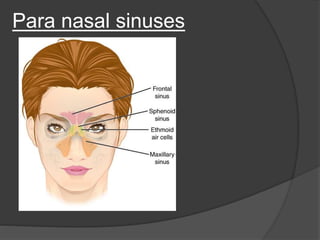
Para nasal sinuses
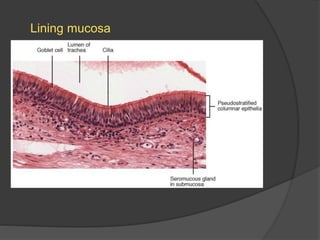
Lining mucosa
Functions:
 Air filtration
 Humidify
 Voice resonance
 Defining tonal quality
 Voice amplification
 Reducing the weight of skull
Maxillary sinus
 Largest
 Most prone to infection
 Antrum
 Body of maxilla
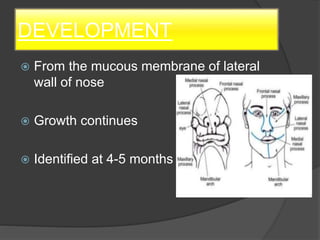
DEVELOPMENT
 From the mucous membrane of lateral
wall of nose
 Growth continues
 Identified at 4-5 months
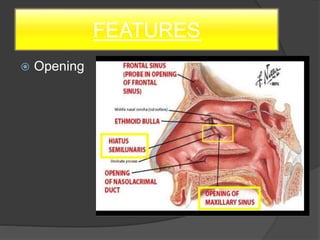
FEATURES
 Opening
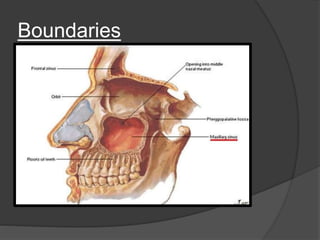
Boundaries
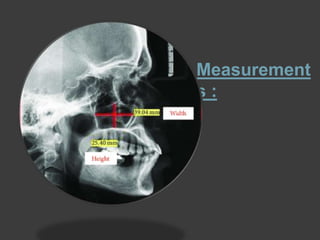
Measurement
s :
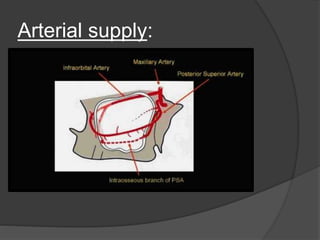
Arterial supply:
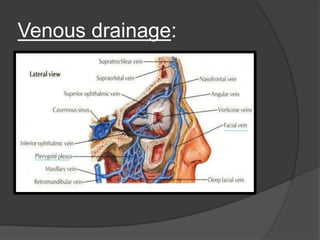
Venous drainage:
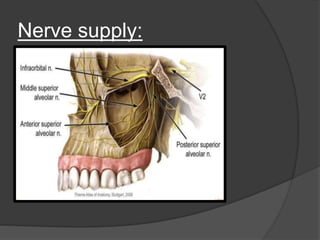
Nerve supply:
APPLIED ASPECTS:
 Endo-antral-syndrome
 Rhino sinusitis
 Referral of maxillary sinus pain to the teeth
 Distinguishing differences between
symptoms of odontalgia and sinus pain
 Periapical mucositis
 Maxillary sinusitis of dental origin
ENDO ANTRAL
SYNDROME
 Spread of pulpal diseases beyond confines
of dental supporting tissues into the sinus
 Findings:
 Pulpal disease in a tooth
 Periapical radiolucency
 Loss of laminadura
 A faintly radiopaque mass bulging into
sinus space
 Varying degree of radiopacity of the
surrounding sinus space
 Treatment:
• Non surgical root canal treatment
• Surgical approach
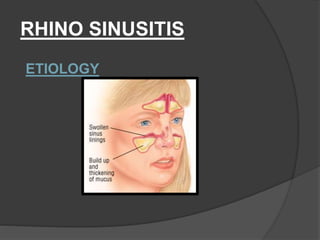
ETIOLOGY
RHINO SINUSITIS
EPIDIMIOLOGY:
 16% - total population
 5% - all visits to primary care physicians
 Study : 247- men
93% - maxillary tooth ache
Rhino sinusitis
 Classification:
a) Acute
b) Sub acute
c) Recurrent acute or chronic
Acute :
 Sudden onset
 40-50% patients recover spontaneously
 Respond well to antibiotic and / or
adjunctive treatments
 Predominant bacterial flora
-Streptococcus pneumoniae
-Haemophilus influenza
-Moraxella catarrhalis
 Treatment: Amoxicillin
Trimethoprim- sulfamethaxazole
CHRONIC RHINO
SINUSITIS:
 Less severe symptoms
 More difficult to resolve
 Extremely difficult to recognize
 Mixed infection
 Treatment :
 narrow spectrum regimens
 Broad spectrum regimens
 Amoxicillin-clavulanate
 Clindamycin
 Combination of metronidazole & pencillin
 Other ajunctives: steroid nasal sprays
decongestants
saline irrigation
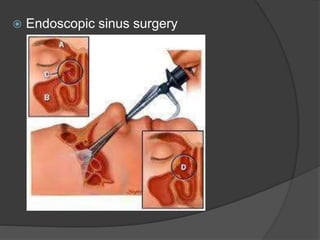
 Endoscopic sinus surgery
Referral of maxillary
sinus pain to the teeth:
 Close anatomic relationship
 Thickness of bony partition
-0.83 mm
 Percussion of proximate teeth
 Stimulation of maxillary sinus ostium
 Sensory innervation of the maxillary sinus
Distinguishing differences
between symptoms of
odontalgia and sinus pain:
 Proper diagnosis
 Important questions to ask a patient
MAXILLARY RHINO
SINUSITIS
 Dull aching pain, difficult to localize or
pinpoint
 Feel presuure in the cheeks and below
the eyes
 Positional changes
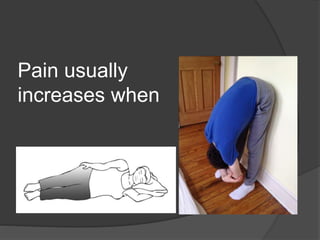
Pain usually
increases when
Pulpal pain
 More easily localized
 Unchanged with positions
 Rarely intermittent in intensity
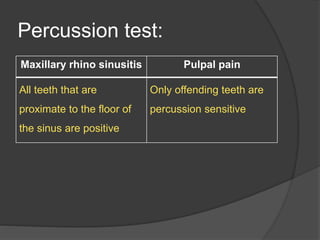
Percussion test:
Maxillary rhino sinusitis Pulpal pain
All teeth that are
proximate to the floor of
the sinus are positive
Only offending teeth are
percussion sensitive
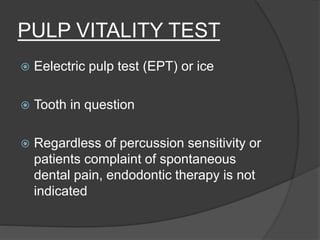
PULP VITALITY TEST
 Eelectric pulp test (EPT) or ice
 Tooth in question
 Regardless of percussion sensitivity or
patients complaint of spontaneous
dental pain, endodontic therapy is not
indicated
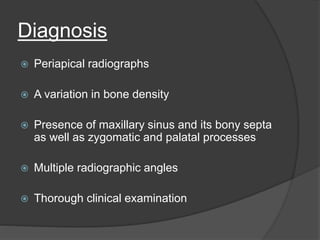
Diagnosis
 Periapical radiographs
 A variation in bone density
 Presence of maxillary sinus and its bony septa
as well as zygomatic and palatal processes
 Multiple radiographic angles
 Thorough clinical examination
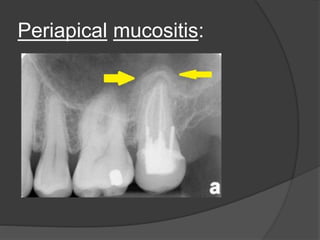
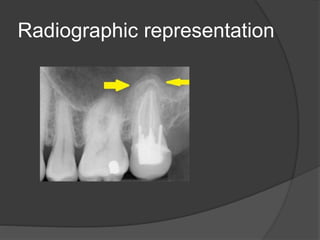
Periapical mucositis:
 - Periapical mucositis is the
inflammation or swelling of the sinus
membrane secondary to periapical
inflammation
Radiographic representation
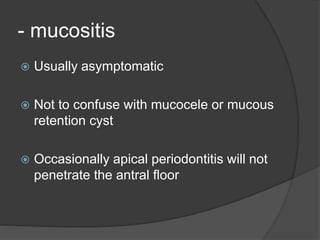
- mucositis
 Usually asymptomatic
 Not to confuse with mucocele or mucous
retention cyst
 Occasionally apical periodontitis will not
penetrate the antral floor
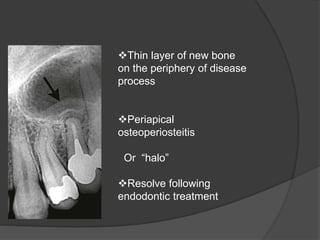
Thin layer of new bone
on the periphery of disease
process
Periapical
osteoperiosteitis
Or “halo”
Resolve following
endodontic treatment
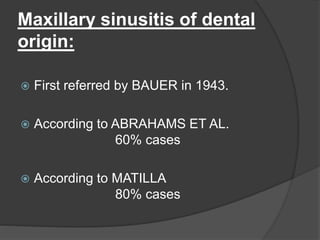
Maxillary sinusitis of dental
origin:
 First referred by BAUER in 1943.
 According to ABRAHAMS ET AL.
60% cases
 According to MATILLA
80% cases
MSDO
 Usually affects floor of the maxillary
sinus
 If ostial obstruction occurs
-bacterial colonization
- sinus infection
 Reported frequency of MSDO
4.6 and 47 %
 Due to difference in criteria and
definitions as well as the inherent
difficulty in establishing an exact casual
relationship
 Dental infections accounts approximately:
10-15%:acute sinusitis
40.6 % : chronic sinusitis
 Chronic sinusitis- predominant anaerobic
bacteria are:
prevotella sp.,
porphyromonas sp.,
fusobacterium nucleatum
peptostreptococcus sp.,
 If sinus infection is secondary to dental
infection, sinus healing cannot occur unless
the offending tooth is treated or removed.
 Importance is heightened with reports in the
literature of dental infections spreading rapidly
through the maxillary sinus causing
 orbital cellulitis
 blindness
 Meningitis
 Subdural empyema
 Brain abscess
 Cavernous sinus thrombosis
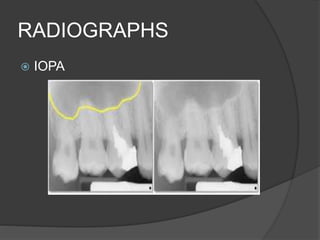
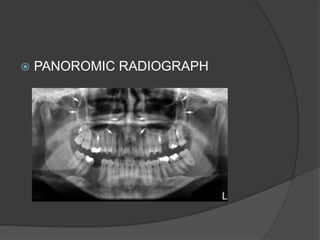
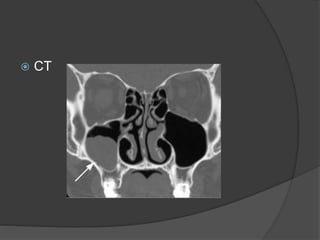
RADIOGRAPHS
 IOPA
 PANOROMIC RADIOGRAPH
 CT
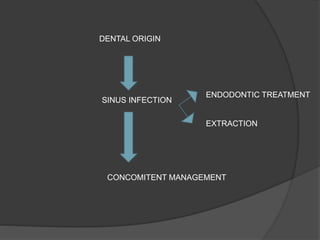
DENTAL ORIGIN
SINUS INFECTION
ENDODONTIC TREATMENT
EXTRACTION
CONCOMITENT MANAGEMENT
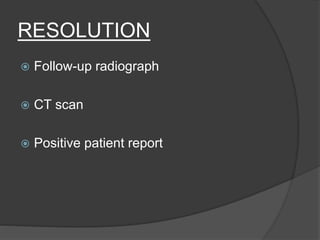
RESOLUTION
 Follow-up radiograph
 CT scan
 Positive patient report
CONVENTIONAL ENDODONTIC
TREATMENT
 Maxillary sinus poses a special
challenge
 All endodontic materials an instruments
should be restricted to the confines of
root canal system
 Procedural errors
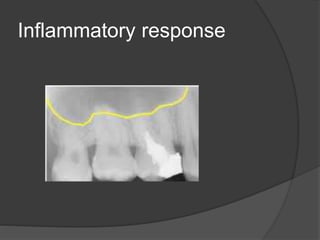
Inflammatory response
Periapical extrusion of
debris
 Periapical inflammation
 Post operative pain
 Delayed healing
Overzealous reaming or
filing
 Severe damage
 Severe Inflammatory response
 Non specific mediators of inflammation
 Continued release of antigens
 Resulting in immunologic reactions
Severe irritation
 Defense mechanism cannot overcome
 Granuloma
 cyst
Sodium hypochlorite
 Commonly employed root canal irrigant
 Severe inflammatory reactions
 Extremely toxic
 Soft tissue complications
Immediate complications
 Severe pain
 Oedema
 Profuse hemorrhage
 Several days of increasing oedema and
ecchymosis
tissue necrosis, paraesthesia
secondary infection
Calcium hydroxide
 Intra canal medicament
 Irritating to tissues
 Immediate degenerative effect
 Sinusitis
Sealer or gutta percha or silver
cones
 Mechanical irritation results from
overfilling the root canal
 Inflammatory reaction
 Persists until the foriegnbody is
removed
Dodd et al. (1984)
 Maxillary first molar overfilled with silver
cones
 Chronic sinusitis
 Initially undiagnosed
 Endodontic retreatment
ENDODONTIC SURGERY
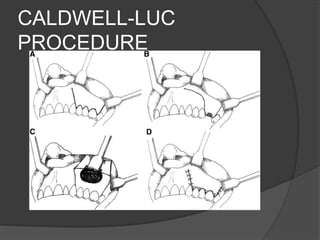
 Broken instruments and / or filling
materials in the maxillary sinus can only
be removed by means of a caldwell-luc
procedure
CALDWELL-LUC
PROCEDURE
CONCLUSION
 The close anatomical relationship of maxillary sinus and
roots of maxillary molars and premolars can lead to
severe endodontic complications
 In case of sinusitis of dental origin, conventional
endodontic treatment of retreatment is the treatment of
choice with surgical intervention only in refractory cases
 Root ends & materials that may enter sinus during
endodontic therapy may nee caldwell luc approach
 Antibiotics, decongestants & analgesics are indicated for
the treatment of sinusitis or when sinus is penetrated
during surgical endodontic procedures
REFERENCES
 HUMAN ANATOMY HEAD AN NECK, B D
CHAURASIA’S, FIFTH EDITION.
 INGLE’S ENDODONTICS SIXTH EDITION
 ENDODONTIC IMPLICATIONS OF THE
MAXILLARY SINUS- A REVIEW
 INTERNATIONAL ENDODONTIC
JOURNAL, 35, 127-141,2002
T
H
A
N
K
Y
O
U

Maxillary sinus and implication in endodontics

  • 2.
  • 3.
    CONTENTS  Introduction  Development Features  Applied aspects  Conventional endodontic treatments  Endodontic surgery  Conclusion  References
  • 4.
    INTRODUCTION  Non odontogeniccause  Deserves important consideration  Result of misdiagnosis  Rhino sinusitis from odontalgia  Understanding the effects of periapical infections
  • 5.
  • 6.
  • 7.
    Functions:  Air filtration Humidify  Voice resonance  Defining tonal quality  Voice amplification  Reducing the weight of skull
  • 8.
    Maxillary sinus  Largest Most prone to infection  Antrum  Body of maxilla
  • 9.
    DEVELOPMENT  From themucous membrane of lateral wall of nose  Growth continues  Identified at 4-5 months
  • 10.
  • 11.
  • 12.
  • 13.
  • 14.
  • 15.
  • 16.
    APPLIED ASPECTS:  Endo-antral-syndrome Rhino sinusitis  Referral of maxillary sinus pain to the teeth  Distinguishing differences between symptoms of odontalgia and sinus pain  Periapical mucositis  Maxillary sinusitis of dental origin
  • 17.
    ENDO ANTRAL SYNDROME  Spreadof pulpal diseases beyond confines of dental supporting tissues into the sinus  Findings:  Pulpal disease in a tooth  Periapical radiolucency  Loss of laminadura  A faintly radiopaque mass bulging into sinus space  Varying degree of radiopacity of the surrounding sinus space
  • 18.
     Treatment: • Nonsurgical root canal treatment • Surgical approach
  • 19.
  • 20.
    EPIDIMIOLOGY:  16% -total population  5% - all visits to primary care physicians  Study : 247- men 93% - maxillary tooth ache
  • 21.
    Rhino sinusitis  Classification: a)Acute b) Sub acute c) Recurrent acute or chronic
  • 22.
    Acute :  Suddenonset  40-50% patients recover spontaneously  Respond well to antibiotic and / or adjunctive treatments  Predominant bacterial flora -Streptococcus pneumoniae -Haemophilus influenza -Moraxella catarrhalis  Treatment: Amoxicillin Trimethoprim- sulfamethaxazole
  • 23.
    CHRONIC RHINO SINUSITIS:  Lesssevere symptoms  More difficult to resolve  Extremely difficult to recognize  Mixed infection  Treatment :  narrow spectrum regimens  Broad spectrum regimens  Amoxicillin-clavulanate  Clindamycin  Combination of metronidazole & pencillin  Other ajunctives: steroid nasal sprays decongestants saline irrigation
  • 24.
  • 25.
    Referral of maxillary sinuspain to the teeth:  Close anatomic relationship  Thickness of bony partition -0.83 mm  Percussion of proximate teeth  Stimulation of maxillary sinus ostium  Sensory innervation of the maxillary sinus
  • 26.
    Distinguishing differences between symptomsof odontalgia and sinus pain:  Proper diagnosis  Important questions to ask a patient
  • 27.
    MAXILLARY RHINO SINUSITIS  Dullaching pain, difficult to localize or pinpoint  Feel presuure in the cheeks and below the eyes  Positional changes
  • 28.
  • 29.
    Pulpal pain  Moreeasily localized  Unchanged with positions  Rarely intermittent in intensity
  • 30.
    Percussion test: Maxillary rhinosinusitis Pulpal pain All teeth that are proximate to the floor of the sinus are positive Only offending teeth are percussion sensitive
  • 31.
    PULP VITALITY TEST Eelectric pulp test (EPT) or ice  Tooth in question  Regardless of percussion sensitivity or patients complaint of spontaneous dental pain, endodontic therapy is not indicated
  • 32.
    Diagnosis  Periapical radiographs A variation in bone density  Presence of maxillary sinus and its bony septa as well as zygomatic and palatal processes  Multiple radiographic angles  Thorough clinical examination
  • 33.
  • 34.
     - Periapicalmucositis is the inflammation or swelling of the sinus membrane secondary to periapical inflammation
  • 35.
  • 36.
    - mucositis  Usuallyasymptomatic  Not to confuse with mucocele or mucous retention cyst  Occasionally apical periodontitis will not penetrate the antral floor
  • 37.
    Thin layer ofnew bone on the periphery of disease process Periapical osteoperiosteitis Or “halo” Resolve following endodontic treatment
  • 38.
    Maxillary sinusitis ofdental origin:  First referred by BAUER in 1943.  According to ABRAHAMS ET AL. 60% cases  According to MATILLA 80% cases
  • 39.
    MSDO  Usually affectsfloor of the maxillary sinus  If ostial obstruction occurs -bacterial colonization - sinus infection
  • 40.
     Reported frequencyof MSDO 4.6 and 47 %  Due to difference in criteria and definitions as well as the inherent difficulty in establishing an exact casual relationship
  • 41.
     Dental infectionsaccounts approximately: 10-15%:acute sinusitis 40.6 % : chronic sinusitis  Chronic sinusitis- predominant anaerobic bacteria are: prevotella sp., porphyromonas sp., fusobacterium nucleatum peptostreptococcus sp.,
  • 42.
     If sinusinfection is secondary to dental infection, sinus healing cannot occur unless the offending tooth is treated or removed.  Importance is heightened with reports in the literature of dental infections spreading rapidly through the maxillary sinus causing  orbital cellulitis  blindness  Meningitis  Subdural empyema  Brain abscess  Cavernous sinus thrombosis
  • 43.
  • 44.
  • 45.
  • 46.
    DENTAL ORIGIN SINUS INFECTION ENDODONTICTREATMENT EXTRACTION CONCOMITENT MANAGEMENT
  • 47.
    RESOLUTION  Follow-up radiograph CT scan  Positive patient report
  • 48.
    CONVENTIONAL ENDODONTIC TREATMENT  Maxillarysinus poses a special challenge  All endodontic materials an instruments should be restricted to the confines of root canal system  Procedural errors
  • 49.
  • 50.
    Periapical extrusion of debris Periapical inflammation  Post operative pain  Delayed healing
  • 51.
    Overzealous reaming or filing Severe damage  Severe Inflammatory response  Non specific mediators of inflammation  Continued release of antigens  Resulting in immunologic reactions
  • 52.
    Severe irritation  Defensemechanism cannot overcome  Granuloma  cyst
  • 53.
    Sodium hypochlorite  Commonlyemployed root canal irrigant  Severe inflammatory reactions  Extremely toxic  Soft tissue complications
  • 54.
    Immediate complications  Severepain  Oedema  Profuse hemorrhage  Several days of increasing oedema and ecchymosis tissue necrosis, paraesthesia secondary infection
  • 55.
    Calcium hydroxide  Intracanal medicament  Irritating to tissues  Immediate degenerative effect  Sinusitis
  • 56.
    Sealer or guttapercha or silver cones  Mechanical irritation results from overfilling the root canal  Inflammatory reaction  Persists until the foriegnbody is removed
  • 57.
    Dodd et al.(1984)  Maxillary first molar overfilled with silver cones  Chronic sinusitis  Initially undiagnosed  Endodontic retreatment
  • 58.
    ENDODONTIC SURGERY  Brokeninstruments and / or filling materials in the maxillary sinus can only be removed by means of a caldwell-luc procedure
  • 59.
  • 60.
    CONCLUSION  The closeanatomical relationship of maxillary sinus and roots of maxillary molars and premolars can lead to severe endodontic complications  In case of sinusitis of dental origin, conventional endodontic treatment of retreatment is the treatment of choice with surgical intervention only in refractory cases  Root ends & materials that may enter sinus during endodontic therapy may nee caldwell luc approach  Antibiotics, decongestants & analgesics are indicated for the treatment of sinusitis or when sinus is penetrated during surgical endodontic procedures
  • 61.
    REFERENCES  HUMAN ANATOMYHEAD AN NECK, B D CHAURASIA’S, FIFTH EDITION.  INGLE’S ENDODONTICS SIXTH EDITION  ENDODONTIC IMPLICATIONS OF THE MAXILLARY SINUS- A REVIEW  INTERNATIONAL ENDODONTIC JOURNAL, 35, 127-141,2002
  • 62.