The Sieve of AtkinThe Sieve of Eratosthenesare methods to determine whether a given
integer is a prime number or not.
Both methods can be applied and used to create programming algorithms and the computer will
do the rest of the job for you. The Sieve of Eratosthenes is a simple way. Let say you want to find out
which numbers (from 1 to 100) are prime numbers. So, first of all you need to list all the 100 numbers
down. Then, you start crossing out numbers that are not prime numbers.
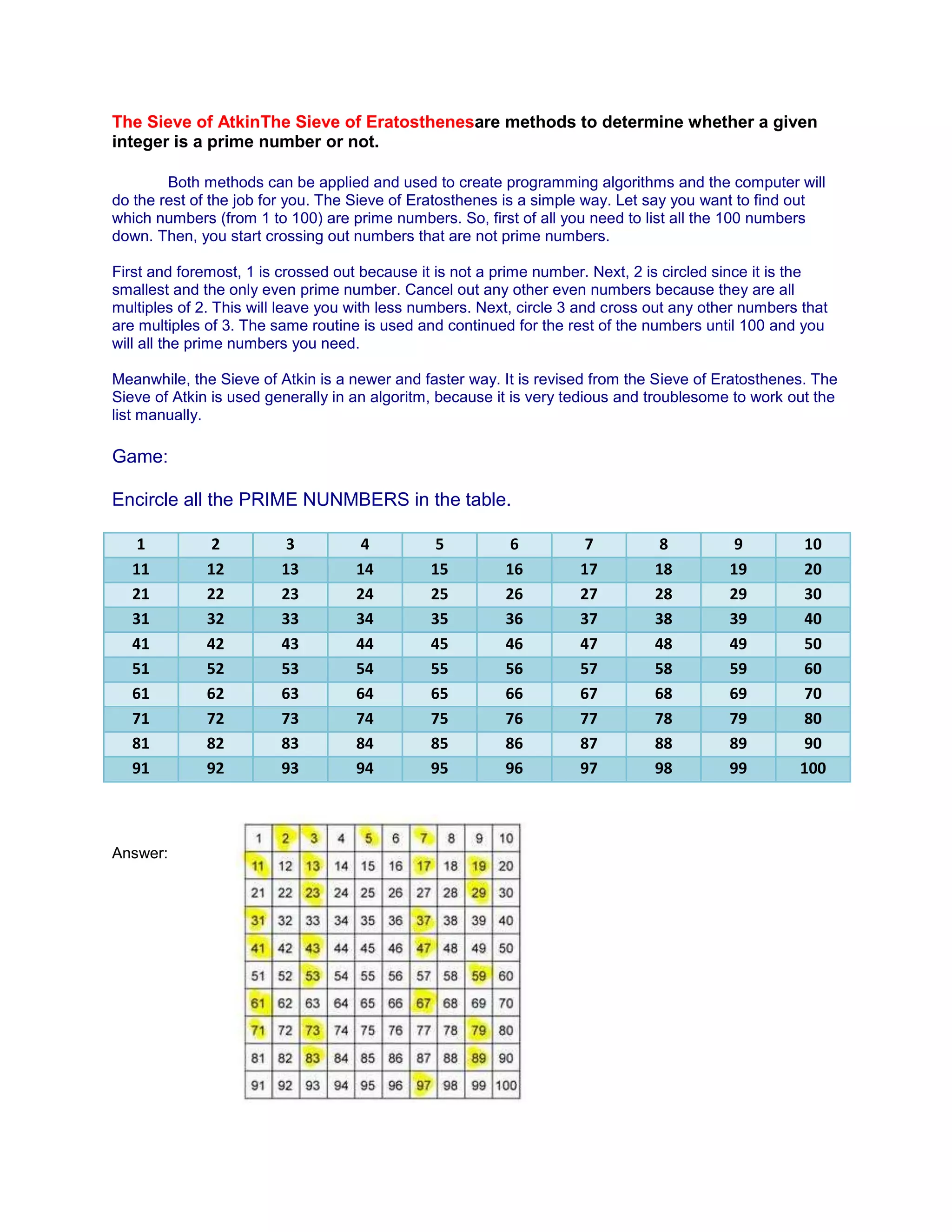
First and foremost, 1 is crossed out because it is not a prime number. Next, 2 is circled since it is the
smallest and the only even prime number. Cancel out any other even numbers because they are all
multiples of 2. This will leave you with less numbers. Next, circle 3 and cross out any other numbers that
are multiples of 3. The same routine is used and continued for the rest of the numbers until 100 and you
will all the prime numbers you need.
Meanwhile, the Sieve of Atkin is a newer and faster way. It is revised from the Sieve of Eratosthenes. The
Sieve of Atkin is used generally in an algoritm, because it is very tedious and troublesome to work out the
list manually.

Game:
Encircle all the PRIME NUNMBERS in the table.
1
11
21
31
41
51
61
71
81
91

Answer:

2
12
22
32
42
52
62
72
82
92

3
13
23
33
43
53
63
73
83
93

4
14
24
34
44
54
64
74
84
94

5
15
25
35
45
55
65
75
85
95

6
16
26
36
46
56
66
76
86
96

7
17
27
37
47
57
67
77
87
97

8
18
28
38
48
58
68
78
88
98

9
19
29
39
49
59
69
79
89
99

10
20
30
40
50
60
70
80
90
100
Trivia
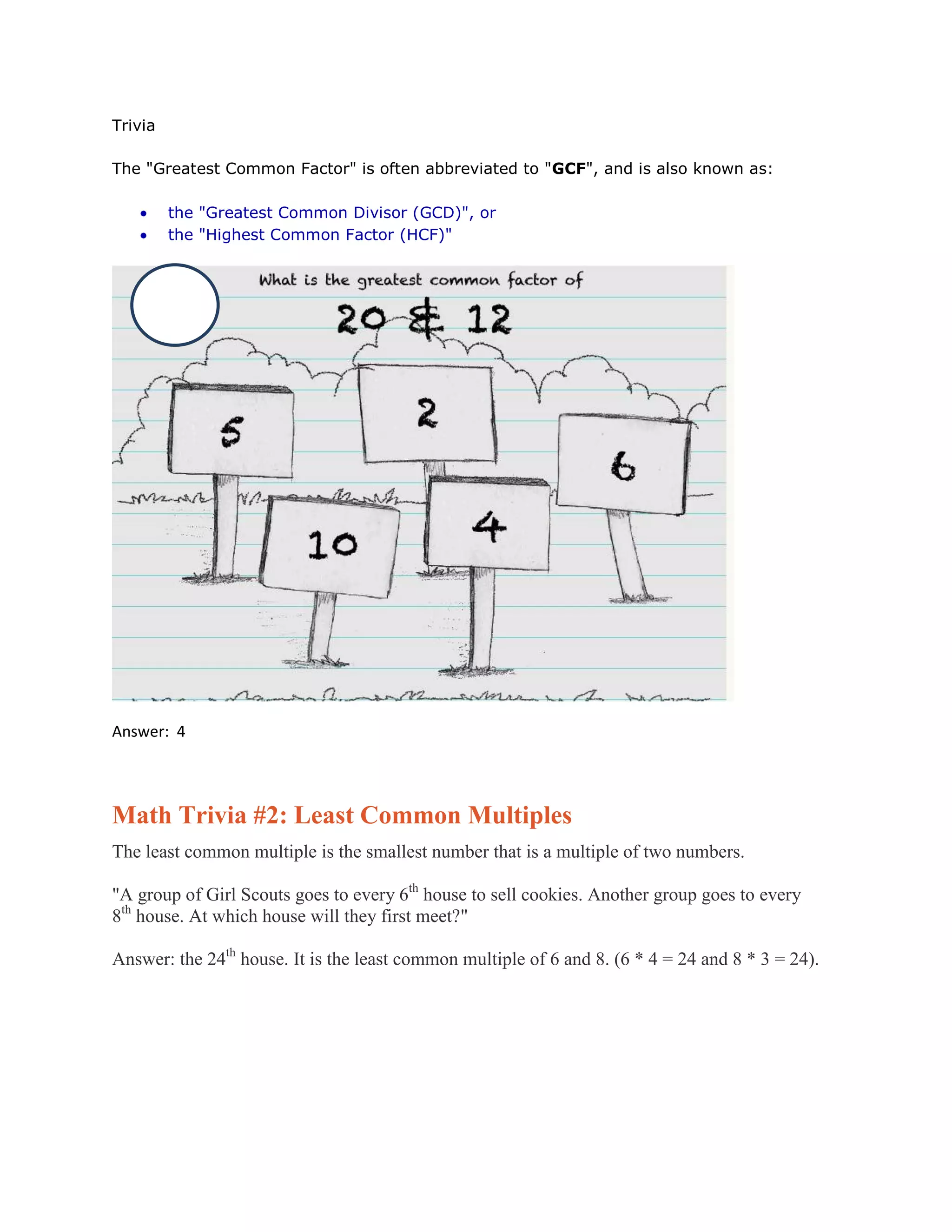
The "Greatest Common Factor" is often abbreviated to "GCF", and is also known as:
the "Greatest Common Divisor (GCD)", or
the "Highest Common Factor (HCF)"

Answer: 4

Math Trivia #2: Least Common Multiples
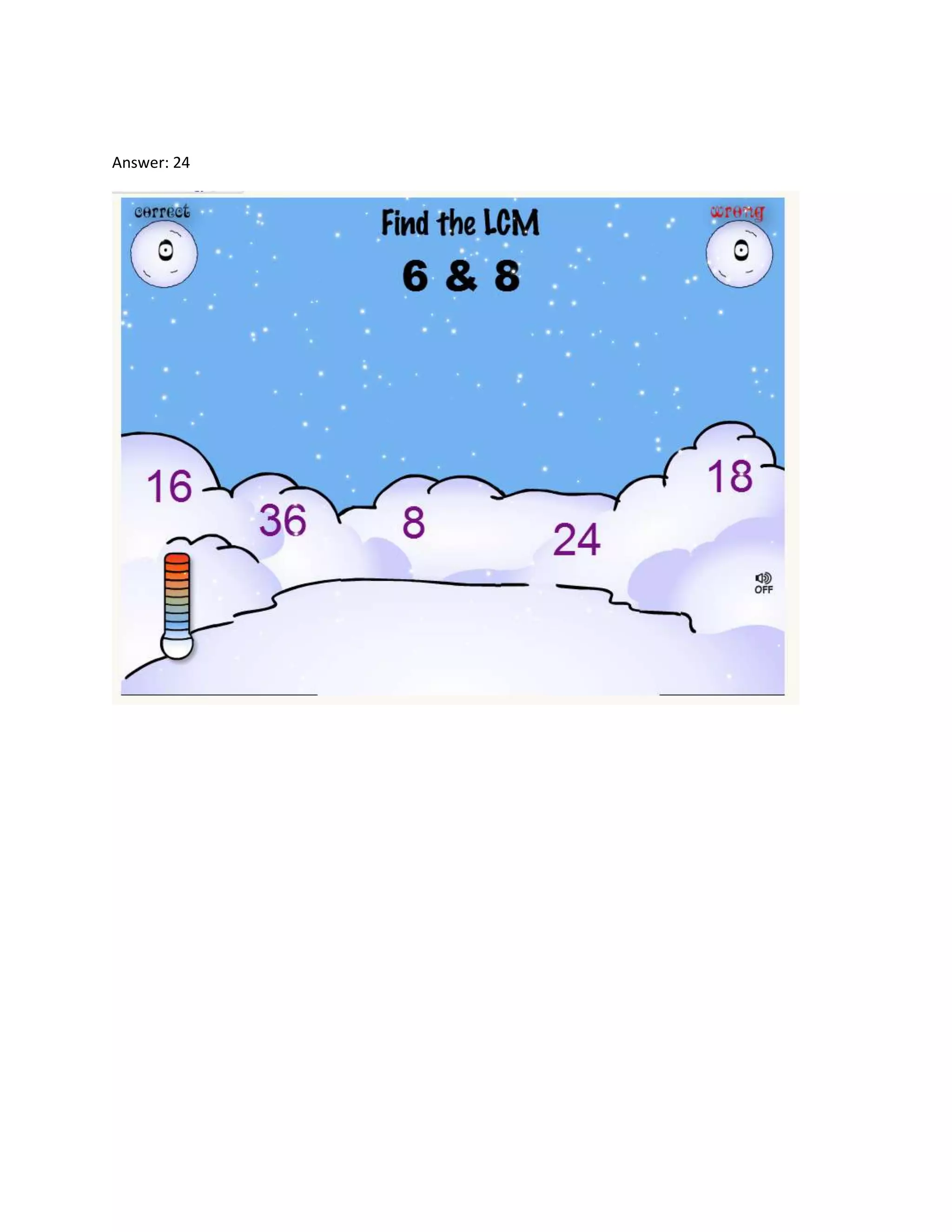
The least common multiple is the smallest number that is a multiple of two numbers.
"A group of Girl Scouts goes to every 6th house to sell cookies. Another group goes to every
8th house. At which house will they first meet?"
Answer: the 24th house. It is the least common multiple of 6 and 8. (6 * 4 = 24 and 8 * 3 = 24).
Answer: 24

Math trivia

  • 1.
    The Sieve ofAtkinThe Sieve of Eratosthenesare methods to determine whether a given integer is a prime number or not. Both methods can be applied and used to create programming algorithms and the computer will do the rest of the job for you. The Sieve of Eratosthenes is a simple way. Let say you want to find out which numbers (from 1 to 100) are prime numbers. So, first of all you need to list all the 100 numbers down. Then, you start crossing out numbers that are not prime numbers. First and foremost, 1 is crossed out because it is not a prime number. Next, 2 is circled since it is the smallest and the only even prime number. Cancel out any other even numbers because they are all multiples of 2. This will leave you with less numbers. Next, circle 3 and cross out any other numbers that are multiples of 3. The same routine is used and continued for the rest of the numbers until 100 and you will all the prime numbers you need. Meanwhile, the Sieve of Atkin is a newer and faster way. It is revised from the Sieve of Eratosthenes. The Sieve of Atkin is used generally in an algoritm, because it is very tedious and troublesome to work out the list manually. Game: Encircle all the PRIME NUNMBERS in the table. 1 11 21 31 41 51 61 71 81 91 Answer: 2 12 22 32 42 52 62 72 82 92 3 13 23 33 43 53 63 73 83 93 4 14 24 34 44 54 64 74 84 94 5 15 25 35 45 55 65 75 85 95 6 16 26 36 46 56 66 76 86 96 7 17 27 37 47 57 67 77 87 97 8 18 28 38 48 58 68 78 88 98 9 19 29 39 49 59 69 79 89 99 10 20 30 40 50 60 70 80 90 100
  • 2.
    Trivia The "Greatest CommonFactor" is often abbreviated to "GCF", and is also known as: the "Greatest Common Divisor (GCD)", or the "Highest Common Factor (HCF)" Answer: 4 Math Trivia #2: Least Common Multiples The least common multiple is the smallest number that is a multiple of two numbers. "A group of Girl Scouts goes to every 6th house to sell cookies. Another group goes to every 8th house. At which house will they first meet?" Answer: the 24th house. It is the least common multiple of 6 and 8. (6 * 4 = 24 and 8 * 3 = 24).
  • 3.