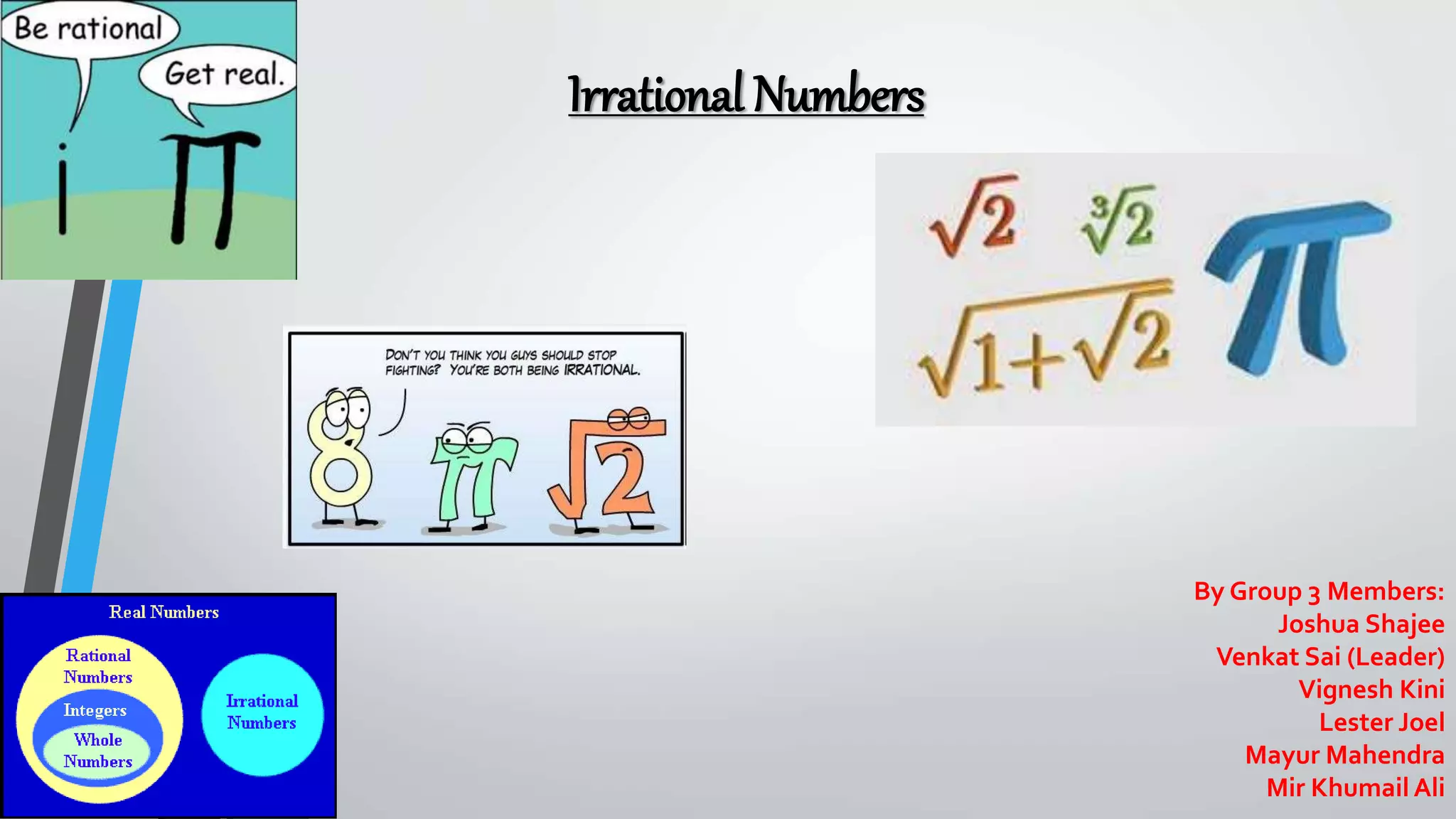
Irrational Numbers
By Group 3 Members:
Joshua Shajee
Venkat Sai (Leader)
Vignesh Kini
Lester Joel
Mayur Mahendra
Mir Khumail Ali
1 2 3
2
1 1 2
2 4 2
3 9
The square of an integer is a perfect
square.
The opposite of squaring a number is
taking the square root.
Example
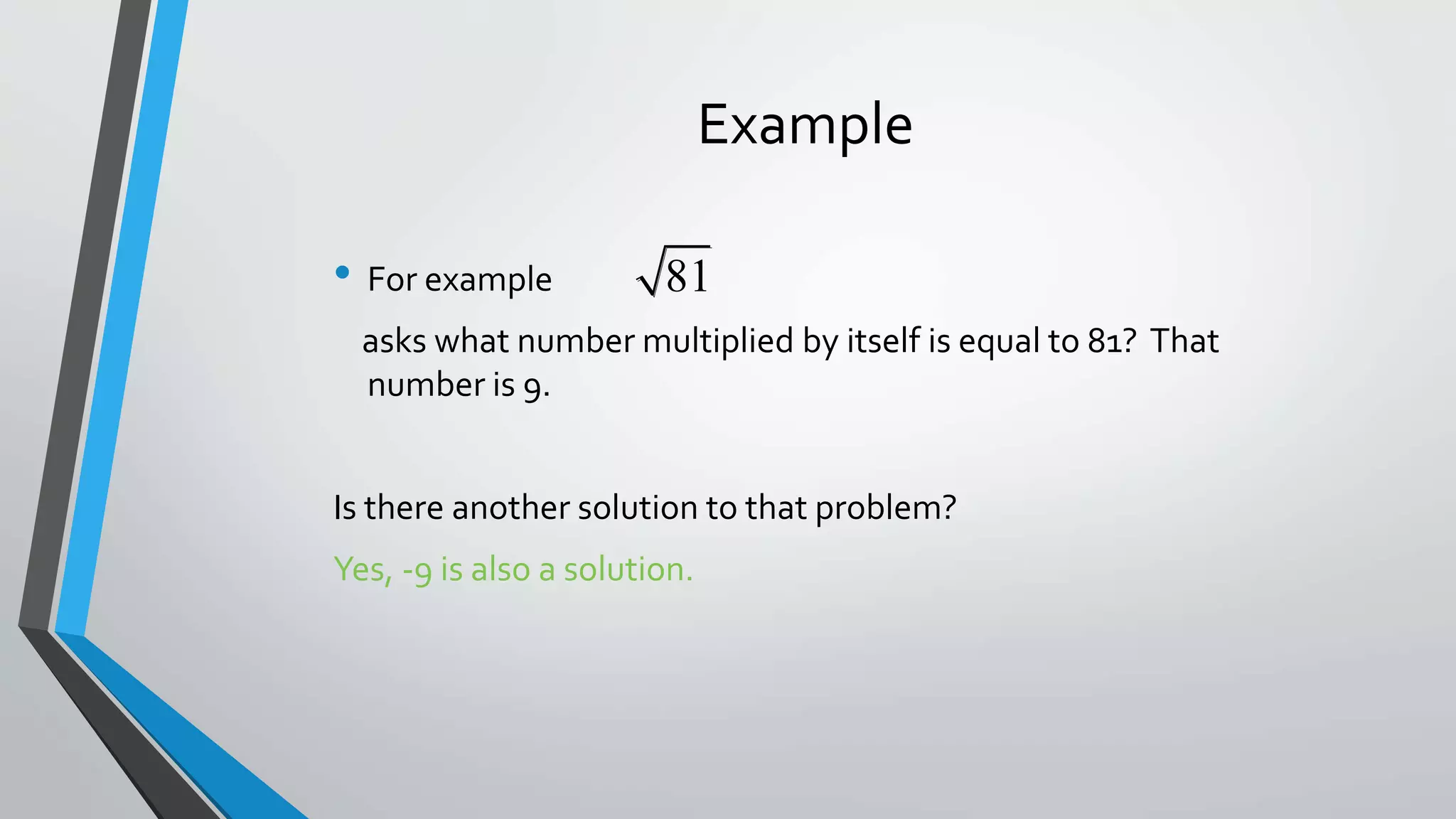
• For example
asks what number multiplied by itself is equal to 81? That
number is 9.
Is there another solution to that problem?
Yes, -9 is also a solution.
81
Simplify each square root
100
16
10
-4
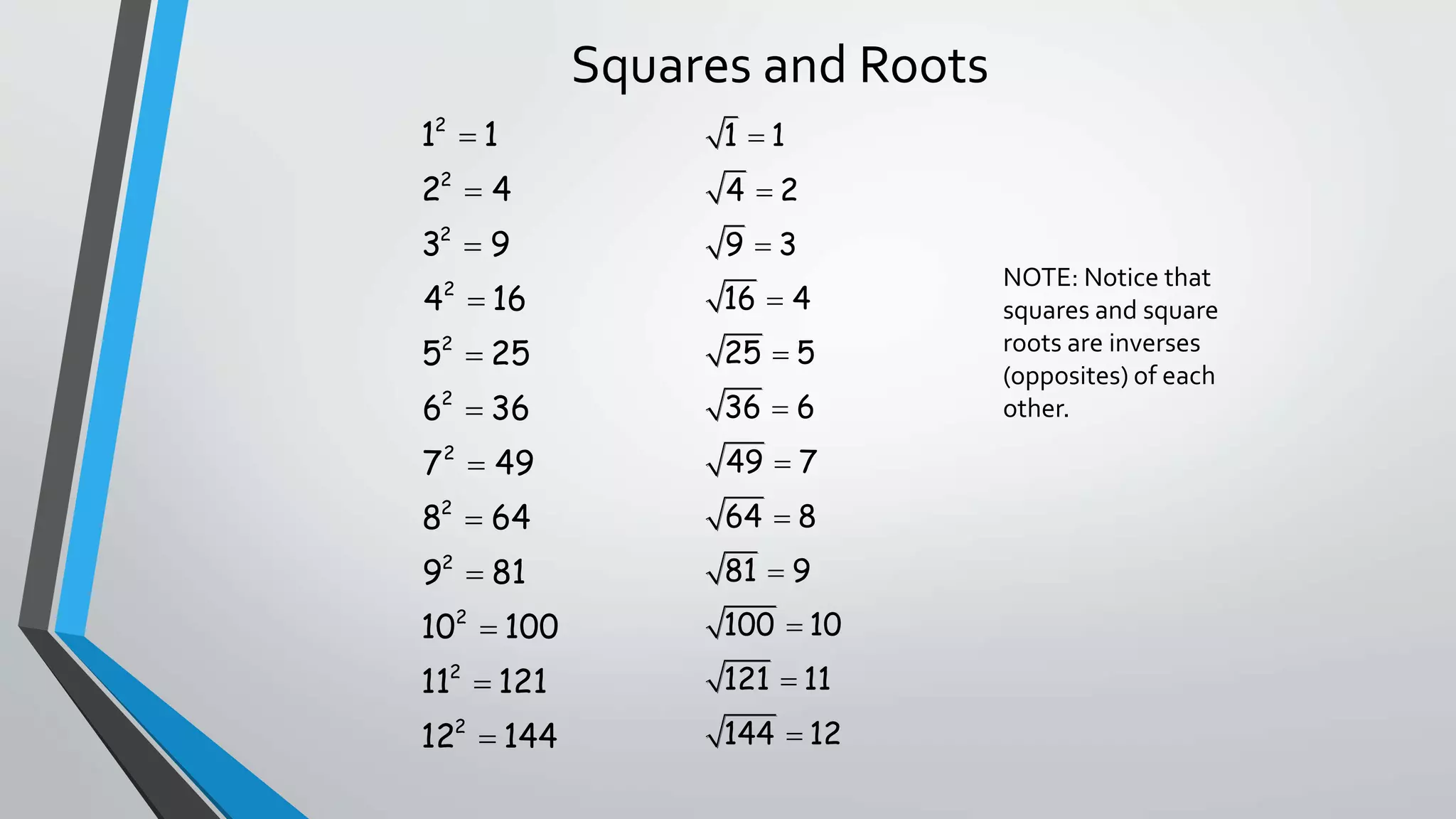
Squares and Roots
2
2
2
2
2
2
2
2
2
2
2
2
1 1
2 4
3 9
4 16
5 25
6 36
7 49
8 64
9 81
10 100
11 121
12 144












1 1
4 2
9 3
16 4
25 5
36 6
49 7
64 8
81 9
100 10
121 11
144 12












NOTE: Notice that
squares and square
roots are inverses
(opposites) of each
other.
Estimating Square Roots
Once you memorized squares and their roots, we can estimate square roots
that are not perfect squares
• For example, what about
8
Estimating Square Roots
• We find the two perfect squares that are before and after
the square root of 8. . .
• and
• Look at them on a number line:
4 5
94
96 7 832
2 3
• We can see that is between 2 and 3 but
is closer to 3. We would say that is approximately 3.
Estimating square roots
4 5 96 7 832
2 3
8
8
TRY THIS:
Estimate to the nearest whole number
27
78
50
5
-9
7
• Rational number- can be written as a fraction
• Irrational number- cannot be written as a fraction
• because:
• it is a non-terminating decimal
• it is a decimal that does NOT repeat
* The square roots of ALL perfect squares are rational.
* The square roots of numbers that are NOT perfect
squares are irrational.
Identify each number as rational or
irrational.
2
81
0.53
0.627
13.875931...
Irrational
Rational
Rational
Rational
Irrational
Irrational numbers

Irrational numbers

  • 1.
    Irrational Numbers By Group3 Members: Joshua Shajee Venkat Sai (Leader) Vignesh Kini Lester Joel Mayur Mahendra Mir Khumail Ali
  • 2.
    1 2 3 2 11 2 2 4 2 3 9 The square of an integer is a perfect square. The opposite of squaring a number is taking the square root.
  • 3.
    Example • For example askswhat number multiplied by itself is equal to 81? That number is 9. Is there another solution to that problem? Yes, -9 is also a solution. 81
  • 4.
    Simplify each squareroot 100 16 10 -4
  • 5.
    Squares and Roots 2 2 2 2 2 2 2 2 2 2 2 2 11 2 4 3 9 4 16 5 25 6 36 7 49 8 64 9 81 10 100 11 121 12 144             1 1 4 2 9 3 16 4 25 5 36 6 49 7 64 8 81 9 100 10 121 11 144 12             NOTE: Notice that squares and square roots are inverses (opposites) of each other.
  • 6.
    Estimating Square Roots Onceyou memorized squares and their roots, we can estimate square roots that are not perfect squares • For example, what about 8
  • 7.
    Estimating Square Roots •We find the two perfect squares that are before and after the square root of 8. . . • and • Look at them on a number line: 4 5 94 96 7 832 2 3
  • 8.
    • We cansee that is between 2 and 3 but is closer to 3. We would say that is approximately 3. Estimating square roots 4 5 96 7 832 2 3 8 8
  • 9.
    TRY THIS: Estimate tothe nearest whole number 27 78 50 5 -9 7
  • 10.
    • Rational number-can be written as a fraction • Irrational number- cannot be written as a fraction • because: • it is a non-terminating decimal • it is a decimal that does NOT repeat * The square roots of ALL perfect squares are rational. * The square roots of numbers that are NOT perfect squares are irrational.
  • 11.
    Identify each numberas rational or irrational. 2 81 0.53 0.627 13.875931... Irrational Rational Rational Rational Irrational