LABORATORY OF BIOLOGICAL STRUCTURE MECHANICS
www.labsmech.polimi.it
Master’s Thesis presentation
Assessment of anodic aluminium oxide coatings towards an
alternative solution to spark erosion damage of bearings
Thesis Presented by: Ranganath Nagaraju
Supervisor : Prof. Antonello Vicenzo
2
Summary
 Introduction
 Background
 Current Solution
 Our Idea
 Assessment scheme
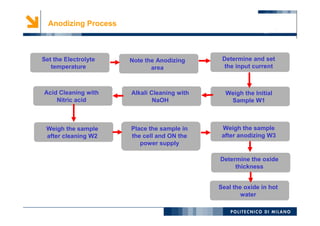
 Anodizing Process
 Results and Discussion
 Further developments
3
Introduction
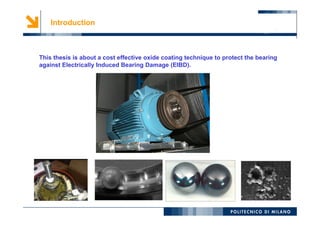
This thesis is about a cost effective oxide coating technique to protect the bearing
against Electrically Induced Bearing Damage (EIBD).
4
Background
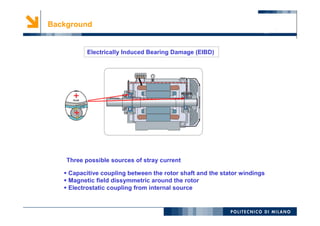
Electrically Induced Bearing Damage (EIBD)
 Capacitive coupling between the rotor shaft and the stator windings
 Magnetic field dissymmetric around the rotor
 Electrostatic coupling from internal source
Three possible sources of stray current
5
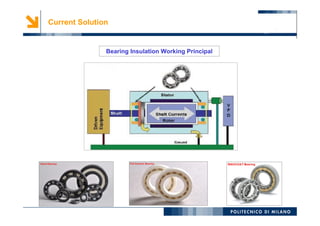
Current Solution
Bearing Insulation Working Principal
6Issues with Current Day Solution
1) Insulated bearing: Constrain with the size and the cost of the bearing.
2) Ceramic bearings: Is quite effective but a more expensive solution .
7
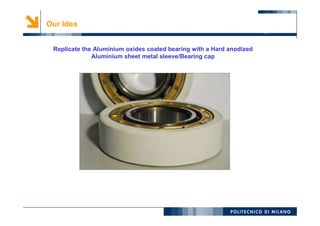
Our Idea
Replicate the Aluminium oxides coated bearing with a Hard anodized
Aluminium sheet metal sleeve/Bearing cap
8
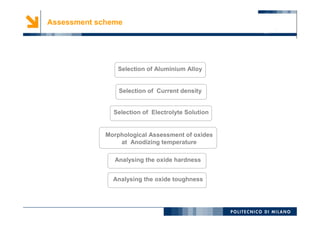
Assessment scheme
Morphological Assessment of oxides
at Anodizing temperature
Selection of Electrolyte Solution
Selection of Aluminium Alloy
Selection of Current density
Analysing the oxide hardness
Analysing the oxide toughness
9
Anodizing Process
Set the Electrolyte
temperature
Note the Anodizing
area
Determine and set
the input current
Weigh the Initial
Sample W1
Alkali Cleaning with
NaOH
Acid Cleaning with
Nitric acid
Weigh the sample
after cleaning W2
Seal the oxide in hot
water
Place the sample in
the cell and ON the
power supply
Weigh the sample
after anodizing W3
Determine the oxide
thickness
10
Results and Discussion
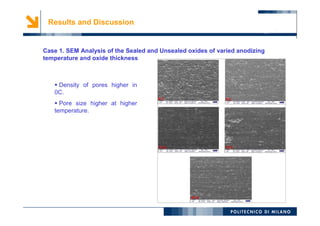
Case 1. SEM Analysis of the Sealed and Unsealed oxides of varied anodizing
temperature and oxide thickness
 Density of pores higher in
0C.
 Pore size higher at higher
temperature.
11
Case 1
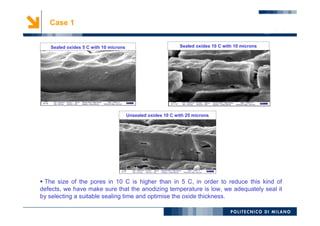
 The size of the pores in 10 C is higher than in 5 C, in order to reduce this kind of
defects, we have make sure that the anodizing temperature is low, we adequately seal it
by selecting a suitable sealing time and optimise the oxide thickness.
Sealed oxides 10 C with 10 microns
Unsealed oxides 10 C with 25 microns
Sealed oxides 5 C with 10 microns
12
Case 2
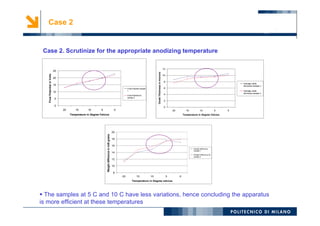
Case 2. Scrutinize for the appropriate anodizing temperature
8
10
12
14
16
18
20
20 15 10 5 0
Temperature in Degree celcius
Weightdifferenceinmilligrams
Weight difference
Sample 1
Weight Difference for
sample 2
0
5
10
15
20
25
20 15 10 5 0
Temperature in Degree Celcius
FinalPotentialinVolts
Final Potential Sample
1
Final Potential for
sample 2
0
2
4
6
8
10
12
20 15 10 5 0
Temperature in Degree Celcius
OxideThicknessinmicrons
Average oxide
thickness Sample 1
Average oxide
thickness sample 2
 The samples at 5 C and 10 C have less variations, hence concluding the apparatus
is more efficient at these temperatures
13
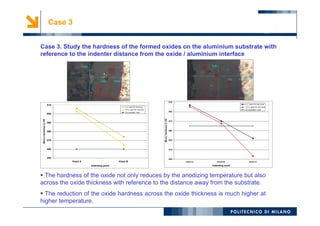
Case 3. Study the hardness of the formed oxides on the aluminium substrate with
reference to the indenter distance from the oxide / aluminium interface
Case 3
 The hardness of the oxide not only reduces by the anodizing temperature but also
across the oxide thickness with reference to the distance away from the substrate.
 The reduction of the oxide hardness across the oxide thickness is much higher at
higher temperature.
14
Case 4
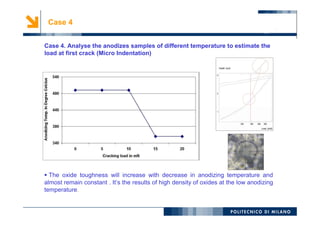
Case 4. Analyse the anodizes samples of different temperature to estimate the
load at first crack (Micro Indentation)
 The oxide toughness will increase with decrease in anodizing temperature and
almost remain constant . It’s the results of high density of oxides at the low anodizing
temperature.
15
Case 5
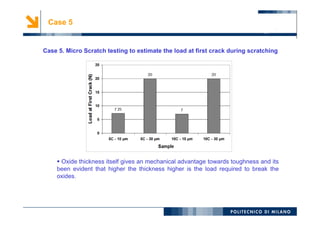
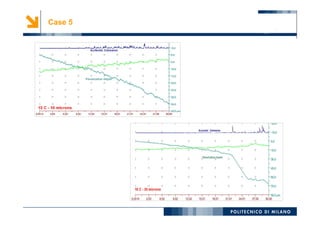
Case 5. Micro Scratch testing to estimate the load at first crack during scratching
 Oxide thickness itself gives an mechanical advantage towards toughness and its
been evident that higher the thickness higher is the load required to break the
oxides.
16
Case 5
17
Case 6
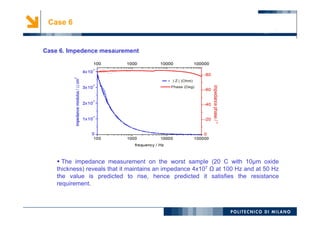
Case 6. Impedence mesaurement
 The impedance measurement on the worst sample (20 C with 10µm oxide
thickness) reveals that it maintains an impedance 4x10⁷ Ω at 100 Hz and at 50 Hz
the value is predicted to rise, hence predicted it satisfies the resistance
requirement.
18
Further Developments
 Improve the toughness
Since we suspect the possibility of the oxide damage due to fretting between the
contact surfaces at the fitment. One of the predicted solution could be polymer
sealing the oxides.
 Determine the electrical properties of the oxides
Both Break down voltage and the electrical resistivity has to me estimated as per
the ASTM guidelines D159, D150 and D257.
 Preparation on the product
All these analysis should be executed and confirmed at the prototype level and
these require a special bearing setup. And this should be performed under
professional guidance.
19

Master Thesis Presentaion

  • 1.
    LABORATORY OF BIOLOGICALSTRUCTURE MECHANICS www.labsmech.polimi.it Master’s Thesis presentation Assessment of anodic aluminium oxide coatings towards an alternative solution to spark erosion damage of bearings Thesis Presented by: Ranganath Nagaraju Supervisor : Prof. Antonello Vicenzo
  • 2.
    2 Summary  Introduction  Background Current Solution  Our Idea  Assessment scheme  Anodizing Process  Results and Discussion  Further developments
  • 3.
    3 Introduction This thesis isabout a cost effective oxide coating technique to protect the bearing against Electrically Induced Bearing Damage (EIBD).
  • 4.
    4 Background Electrically Induced BearingDamage (EIBD)  Capacitive coupling between the rotor shaft and the stator windings  Magnetic field dissymmetric around the rotor  Electrostatic coupling from internal source Three possible sources of stray current
  • 5.
  • 6.
    6Issues with CurrentDay Solution 1) Insulated bearing: Constrain with the size and the cost of the bearing. 2) Ceramic bearings: Is quite effective but a more expensive solution .
  • 7.
    7 Our Idea Replicate theAluminium oxides coated bearing with a Hard anodized Aluminium sheet metal sleeve/Bearing cap
  • 8.
    8 Assessment scheme Morphological Assessmentof oxides at Anodizing temperature Selection of Electrolyte Solution Selection of Aluminium Alloy Selection of Current density Analysing the oxide hardness Analysing the oxide toughness
  • 9.
    9 Anodizing Process Set theElectrolyte temperature Note the Anodizing area Determine and set the input current Weigh the Initial Sample W1 Alkali Cleaning with NaOH Acid Cleaning with Nitric acid Weigh the sample after cleaning W2 Seal the oxide in hot water Place the sample in the cell and ON the power supply Weigh the sample after anodizing W3 Determine the oxide thickness
  • 10.
    10 Results and Discussion Case1. SEM Analysis of the Sealed and Unsealed oxides of varied anodizing temperature and oxide thickness  Density of pores higher in 0C.  Pore size higher at higher temperature.
  • 11.
    11 Case 1  Thesize of the pores in 10 C is higher than in 5 C, in order to reduce this kind of defects, we have make sure that the anodizing temperature is low, we adequately seal it by selecting a suitable sealing time and optimise the oxide thickness. Sealed oxides 10 C with 10 microns Unsealed oxides 10 C with 25 microns Sealed oxides 5 C with 10 microns
  • 12.
    12 Case 2 Case 2.Scrutinize for the appropriate anodizing temperature 8 10 12 14 16 18 20 20 15 10 5 0 Temperature in Degree celcius Weightdifferenceinmilligrams Weight difference Sample 1 Weight Difference for sample 2 0 5 10 15 20 25 20 15 10 5 0 Temperature in Degree Celcius FinalPotentialinVolts Final Potential Sample 1 Final Potential for sample 2 0 2 4 6 8 10 12 20 15 10 5 0 Temperature in Degree Celcius OxideThicknessinmicrons Average oxide thickness Sample 1 Average oxide thickness sample 2  The samples at 5 C and 10 C have less variations, hence concluding the apparatus is more efficient at these temperatures
  • 13.
    13 Case 3. Studythe hardness of the formed oxides on the aluminium substrate with reference to the indenter distance from the oxide / aluminium interface Case 3  The hardness of the oxide not only reduces by the anodizing temperature but also across the oxide thickness with reference to the distance away from the substrate.  The reduction of the oxide hardness across the oxide thickness is much higher at higher temperature.
  • 14.
    14 Case 4 Case 4.Analyse the anodizes samples of different temperature to estimate the load at first crack (Micro Indentation)  The oxide toughness will increase with decrease in anodizing temperature and almost remain constant . It’s the results of high density of oxides at the low anodizing temperature.
  • 15.
    15 Case 5 Case 5.Micro Scratch testing to estimate the load at first crack during scratching  Oxide thickness itself gives an mechanical advantage towards toughness and its been evident that higher the thickness higher is the load required to break the oxides.
  • 16.
  • 17.
    17 Case 6 Case 6.Impedence mesaurement  The impedance measurement on the worst sample (20 C with 10µm oxide thickness) reveals that it maintains an impedance 4x10⁷ Ω at 100 Hz and at 50 Hz the value is predicted to rise, hence predicted it satisfies the resistance requirement.
  • 18.
    18 Further Developments  Improvethe toughness Since we suspect the possibility of the oxide damage due to fretting between the contact surfaces at the fitment. One of the predicted solution could be polymer sealing the oxides.  Determine the electrical properties of the oxides Both Break down voltage and the electrical resistivity has to me estimated as per the ASTM guidelines D159, D150 and D257.  Preparation on the product All these analysis should be executed and confirmed at the prototype level and these require a special bearing setup. And this should be performed under professional guidance.
  • 19.