














Marketing MetricsDaniel James Scott
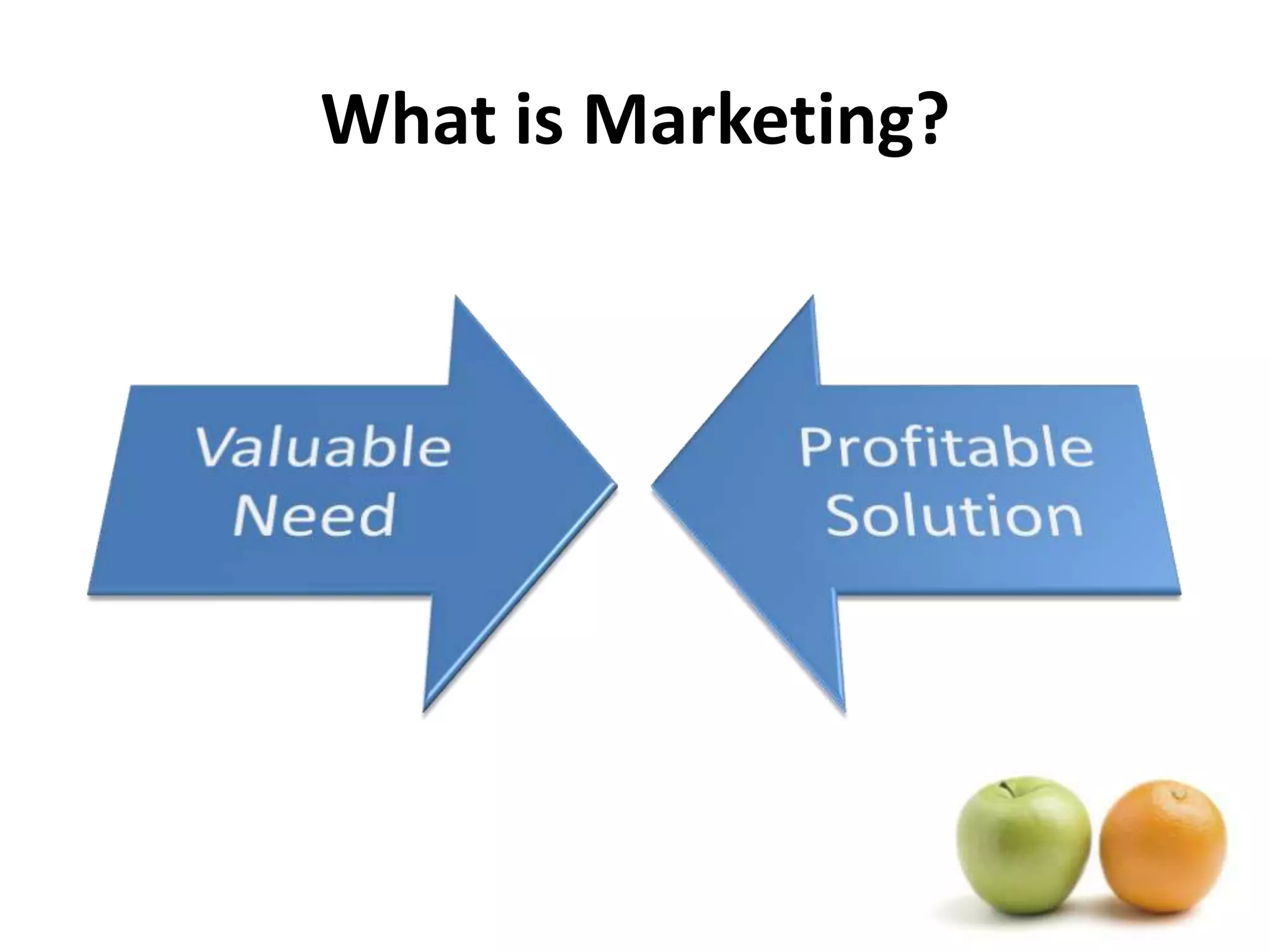
What is Marketing?
Only Desirable Result?
$$$  INCREASED CASH FLOW!  $$$(preferably with less effort)
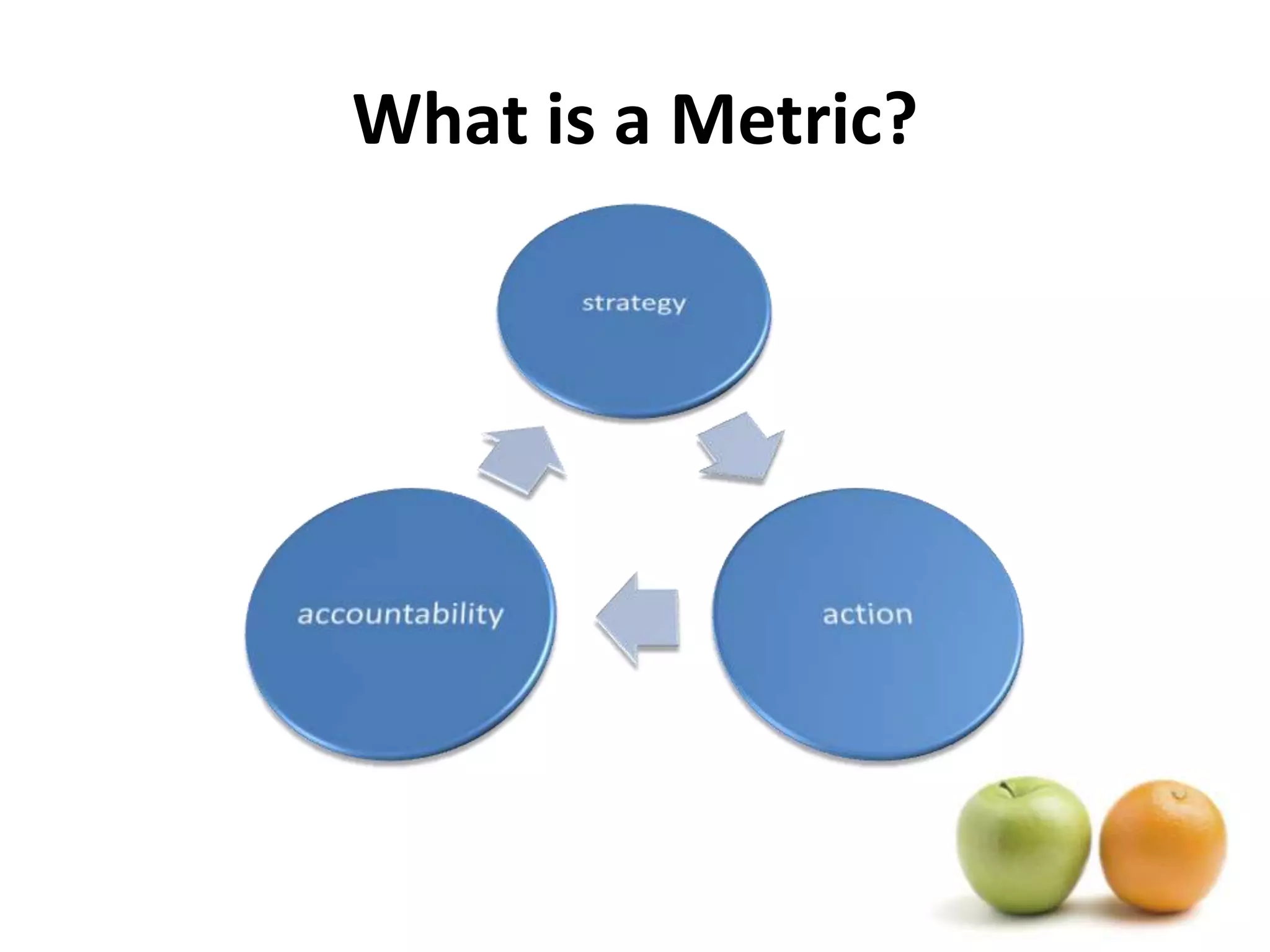
What is a Metric?
Measurements : Metrics ::Tactics : Marketing
What is a Metric?What you measure, not the measureSet against benchmarks, not a benchmarkHistorical, not a forecast
Metric CriteriaMetrics drive business results. Metrics reflect business results. Metrics are something you can influence. Metrics are measured accurately. Metrics are measured consistently. Metrics are measured cost effectively. Key stakeholders agree that key metrics meet these criteria.
How do I use metrics?Always support strategyDefine what to measure (create framework)Compare against past performanceCompare against benchmarksCompare against future goals
The Keys to MetricsOnly a fewCost effective to measureStart at first controlled stepEnd at cash flowShould TELL you something meaningful
#1 Marketing Metric?
Sales
This metric is not enough.
#2 Marketing Metric?
Cash in Pocket
This metric is not enough either.
The point?
No one metric can do it all.
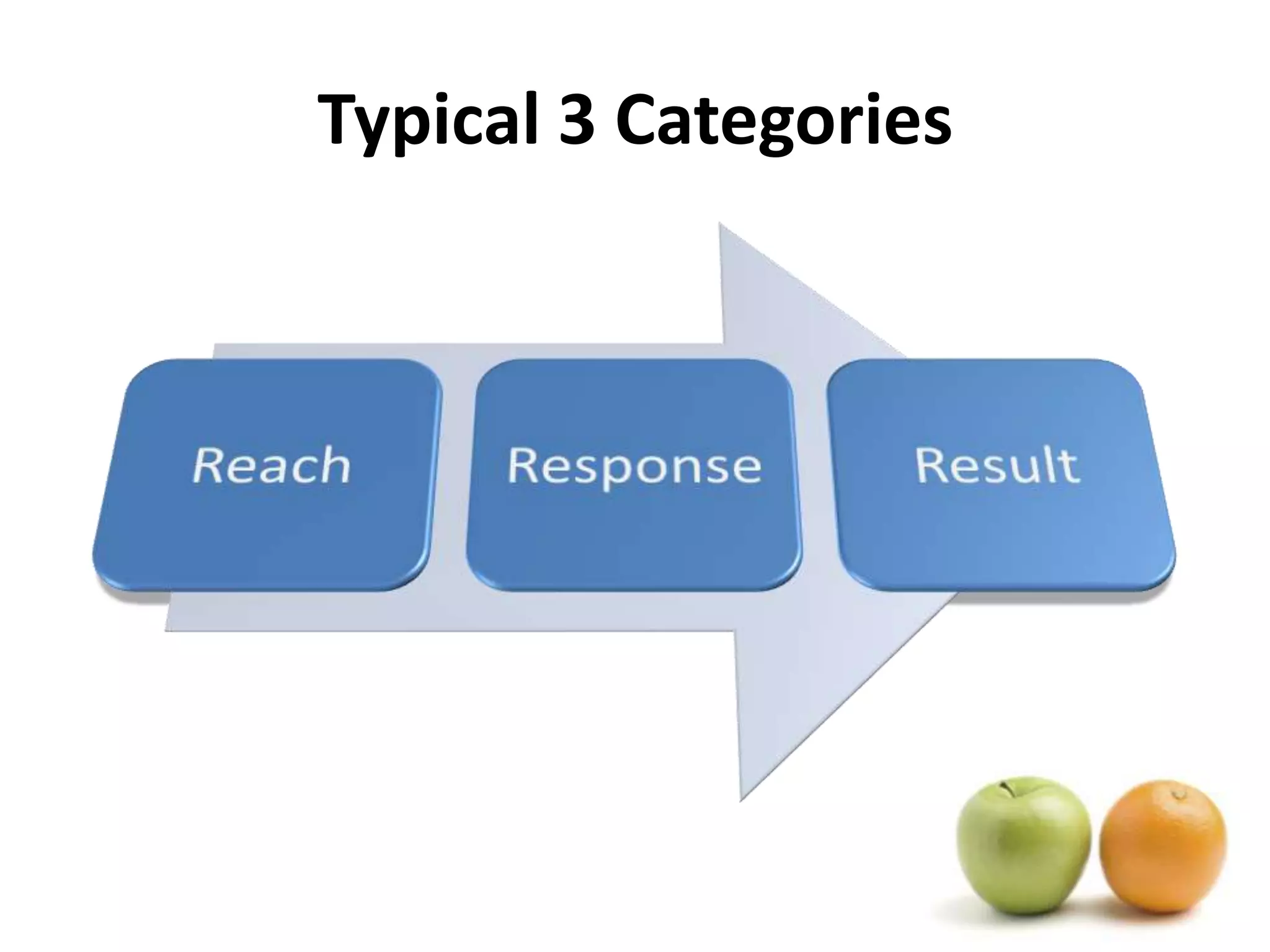
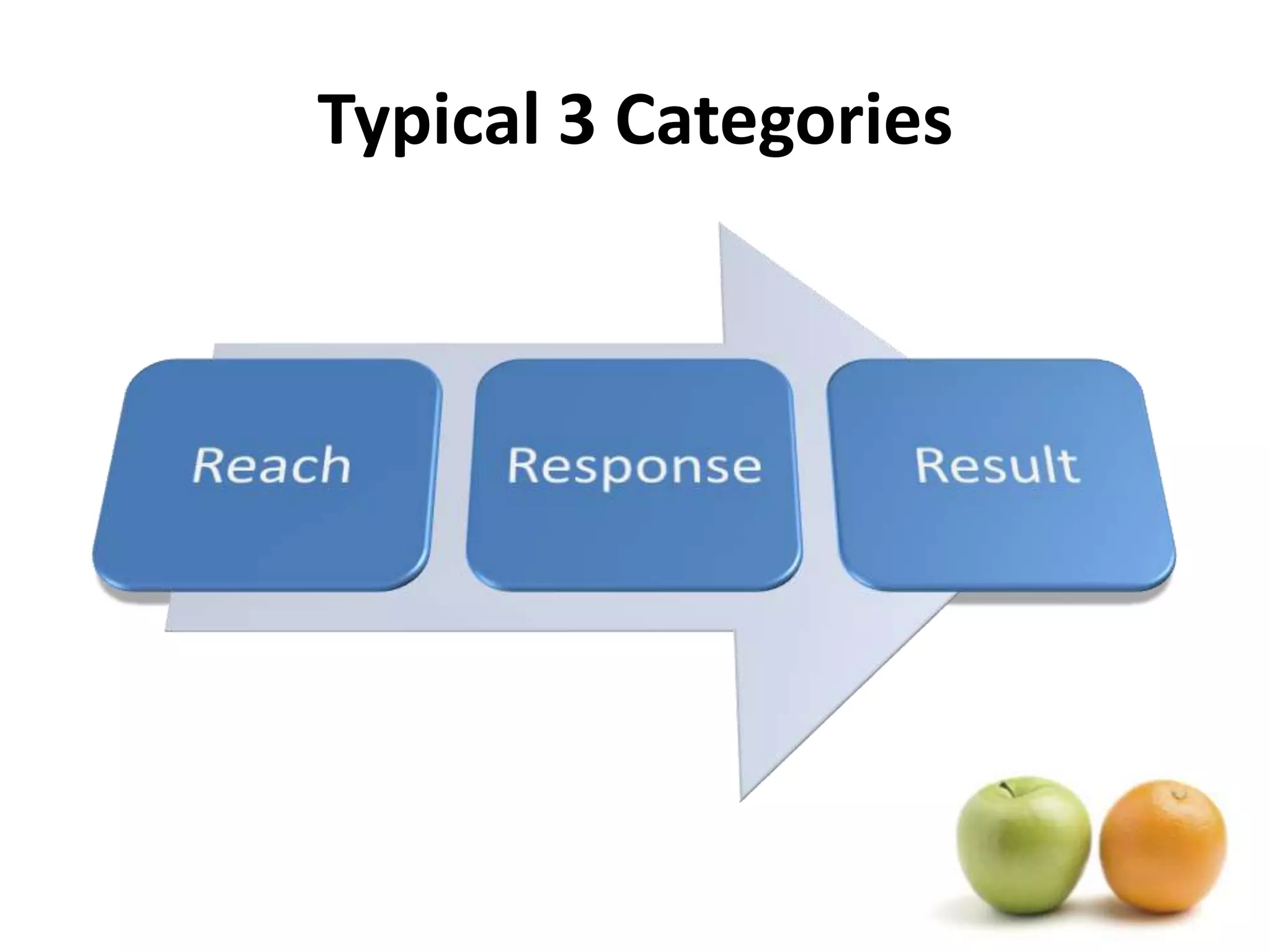
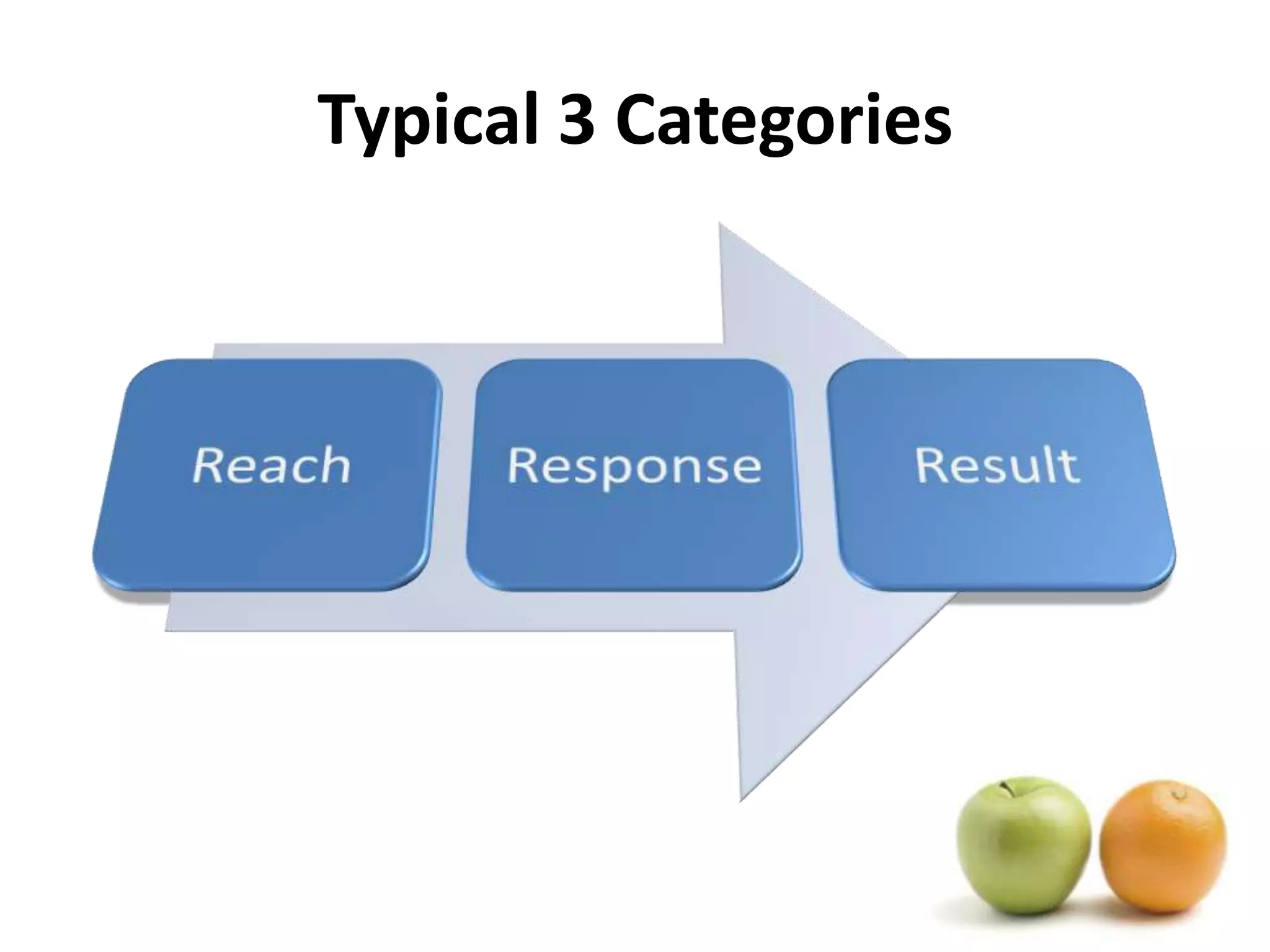
Typical 3 Categories
Question…
If we absolutely had to pick one, what would be the most important marketing metric for determining value (results)?
Price.
Raising prices solves other issues.
Raising prices is in your control.
Need a reason to raise prices?
How about three?
#1.  PPI +3.9% every year10-year average annual growth
CPI only +2.8%10-year average annual growth
#2.  Compensation +3.4% every year10-year average annual growth
Employer contributions to health premiums +8.8% (single) to +9.2% (family)
#3.  Only 3% separates the average US profitable and unprofitable transaction.
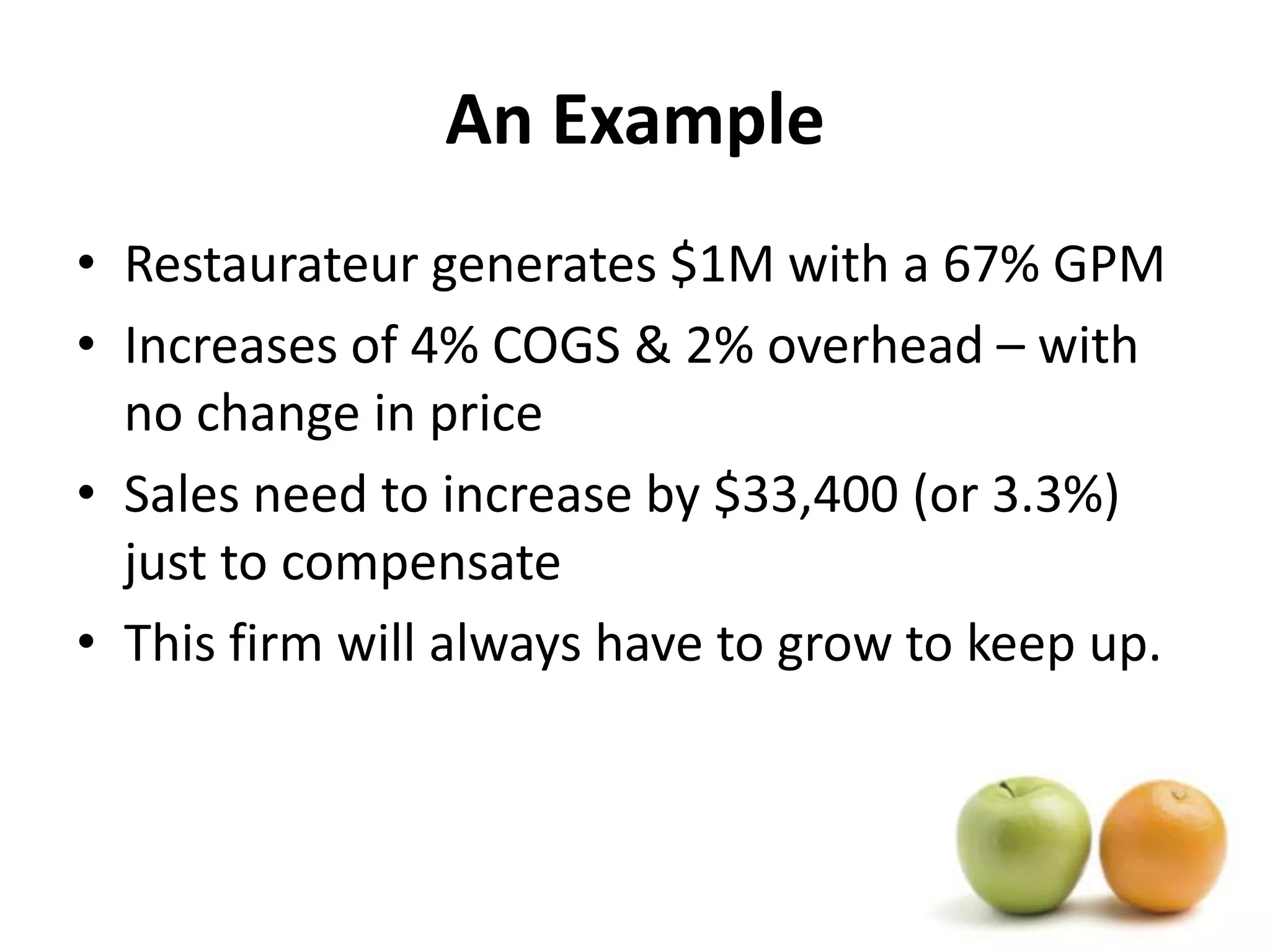
An ExampleRestaurateur generates $1M with a 67% GPMIncreases of 4% COGS & 2% overhead – with no change in priceSales need to increase by $33,400 (or 3.3%) just to compensateThis firm will always have to grow to keep up.
Raising prices is in your control.
How?
Focus on serving your best 5% ...rather than 5% of everyone.
Provide that 5% killer customer service.
Less is more.
The point?
Better (financial) results, less effort.
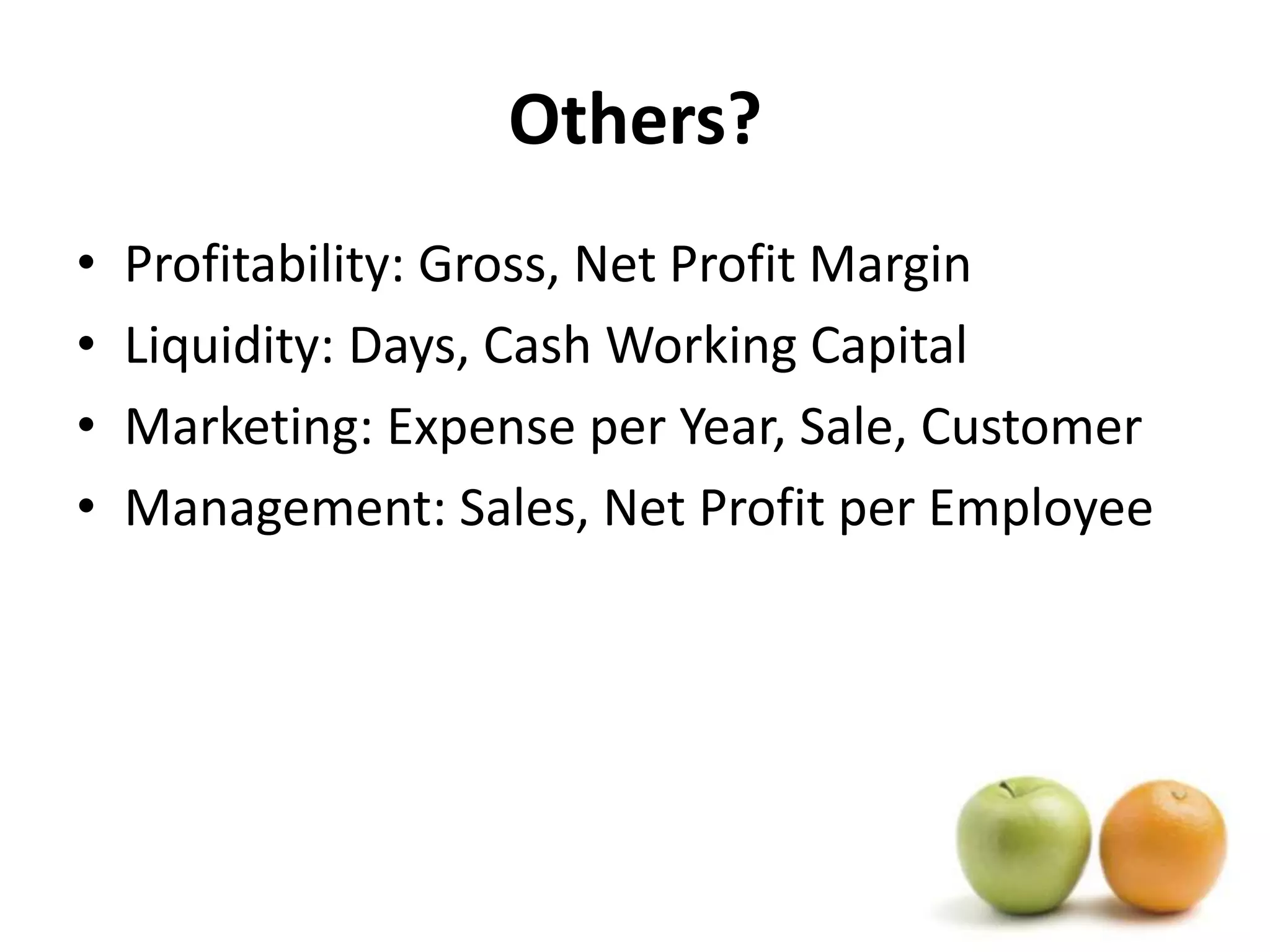
Others?Profitability: Gross, Net Profit MarginLiquidity: Days, Cash Working CapitalMarketing: Expense per Year, Sale, CustomerManagement: Sales, Net Profit per Employee
Typical 3 Categories
Let’s back up for a second and talk about “reach.”
#1 reach metric?
Website pageviews
So, what should we measure?
Typical 3 Categories
Response, not reach.
Response requires a goal.
“Reach” cannot close profitable sales.
Response (possibly) can.
Big Biz:  Our radio ad reached an audience of 500,000.
Small Biz:  Of the 500,000 reached, 50 responded.
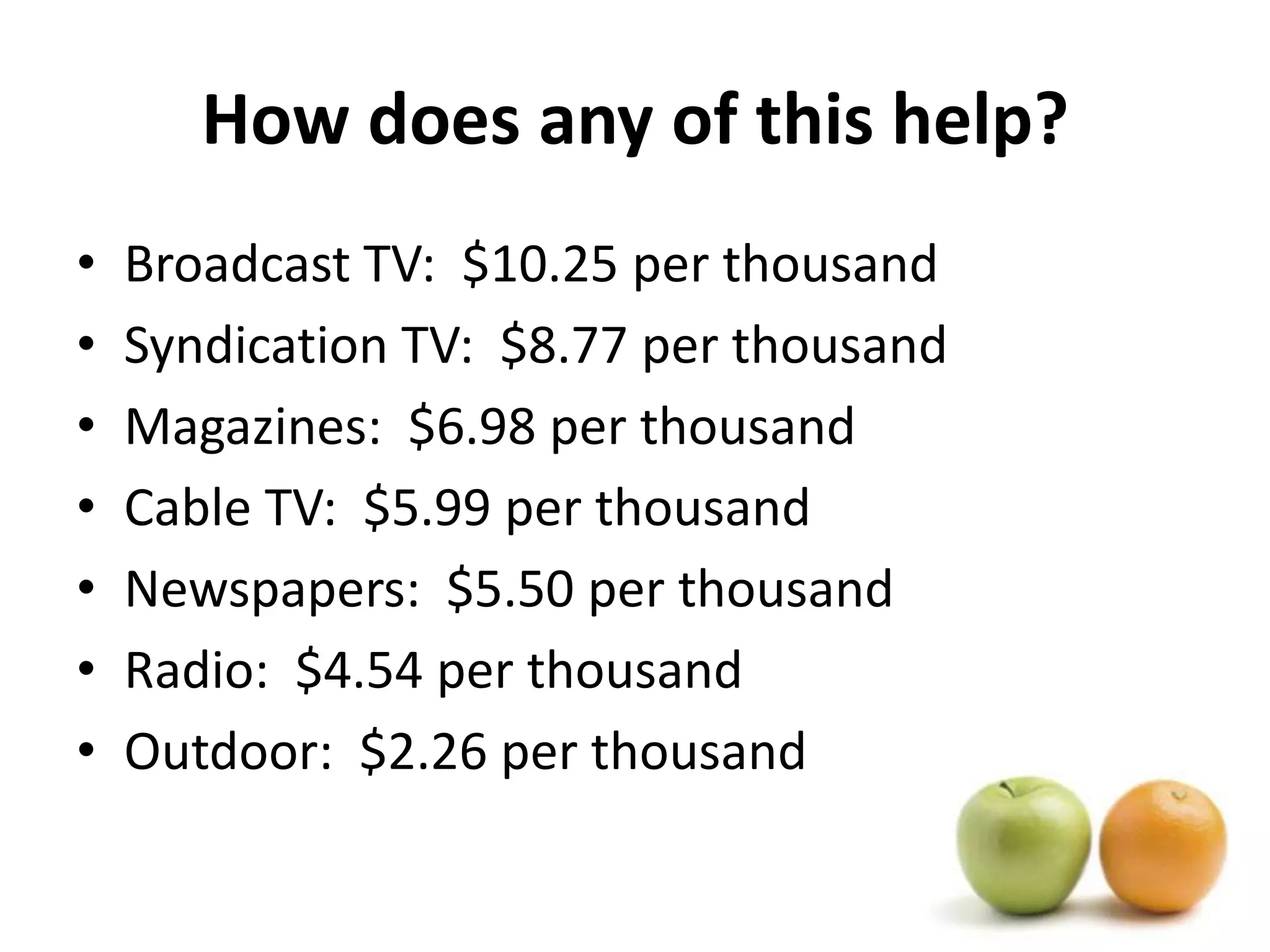
How does any of this help?Broadcast TV:  $10.25 per thousandSyndication TV:  $8.77 per thousandMagazines:  $6.98 per thousandCable TV:  $5.99 per thousandNewspapers:  $5.50 per thousandRadio:  $4.54 per thousandOutdoor:  $2.26 per thousand
Where to invest?
In response!
Response Metrics are Endless
Focus First, then Split
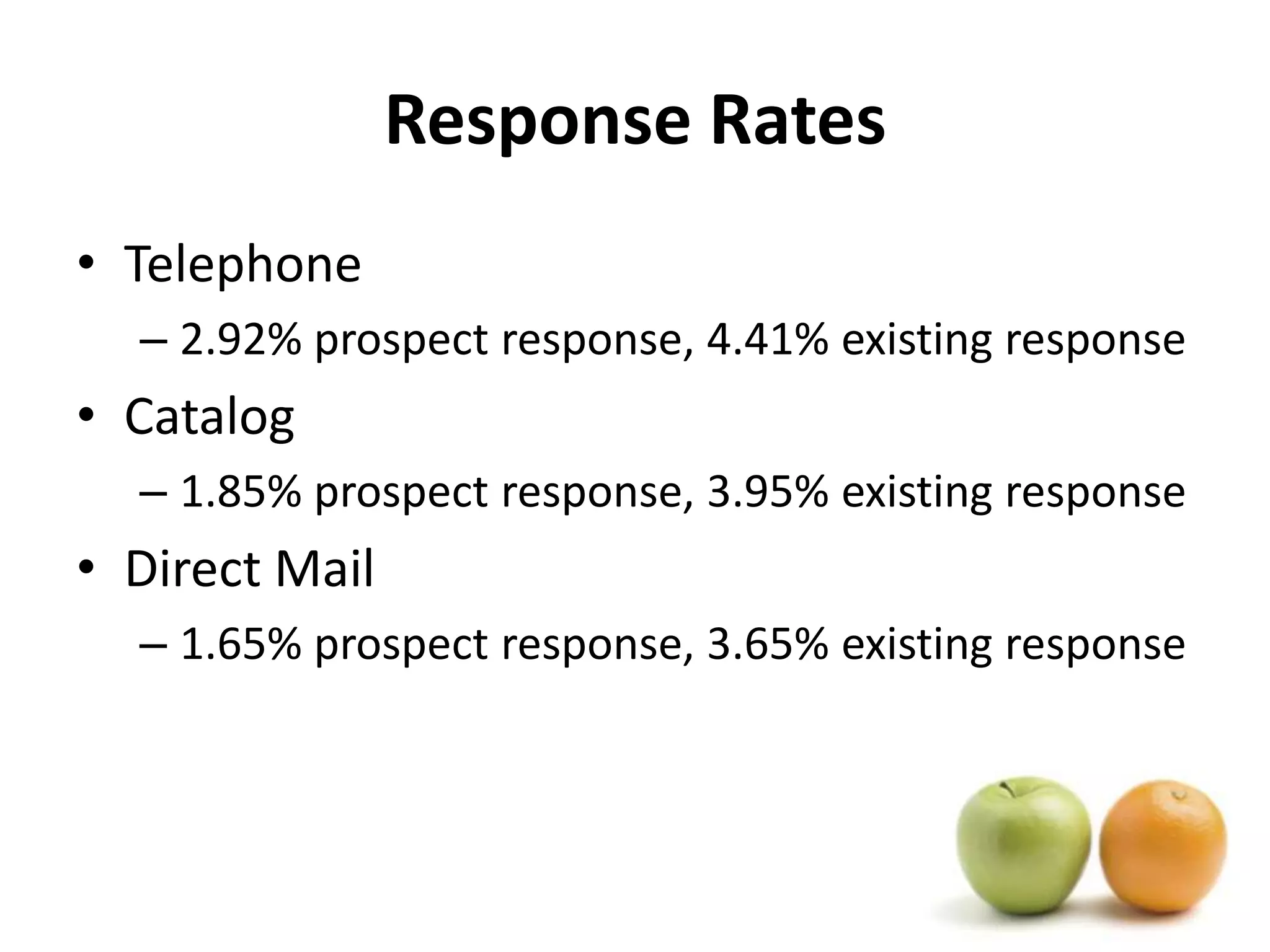
Response RatesTelephone2.92% prospect response, 4.41% existing responseCatalog1.85% prospect response, 3.95% existing responseDirect Mail1.65% prospect response, 3.65% existing response
How to Fix ProblemsAcknowledge you will screw upTie earnings to employees, not last yearThink today like you fired your marketing firm yesterdayStop trying to be like everyone elseDo less, create more MEASUREABLE impact
To RecapFocus on cash flowWe’re only doing this for one reasonThere is no one metricPrice is closeMeasure customer response, then impact on cash flowReach is only a number, not a result
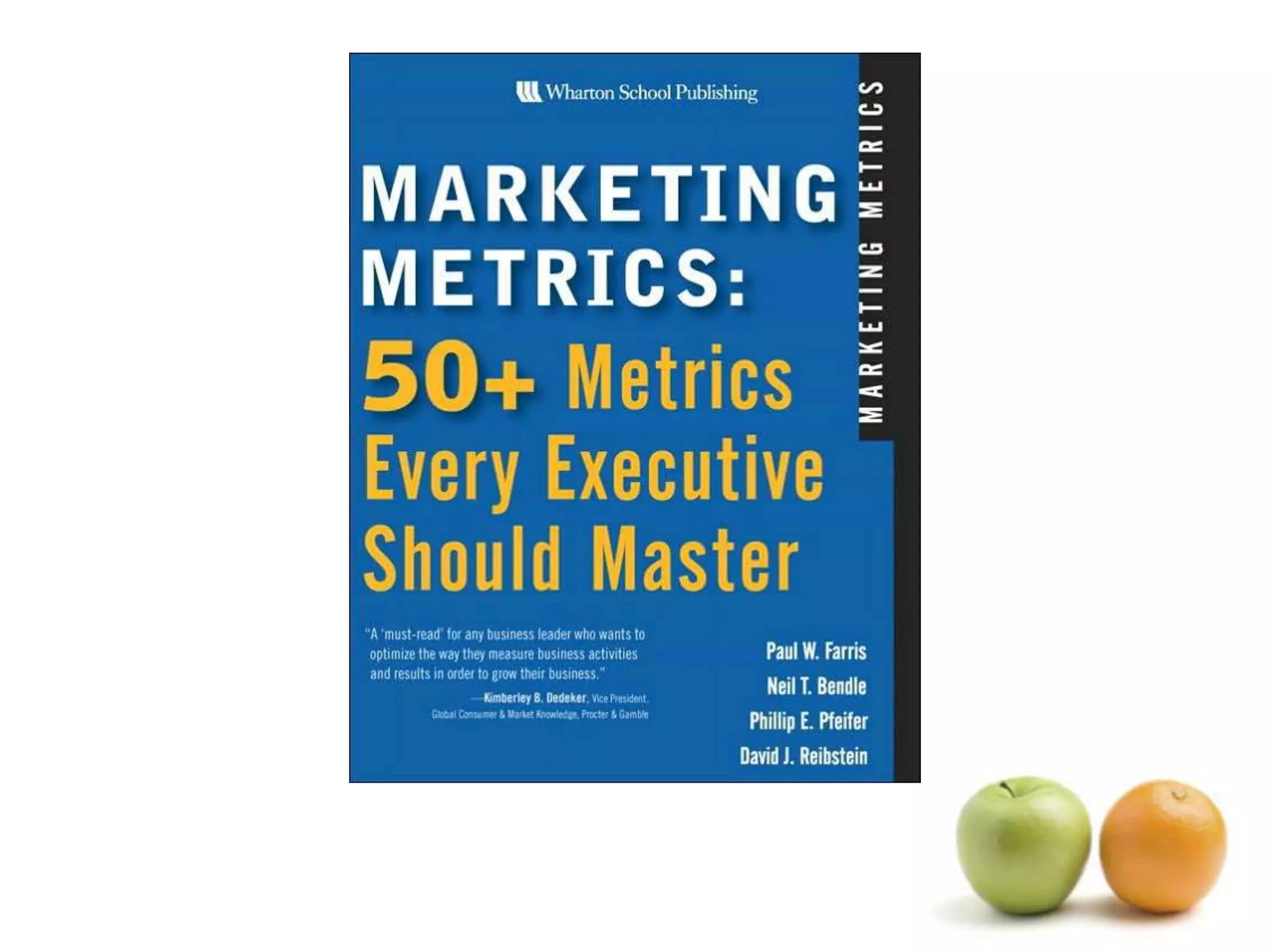
If I wanted to read just one marketing metrics book, it should be…
 Thank you!

Marketing Metrics

Editor's Notes

  • #3 Valuable = Willing and Able to pay for
  • #6 Ability to define a desired resultAbility to influence that resultAbility to measure your influence
  • #7 Metrics are a framework to help us understand the world
  • #9 Source: MarketingProfs.com
  • #10 Metric = a standard of measurement, not the measure itself!
  • #11 Causation, not correlation. (i.e. I believe all tall people I’ve met are smarter than short people. Everyone 5’6” raise your hands. Look around. What you will see is the “tall” population… and that I’m an idiot.)Avoid decision paralysisA wink is not one of the four bases, have to bat first.We’ll never know if that action was good or bad without cash exchanging hands.Paying $3000 to know that “brand recognition” is up 3 points is a waste of money. Ditto for number of media mentions.
  • #14 I can make more sales in a number of ways, most tend to hurt profitability.
  • #17 I can put more cash in my pocket by increasing profitable sales. Or selling assets. Or licensing IP. Or refinancing debt. Or raising new equity capital. Or working more than one job.
  • #20 Result = Value
  • #22 One metric that covers all areas.
  • #23 The price measure tells us two things:Costs of goods sold management.Value to the market.
  • #24 Increases revenue, allows you to extend credit, increases margins, increases perceived value, allows a few screw-ups here and there, etc.
  • #25 Reducing costs may not be.
  • #26 How about three?
  • #28 Consultants – office supplies, printing, utilities, gas, food, etc.
  • #32 Average firm resets prices only every 36 months.
  • #33 3-4 tickets/day
  • #34 Sales increases may not be.Candy, on average, has increased $0.01/year since the 70’s.What money savings is had from a consultant with “less overhead” than the “big guys”?
  • #38 Raising prices will naturally trim unprofitable customers.
  • #40 Not talking about pricing out of the market, or not gaining a scalable advantage, just value to the market.Example: Sell to Wal-Mart, every year your price is moved down – and you take it. You deserve to go out of business.
  • #42 Result = Value
  • #43 There is a problem with “reach” – we do not control it!
  • #45 Assumed correlation, not causation. (pageviews don’t magically, or even formulaically, equal sales) This would be like measuring how many times we appeared in search results and extrapolating some meaning from that #.
  • #47 Result = Value
  • #48 Who? What? When? Where? Why? How?
  • #49 Who? What? When? Where? Why? How?
  • #50 What is “share of voice”? Too many variables…
  • #52 Good for Coca-Cola, no control for us
  • #53 Good for Small Business, we can do something starting with response
  • #54 Source: eMarketerWhat did we talk about when addressing raising prices?
  • #59 E-mail: $244.69 per thousand prospects, $183.66 per thousand existing (MarketingProfs)35.7% of online budget (MarketingProfs)8.56%(DMA)/22.4% (Bronto) prospect open rate, 14.92% existing open rate (DMA)5.57% (DMA)/4.4% (Bronto) prospect clickthrough rate, 9.36% existing clickthrough rate (DMA)3.15% prospect conversion rate (DMA), 5.26% existing conversion rate (DMA)Telephone2.92% prospect response, 4.41% existing responseCatalog1.85% prospect response, 3.95% existing responseDirect Mail1.65% prospect response, 3.65% existing responseSEO & Paid Search33% of online budget (DMA)Cost per click averages $1.56-$1.98 (DMA)