BISHAL NASKAR, ROLL NO.: 11
BISTI BORAH, ROLL NO.:12
B.VENUEGOPAL, ROLL NO.:13
DEBAL ROY, ROLL NO.:14
DEBASMITA GHATAK.:15
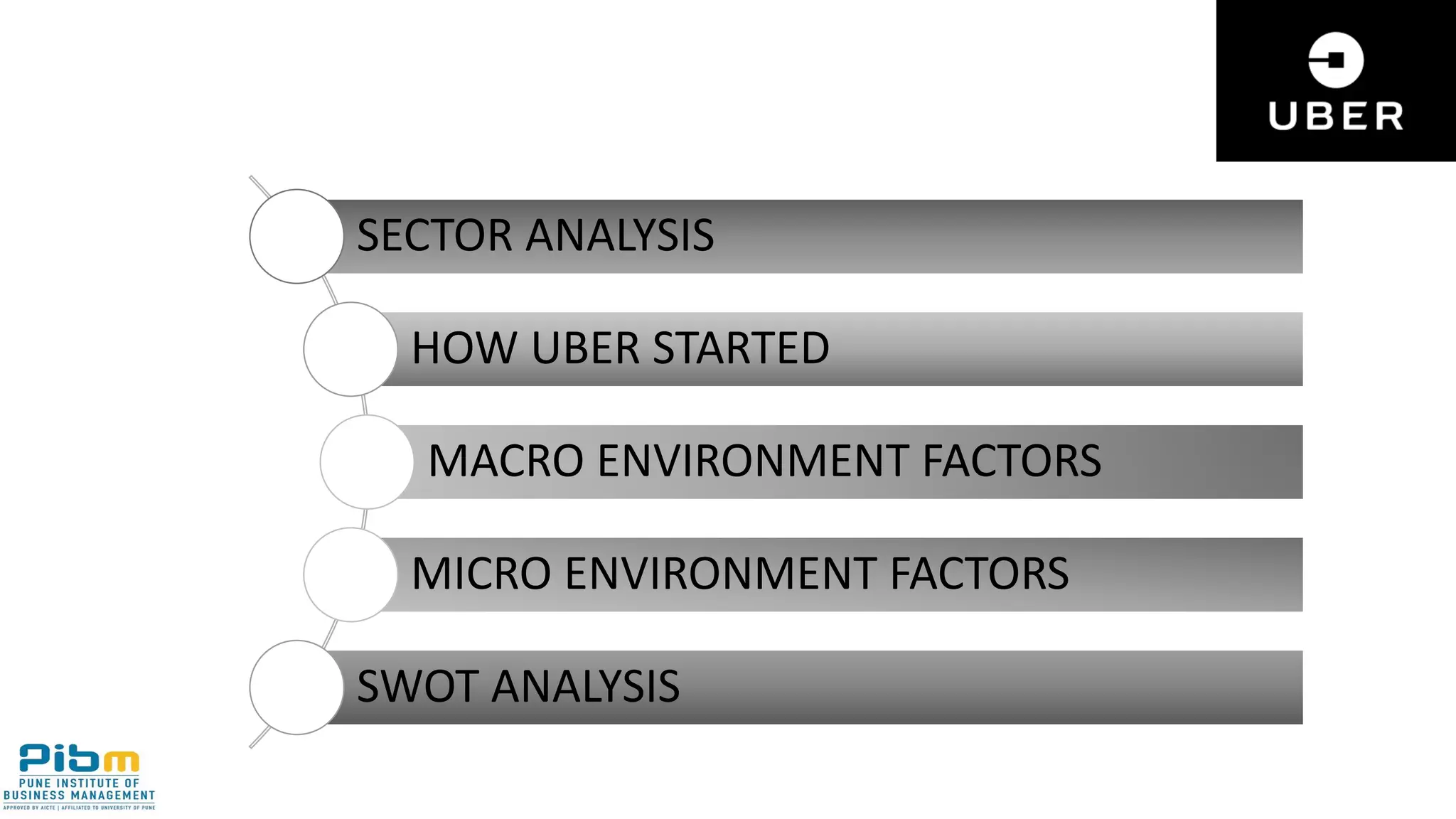
SECTOR ANALYSIS
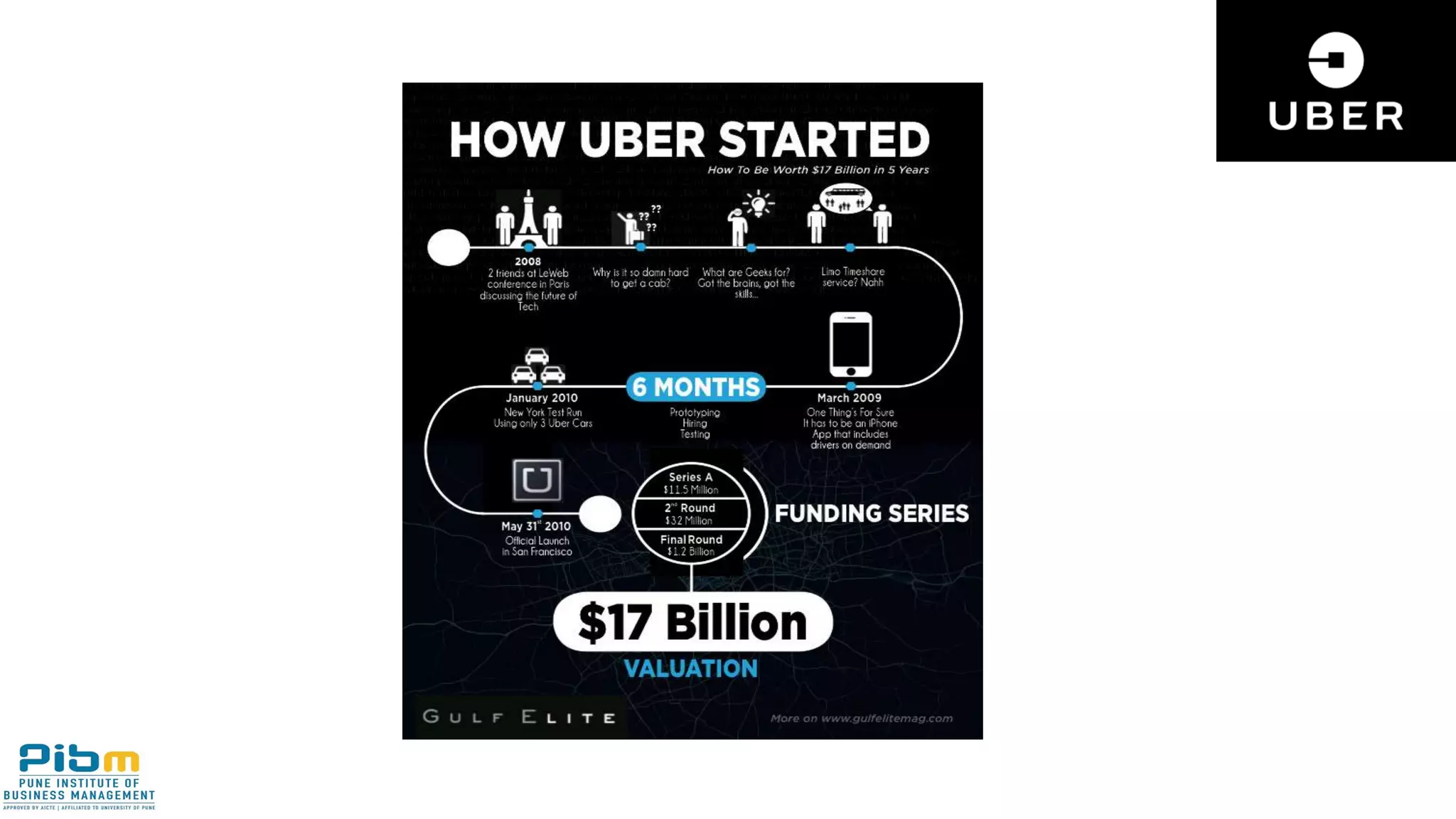
HOW UBER STARTED
MACRO ENVIRONMENT FACTORS
MICRO ENVIRONMENT FACTORS
SWOT ANALYSIS
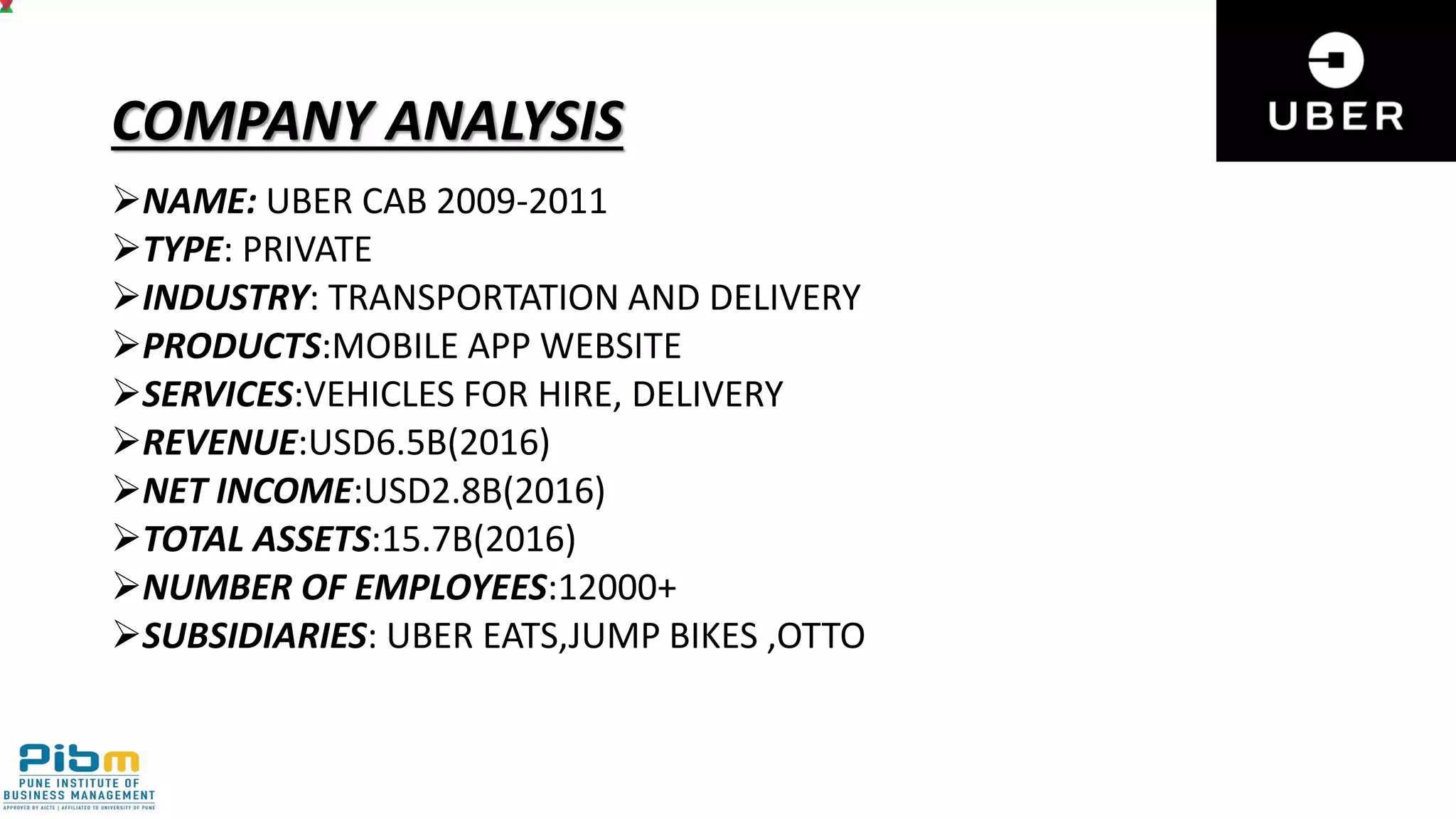
COMPANY ANALYSIS
NAME: UBER CAB 2009-2011
TYPE: PRIVATE
INDUSTRY: TRANSPORTATION AND DELIVERY
PRODUCTS:MOBILE APP WEBSITE
SERVICES:VEHICLES FOR HIRE, DELIVERY
REVENUE:USD6.5B(2016)
NET INCOME:USD2.8B(2016)
TOTAL ASSETS:15.7B(2016)
NUMBER OF EMPLOYEES:12000+
SUBSIDIARIES: UBER EATS,JUMP BIKES ,OTTO
MACRO ENVIRONMENT FACTORS
 SOCIO CULTURAL: Word of mouth spread
awareness quickly
 POLITICAL FACTORS: To provide
documentaion
 ECONOMIC FACTORS: Sharing physical or
intellectual resources
 TECHNOLOGICAL FACTORS: Spread through
social media , usage of 4G network
MICRO ENVIRONMENT FACTORS
 COMPERTITORS: OLA, CAREEM, DIDI CHUXING,
LYFT, GRAB
 PUBLICS: Local public, General public, Internal
public, Media public
 CUSTOMERS: Customer are those who are out of
there home and on and about
 SUPPLIERS: Owners of the cars and Drivers
PORTER’S FIVE FORCE MODEL
BARGANING POWER
OF SUPPLIERS
THREAT OF NEW
ENTRANTS
BARGANIG POWER OF
BUYERS
THREAT OF
SUBSTITUTES
INDUSTRY
RIVALRY
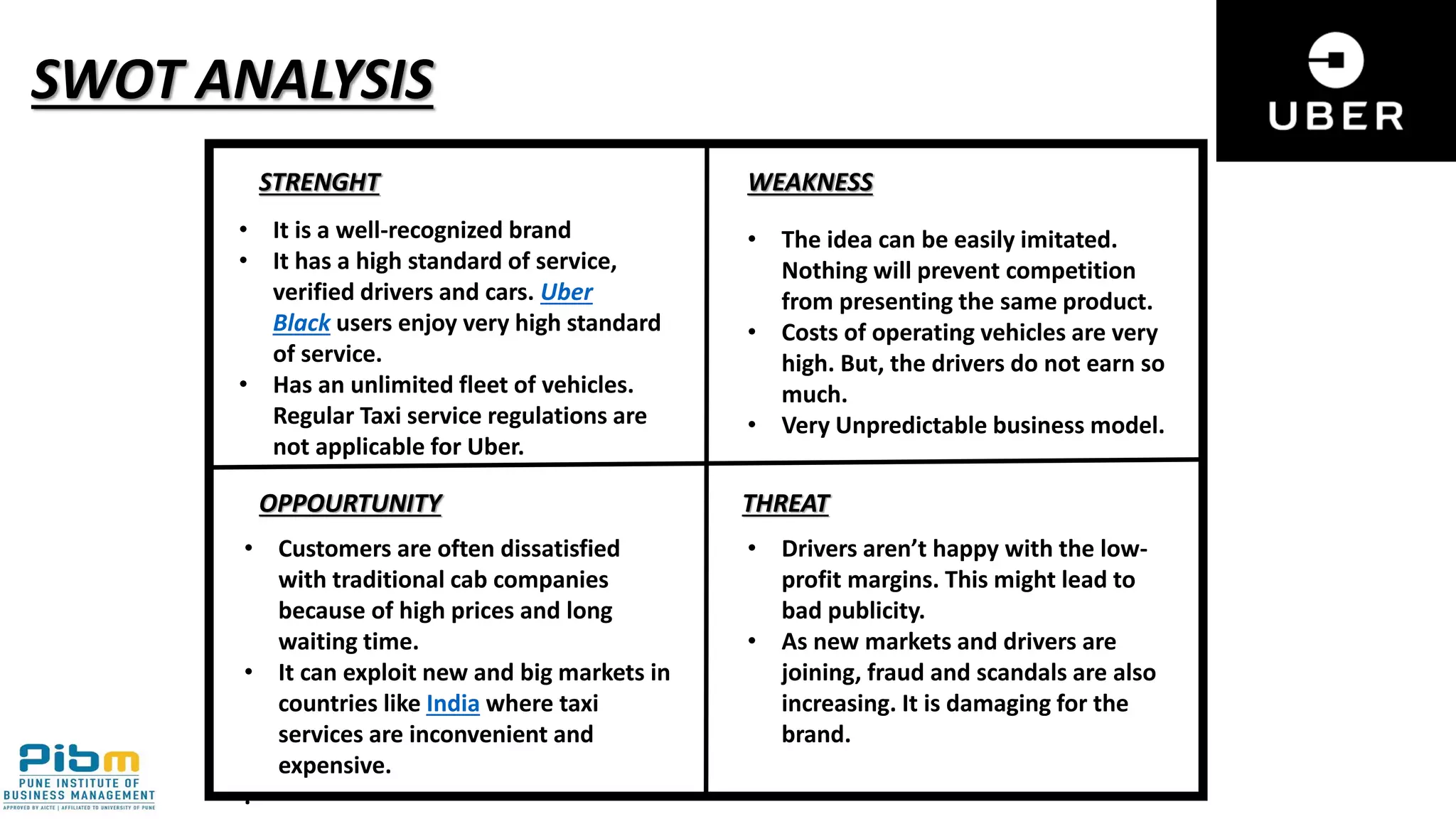
SWOT ANALYSIS
STRENGHT WEAKNESS
OPPOURTUNITY THREAT
• It is a well-recognized brand
• It has a high standard of service,
verified drivers and cars. Uber
Black users enjoy very high standard
of service.
• Has an unlimited fleet of vehicles.
Regular Taxi service regulations are
not applicable for Uber.
• The idea can be easily imitated.
Nothing will prevent competition
from presenting the same product.
• Costs of operating vehicles are very
high. But, the drivers do not earn so
much.
• Very Unpredictable business model.
• Customers are often dissatisfied
with traditional cab companies
because of high prices and long
waiting time.
• It can exploit new and big markets in
countries like India where taxi
services are inconvenient and
expensive.
.
• Drivers aren’t happy with the low-
profit margins. This might lead to
bad publicity.
• As new markets and drivers are
joining, fraud and scandals are also
increasing. It is damaging for the
brand.
THANK YOU

MARKETING ENVIRONMENT OF UBER

  • 1.
    BISHAL NASKAR, ROLLNO.: 11 BISTI BORAH, ROLL NO.:12 B.VENUEGOPAL, ROLL NO.:13 DEBAL ROY, ROLL NO.:14 DEBASMITA GHATAK.:15
  • 2.
    SECTOR ANALYSIS HOW UBERSTARTED MACRO ENVIRONMENT FACTORS MICRO ENVIRONMENT FACTORS SWOT ANALYSIS
  • 3.
    COMPANY ANALYSIS NAME: UBERCAB 2009-2011 TYPE: PRIVATE INDUSTRY: TRANSPORTATION AND DELIVERY PRODUCTS:MOBILE APP WEBSITE SERVICES:VEHICLES FOR HIRE, DELIVERY REVENUE:USD6.5B(2016) NET INCOME:USD2.8B(2016) TOTAL ASSETS:15.7B(2016) NUMBER OF EMPLOYEES:12000+ SUBSIDIARIES: UBER EATS,JUMP BIKES ,OTTO
  • 5.
    MACRO ENVIRONMENT FACTORS SOCIO CULTURAL: Word of mouth spread awareness quickly  POLITICAL FACTORS: To provide documentaion  ECONOMIC FACTORS: Sharing physical or intellectual resources  TECHNOLOGICAL FACTORS: Spread through social media , usage of 4G network
  • 6.
    MICRO ENVIRONMENT FACTORS COMPERTITORS: OLA, CAREEM, DIDI CHUXING, LYFT, GRAB  PUBLICS: Local public, General public, Internal public, Media public  CUSTOMERS: Customer are those who are out of there home and on and about  SUPPLIERS: Owners of the cars and Drivers
  • 7.
    PORTER’S FIVE FORCEMODEL BARGANING POWER OF SUPPLIERS THREAT OF NEW ENTRANTS BARGANIG POWER OF BUYERS THREAT OF SUBSTITUTES INDUSTRY RIVALRY
  • 8.
    SWOT ANALYSIS STRENGHT WEAKNESS OPPOURTUNITYTHREAT • It is a well-recognized brand • It has a high standard of service, verified drivers and cars. Uber Black users enjoy very high standard of service. • Has an unlimited fleet of vehicles. Regular Taxi service regulations are not applicable for Uber. • The idea can be easily imitated. Nothing will prevent competition from presenting the same product. • Costs of operating vehicles are very high. But, the drivers do not earn so much. • Very Unpredictable business model. • Customers are often dissatisfied with traditional cab companies because of high prices and long waiting time. • It can exploit new and big markets in countries like India where taxi services are inconvenient and expensive. . • Drivers aren’t happy with the low- profit margins. This might lead to bad publicity. • As new markets and drivers are joining, fraud and scandals are also increasing. It is damaging for the brand.
  • 9.