Marketing
environment
External
marketing
environment
Micro
environment
Macro
environment
Internal
marketing
environment
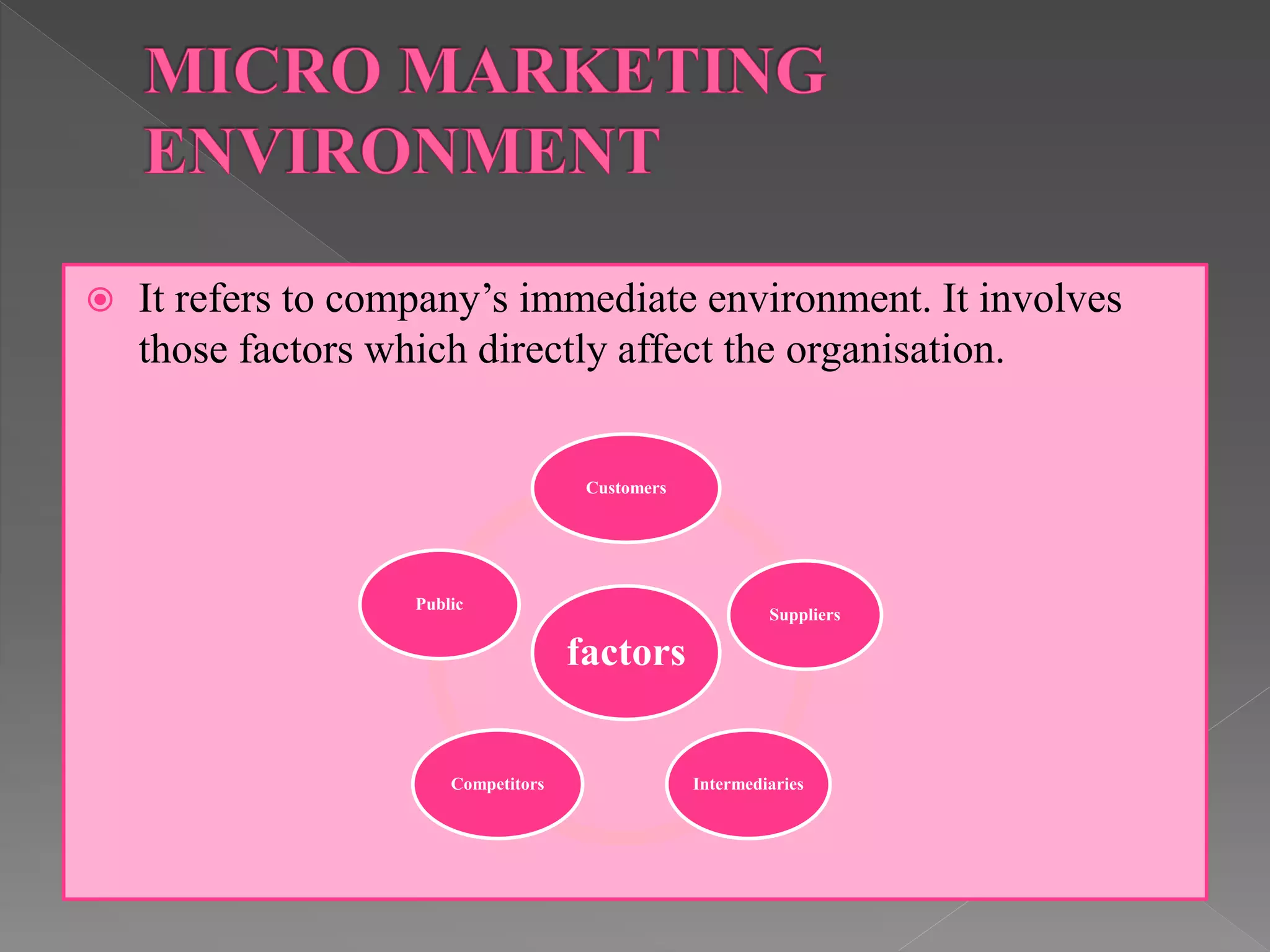
 It refers to company’s immediate environment. It involves
those factors which directly affect the organisation.
factors
Customers
Suppliers
IntermediariesCompetitors
Public
 Ultimate customers
 Industrial customers
 Resellers
 Government customers
 Foreign customers
 Resellers
 Physical distribution
firms
 Marketing service
agencies
 Financial intermediaries
The company should go
for:-
 Developing
specifications
 Searching potential
suppliers
 Identifying & analysing
suppliers
 Choose supplier
 Financial public
 Media public
 Government public
 Citizen action public
 Internal public
 Local public
 General public
 Macro environment refers to those factors which
are external to the company and are quite
uncontrollable.
 Specific examples of macro environment
influences include changes in interest rates,
changes in cultural tastes, disastrous weather, or
government regulations.
Economic environment
Demographic environment
Social and cultural environment
Political and legal environment
Technological environment
Natural environment
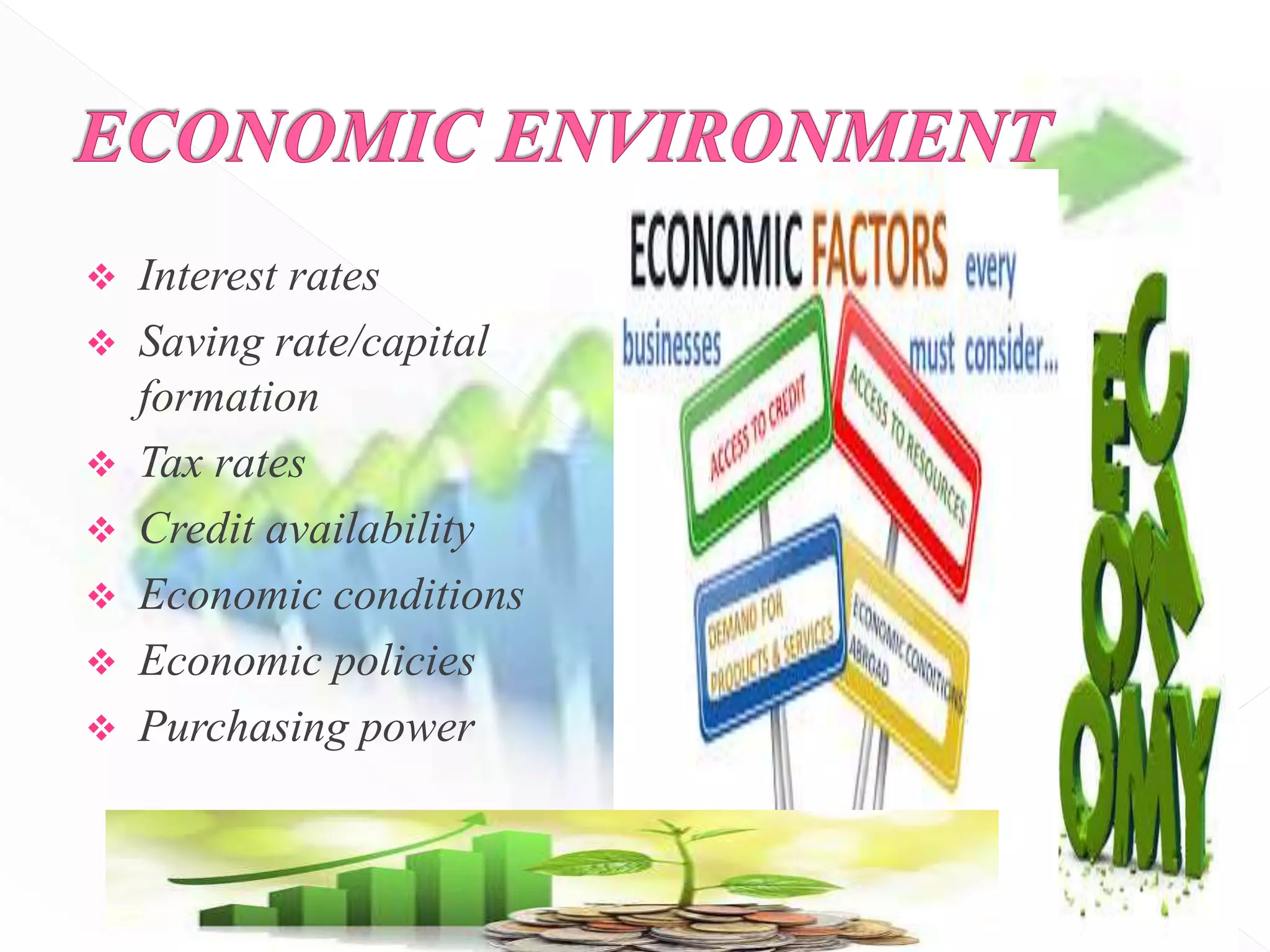
 Interest rates
 Saving rate/capital
formation
 Tax rates
 Credit availability
 Economic conditions
 Economic policies
 Purchasing power
 Size of population
 Age distribution
 Literacy level
 Household pattern
 Income group
 Gender
 Marital status
 Occupation and
profession
 Religion
 Languages
 Food habits
 Dress code
 Festivals, traditions
and norms
 Values
 Beliefs and attitudes
 Friends, family,
reference group, peers
 Political stability
 Government policies
 Social legislations and
regulations
 Quotas and taxes
 Legislations related to
marketing specifically
 Technical know how
 Availability of
technology
 Technological
developments
 Natural resources
 Climate
 Topography of land

Marketing environment - factors