MarketingAutomation
Part -2
Microsoft Dynamics CRM 2016
Managing
Campaigns
In Dynamics CRM, campaigns are used to manage all of the
information and action items for your marketing projects.
Using campaigns, you can track each of the steps in a marketing
project plan and assign them to yourself or others within your
organization.
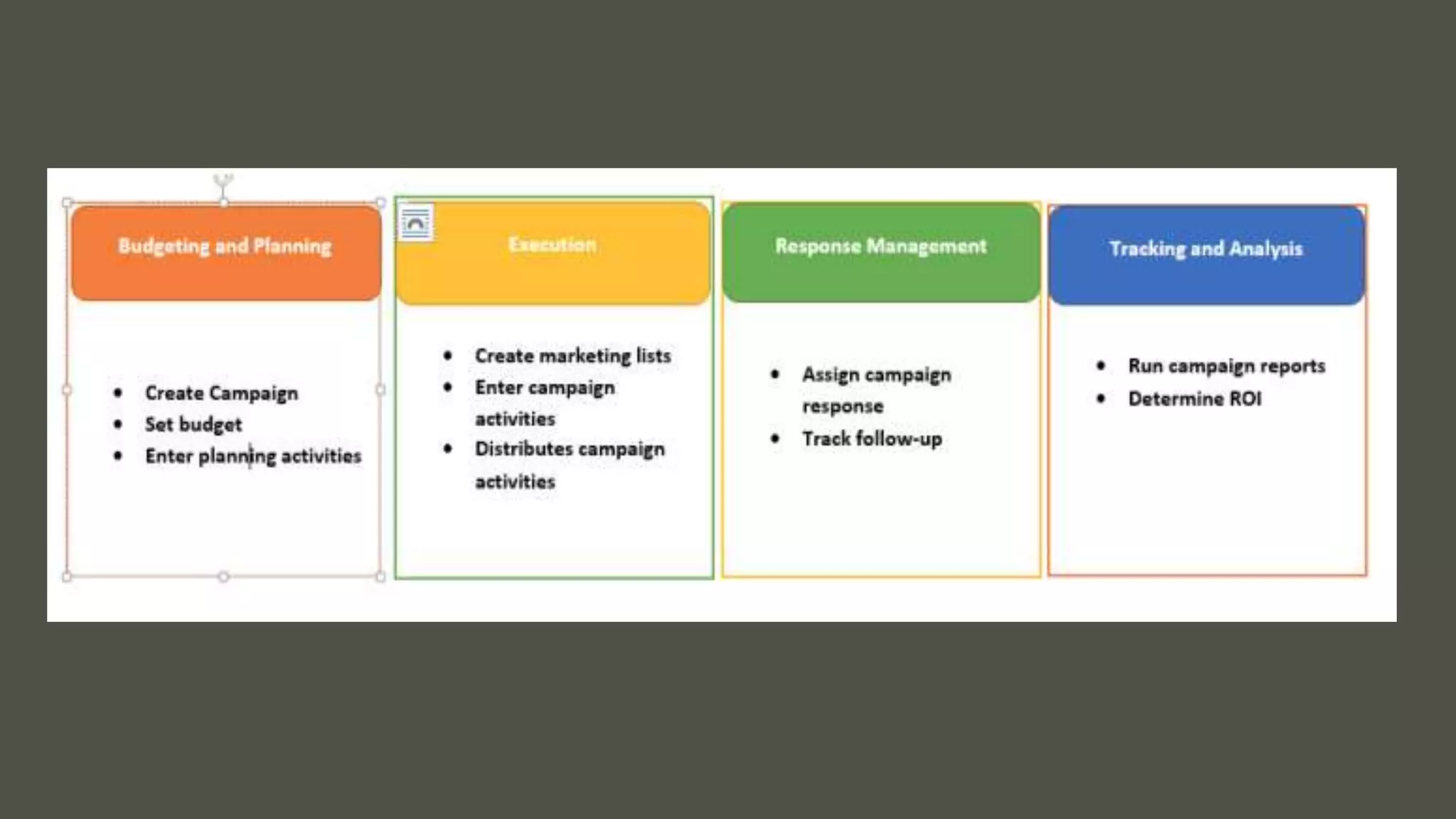
Specific campaign actions can be planned, budgeted, and executed,
including phone calls, e-mails, and letters.
Campaigns can also be associated with items in your product and
sales literature lists so you can easily find all the relevant campaigns
for these items.
Creating
Campaign
You can create a new campaign by clicking the new button in the Ribbon
menu, or you can use an existing campaign or campaign template to create
a new campaign. Using past campaigns or campaign templates provides a
time-saving shortcut to reuse complex campaign plans.
To create your first campaign, navigate to the campaign list in Dynamics
CRM and click the new button on the Ribbon menu. Keep in mind that most
of the fields described below can be changed to work with your specific
business process.
You need to understand and use the following fields to utilize the campaign
functionality.
Status Reason: Use this field as an indicator of the current stage of the
campaign.
Campaign Type: Designate the type of campaign using this field. This is an
area where you may want to customize campaigns by adding some other
options in this list
Total Cost of Campaign Activities: This field tracks a running total of the costs
for all of the campaign activities associated with a campaign.
Miscellaneous Costs: If there are other miscellaneous costs for this campaign
not tracked in campaign activities, then enter that amount here.
Total Cost of Campaign: This field is the total of the two fields listed above. It
is calculated whenever the record is saved.
Budget Allocated: Enter the total allocated budget here. Reports are available
that compare your budget to your actual costs for each campaign.
Estimated Revenue: Enter the estimated amount of revenue that the
campaign will generate. Reports are available that will compare the estimated
revenues to actual revenues in the campaign.
When we use
Campaigns
The campaign functionality in Dynamics CRM is most frequently used for
direct marketing campaigns such as e-mail marketing, direct mail, or
telesales.
These types of campaigns readily lend themselves to a CRM tool because they
target a specific list, with a specific message, and drive a specific response.
However, Dynamics CRM can be used to handle virtually any marketing
campaign at all.
Types of campaigns can include the grand opening of a new location, a new
product launch, a press release, search engine marketing, and so on.
Some campaigns can be complex, with multiple customer contacts (for
example, a new product launch may include developing new literature, a
press release, and sending e-mails).
By using Dynamics CRM to manage all of your marketing campaigns, you can
track the full marketing budget in one place.
You can also associate new leads and opportunities directly to campaigns to
measure the ROI of every campaign.
One-off direct marketing campaigns are a great way to start using the
campaign functionality, but you should plan to fully leverage campaigns to
manage all of your marketing projects.
Campaign
Templates
Campaign templates can be created as a way to ensure that a consistent process
is followed in similar campaigns and to save time keying campaign data. You
have the same functionality available when creating a campaign template as you
did when creating a standard campaign.
Creating a campaign template: To create a new blank campaign template,
navigate to the list of campaigns and click the New Template button in the
Ribbon menu. If you want to create a new template based on a previous
campaign or template, then open the campaign form and click the Copy as
Template button in the Ribbon menu. Fill out all the desired information in
the campaign template and add any planning activities and campaign
activities that you would like to include in the template.
Using a campaign template: To use a campaign template, double-click on
the record in the campaign list and then click the Copy as Campaign button in
the Ribbon menu. A copy of the template is created, including all of the
planning activities and campaign activities.
Planning
Activity
Use the list of planning activities as the project plan for your
campaign.Activities in this list can be assigned to yourself or to
other Dynamics CRM users within your organization.As activities
are completed, this view is updated so you can track what is
completed and what remains to be done.
Campaign
Activities
Campaign activities are either paid steps in the campaign management
process (such as professional copy writing) or direct contacts made with
members of your marketing list (such as e-mail campaigns).
The costs that you associate with individual campaign activities are
aggregated and totaled in the Total Cost of Campaign Activities field on the
campaign form.
In addition, you can distribute your campaign activities across the records on
your marketing lists for the campaign to automate direct
communications to leads, contacts, and accounts.
Using
Campaign
Activities
You can create campaign activities for a campaign by navigating to the
campaign activity list for a campaign and clicking the Add New Campaign
Activity button. Use the following fields to get the most out of campaign
activities:
Channel: If your campaign activity will not be distributed to a target
marketing list, then select the Other value for this field (or leave it blank).
Outsource Vendors: If you are working with an outside vendor on this
activity, then you can use this field to select the vendor from among your list
of accounts in Dynamics CRM.
Budget Allocated: This is an optional field that does not total back to the
campaign.
Actual Cost: This budget field that totals back to the campaign record. If you
want to track the actual costs for your campaign, then be sure to enter a cost
here

Marketing Automation - Part 2

  • 1.
  • 2.
    Managing Campaigns In Dynamics CRM,campaigns are used to manage all of the information and action items for your marketing projects. Using campaigns, you can track each of the steps in a marketing project plan and assign them to yourself or others within your organization. Specific campaign actions can be planned, budgeted, and executed, including phone calls, e-mails, and letters. Campaigns can also be associated with items in your product and sales literature lists so you can easily find all the relevant campaigns for these items.
  • 4.
    Creating Campaign You can createa new campaign by clicking the new button in the Ribbon menu, or you can use an existing campaign or campaign template to create a new campaign. Using past campaigns or campaign templates provides a time-saving shortcut to reuse complex campaign plans. To create your first campaign, navigate to the campaign list in Dynamics CRM and click the new button on the Ribbon menu. Keep in mind that most of the fields described below can be changed to work with your specific business process.
  • 5.
    You need tounderstand and use the following fields to utilize the campaign functionality. Status Reason: Use this field as an indicator of the current stage of the campaign. Campaign Type: Designate the type of campaign using this field. This is an area where you may want to customize campaigns by adding some other options in this list Total Cost of Campaign Activities: This field tracks a running total of the costs for all of the campaign activities associated with a campaign. Miscellaneous Costs: If there are other miscellaneous costs for this campaign not tracked in campaign activities, then enter that amount here. Total Cost of Campaign: This field is the total of the two fields listed above. It is calculated whenever the record is saved. Budget Allocated: Enter the total allocated budget here. Reports are available that compare your budget to your actual costs for each campaign. Estimated Revenue: Enter the estimated amount of revenue that the campaign will generate. Reports are available that will compare the estimated revenues to actual revenues in the campaign.
  • 6.
    When we use Campaigns Thecampaign functionality in Dynamics CRM is most frequently used for direct marketing campaigns such as e-mail marketing, direct mail, or telesales. These types of campaigns readily lend themselves to a CRM tool because they target a specific list, with a specific message, and drive a specific response. However, Dynamics CRM can be used to handle virtually any marketing campaign at all. Types of campaigns can include the grand opening of a new location, a new product launch, a press release, search engine marketing, and so on. Some campaigns can be complex, with multiple customer contacts (for example, a new product launch may include developing new literature, a press release, and sending e-mails). By using Dynamics CRM to manage all of your marketing campaigns, you can track the full marketing budget in one place. You can also associate new leads and opportunities directly to campaigns to measure the ROI of every campaign. One-off direct marketing campaigns are a great way to start using the campaign functionality, but you should plan to fully leverage campaigns to manage all of your marketing projects.
  • 7.
    Campaign Templates Campaign templates canbe created as a way to ensure that a consistent process is followed in similar campaigns and to save time keying campaign data. You have the same functionality available when creating a campaign template as you did when creating a standard campaign. Creating a campaign template: To create a new blank campaign template, navigate to the list of campaigns and click the New Template button in the Ribbon menu. If you want to create a new template based on a previous campaign or template, then open the campaign form and click the Copy as Template button in the Ribbon menu. Fill out all the desired information in the campaign template and add any planning activities and campaign activities that you would like to include in the template. Using a campaign template: To use a campaign template, double-click on the record in the campaign list and then click the Copy as Campaign button in the Ribbon menu. A copy of the template is created, including all of the planning activities and campaign activities.
  • 8.
    Planning Activity Use the listof planning activities as the project plan for your campaign.Activities in this list can be assigned to yourself or to other Dynamics CRM users within your organization.As activities are completed, this view is updated so you can track what is completed and what remains to be done.
  • 9.
    Campaign Activities Campaign activities areeither paid steps in the campaign management process (such as professional copy writing) or direct contacts made with members of your marketing list (such as e-mail campaigns). The costs that you associate with individual campaign activities are aggregated and totaled in the Total Cost of Campaign Activities field on the campaign form. In addition, you can distribute your campaign activities across the records on your marketing lists for the campaign to automate direct communications to leads, contacts, and accounts.
  • 10.
    Using Campaign Activities You can createcampaign activities for a campaign by navigating to the campaign activity list for a campaign and clicking the Add New Campaign Activity button. Use the following fields to get the most out of campaign activities: Channel: If your campaign activity will not be distributed to a target marketing list, then select the Other value for this field (or leave it blank). Outsource Vendors: If you are working with an outside vendor on this activity, then you can use this field to select the vendor from among your list of accounts in Dynamics CRM. Budget Allocated: This is an optional field that does not total back to the campaign. Actual Cost: This budget field that totals back to the campaign record. If you want to track the actual costs for your campaign, then be sure to enter a cost here