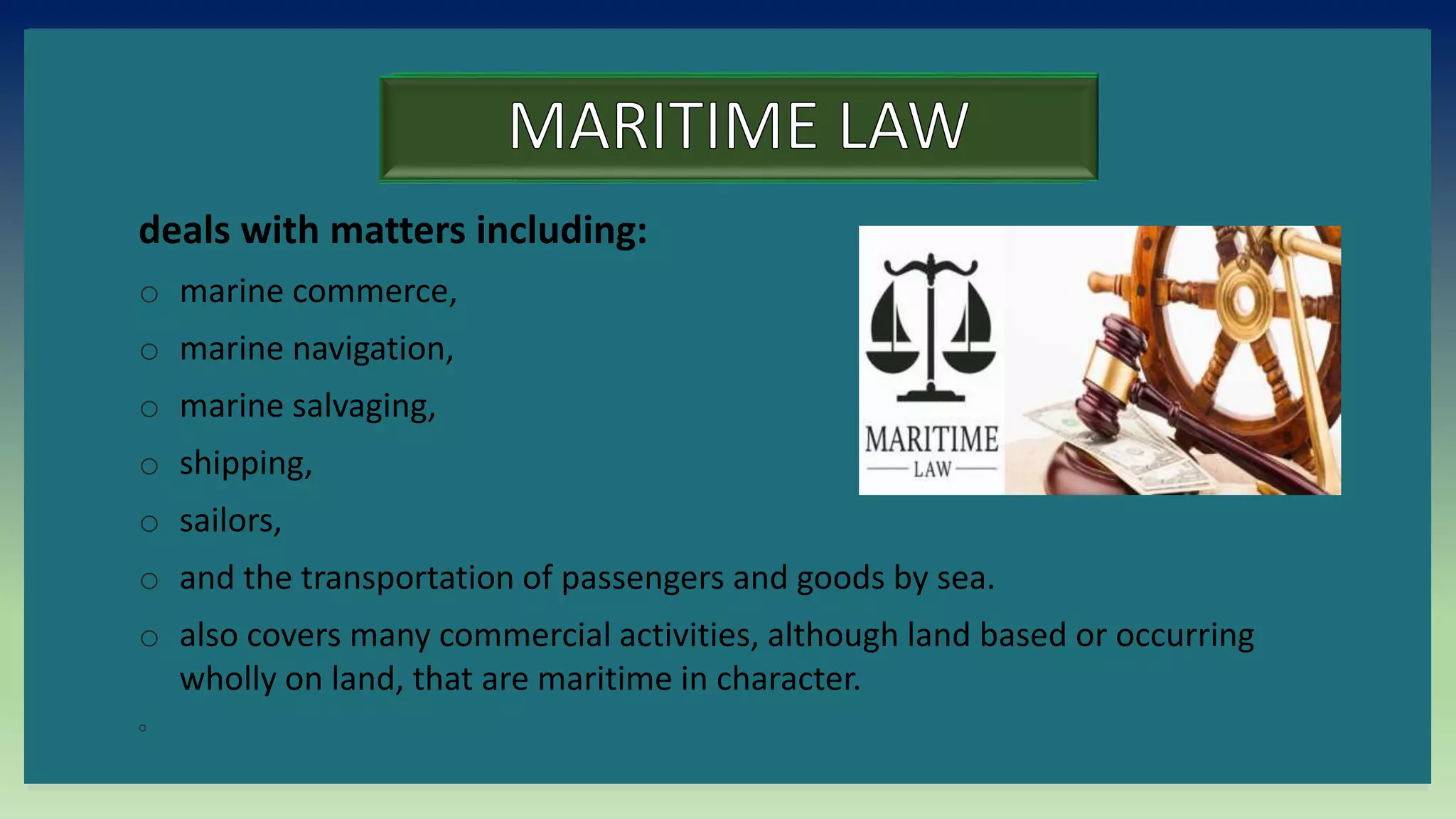
MARITIME LAW
STCW Code Table A-II/1 and A-II/2
Learning Outcomes
At the end of the class, the student should be able
to:
Discuss the Maritime Law, its introduction, history
and importance.
Frequent Question
1. What is Maritime Law?
2. Where did Maritime Law originated?
3. What are the international conventions that concerned
with Maritime Law?
4. Who will be implementing the provisions on a
Convention or other International agreement enacted by
the State?
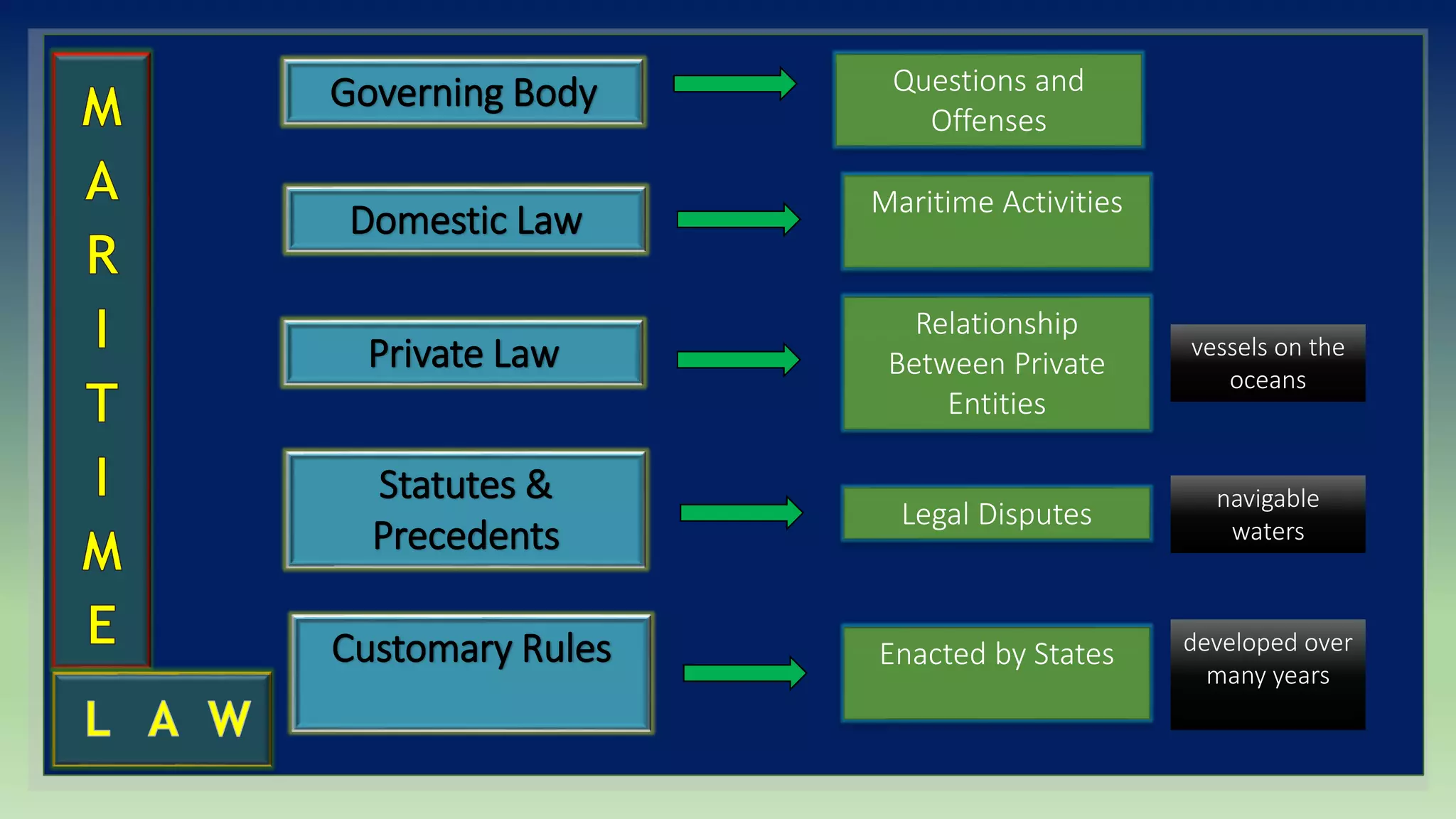
Governing Body
Domestic Law
Private Law
Statutes &
Precedents
Customary Rules
Questions and
Offenses
Maritime Activities
Legal Disputes
Relationship
Between Private
Entities
Enacted by States
vessels on the
oceans
navigable
waters
developed over
many years
deals with matters including:
o marine commerce,
o marine navigation,
o marine salvaging,
o shipping,
o sailors,
o and the transportation of passengers and goods by sea.
o also covers many commercial activities, although land based or occurring
wholly on land, that are maritime in character.
◦
Public international law
(or the law of nations)
is a body of customary or conventional rules
which are considered as legal binding by civilized
states in their interaction with each other and is
concerned solely with the rights and obligations
of sovereign states.
International Public
Maritime Law
It concerns the legal relationship
between States in respect of maritime
matters
Private International Maritime
Law
CONVENTIONS
CONVENTIONS
ORIGINS
IPLEMENTATION
TREATY
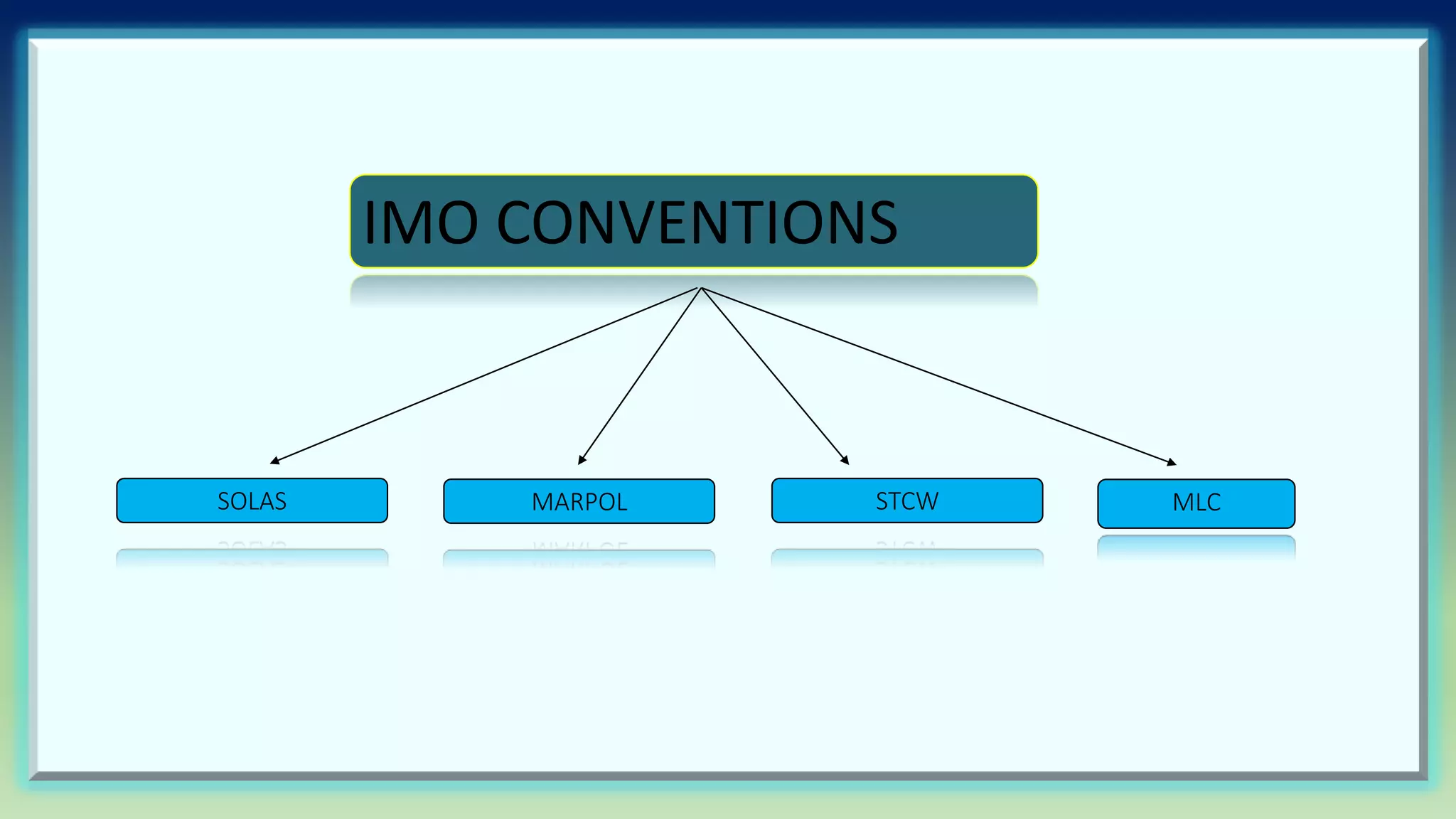
IMO CONVENTIONS
MARPOL MLC
SOLAS STCW
S O L A S
1. Construction
1.1 Subdivision and Stability
1.2 Machinery
1.3 Electrical Installation
1.4 Fire
1.4.1 Protection
1.4.2 Detection
1.4.3 Extinction
2. Life Saving Appliances and Arrangement
3. Radio Communication
4. Safety of Navigation
5. Carriage of Cargo
M A R P O L
I. Oil
II. Noxious Liquid Substances in Bulk
III. Packaged Form
IV.Sewage
V. Garbage
VI.Air
Composed of 6 Annexes
S T C W
1. Training Center
2. Academy / Colleges
3. Certification
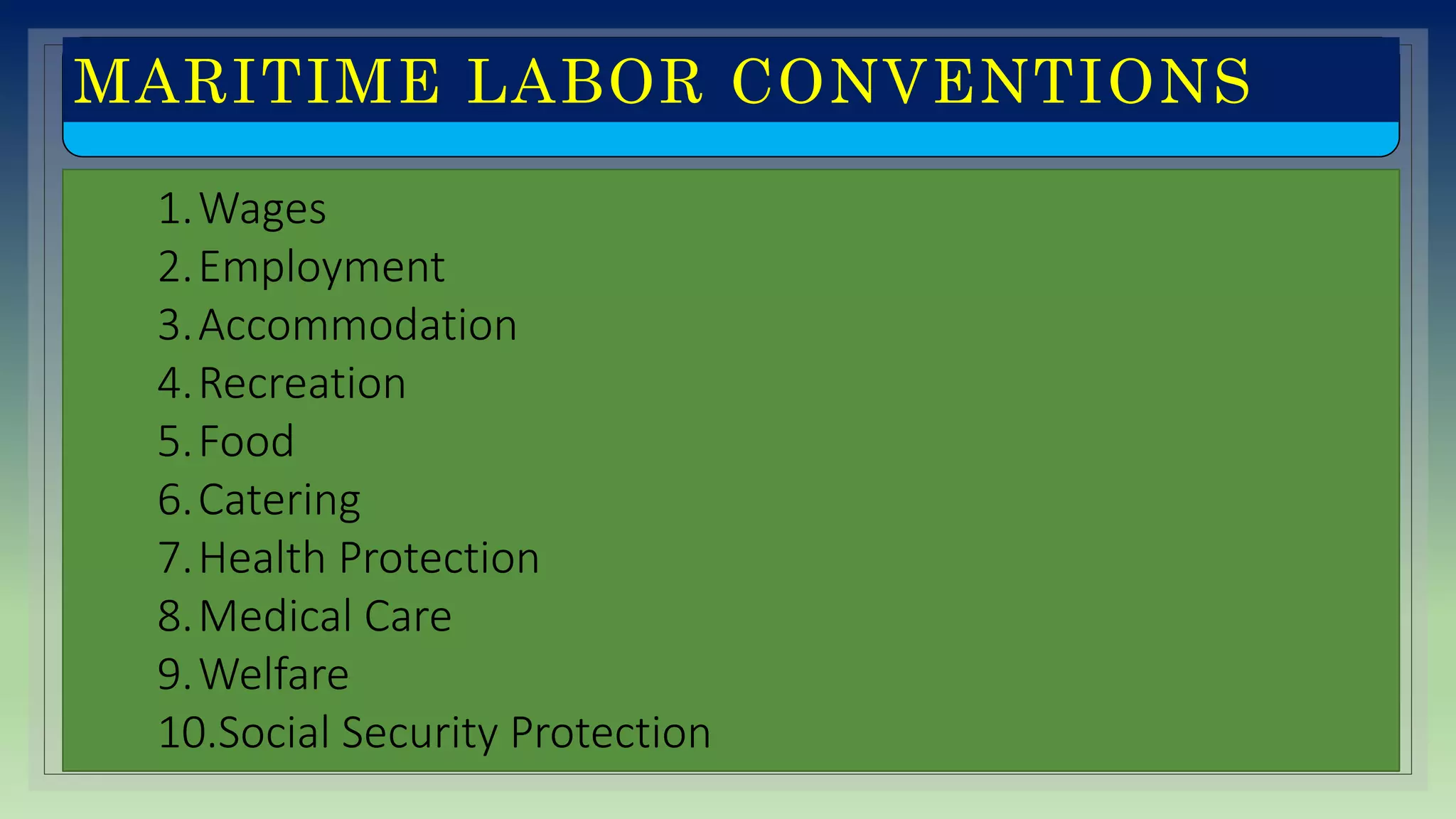
MARITIME LABOR CONVENTIONS
1.Wages
2.Employment
3.Accommodation
4.Recreation
5.Food
6.Catering
7.Health Protection
8.Medical Care
9.Welfare
10.Social Security Protection
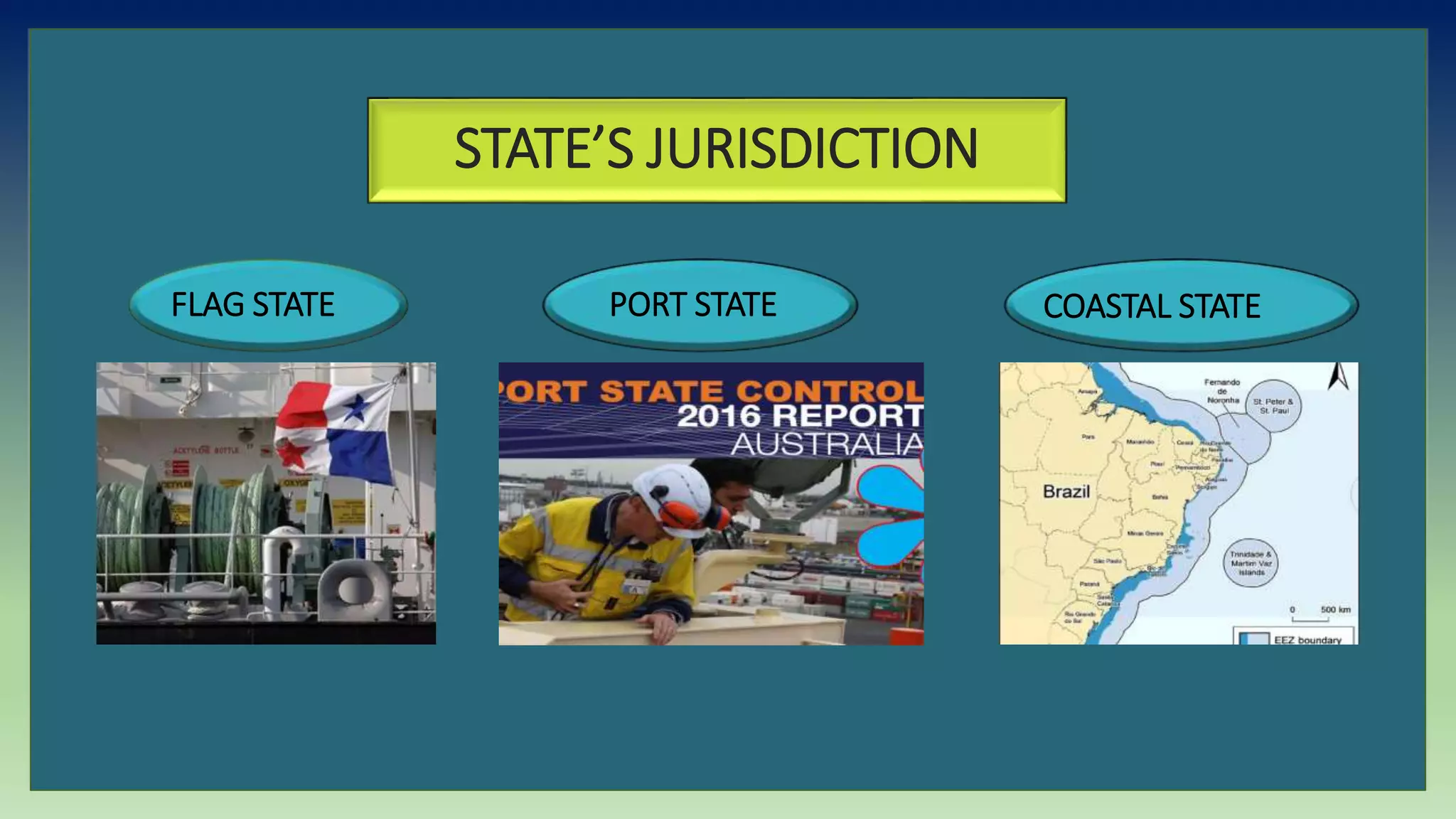
STATE’S JURISDICTION
FLAG STATE PORT STATE COASTAL STATE
Flag State
• shall ensure compliance by vessels flying their flag or of
their registry with their laws and regulations.
Port State
• may undertake investigations on a vessel voluntarily
within a port or at an offshore terminal of a State.
Coastal State
• laws and regulations relating to innocent passage
through the territorial sea.
What is meant by “no more favourable treatment” for ships of non-
ratifying countries?
No
Exemption !!!
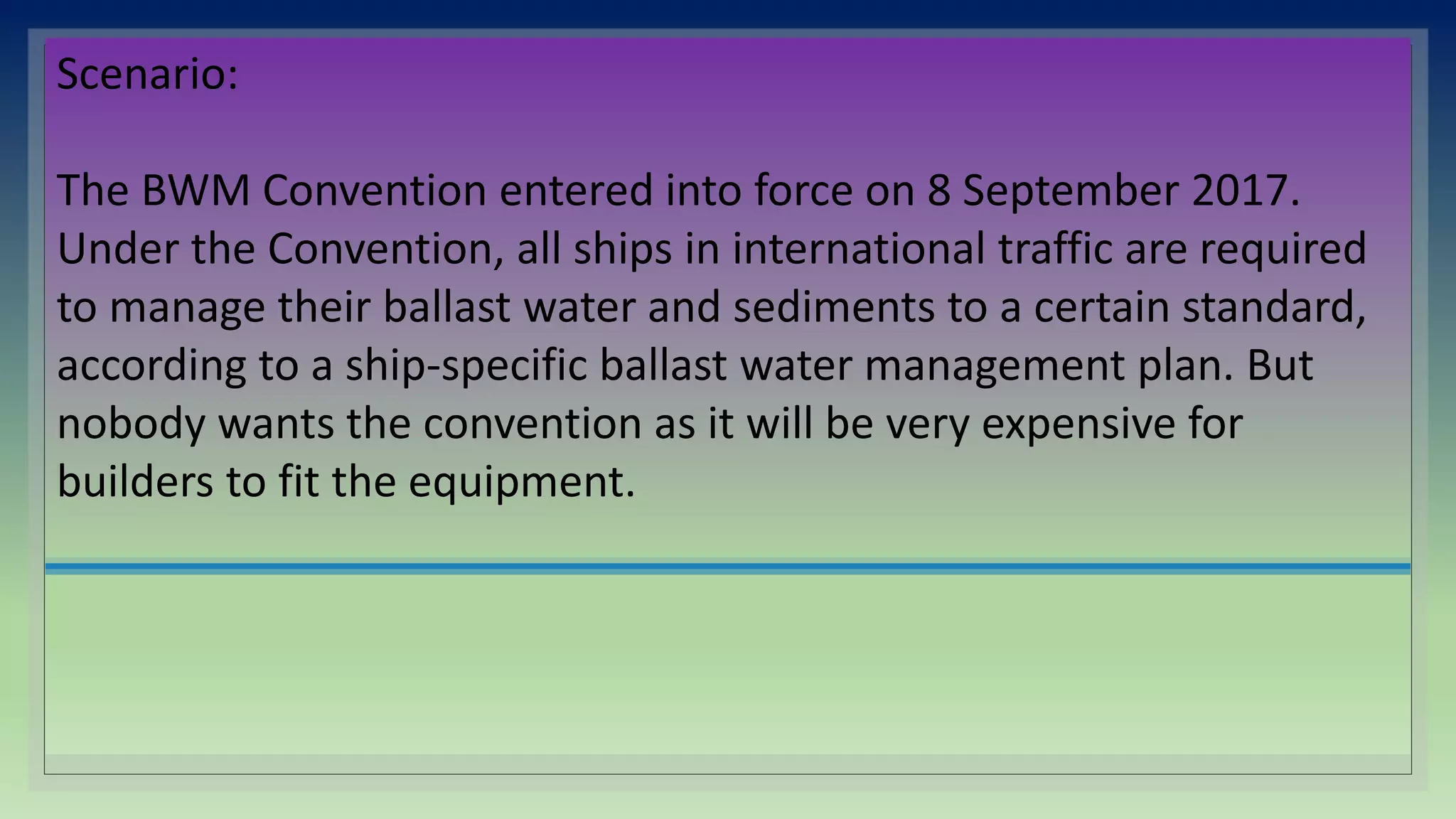
Scenario:
The BWM Convention entered into force on 8 September 2017.
Under the Convention, all ships in international traffic are required
to manage their ballast water and sediments to a certain standard,
according to a ship-specific ballast water management plan. But
nobody wants the convention as it will be very expensive for
builders to fit the equipment.
Those countries that haven’t signed up will still have
to comply? Why?
Yes they must comply, because of the
clause “no more favourable
treatment” for ships of non-ratifying
countries

Maritime Law PPT Week 1.pptx

  • 1.
    MARITIME LAW STCW CodeTable A-II/1 and A-II/2
  • 2.
    Learning Outcomes At theend of the class, the student should be able to: Discuss the Maritime Law, its introduction, history and importance.
  • 3.
    Frequent Question 1. Whatis Maritime Law? 2. Where did Maritime Law originated? 3. What are the international conventions that concerned with Maritime Law? 4. Who will be implementing the provisions on a Convention or other International agreement enacted by the State?
  • 4.
    Governing Body Domestic Law PrivateLaw Statutes & Precedents Customary Rules Questions and Offenses Maritime Activities Legal Disputes Relationship Between Private Entities Enacted by States vessels on the oceans navigable waters developed over many years
  • 5.
    deals with mattersincluding: o marine commerce, o marine navigation, o marine salvaging, o shipping, o sailors, o and the transportation of passengers and goods by sea. o also covers many commercial activities, although land based or occurring wholly on land, that are maritime in character. ◦
  • 6.
    Public international law (orthe law of nations) is a body of customary or conventional rules which are considered as legal binding by civilized states in their interaction with each other and is concerned solely with the rights and obligations of sovereign states.
  • 8.
    International Public Maritime Law Itconcerns the legal relationship between States in respect of maritime matters
  • 9.
  • 10.
  • 11.
  • 12.
  • 13.
    S O LA S 1. Construction 1.1 Subdivision and Stability 1.2 Machinery 1.3 Electrical Installation 1.4 Fire 1.4.1 Protection 1.4.2 Detection 1.4.3 Extinction 2. Life Saving Appliances and Arrangement 3. Radio Communication 4. Safety of Navigation 5. Carriage of Cargo
  • 14.
    M A RP O L I. Oil II. Noxious Liquid Substances in Bulk III. Packaged Form IV.Sewage V. Garbage VI.Air Composed of 6 Annexes
  • 15.
    S T CW 1. Training Center 2. Academy / Colleges 3. Certification
  • 16.
  • 17.
    STATE’S JURISDICTION FLAG STATEPORT STATE COASTAL STATE
  • 18.
    Flag State • shallensure compliance by vessels flying their flag or of their registry with their laws and regulations. Port State • may undertake investigations on a vessel voluntarily within a port or at an offshore terminal of a State. Coastal State • laws and regulations relating to innocent passage through the territorial sea.
  • 19.
    What is meantby “no more favourable treatment” for ships of non- ratifying countries?
  • 20.
  • 21.
    Scenario: The BWM Conventionentered into force on 8 September 2017. Under the Convention, all ships in international traffic are required to manage their ballast water and sediments to a certain standard, according to a ship-specific ballast water management plan. But nobody wants the convention as it will be very expensive for builders to fit the equipment.
  • 22.
    Those countries thathaven’t signed up will still have to comply? Why?
  • 23.
    Yes they mustcomply, because of the clause “no more favourable treatment” for ships of non-ratifying countries

Editor's Notes

  • #5 Governs maritime questions and offenses Domestic law governing maritime activities Private international law governing the relationships between private entities that operate vessels on the oceans