Marine carbon cycle
By Masroor ahmad
Sub..Marine microbiology
Department of microbiology
University of Baluchistan
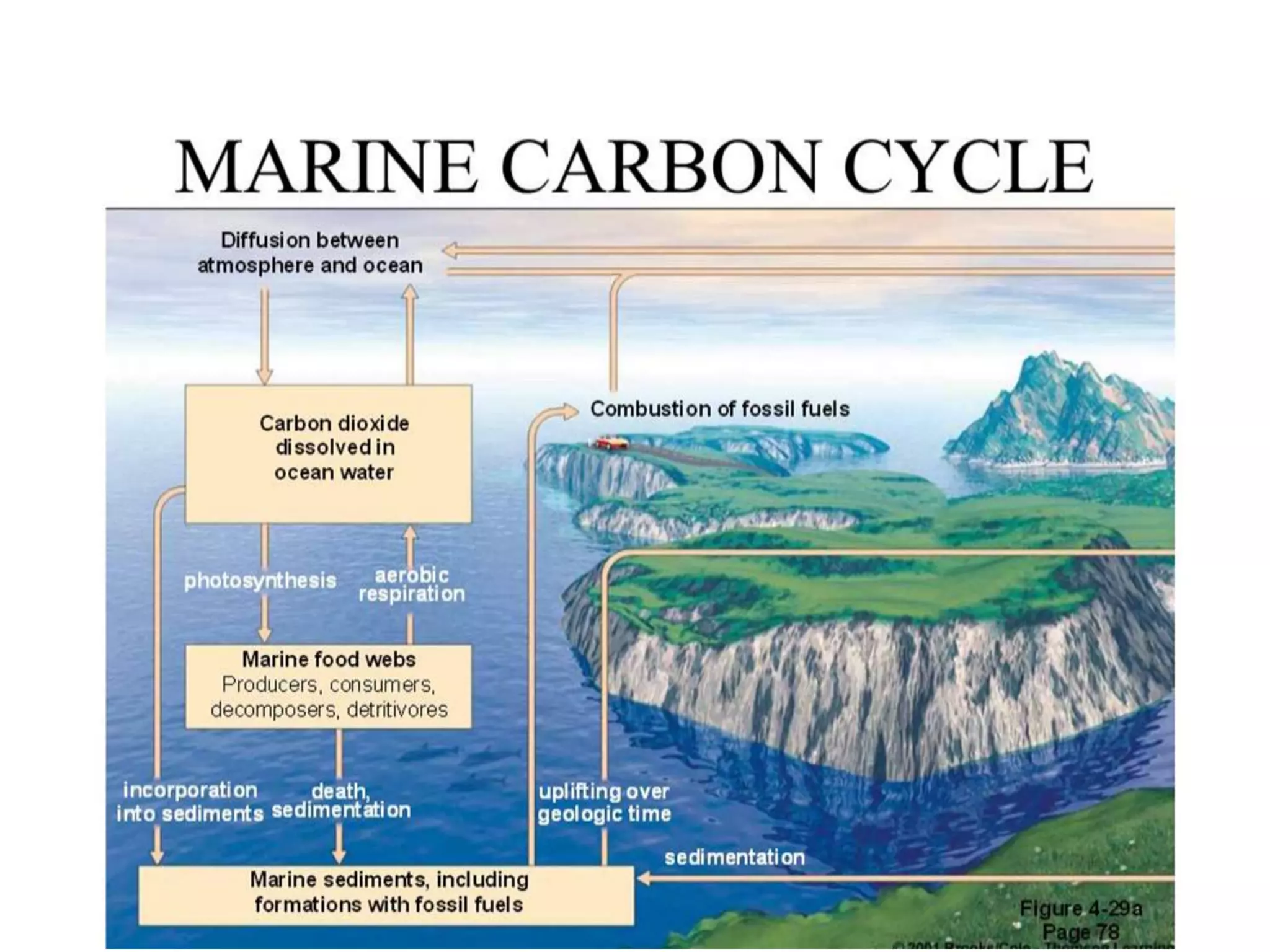
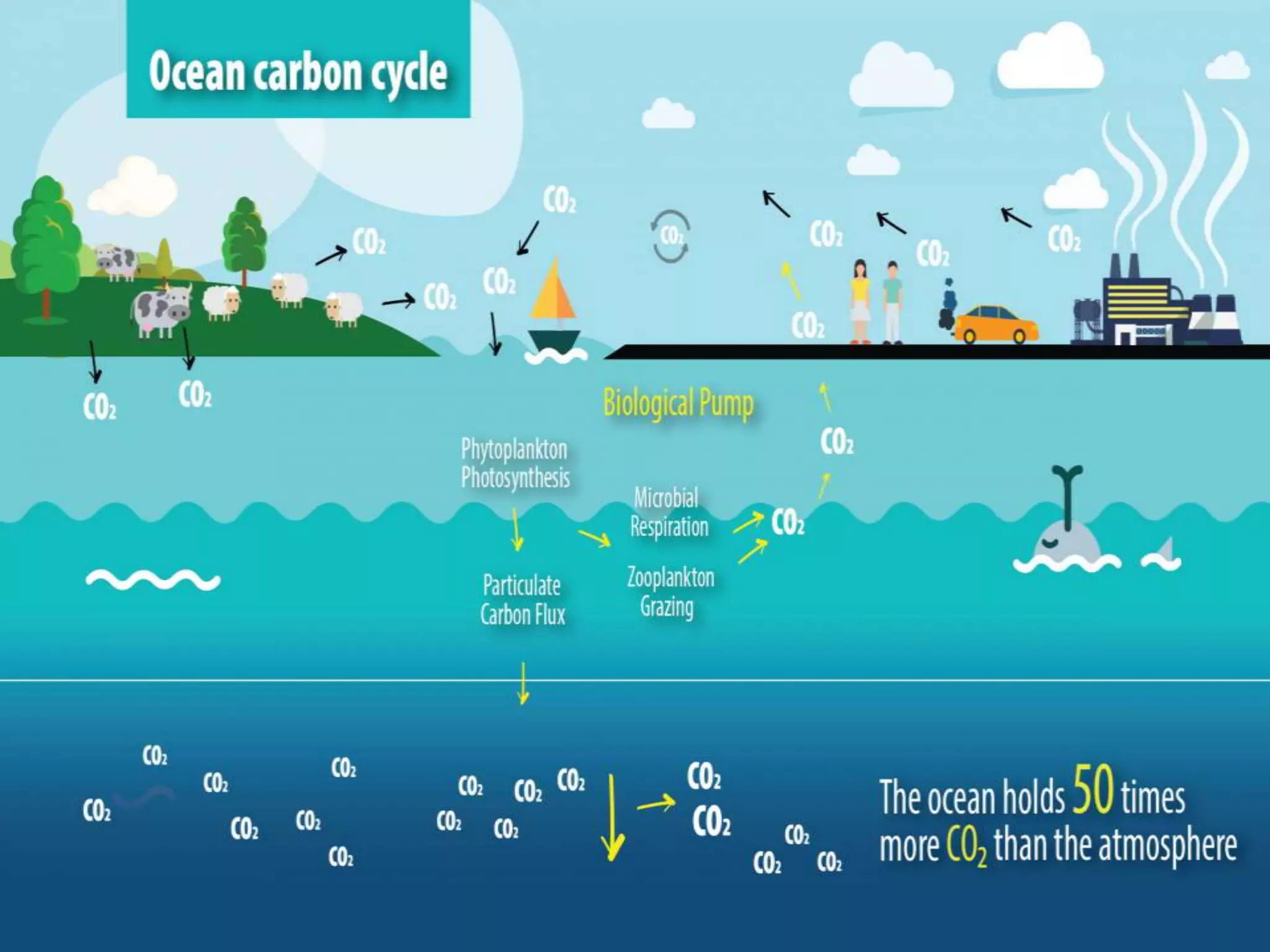
Marine carbon cycle
• The marine carbon cycle involves
processes that
exchange carbon between various
pools within the ocean as well as
between the atmosphere,
Carbon is released into the atmosphere in
several ways
• Respiration by plants and animals.
• Decay of animal and plant matter.
• Combustion of organic material
• Production of cement.
• The ocean releases CO2 into the atmosphere.
• Volcanic eruptions and metamorphism
Carbon is taken from the atmosphere in
several ways
• Photosynthesis.
• The oceans when the seawater becomes
cooler, more CO2 dissolve and become
carbonic acid.
• In the upper ocean areas organisms convert
reduced carbon to tissues, or carbonates.
• Carbon dioxide is constantly being exchanged
between the atmosphere and the upper levels
of the oceans, by physical and by chemical
processes.
• The productivity of phytoplankton depends on
sunlight, temperature and supply of nutrients,
and therefore varies geographically.
Carbon dioxide is more soluble in cold water
than it is in warm water, so the concentration of
dissolved CO2 tends to be higher in cold polar
waters than in warm tropical waters.
• Cold, dense polar water sinks and flows under
the influence of gravity along the ocean floor
towards the Equator.
• It returns to the surface by upwelling's at
various places in the oceans,
• to supply nutrients and promote
unusually high phytoplankton
productivity there.
• Zooplankton (water-borne animal life, mostly
microscopic) and higher marine organisms consume
these phytoplankton.
• The dead remains of phytoplankton, zooplankton
and larger organisms sink through the water
column, transferring carbon from the upper few
hundred meters towards the ocean depths.
• Organic matter gets a chance to accumulate
on the ocean floor.
• It provides food for filter feeders in deep
water and on the ocean floor, and through
them for predatory animals, and ultimately
feeds the ubiquitous decomposers.
• organic matter gets a chance to
accumulate on the ocean floor. It provides
food for filter feeders in deep water and on
the ocean floor, and through them for
predatory animals, and ultimately feeds
the ubiquitous decomposers.
• All these organisms release CO2 back into
solution through respiration
• The International Atomic energy agency (IAEA)
works with Member States to gain a better
understanding of the carbon cycle processes
and stocks of carbon which Member States
can then use to construct the climate model
to predict the impacts of climate change.
Marine carbon cycle.by masroor

Marine carbon cycle.by masroor

  • 1.
    Marine carbon cycle ByMasroor ahmad Sub..Marine microbiology Department of microbiology University of Baluchistan
  • 3.
    Marine carbon cycle •The marine carbon cycle involves processes that exchange carbon between various pools within the ocean as well as between the atmosphere,
  • 5.
    Carbon is releasedinto the atmosphere in several ways • Respiration by plants and animals. • Decay of animal and plant matter. • Combustion of organic material • Production of cement. • The ocean releases CO2 into the atmosphere. • Volcanic eruptions and metamorphism
  • 6.
    Carbon is takenfrom the atmosphere in several ways • Photosynthesis. • The oceans when the seawater becomes cooler, more CO2 dissolve and become carbonic acid. • In the upper ocean areas organisms convert reduced carbon to tissues, or carbonates.
  • 7.
    • Carbon dioxideis constantly being exchanged between the atmosphere and the upper levels of the oceans, by physical and by chemical processes. • The productivity of phytoplankton depends on sunlight, temperature and supply of nutrients, and therefore varies geographically.
  • 8.
    Carbon dioxide ismore soluble in cold water than it is in warm water, so the concentration of dissolved CO2 tends to be higher in cold polar waters than in warm tropical waters. • Cold, dense polar water sinks and flows under the influence of gravity along the ocean floor towards the Equator.
  • 9.
    • It returnsto the surface by upwelling's at various places in the oceans, • to supply nutrients and promote unusually high phytoplankton productivity there.
  • 11.
    • Zooplankton (water-borneanimal life, mostly microscopic) and higher marine organisms consume these phytoplankton. • The dead remains of phytoplankton, zooplankton and larger organisms sink through the water column, transferring carbon from the upper few hundred meters towards the ocean depths.
  • 12.
    • Organic mattergets a chance to accumulate on the ocean floor. • It provides food for filter feeders in deep water and on the ocean floor, and through them for predatory animals, and ultimately feeds the ubiquitous decomposers.
  • 14.
    • organic mattergets a chance to accumulate on the ocean floor. It provides food for filter feeders in deep water and on the ocean floor, and through them for predatory animals, and ultimately feeds the ubiquitous decomposers. • All these organisms release CO2 back into solution through respiration
  • 15.
    • The InternationalAtomic energy agency (IAEA) works with Member States to gain a better understanding of the carbon cycle processes and stocks of carbon which Member States can then use to construct the climate model to predict the impacts of climate change.