Linked Data's Many Varieties
UW-Madison SLIS CES
Webinar
Tuesday, March 18
Debra Shapiro
dsshapiro@wisc.edu
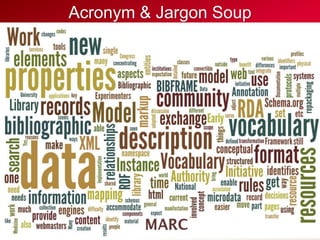
Acronym & Jargon Soup
Assignment:
 Think about your favorite words from the cloud
 Some of the biggest are:
 Work, elements, properties, data, bibliographic,
MARC, XML, description, vocabulary, BIBFRAME,
community, library, records, resources,
Schema.org, format, new
 Some little interesting ones – yes, webmasters,
identifies, adapted, people, future, easier ….
 Link to look at cloud - http://bit.ly/318Web
What is the ultimate goal of all this linked
data stuff?
 Get library data out on the open web?
 Make Google happy?
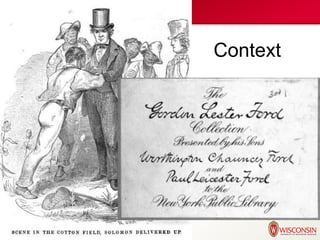
 Context
 Openness and accessibility?
 Torture librarians?
 All of the above
Flavors we’ll hear about today
 Schema.org
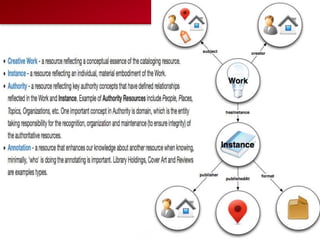
 BIBFRAME
 europeana & other European efforts (DPLA)
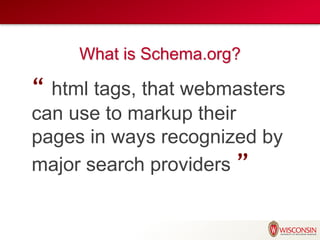
What is Schema.org?
“ html tags, that webmasters
can use to markup their
pages in ways recognized by
major search providers ”
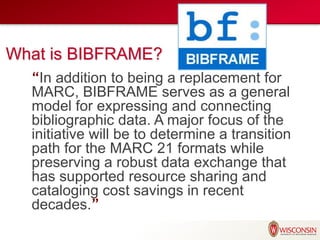
What is BIBFRAME?
“In addition to being a replacement for
MARC, BIBFRAME serves as a general
model for expressing and connecting
bibliographic data. A major focus of the
initiative will be to determine a transition
path for the MARC 21 formats while
preserving a robust data exchange that
has supported resource sharing and
cataloging cost savings in recent
decades.”
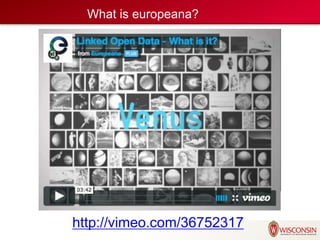
http://vimeo.com/36752317
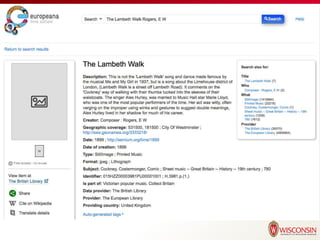
What is europeana?
Europe is ahead of us
 BnF (Bibliothèque nationale de France) Linked
data efforts: http://data.bnf.fr/semanticweb
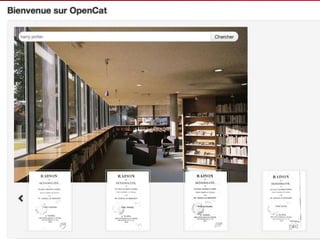
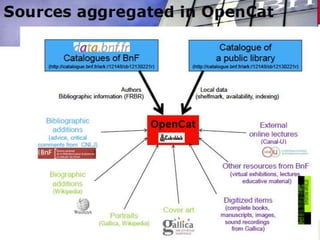
 The Open Cat Prototype: Small libraries utilize
BnF linked data
 http://swib.org/swib13/slides/simon_swib13_104.p
df
 DNF (Deutsche Nationalbibliothek) BIBFRAME
early experimenter
 http://www.dnb.de/EN/Wir/Projekte/Laufend/bibfra
me.html
Schema.org vs. BIBFRAME
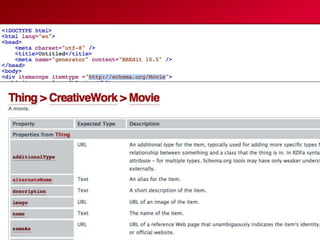
 Schema.org way to add html tags to web pages –
that can be displaying bibliographic information
 OCLC doing this automatically for OCLC member
libraries
 Librarians can add to/authoritize schema.org
definitions
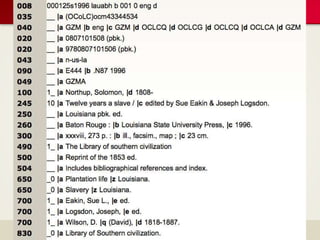
 BIBFRAME way to re-encode MARC in a linked
data consumeable way
 Not ready yet, but best we have so far?
 Existing MARC data will be batch transformed to
BIBFRAME
 BIBFRAME does have an editor, though
Europe is ahead of us
 Open linked data
 Europeana portal
 National libraries like France & Germany batch
converting bibliographic data for benefit of all
libraries in the country
 US doesn’t really have a national library ….
 DPLA metadata policies based on europeana
open data agreements. No copyright in metadata
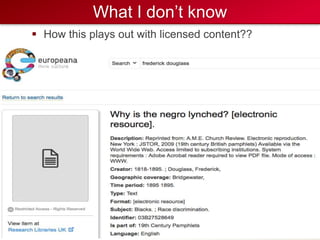
What I don’t know
 How this plays out with licensed content??
What I do know
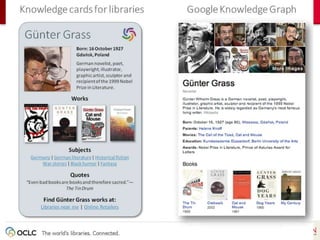
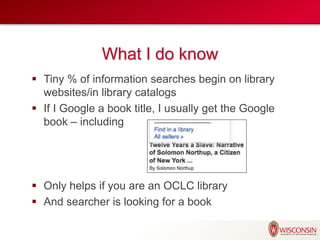
 Tiny % of information searches begin on library
websites/in library catalogs
 If I Google a book title, I usually get the Google
book – including
 Only helps if you are an OCLC library
 And searcher is looking for a book
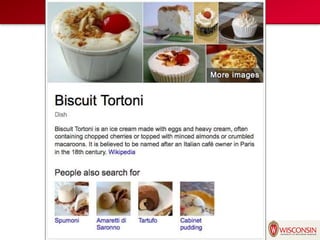
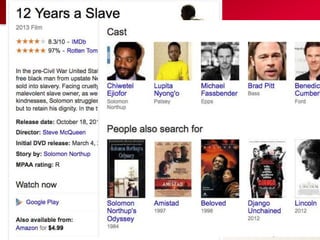
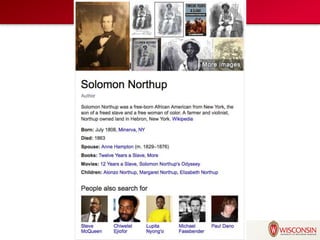
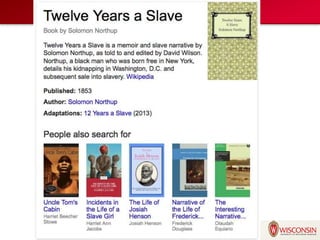
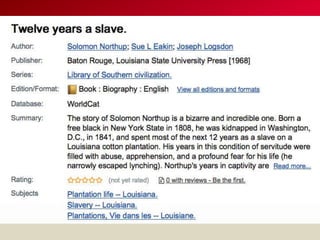
Context
Context
What I recommend
 Become a joiner –
 Expose metadata
 Big initiatives like europeana and DPLA can ingest
all kinds of metadata – including MARC
 OCLC is shifting everyone to the WorldShare
Metadata Collection Manager – MARC, MARCXML,
MODS, DC, all kinds of data from publishers and
Hathi Trust …
 Educate yourself – see bibliography
 Advocate for openness
What I believe
 Don’t lose sleep!
 Linked data will be for discovery
 Data & Properties - RULE
 < >, encoding, screens & screens of RDF
 Do not matter as much as
 Content
 Quality bibliographic information

Many flavors of linked data

  • 2.
    Linked Data's ManyVarieties UW-Madison SLIS CES Webinar Tuesday, March 18 Debra Shapiro dsshapiro@wisc.edu
  • 3.
  • 4.
    Assignment:  Think aboutyour favorite words from the cloud  Some of the biggest are:  Work, elements, properties, data, bibliographic, MARC, XML, description, vocabulary, BIBFRAME, community, library, records, resources, Schema.org, format, new  Some little interesting ones – yes, webmasters, identifies, adapted, people, future, easier ….  Link to look at cloud - http://bit.ly/318Web
  • 5.
    What is theultimate goal of all this linked data stuff?  Get library data out on the open web?  Make Google happy?  Context  Openness and accessibility?  Torture librarians?  All of the above
  • 10.
    Flavors we’ll hearabout today  Schema.org  BIBFRAME  europeana & other European efforts (DPLA)
  • 11.
    What is Schema.org? “html tags, that webmasters can use to markup their pages in ways recognized by major search providers ”
  • 17.
    What is BIBFRAME? “Inaddition to being a replacement for MARC, BIBFRAME serves as a general model for expressing and connecting bibliographic data. A major focus of the initiative will be to determine a transition path for the MARC 21 formats while preserving a robust data exchange that has supported resource sharing and cataloging cost savings in recent decades.”
  • 22.
  • 26.
    Europe is aheadof us  BnF (Bibliothèque nationale de France) Linked data efforts: http://data.bnf.fr/semanticweb  The Open Cat Prototype: Small libraries utilize BnF linked data  http://swib.org/swib13/slides/simon_swib13_104.p df  DNF (Deutsche Nationalbibliothek) BIBFRAME early experimenter  http://www.dnb.de/EN/Wir/Projekte/Laufend/bibfra me.html
  • 30.
    Schema.org vs. BIBFRAME Schema.org way to add html tags to web pages – that can be displaying bibliographic information  OCLC doing this automatically for OCLC member libraries  Librarians can add to/authoritize schema.org definitions  BIBFRAME way to re-encode MARC in a linked data consumeable way  Not ready yet, but best we have so far?  Existing MARC data will be batch transformed to BIBFRAME  BIBFRAME does have an editor, though
  • 31.
    Europe is aheadof us  Open linked data  Europeana portal  National libraries like France & Germany batch converting bibliographic data for benefit of all libraries in the country  US doesn’t really have a national library ….  DPLA metadata policies based on europeana open data agreements. No copyright in metadata
  • 32.
    What I don’tknow  How this plays out with licensed content??
  • 33.
    What I doknow  Tiny % of information searches begin on library websites/in library catalogs  If I Google a book title, I usually get the Google book – including  Only helps if you are an OCLC library  And searcher is looking for a book
  • 34.
  • 35.
    What I recommend Become a joiner –  Expose metadata  Big initiatives like europeana and DPLA can ingest all kinds of metadata – including MARC  OCLC is shifting everyone to the WorldShare Metadata Collection Manager – MARC, MARCXML, MODS, DC, all kinds of data from publishers and Hathi Trust …  Educate yourself – see bibliography  Advocate for openness
  • 36.
    What I believe Don’t lose sleep!  Linked data will be for discovery  Data & Properties - RULE  < >, encoding, screens & screens of RDF  Do not matter as much as  Content  Quality bibliographic information

Editor's Notes

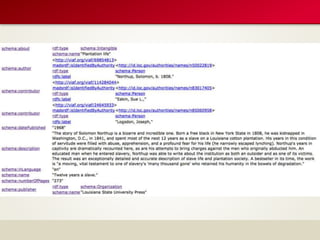
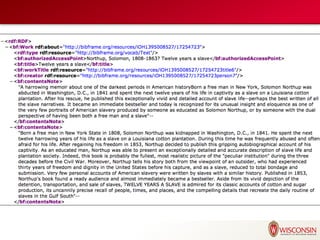
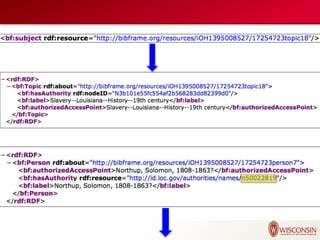
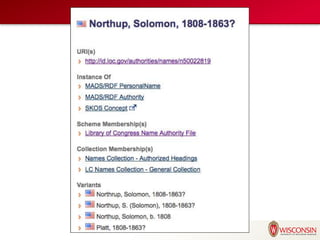
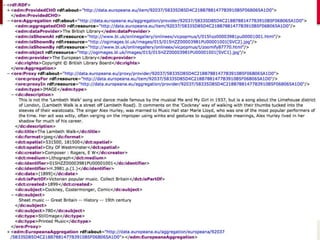
  • #20 That’s what I did here; went to BIBFRAME.org tools - & converted LoC’s MARCXML for twelve years a slave to BIBFRAME – this is BIBFRAME in RDF/XML – only a small portion. We’ll look at a few details on the next slide