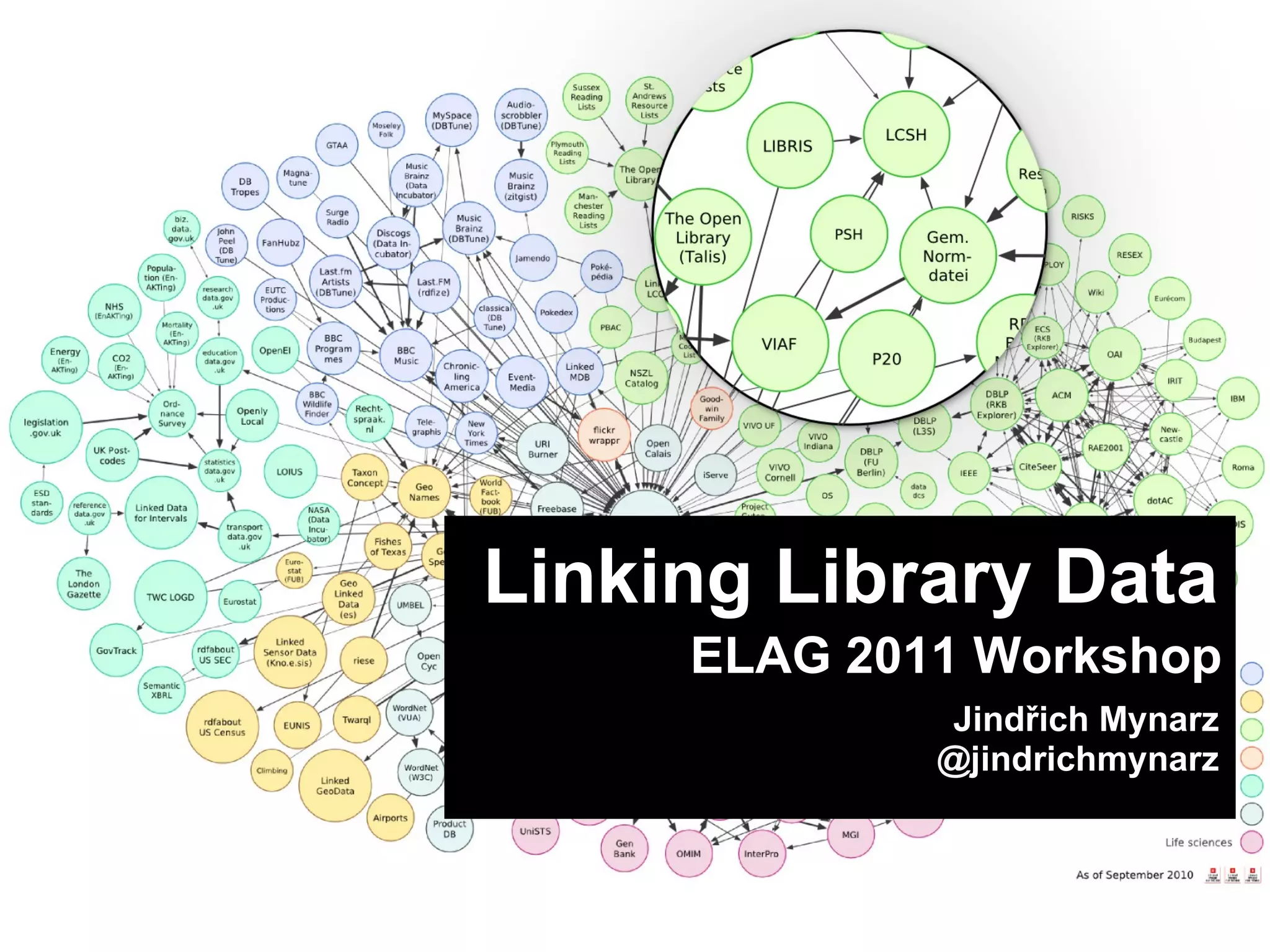
Linking Library Data ELAG 2011 Workshop Jindřich Mynarz  @ jindrichmynarz
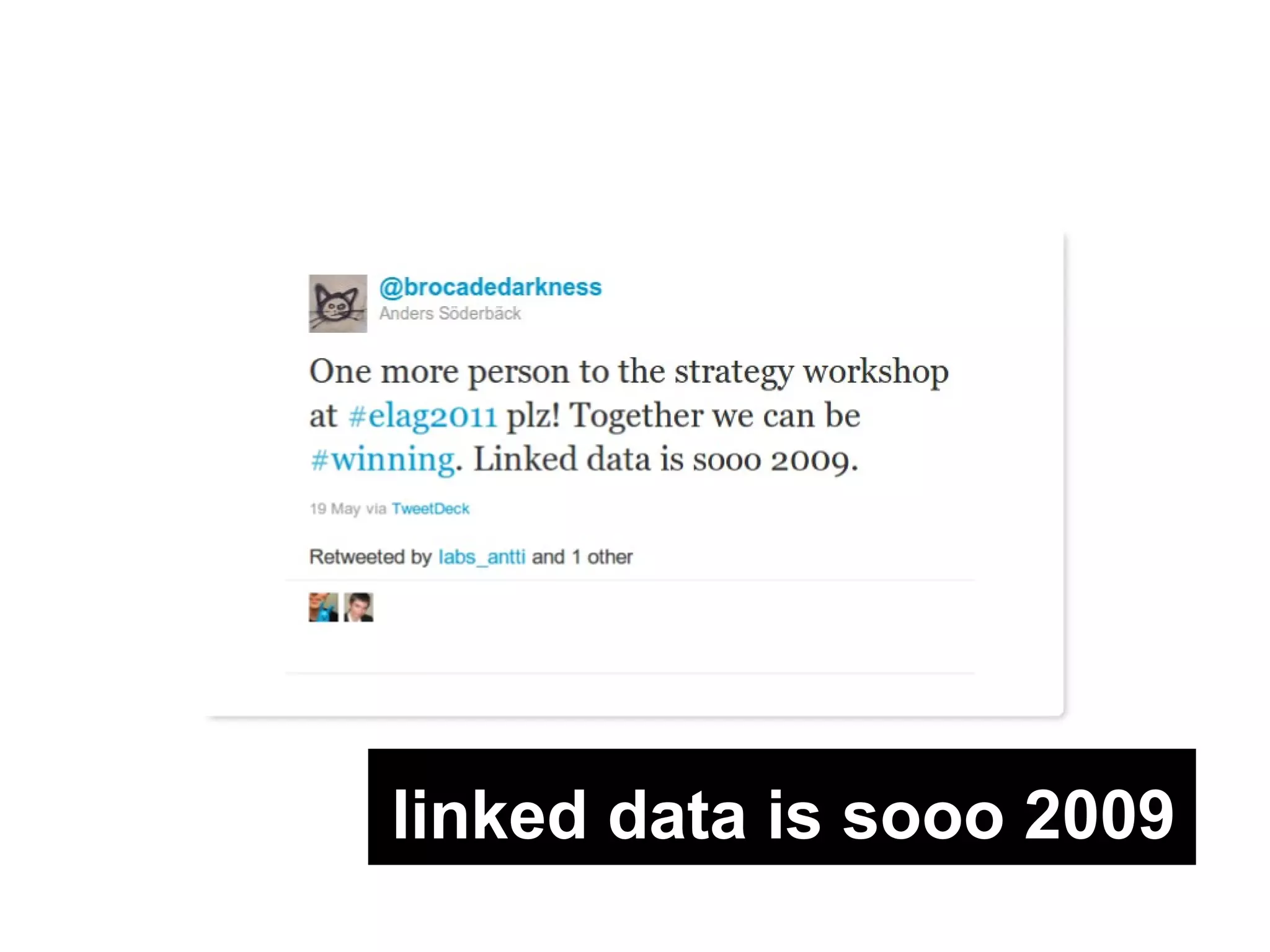
linked data is sooo 2009
Workshop Introduction Motivation Involved technologies Discussion Key questions Potential issues Practical linking Shared document:  bit.ly/linking-library-data Twitter hashtag:  #elag2011
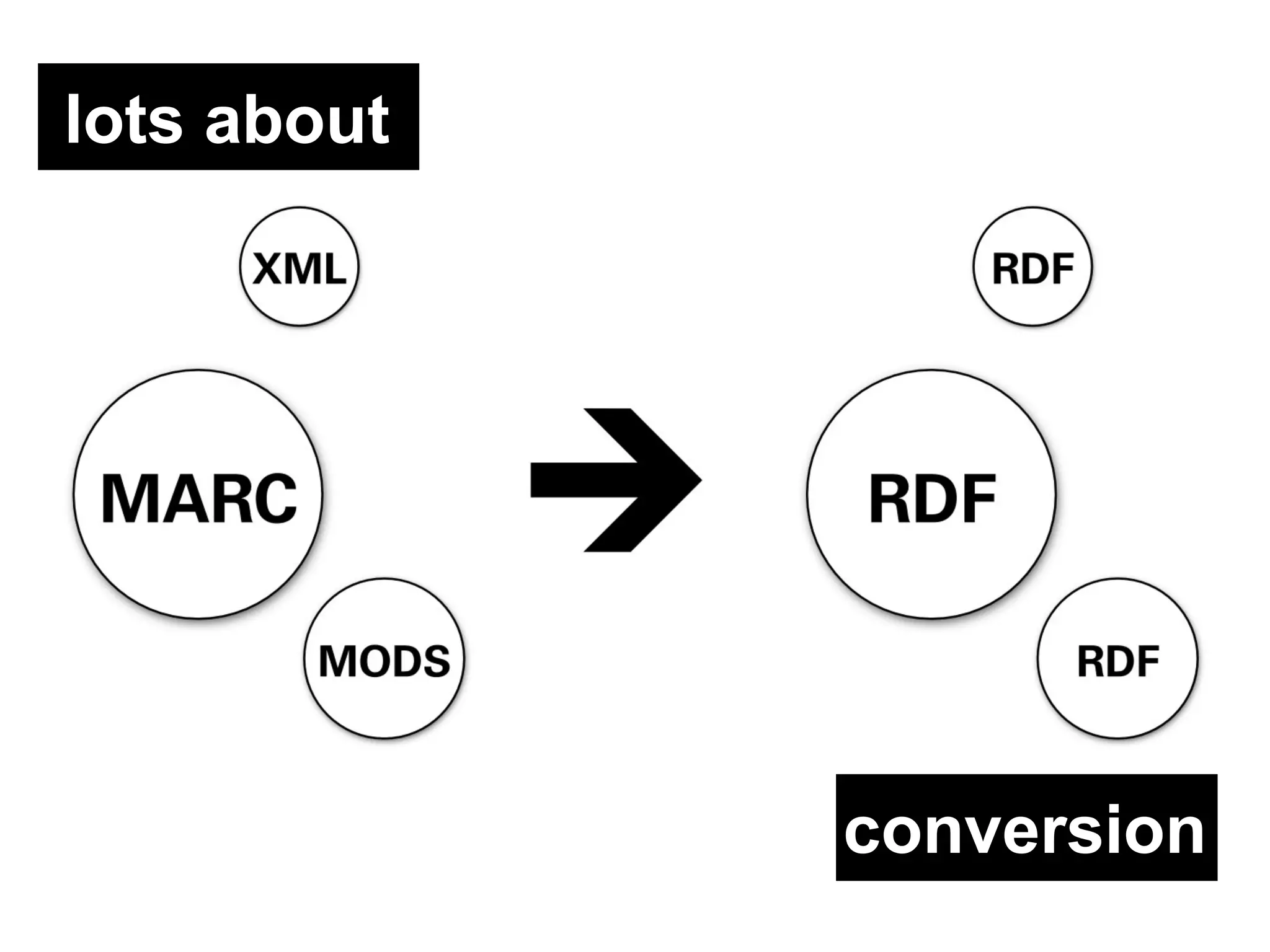
conversion lots about
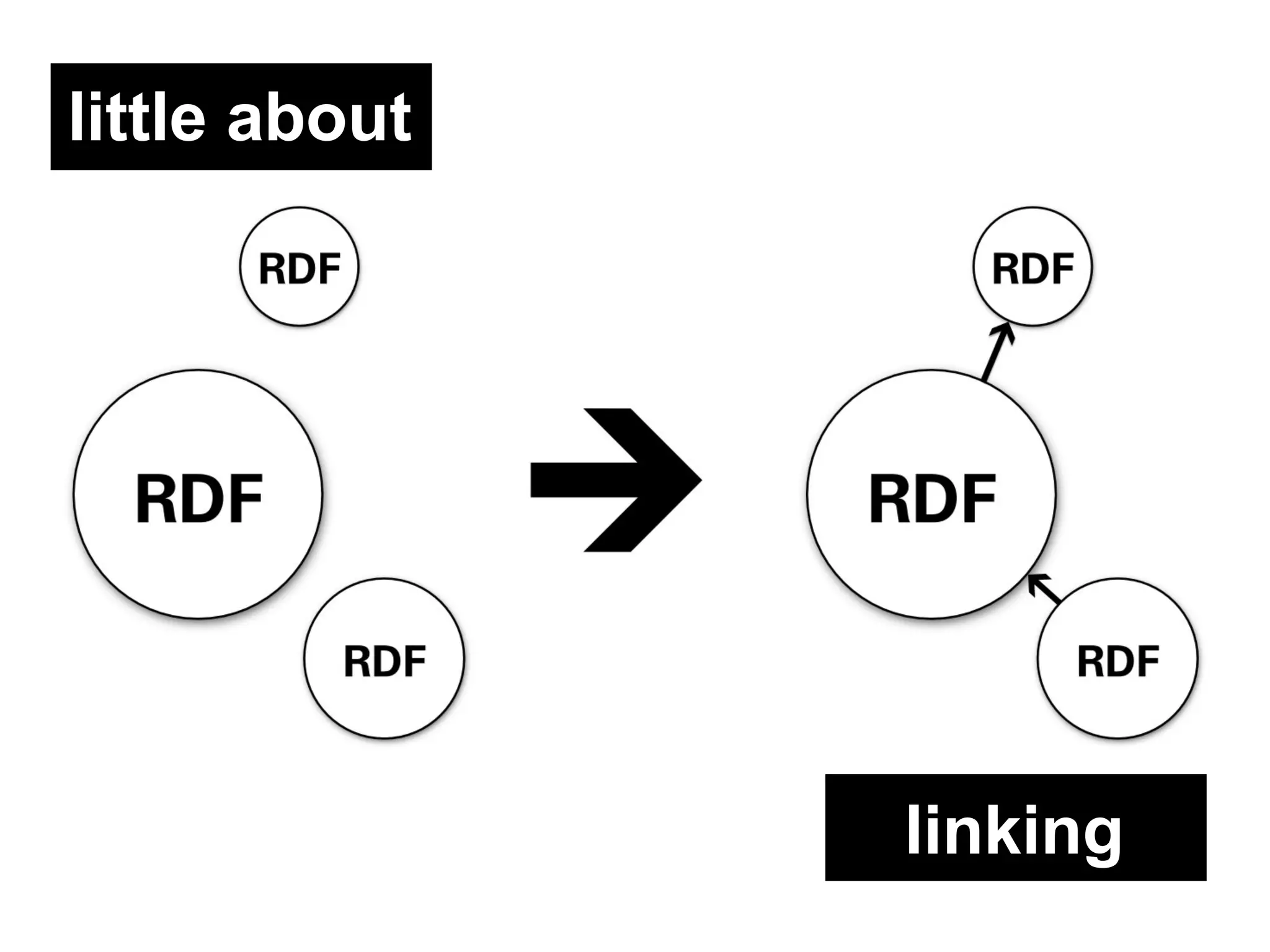
linking little about
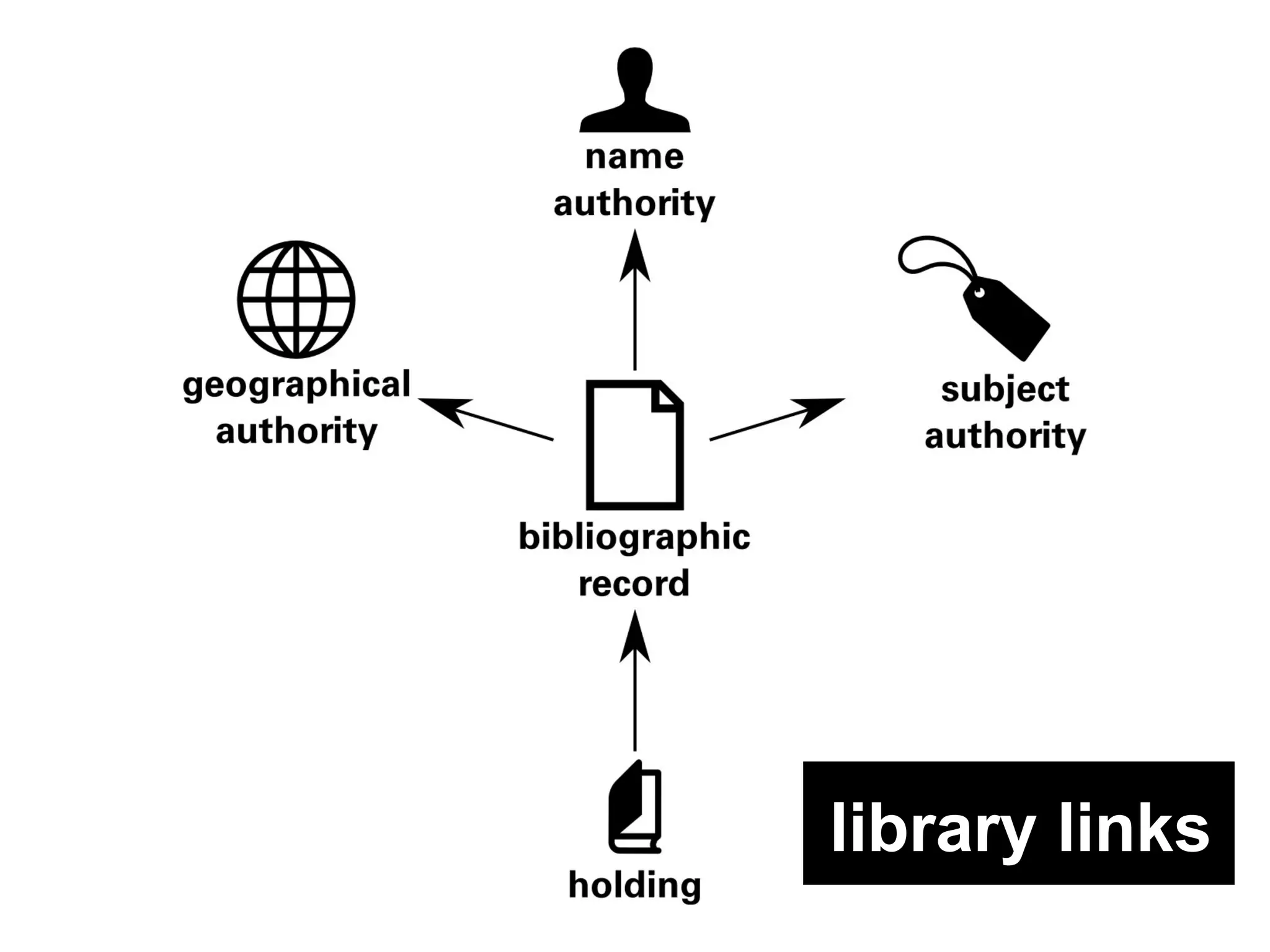
library links


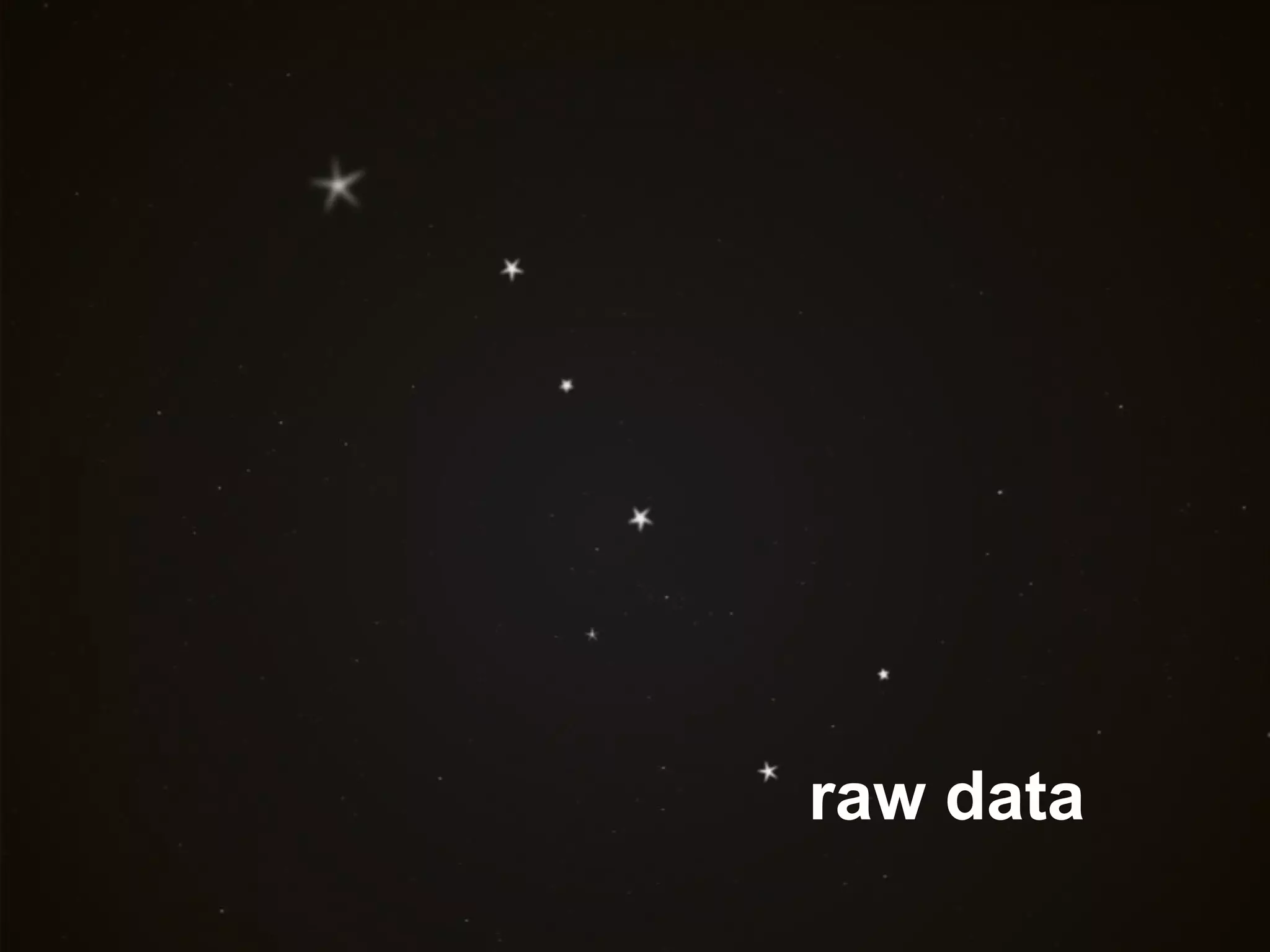
raw data
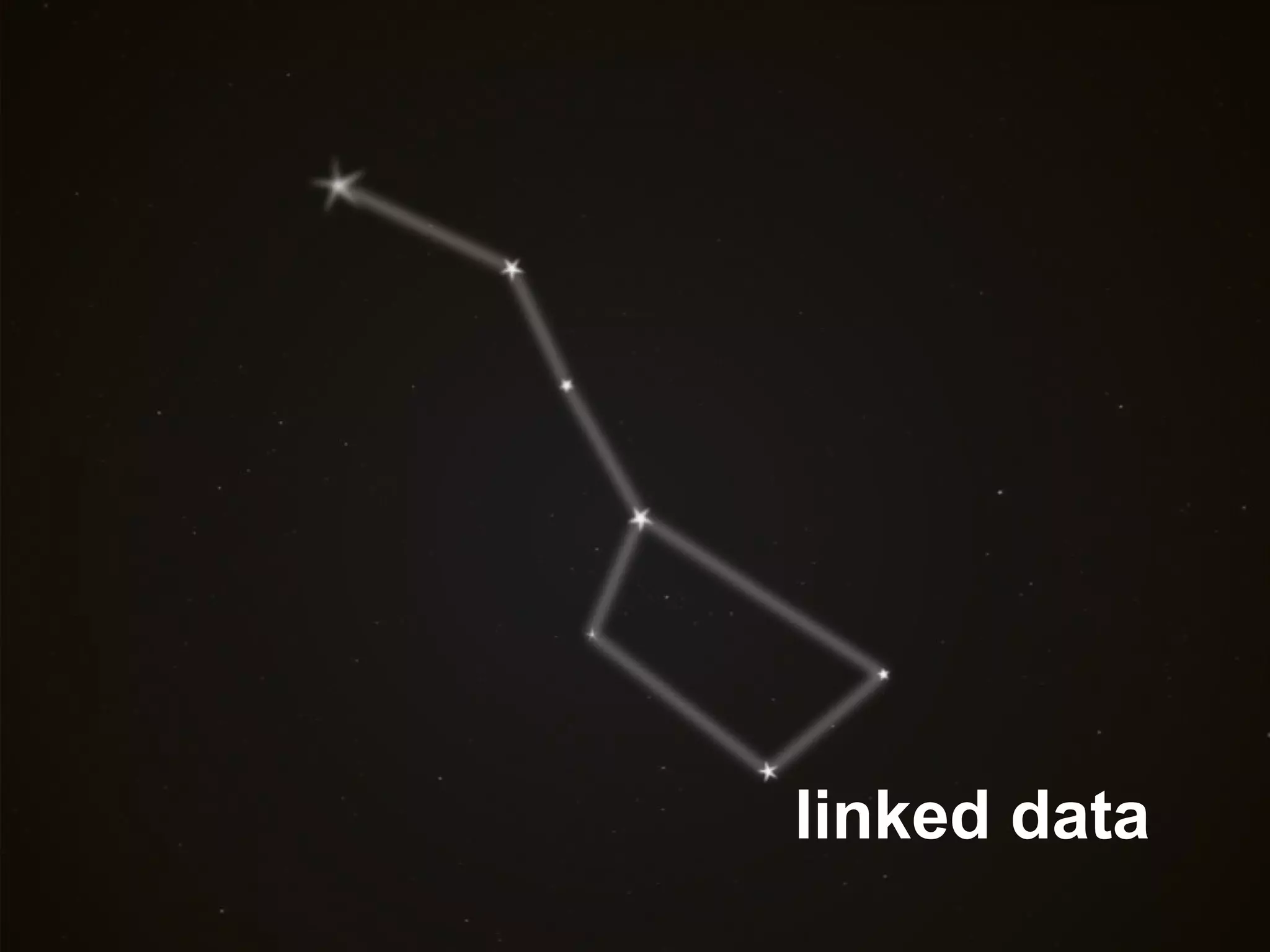
linked data
Key technologies URIs RDF SPARQL Linked data
URIs U niform  R esource  I dentifiers <http://example.com> &quot;Cool URIs&quot; resolvable stable implement content negotiation
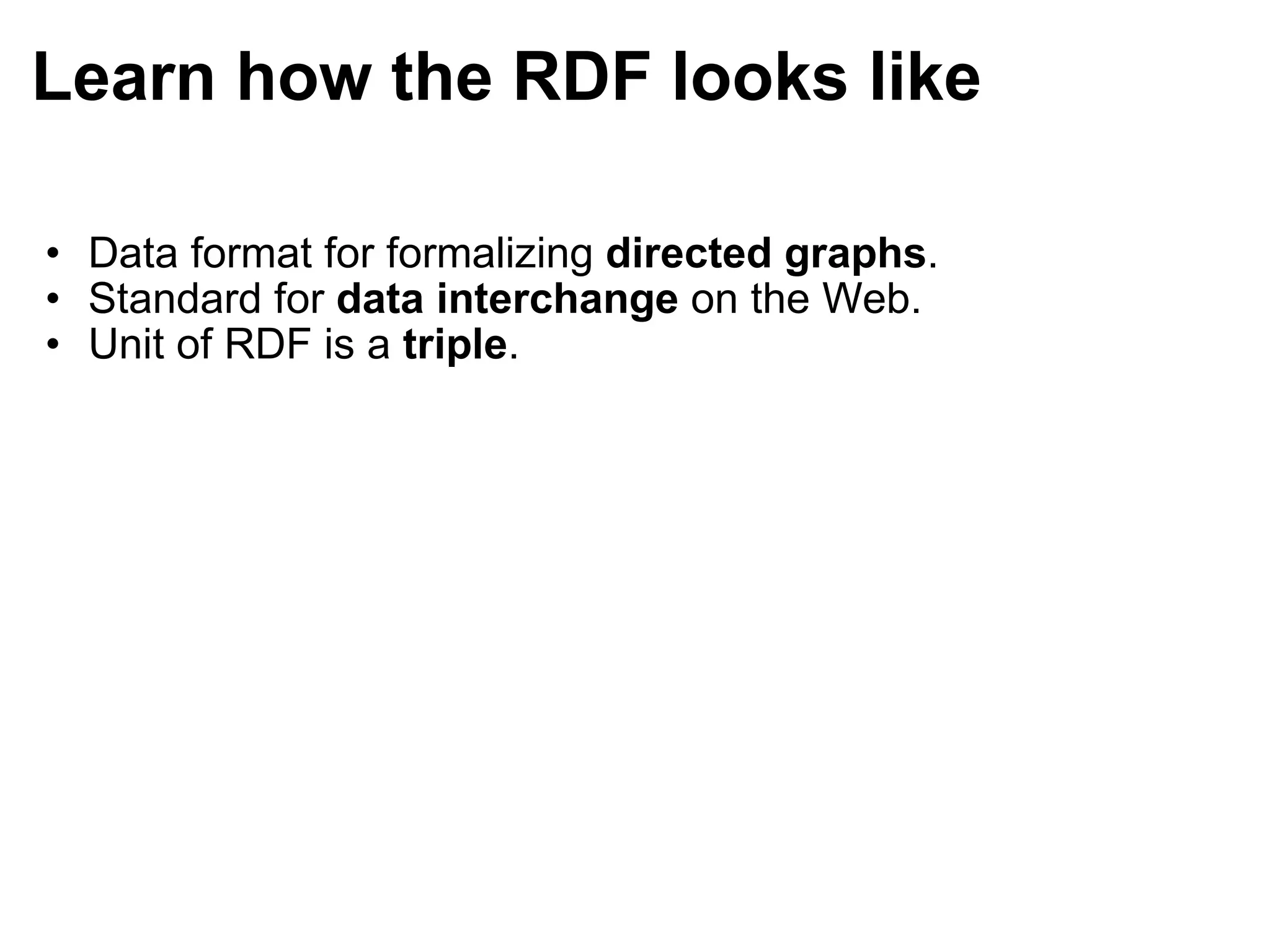
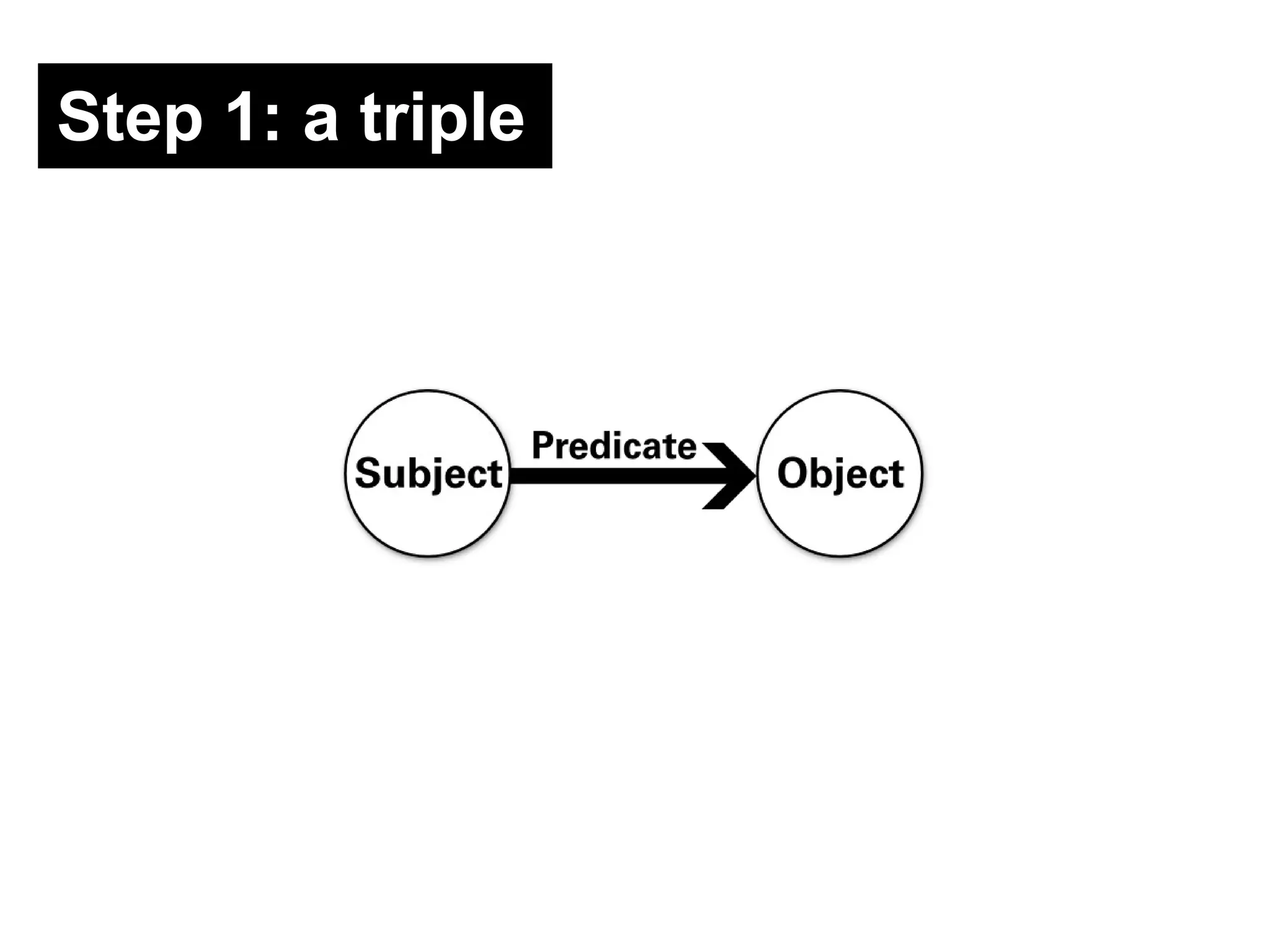
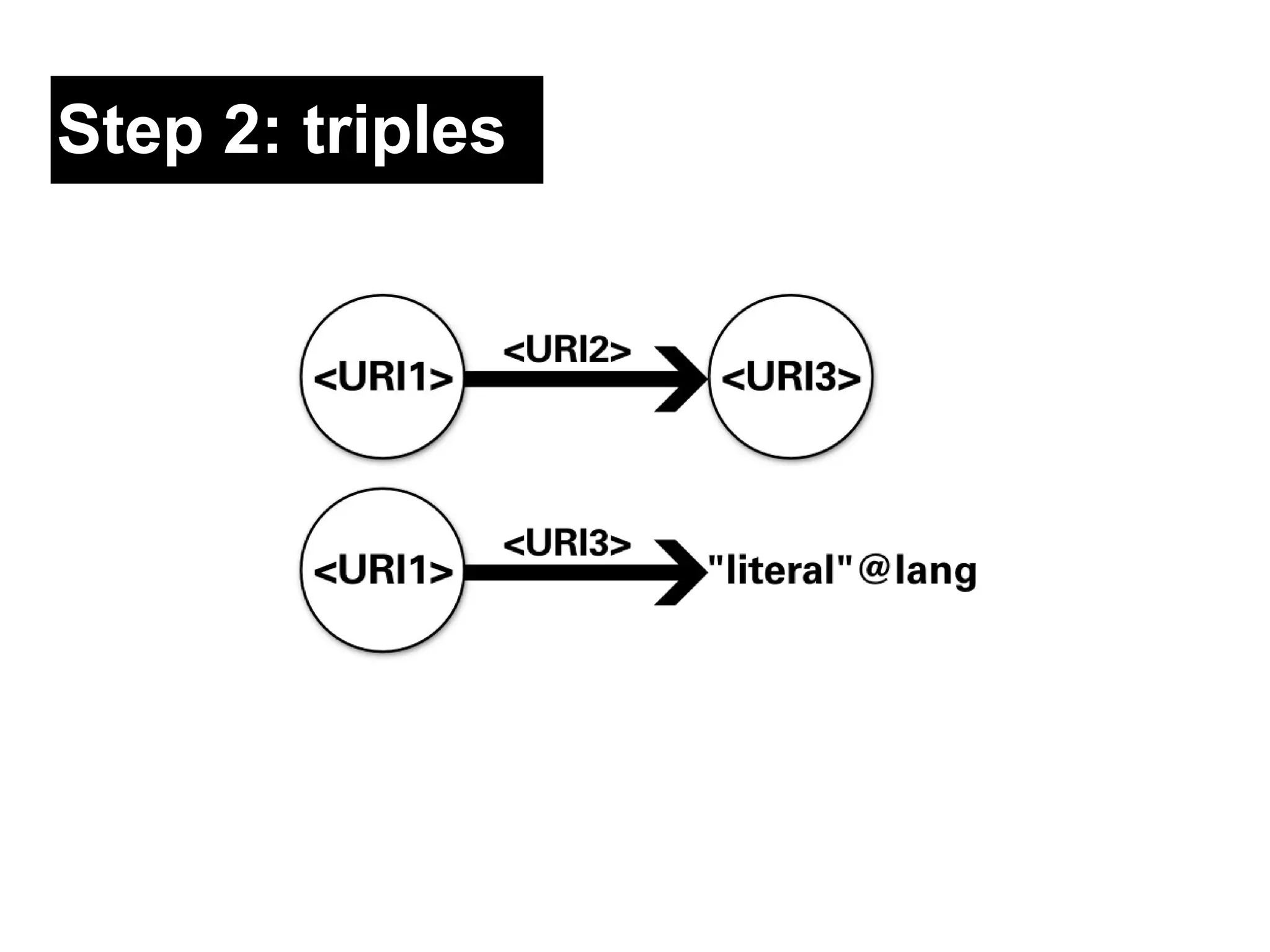
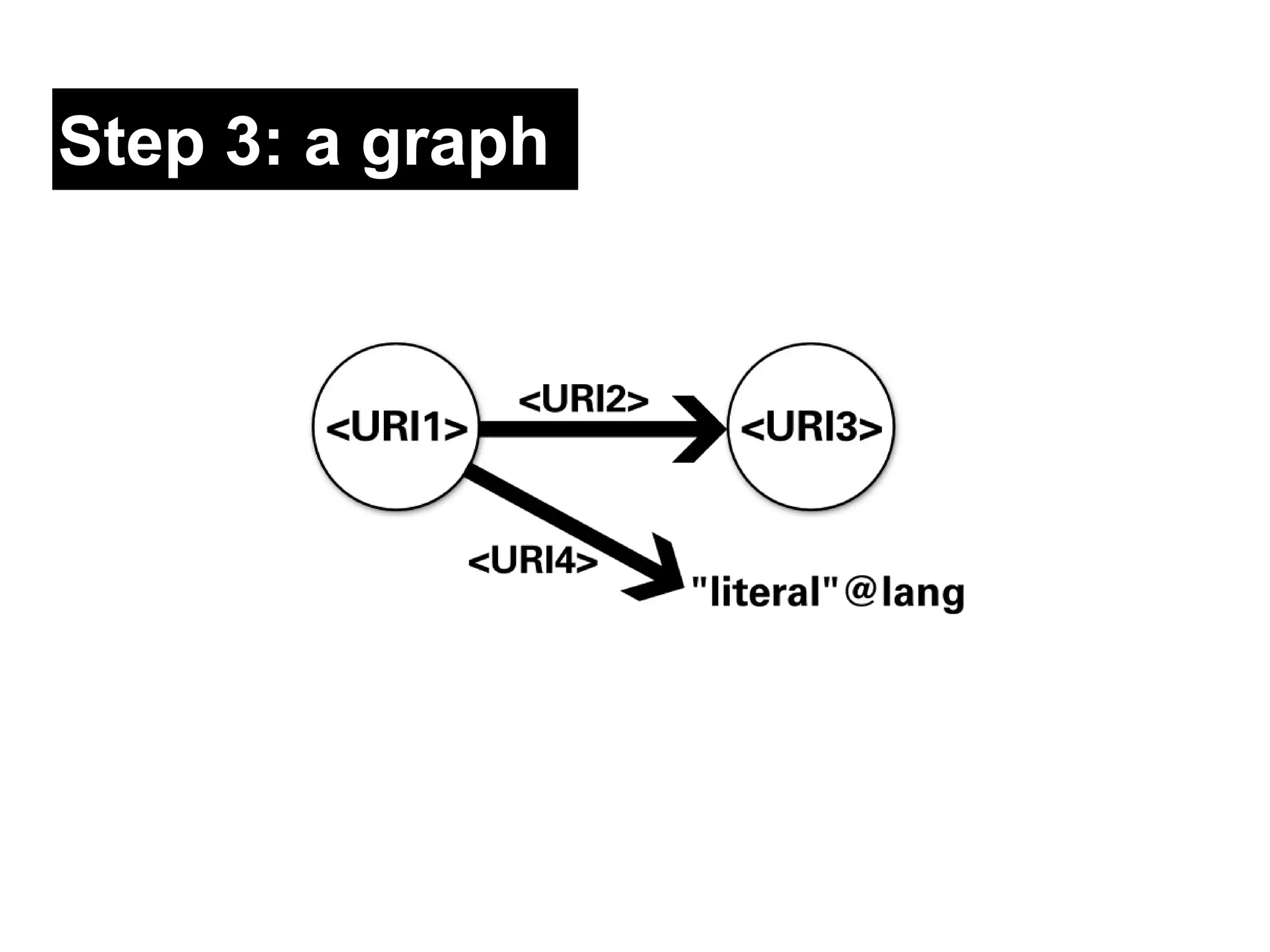
Learn how the RDF looks like Data format for formalizing  directed graphs . Standard for  data interchange  on the Web. Unit of RDF is a  triple .
Step 1: a triple
Step 2: triples
Step 3: a graph
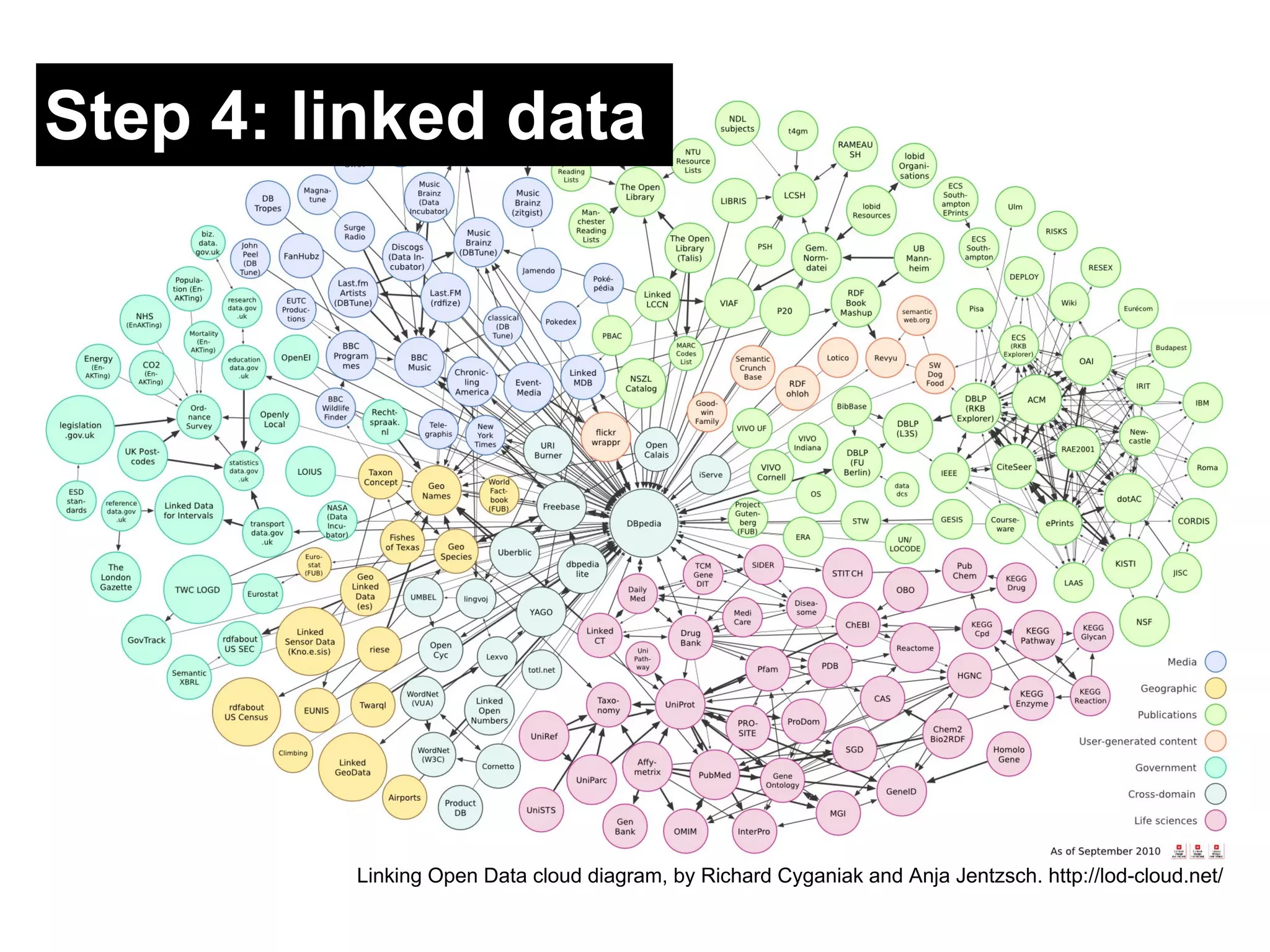
Linking Open Data cloud diagram, by Richard Cyganiak and Anja Jentzsch. http://lod-cloud.net/ Step 4: linked data
Learn how to SPARQL Query language for RDF PREFIX ex: <http://example.com> SELECT  [DISTINCT] ?what [FROM ?where] WHERE   {    ?triplePattern }   [LIMIT ?limit] [ORDER BY ?variable] 
Linked data Use  URIs  as names for things Use  HTTP URIs  so that people can look up those names. When someone looks up a URI,  provide useful information , using the standards (RDF, SPARQL) Include  links to other  URIs. so that they can discover more things.
Linking data linking...  is a  continuous integration  of heterogeneous dataspaces?  creates  context ? is a  job for librarians ? Or  machines ? is  good ?
@href  is a blunt instrument
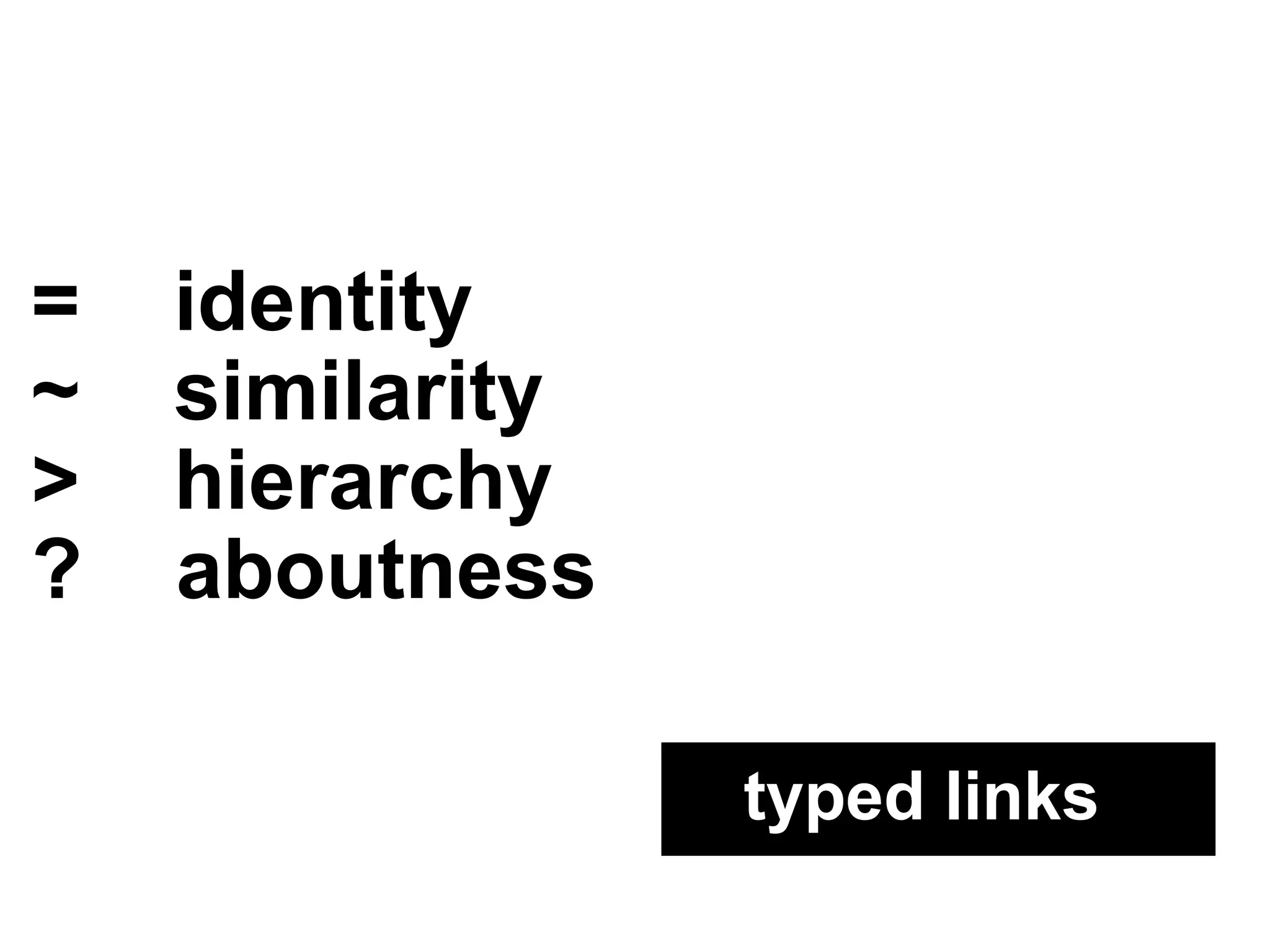
typed links
=    identity ~    similarity >    hierarchy ?    aboutness typed links
Discussion How to  find datasets  suitable for interlinking?  How to make my dataset  worth linking to ? How to  encourage others to link  to my data? What is the  added value  of links?  How to  determine the quality  of a link? How to  maintain  links?
find and examine data
added value of links
link baiting
link maintenance
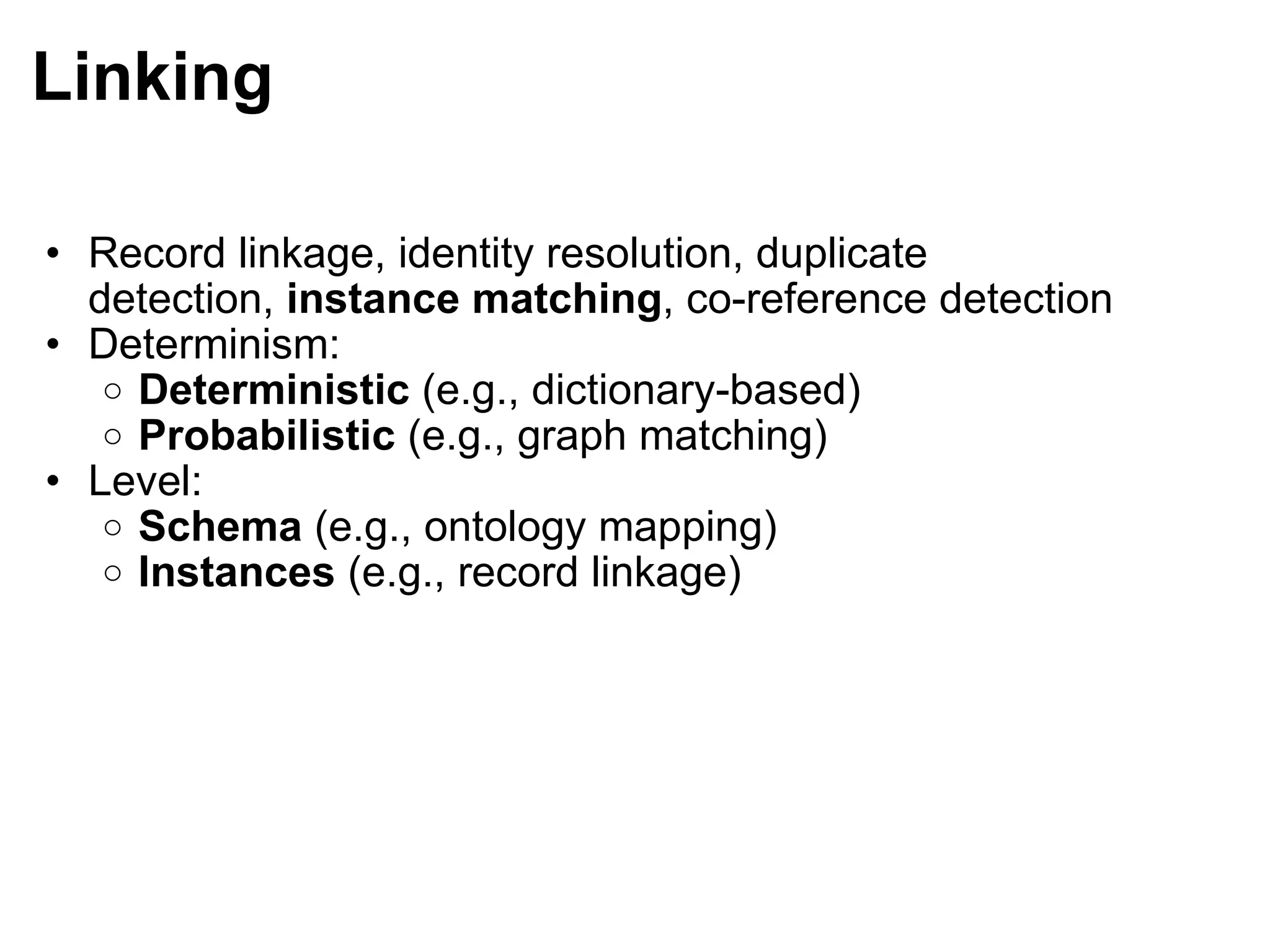
Linking Record linkage, identity resolution, duplicate detection,  instance matching , co-reference detection Determinism:  Deterministic  (e.g., dictionary-based) Probabilistic  (e.g., graph matching) Level: Schema  (e.g., ontology mapping) Instances  (e.g., record linkage)
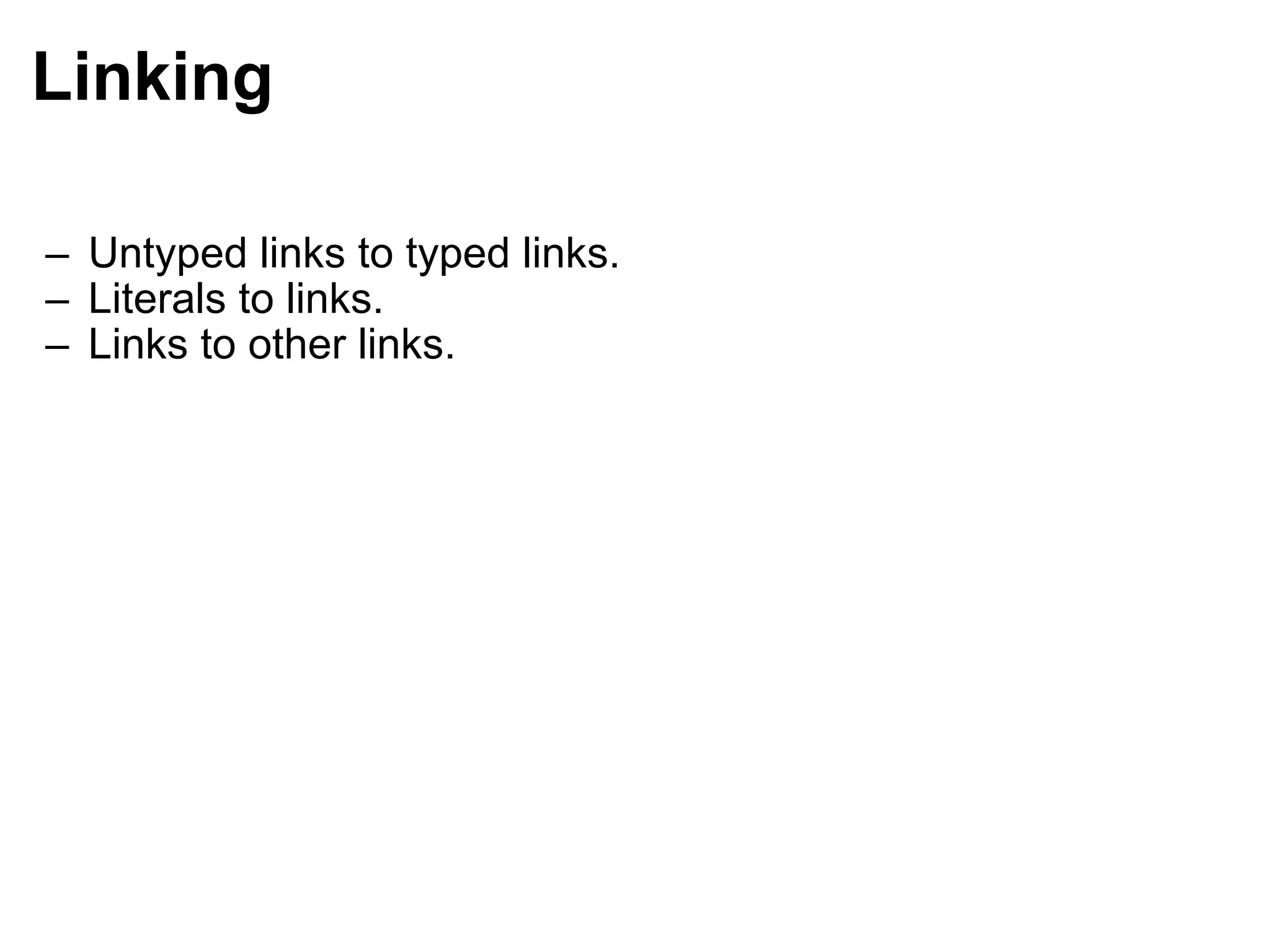
Linking Untyped links to typed links. Literals to links. Links to other links.
Interlinking with Silk Silk is an interlinking framework for  instance matching . Uses the  link specification language  to describe the interlinking process. Powerful and relatively easy-to-use.
Link specification language Your turn!
connect the dots
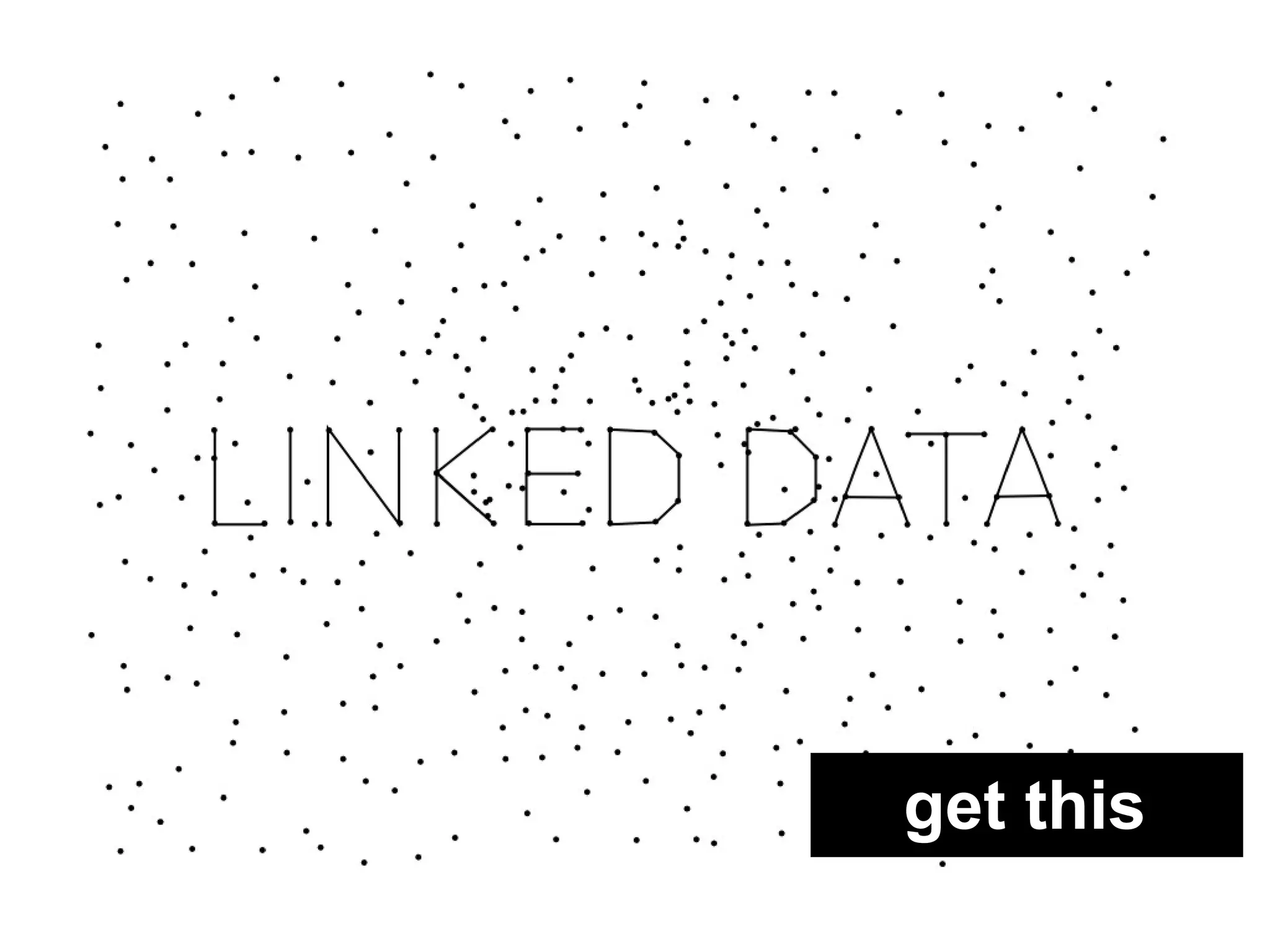
get this
or this
the end.

Linking library data