Manufacturing
Shop
Establishment &
Layout
This presentation explores the key considerations involved in establishing a
manufacturing shop, from site selection and layout to machinery placement
and workflow optimization. It provides a comprehensive guide for
entrepreneurs and managers looking to build or upgrade their
manufacturing facilities.
By Deepak Yadav
Factors to Consider in Shop
Establishment
1 Production Type
The type of products you plan
to manufacture will dictate the
necessary equipment, layout,
and safety protocols.
2 Production Volume
High-volume production
requires larger spaces, more
machinery, and efficient
material handling systems.
3 Market Demand
Understanding market trends
and potential customers is
crucial for determining the
scale and scope of your
manufacturing operation.
4 Financial Resources
Establish a realistic budget for
acquiring land, constructing
buildings, purchasing
machinery, and operating the
shop.
Site Selection and Zoning Requirements
Location
Choose a site with good access to
transportation, utilities, and skilled labor.
Zoning
Ensure the selected site is zoned for
industrial use and meets local
regulations.
Environmental Impact
Consider the environmental impact of
your manufacturing processes and
choose a site that minimizes pollution
and waste.
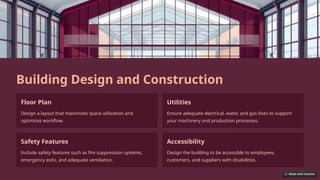
Building Design and Construction
Floor Plan
Design a layout that maximizes space utilization and
optimizes workflow.
Utilities
Ensure adequate electrical, water, and gas lines to support
your machinery and production processes.
Safety Features
Include safety features such as fire suppression systems,
emergency exits, and adequate ventilation.
Accessibility
Design the building to be accessible to employees,
customers, and suppliers with disabilities.
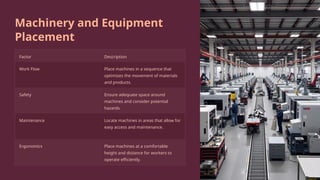
Machinery and Equipment
Placement
Factor Description
Work Flow Place machines in a sequence that
optimizes the movement of materials
and products.
Safety Ensure adequate space around
machines and consider potential
hazards.
Maintenance Locate machines in areas that allow for
easy access and maintenance.
Ergonomics Place machines at a comfortable
height and distance for workers to
operate efficiently.
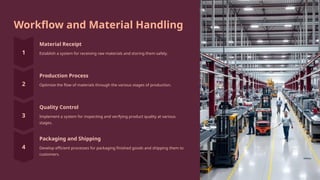
Workflow and Material Handling
Material Receipt
Establish a system for receiving raw materials and storing them safely.
Production Process
Optimize the flow of materials through the various stages of production.
Quality Control
Implement a system for inspecting and verifying product quality at various
stages.
Packaging and Shipping
Develop efficient processes for packaging finished goods and shipping them to
customers.
Lighting, Ventilation, and
Safety Considerations
Lighting
Provide adequate lighting to ensure
worker safety and productivity.
Ventilation
Ensure proper ventilation to remove
fumes, dust, and other hazards.
Safety
Implement safety protocols, training,
and equipment to minimize
accidents and injuries.
Fire Safety
Install fire suppression systems and
ensure proper fire safety procedures
are in place.
Conclusion and Key
Takeaways
Establishing a manufacturing shop requires careful planning and attention to
detail. By considering factors such as site selection, building design,
machinery placement, and workflow optimization, you can create a
productive and efficient manufacturing environment. Always prioritize safety
and maintain a focus on continuous improvement.

Manufacturing-Shop-Establishment-and-Layout

  • 1.
    Manufacturing Shop Establishment & Layout This presentationexplores the key considerations involved in establishing a manufacturing shop, from site selection and layout to machinery placement and workflow optimization. It provides a comprehensive guide for entrepreneurs and managers looking to build or upgrade their manufacturing facilities. By Deepak Yadav
  • 2.
    Factors to Considerin Shop Establishment 1 Production Type The type of products you plan to manufacture will dictate the necessary equipment, layout, and safety protocols. 2 Production Volume High-volume production requires larger spaces, more machinery, and efficient material handling systems. 3 Market Demand Understanding market trends and potential customers is crucial for determining the scale and scope of your manufacturing operation. 4 Financial Resources Establish a realistic budget for acquiring land, constructing buildings, purchasing machinery, and operating the shop.
  • 3.
    Site Selection andZoning Requirements Location Choose a site with good access to transportation, utilities, and skilled labor. Zoning Ensure the selected site is zoned for industrial use and meets local regulations. Environmental Impact Consider the environmental impact of your manufacturing processes and choose a site that minimizes pollution and waste.
  • 4.
    Building Design andConstruction Floor Plan Design a layout that maximizes space utilization and optimizes workflow. Utilities Ensure adequate electrical, water, and gas lines to support your machinery and production processes. Safety Features Include safety features such as fire suppression systems, emergency exits, and adequate ventilation. Accessibility Design the building to be accessible to employees, customers, and suppliers with disabilities.
  • 5.
    Machinery and Equipment Placement FactorDescription Work Flow Place machines in a sequence that optimizes the movement of materials and products. Safety Ensure adequate space around machines and consider potential hazards. Maintenance Locate machines in areas that allow for easy access and maintenance. Ergonomics Place machines at a comfortable height and distance for workers to operate efficiently.
  • 6.
    Workflow and MaterialHandling Material Receipt Establish a system for receiving raw materials and storing them safely. Production Process Optimize the flow of materials through the various stages of production. Quality Control Implement a system for inspecting and verifying product quality at various stages. Packaging and Shipping Develop efficient processes for packaging finished goods and shipping them to customers.
  • 7.
    Lighting, Ventilation, and SafetyConsiderations Lighting Provide adequate lighting to ensure worker safety and productivity. Ventilation Ensure proper ventilation to remove fumes, dust, and other hazards. Safety Implement safety protocols, training, and equipment to minimize accidents and injuries. Fire Safety Install fire suppression systems and ensure proper fire safety procedures are in place.
  • 8.
    Conclusion and Key Takeaways Establishinga manufacturing shop requires careful planning and attention to detail. By considering factors such as site selection, building design, machinery placement, and workflow optimization, you can create a productive and efficient manufacturing environment. Always prioritize safety and maintain a focus on continuous improvement.