Introduction to Raw
Materials
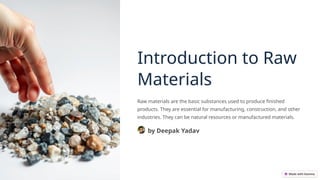
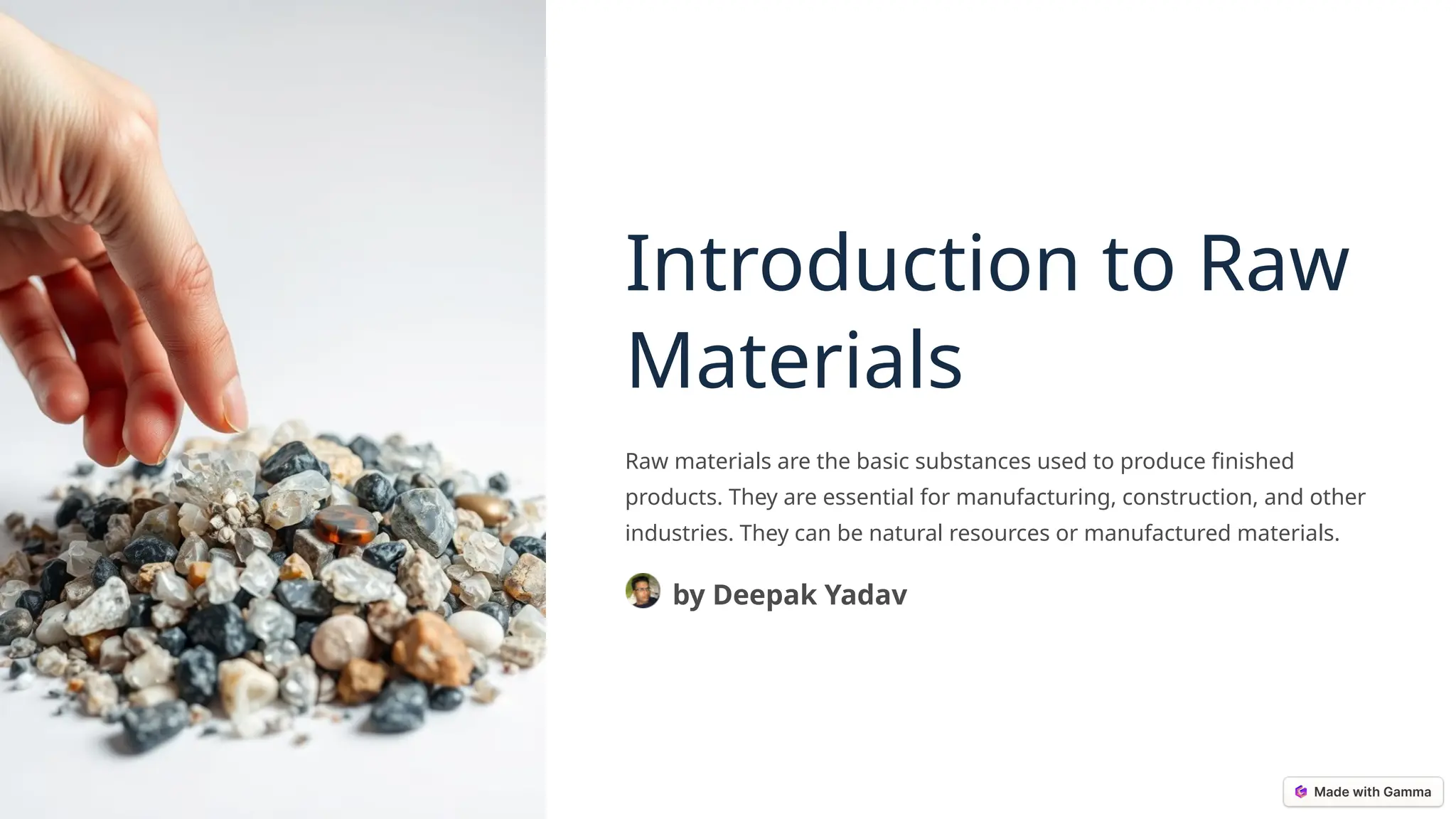
Raw materials are the basic substances used to produce finished
products. They are essential for manufacturing, construction, and other
industries. They can be natural resources or manufactured materials.
by Deepak Yadav
Types of Raw Materials
Natural Raw Materials
Natural raw materials are derived
from nature. They include minerals,
wood, petroleum, and agricultural
products.
Manufactured Raw Materials
These are created through industrial
processes. They include steel, plastics,
and chemicals.
Renewable Raw Materials
Renewable raw materials can be
replenished over time, such as wood,
bamboo, and cotton.
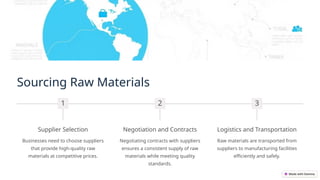
Sourcing Raw Materials
1
Supplier Selection
Businesses need to choose suppliers
that provide high-quality raw
materials at competitive prices.
2
Negotiation and Contracts
Negotiating contracts with suppliers
ensures a consistent supply of raw
materials while meeting quality
standards.
3
Logistics and Transportation
Raw materials are transported from
suppliers to manufacturing facilities
efficiently and safely.
Quality Control of Raw
Materials
1 Inspection
Raw materials are
inspected for defects,
contamination, and
compliance with quality
standards.
2 Testing
Testing ensures that raw
materials meet the
necessary specifications for
the intended use.
3 Documentation
Quality control records are
maintained to track the
history of raw materials and
ensure accountability.
4 Rejection
Raw materials that fail
quality control are rejected
to maintain product quality
and safety.
Storage and Handling of Raw Materials
Warehousing
Raw materials are stored in
controlled environments to protect
them from damage and
deterioration.
Inventory Management
Efficient inventory management
ensures that there is an adequate
supply of raw materials without
unnecessary waste.
Handling and Safety
Proper handling and safety
procedures minimize risks of
accidents and ensure the integrity
of the raw materials.
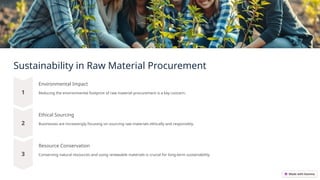
Sustainability in Raw Material Procurement
Environmental Impact
Reducing the environmental footprint of raw material procurement is a key concern.
Ethical Sourcing
Businesses are increasingly focusing on sourcing raw materials ethically and responsibly.
Resource Conservation
Conserving natural resources and using renewable materials is crucial for long-term sustainability.
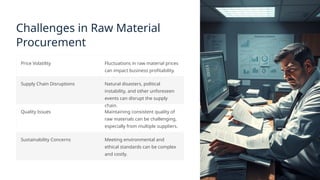
Challenges in Raw Material
Procurement
Price Volatility Fluctuations in raw material prices
can impact business profitability.
Supply Chain Disruptions Natural disasters, political
instability, and other unforeseen
events can disrupt the supply
chain.
Quality Issues Maintaining consistent quality of
raw materials can be challenging,
especially from multiple suppliers.
Sustainability Concerns Meeting environmental and
ethical standards can be complex
and costly.
Conclusion: Importance of
Raw Materials in Business
Raw materials are fundamental to the success of any business. Efficient
procurement, quality control, and sustainable practices are essential for
ensuring a consistent supply of high-quality materials.

Introduction to Raw Materials Used in Manufacturing Process

  • 1.
    Introduction to Raw Materials Rawmaterials are the basic substances used to produce finished products. They are essential for manufacturing, construction, and other industries. They can be natural resources or manufactured materials. by Deepak Yadav
  • 2.
    Types of RawMaterials Natural Raw Materials Natural raw materials are derived from nature. They include minerals, wood, petroleum, and agricultural products. Manufactured Raw Materials These are created through industrial processes. They include steel, plastics, and chemicals. Renewable Raw Materials Renewable raw materials can be replenished over time, such as wood, bamboo, and cotton.
  • 3.
    Sourcing Raw Materials 1 SupplierSelection Businesses need to choose suppliers that provide high-quality raw materials at competitive prices. 2 Negotiation and Contracts Negotiating contracts with suppliers ensures a consistent supply of raw materials while meeting quality standards. 3 Logistics and Transportation Raw materials are transported from suppliers to manufacturing facilities efficiently and safely.
  • 4.
    Quality Control ofRaw Materials 1 Inspection Raw materials are inspected for defects, contamination, and compliance with quality standards. 2 Testing Testing ensures that raw materials meet the necessary specifications for the intended use. 3 Documentation Quality control records are maintained to track the history of raw materials and ensure accountability. 4 Rejection Raw materials that fail quality control are rejected to maintain product quality and safety.
  • 5.
    Storage and Handlingof Raw Materials Warehousing Raw materials are stored in controlled environments to protect them from damage and deterioration. Inventory Management Efficient inventory management ensures that there is an adequate supply of raw materials without unnecessary waste. Handling and Safety Proper handling and safety procedures minimize risks of accidents and ensure the integrity of the raw materials.
  • 6.
    Sustainability in RawMaterial Procurement Environmental Impact Reducing the environmental footprint of raw material procurement is a key concern. Ethical Sourcing Businesses are increasingly focusing on sourcing raw materials ethically and responsibly. Resource Conservation Conserving natural resources and using renewable materials is crucial for long-term sustainability.
  • 7.
    Challenges in RawMaterial Procurement Price Volatility Fluctuations in raw material prices can impact business profitability. Supply Chain Disruptions Natural disasters, political instability, and other unforeseen events can disrupt the supply chain. Quality Issues Maintaining consistent quality of raw materials can be challenging, especially from multiple suppliers. Sustainability Concerns Meeting environmental and ethical standards can be complex and costly.
  • 8.
    Conclusion: Importance of RawMaterials in Business Raw materials are fundamental to the success of any business. Efficient procurement, quality control, and sustainable practices are essential for ensuring a consistent supply of high-quality materials.