DR.ARJUN M.B
M6
MODERATOR : DR.ATUL GOEL
 Exacebration of hyperthyroidism
 Acute, life threatening hypermetabolic state
 Can also be the initial presentation of thyrotoxic
crisis
 Mortality -20-30%
 Grave`s disease
 Multinodular goitre
 Hypersecretory thyroid cancer
 Tumor in the HPA axis
 Hyperthyroidism by iodine exposure ( radio
contrast, amiodarone)
 Most common – INFECTIONS
 Discontinuation of thyroid medications
 Systemic insults- CVA, MI, DKA, Hypoglycemia,
dehydration
 Surgical procedures
 Emotional stress
 Trauma
 Tooth extraction
 Child birth
 Toxaemia of pregnancy
 Patients have high level of Free T3, T4, even though
TSH may not be high
 Hypothesis 1: Adrenergic receptor activation
Widely accepted hypothesis at present
Sympathetic nerves innervate thyroid gland and
catecholamines increase the thyroid synthesis.
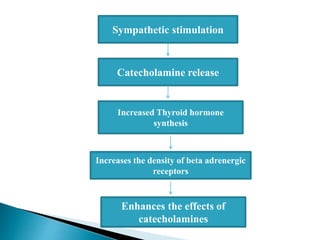
Sympathetic stimulation
Catecholamine release
Increased Thyroid hormone
synthesis
Increases the density of beta adrenergic
receptors
Enhances the effects of
catecholamines
 Hypothesis 2 : A drop in levels of Thyroid binding
globulin
 Hypothesis 3 : alteration in tissue tolerance to
Hormone
 Hypothesis 4 : Presence of unique catecholamine
like substance in thyrotoxicosis.
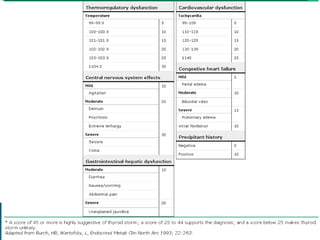
 Extremely high metabolism increases temperature ,
oxygen and energy consumption.
 Accelerated tachycardia, Hypertension, high output
cardiac failure- Pulmonary edema, cardiac arrythmias.
 Diarrhea, vomiting, abdominal pain
 Irritability, restlessness, agitation, Ghabrahat
 Delirium ,Seizures coma
 High index of suspicion .
 Careful history and REVIEW OF PREVIOUS
RECORDS
 Measurement of free T3, T4 , TSH levels
 Investigations to find out the precipitating cause.
1. Medications to halt the synthesis , release and
peripheral converssion of thyroid hormone.
2. Medications to counteract peripheral effects of
thyroid hormone
3. Controlling adrenergic and systemic
decompensation with supportive therapy
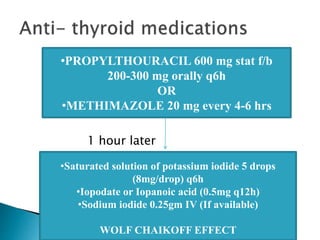
1 hour later
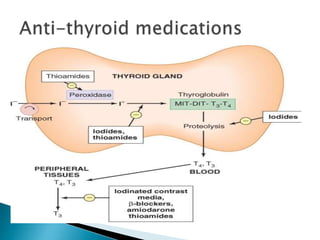
•PROPYLTHOURACIL 600 mg stat f/b
200-300 mg orally q6h
OR
•METHIMAZOLE 20 mg every 4-6 hrs
•Saturated solution of potassium iodide 5 drops
(8mg/drop) q6h
•Iopodate or Iopanoic acid (0.5mg q12h)
•Sodium iodide 0.25gm IV (If available)
WOLF CHAIKOFF EFFECT
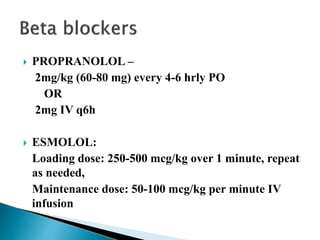
 PROPRANOLOL –
2mg/kg (60-80 mg) every 4-6 hrly PO
OR
2mg IV q6h
 ESMOLOL:
Loading dose: 250-500 mcg/kg over 1 minute, repeat
as needed,
Maintenance dose: 50-100 mcg/kg per minute IV
infusion
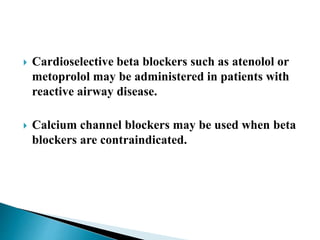
 Cardioselective beta blockers such as atenolol or
metoprolol may be administered in patients with
reactive airway disease.
 Calcium channel blockers may be used when beta
blockers are contraindicated.
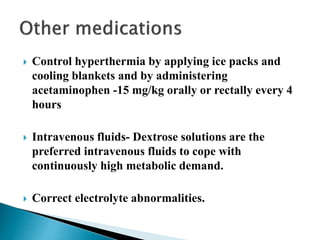
 Control hyperthermia by applying ice packs and
cooling blankets and by administering
acetaminophen -15 mg/kg orally or rectally every 4
hours
 Intravenous fluids- Dextrose solutions are the
preferred intravenous fluids to cope with
continuously high metabolic demand.
 Correct electrolyte abnormalities.
 Decrease peripheral conversion of T4 to T3.
 This may also be useful in preventing relative
adrenal insufficiency due to hyperthyroidism and
improving vasomotor symptoms.
 Hydrocortisone: 5 mg/kg (up to 100 mg)
intravenously every 6-8 hours
 Dexamethasone: 0.1-0.2 mg/kg per day divided
every 6-8 hours
 Treat the underlying condition, if any, that
precipitated thyroid storm and exclude
comorbidities such as diabetic ketoacidosis and
adrenal insufficiency.
 Infection should be treated with antibiotics.
 Rarely, as a life-saving measure, plasmapheresis has
been used to treat thyroid storm in adults.
 Bile acid sequestrants prevent reabsorption of free
THs in the gut (released from conjugated TH
metabolites secreted into bile through the
enterohepatic circulation).
 A recommended dose is 4 g of cholestyramine every
6 hours via a nasogastric tube.
 Another option is 20-30 g/day of Colestipol-HCl
 Iodine preparations should be discontinued once the
acute phase resolves - afebrile with normalization of
cardiac and neurological status.
 Dose of thioamides adjusted to maintain thyroid
function in the normal range.
 PTU during treatment of thyroid storm, this should
be switched to methimazole at the time of discharge.
 Beta-blockers may be discontinued once thyroid
function normalizes
 Glucocorticoids should be weaned and stopped
 Surgery : Thyroidectomy/ Thyroid artery
embolization , may be performed after about 7 days
of iodine administration. (Iodine reduces the
vascularity of the gland and the risk for thyroid
storm.)
 Thyroid storm is a life threatening emergecny if
untreated- upto 30% mortality even in treated
cases.
 High index of suspicion . Never ignore
GHABRAHAT
 Patients of hyperthyroidism must be counselled
about the possibility of thyroid storm during acute
stress.
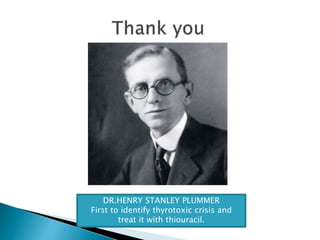
DR.HENRY STANLEY PLUMMER
First to identify thyrotoxic crisis and
treat it with thiouracil.
 J.Larry Jameson, Susan.J.Mandel, Antony.P.weetman :
Disorders of the thyroid gland :Harrison`s principles of
internal medicine 19th edition : 2298-2302
 Bindu nayak MD, Kenneth Burman : Thyroid storm ;
Endocrinolo Metab Clin N Am 35(2006) 663-686
 www.emedicine.medscape.com

manoj THYROTOXIC CRISIS.pptx

  • 1.
  • 2.
     Exacebration ofhyperthyroidism  Acute, life threatening hypermetabolic state  Can also be the initial presentation of thyrotoxic crisis  Mortality -20-30%
  • 3.
     Grave`s disease Multinodular goitre  Hypersecretory thyroid cancer  Tumor in the HPA axis  Hyperthyroidism by iodine exposure ( radio contrast, amiodarone)
  • 4.
     Most common– INFECTIONS  Discontinuation of thyroid medications  Systemic insults- CVA, MI, DKA, Hypoglycemia, dehydration  Surgical procedures  Emotional stress  Trauma  Tooth extraction  Child birth  Toxaemia of pregnancy
  • 5.
     Patients havehigh level of Free T3, T4, even though TSH may not be high  Hypothesis 1: Adrenergic receptor activation Widely accepted hypothesis at present Sympathetic nerves innervate thyroid gland and catecholamines increase the thyroid synthesis.
  • 6.
    Sympathetic stimulation Catecholamine release IncreasedThyroid hormone synthesis Increases the density of beta adrenergic receptors Enhances the effects of catecholamines
  • 7.
     Hypothesis 2: A drop in levels of Thyroid binding globulin  Hypothesis 3 : alteration in tissue tolerance to Hormone  Hypothesis 4 : Presence of unique catecholamine like substance in thyrotoxicosis.
  • 8.
     Extremely highmetabolism increases temperature , oxygen and energy consumption.  Accelerated tachycardia, Hypertension, high output cardiac failure- Pulmonary edema, cardiac arrythmias.  Diarrhea, vomiting, abdominal pain  Irritability, restlessness, agitation, Ghabrahat  Delirium ,Seizures coma
  • 10.
     High indexof suspicion .  Careful history and REVIEW OF PREVIOUS RECORDS  Measurement of free T3, T4 , TSH levels  Investigations to find out the precipitating cause.
  • 11.
    1. Medications tohalt the synthesis , release and peripheral converssion of thyroid hormone. 2. Medications to counteract peripheral effects of thyroid hormone 3. Controlling adrenergic and systemic decompensation with supportive therapy
  • 13.
    1 hour later •PROPYLTHOURACIL600 mg stat f/b 200-300 mg orally q6h OR •METHIMAZOLE 20 mg every 4-6 hrs •Saturated solution of potassium iodide 5 drops (8mg/drop) q6h •Iopodate or Iopanoic acid (0.5mg q12h) •Sodium iodide 0.25gm IV (If available) WOLF CHAIKOFF EFFECT
  • 14.
     PROPRANOLOL – 2mg/kg(60-80 mg) every 4-6 hrly PO OR 2mg IV q6h  ESMOLOL: Loading dose: 250-500 mcg/kg over 1 minute, repeat as needed, Maintenance dose: 50-100 mcg/kg per minute IV infusion
  • 15.
     Cardioselective betablockers such as atenolol or metoprolol may be administered in patients with reactive airway disease.  Calcium channel blockers may be used when beta blockers are contraindicated.
  • 16.
     Control hyperthermiaby applying ice packs and cooling blankets and by administering acetaminophen -15 mg/kg orally or rectally every 4 hours  Intravenous fluids- Dextrose solutions are the preferred intravenous fluids to cope with continuously high metabolic demand.  Correct electrolyte abnormalities.
  • 17.
     Decrease peripheralconversion of T4 to T3.  This may also be useful in preventing relative adrenal insufficiency due to hyperthyroidism and improving vasomotor symptoms.  Hydrocortisone: 5 mg/kg (up to 100 mg) intravenously every 6-8 hours  Dexamethasone: 0.1-0.2 mg/kg per day divided every 6-8 hours
  • 18.
     Treat theunderlying condition, if any, that precipitated thyroid storm and exclude comorbidities such as diabetic ketoacidosis and adrenal insufficiency.  Infection should be treated with antibiotics.  Rarely, as a life-saving measure, plasmapheresis has been used to treat thyroid storm in adults.
  • 19.
     Bile acidsequestrants prevent reabsorption of free THs in the gut (released from conjugated TH metabolites secreted into bile through the enterohepatic circulation).  A recommended dose is 4 g of cholestyramine every 6 hours via a nasogastric tube.  Another option is 20-30 g/day of Colestipol-HCl
  • 20.
     Iodine preparationsshould be discontinued once the acute phase resolves - afebrile with normalization of cardiac and neurological status.  Dose of thioamides adjusted to maintain thyroid function in the normal range.  PTU during treatment of thyroid storm, this should be switched to methimazole at the time of discharge.
  • 21.
     Beta-blockers maybe discontinued once thyroid function normalizes  Glucocorticoids should be weaned and stopped  Surgery : Thyroidectomy/ Thyroid artery embolization , may be performed after about 7 days of iodine administration. (Iodine reduces the vascularity of the gland and the risk for thyroid storm.)
  • 22.
     Thyroid stormis a life threatening emergecny if untreated- upto 30% mortality even in treated cases.  High index of suspicion . Never ignore GHABRAHAT  Patients of hyperthyroidism must be counselled about the possibility of thyroid storm during acute stress.
  • 23.
    DR.HENRY STANLEY PLUMMER Firstto identify thyrotoxic crisis and treat it with thiouracil.
  • 24.
     J.Larry Jameson,Susan.J.Mandel, Antony.P.weetman : Disorders of the thyroid gland :Harrison`s principles of internal medicine 19th edition : 2298-2302  Bindu nayak MD, Kenneth Burman : Thyroid storm ; Endocrinolo Metab Clin N Am 35(2006) 663-686  www.emedicine.medscape.com