Dr. S CHANDRASEKAR, MD
HOD & PROFESSOR OF MEDICINE
DEPT. OF GENERAL MEDICINE
SMC
WHY??
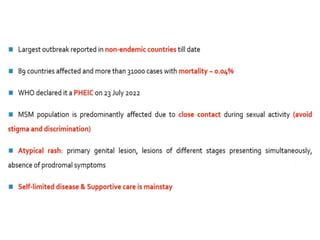
WHO declares Mpox outbreak global public
health emergency
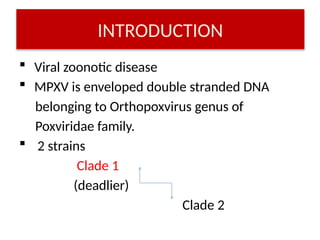
INTRODUCTION
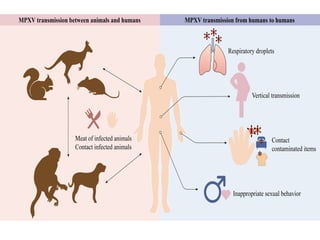
 Viral zoonotic disease
 MPXV is enveloped double stranded DNA
belonging to Orthopoxvirus genus of
Poxviridae family.
 2 strains
Clade 1
(deadlier)
Clade 2
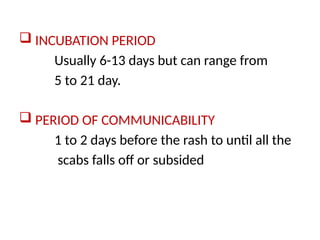
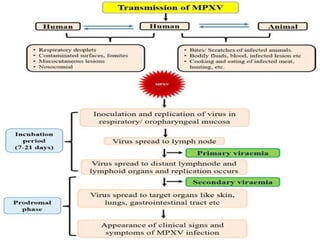
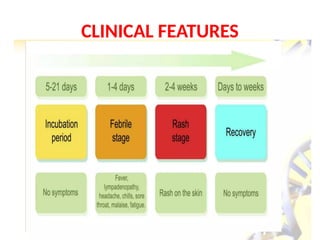
 INCUBATION PERIOD
Usually 6-13 days but can range from
5 to 21 day.
 PERIOD OF COMMUNICABILITY
1 to 2 days before the rash to until all the
scabs falls off or subsided
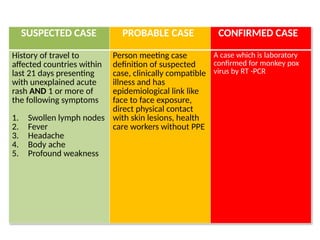
SUSPECTED CASE PROBABLE CASE CONFIRMED CASE
History of travel to
affected countries within
last 21 days presenting
with unexplained acute
rash AND 1 or more of
the following symptoms
1. Swollen lymph nodes
2. Fever
3. Headache
4. Body ache
5. Profound weakness
Person meeting case
definition of suspected
case, clinically compatible
illness and has
epidemiological link like
face to face exposure,
direct physical contact
with skin lesions, health
care workers without PPE
A case which is laboratory
confirmed for monkey pox
virus by RT -PCR
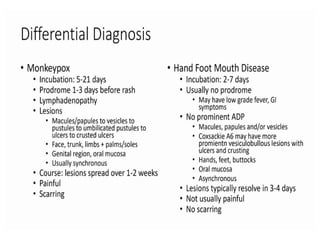
CLINICAL FEATURES
PRODROMAL PHASE
SKIN INVOLVEMENT
• ENANTHEM – First lesions on tongue and
mouth
• CENTRIFUGAL SPREAD - Macules starts from
face spreading to arms, legs, palms and soles
within 24 hours.
• Follows macular, papular,vesicular and
pustular phase. Classic is vesicopustular.
• Predilection to palms and soles is
characteristic of Monkey pox.
STAGES OF RASH
4 -5 DAYS 5-6 DAYS 6-7DAYS
RASHES IN MPOX
4 -5 DAYS 5-6 DAYS 6-7DAYS
COMPLICATIONS
• Secondary infections
• Pneumonia
• Sepsis
• Encephalitis
• Corneal involvement can lead to loss of vision
DIAGNOSIS
Traveller from outbreak /endemic region or community transmission
ASYMPTOMATIC Observe for development of any signs and symptoms
for 21 days.
SYMPTOMATIC
(RT –PCR)
RASH PHASE RECOVERY PHASE
• Lesion roof
• Lesion fluid
• Lesion base
• Lesion crust
• Naso or oropharyngeal
swab
• Blood
• Urine
• Blood
• Urine
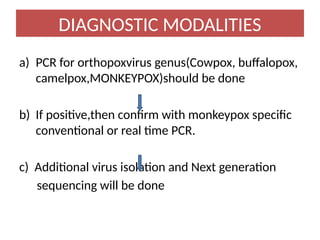
DIAGNOSTIC MODALITIES
a) PCR for orthopoxvirus genus(Cowpox, buffalopox,
camelpox,MONKEYPOX)should be done
b) If positive,then confirm with monkeypox specific
conventional or real time PCR.
c) Additional virus isolation and Next generation
sequencing will be done
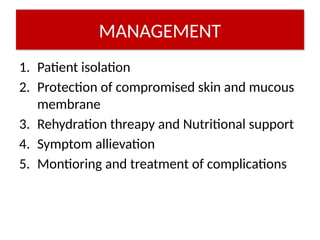
MANAGEMENT
1. Patient isolation
2. Protection of compromised skin and mucous
membrane
3. Rehydration threapy and Nutritional support
4. Symptom allievation
5. Montioring and treatment of complications
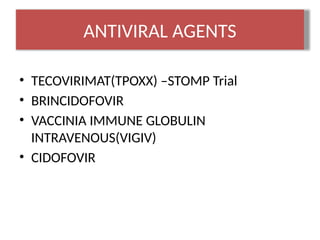
ANTIVIRAL AGENTS
• TECOVIRIMAT(TPOXX) –STOMP Trial
• BRINCIDOFOVIR
• VACCINIA IMMUNE GLOBULIN
INTRAVENOUS(VIGIV)
• CIDOFOVIR
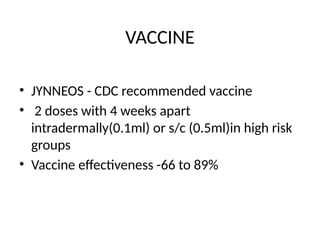
VACCINE
• JYNNEOS - CDC recommended vaccine
• 2 doses with 4 weeks apart
intradermally(0.1ml) or s/c (0.5ml)in high risk
groups
• Vaccine effectiveness -66 to 89%
THANK YOU
• Some people, the first symptom of mpox is a rash, while others may have
fever, muscle aches or sore throat first.
• The mpox rash often begins on the face and spreads over the body,
extending to the palms of the hands and soles of the feet. {It can also start
on other parts of the body where contact was made, such as the genitals}.
• Rash starts as a flat sore, which develops into a blister filled with liquid that
may be itchy or painful. As the rash heals, the lesions dry up, crust over and
fall off.
• Some people may have one or a few skin lesions and others have hundreds
or more. These can appear anywhere on the body including: palms of hands
and soles of feet face, mouth and throat groin and genital areas anus.
• Note: Blisters are a feature of Chicken Pox but chicken pox is not usually
associated with Swollen Lymph Nodes Secondly Mpox blisters are mainly on
palms and soles
TREATMENT
• Supportive treatment, pain fever
management nutrition hydration Isolation.
Prevention of secondary infection
Medication Tecovirimat, not yet freely
available but as trial enrollment

Monkey pox guidelines and management treatment

  • 1.
    Dr. S CHANDRASEKAR,MD HOD & PROFESSOR OF MEDICINE DEPT. OF GENERAL MEDICINE SMC
  • 2.
    WHY?? WHO declares Mpoxoutbreak global public health emergency
  • 3.
    INTRODUCTION  Viral zoonoticdisease  MPXV is enveloped double stranded DNA belonging to Orthopoxvirus genus of Poxviridae family.  2 strains Clade 1 (deadlier) Clade 2
  • 5.
     INCUBATION PERIOD Usually6-13 days but can range from 5 to 21 day.  PERIOD OF COMMUNICABILITY 1 to 2 days before the rash to until all the scabs falls off or subsided
  • 6.
    SUSPECTED CASE PROBABLECASE CONFIRMED CASE History of travel to affected countries within last 21 days presenting with unexplained acute rash AND 1 or more of the following symptoms 1. Swollen lymph nodes 2. Fever 3. Headache 4. Body ache 5. Profound weakness Person meeting case definition of suspected case, clinically compatible illness and has epidemiological link like face to face exposure, direct physical contact with skin lesions, health care workers without PPE A case which is laboratory confirmed for monkey pox virus by RT -PCR
  • 10.
  • 11.
  • 12.
    SKIN INVOLVEMENT • ENANTHEM– First lesions on tongue and mouth • CENTRIFUGAL SPREAD - Macules starts from face spreading to arms, legs, palms and soles within 24 hours. • Follows macular, papular,vesicular and pustular phase. Classic is vesicopustular. • Predilection to palms and soles is characteristic of Monkey pox.
  • 13.
    STAGES OF RASH 4-5 DAYS 5-6 DAYS 6-7DAYS
  • 14.
    RASHES IN MPOX 4-5 DAYS 5-6 DAYS 6-7DAYS
  • 18.
    COMPLICATIONS • Secondary infections •Pneumonia • Sepsis • Encephalitis • Corneal involvement can lead to loss of vision
  • 19.
    DIAGNOSIS Traveller from outbreak/endemic region or community transmission ASYMPTOMATIC Observe for development of any signs and symptoms for 21 days. SYMPTOMATIC (RT –PCR) RASH PHASE RECOVERY PHASE • Lesion roof • Lesion fluid • Lesion base • Lesion crust • Naso or oropharyngeal swab • Blood • Urine • Blood • Urine
  • 20.
    DIAGNOSTIC MODALITIES a) PCRfor orthopoxvirus genus(Cowpox, buffalopox, camelpox,MONKEYPOX)should be done b) If positive,then confirm with monkeypox specific conventional or real time PCR. c) Additional virus isolation and Next generation sequencing will be done
  • 21.
    MANAGEMENT 1. Patient isolation 2.Protection of compromised skin and mucous membrane 3. Rehydration threapy and Nutritional support 4. Symptom allievation 5. Montioring and treatment of complications
  • 24.
    ANTIVIRAL AGENTS • TECOVIRIMAT(TPOXX)–STOMP Trial • BRINCIDOFOVIR • VACCINIA IMMUNE GLOBULIN INTRAVENOUS(VIGIV) • CIDOFOVIR
  • 28.
    VACCINE • JYNNEOS -CDC recommended vaccine • 2 doses with 4 weeks apart intradermally(0.1ml) or s/c (0.5ml)in high risk groups • Vaccine effectiveness -66 to 89%
  • 29.
  • 30.
    • Some people,the first symptom of mpox is a rash, while others may have fever, muscle aches or sore throat first. • The mpox rash often begins on the face and spreads over the body, extending to the palms of the hands and soles of the feet. {It can also start on other parts of the body where contact was made, such as the genitals}. • Rash starts as a flat sore, which develops into a blister filled with liquid that may be itchy or painful. As the rash heals, the lesions dry up, crust over and fall off. • Some people may have one or a few skin lesions and others have hundreds or more. These can appear anywhere on the body including: palms of hands and soles of feet face, mouth and throat groin and genital areas anus. • Note: Blisters are a feature of Chicken Pox but chicken pox is not usually associated with Swollen Lymph Nodes Secondly Mpox blisters are mainly on palms and soles
  • 31.
    TREATMENT • Supportive treatment,pain fever management nutrition hydration Isolation. Prevention of secondary infection Medication Tecovirimat, not yet freely available but as trial enrollment