SUCCESS STORIES….
It’s all about the Strategic
         Management


                   Presented By:
                   MANIK KUDYAR
                   MBA-HRM
                   1200712
What is Strategy???

The word “strategy” is derived from the Greek
 word “stratçgos”; stratus (meaning army) and
 “ago” (meaning leading/moving).

Strategy is an action that managers take to
 attain one or more of the organization‟s goals.

Strategy is a well defined roadmap of an
 organization.
It defines the overall mission, vision and
 direction of an organization. The objective
 of a strategy is to maximize an
 organization‟s strengths and to minimize
 the strengths of the competitors.


Strategy, in short, bridges the gap between
 “where we are” and “where we want to be”.
Strategic Management

Strategic Management is all about identification
 and description of the strategies that managers
 can carry so as to achieve better performance and
 a competitive advantage for their organization.

An organization is said to have competitive
 advantage if its profitability is higher than the
 average profitability for all companies in its
 industry.
Success Story of
   “MAGGI”
The Origin
 In Switzerland in 1863, Julius Michael Johannes
  Maggi developed a formula to bring added taste to
  meals.

 This marked the beginning of the Maggi brand and
  its lines of convenient food products.

 Maggi merged with Nestlé in 1947. Maggi has
  been offering high quality and innovative products
  ever since.
Indian Success
 Maggi owned by Nestle is a brand that created a category for itself in
  the Foods market in India.

 The brand which is famous for the Noodles has evolved into the
  umbrella brand for Nestle in the Food segment.

 Nestle launched its noodles in the Indian market in the early 1980's.

 Nestle wanted to explore the potential for such an Instant food among
  the Indian market.
Maggi has faced lot of hurdles in its journey in
 India.

The basic problem the brand faced is the Indian
 Psyche.

Initially Nestle tried to position the Noodles in
 the platform of convenience targeting the
 working women. But it found that the sales are
 not picking up despite heavy promotion.
The Repositioning Strategy
 Research showed that Kids were the largest
  consumers of the brand.

 Realising this, Nestle repositioned the brand
  towards the kids using sales promotions and smart
  advertising.

 Now Indians are the largest eaters of Maggi
  Noodles in the world. Maggi Noodles is a
  MARKETING SUCCESS STORY.
The NISSIN Effect
 It was during the late 1990‟s that Indo Nissin - a Japanese company
  launched its Noodles brand "Top Ramen" with lot of promotion and
  with SRK endorsing the brand.

 TopRamen gave Maggi a run for its money.


Change in Taste (Maggi)
- A Big Failure
- The consumers rejected the new taste of Maggi.
Maggi – It’s Back
- And in 1999 Maggi relaunched Noodles with the original taste.
- Nestle was ready to accept the consumers verdict and it paid off
  handsomely.
- Top Ramen could not sustain the growth it had for long.
STP of MAGGI
Segmentation on the basis of:
- Life Style
- Eating Habits


Targeted the:
- Kids
- Working Women


Positioned themselves as:
- A Healthy Fast Food
- Slogan “2 minute noodles”
EXPANDING THE SPECTURUM,
    SLOGANS & TAG LINES
 Bas 2 Minute : Promising mothers of FAST TO COOK and GOOD
  TO EAT snacks

 MAGGI KETCHUP -- “Its Different”

 SOUPS -- “Taste bhi, Health Bhi”

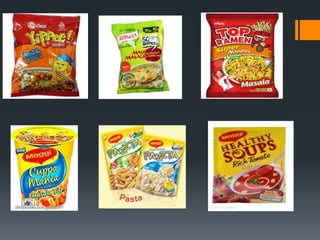
 Products like NOODLES (Masala, Tomato, Chicken), Cuppamania


 Low Salt and No Trans Fat products
 Vegetable Atta Noodles and Dal Atta Noodles
BRAND EXTENSION
 Health conscious Families, for attracting the families

 Competitors: KISSAN, HEINZ, TOPS etc…

 New Entrants

 To overcome the problem of decline in sales
Another Friend…
 Inviting people to send new recipes made with the
  help of Maggi

 There Maggi Stories

 Organizing Contest, Games and Industrial Visits for
  School Kids

 Using Attractive Advertising Campaigns
Success Story of
    “NIKE”
The HISTORY of the BRAND
 Nike was established by a couple of students from the
  University of Oregon.

 Phil Knight - was engaged in running (an athlete), and
  his companion - Bill Bowerman was his athletic trainer.

 In the early 60's American sports shoes cost about $
  5, and the quality was appropriate.

 Athletes got blisters, but one could not afford to buy
  expensive, high-quality German shoes.
 In 1964, Knight and Bowerman developed their business plan to sell
  inexpensive shoes by designing them in America, manufacturing in
  Japan (due to cheap labor), and selling it in the United States at
  lower prices than the German footwear.

 The first batch was sold from the truck near the tracks. So were
  earned first 8 thousand dollars. The partners decided to continue to
  cooperate with the Japanese and the project was named BLUE
  RIBBON SPORTS.

 1965 was a year of changes for the company name to the Greek
  goddess of victory Nike, which the manager of the company saw in
  a dream. By this time, Knight had already managed to sell shoes
  worth $ 1 million.
Timely Innovations

1975 - Corrugated Sole

1978 - Light Weight Shoes


- In the year 1980, Nike was second only to REEBOK

- To become #1, Focus shifted to the ADVERTISING side
Air Jordan Brand Phenomenon
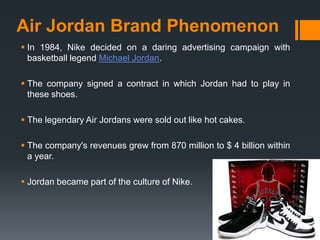
 In 1984, Nike decided on a daring advertising campaign with
  basketball legend Michael Jordan.

 The company signed a contract in which Jordan had to play in
  these shoes.

 The legendary Air Jordans were sold out like hot cakes.

 The company's revenues grew from 870 million to $ 4 billion within
  a year.

 Jordan became part of the culture of Nike.
The Positioning Strategy

 Demographics (18-40), M/F, social class)

 Lifestyle (active teens, athletic/sporty individuals, casual
  lifestyle with fashionable taste)

 Behavior (sneakers as fashion statement, fitness craze,
  multipurpose shoes)
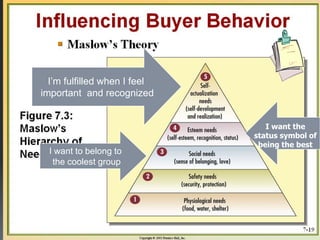
I‟m fulfilled when I feel
important and recognized


                                 I want the
                              status symbol of
                               being the best
  I want to belong to
   the coolest group
Marketing Mix Strategy
            PRODUCT, PRICE, PLACE & PROMOTION


 Nike‟s is known for their footwear. It has designed a whole line up
  of footwear for almost every sport.

 Different types of shoes: running, basketball, soccer, cross
  training, football, tennis, golf

 Shoes for Kids, Men and Women

 The Clothing Line
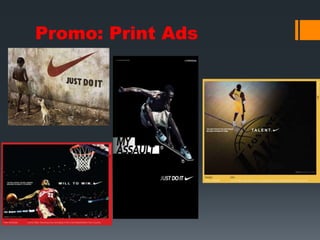
Promo: Print Ads
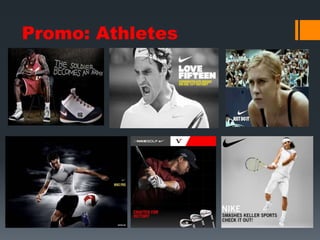
Promo: Athletes
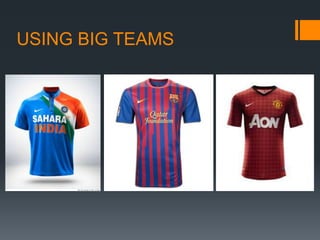
USING BIG TEAMS
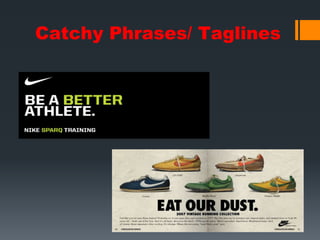
Catchy Phrases/ Taglines
Nike products are distributed
worldwide

 Malls
 Retail stores
 Partnered stores
 Factory outlets
 Worldwide
 Online stores
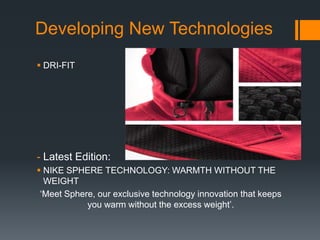
Developing New Technologies
 DRI-FIT


- Latest Edition:
 NIKE SPHERE TECHNOLOGY: WARMTH WITHOUT THE
  WEIGHT
 „Meet Sphere, our exclusive technology innovation that keeps
            you warm without the excess weight‟.
“If you have a body, you are an athlete.
And as long as there are athletes, there will be Nike”.

Success Story of Maggi & Nike

  • 1.
    SUCCESS STORIES…. It’s allabout the Strategic Management Presented By: MANIK KUDYAR MBA-HRM 1200712
  • 2.
    What is Strategy??? Theword “strategy” is derived from the Greek word “stratçgos”; stratus (meaning army) and “ago” (meaning leading/moving). Strategy is an action that managers take to attain one or more of the organization‟s goals. Strategy is a well defined roadmap of an organization.
  • 3.
    It defines theoverall mission, vision and direction of an organization. The objective of a strategy is to maximize an organization‟s strengths and to minimize the strengths of the competitors. Strategy, in short, bridges the gap between “where we are” and “where we want to be”.
  • 4.
    Strategic Management Strategic Managementis all about identification and description of the strategies that managers can carry so as to achieve better performance and a competitive advantage for their organization. An organization is said to have competitive advantage if its profitability is higher than the average profitability for all companies in its industry.
  • 5.
    Success Story of “MAGGI”
  • 6.
    The Origin  InSwitzerland in 1863, Julius Michael Johannes Maggi developed a formula to bring added taste to meals.  This marked the beginning of the Maggi brand and its lines of convenient food products.  Maggi merged with Nestlé in 1947. Maggi has been offering high quality and innovative products ever since.
  • 7.
    Indian Success  Maggiowned by Nestle is a brand that created a category for itself in the Foods market in India.  The brand which is famous for the Noodles has evolved into the umbrella brand for Nestle in the Food segment.  Nestle launched its noodles in the Indian market in the early 1980's.  Nestle wanted to explore the potential for such an Instant food among the Indian market.
  • 8.
    Maggi has facedlot of hurdles in its journey in India. The basic problem the brand faced is the Indian Psyche. Initially Nestle tried to position the Noodles in the platform of convenience targeting the working women. But it found that the sales are not picking up despite heavy promotion.
  • 9.
    The Repositioning Strategy Research showed that Kids were the largest consumers of the brand.  Realising this, Nestle repositioned the brand towards the kids using sales promotions and smart advertising.  Now Indians are the largest eaters of Maggi Noodles in the world. Maggi Noodles is a MARKETING SUCCESS STORY.
  • 10.
    The NISSIN Effect It was during the late 1990‟s that Indo Nissin - a Japanese company launched its Noodles brand "Top Ramen" with lot of promotion and with SRK endorsing the brand.  TopRamen gave Maggi a run for its money. Change in Taste (Maggi) - A Big Failure - The consumers rejected the new taste of Maggi. Maggi – It’s Back - And in 1999 Maggi relaunched Noodles with the original taste. - Nestle was ready to accept the consumers verdict and it paid off handsomely. - Top Ramen could not sustain the growth it had for long.
  • 11.
    STP of MAGGI Segmentationon the basis of: - Life Style - Eating Habits Targeted the: - Kids - Working Women Positioned themselves as: - A Healthy Fast Food - Slogan “2 minute noodles”
  • 12.
    EXPANDING THE SPECTURUM, SLOGANS & TAG LINES  Bas 2 Minute : Promising mothers of FAST TO COOK and GOOD TO EAT snacks  MAGGI KETCHUP -- “Its Different”  SOUPS -- “Taste bhi, Health Bhi”  Products like NOODLES (Masala, Tomato, Chicken), Cuppamania  Low Salt and No Trans Fat products  Vegetable Atta Noodles and Dal Atta Noodles
  • 13.
    BRAND EXTENSION  Healthconscious Families, for attracting the families  Competitors: KISSAN, HEINZ, TOPS etc…  New Entrants  To overcome the problem of decline in sales
  • 15.
    Another Friend…  Invitingpeople to send new recipes made with the help of Maggi  There Maggi Stories  Organizing Contest, Games and Industrial Visits for School Kids  Using Attractive Advertising Campaigns
  • 17.
  • 18.
    The HISTORY ofthe BRAND  Nike was established by a couple of students from the University of Oregon.  Phil Knight - was engaged in running (an athlete), and his companion - Bill Bowerman was his athletic trainer.  In the early 60's American sports shoes cost about $ 5, and the quality was appropriate.  Athletes got blisters, but one could not afford to buy expensive, high-quality German shoes.
  • 19.
     In 1964,Knight and Bowerman developed their business plan to sell inexpensive shoes by designing them in America, manufacturing in Japan (due to cheap labor), and selling it in the United States at lower prices than the German footwear.  The first batch was sold from the truck near the tracks. So were earned first 8 thousand dollars. The partners decided to continue to cooperate with the Japanese and the project was named BLUE RIBBON SPORTS.  1965 was a year of changes for the company name to the Greek goddess of victory Nike, which the manager of the company saw in a dream. By this time, Knight had already managed to sell shoes worth $ 1 million.
  • 20.
    Timely Innovations 1975 -Corrugated Sole 1978 - Light Weight Shoes - In the year 1980, Nike was second only to REEBOK - To become #1, Focus shifted to the ADVERTISING side
  • 21.
    Air Jordan BrandPhenomenon  In 1984, Nike decided on a daring advertising campaign with basketball legend Michael Jordan.  The company signed a contract in which Jordan had to play in these shoes.  The legendary Air Jordans were sold out like hot cakes.  The company's revenues grew from 870 million to $ 4 billion within a year.  Jordan became part of the culture of Nike.
  • 22.
    The Positioning Strategy Demographics (18-40), M/F, social class)  Lifestyle (active teens, athletic/sporty individuals, casual lifestyle with fashionable taste)  Behavior (sneakers as fashion statement, fitness craze, multipurpose shoes)
  • 23.
    I‟m fulfilled whenI feel important and recognized I want the status symbol of being the best I want to belong to the coolest group
  • 24.
    Marketing Mix Strategy PRODUCT, PRICE, PLACE & PROMOTION  Nike‟s is known for their footwear. It has designed a whole line up of footwear for almost every sport.  Different types of shoes: running, basketball, soccer, cross training, football, tennis, golf  Shoes for Kids, Men and Women  The Clothing Line
  • 25.
  • 26.
  • 27.
  • 28.
  • 29.
    Nike products aredistributed worldwide  Malls  Retail stores  Partnered stores  Factory outlets  Worldwide  Online stores
  • 30.
    Developing New Technologies DRI-FIT - Latest Edition:  NIKE SPHERE TECHNOLOGY: WARMTH WITHOUT THE WEIGHT „Meet Sphere, our exclusive technology innovation that keeps you warm without the excess weight‟.
  • 31.
    “If you havea body, you are an athlete. And as long as there are athletes, there will be Nike”.