POTENTIAL SYNERGIES BETWEEN
CAADP NATIONAL INVESTMENT
PLANNING AND FARMING SYSTEMS
INFORMATION
Mandi Rukuni
Presented at Side Event: A Farming Systems Approach to Support National Agriculture
Investment Planning in Southern Africa. Bingu International Conference Centre.
Lilongwe. Malawi. Thursday 16 April 2015
GUIDING QUESTIONS TO POTENTIAL VALUE
ADD OF FS INFORMATION TO CAADP
1. What can the FS tool offer CAADP to strengthen mainstreaming
of land management in country investment plans?
2. What are the strengths and gaps within current implementation
framework; and therefore what could be the entry points for FS
synergies?
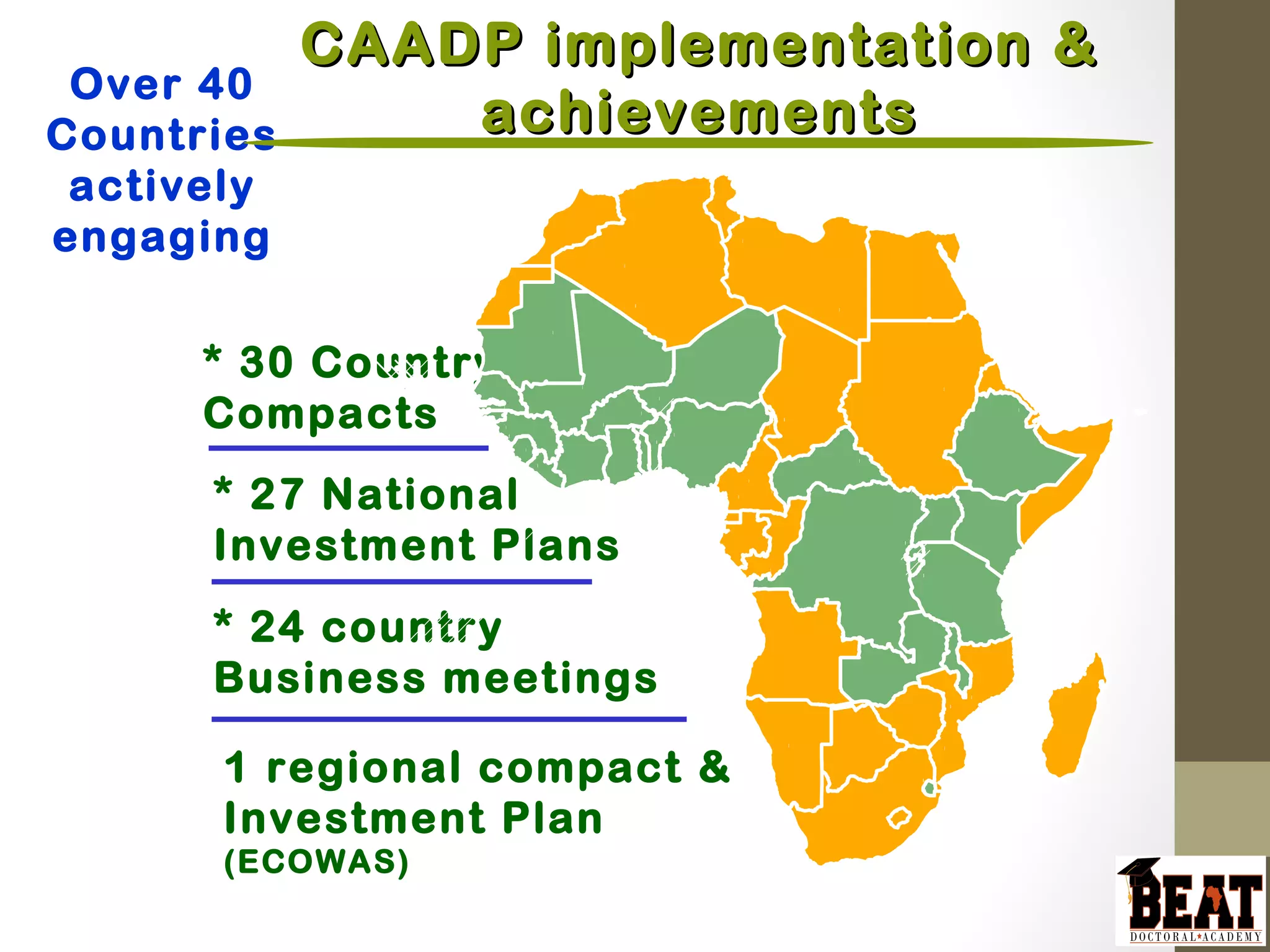
* 30 Country
Compacts
Over 40
Countries
actively
engaging
* 24 country
Business meetings
* 27 National
Investment Plans
1 regional compact &
Investment Plan
(ECOWAS)
CAADP implementation &CAADP implementation &
achievementsachievements
CAADP failures and successes
in 1st
Decade
1. Not much focus on Institutional capacity; Policy reform
2. Shallow problem analysis; poor political economy analysis
3. Not enough focus on how to make markets work better
4. CAADP raised high expectations of mobilization new resources
5. Not enough focus on how to attract and catalyse more domestic
private sector investment in agriculture
6. African financial institutions (AfDB, regional dev banks, private equity
and investment banking institutions) hardly involved
7. Brought Agriculture back as a priority
8. Solidarity and regional integration
9. Rallying point for governments, development partners and
investors
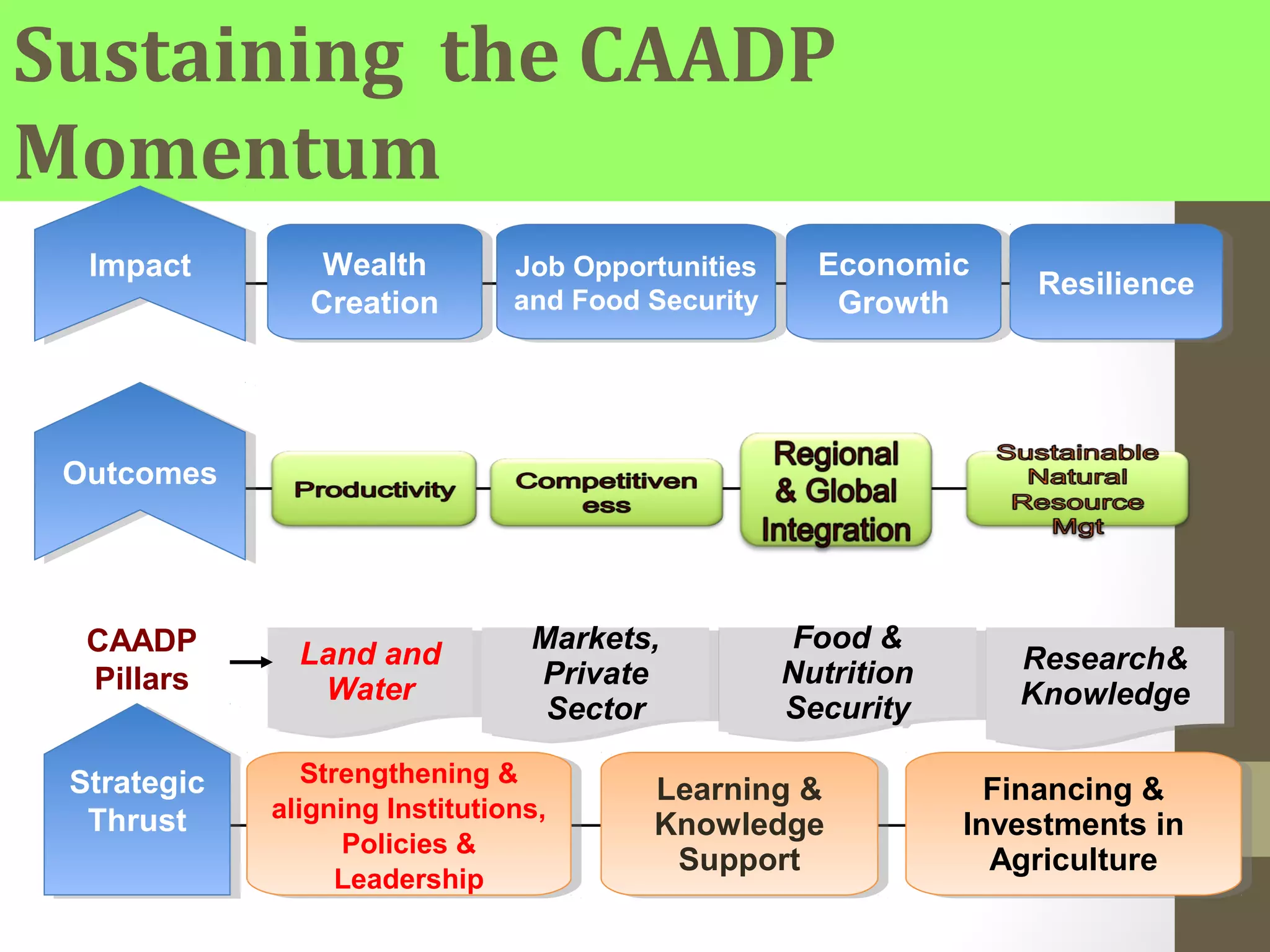
Sustaining the CAADP
Momentum
Wealth
Creation
Wealth
Creation
Job Opportunities
and Food Security
Job Opportunities
and Food Security
Economic
Growth
Economic
Growth
ResilienceResilienceImpactImpact
OutcomesOutcomes
Strategic
Thrust
Strategic
Thrust
Strengthening &
aligning Institutions,
Policies &
Leadership
Strengthening &
aligning Institutions,
Policies &
Leadership
Learning &
Knowledge
Support
Learning &
Knowledge
Support
Financing &
Investments in
Agriculture
Financing &
Investments in
Agriculture
Land and
Water
Land and
Water
Research&
Knowledge
Research&
Knowledge
Food &
Nutrition
Security
Food &
Nutrition
Security
Markets,
Private
Sector
Markets,
Private
Sector
CAADP
Pillars
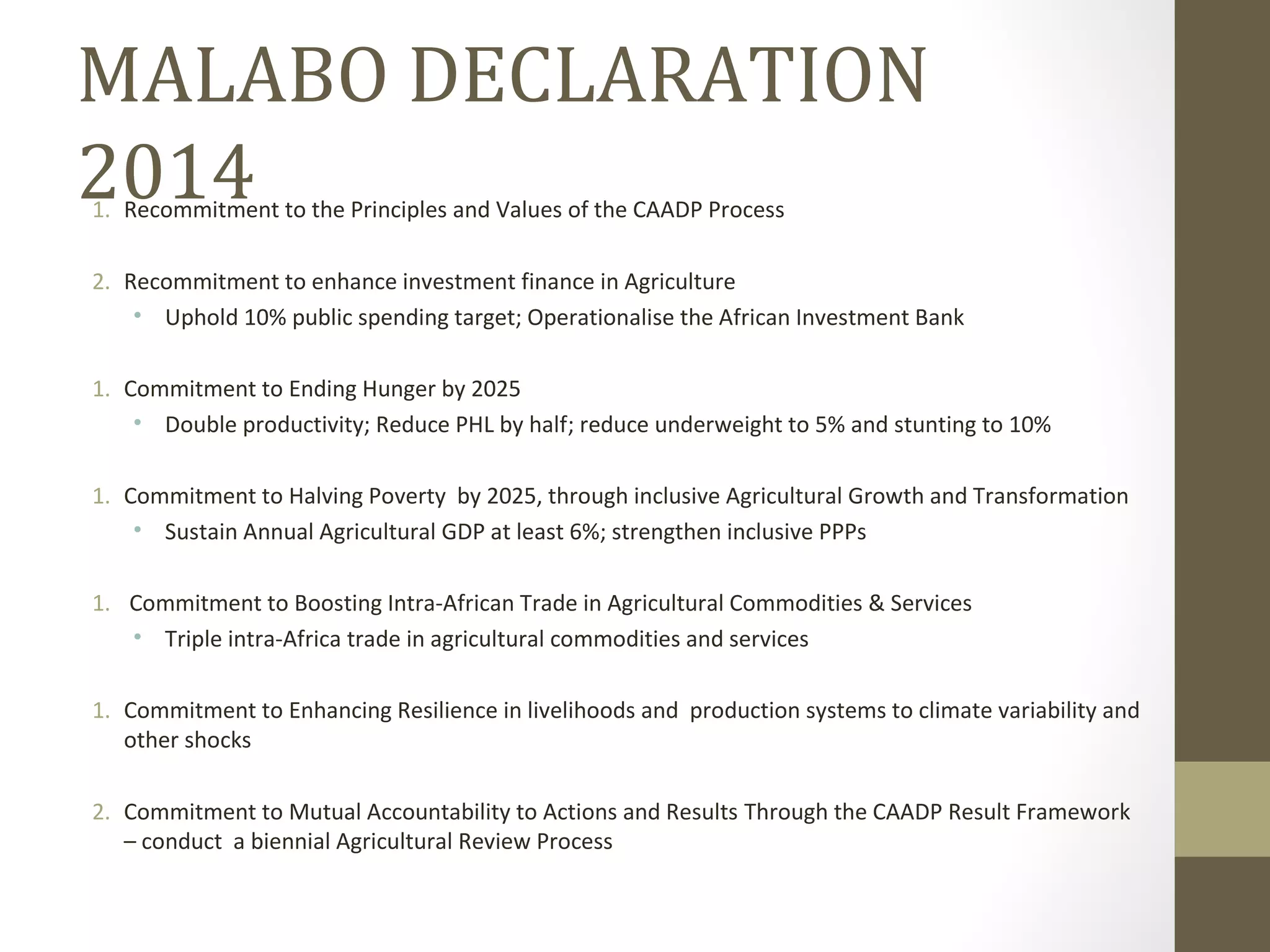
MALABO DECLARATION
20141. Recommitment to the Principles and Values of the CAADP Process
2. Recommitment to enhance investment finance in Agriculture
• Uphold 10% public spending target; Operationalise the African Investment Bank
1. Commitment to Ending Hunger by 2025
• Double productivity; Reduce PHL by half; reduce underweight to 5% and stunting to 10%
1. Commitment to Halving Poverty by 2025, through inclusive Agricultural Growth and Transformation
• Sustain Annual Agricultural GDP at least 6%; strengthen inclusive PPPs
1. Commitment to Boosting Intra-African Trade in Agricultural Commodities & Services
• Triple intra-Africa trade in agricultural commodities and services
1. Commitment to Enhancing Resilience in livelihoods and production systems to climate variability and
other shocks
2. Commitment to Mutual Accountability to Actions and Results Through the CAADP Result Framework
– conduct a biennial Agricultural Review Process
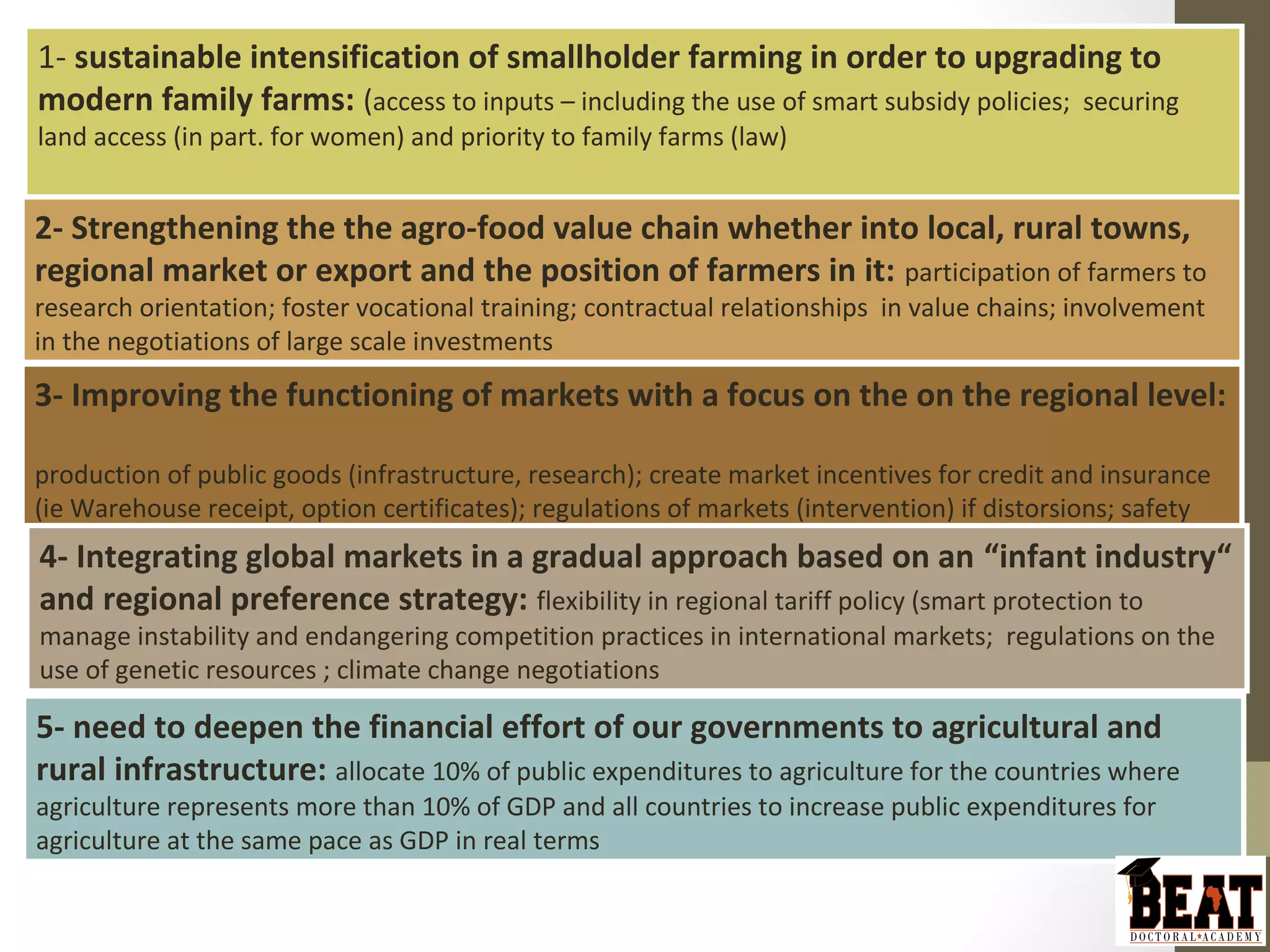
5 Priority orientations
1- sustainable intensification of smallholder farming in order to upgrading to
modern family farms: (access to inputs – including the use of smart subsidy policies; securing
land access (in part. for women) and priority to family farms (law)
2- Strengthening the the agro-food value chain whether into local, rural towns,
regional market or export and the position of farmers in it: participation of farmers to
research orientation; foster vocational training; contractual relationships in value chains; involvement
in the negotiations of large scale investments
3- Improving the functioning of markets with a focus on the on the regional level:
production of public goods (infrastructure, research); create market incentives for credit and insurance
(ie Warehouse receipt, option certificates); regulations of markets (intervention) if distorsions; safety
nets
5- need to deepen the financial effort of our governments to agricultural and
rural infrastructure: allocate 10% of public expenditures to agriculture for the countries where
agriculture represents more than 10% of GDP and all countries to increase public expenditures for
agriculture at the same pace as GDP in real terms
4- Integrating global markets in a gradual approach based on an “infant industry“
and regional preference strategy: flexibility in regional tariff policy (smart protection to
manage instability and endangering competition practices in international markets; regulations on the
use of genetic resources ; climate change negotiations
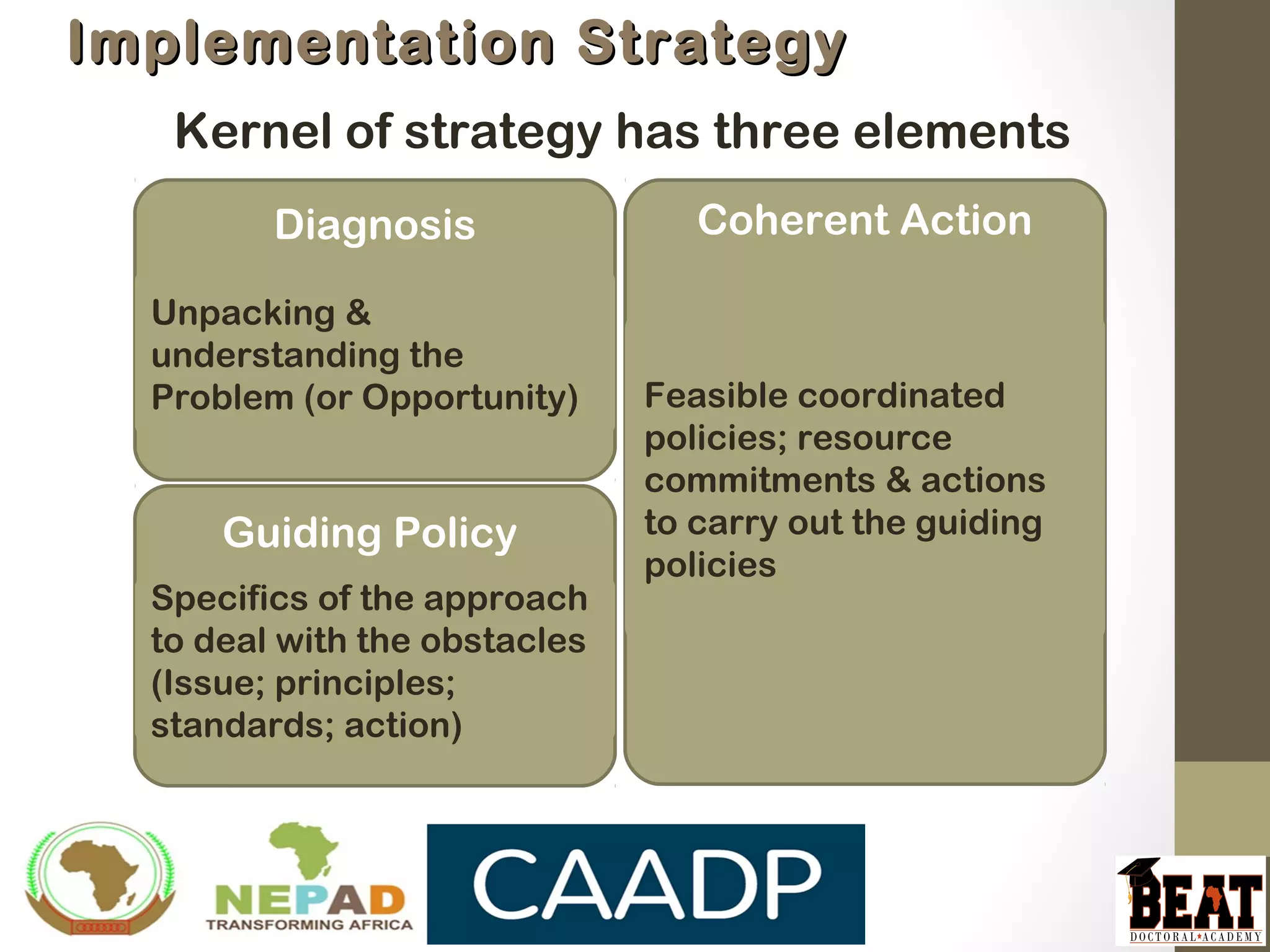
Implementation StrategyImplementation Strategy
Kernel of strategy has three elements
Diagnosis
Guiding Policy
Coherent Action
Unpacking &
understanding the
Problem (or Opportunity) Feasible coordinated
policies; resource
commitments & actions
to carry out the guiding
policies
Specifics of the approach
to deal with the obstacles
(Issue; principles;
standards; action)
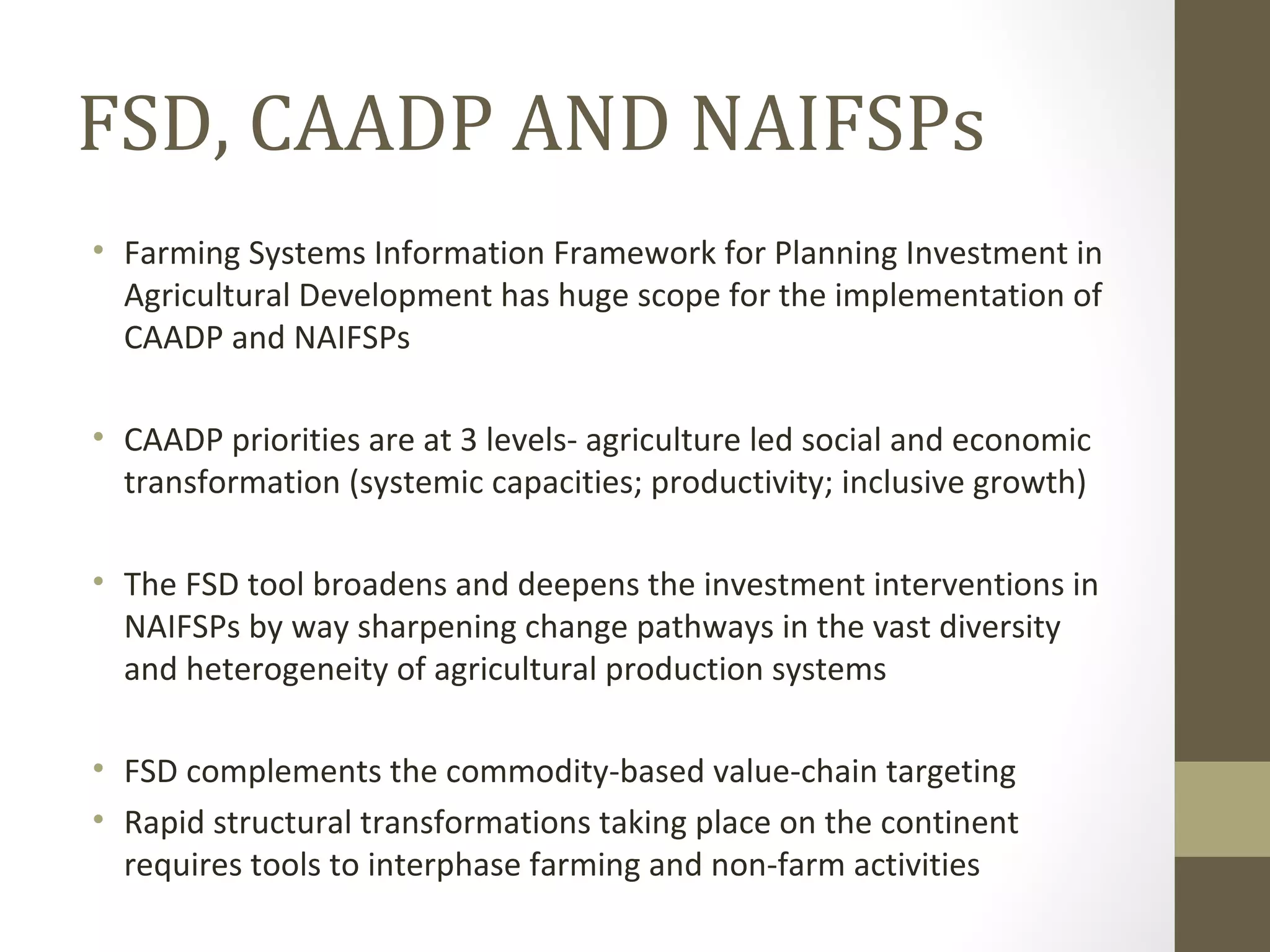
FSD, CAADP AND NAIFSPs
• Farming Systems Information Framework for Planning Investment in
Agricultural Development has huge scope for the implementation of
CAADP and NAIFSPs
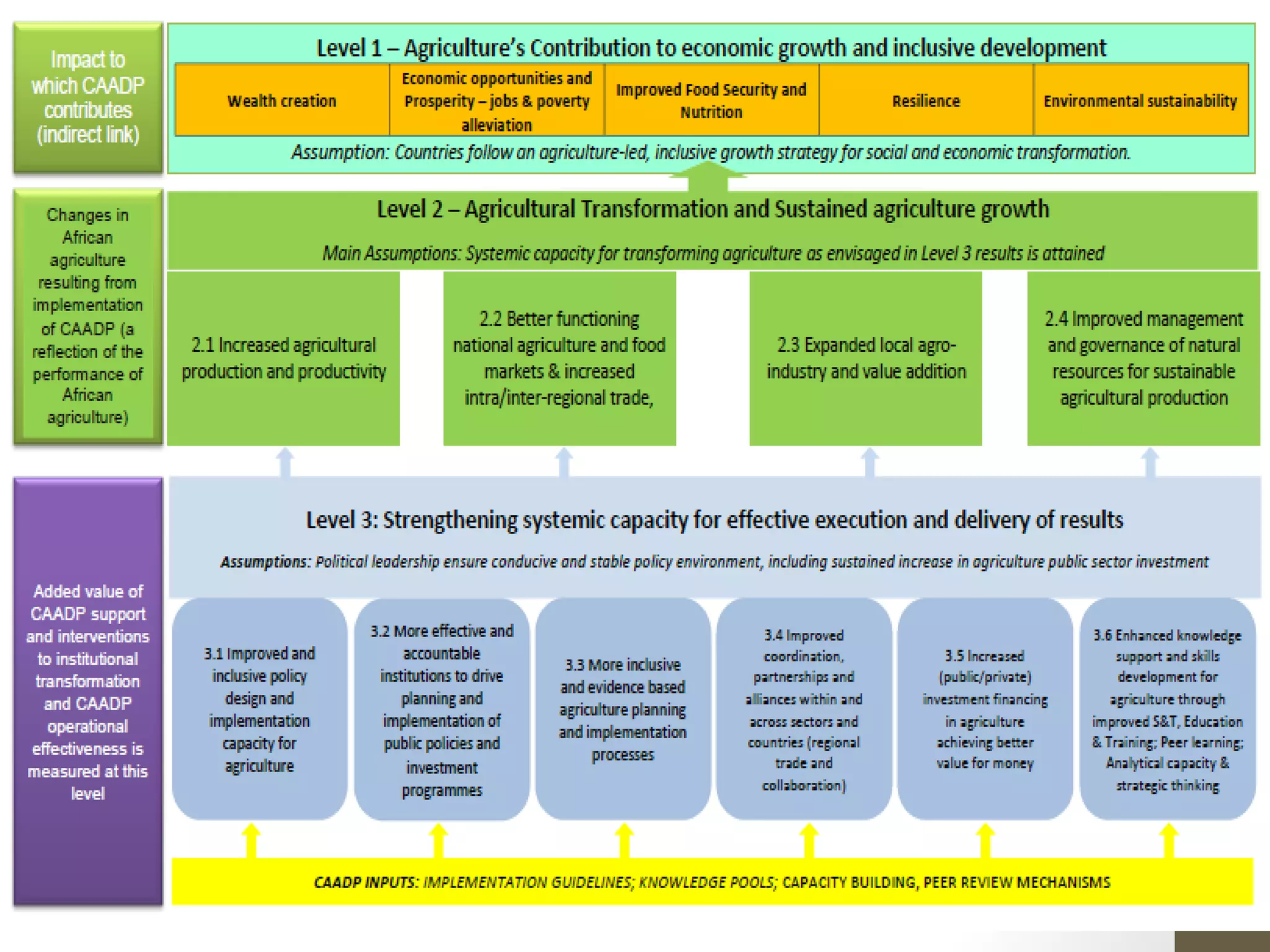
• CAADP priorities are at 3 levels- agriculture led social and economic
transformation (systemic capacities; productivity; inclusive growth)
• The FSD tool broadens and deepens the investment interventions in
NAIFSPs by way sharpening change pathways in the vast diversity
and heterogeneity of agricultural production systems
• FSD complements the commodity-based value-chain targeting
• Rapid structural transformations taking place on the continent
requires tools to interphase farming and non-farm activities
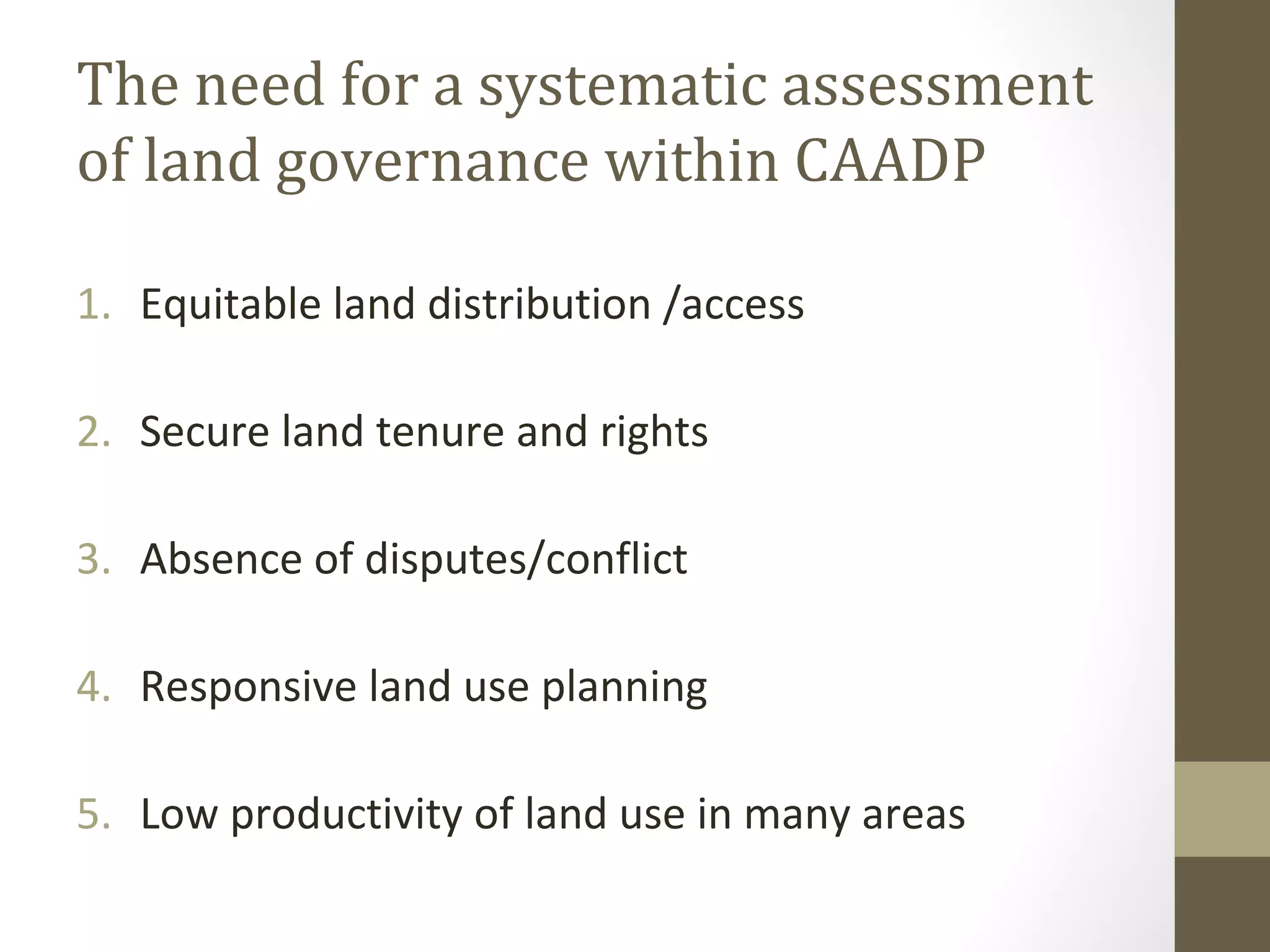
The need for a systematic assessment
of land governance within CAADP
1. Equitable land distribution /access
2. Secure land tenure and rights
3. Absence of disputes/conflict
4. Responsive land use planning
5. Low productivity of land use in many areas
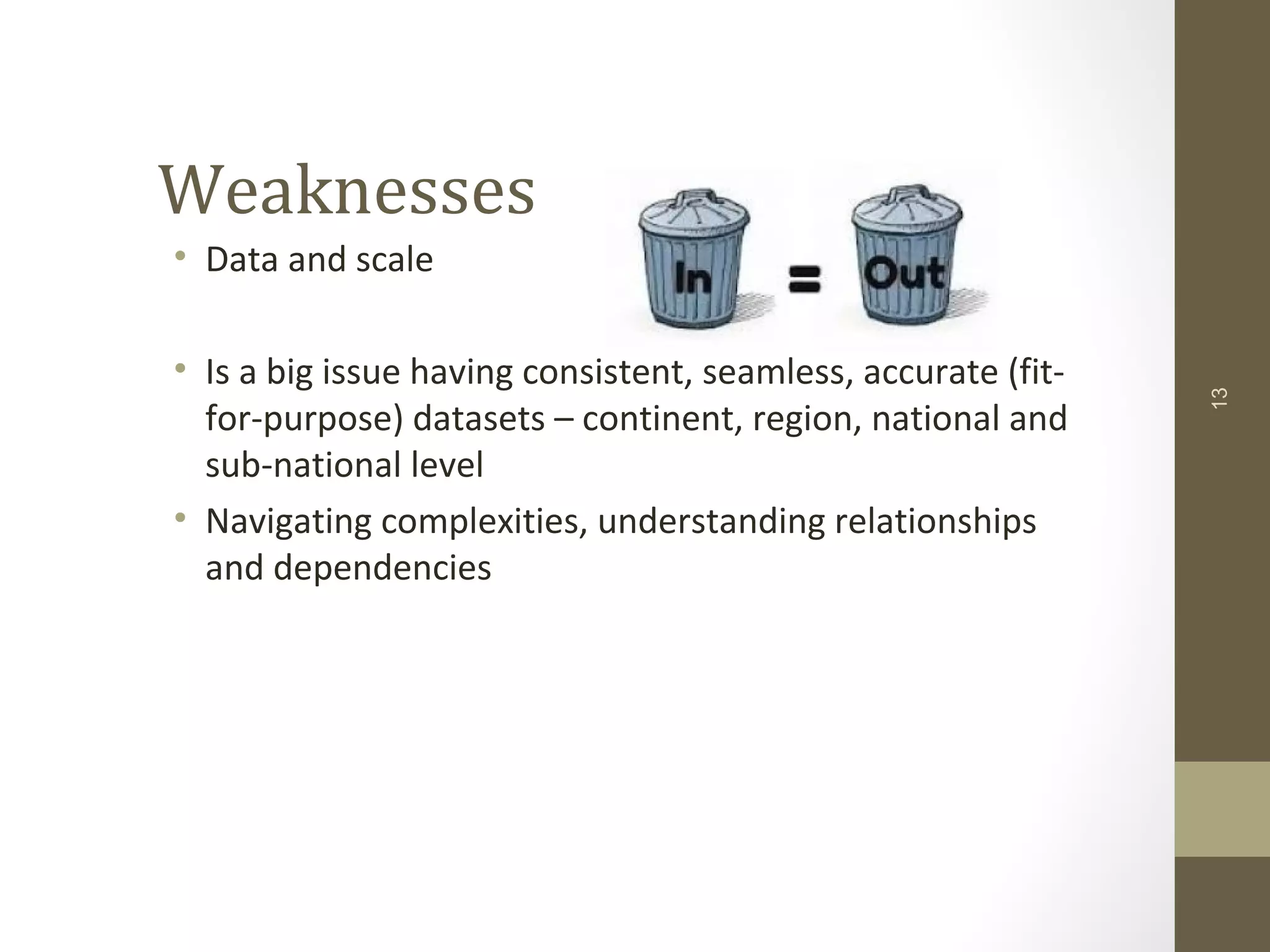
Weaknesses
• Data and scale
• Is a big issue having consistent, seamless, accurate (fit-
for-purpose) datasets – continent, region, national and
sub-national level
• Navigating complexities, understanding relationships
and dependencies
13
CONCLUSIONS
• Opportunity for applying the FSD planning tool in support to
implementing CAADP NAFSIPs
• Need for technical guidelines, tools, capacity building and training
on these tools and follow-ups in implementation alog with CAADP
processes
• This will improve enormously chances of archiving Malabo targets
by 2025
Thanks
• CHRIS AURICHT
• JEAN-MARC BOFFA
15

Potential Synergies between CAADP National Investment Planning and Farming Systems Information

  • 1.
    POTENTIAL SYNERGIES BETWEEN CAADPNATIONAL INVESTMENT PLANNING AND FARMING SYSTEMS INFORMATION Mandi Rukuni Presented at Side Event: A Farming Systems Approach to Support National Agriculture Investment Planning in Southern Africa. Bingu International Conference Centre. Lilongwe. Malawi. Thursday 16 April 2015
  • 2.
    GUIDING QUESTIONS TOPOTENTIAL VALUE ADD OF FS INFORMATION TO CAADP 1. What can the FS tool offer CAADP to strengthen mainstreaming of land management in country investment plans? 2. What are the strengths and gaps within current implementation framework; and therefore what could be the entry points for FS synergies?
  • 3.
    * 30 Country Compacts Over40 Countries actively engaging * 24 country Business meetings * 27 National Investment Plans 1 regional compact & Investment Plan (ECOWAS) CAADP implementation &CAADP implementation & achievementsachievements
  • 4.
    CAADP failures andsuccesses in 1st Decade 1. Not much focus on Institutional capacity; Policy reform 2. Shallow problem analysis; poor political economy analysis 3. Not enough focus on how to make markets work better 4. CAADP raised high expectations of mobilization new resources 5. Not enough focus on how to attract and catalyse more domestic private sector investment in agriculture 6. African financial institutions (AfDB, regional dev banks, private equity and investment banking institutions) hardly involved 7. Brought Agriculture back as a priority 8. Solidarity and regional integration 9. Rallying point for governments, development partners and investors
  • 5.
    Sustaining the CAADP Momentum Wealth Creation Wealth Creation JobOpportunities and Food Security Job Opportunities and Food Security Economic Growth Economic Growth ResilienceResilienceImpactImpact OutcomesOutcomes Strategic Thrust Strategic Thrust Strengthening & aligning Institutions, Policies & Leadership Strengthening & aligning Institutions, Policies & Leadership Learning & Knowledge Support Learning & Knowledge Support Financing & Investments in Agriculture Financing & Investments in Agriculture Land and Water Land and Water Research& Knowledge Research& Knowledge Food & Nutrition Security Food & Nutrition Security Markets, Private Sector Markets, Private Sector CAADP Pillars
  • 7.
    MALABO DECLARATION 20141. Recommitmentto the Principles and Values of the CAADP Process 2. Recommitment to enhance investment finance in Agriculture • Uphold 10% public spending target; Operationalise the African Investment Bank 1. Commitment to Ending Hunger by 2025 • Double productivity; Reduce PHL by half; reduce underweight to 5% and stunting to 10% 1. Commitment to Halving Poverty by 2025, through inclusive Agricultural Growth and Transformation • Sustain Annual Agricultural GDP at least 6%; strengthen inclusive PPPs 1. Commitment to Boosting Intra-African Trade in Agricultural Commodities & Services • Triple intra-Africa trade in agricultural commodities and services 1. Commitment to Enhancing Resilience in livelihoods and production systems to climate variability and other shocks 2. Commitment to Mutual Accountability to Actions and Results Through the CAADP Result Framework – conduct a biennial Agricultural Review Process
  • 8.
  • 9.
    1- sustainable intensificationof smallholder farming in order to upgrading to modern family farms: (access to inputs – including the use of smart subsidy policies; securing land access (in part. for women) and priority to family farms (law) 2- Strengthening the the agro-food value chain whether into local, rural towns, regional market or export and the position of farmers in it: participation of farmers to research orientation; foster vocational training; contractual relationships in value chains; involvement in the negotiations of large scale investments 3- Improving the functioning of markets with a focus on the on the regional level: production of public goods (infrastructure, research); create market incentives for credit and insurance (ie Warehouse receipt, option certificates); regulations of markets (intervention) if distorsions; safety nets 5- need to deepen the financial effort of our governments to agricultural and rural infrastructure: allocate 10% of public expenditures to agriculture for the countries where agriculture represents more than 10% of GDP and all countries to increase public expenditures for agriculture at the same pace as GDP in real terms 4- Integrating global markets in a gradual approach based on an “infant industry“ and regional preference strategy: flexibility in regional tariff policy (smart protection to manage instability and endangering competition practices in international markets; regulations on the use of genetic resources ; climate change negotiations
  • 10.
    Implementation StrategyImplementation Strategy Kernelof strategy has three elements Diagnosis Guiding Policy Coherent Action Unpacking & understanding the Problem (or Opportunity) Feasible coordinated policies; resource commitments & actions to carry out the guiding policies Specifics of the approach to deal with the obstacles (Issue; principles; standards; action)
  • 11.
    FSD, CAADP ANDNAIFSPs • Farming Systems Information Framework for Planning Investment in Agricultural Development has huge scope for the implementation of CAADP and NAIFSPs • CAADP priorities are at 3 levels- agriculture led social and economic transformation (systemic capacities; productivity; inclusive growth) • The FSD tool broadens and deepens the investment interventions in NAIFSPs by way sharpening change pathways in the vast diversity and heterogeneity of agricultural production systems • FSD complements the commodity-based value-chain targeting • Rapid structural transformations taking place on the continent requires tools to interphase farming and non-farm activities
  • 12.
    The need fora systematic assessment of land governance within CAADP 1. Equitable land distribution /access 2. Secure land tenure and rights 3. Absence of disputes/conflict 4. Responsive land use planning 5. Low productivity of land use in many areas
  • 13.
    Weaknesses • Data andscale • Is a big issue having consistent, seamless, accurate (fit- for-purpose) datasets – continent, region, national and sub-national level • Navigating complexities, understanding relationships and dependencies 13
  • 14.
    CONCLUSIONS • Opportunity forapplying the FSD planning tool in support to implementing CAADP NAFSIPs • Need for technical guidelines, tools, capacity building and training on these tools and follow-ups in implementation alog with CAADP processes • This will improve enormously chances of archiving Malabo targets by 2025
  • 15.
    Thanks • CHRIS AURICHT •JEAN-MARC BOFFA 15

Editor's Notes

  • #6 The proposed strategy is intended to catalyse the transformation within the countries as CAADP advances from planning to design and implementation of programs The new CAADP strategy has broadened the impacts expected from CAADP to include Job creation and Resilience. Job creation was probably implied in the previous strategy but it is now explicit It has also given competitiveness greater profile as well as regional integration. It also proposes to be structured around three strategic thrusts. S&T cuts across all three thrusts but is housed with the Knowledge and Knowledge support thrust