The Vision for Southern Africa’s
Small holder Farmers
Presented at the
Bingu International Conference Centre
Presentation Outline
1. Contextual Back ground-Who is the smallholder farmer
2. Why the Vision
3. What is the Vision
4. How to Achieve the Vision
5. Conclusion
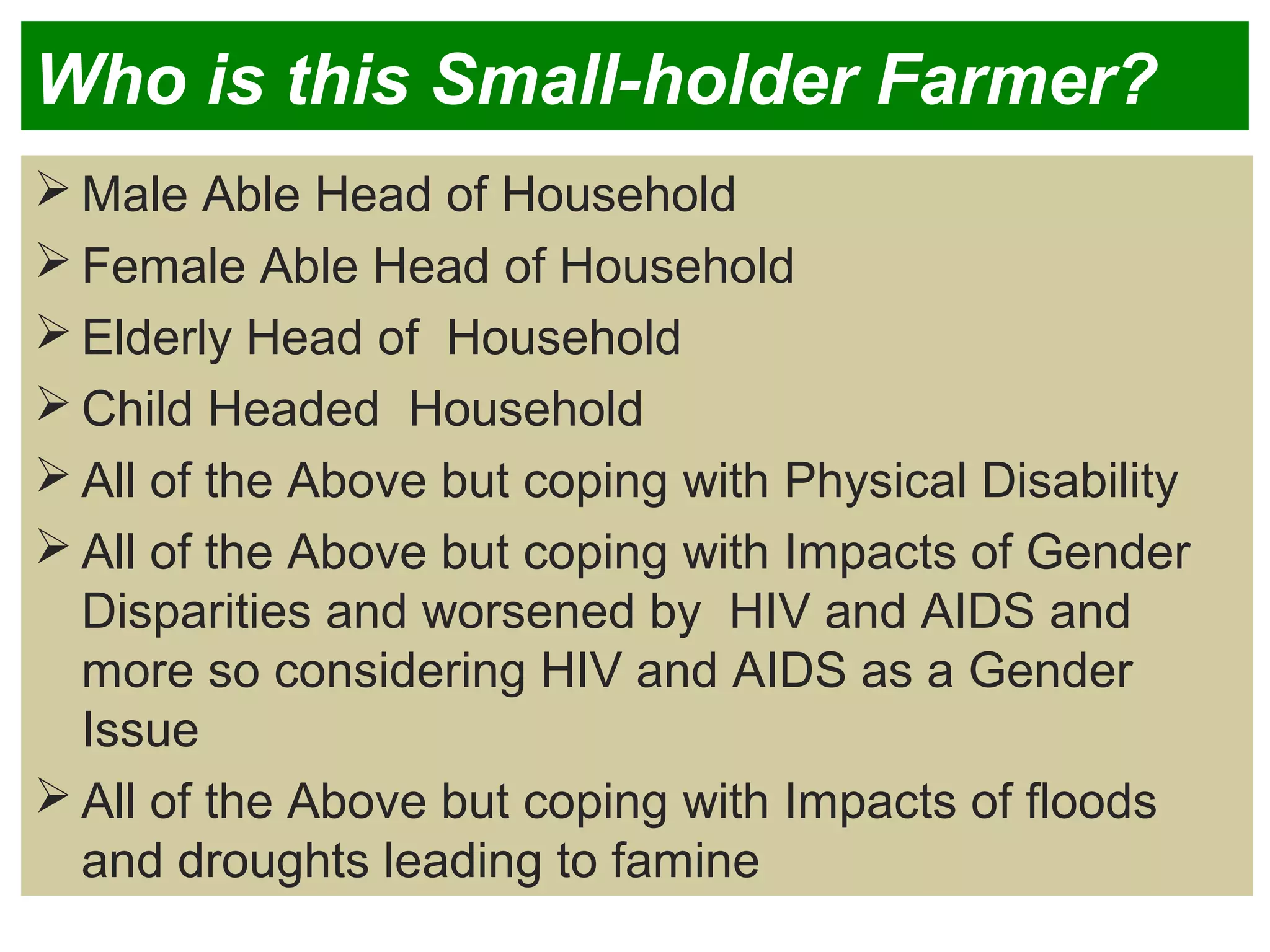
 Male Able Head of Household
 Female Able Head of Household
 Elderly Head of Household
 Child Headed Household
 All of the Above but coping with Physical Disability
 All of the Above but coping with Impacts of Gender
Disparities and worsened by HIV and AIDS and
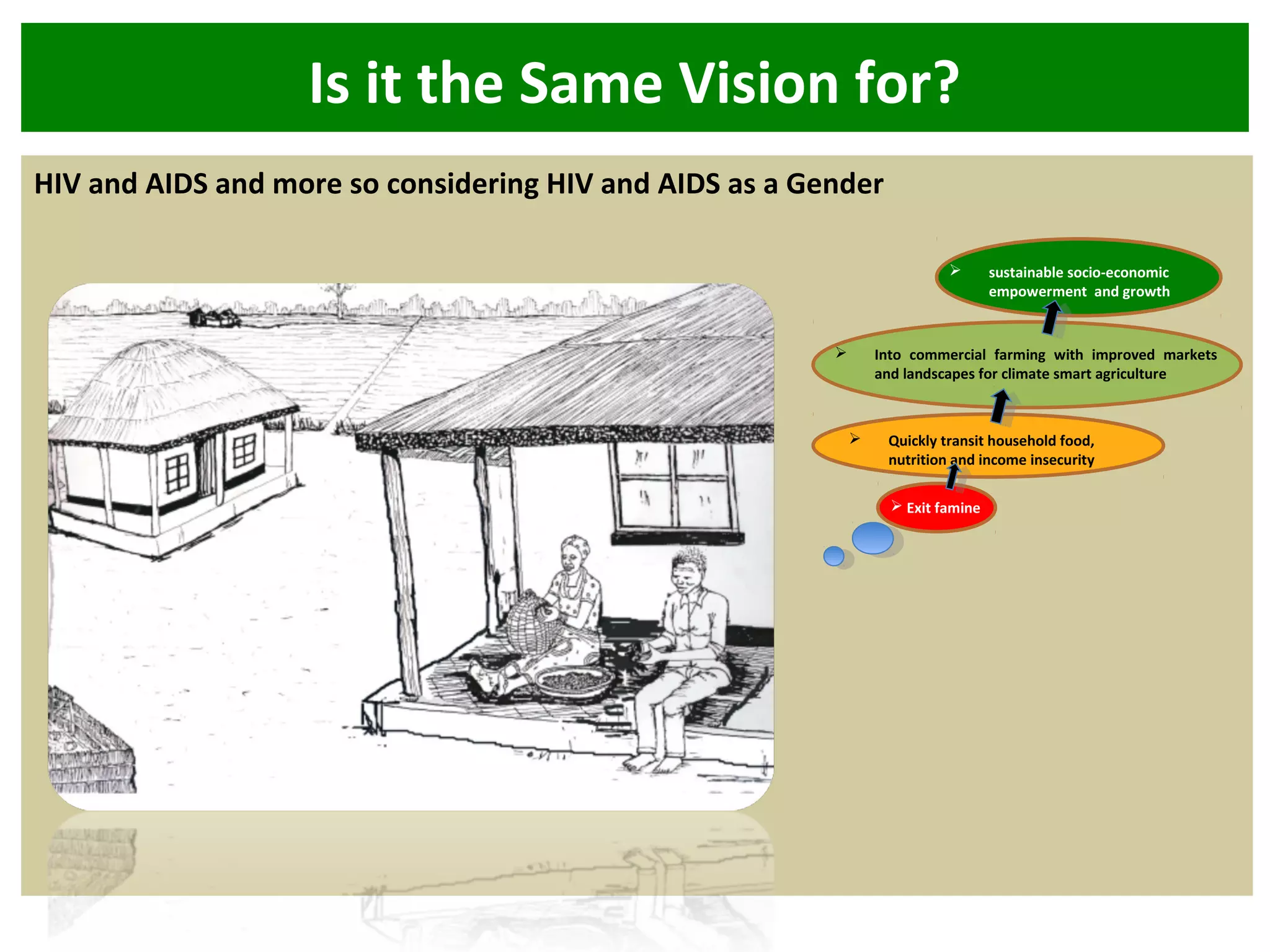
more so considering HIV and AIDS as a Gender
Issue
 All of the Above but coping with Impacts of floods
and droughts leading to famine
Who is this Small-holder Farmer?
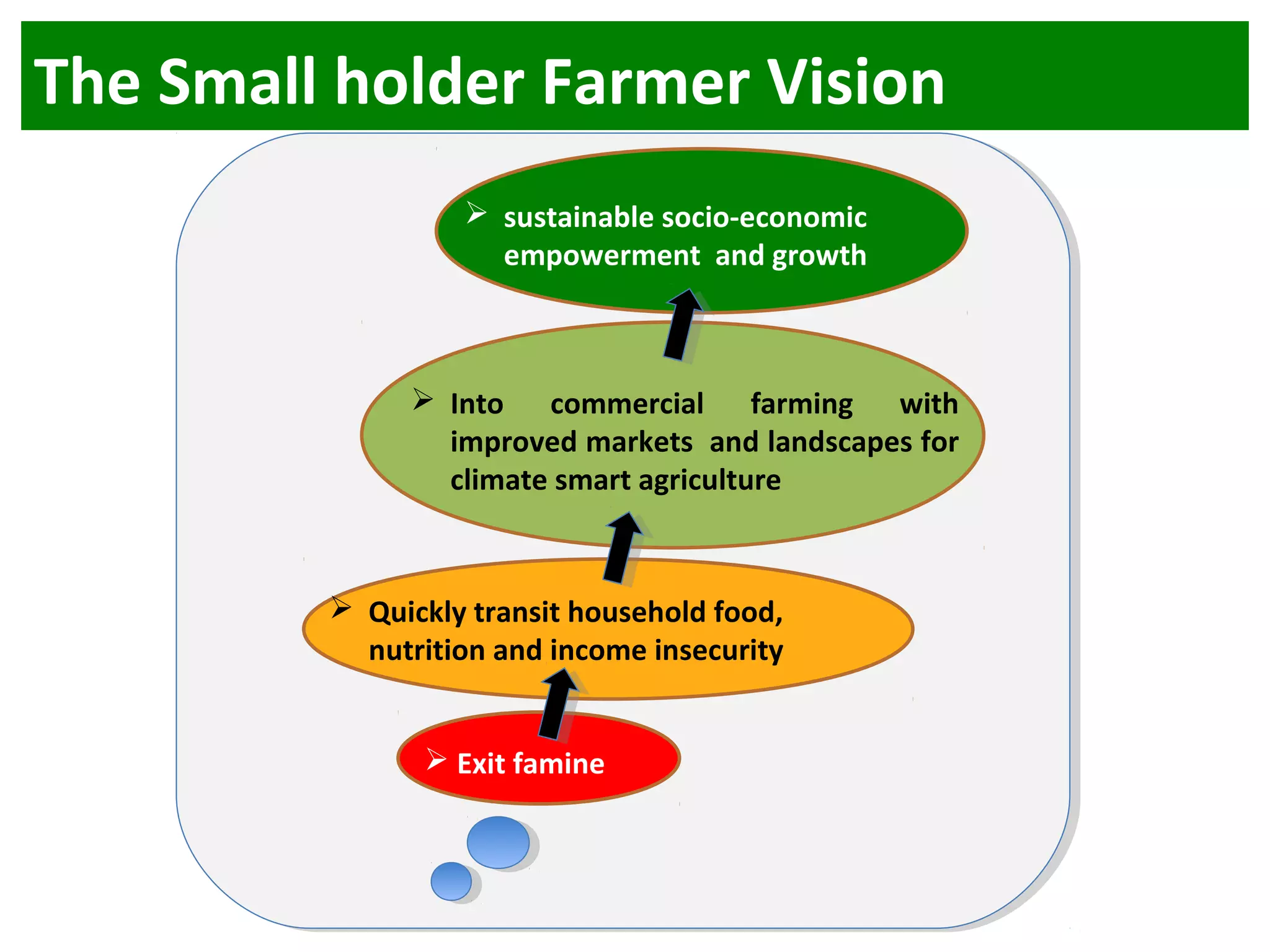
The Small holder Farmer Vision
 Exit famine
 Quickly transit household food,
nutrition and income insecurity
 Into commercial farming with
improved markets and landscapes for
climate smart agriculture
 sustainable socio-economic
empowerment and growth
Is it the Same Vision for?
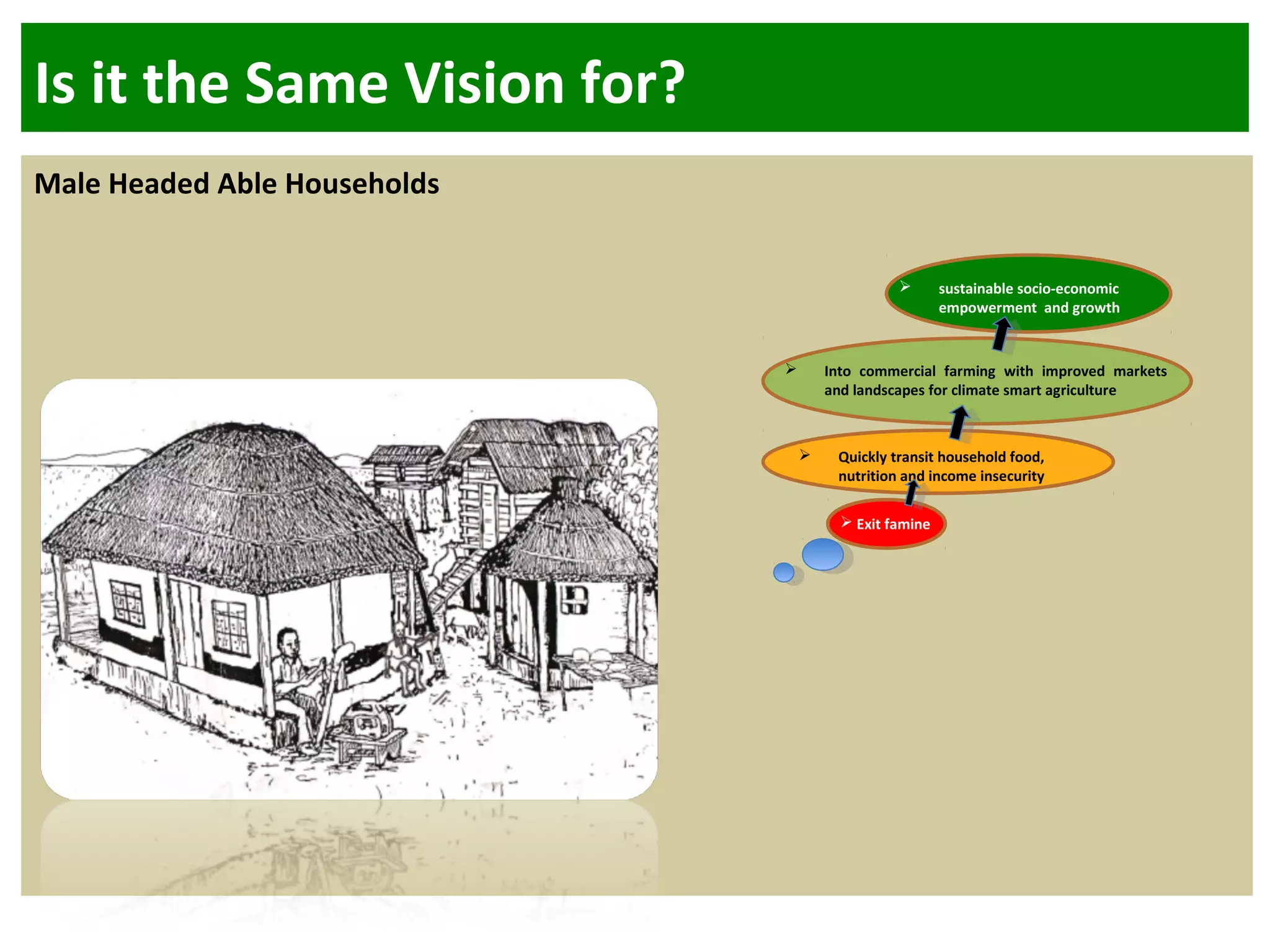
Male Headed Able Households
 Exit famine
 Quickly transit household food,
nutrition and income insecurity
 Into commercial farming with improved markets
and landscapes for climate smart agriculture
 sustainable socio-economic
empowerment and growth
Is it the Same Vision for?
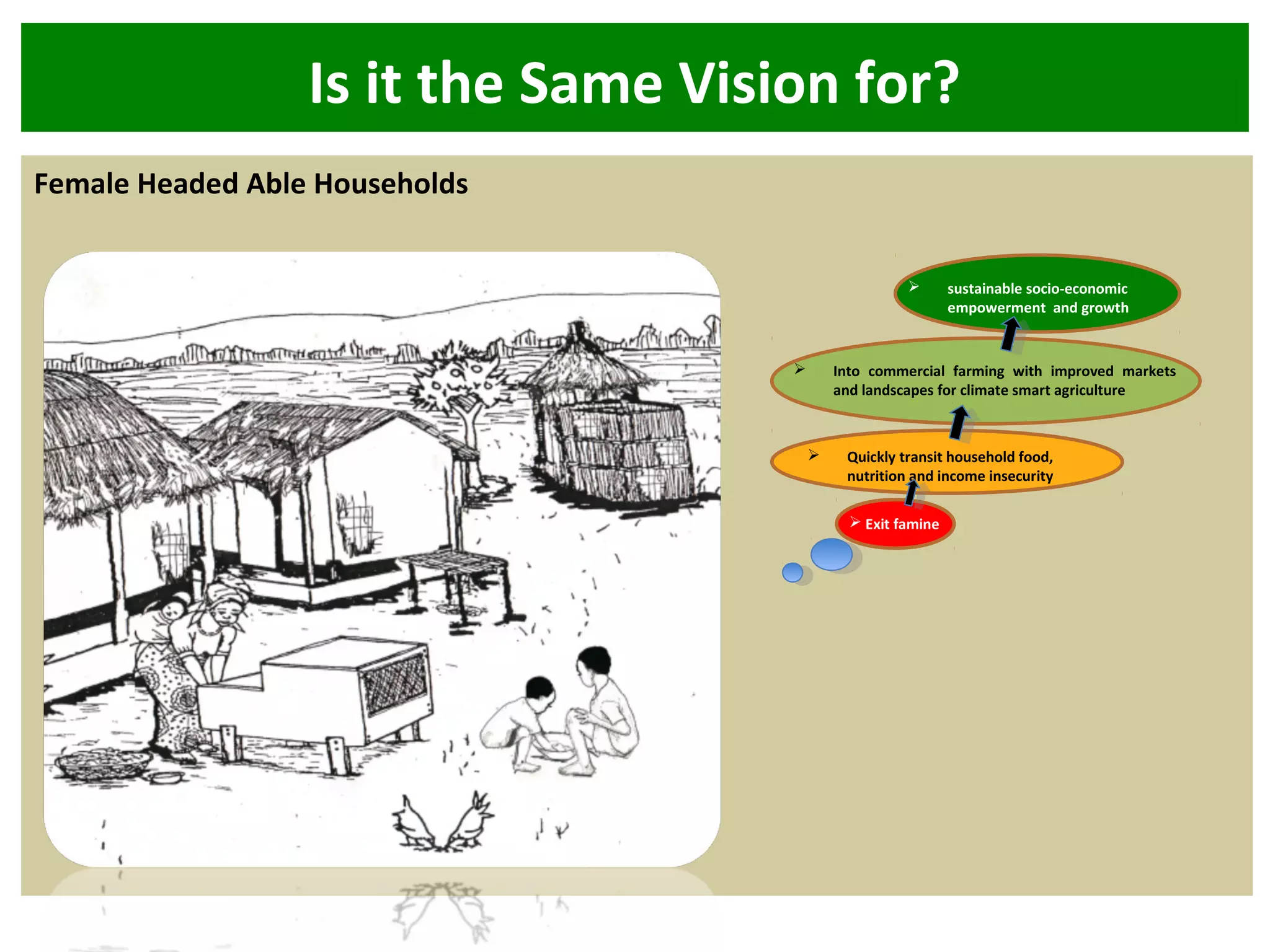
Female Headed Able Households
 Exit famine
 Quickly transit household food,
nutrition and income insecurity
 Into commercial farming with improved markets
and landscapes for climate smart agriculture
 sustainable socio-economic
empowerment and growth
Is it the Same Vision for?
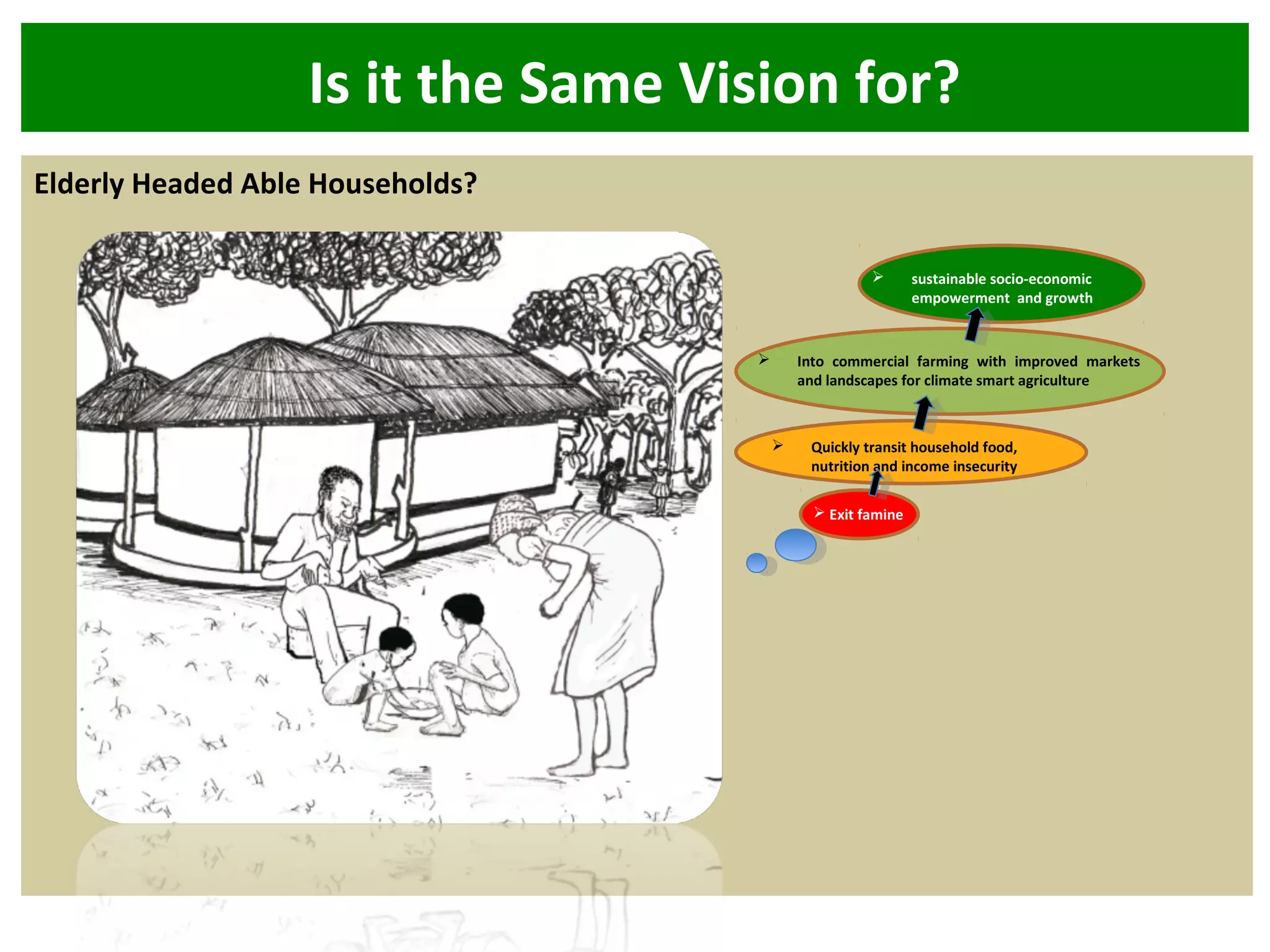
Elderly Headed Able Households?
 Exit famine
 Quickly transit household food,
nutrition and income insecurity
 Into commercial farming with improved markets
and landscapes for climate smart agriculture
 sustainable socio-economic
empowerment and growth
Is it the Same Vision for?
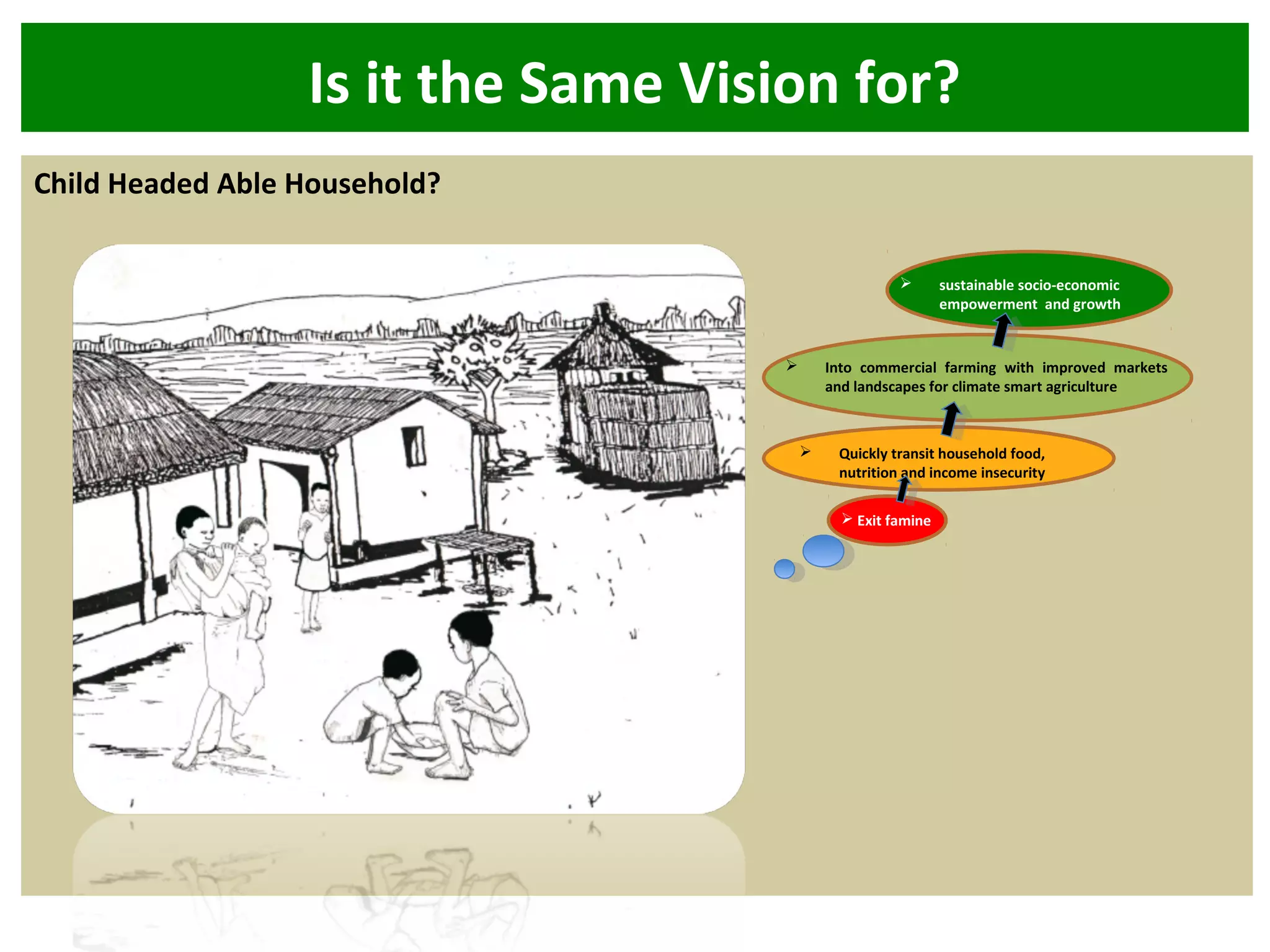
Child Headed Able Household?
 Exit famine
 Quickly transit household food,
nutrition and income insecurity
 Into commercial farming with improved markets
and landscapes for climate smart agriculture
 sustainable socio-economic
empowerment and growth
Is it the Same Vision for?
HIV and AIDS and more so considering HIV and AIDS as a Gender
 Exit famine
 Quickly transit household food,
nutrition and income insecurity
 Into commercial farming with improved markets
and landscapes for climate smart agriculture
 sustainable socio-economic
empowerment and growth
Is it the Same Vision for?
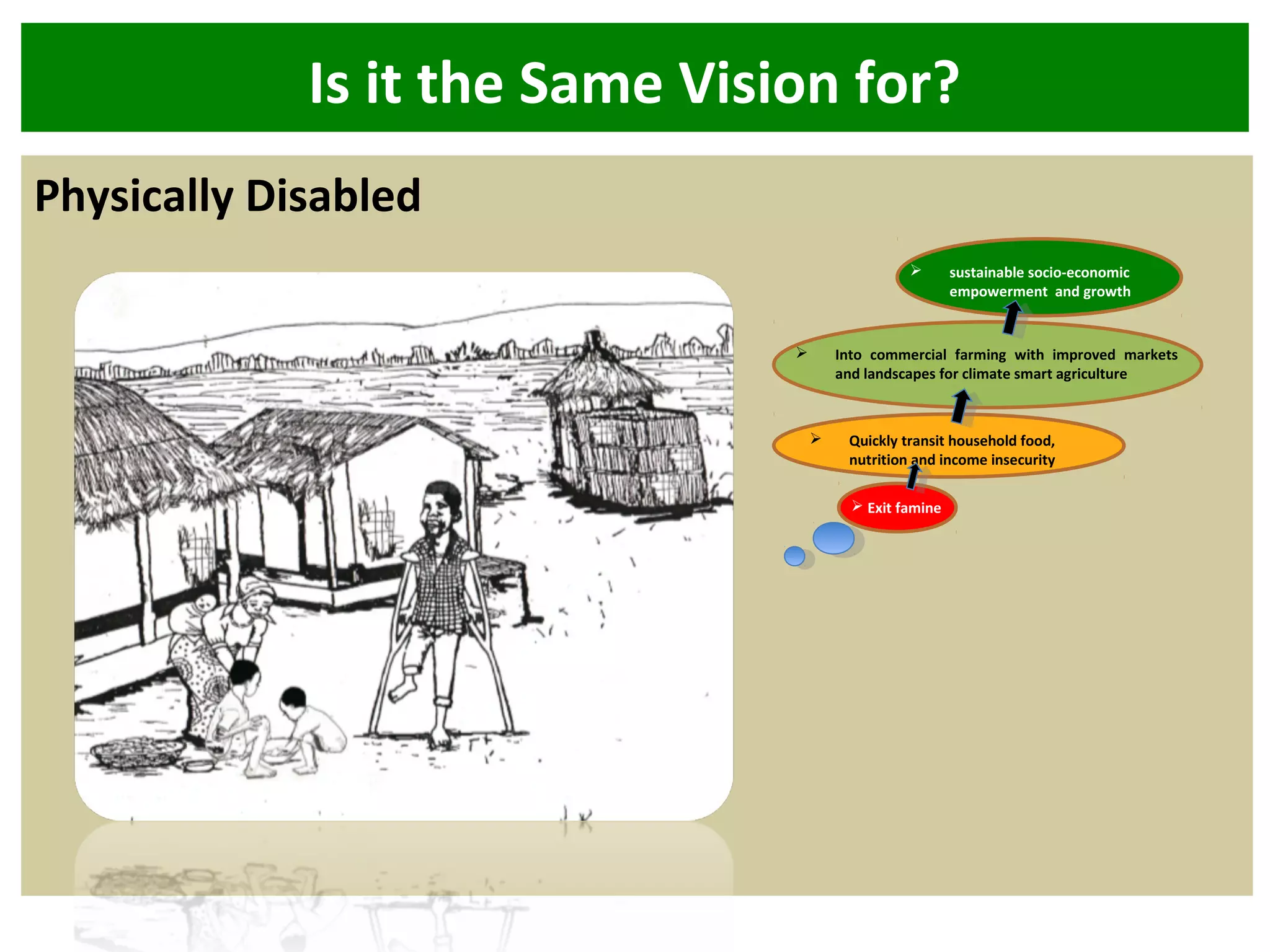
Physically Disabled
 Exit famine
 Quickly transit household food,
nutrition and income insecurity
 Into commercial farming with improved markets
and landscapes for climate smart agriculture
 sustainable socio-economic
empowerment and growth
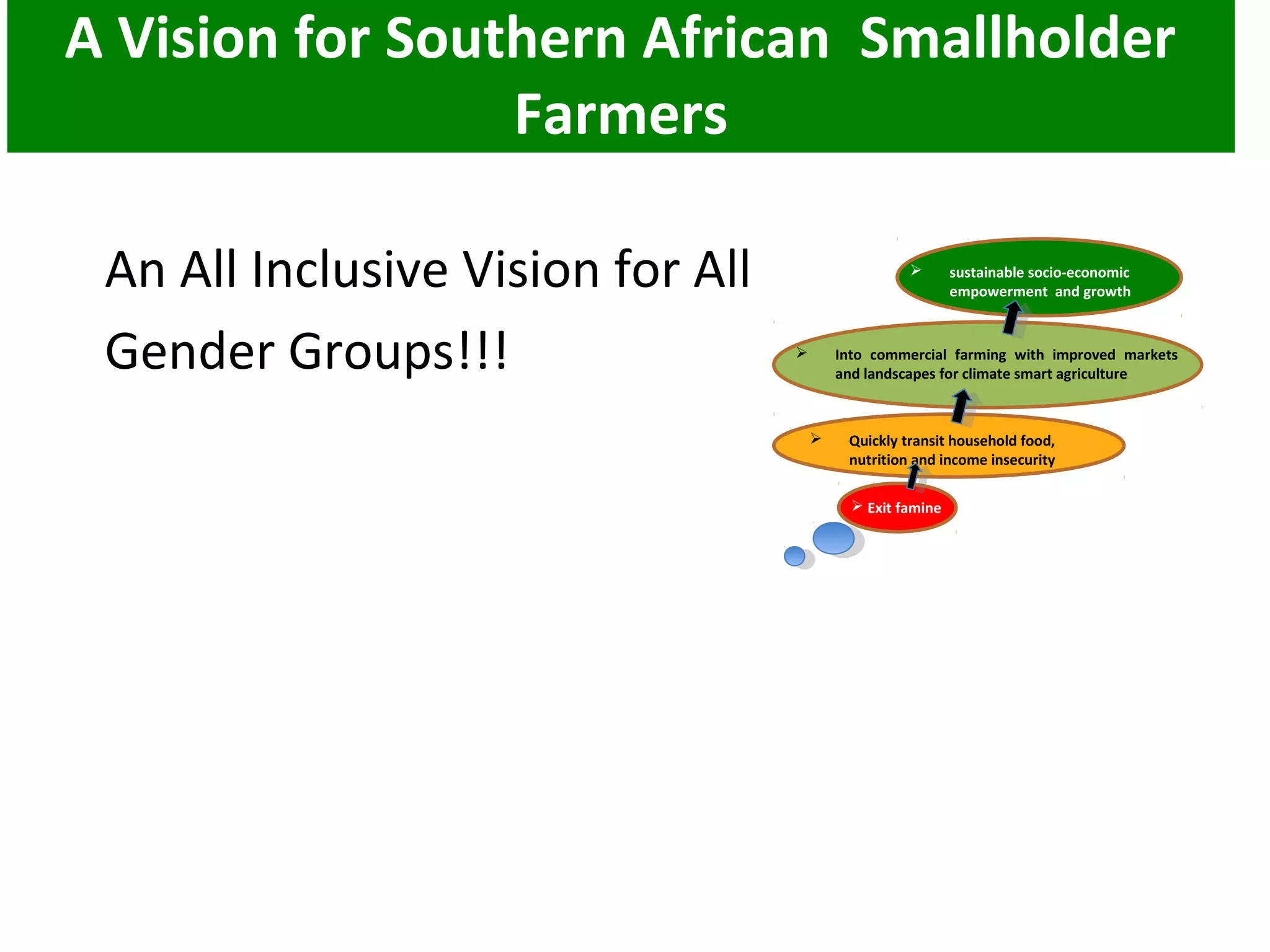
A Vision for Southern African Smallholder
Farmers
 Exit famine
 Quickly transit household food,
nutrition and income insecurity
 Into commercial farming with improved markets
and landscapes for climate smart agriculture
 sustainable socio-economic
empowerment and growth
An All Inclusive Vision for All
Gender Groups!!!
Why the Vision: Refocus
Food and nutrition
insecurity
(Poor land mgt
practices….)
Food and nutrition
insecurity
(Poor land mgt
practices….)
Poor standard and
condition of living
Poor standard and
condition of living
Low exposure to
proven
technologies
Low exposure to
proven
technologies
Income insecurityIncome insecurity
Poor market
information and
infrastructure
Poor market
information and
infrastructure
How to Achieve the Vision
:
Emphasis on Participatory Packaging
of Complementing Scientifically
Proven Interventions
The Village as Entry and Organizing Base
Use the Village as Entry and Organizing Base for Demand-Driven
Interventions including agroforestry and improved land-scapes as
base activities: “The Future Belong to the Organized” (NASFAM Logo)
Participatory Packaging of Integrated
Interventions (PITIEC Package Deals)
Innovative Participatory Progressive and Holistic Packaging of omplementing Interventions
into Integrated Technologies with Information Education and Communication(PITIEC)
package deals for Total Village Transformation
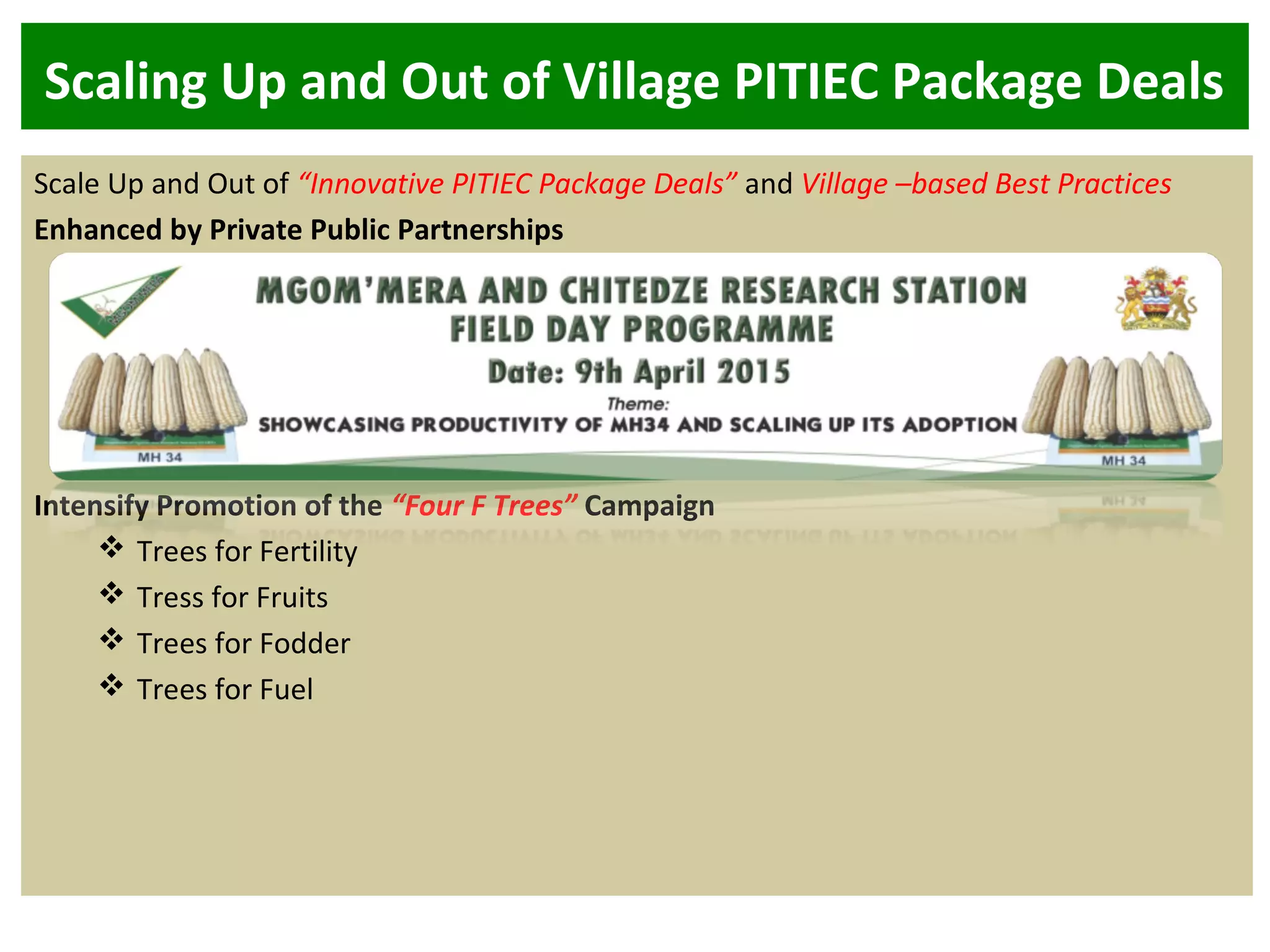
Scaling Up and Out of Village PITIEC Package Deals
Scale Up and Out of “Innovative PITIEC Package Deals” and Village –based Best Practices
Enhanced by Private Public Partnerships
Intensify Promotion of the “Four F Trees” Campaign
 Trees for Fertility
 Tress for Fruits
 Trees for Fodder
 Trees for Fuel
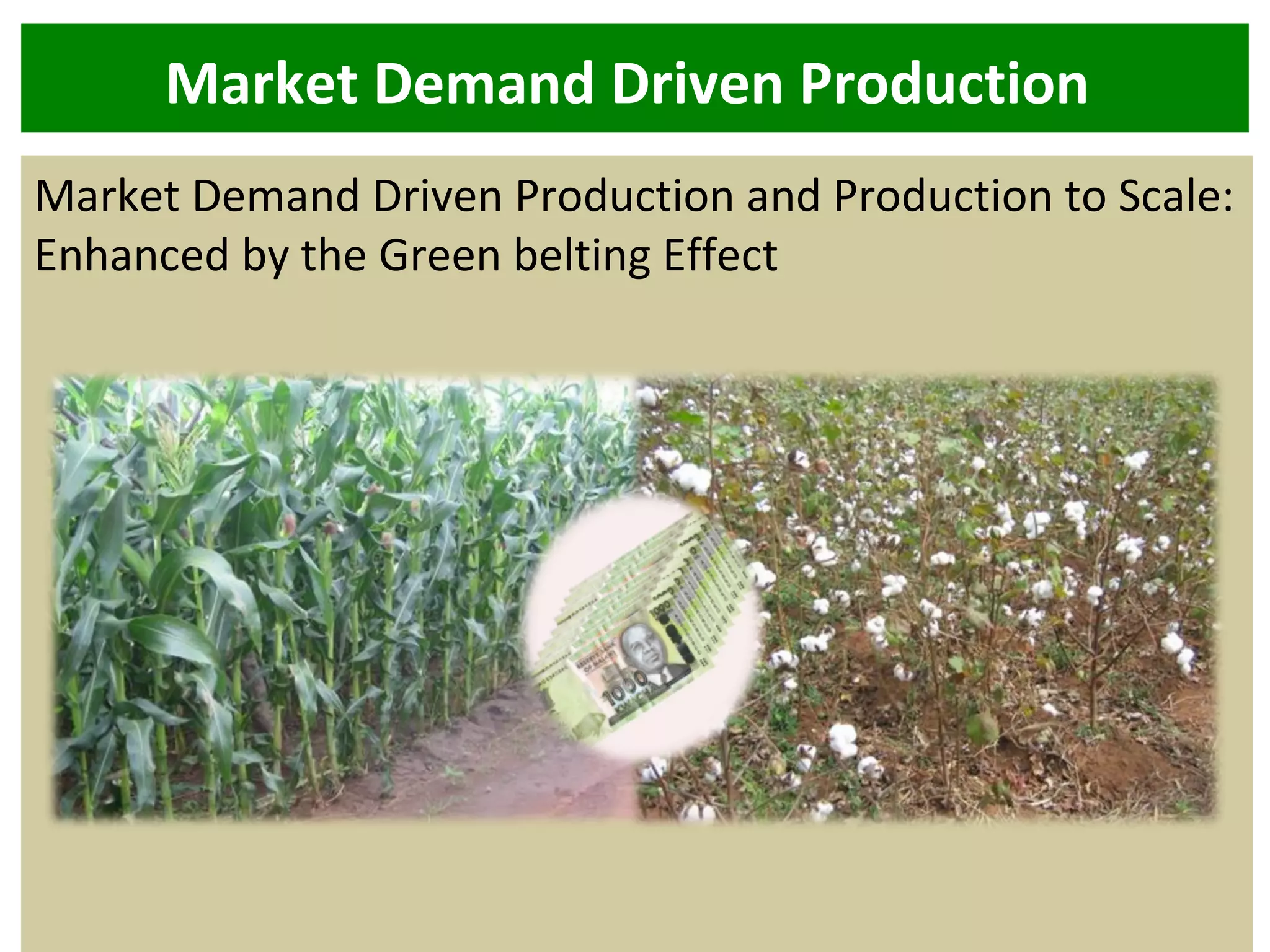
Market Demand Driven Production
Market Demand Driven Production and Production to Scale:
Enhanced by the Green belting Effect
Support Systems for the Package Deal to see more
MVTTS spread like wild fire
Support Systems for Sustainable and Progressive
PITIEC Package Deals
Conclusion
Beat famine in Southern Africa with concerted
efforts to:
Focus on the vision for the small holder
farmers in their gender the categories for:
Clear understanding of their various situations
and demands that have implications on
programming for accelerating impact through
landscape and livelihoods regeneration
Thank you for your attention

The Vision for Southern Africa’s Small holder Farmers

  • 1.
    The Vision forSouthern Africa’s Small holder Farmers Presented at the Bingu International Conference Centre
  • 2.
    Presentation Outline 1. ContextualBack ground-Who is the smallholder farmer 2. Why the Vision 3. What is the Vision 4. How to Achieve the Vision 5. Conclusion
  • 3.
     Male AbleHead of Household  Female Able Head of Household  Elderly Head of Household  Child Headed Household  All of the Above but coping with Physical Disability  All of the Above but coping with Impacts of Gender Disparities and worsened by HIV and AIDS and more so considering HIV and AIDS as a Gender Issue  All of the Above but coping with Impacts of floods and droughts leading to famine Who is this Small-holder Farmer?
  • 4.
    The Small holderFarmer Vision  Exit famine  Quickly transit household food, nutrition and income insecurity  Into commercial farming with improved markets and landscapes for climate smart agriculture  sustainable socio-economic empowerment and growth
  • 5.
    Is it theSame Vision for? Male Headed Able Households  Exit famine  Quickly transit household food, nutrition and income insecurity  Into commercial farming with improved markets and landscapes for climate smart agriculture  sustainable socio-economic empowerment and growth
  • 6.
    Is it theSame Vision for? Female Headed Able Households  Exit famine  Quickly transit household food, nutrition and income insecurity  Into commercial farming with improved markets and landscapes for climate smart agriculture  sustainable socio-economic empowerment and growth
  • 7.
    Is it theSame Vision for? Elderly Headed Able Households?  Exit famine  Quickly transit household food, nutrition and income insecurity  Into commercial farming with improved markets and landscapes for climate smart agriculture  sustainable socio-economic empowerment and growth
  • 8.
    Is it theSame Vision for? Child Headed Able Household?  Exit famine  Quickly transit household food, nutrition and income insecurity  Into commercial farming with improved markets and landscapes for climate smart agriculture  sustainable socio-economic empowerment and growth
  • 9.
    Is it theSame Vision for? HIV and AIDS and more so considering HIV and AIDS as a Gender  Exit famine  Quickly transit household food, nutrition and income insecurity  Into commercial farming with improved markets and landscapes for climate smart agriculture  sustainable socio-economic empowerment and growth
  • 10.
    Is it theSame Vision for? Physically Disabled  Exit famine  Quickly transit household food, nutrition and income insecurity  Into commercial farming with improved markets and landscapes for climate smart agriculture  sustainable socio-economic empowerment and growth
  • 11.
    A Vision forSouthern African Smallholder Farmers  Exit famine  Quickly transit household food, nutrition and income insecurity  Into commercial farming with improved markets and landscapes for climate smart agriculture  sustainable socio-economic empowerment and growth An All Inclusive Vision for All Gender Groups!!!
  • 12.
    Why the Vision:Refocus Food and nutrition insecurity (Poor land mgt practices….) Food and nutrition insecurity (Poor land mgt practices….) Poor standard and condition of living Poor standard and condition of living Low exposure to proven technologies Low exposure to proven technologies Income insecurityIncome insecurity Poor market information and infrastructure Poor market information and infrastructure
  • 13.
    How to Achievethe Vision : Emphasis on Participatory Packaging of Complementing Scientifically Proven Interventions
  • 14.
    The Village asEntry and Organizing Base Use the Village as Entry and Organizing Base for Demand-Driven Interventions including agroforestry and improved land-scapes as base activities: “The Future Belong to the Organized” (NASFAM Logo)
  • 15.
    Participatory Packaging ofIntegrated Interventions (PITIEC Package Deals) Innovative Participatory Progressive and Holistic Packaging of omplementing Interventions into Integrated Technologies with Information Education and Communication(PITIEC) package deals for Total Village Transformation
  • 16.
    Scaling Up andOut of Village PITIEC Package Deals Scale Up and Out of “Innovative PITIEC Package Deals” and Village –based Best Practices Enhanced by Private Public Partnerships Intensify Promotion of the “Four F Trees” Campaign  Trees for Fertility  Tress for Fruits  Trees for Fodder  Trees for Fuel
  • 17.
    Market Demand DrivenProduction Market Demand Driven Production and Production to Scale: Enhanced by the Green belting Effect
  • 18.
    Support Systems forthe Package Deal to see more MVTTS spread like wild fire Support Systems for Sustainable and Progressive PITIEC Package Deals
  • 19.
    Conclusion Beat famine inSouthern Africa with concerted efforts to: Focus on the vision for the small holder farmers in their gender the categories for: Clear understanding of their various situations and demands that have implications on programming for accelerating impact through landscape and livelihoods regeneration
  • 20.
    Thank you foryour attention

Editor's Notes

  • #4 1949 was the worst drought and famine in Malawi history Extension was introduced as a direct response to the famine
  • #5 1949 was the worst drought and famine in Malawi history Extension was introduced as a direct response to the famine
  • #6 1949 was the worst drought and famine in Malawi history Extension was introduced as a direct response to the famine
  • #7 1949 was the worst drought and famine in Malawi history Extension was introduced as a direct response to the famine
  • #8 1949 was the worst drought and famine in Malawi history Extension was introduced as a direct response to the famine
  • #9 1949 was the worst drought and famine in Malawi history Extension was introduced as a direct response to the famine
  • #10 1949 was the worst drought and famine in Malawi history Extension was introduced as a direct response to the famine
  • #11 1949 was the worst drought and famine in Malawi history Extension was introduced as a direct response to the famine
  • #12 1949 was the worst drought and famine in Malawi history Extension was introduced as a direct response to the famine
  • #13 1949 was the worst drought and famine in Malawi history Extension was introduced as a direct response to the famine
  • #14 1949 was the worst drought and famine in Malawi history Extension was introduced as a direct response to the famine
  • #15 1949 was the worst drought and famine in Malawi history Extension was introduced as a direct response to the famine