

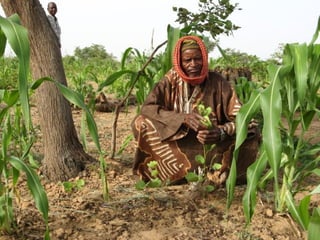
“I visited 385 agricultural programs in
95 countries.
Very few programs have scaled up.
The FMNR story is unique”.
Roland Bunch.
International Agricultural Consultant.
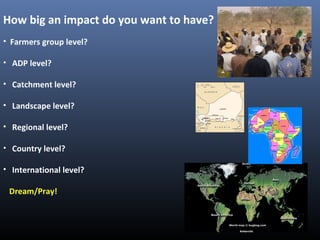
How big an impact do you want to have?
• Farmers group level?
• ADP level?
• Catchment level?
• Landscape level?
• Regional level?
• Country level?
• International level?
Dream/Pray!
Please write down your goal –
how big an impact
do you want to have?
2010
2015
2013
2015
2013
2012
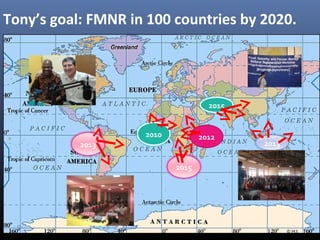
Tony’s goal: FMNR in 100 countries by 2020.
“You need to see
cabbages in your head,
before you see them in
the ground.”
Sanchez. Human Farm
1.What was the environment (water supply,
weather, soil fertility, biodiversity, …) like
when you were a child?
2.What is the environment like now?
3.If we do nothing – what will the
environment be like for our children and
grandchildren?
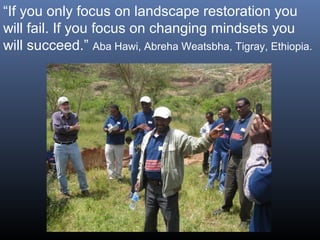
“If you only focus on landscape restoration you
will fail. If you focus on changing mindsets you
will succeed.” Aba Hawi, Abreha Weatsbha, Tigray, Ethiopia.
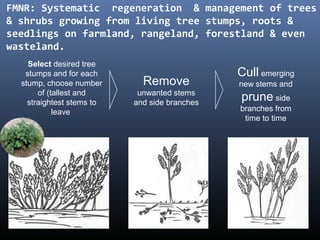
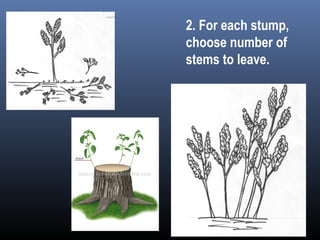
Select desired tree
stumps and for each
stump, choose number
of (tallest and
straightest stems to
leave
Remove
unwanted stems
and side branches
Cull emerging
new stems and
prune side
branches from
time to time
FMNR: Systematic regeneration & management of trees
& shrubs growing from living tree stumps, roots &
seedlings on farmland, rangeland, forestland & even
wasteland.
REFORESTATION
WITHOUT PLANTING
TREES?
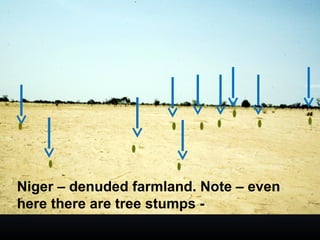
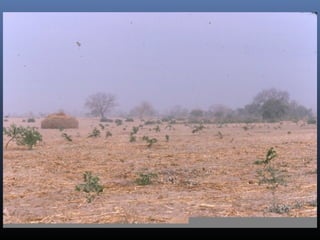
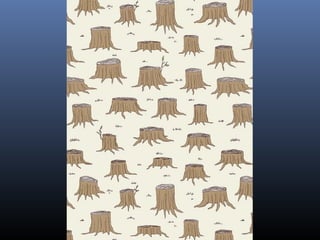
Niger – denuded farmland. Note – even
here there are tree stumps -
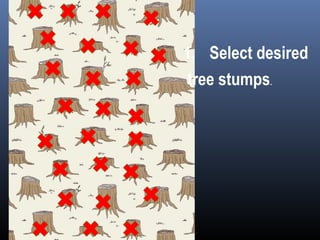
2. For each stump,
choose number of
stems to leave.
1. Select desired
tree stumps.
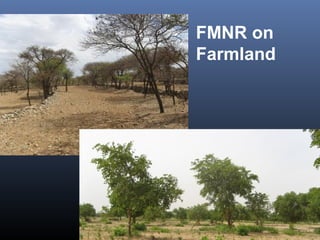
FMNR on
Farmland
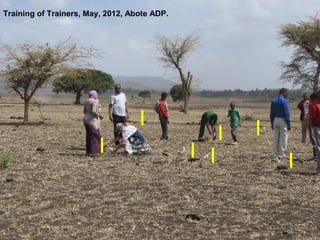
Training of Trainers, May, 2012, Abote ADP.
FMNR on
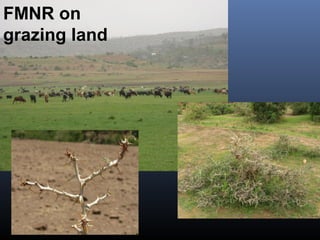
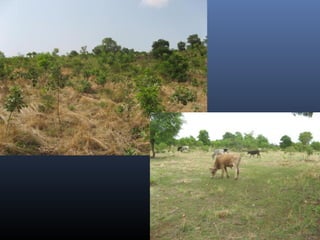
grazing land
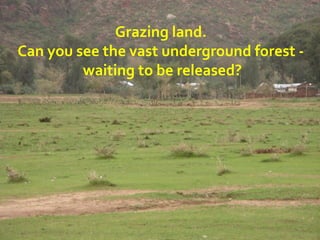
Grazing land.
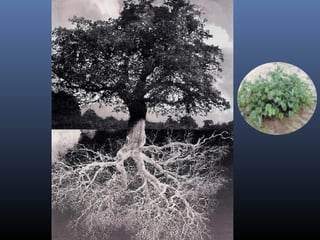
Can you see the vast underground forest -
waiting to be released?
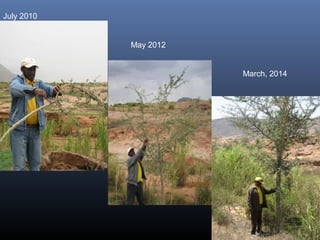
July 2010
May 2012
March, 2014
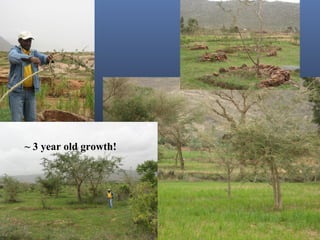
~ 3 year old growth!
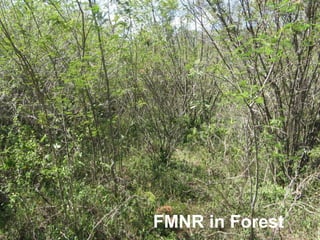
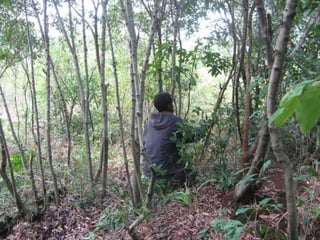
FMNR in Forest
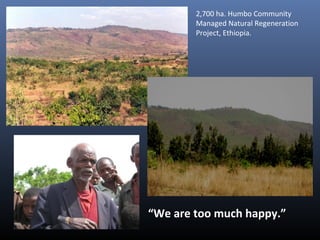
“We are too much happy.”
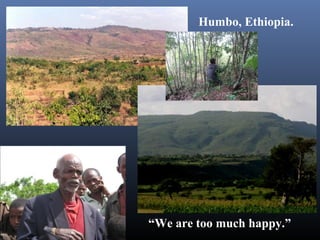
2,700 ha. Humbo Community
Managed Natural Regeneration
Project, Ethiopia.
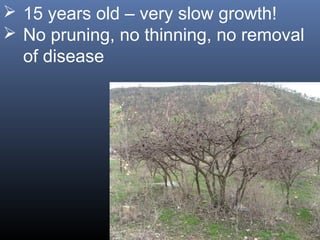
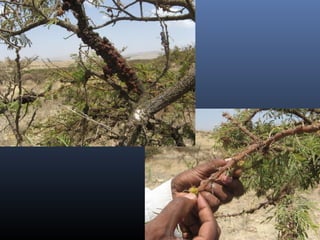
 15 years old – very slow growth!
 No pruning, no thinning, no removal
of disease
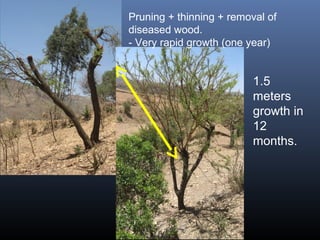
Pruning + thinning + removal of
diseased wood.
- Very rapid growth (one year)
1.5
meters
growth in
12
months.
http://en.wikipedia.org/wiki/Farmer_Managed_Natu
 
http://www.youtube.com/watch?v=E9DpptI4QGY
http://www.fmnrhub.com.au
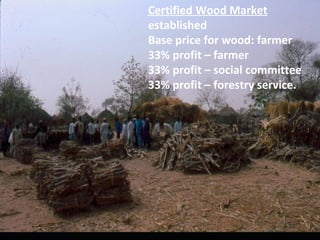
Certified Wood Market
established
Base price for wood: farmer
33% profit – farmer
33% profit – social committee
33% profit – forestry service.
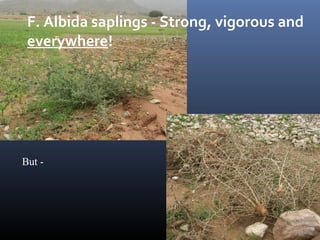
F. Albida saplings - Strong, vigorous and
everywhere!
But -
“We are too much happy.”
Humbo, Ethiopia.
What methods have been tried in 
Tanzania?
Which ones work? Why do they work?
Which ones do not? Why don’t they 
work?
Discussion
1. What is required to introduce FMNR to Tanzania?
2.a) What are the existing laws on tree and land use?
2.b) Do these laws encourage or discourage FMNR?
3. How would you deal with issues such as:
• Fire
• Livestock
• FMNR on communal land
• FMNR on private land
• Charcoal making and wood cutting.

FMNR: Definition

Editor's Notes

  • #2 FMNR is tried and proven. It is scalable and once introduced can continue to scale up without ongoing project input. You are not taking a gamble here – if you introduce it, and do it well, there is high likelihood that it will spread.
  • #3 What level impact do you see yourself having?
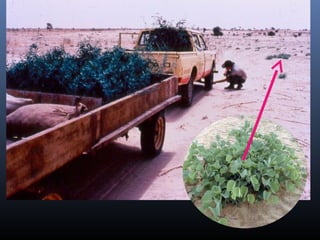
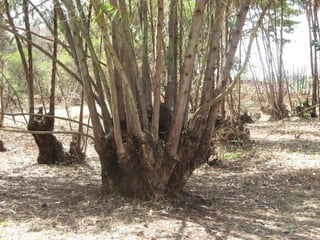
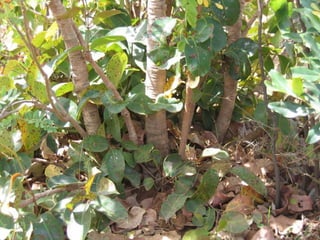
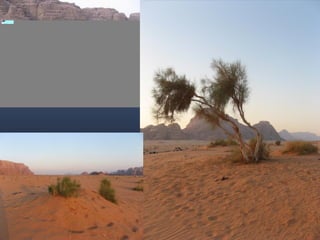
  • #9 It is estimated that in Niger 60 million trees were planted from nurseries over 20 year period with less than 20% survival. I felt very discouraged. I looked North, South, East, West – and thought, using this nursery and tree planting technique, at this rate – it was impossible revegetate the land on a large enough scale to make an impact. How many million dollars would I need? How many staff would I need? How many decades would it take? For me the solution came as an answer to prayer, and I saw for the first time, what I had seen all along but hadn’t recognized for what it was. There are millions of living tree stumps in farmlands, grazing lands and degraded forests across Africa and other countries with the potential to re-grow into trees, if we give them a chance. Insert: this ‘bush’ is actually regrowth from a tree stump and has the potential to rapidly grow into a tree if pruned and cared for properly.
  • #10 All we see after clearing are the tree shoots. In fact, these shoots are supported by a mature root system full of stored energy which can feed shoot growth and cause them to grow very quickly.
  • #11 FMNR – regeneration of trees from existing stumps. 1st year.
  • #17 Step 2. Select desired tree stump Step 3. Remove unwanted stems and side branches. Again, exactly how many stems will be left will depend on the objective – do you want a single stemmed fruiting or timber tree, or do you want multi-stemmed trees so that some stems can be harvested each year for firewood or other purposes. Step 4. Where branches and stems have been pruned they will often re-sprout, so emerging new stems and side branches will need to be pruned from time to time. How many stems the farmer leaves and how heavily and in what manner the regrowth is pruned will depend on the farmers needs, the particular species and the local conditions.
  • #18 Previously barren landscape. In year one, the pruned trees are growing quickly. Notice that this farmer has also begun leaving crop residues on the field. This will also reduce wind speed and temperature, reduce evaporation and increase organic matter going back into the soil.
  • #19 Even in the first year of FMNR there is a benefit. Even though this is a small amount of firewood it is significant and it reduced the number of trips and the distance travelled in search of firewood. Notice also all the organic matter laying on the ground. This has a vey large impact on soil fertility.
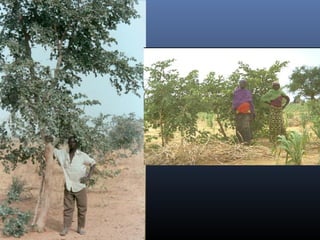
  • #20 Left: two to three year old growth with FMNR. Notice, this farmer is allowing a single trunk to grow and will harvest selected branches each year so that there will always be tree cover. He found that re-growth from trees is faster and less vulnerable to livestock damage than regrowth from tree stumps. Right – there need be no gender or age or culture barrier – anybody can practice and benefit from FMNR. It is important to be intentional about facilitating this in some cultures though.
  • #21 Within three years, farmers were managing trees on their land sustainably. - Soil fertility increased, soil structure improved, and hence crop yields also. Income from wood and fodder there was greater moisture infiltration and retention in the soils. Farmers began to see trees as a sustainable cash crop in their own right. Halidou has a rotation system here – cut and bundled branches can be seen in the background. The trunk on his right will be harvested this year and in front of him are replacement stems. The trees are growing in a healthy field of millet.
  • #22 A cleared forest might look like this. Exactly how we do FMNR is flexible and depends on the objective (e.g. Do we want to restore a biodiverse forest, do we want the land for cultivation or for pasture), the species available, and the end uses of those species (timber, firewood, fruits, fodder, habitat, beauty, etc). So, there is no one way of doing FMNR. But there are principles or guides.
  • #23 So depending on our goal, we may leave many or few stumps to regrow. We may leave all or selected species occurring. We may leave certain stumps which are aligned in rows to aid cultivation, or we may leave stumps randomly.
  • #24 Top left: NW Tigray – farmers are practicing FMNR with this particular species (A. etbica) along contour lines only. A. etbica is valued for its firewood and small poles, but it competes heavily with food crops, therefore they only leave it on farm borders and on contours. However, they do leave other valued species (e.g. Faidherbia and zyzyphus) within fields – because they do not compete negatively with crops and in fact, crops benefit from their presence. Bottom right – farmers in Niger mostly cultivate their land with hand held implements, and so are less concerned about having trees in rows.
  • #25 Yellow marks indicate young Faidherbia trees emerging.
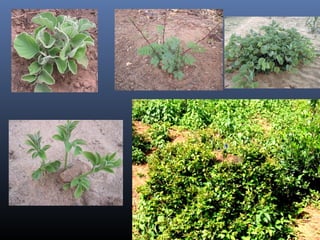
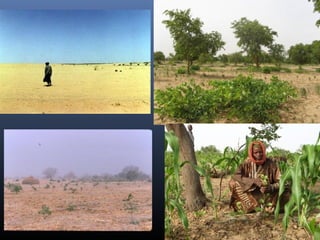
  • #26 Top left: even seemingly barren land can harbour stumps, roots and seeds with the ability to grow, if given a chance. Bottom Left: during the first year since pruning and allowing the re-growth from stumps to grow. Notice also that farmers are now able to leave crop residues on the field – for they are beginning to realize the benefits of agro-forestry – more fuel wood and more fodder. Top Right: 3-4 years after commencing FMNR, trees have transformed the landscape, and are contributing to a more favourable environment for crops and livestock. Bottom right: This farmer is happily growing indigenous trees with his annual grain crop. Notice behind him – there are bundles of wood for sale. The tree trunk to his right will be harvested next year, and he is grooming numerous shoots (to his right and in front of him) to be harvested in future years. Notice also that the crop is growing well, beneath and right up to the trunk of the tree.
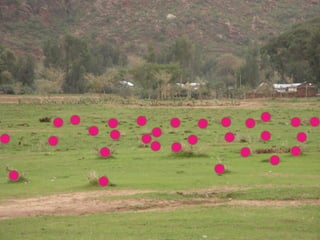
  • #27 Second – on grazing land, livestock pressure is high and constant.
  • #28 Yet – there are literally thousands of Faidherbia trees in this landscape.
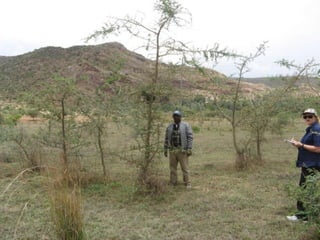
  • #31 Farmers in Abreha Atsbeha, Tigray are leaving fodder trees (Faidherbia albida) on grazing land. Eventually they will thin trees down to approximately 10m by 10 m spacing.
  • #32 Contrary to popular belief, the growth rates are quite rapid.
  • #35 This community (Humbo, Ethiopia) have allowed all tree stumps to regrow in this forest setting. They have also deliberately left multiple stems growing from each tree stump in order to be able to harvest firewood and poles while maintaining a forest.
  • #36 Large mountain range – was forest probably as recently as the 1960’s, was completely cleared by 1999 (top left). Through organizing the communities utilizing this mountain, providing legally binding user rights, providing training and follow up, communities have realized rapid reforestation and are benefiting in many ways.
  • #45 Their tree work was so successful that wood markets sprung up where there was only sand before. They charge a membership fee and farmers are paid a guaranteed price for the wood. Profits over and above the guaranteed price are then divided up between the farmer, organizing committee and the forestry department.
  • #46 This is the case in Abreha Atsbeha. Faidherbia trees are everywhere.
  • #47 Large mountain range – was forest probably as recently as the 1960’s, today, no standing trees on this 15,000 ha. Site.
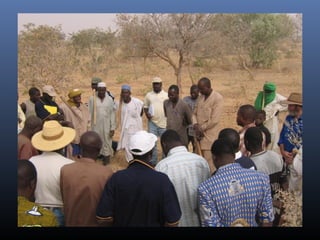
  • #48 Exchange visit / FMNR training time and time for farmers to ask other farmers questions. Exchange visits have proven to be one of the most powerful means of spreading FMNR from farmer to farmer.