Practical aspects of implementing
FMNR
Beating Famine Conference, Malawi
14th -17th April 2015
Caroline Njiru
World Vision Kenya
The approach
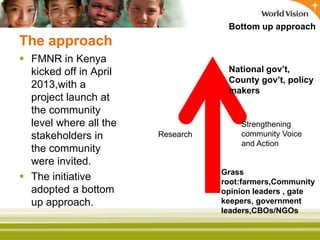
 FMNR in Kenya
kicked off in April
2013,with a
project launch at
the community
level where all the
stakeholders in
the community
were invited.
 The initiative
adopted a bottom
up approach.
Bottom up approach
National gov’t,
County gov’t, policy
makers
Grass
root:farmers,Community
opinion leaders , gate
keepers, government
leaders,CBOs/NGOs
Research
Strengthening
community Voice
and Action
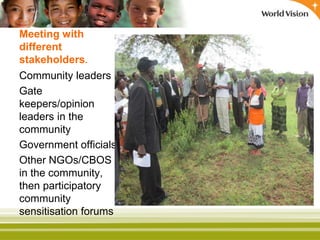
Meeting with
different
stakeholders.
Community leaders
Gate
keepers/opinion
leaders in the
community
Government officials
Other NGOs/CBOS
in the community,
then participatory
community
sensitisation forums
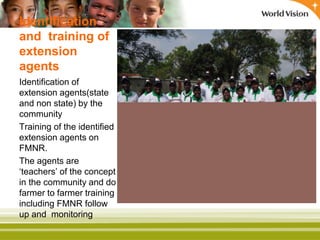
Identification
and training of
extension
agents
Identification of
extension agents(state
and non state) by the
community
Training of the identified
extension agents on
FMNR.
The agents are
‘teachers’ of the concept
in the community and do
farmer to farmer training
including FMNR follow
up and monitoring
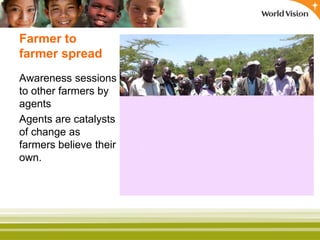
Farmer to
farmer spread
Awareness sessions
to other farmers by
agents
Agents are catalysts
of change as
farmers believe their
own.
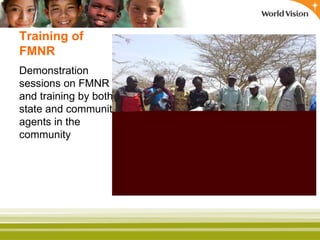
Training of
FMNR
Demonstration
sessions on FMNR
and training by both
state and community
agents in the
community
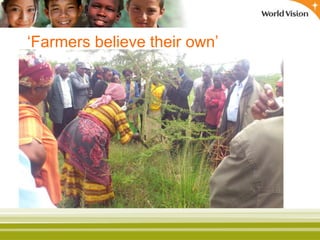
‘Farmers believe their own’
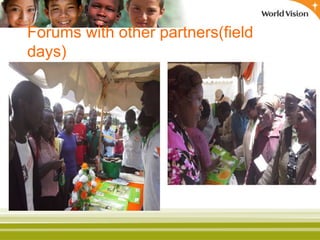
Forums with other partners(field
days)
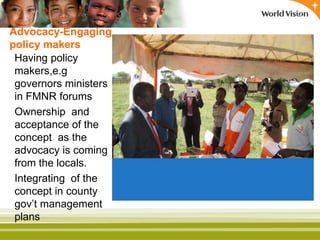
Advocacy-Engaging
policy makers
Having policy
makers,e.g
governors ministers
in FMNR forums
Ownership and
acceptance of the
concept as the
advocacy is coming
from the locals.
Integrating of the
concept in county
gov’t management
plans
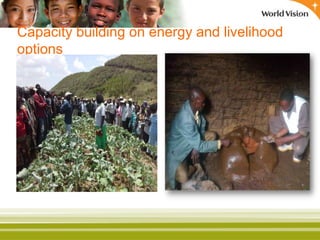
Capacity building on energy and livelihood
options
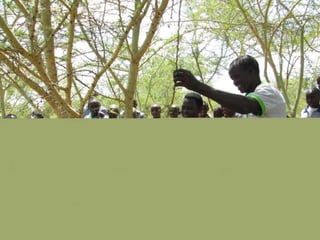
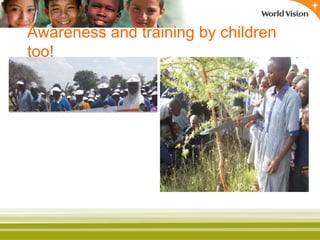
Awareness and training by children
too!
Use of Media
Posters,booklets….
Exchange visits
Enabling factors
 Bottom up approach
 Community education and awareness.
 Riding on the early adopters
 Learning sites( individual farms/public sites)
 Defined land and tree tenure, joint management on
communal land(By laws)
 Stopping destructive burning and educate community on
managing wildfires
 Policy intergration,partnerships(government,CBOs,women
groups,youth groups etc),
 Connecting FMNRwith farmers livelihoods.
Lessons learnt
 Bottom up approach is key, you have to win the farmers!
 It is important to build a movement of champions(both
community and institutions)
 Motivation of extension agents should be considered
 Use existing community structures
 Acknowledge indigenous knowledge
 It is important to contextualise(connecting with the source
livelihood of the community)
 Tree and land Tenure/ownership, affect uptake, where user
rights or land tenure defined uptake is high
 Capacity building community on alternative livelihood and
energy options are key investments that can enhance success.
 Children and schools are a major catalyst for FMNR spread.
 Law and legislation(Policy),partnerships(government and non
government) key in FMNR spread.
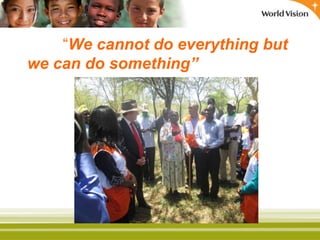
“We cannot do everything but
we can do something”

Practical aspects of implementing FMNR

  • 1.
    Practical aspects ofimplementing FMNR Beating Famine Conference, Malawi 14th -17th April 2015 Caroline Njiru World Vision Kenya
  • 2.
    The approach  FMNRin Kenya kicked off in April 2013,with a project launch at the community level where all the stakeholders in the community were invited.  The initiative adopted a bottom up approach. Bottom up approach National gov’t, County gov’t, policy makers Grass root:farmers,Community opinion leaders , gate keepers, government leaders,CBOs/NGOs Research Strengthening community Voice and Action
  • 3.
    Meeting with different stakeholders. Community leaders Gate keepers/opinion leadersin the community Government officials Other NGOs/CBOS in the community, then participatory community sensitisation forums
  • 4.
    Identification and training of extension agents Identificationof extension agents(state and non state) by the community Training of the identified extension agents on FMNR. The agents are ‘teachers’ of the concept in the community and do farmer to farmer training including FMNR follow up and monitoring
  • 5.
    Farmer to farmer spread Awarenesssessions to other farmers by agents Agents are catalysts of change as farmers believe their own.
  • 6.
    Training of FMNR Demonstration sessions onFMNR and training by both state and community agents in the community
  • 7.
  • 8.
    Forums with otherpartners(field days)
  • 9.
    Advocacy-Engaging policy makers Having policy makers,e.g governorsministers in FMNR forums Ownership and acceptance of the concept as the advocacy is coming from the locals. Integrating of the concept in county gov’t management plans
  • 11.
    Capacity building onenergy and livelihood options
  • 12.
    Awareness and trainingby children too!
  • 13.
  • 14.
  • 15.
  • 17.
    Enabling factors  Bottomup approach  Community education and awareness.  Riding on the early adopters  Learning sites( individual farms/public sites)  Defined land and tree tenure, joint management on communal land(By laws)  Stopping destructive burning and educate community on managing wildfires  Policy intergration,partnerships(government,CBOs,women groups,youth groups etc),  Connecting FMNRwith farmers livelihoods.
  • 18.
    Lessons learnt  Bottomup approach is key, you have to win the farmers!  It is important to build a movement of champions(both community and institutions)  Motivation of extension agents should be considered  Use existing community structures  Acknowledge indigenous knowledge  It is important to contextualise(connecting with the source livelihood of the community)  Tree and land Tenure/ownership, affect uptake, where user rights or land tenure defined uptake is high  Capacity building community on alternative livelihood and energy options are key investments that can enhance success.  Children and schools are a major catalyst for FMNR spread.  Law and legislation(Policy),partnerships(government and non government) key in FMNR spread.
  • 19.
    “We cannot doeverything but we can do something”