Influencing emerging legislation – how a Bill becomes law 1 st  November 2011
Manifesto commitment White Paper/Green Paper Queen’s Speech Or none of the above...
1 Contribute to Government consultations on new laws
Some Bills get pre-legislative scrutiny These are called  Draft Bills Examined by a joint committee of MPs and Lords
2 Submit evidence to the Joint Committee looking at the Draft Bill
Publication of Bill No debate No approval needed to proceed
3 Read the Explanatory Notes and work out exactly how you want to change the Bill
4 Prepare quotes, statistics & individual testimony for the changes you want
5 Research and contact the MPs you want to influence
Two weeks after First Reading Debate on main principles No amendments House must approve Second Reading for Bill to progress
6 Read the Second Reading debate – who are the MPs who might support you?
7 Look for the House of Commons Library Research Paper on your Bill
8 Submit evidence to the Public Bill Committee
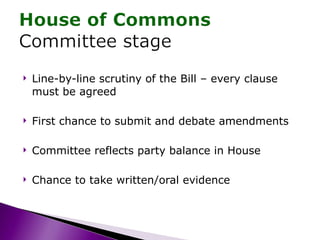
Line-by-line scrutiny of the Bill – every clause must be agreed First chance to submit and debate amendments Committee reflects party balance in House  Chance to take written/oral evidence
9 Look for the House of Commons Library committee stage report
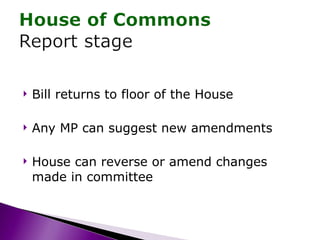
Bill returns to floor of the House Any MP can suggest new amendments House can reverse or amend changes made in committee
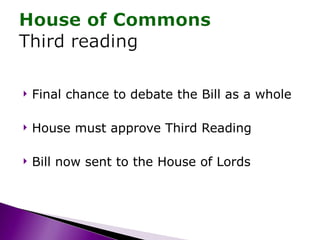
Final chance to debate the Bill as a whole House must approve Third Reading  Bill now sent to the House of Lords
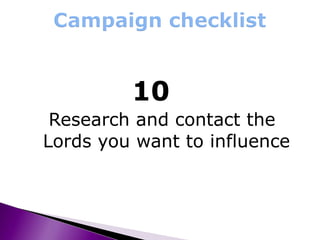
10 Research and contact the Lords you want to influence
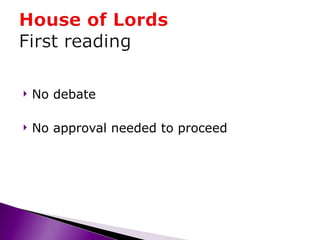
No debate No approval needed to proceed
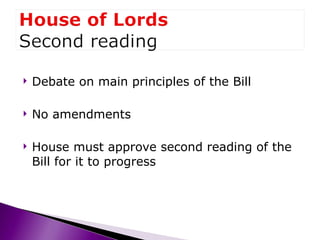
Debate on main principles of the Bill  No amendments House must approve second reading of the Bill for it to progress
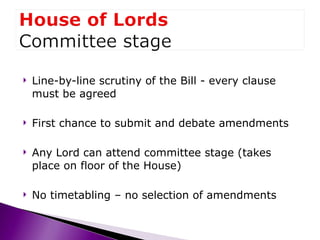
Line-by-line scrutiny of the Bill - every clause must be agreed First chance to submit and debate amendments Any Lord can attend committee stage (takes place on floor of the House) No timetabling – no selection of amendments
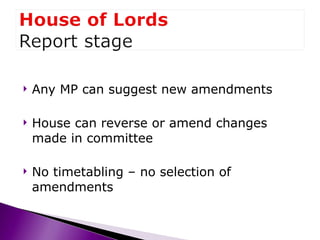
Any MP can suggest new amendments House can reverse or amend changes made in committee No timetabling – no selection of amendments
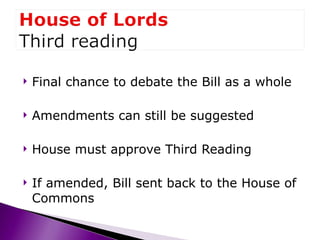
Final chance to debate the Bill as a whole Amendments can still be suggested House must approve Third Reading  If amended, Bill sent back to the House of Commons
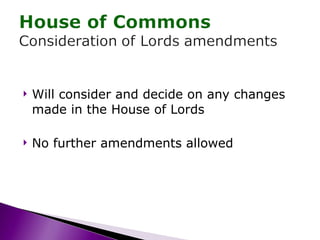
Will consider and decide on any changes made in the House of Lords No further amendments allowed
Will consider and decide on any changes made in the House of Commons Both Houses must eventually agree on the text of the Bill
Not withheld since 1707  Some sections of the Act likely to be enacted by secondary legislation
Ballot Bill Ten Minute Rule Bill Presentation Bill

Manchester Conference 1.11.11 - Legislation presentation

  • 1.
    Influencing emerging legislation– how a Bill becomes law 1 st November 2011
  • 2.
    Manifesto commitment WhitePaper/Green Paper Queen’s Speech Or none of the above...
  • 3.
    1 Contribute toGovernment consultations on new laws
  • 4.
    Some Bills getpre-legislative scrutiny These are called Draft Bills Examined by a joint committee of MPs and Lords
  • 5.
    2 Submit evidenceto the Joint Committee looking at the Draft Bill
  • 6.
    Publication of BillNo debate No approval needed to proceed
  • 7.
    3 Read theExplanatory Notes and work out exactly how you want to change the Bill
  • 8.
    4 Prepare quotes,statistics & individual testimony for the changes you want
  • 9.
    5 Research andcontact the MPs you want to influence
  • 10.
    Two weeks afterFirst Reading Debate on main principles No amendments House must approve Second Reading for Bill to progress
  • 11.
    6 Read theSecond Reading debate – who are the MPs who might support you?
  • 12.
    7 Look forthe House of Commons Library Research Paper on your Bill
  • 13.
    8 Submit evidenceto the Public Bill Committee
  • 14.
    Line-by-line scrutiny ofthe Bill – every clause must be agreed First chance to submit and debate amendments Committee reflects party balance in House Chance to take written/oral evidence
  • 15.
    9 Look forthe House of Commons Library committee stage report
  • 16.
    Bill returns tofloor of the House Any MP can suggest new amendments House can reverse or amend changes made in committee
  • 17.
    Final chance todebate the Bill as a whole House must approve Third Reading Bill now sent to the House of Lords
  • 18.
    10 Research andcontact the Lords you want to influence
  • 19.
    No debate Noapproval needed to proceed
  • 20.
    Debate on mainprinciples of the Bill No amendments House must approve second reading of the Bill for it to progress
  • 21.
    Line-by-line scrutiny ofthe Bill - every clause must be agreed First chance to submit and debate amendments Any Lord can attend committee stage (takes place on floor of the House) No timetabling – no selection of amendments
  • 22.
    Any MP cansuggest new amendments House can reverse or amend changes made in committee No timetabling – no selection of amendments
  • 23.
    Final chance todebate the Bill as a whole Amendments can still be suggested House must approve Third Reading If amended, Bill sent back to the House of Commons
  • 24.
    Will consider anddecide on any changes made in the House of Lords No further amendments allowed
  • 25.
    Will consider anddecide on any changes made in the House of Commons Both Houses must eventually agree on the text of the Bill
  • 26.
    Not withheld since1707 Some sections of the Act likely to be enacted by secondary legislation
  • 27.
    Ballot Bill TenMinute Rule Bill Presentation Bill