MANAGING DIVERSITY
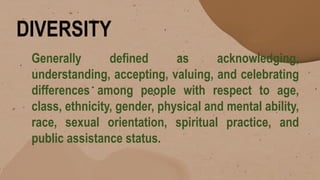
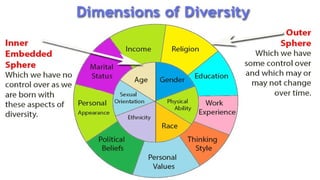
DIVERSITY
Generally defined as acknowledging,
understanding, accepting, valuing, and celebrating
differences among people with respect to age,
class, ethnicity, gender, physical and mental ability,
race, sexual orientation, spiritual practice, and
public assistance status.
DIVERSITY
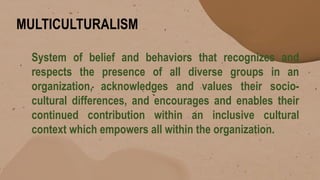
MULTICULTURALISM
System of belief and behaviors that recognizes and
respects the presence of all diverse groups in an
organization, acknowledges and values their socio-
cultural differences, and encourages and enables their
continued contribution within an inclusive cultural
context which empowers all within the organization.
ADVANTAGES MULTICULTURALISM
 CULTURAL AWARENESS. It helps in creating a sense
of cultural awareness among workers.
ADVANTAGES MULTICULTURALISM
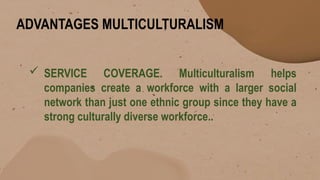
 SERVICE COVERAGE. Multiculturalism helps
companies create a workforce with a larger social
network than just one ethnic group since they have a
strong culturally diverse workforce..
ADVANTAGES MULTICULTURALISM
 EMPLOYEE RELATIONS. Employees exposed to
different viewpoints and cultures in the office or
workplace are usually more likely to practice
toleration.
ADVANTAGES MULTICULTURALISM
 KNOWLEDGE. Employees who become aware of the
culture of others in the workplace may want to learn
more about that culture.
MANAGING DIVERSITY
MANAGING DIVERSITY
According to Taylor Cox, “It is planning and
implementing organizational systems and practices to
manage people so that the potential disadvantages are
minimized.” (Cox, 2009)
MANAGING DIVERSITY
A management system which incorporates the
differences found in a multicultural workforce in a
manner which results in the highest level of
productivity for both organization and the individual.
MANAGING DIVERSITY
EEO – Equal Employment Opportunities
(EEO) means eliminating barriers to ensure
that all employees are considered for the
employment of their choice and have the
chance to perform to their maximum
potential.
MANAGING DIVERSITY
EEO practices include:
Fairness at work, hiring based on merit and promotion
based on talent. I concerns all aspects of employment
including recruitment, pay and other rewards, career
development and work conditions.
DIVERSITY ISSUES
DIVERSITY ISSUES
 RESPECT IN THE WORKPLACE. The key component
in achieving a favorably diversified workplace is
establishing teamwork and mutual respect among
staff members.
DIVERSITY ISSUES
 CONFLICT among employees becomes inevitable
when prejudice, racism, discrimination and a lack of
respect creep into a work environment. If not
distinguished, this can turn explosive or even violent.
DIVERSITY ISSUES
 LIFESTYLE ACCEPTANCE. Though one’s personal
life should typically not affect their job performance,
however, at times the lifestyle acceptance is an issue
in the workplace.
DIVERSITY ISSUES
 ETHNIC AND CULTURAL DIFFERENCES. It is often
noticed that, some individuals harbor unfair
prejudices against people from different colors,
cultures, ethnicity or religion than their own.
DIVERSITY ISSUES
 GENDER. One of the oldest and most common
diversity issues in the workplace is the topic on “men
vs women”.
DIVERSITY ISSUES
 HARASSMENT. At times harassment can be an issue
in a diversified work environment, but should
absolutely never be tolerated.
DIVERSITY ISSUES
 COMMUNICATION. Even when no prejudice exists
among employees, a diversified workplace can bring
about certain communication issues.
DIVERSITY ISSUES
 GENERATION GAPS. In a larger diversified
corporations, staffs are often made up of workers
who range from teenagers to senior citizens.
DIVERSITY ISSUES
 DISABILITIES. Unfortunately, workers who are
mentally or physically handicapped sometimes
encounter discriminatory behavior from insensitive
co-workers.
DIVERSITY ISSUES
 CONSISTENCY. Diversity training and practices are
not just a course or exam that employees take.
Consistency and a daily practice of company
behavior policies is essential in molding a positive
and productive workplace.
ADVANTAGE OF DIVERSE WORKFORCE
ADVANTAGES OF A DIVERSE WORKFORCE
 CREATIVITY INCREASES when people with different
ways of solving difficult problems work together
towards a common objective.
ADVANTAGES OF A DIVERSE WORKFORCE
 PRODUCTIVITY INCREASES exponentially when
people of various cultures work together towards a
single inspiring goal.
ADVANTAGES OF A DIVERSE WORKFORCE
 NEW ATTITUDES are brought to the business table by
people from diverse cultures.
STEPS IN MANAGING DIVERSITY
 EMPHASIZE COMMUNICATION. Organizations should
ensure that all employees understand their policies,
procedures, safety rule, and other important
information.
STEPS IN MANAGING DIVERSITY
 VIEW EMPLOYEES AS INDIVIDUAL. Positive and
negative stereotypes, both should be avoided. There
should not be any assumptions regarding employees
from different groups.
STEPS IN MANAGING DIVERSITY
 ENCOURAGE EMPLOYEES TO WORK IN DIVERSE
GROUPS. Organizations should assure that work
teams reflect the diversity of their workplace. Diverse
work teams let employees get to know and value one
another as individuals.
STEPS IN MANAGING DIVERSITY
 BASE DECISIONS ON OBJECTIVE. Each and every
employee (of all backgrounds) should be asked to
meet required standards and perform to the best of
their ability.
STEPS IN MANAGING DIVERSITY
 BE OPEN-MINDED. Recognize and encourage
employees to recognize, that one’s own experience,
background, and culture are not the only ones with
value to the organization.
The concept of diversity
encompasses ACCEPTANCE
and RESPECT. Each
individual are unique and
different.

Managing-Diversity - Human Resource Management

  • 1.
  • 2.
    DIVERSITY Generally defined asacknowledging, understanding, accepting, valuing, and celebrating differences among people with respect to age, class, ethnicity, gender, physical and mental ability, race, sexual orientation, spiritual practice, and public assistance status.
  • 3.
  • 4.
    MULTICULTURALISM System of beliefand behaviors that recognizes and respects the presence of all diverse groups in an organization, acknowledges and values their socio- cultural differences, and encourages and enables their continued contribution within an inclusive cultural context which empowers all within the organization.
  • 5.
    ADVANTAGES MULTICULTURALISM  CULTURALAWARENESS. It helps in creating a sense of cultural awareness among workers.
  • 6.
    ADVANTAGES MULTICULTURALISM  SERVICECOVERAGE. Multiculturalism helps companies create a workforce with a larger social network than just one ethnic group since they have a strong culturally diverse workforce..
  • 7.
    ADVANTAGES MULTICULTURALISM  EMPLOYEERELATIONS. Employees exposed to different viewpoints and cultures in the office or workplace are usually more likely to practice toleration.
  • 8.
    ADVANTAGES MULTICULTURALISM  KNOWLEDGE.Employees who become aware of the culture of others in the workplace may want to learn more about that culture.
  • 9.
  • 11.
    MANAGING DIVERSITY According toTaylor Cox, “It is planning and implementing organizational systems and practices to manage people so that the potential disadvantages are minimized.” (Cox, 2009)
  • 12.
    MANAGING DIVERSITY A managementsystem which incorporates the differences found in a multicultural workforce in a manner which results in the highest level of productivity for both organization and the individual.
  • 13.
    MANAGING DIVERSITY EEO –Equal Employment Opportunities (EEO) means eliminating barriers to ensure that all employees are considered for the employment of their choice and have the chance to perform to their maximum potential.
  • 14.
    MANAGING DIVERSITY EEO practicesinclude: Fairness at work, hiring based on merit and promotion based on talent. I concerns all aspects of employment including recruitment, pay and other rewards, career development and work conditions.
  • 15.
  • 16.
    DIVERSITY ISSUES  RESPECTIN THE WORKPLACE. The key component in achieving a favorably diversified workplace is establishing teamwork and mutual respect among staff members.
  • 17.
    DIVERSITY ISSUES  CONFLICTamong employees becomes inevitable when prejudice, racism, discrimination and a lack of respect creep into a work environment. If not distinguished, this can turn explosive or even violent.
  • 18.
    DIVERSITY ISSUES  LIFESTYLEACCEPTANCE. Though one’s personal life should typically not affect their job performance, however, at times the lifestyle acceptance is an issue in the workplace.
  • 19.
    DIVERSITY ISSUES  ETHNICAND CULTURAL DIFFERENCES. It is often noticed that, some individuals harbor unfair prejudices against people from different colors, cultures, ethnicity or religion than their own.
  • 20.
    DIVERSITY ISSUES  GENDER.One of the oldest and most common diversity issues in the workplace is the topic on “men vs women”.
  • 21.
    DIVERSITY ISSUES  HARASSMENT.At times harassment can be an issue in a diversified work environment, but should absolutely never be tolerated.
  • 22.
    DIVERSITY ISSUES  COMMUNICATION.Even when no prejudice exists among employees, a diversified workplace can bring about certain communication issues.
  • 23.
    DIVERSITY ISSUES  GENERATIONGAPS. In a larger diversified corporations, staffs are often made up of workers who range from teenagers to senior citizens.
  • 24.
    DIVERSITY ISSUES  DISABILITIES.Unfortunately, workers who are mentally or physically handicapped sometimes encounter discriminatory behavior from insensitive co-workers.
  • 25.
    DIVERSITY ISSUES  CONSISTENCY.Diversity training and practices are not just a course or exam that employees take. Consistency and a daily practice of company behavior policies is essential in molding a positive and productive workplace.
  • 26.
  • 27.
    ADVANTAGES OF ADIVERSE WORKFORCE  CREATIVITY INCREASES when people with different ways of solving difficult problems work together towards a common objective.
  • 28.
    ADVANTAGES OF ADIVERSE WORKFORCE  PRODUCTIVITY INCREASES exponentially when people of various cultures work together towards a single inspiring goal.
  • 29.
    ADVANTAGES OF ADIVERSE WORKFORCE  NEW ATTITUDES are brought to the business table by people from diverse cultures.
  • 30.
  • 31.
    STEPS IN MANAGINGDIVERSITY  EMPHASIZE COMMUNICATION. Organizations should ensure that all employees understand their policies, procedures, safety rule, and other important information.
  • 32.
    STEPS IN MANAGINGDIVERSITY  VIEW EMPLOYEES AS INDIVIDUAL. Positive and negative stereotypes, both should be avoided. There should not be any assumptions regarding employees from different groups.
  • 33.
    STEPS IN MANAGINGDIVERSITY  ENCOURAGE EMPLOYEES TO WORK IN DIVERSE GROUPS. Organizations should assure that work teams reflect the diversity of their workplace. Diverse work teams let employees get to know and value one another as individuals.
  • 34.
    STEPS IN MANAGINGDIVERSITY  BASE DECISIONS ON OBJECTIVE. Each and every employee (of all backgrounds) should be asked to meet required standards and perform to the best of their ability.
  • 35.
    STEPS IN MANAGINGDIVERSITY  BE OPEN-MINDED. Recognize and encourage employees to recognize, that one’s own experience, background, and culture are not the only ones with value to the organization.
  • 36.
    The concept ofdiversity encompasses ACCEPTANCE and RESPECT. Each individual are unique and different.