Venkatesh Karthikeyan
III MBBS
Velammal Medical College
Email : 4852012@gmail.com
Management
 Medical
 Surgical
Medical management
 Usually in acute tonsillitis
 Treated with:
 Paracetamol (analgesia)
 Gargles of glycerol – thymol (soothing)
 Penicillin V
Ampicillin is avoided
Surgical Management
 Indications
 Contraindications
 Anaesthesia
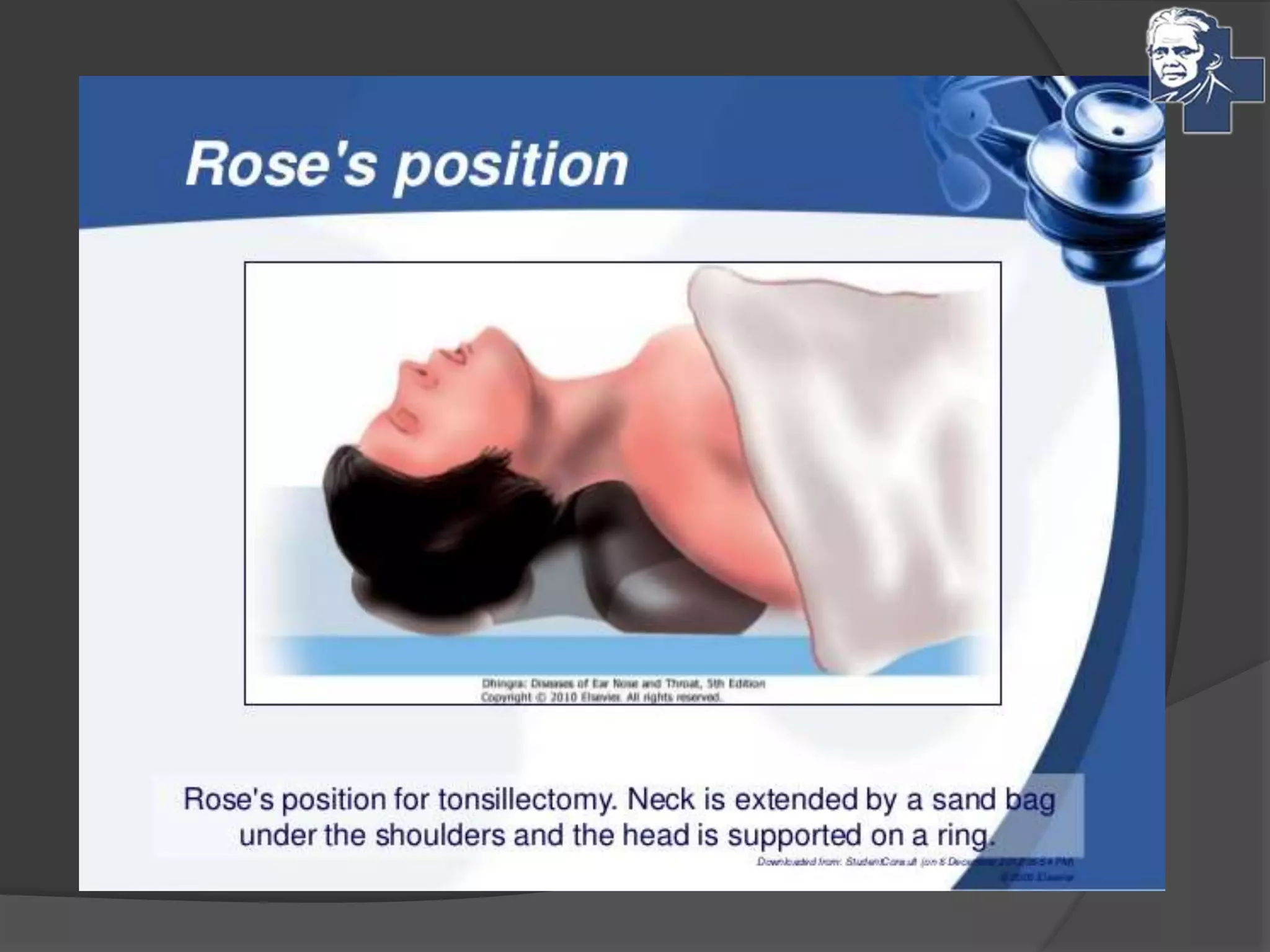
 Position
 Steps of operation
 Post – op care
Indications
 Absolute
 Relative
 As a part of another operation
Absolute Indications
 Recurrent throat infection (7-5-3-14)
 Peritonsillar abscess
 Tonsillitis
 Hypertrophy of tonsils
 Suspicion of Malignancy
Relative indication
 Diphtheria carriers
 Streptococcal carriers
 Recurrent streptococcal tonsillitis in
patients with valvular heart disease
 Chronic tonsillitis with halitosis
As a part of another operation
 Palatopharyngoplasty (in sleep apnoea)
 Removal of styloid process (elongated –
recurrent cervicofacial pain – Eagle’s
syndrome)
 Glossopharyngeal neurectomy (for
cancer related carotid sinus syncope)
Contraindications
 Hb < 10g%
 Presence of acute infection in upper
respiratory tract (bleeding)
 Age <3
 Cleft palate
 Bleeding disorders
 Polio epidemic
 Co-morbidity
 Menstruation
Position for tonsillectomy
Steps of
operation
Dissection and Snare Method
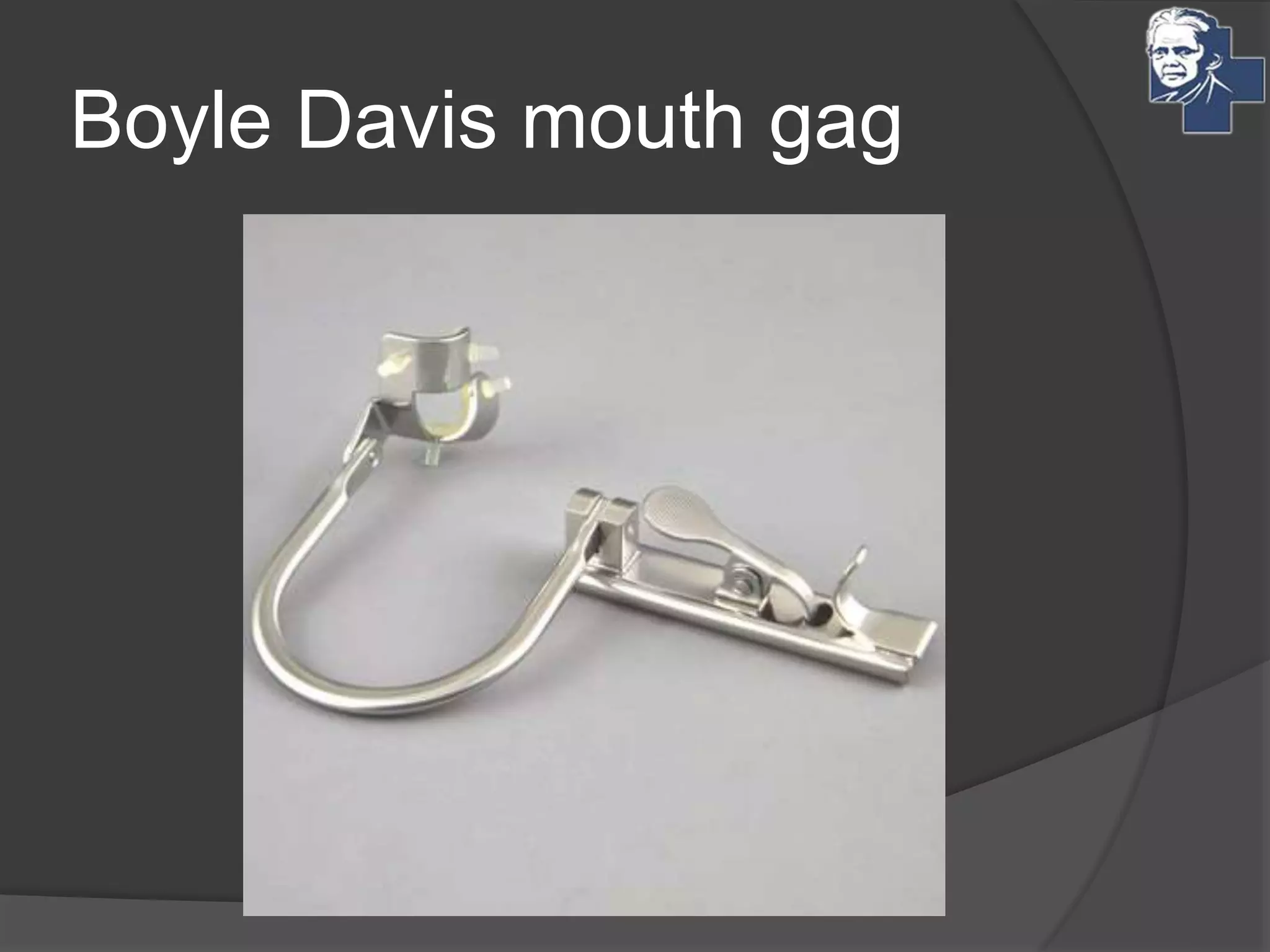
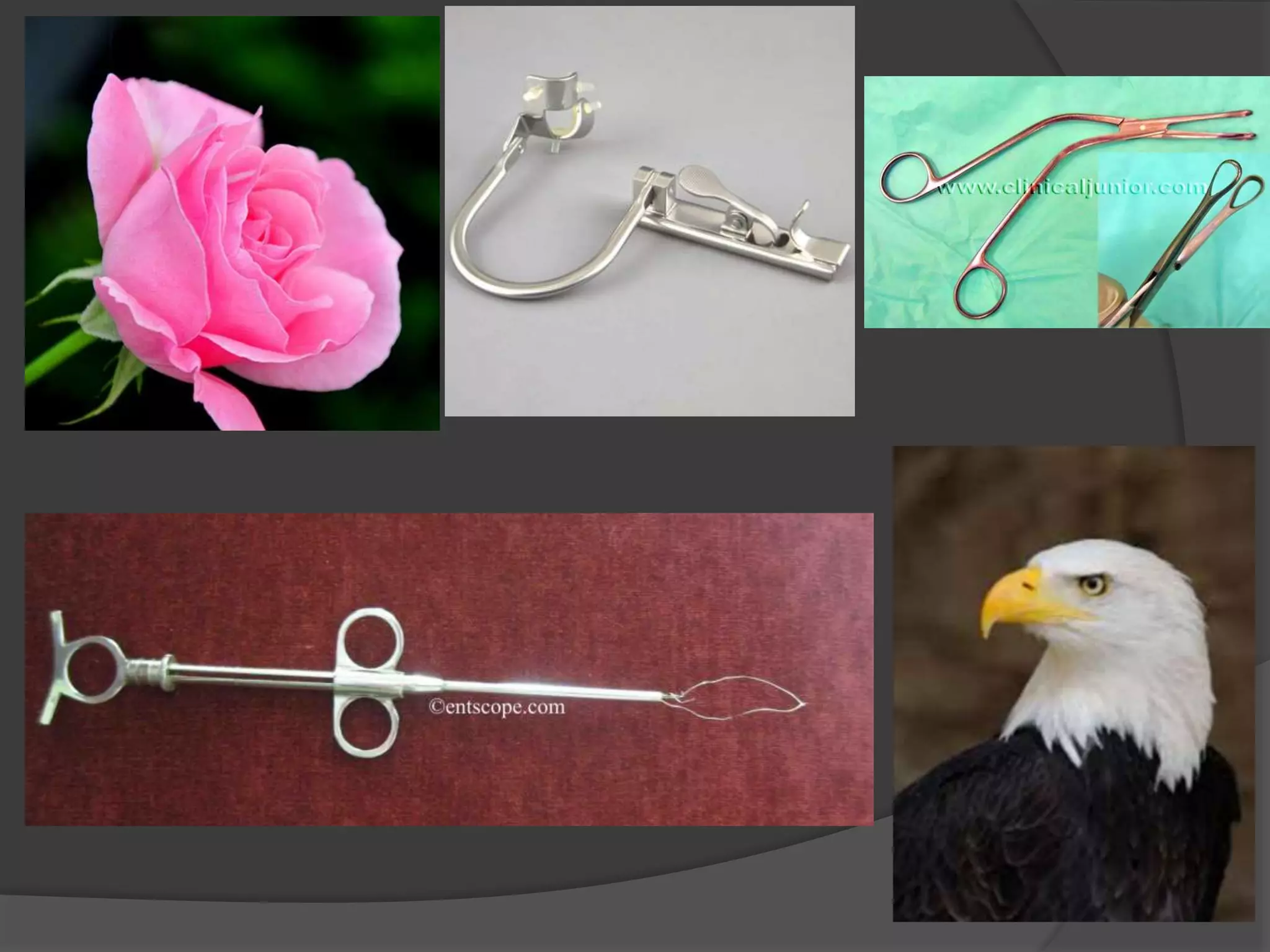
 Boyle – Davis mouth gag is introduced
and opened
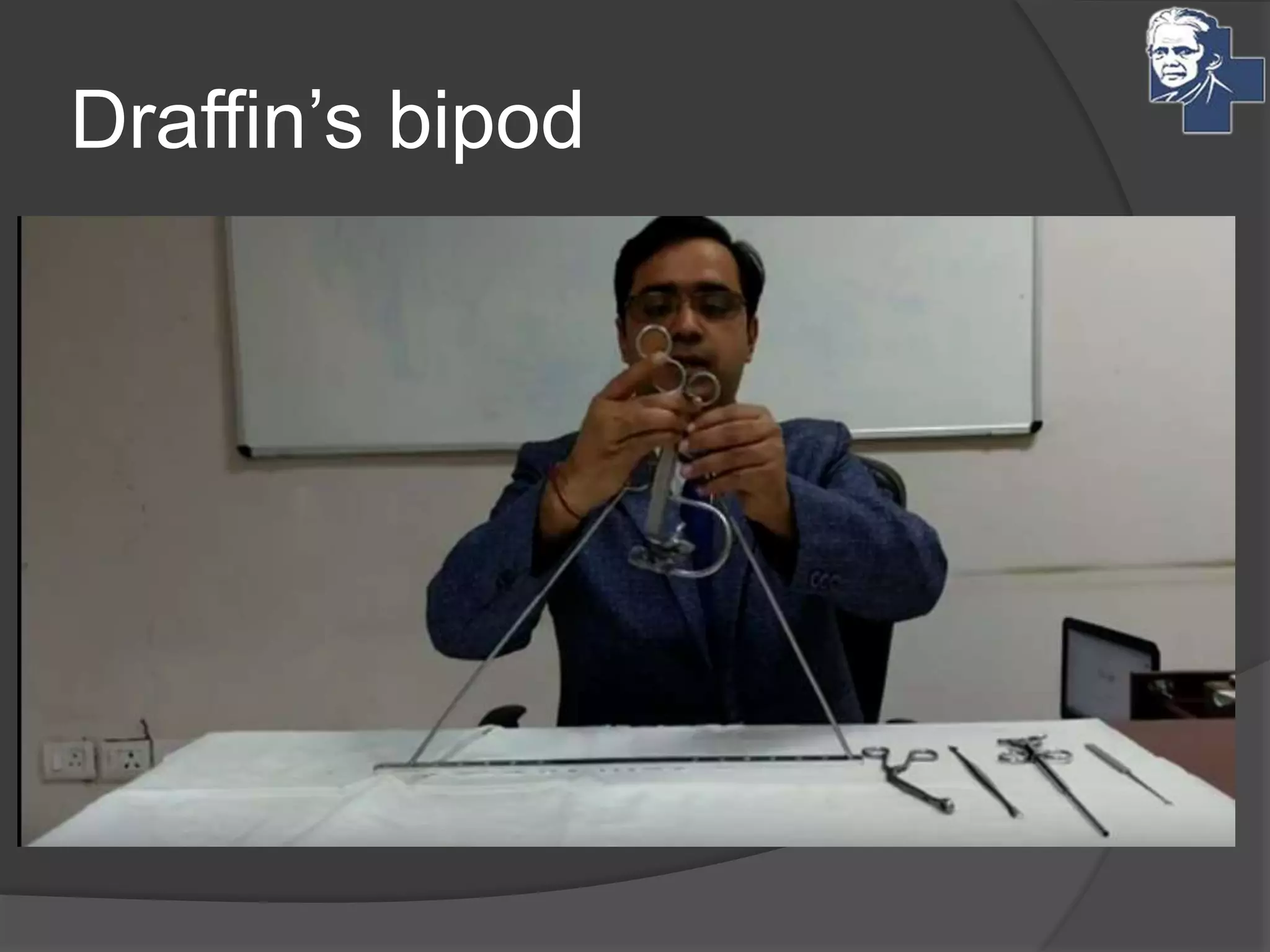
 It is held in place by Draffin’s bipods
Boyle Davis mouth gag
Draffin’s bipod
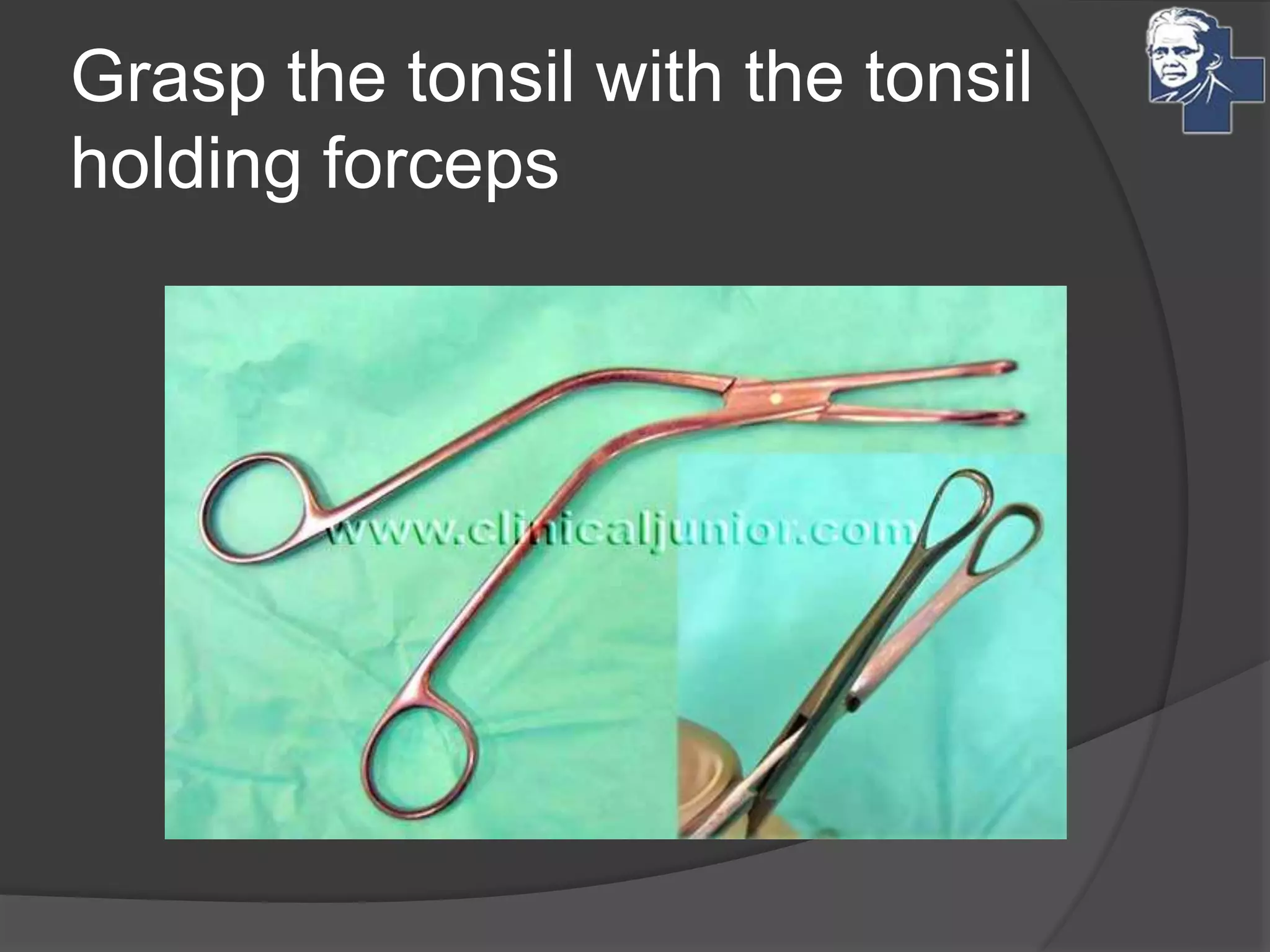
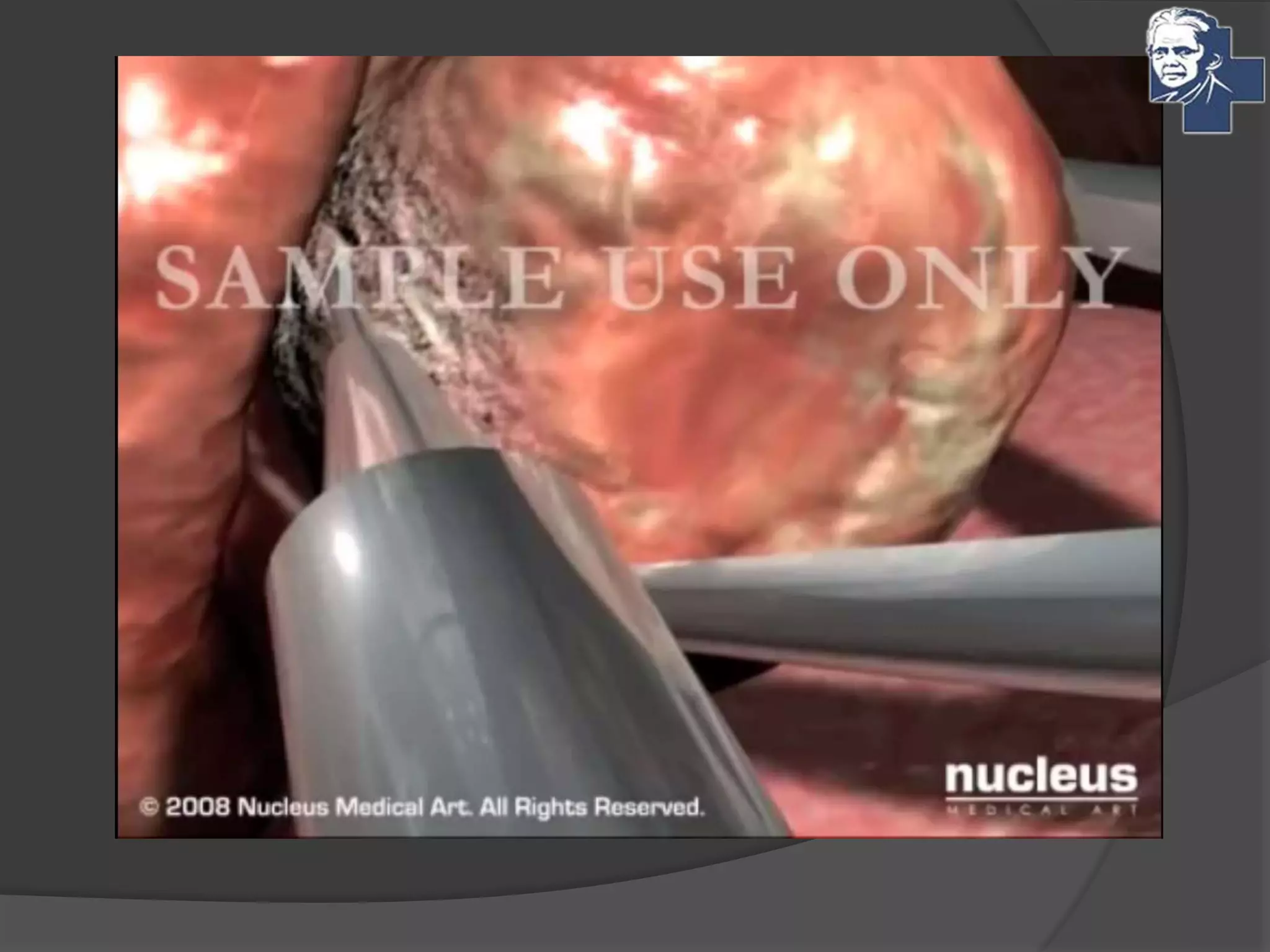
Grasp the tonsil with the tonsil
holding forceps
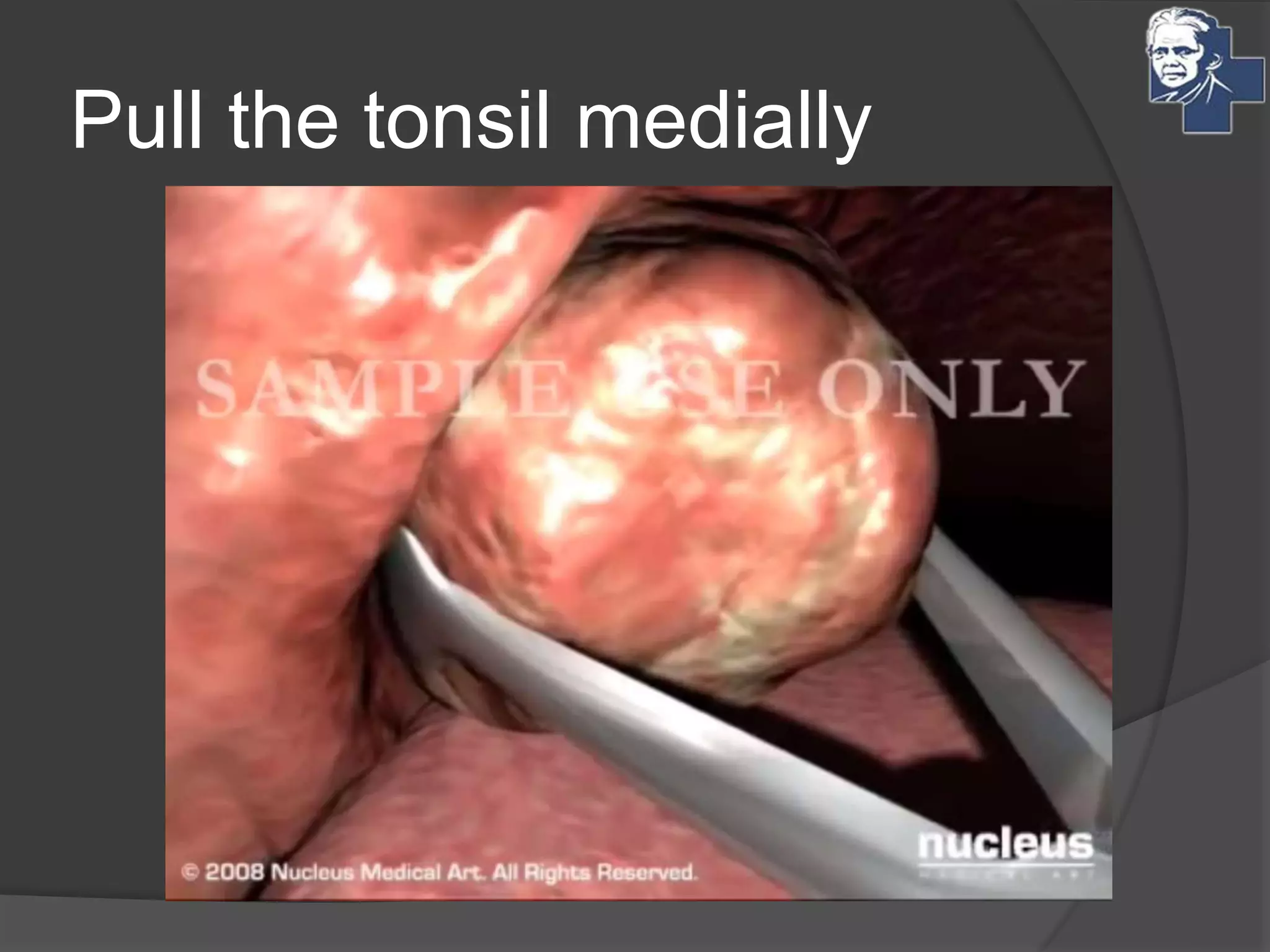
Pull the tonsil medially
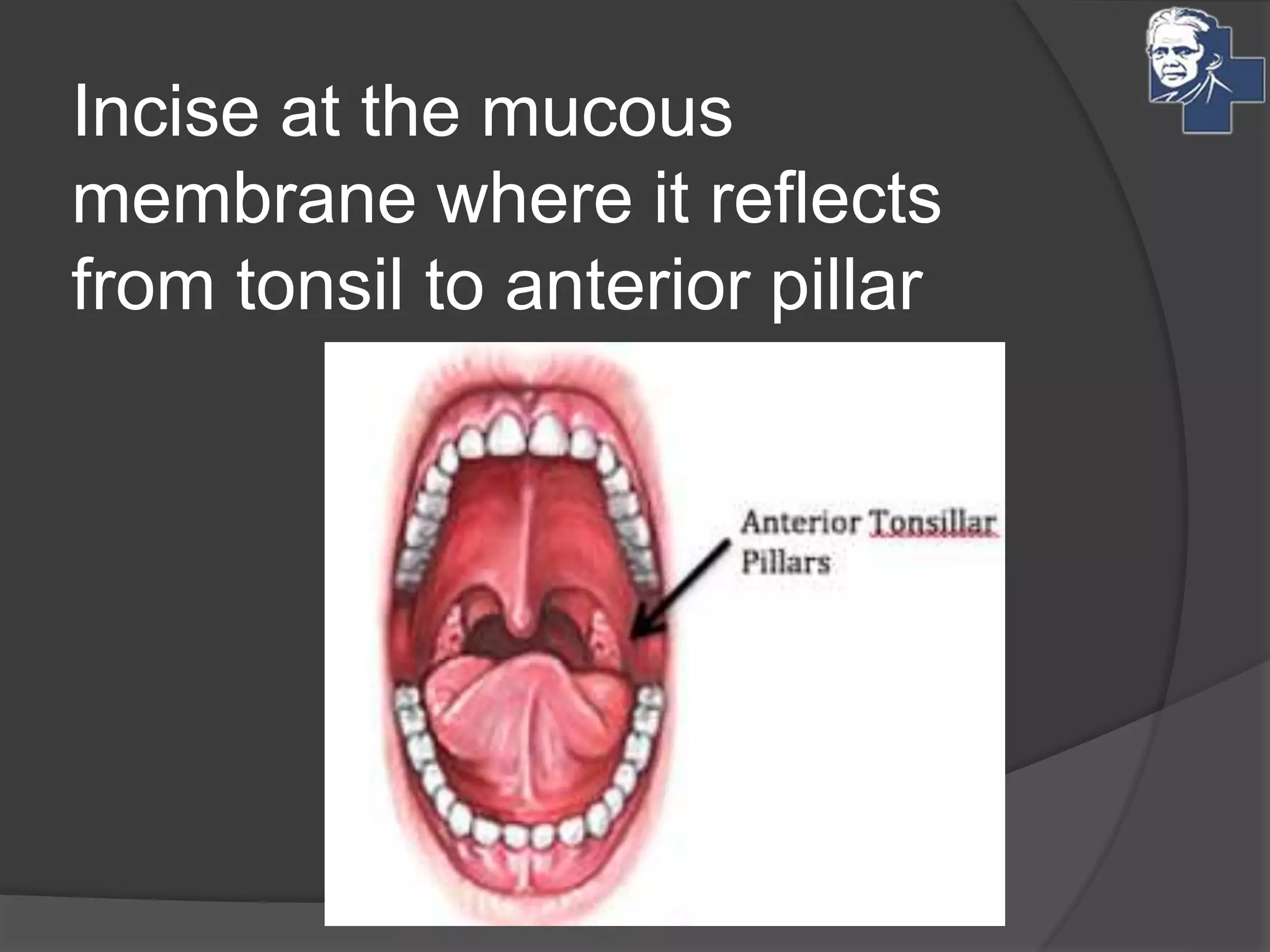
Incise at the mucous
membrane where it reflects
from tonsil to anterior pillar
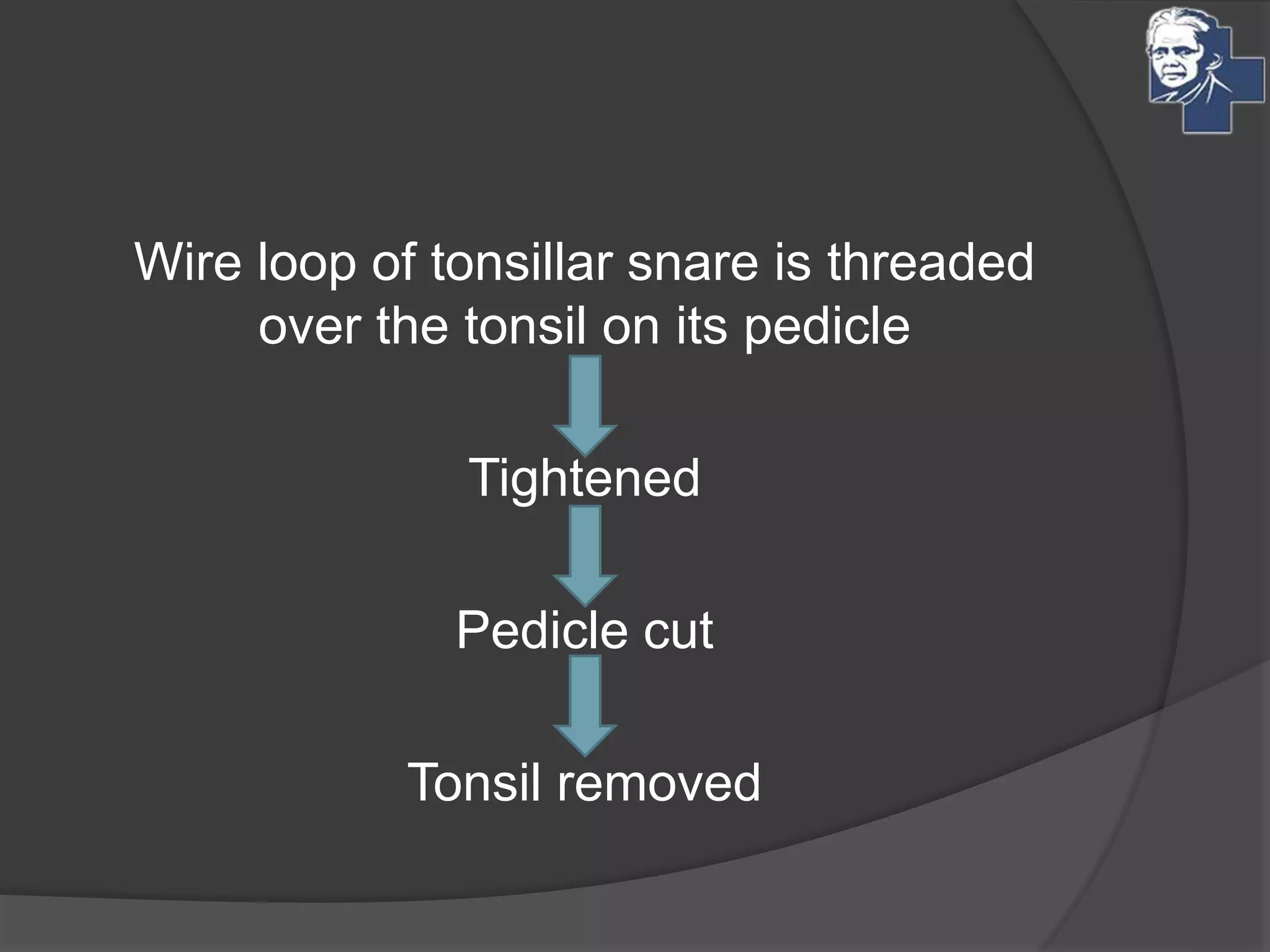
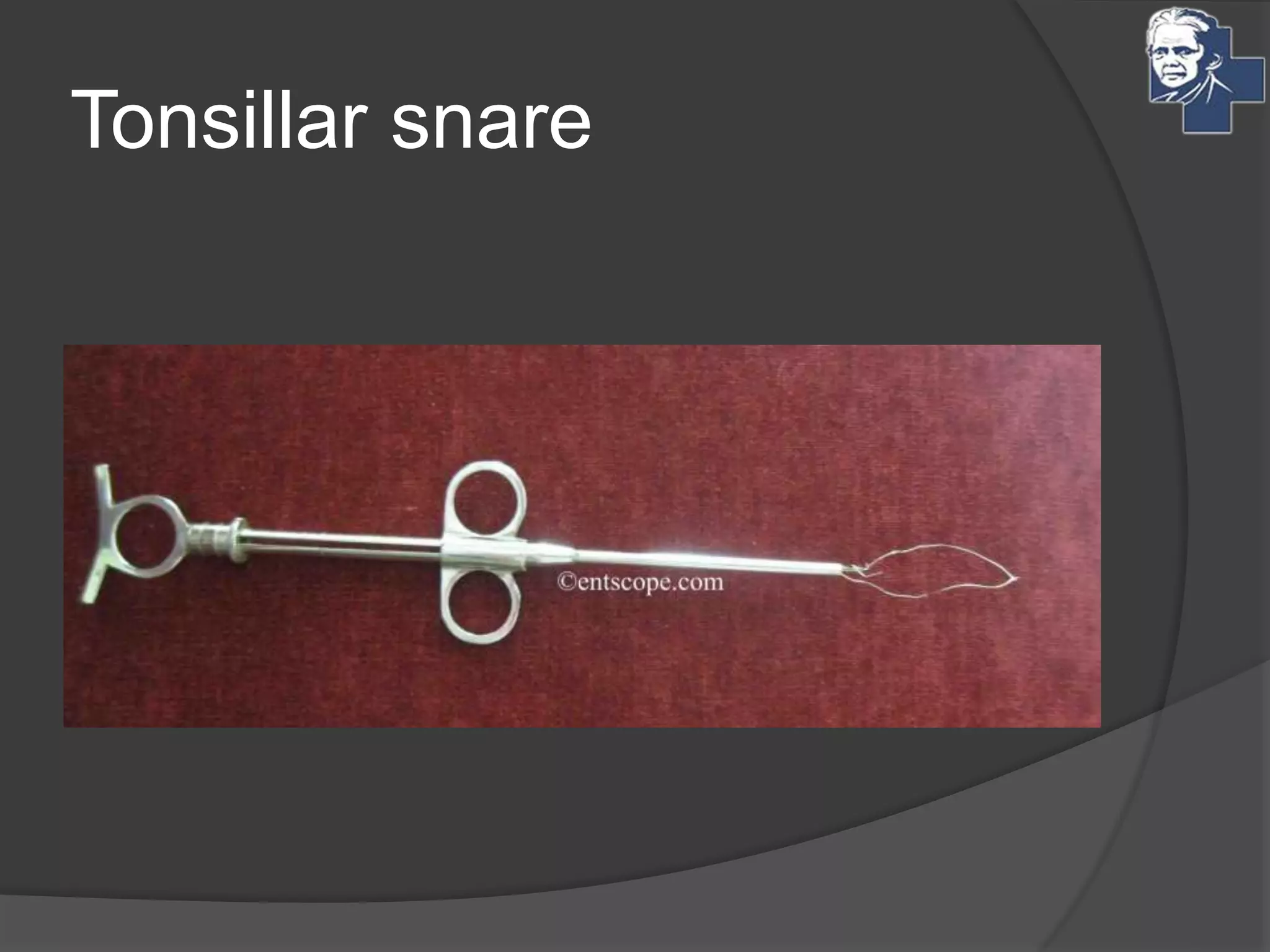
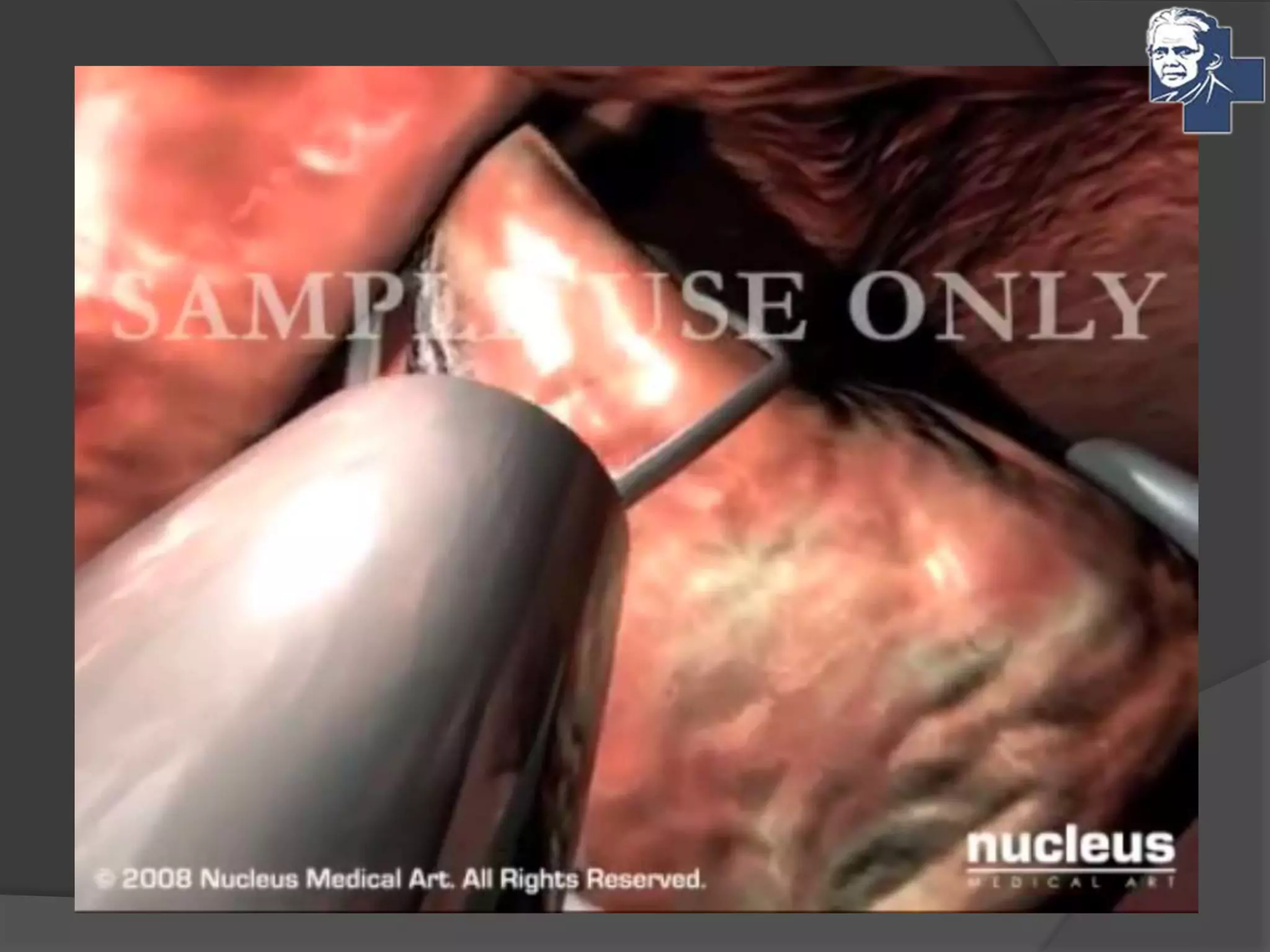
Wire loop of tonsillar snare is threaded
over the tonsil on its pedicle
Tightened
Pedicle cut
Tonsil removed
Tonsillar snare
 Place the gauze sponge in the fossa
 Apply pressure for few minutes
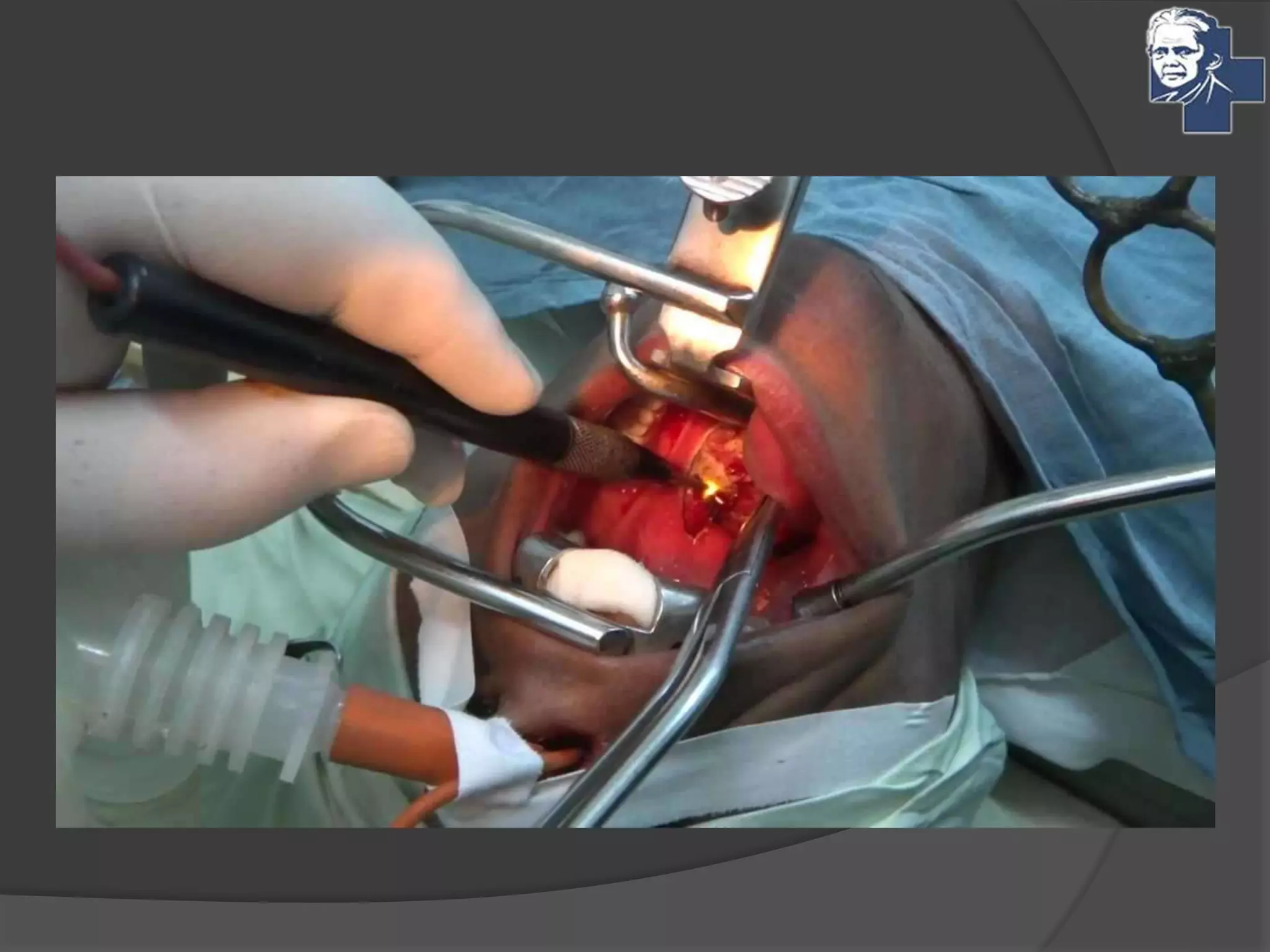
 Tie bleeding points with silk/cauterize
 Repeat the procedure on other side
Dissection and Snare
Method
 Boyle – Davis mouth gag – Draffin’s bipods
 Tonsil holding forceps – pull medially
 Incision
 Thread a wire loop of tonsillar snare over
tonsillar pedicle and cut it
 Remove the tonsil
 Gauze sponge – pressure – bleeding
control
 Repeat on the other side
Post operative care
 Immediate general care
 Diet
 Oral hygiene
 Analgesics
 Antibiotics
Immediate general care
 Recovery from anaesthesia
 Keep a watch on bleeding
 Monitor vitals
Diet
 Liquid diet
 Soft to solid foods on second day
Oral hygiene
 Salt water gargles 3-4 times a day
 Mouth wash with plain water after every
feed
Analgesics and antibiotics
 Paracetamol
 30 minutes before meal
 Avoid aspirin and ibuprofen
(Increases bleeding)
 Choose appropriate antibiotics
Other techniques of
tonsillectomy
 Cold method
 Hot method
Cold Method
 Guillotine method
 Intracapsular tonsillectomy with debrider
 Harmonic scalpel
 Plasma mediated ablation technique
 Cryosurgical technique
Hot method
 Electrocautery
 Laser tonsillectomy
 Coblation tonsillectomy
 Radiofrequency
References:
 Diseases of Ear, Nose and Throat – PL
Dhingra, 6th edition
 Short practice of surgery – Bailey &
Love – 26th edition
 www.ncbi.nlm.nih.gov
Thank you 

Management of Tonsillitis - Steps of tonsillectomy

Editor's Notes

  • #4 Rash in patients with infectious mononucleosis
  • #12 OT –Anaesthesia