CONSULTING ENGAGEMENT
Kathleen Belle A. Tuzon
BSA 4-11
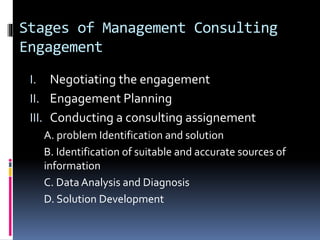
Stages of Management Consulting
Engagement
I. Negotiating the engagement
II. Engagement Planning
III. Conducting a consulting assignement
A. problem Identification and solution
B. Identification of suitable and accurate sources of
information
C. Data Analysis and Diagnosis
D. Solution Development
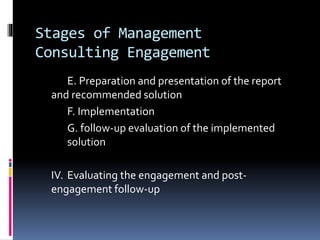
Stages of Management
Consulting Engagement
E. Preparation and presentation of the report
and recommended solution
F. Implementation
G. follow-up evaluation of the implemented
solution
IV. Evaluating the engagement and post-
engagement follow-up
I. NEGOTIATING THE ENGAGEMENT
 This involves the stage where the CPA and
the client discuss the proposed professional
consulting services.
 It is the process whereby the client decides
whether or not he wishes to engage the CPA
and the CPA determines whether or not he
can accept that assignment.
Proposal Letter
Proposal Letter is a written communication
between the CPA and the client setting forth the
terms and the condition of the proposed
consultancy work.
Proposal Letter will generally include;
 The objectives and benefits of the engagement
 The scope of the work and the role of the CPA
 The approach to the study
 The project organization
 Fees and billing arrangement
 Firm qualifications, where appropriate
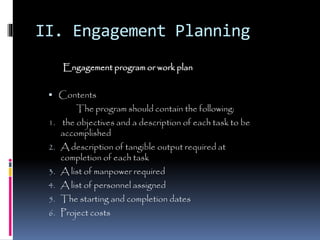
II. Engagement Planning
Engagement program or work plan
 Contents
The program should contain the following:
1. the objectives and a description of each task to be
accomplished
2. A description of tangible output required at
completion of each task
3. A list of manpower required
4. A list of personnel assigned
5. The starting and completion dates
6. Project costs
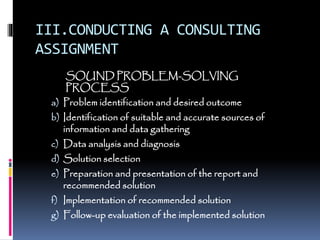
III.CONDUCTING A CONSULTING
ASSIGNMENT
SOUND PROBLEM-SOLVING
PROCESS
a) Problem identification and desired outcome
b) Identification of suitable and accurate sources of
information and data gathering
c) Data analysis and diagnosis
d) Solution selection
e) Preparation and presentation of the report and
recommended solution
f) Implementation of recommended solution
g) Follow-up evaluation of the implemented solution
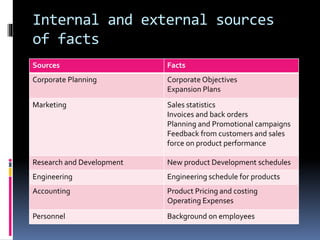
Internal and external sources
of facts
Sources Facts
Corporate Planning Corporate Objectives
Expansion Plans
Marketing Sales statistics
Invoices and back orders
Planning and Promotional campaigns
Feedback from customers and sales
force on product performance
Research and Development New product Development schedules
Engineering Engineering schedule for products
Accounting Product Pricing and costing
Operating Expenses
Personnel Background on employees
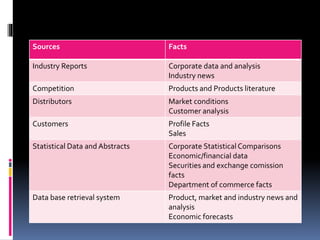
Sources Facts
Industry Reports Corporate data and analysis
Industry news
Competition Products and Products literature
Distributors Market conditions
Customer analysis
Customers Profile Facts
Sales
Statistical Data and Abstracts Corporate Statistical Comparisons
Economic/financial data
Securities and exchange comission
facts
Department of commerce facts
Data base retrieval system Product, market and industry news and
analysis
Economic forecasts
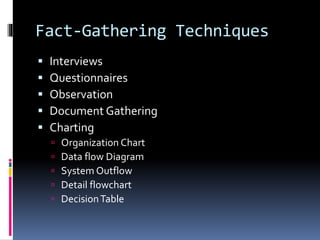
Fact-Gathering Techniques
 Interviews
 Questionnaires
 Observation
 Document Gathering
 Charting
 Organization Chart
 Data flow Diagram
 System Outflow
 Detail flowchart
 DecisionTable
IV. Evaluating the engagement
and Post Engagement follow-up
 EVALUATIONOFTHE ENGEMENT
 Benefits
 It will provide direction for staff training program in
the MAS division
 It will serve as a basis for evaluating on-th-jpb
performance of staff personnel
 It will provide data for determining required
resources for subsequent similar engagements
 It will provide tangible evidence of quality
consciousness consistent with the other areas of a
CPAs practice
The evaluation will formally
cover the following:
 Proposal
 Engagement Program
 Work program and schedule
 Source data and documentation
 Reports
 Results
PROJECT MANAGEMENT AND
CONTROL
 Project Management means planning,
executing, scheduling and controlling
activities to provide solutions to the identified
problems.
A. Project Plan
 Project plan serves a nucleus of a consulting
engagement and provides a guide to staff
assignment and completion dates.
 It also provides the consultant with an
updated status at any point during the
project.
Developing the detailed work
plan
 The detailed work plan serves as the blueprint for
execution of the engagement and a means by which
the consultant can monitor project progress
 Components:
 Task identification and description
 Task relationship
 Estimating the work effort and completion time
 Scheduling tasks
 Determining review point
 Staffing the project
 Project costing
 Detailed work plan review
B. Organizing the project
Team
C. Project Schedule
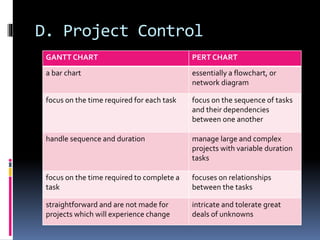
D. Project Control
GANTT CHART PERT CHART
a bar chart essentially a flowchart, or
network diagram
focus on the time required for each task focus on the sequence of tasks
and their dependencies
between one another
handle sequence and duration manage large and complex
projects with variable duration
tasks
focus on the time required to complete a
task
focuses on relationships
between the tasks
straightforward and are not made for
projects which will experience change
intricate and tolerate great
deals of unknowns
E. Documentation Policies
and Guidelines
 What documentation policies and guidelines
should be established for internal use?
 Defined structure
 Timing
 Responsibilities
The report format would
include all or part of the
following sections:
I. Statement of the engagement objectives
II. Background information and activities
conducted to analyze the client’s business
III. Findings and Conclusions
IV. Recommendations
V. Benefits of implementing
Recommendations

management advisory sevices by KBtuzon

  • 1.
  • 2.
    Stages of ManagementConsulting Engagement I. Negotiating the engagement II. Engagement Planning III. Conducting a consulting assignement A. problem Identification and solution B. Identification of suitable and accurate sources of information C. Data Analysis and Diagnosis D. Solution Development
  • 3.
    Stages of Management ConsultingEngagement E. Preparation and presentation of the report and recommended solution F. Implementation G. follow-up evaluation of the implemented solution IV. Evaluating the engagement and post- engagement follow-up
  • 4.
    I. NEGOTIATING THEENGAGEMENT  This involves the stage where the CPA and the client discuss the proposed professional consulting services.  It is the process whereby the client decides whether or not he wishes to engage the CPA and the CPA determines whether or not he can accept that assignment.
  • 5.
    Proposal Letter Proposal Letteris a written communication between the CPA and the client setting forth the terms and the condition of the proposed consultancy work. Proposal Letter will generally include;  The objectives and benefits of the engagement  The scope of the work and the role of the CPA  The approach to the study  The project organization  Fees and billing arrangement  Firm qualifications, where appropriate
  • 6.
    II. Engagement Planning Engagementprogram or work plan  Contents The program should contain the following: 1. the objectives and a description of each task to be accomplished 2. A description of tangible output required at completion of each task 3. A list of manpower required 4. A list of personnel assigned 5. The starting and completion dates 6. Project costs
  • 7.
    III.CONDUCTING A CONSULTING ASSIGNMENT SOUNDPROBLEM-SOLVING PROCESS a) Problem identification and desired outcome b) Identification of suitable and accurate sources of information and data gathering c) Data analysis and diagnosis d) Solution selection e) Preparation and presentation of the report and recommended solution f) Implementation of recommended solution g) Follow-up evaluation of the implemented solution
  • 8.
    Internal and externalsources of facts Sources Facts Corporate Planning Corporate Objectives Expansion Plans Marketing Sales statistics Invoices and back orders Planning and Promotional campaigns Feedback from customers and sales force on product performance Research and Development New product Development schedules Engineering Engineering schedule for products Accounting Product Pricing and costing Operating Expenses Personnel Background on employees
  • 9.
    Sources Facts Industry ReportsCorporate data and analysis Industry news Competition Products and Products literature Distributors Market conditions Customer analysis Customers Profile Facts Sales Statistical Data and Abstracts Corporate Statistical Comparisons Economic/financial data Securities and exchange comission facts Department of commerce facts Data base retrieval system Product, market and industry news and analysis Economic forecasts
  • 10.
    Fact-Gathering Techniques  Interviews Questionnaires  Observation  Document Gathering  Charting  Organization Chart  Data flow Diagram  System Outflow  Detail flowchart  DecisionTable
  • 11.
    IV. Evaluating theengagement and Post Engagement follow-up  EVALUATIONOFTHE ENGEMENT  Benefits  It will provide direction for staff training program in the MAS division  It will serve as a basis for evaluating on-th-jpb performance of staff personnel  It will provide data for determining required resources for subsequent similar engagements  It will provide tangible evidence of quality consciousness consistent with the other areas of a CPAs practice
  • 12.
    The evaluation willformally cover the following:  Proposal  Engagement Program  Work program and schedule  Source data and documentation  Reports  Results
  • 13.
    PROJECT MANAGEMENT AND CONTROL Project Management means planning, executing, scheduling and controlling activities to provide solutions to the identified problems.
  • 14.
    A. Project Plan Project plan serves a nucleus of a consulting engagement and provides a guide to staff assignment and completion dates.  It also provides the consultant with an updated status at any point during the project.
  • 15.
    Developing the detailedwork plan  The detailed work plan serves as the blueprint for execution of the engagement and a means by which the consultant can monitor project progress  Components:  Task identification and description  Task relationship  Estimating the work effort and completion time  Scheduling tasks  Determining review point  Staffing the project  Project costing  Detailed work plan review
  • 16.
    B. Organizing theproject Team C. Project Schedule
  • 17.
    D. Project Control GANTTCHART PERT CHART a bar chart essentially a flowchart, or network diagram focus on the time required for each task focus on the sequence of tasks and their dependencies between one another handle sequence and duration manage large and complex projects with variable duration tasks focus on the time required to complete a task focuses on relationships between the tasks straightforward and are not made for projects which will experience change intricate and tolerate great deals of unknowns
  • 18.
    E. Documentation Policies andGuidelines  What documentation policies and guidelines should be established for internal use?  Defined structure  Timing  Responsibilities
  • 19.
    The report formatwould include all or part of the following sections: I. Statement of the engagement objectives II. Background information and activities conducted to analyze the client’s business III. Findings and Conclusions IV. Recommendations V. Benefits of implementing Recommendations

Editor's Notes

  • #6 It may be prepared by either the CPA or the client. Purposes of the proposal letter a) to minimize the undestanmdings between the cpa firm and the client b) To assist in better administration of the engagement
  • #18 Summary of Differences between PERT and Gantt charts: A PERT chart is essentially a flowchart, or network diagram, while the Gantt chart is a bar chart. PERT charts focus on the sequence of tasks and their dependencies between one another while Gantt charts focus on the time required for each task. Gantt charts handle sequence and duration, while PERT charts manage large and complex projects with variable duration tasks. Gantt charts focus on the time required to complete a task; whereas a PERT chart focuses on relationships between the tasks. Gantt charts are straightforward and are not made for projects which will experience change; while PERT charts are intricate and tolerate great deals of unknowns.