
Basics of ConsultingBasics of Consulting
SkillsSkills
Amar Majhu
Teaching ObjectivesTeaching Objectives
To provide class with an
overview of key consulting skills,
the basic model of the consulting
process, and exposure to the
following:
Ethical issues in consulting
Career opportunities in
consulting
What is a Consultant?What is a Consultant?
Someone who provides his
or her unique expertise to an
organization or to someone
else.
Internal ConsultantInternal Consultant
A professional who is employed full-time
by an organization and who reports to a
general manager or other senior
management. He/she works exclusively
within the domain of the employing
organization and at the request of the
manager to whom he/she reports.
External ConsultantExternal Consultant
A professional who does not work within a
parent host company. A professional who
has an expertise in a specific area and
offers his/her services to the public and/or
private sector.
Consultant’s ObjectivesConsultant’s Objectives
To establish a collaborative relationship
To solve problems so they stay solved
To ensure attention is given to both the
technical/business problem and the
relationships
Key Consulting SkillsKey Consulting Skills
Technical
◦ Time management
◦ Team work
◦ Software application
Interpersonal
◦ Open minded
◦ Support
◦ Respect
Consulting
◦ Listening
◦ Building Trust
◦ Balancing Directness
Practical ApplicationsPractical Applications
Bain & Company seek applicants who
possess:
◦Big picture thinking
◦Problem solving logic
◦Focus on value
◦Depth and breadth- business
intuition
◦Results orientation
Consulting ProcessConsulting Process
Entry & Contracting
Discover & Data Collection
Feedback & Decision to Act
Engagement & Implementation
Recycle, Extension, & Terminate
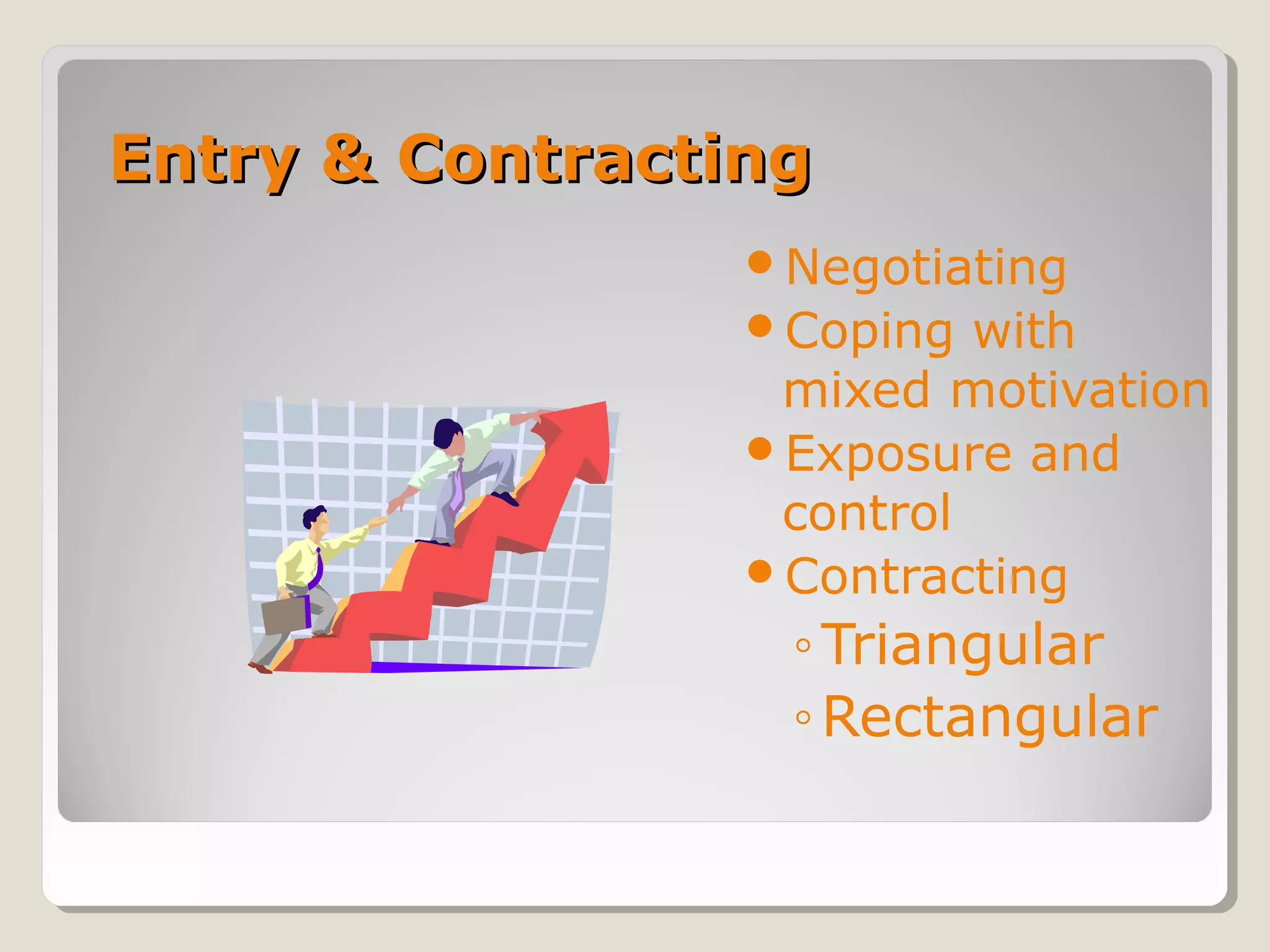
Entry & ContractingEntry & Contracting
Negotiating
Coping with
mixed motivation
Exposure and
control
Contracting
◦Triangular
◦Rectangular
Discovery & Data CollectionDiscovery & Data Collection
Layers of analysis
Political climate
Resistance to
share information
Interview as a
joint learning
event
Feedback & The Decision ToFeedback & The Decision To
ActAct
Funneling data
Presenting data
Managing the
feedback meeting
Focus on here
and now
Don’t take it
personally
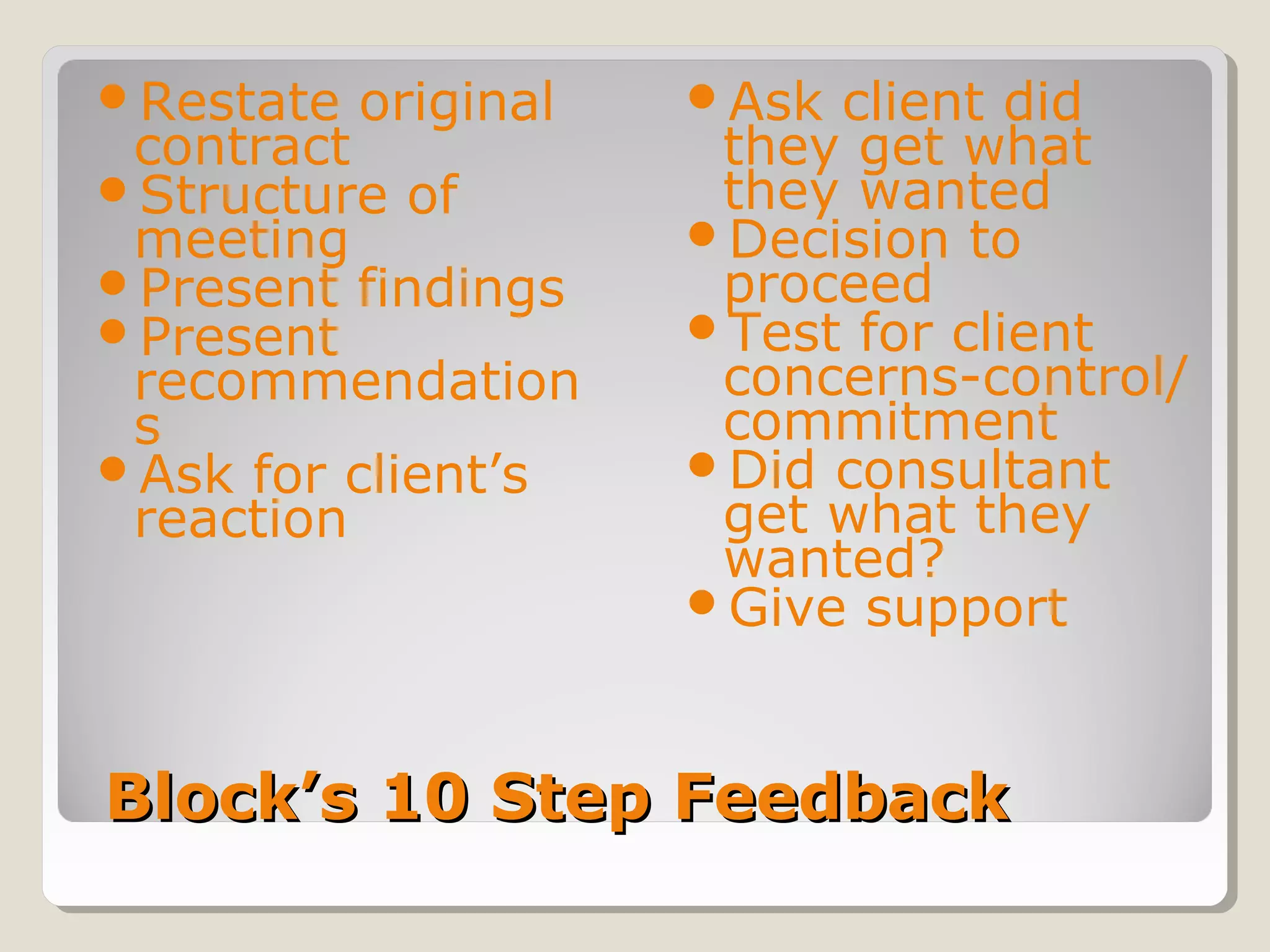
Block’s 10 Step FeedbackBlock’s 10 Step Feedback
Restate original
contract
Structure of
meeting
Present findings
Present
recommendation
s
Ask for client’s
reaction
Ask client did
they get what
they wanted
Decision to
proceed
Test for client
concerns-control/
commitment
Did consultant
get what they
wanted?
Give support
Engagement &Engagement &
ImplementationImplementation
Bet on
engagement over
mandate and
persuasion
Design more
participation then
presentation
Encourage
difficult public
exchange
Change the
conversation
Recycle, Extension,Recycle, Extension,
TerminatioTerminatio
Evaluate what
happened in
“Engagement and
Implementation”
Decide on next
step
◦Recycle
◦Extension
◦Termination
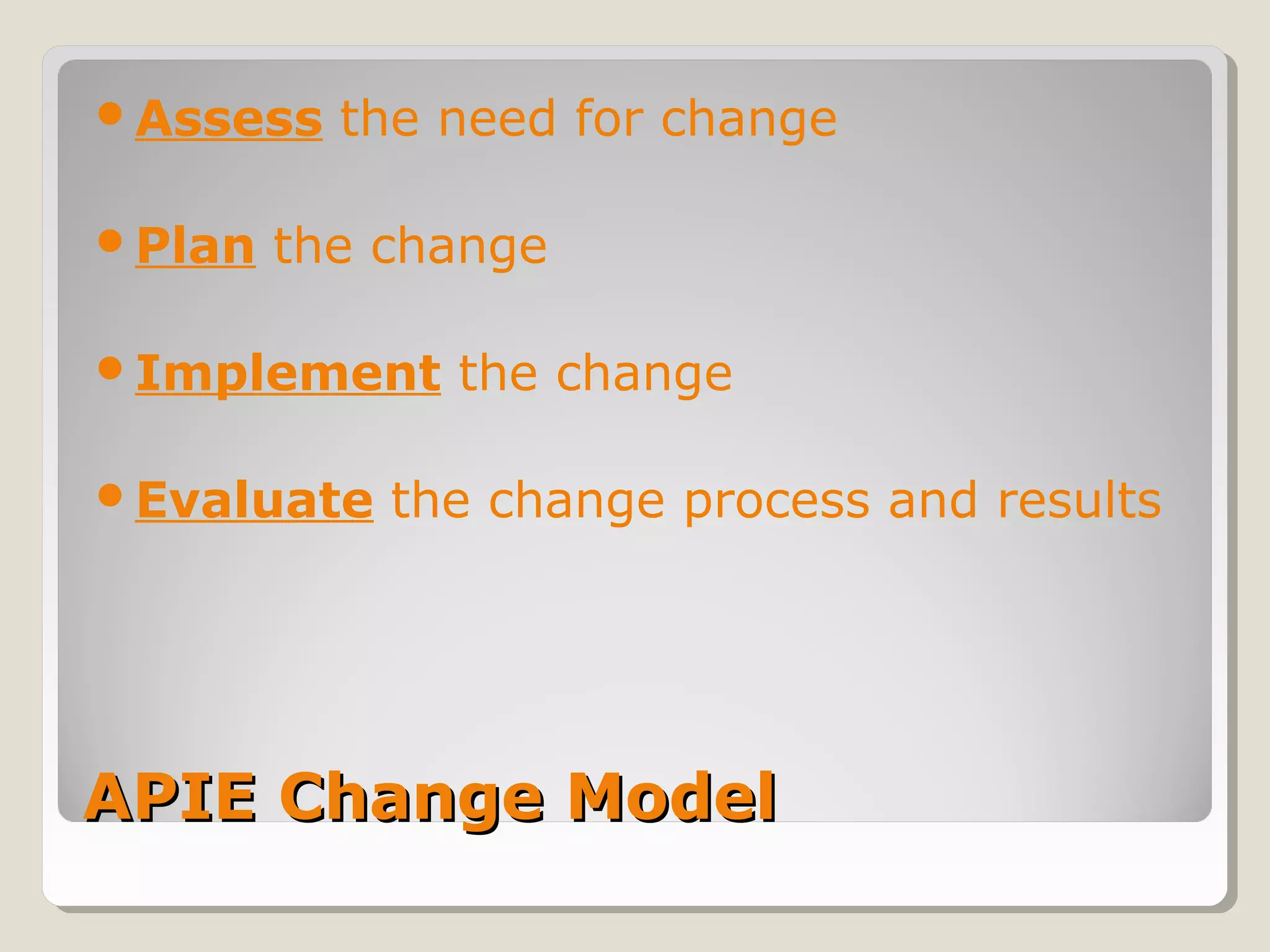
APIE Change ModelAPIE Change Model
Assess the need for change
Plan the change
Implement the change
Evaluate the change process and results
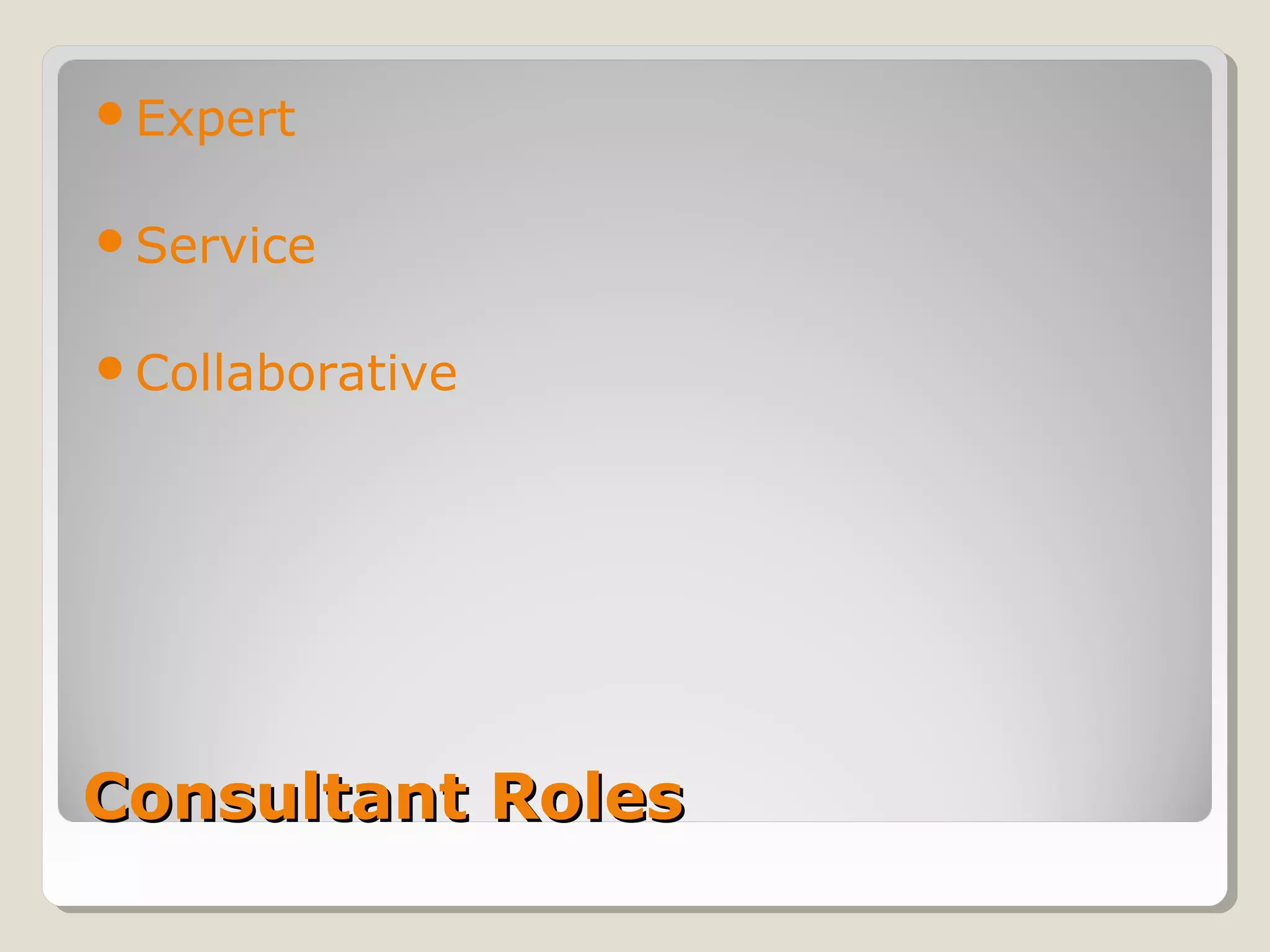
Consultant RolesConsultant Roles
Expert
Service
Collaborative
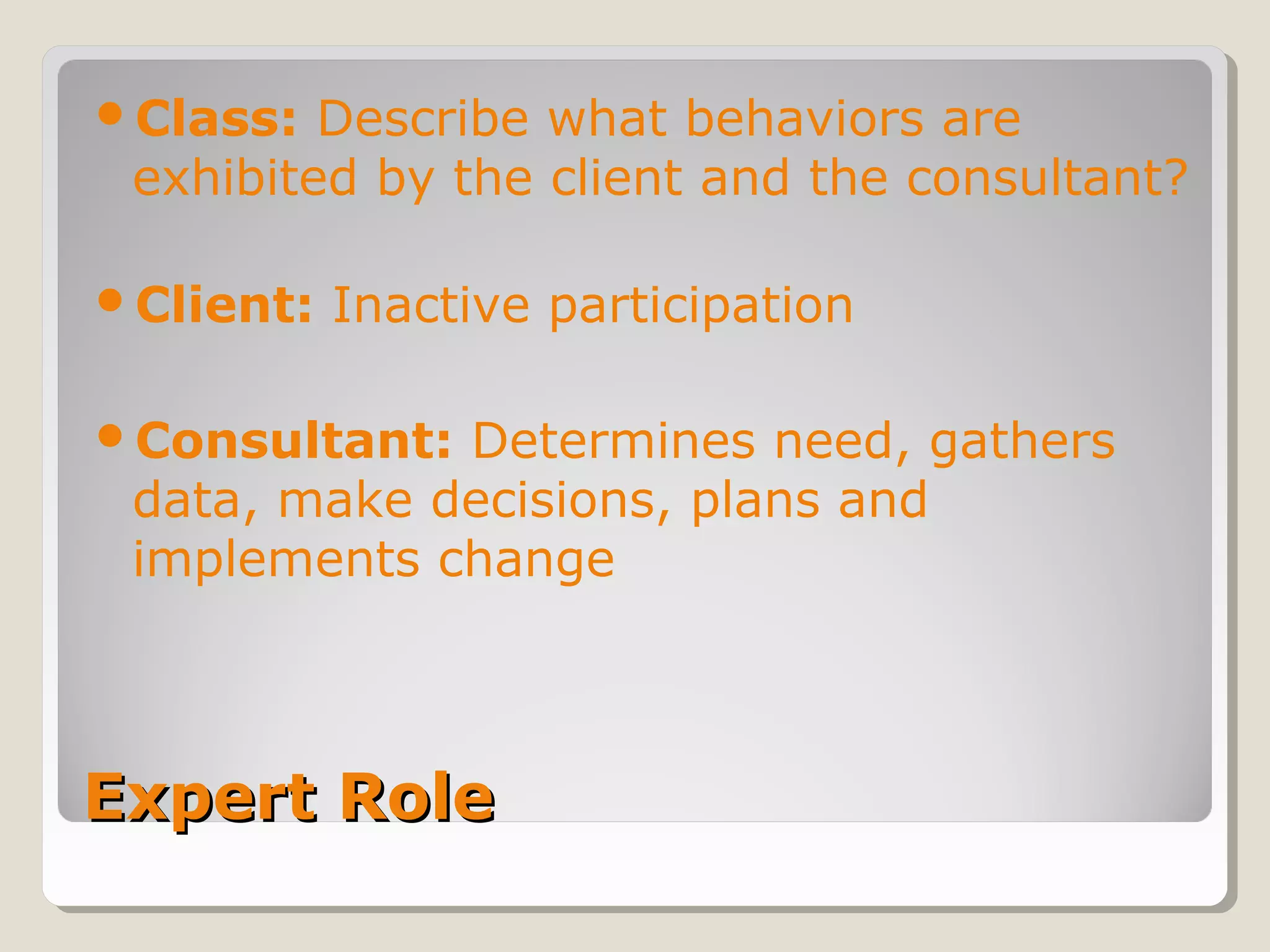
Expert RoleExpert Role
Class: Describe what behaviors are
exhibited by the client and the consultant?
Client: Inactive participation
Consultant: Determines need, gathers
data, make decisions, plans and
implements change
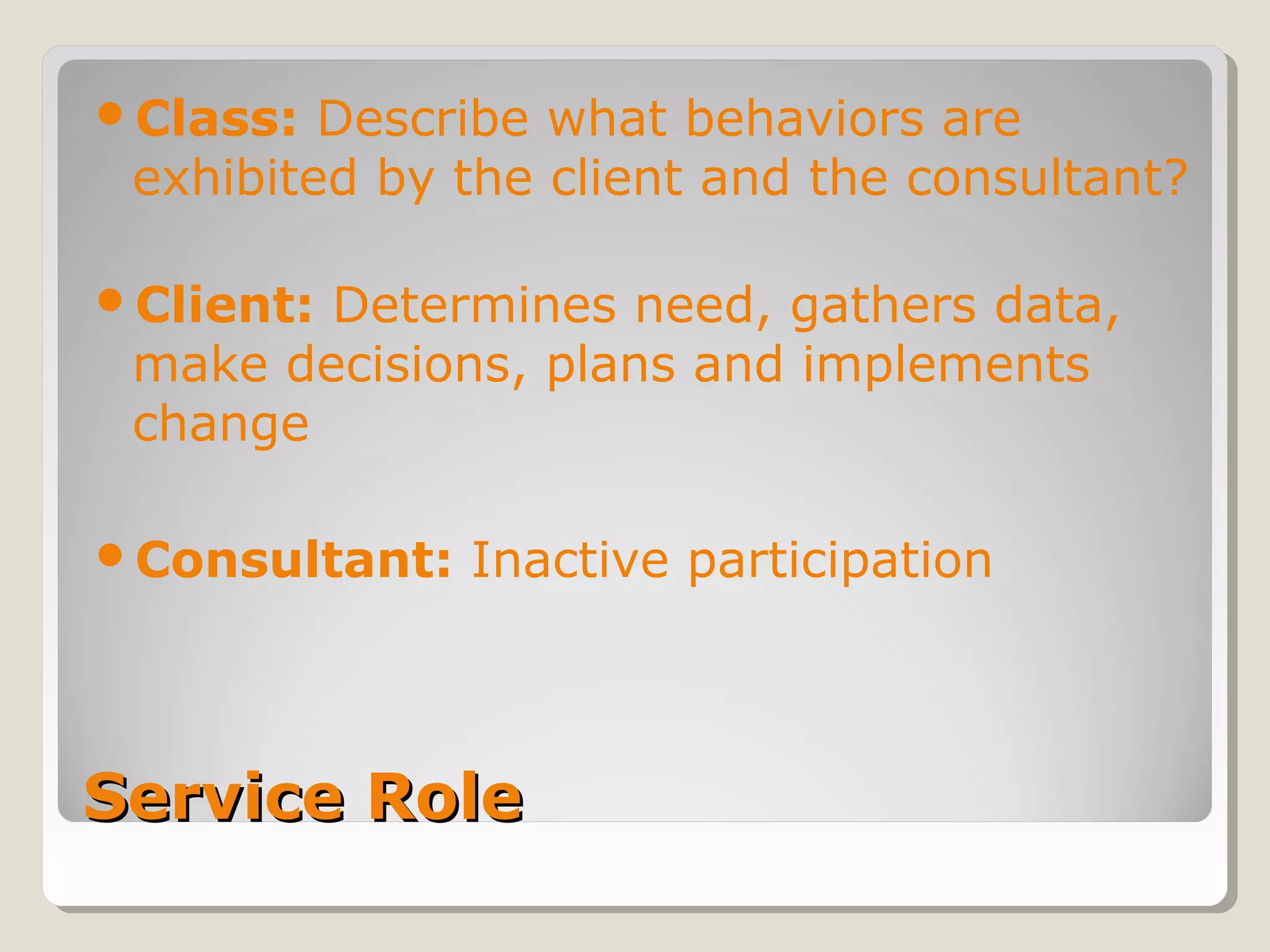
Service RoleService Role
Class: Describe what behaviors are
exhibited by the client and the consultant?
Client: Determines need, gathers data,
make decisions, plans and implements
change
Consultant: Inactive participation
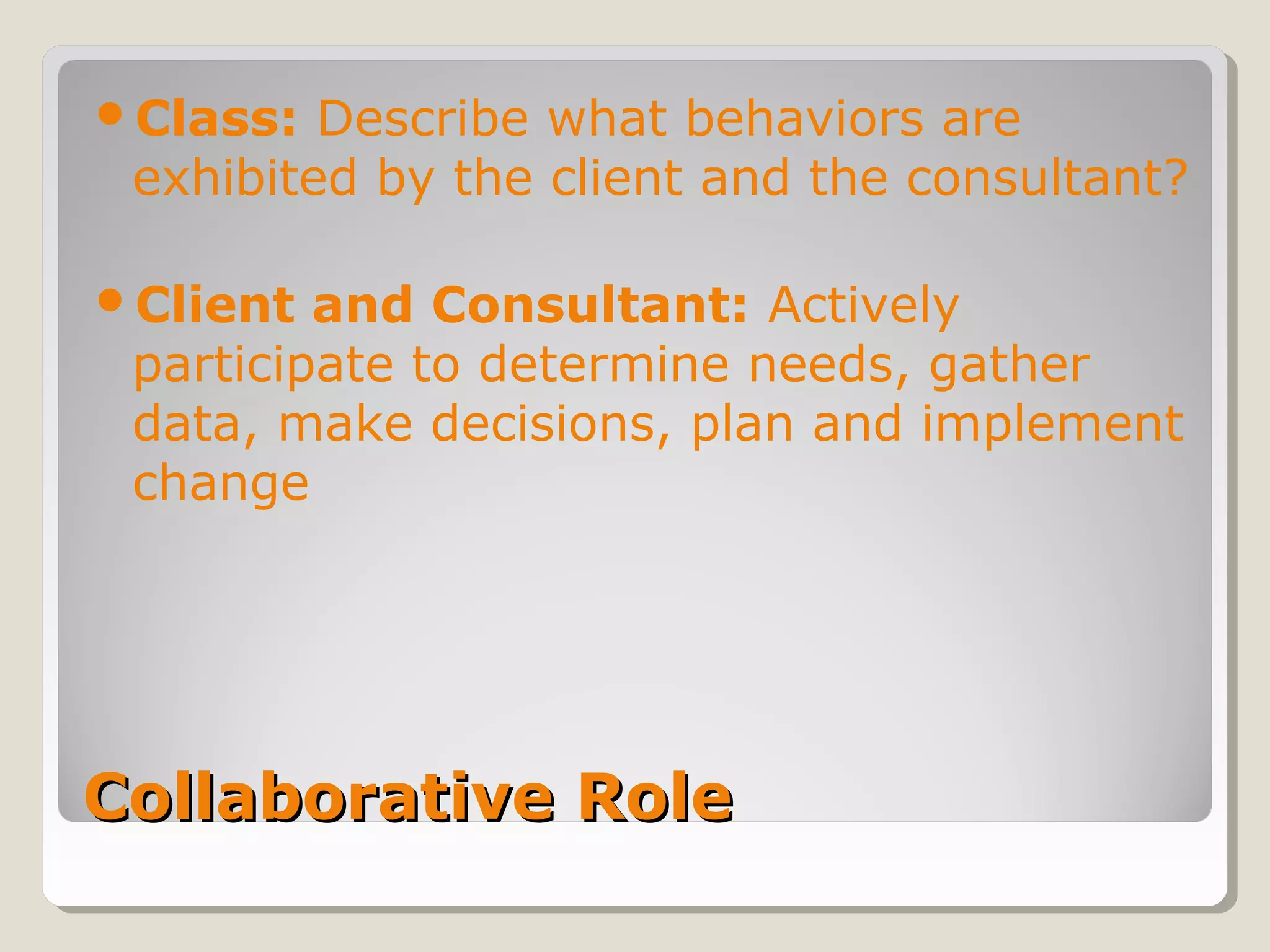
Collaborative RoleCollaborative Role
Class: Describe what behaviors are
exhibited by the client and the consultant?
Client and Consultant: Actively
participate to determine needs, gather
data, make decisions, plan and implement
change
Consulting StylesConsulting Styles
Stabilizer
Cheerleader
Analyzer
Persuader
Pathfinder
Ethical IssuesEthical Issues
Boundaries of competence
Conflicts between ethics and company
demands
Explaining assessment results
Q & AQ & A

Basics of consulting skills | Amar Majhu