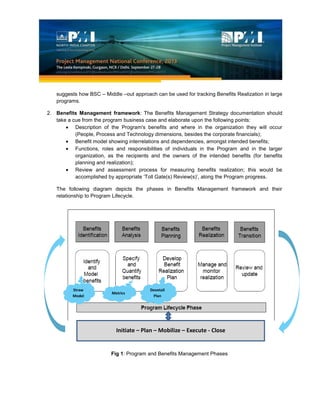
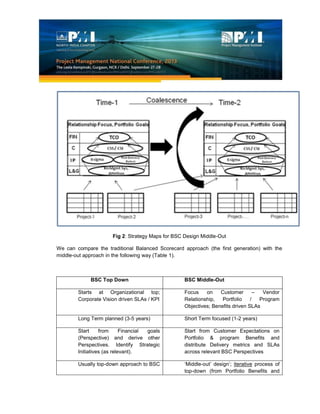
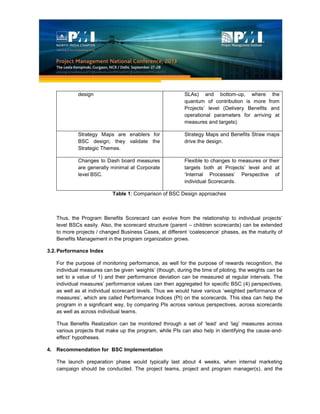
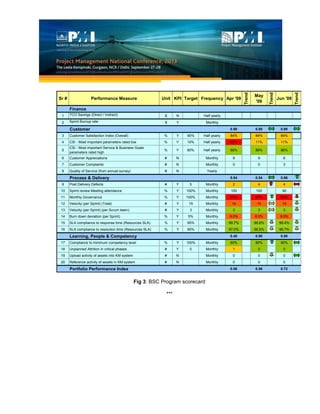
This document discusses using a "middle-out" balanced scorecard approach to monitor benefits realization in large transformation programs. It begins by describing the typical benefits management lifecycle and framework, including identifying, analyzing, planning and realizing benefits. It then explains how a balanced scorecard is usually designed in a top-down manner at the corporate level but proposes a middle-out approach where individual project scorecards are developed and connected to an overarching program scorecard to track progress towards intended benefits. The document provides an example case study where this middle-out balanced scorecard approach was adopted to monitor a program.